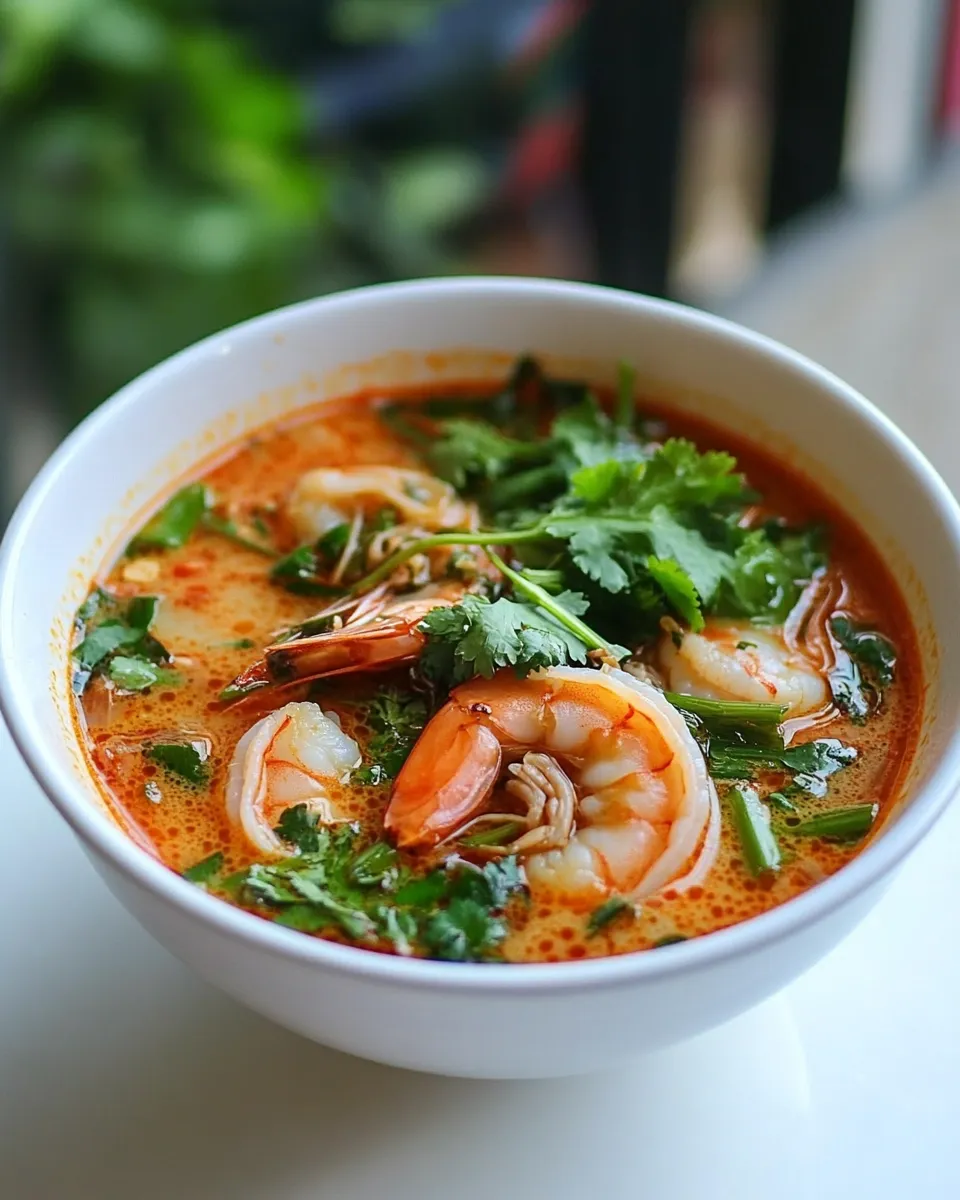
Thai Spicy Shrimp Soup: Tom Yum Goong
I fell in love with Tom Yum the first time I tasted it in a tiny Bangkok stall where the broth hit my nose before the bowl hit the table. Sharp lime, fragrant lemongrass, and that immediate savory-spicy balance — it demanded attention. This version is uncomplicated, home-kitchen friendly, and keeps the bright, tangy soul of Tom Yum while leaning on readily available ingredients.
This recipe is written to be practical. No obscure measurements, no long marinating. You’ll get clear steps, exact ingredient notes, and sensible options for when you can’t find something. Make the creamy version if you want a softer mouthfeel; otherwise keep it clear and crisp.
Follow the directions in order, taste as you go, and don’t be afraid to adjust the chilies or lime at the end. Tom Yum is forgiving and responsive: one little squeeze of lime or a dash of fish sauce can shift the whole bowl toward perfect.
Ingredient Breakdown

- 5 prawns (ideally fresh) — the star protein; cook briefly so they stay tender and juicy.
- 2 stalks lemongrass — fragrant backbone of the broth; bruise to release the oils.
- 6 Kaffir lime leaves, torn — adds citrusy aroma; tearing releases more oil than whole leaves.
- ½ inch knob of galangal, thinly sliced — peppery, slightly piney root; slice thin so it infuses fast.
- 100 g straw mushrooms, halved — mild texture; use halved so they cook quickly and hold shape.
- ½ box evaporated milk (or fresh milk, optional for creamy version) — optional for a richer, mellow soup; add at the end and lower heat.
- 2–3 tbsp Thai chili paste (Nam Prik Pao) — gives depth, color, and a smoky-sweet heat; dissolve fully in the broth.
- 1 handful bird’s eye chilies, lightly crushed — pure heat; crush for a sharper chili hit.
- 6 pieces red Thai chilies, sliced or left whole (for extra heat) — visual pop and extra spice; slice if you want more surface area to release heat.
- 2 limes — fresh juice brightens and balances the soup; add after heat is off for best flavor.
- salt (to taste, optional) — fine-tune seasoning; use sparingly if you’re also adding fish sauce.
- fish sauce (to taste) — key savory element; adds umami and the salty backbone for Tom Yum.
- sugar (or to taste) — a pinch cuts the edge of sour and spicy; balance, don’t sweeten.
- fresh sawtooth coriander or cilantro (to garnish) — finish for herbaceous brightness and color.
Tom Yum Goong: How It’s Done
- Prepare the aromatics: thinly slice the ½-inch knob of galangal, tear the 6 kaffir lime leaves, and bruise the 2 stalks of lemongrass (smash them once with the flat side of a knife or pestle).
- Bring a pot of water to a boil over medium-high heat. Add the bruised lemongrass, sliced galangal, and torn kaffir lime leaves. Simmer for a few minutes until the broth is aromatic.
- Add the 100 g halved straw mushrooms and cook until they are almost tender (about 1–2 minutes).
- Add the 5 prawns and cook just until they turn pink and opaque (do not overcook).
- Stir in 2–3 tablespoons Thai chili paste (Nam Prik Pao) until it is fully dissolved in the broth.
- If making the creamy version, pour in ½ box evaporated milk (or fresh milk) and stir gently. Lower the heat to prevent the soup from boiling vigorously.
- Turn off the heat. Squeeze the juice from the 2 limes into the soup and season with fish sauce, salt, and sugar to taste. Taste and adjust until the soup is balanced spicy, sour, and slightly salty.
- Lightly crush the handful of bird’s eye chilies and add them along with the 6 red Thai chilies (slice them or leave them whole according to your heat preference). Stir briefly to distribute.
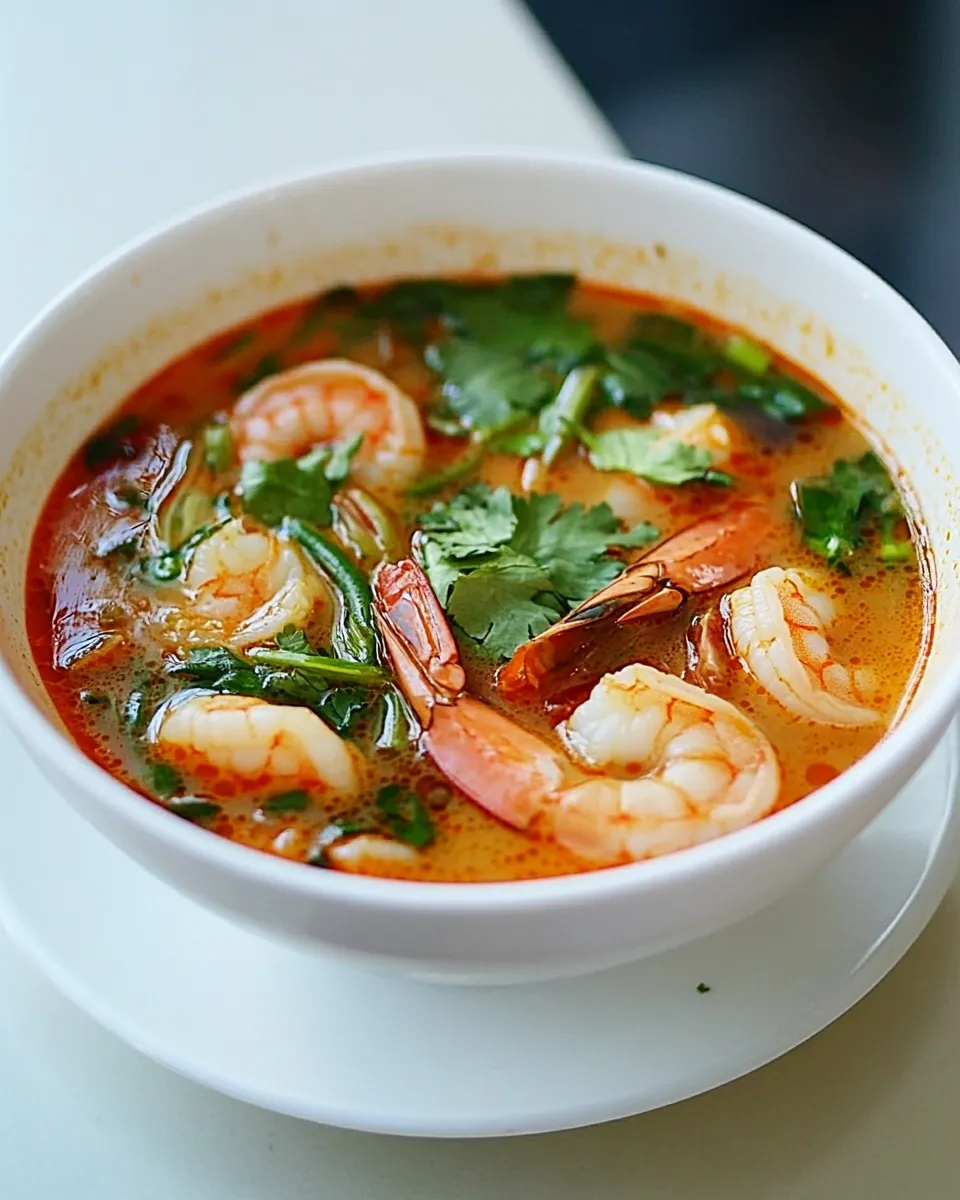
- Ladle the soup into bowls and garnish with chopped sawtooth coriander (cilantro) and extra torn kaffir lime leaves, if desired.
The Upside of Tom Yum Goong
Tom Yum Goong is one of those soups that feels both light and satisfying. It wakes up your taste buds with citrus and chile while the prawns keep it substantial without heaviness. If you’re watching calories, skip the evaporated milk and the soup stays low-calorie while remaining intensely flavored.
It’s versatile. Serve it as a starter or as the centerpiece of a casual meal with steamed rice. Because it cooks fast, it’s a great last-minute dinner when you want something impressive but quick. The aromatics—lemongrass, galangal, kaffir lime—make the kitchen smell phenomenal and genuine, even if you’re cooking this outside Thailand.
Quick Replacement Ideas

- Prawns — if you can’t get prawns, substitute with shrimp of similar size or peeled shrimp; cook the same way.
- Straw mushrooms — use button or cremini mushrooms sliced thinly; they won’t be identical but add pleasant texture.
- Galangal — if unavailable, a small piece of fresh ginger will work in a pinch, though the flavor shifts slightly.
- Kaffir lime leaves — a strip of lime zest can substitute for aroma, but add it sparingly to avoid bitterness.
- Thai chili paste (Nam Prik Pao) — sambal oelek mixed with a touch of sugar and roasted shallot or a store-bought chili-garlic sauce can stand in if you don’t have Nam Prik Pao.
- Evaporated milk — use light coconut milk for a different but traditional creamy Tom Yum; it will be richer and coconut-forward.
Hardware & Gadgets
- Sharp chef’s knife — for slicing galangal and chopping herbs cleanly.
- Cutting board — separate boards for seafood and aromatics if you can, to keep prep tidy.
- Heavy-bottomed pot or saucepan — retains even heat for simmering the broth.
- Small pestle or the flat side of a knife — to bruise lemongrass and release essential oils.
- Ladle and bowls — for serving while the soup is hot and aromatic.
Frequent Missteps to Avoid
- Overcooking the prawns — they go from perfect to rubbery in moments. Add them late and remove as soon as they turn pink and opaque.
- Boiling vigorously after adding milk — milk can separate or curdle. Lower the heat and keep it gentle.
- Under-flavoring — Tom Yum lives on balance. Add fish sauce and lime incrementally and taste; it’s easy to add but hard to undo.
- Skipping the tear/bruise step — whole kaffir leaves and unbruised lemongrass release less aroma. Tear and bruise for fuller flavor.
- Adding all chilies at once — if you’re unsure about heat, add half, taste, then finish with the rest.
Make It Your Way
Tom Yum is built around a three-way flavor conversation: spicy, sour, and salty (with a hint of sweet). Tweak any one to suit your palate, but keep tasting as you go. Here are a few intentional variants:
Creamy vs Clear
For a classic silky finish, add the evaporated milk (or coconut milk) near the end and keep the heat low. If you prefer a bright, clear broth, skip the milk and emphasize lime and fish sauce.
Heat Calibration
Bird’s eye chilies bring intense punch. Use fewer or keep them whole so they infuse less. Slice them for more immediate heat. The Nam Prik Pao also carries heat plus depth; reduce to 1–2 tablespoons if you prefer milder spice.
Protein and Add-Ins
Keep the prawns, or switch to a mix of seafood like small scallops if you want variety. Add cherry tomatoes or a handful of baby spinach for color and extra veg — add them just before serving so they don’t overcook.
Cook’s Notes
- Taste at three points: after the aromatics simmer, after you add the chili paste, and after you finish with lime and fish sauce. Each stage will evolve.
- Use fresh limes: bottled lime won’t give the same brightness or the subtle floral notes.
- Prep ahead: slice galangal, tear lime leaves, and bruise lemongrass in advance and keep them wrapped in the fridge for up to a day.
- Adjust oiliness: if your Nam Prik Pao is oily, skim a bit of oil from the top if you prefer a leaner broth.
Freezer-Friendly Notes
Tom Yum is best fresh, but you can freeze the broth without prawns. Freeze cooled, strained broth in airtight containers for up to 2 months. Thaw overnight in the fridge, reheat gently, then add fresh prawns and mushrooms to finish cooking before serving. Avoid freezing the creamy version with milk, as texture can change on thawing.
Handy Q&A
- Q: Can I use dried lime leaves?
A: Dried kaffir leaves can work when fresh aren’t available, but their aroma is less vibrant. Rehydrate them briefly in warm water before adding. - Q: How do I make it less spicy for kids?
A: Reduce bird’s eye chilies and Nam Prik Pao. Keep a small bowl of the crushed chilies on the side for adults to add to their bowls. - Q: Is Nam Prik Pao essential?
A: It’s highly recommended for depth and color. If you don’t have it, blend a small amount of sautéed shallot with chili paste and a pinch of sugar as a stopgap. - Q: Can I substitute lime with lemon?
A: Yes, in a pinch. Lime has a different floral note, but lemon will still give the sour brightness needed.
Bring It to the Table
Serve Tom Yum hot, right after you finish it. Garnish bowls with chopped sawtooth coriander and a few torn kaffir leaves for aroma and color. Place extra lime wedges, sliced chilies, and fish sauce at the table so everyone can balance their bowl to taste.
Pair it with steamed jasmine rice and a light, cool salad to contrast the heat. If you want a truly Thai spread, add sticky rice and a simple stir-fried vegetable on the side. Most importantly: lean in, taste, and adjust. The best bowls are the ones tuned to the people at the table.
Thai Spicy Shrimp Soup: Tom Yum Goong
Ingredients
Ingredients
- 5 prawns ideally fresh
- 2 stalkslemongrass
- 6 Kaffir lime leavestorn
- 1/2 inchknob of galangalthinly sliced
- 100 gstraw mushroomshalved
- 1/2 boxevaporated milk or fresh milk, optional for creamy version
- 2-3 tbspThai chili paste Nam Prik Pao
- 1 handful bird’s eye chilieslightly crushed
- 6 piecesred Thai chiliessliced or left whole for extra heat
- 2 limes
- salt to taste, optional
- fish sauce to taste
- sugar or to taste
- fresh sawtooth coriander or cilantro to garnish
Instructions
Instructions
- Prepare the aromatics: thinly slice the ½-inch knob of galangal, tear the 6 kaffir lime leaves, and bruise the 2 stalks of lemongrass (smash them once with the flat side of a knife or pestle).
- Bring a pot of water to a boil over medium-high heat. Add the bruised lemongrass, sliced galangal, and torn kaffir lime leaves. Simmer for a few minutes until the broth is aromatic.
- Add the 100 g halved straw mushrooms and cook until they are almost tender (about 1–2 minutes).
- Add the 5 prawns and cook just until they turn pink and opaque (do not overcook).
- Stir in 2–3 tablespoons Thai chili paste (Nam Prik Pao) until it is fully dissolved in the broth.
- If making the creamy version, pour in ½ box evaporated milk (or fresh milk) and stir gently. Lower the heat to prevent the soup from boiling vigorously.
- Turn off the heat. Squeeze the juice from the 2 limes into the soup and season with fish sauce, salt, and sugar to taste. Taste and adjust until the soup is balanced spicy, sour, and slightly salty.
- Lightly crush the handful of bird’s eye chilies and add them along with the 6 red Thai chilies (slice them or leave them whole according to your heat preference). Stir briefly to distribute.
- Ladle the soup into bowls and garnish with chopped sawtooth coriander (cilantro) and extra torn kaffir lime leaves, if desired.
Equipment
- Pot
- Knife
- Ladle
Notes
Optional: For a clear version (Tom Yum Nam Sai), omit the milk.