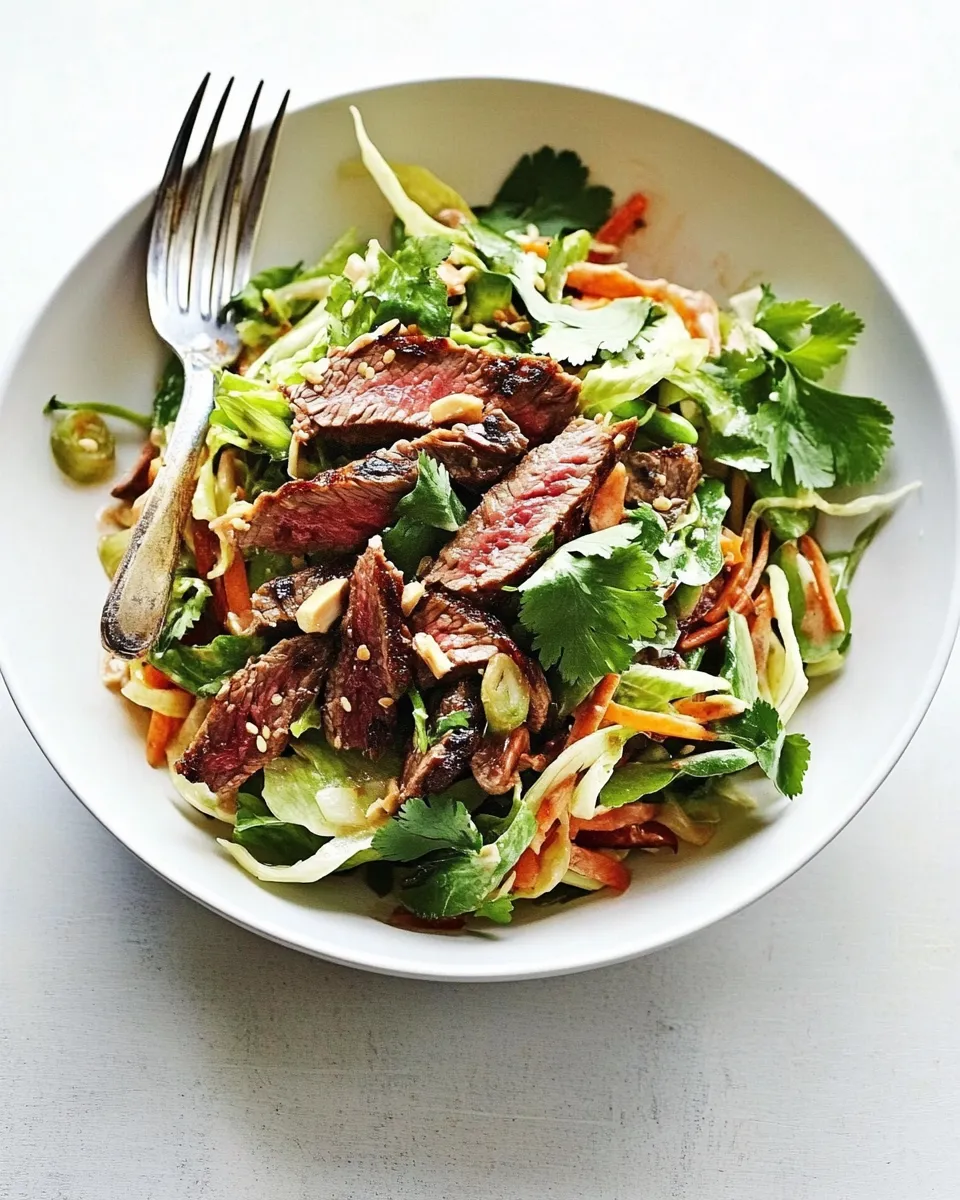
Thai Steak Salad Recipe
Bright, fresh, and just the right amount of spicy — this Thai Steak Salad Recipe is the kind of weeknight meal that feels special without fuss. A juicy, quick-seared flank steak pairs with a punchy lime-and-fish-sauce dressing, crisp vegetables, and a scatter of aromatic herbs for a lively plate that’s both satisfying and refreshing. The flavor profile is layered: tang from lime, umami from soy and fish sauce, gentle sweetness from brown sugar, and a little heat from Sriracha. It’s one of those meals that comes together fast but tastes like you spent hours coaxing every note into place.
This version is adapted to make the most of 1 pound of flank steak roughly 3/4″ thick, which cooks quickly and slices beautifully against the grain. The salad components are flexible — thinly sliced cabbage, bean sprouts, carrot ribbons, and three herbs add crunch and fragrance. The dressing is simple, made from lime juice, brown sugar, low-sodium soy sauce, fish sauce, garlic, and Sriracha. Follow the step-by-step directions below to build a restaurant-worthy Thai Steak Salad Recipe at home.
Why this Thai Steak Salad Recipe works

- Flank steak cooks fast and slices thin for tender bites that absorb dressing.
- The dressing balances acid, sweet, umami, and heat without overpowering the greens.
- Fresh herbs — mint, cilantro, and basil — make every forkful sing.
- Prep is mostly chopping and whisking, so the whole recipe comes together in under 45 minutes.
Ingredients
- 1 pound flank steak about 3/4″ in thickness
- salt and pepper to taste
- 1/4 cup fresh lime juice
- 2 teaspoons brown sugar
- 1 1/4 tablespoons low sodium soy sauce
- 2 teaspoons fish sauce
- 2 teaspoons minced fresh garlic
- 1 teaspoon Sriracha or other hot chile sauce
- 1 1/2 cups very thinly sliced cabbage or any salad greens
- 1 cup fresh bean sprouts
- 1/2 cup julienne-cut carrots
- 1/4 cup fresh mint leaves
- 1/4 cup fresh cilantro leaves
- 1/4 cup fresh basil leaves
Equipment
- Sharp chef’s knife
- Cutting board
- Large mixing bowl
- Small bowl or jar for dressing
- Whisk or fork
- Large skillet or grill pan
- Tongs
- Meat thermometer (optional)
Prep overview
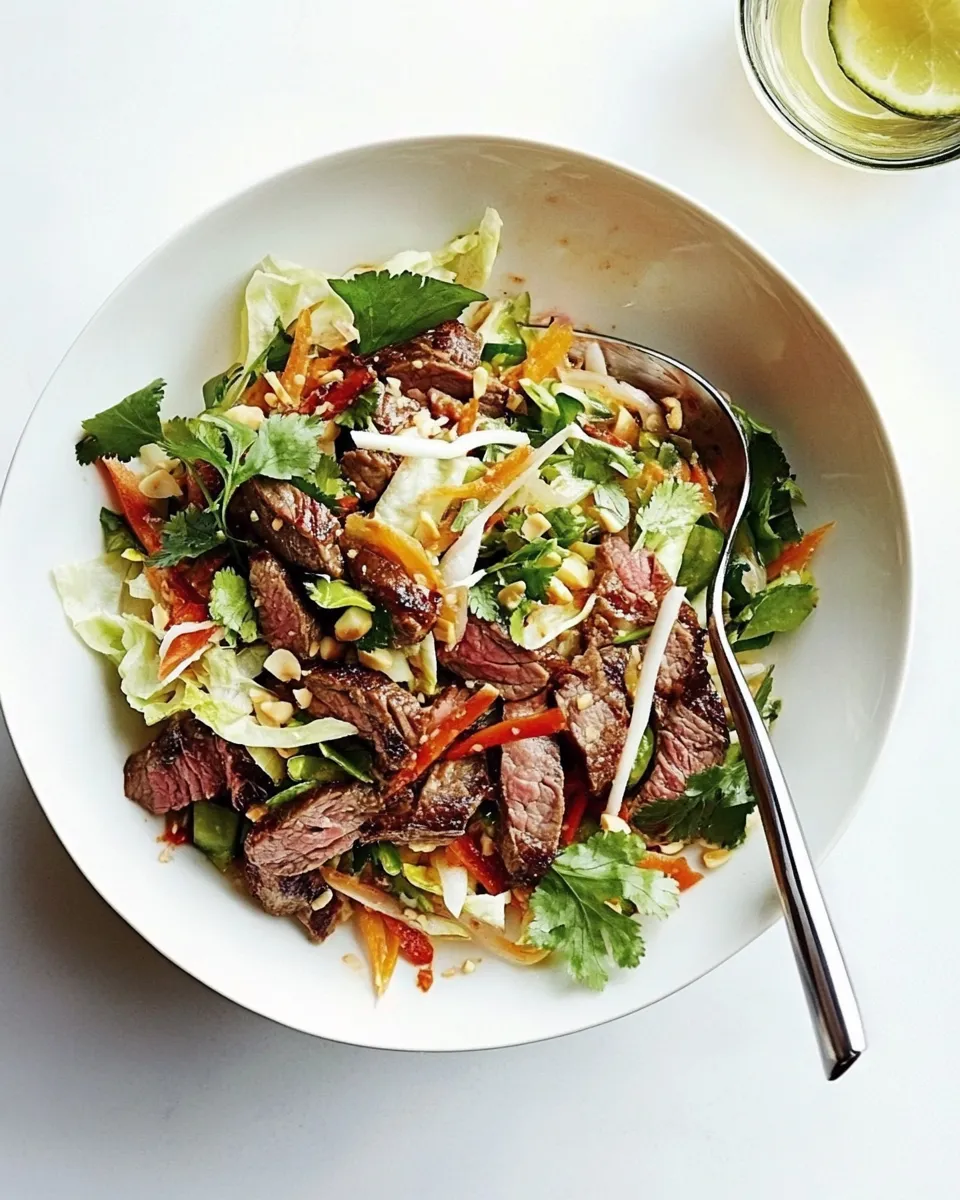
Organize your mise en place before you cook: zest and juice the lime (if you like a touch of zest), mince the garlic, thinly slice the cabbage or greens, julienne the carrots, and pick through the herbs to remove any tough stems. Pull the flank steak from the refrigerator about 15 minutes before cooking so it comes closer to room temperature — that ensures more even cooking.
Step-by-step directions
- Season the steak: Pat the 1 pound flank steak dry with paper towels. Lightly coat both sides with salt and pepper to taste. Set the steak aside while you prepare the dressing and salad components.
- Make the dressing: In a small bowl or jar, combine 1/4 cup fresh lime juice, 2 teaspoons brown sugar, 1 1/4 tablespoons low sodium soy sauce, 2 teaspoons fish sauce, 2 teaspoons minced fresh garlic, and 1 teaspoon Sriracha or other hot chile sauce. Whisk or shake vigorously until the brown sugar dissolves and the dressing is well blended. Taste and adjust — add a touch more lime for brightness, a pinch more sugar if you prefer sweeter, or extra Sriracha for heat. Leave the dressing at room temperature while you cook the steak so the flavors meld.
- Preheat your cooking surface: Heat a large skillet or grill pan over medium-high heat until very hot. If using a skillet, add a light brush of neutral oil with a high smoke point (such as avocado or canola) to the pan and allow it to shimmer.
- Sear the flank steak: Place the seasoned flank steak in the hot skillet. Let it sear without moving for 3 to 4 minutes to develop a deep brown crust. Flip the steak using tongs and cook for an additional 3 to 4 minutes on the other side for medium-rare. Because flank steak is about 3/4″ thick, these times should yield medium-rare; adjust by 1–2 minutes per side if you prefer your steak more done. If using a meat thermometer, aim for about 130–135°F for medium-rare, 140–145°F for medium.
- Rest the steak: Transfer the cooked flank steak to a cutting board and let it rest for 8 to 10 minutes. Resting allows the juices to redistribute and makes the steak easier to slice thinly. While it rests, loosely tent it with foil to keep it warm.
- Prepare the salad base: In a large mixing bowl, combine 1 1/2 cups very thinly sliced cabbage or any salad greens, 1 cup fresh bean sprouts, and 1/2 cup julienne-cut carrots. Gently toss to mix the vegetables so every bite will have a balance of textures.
- Toss with dressing: Pour roughly half of the prepared dressing over the mixed vegetables and toss until evenly coated. Reserve the remaining dressing to drizzle over the plated salad and steak, or serve it on the side for guests who want extra flavor.
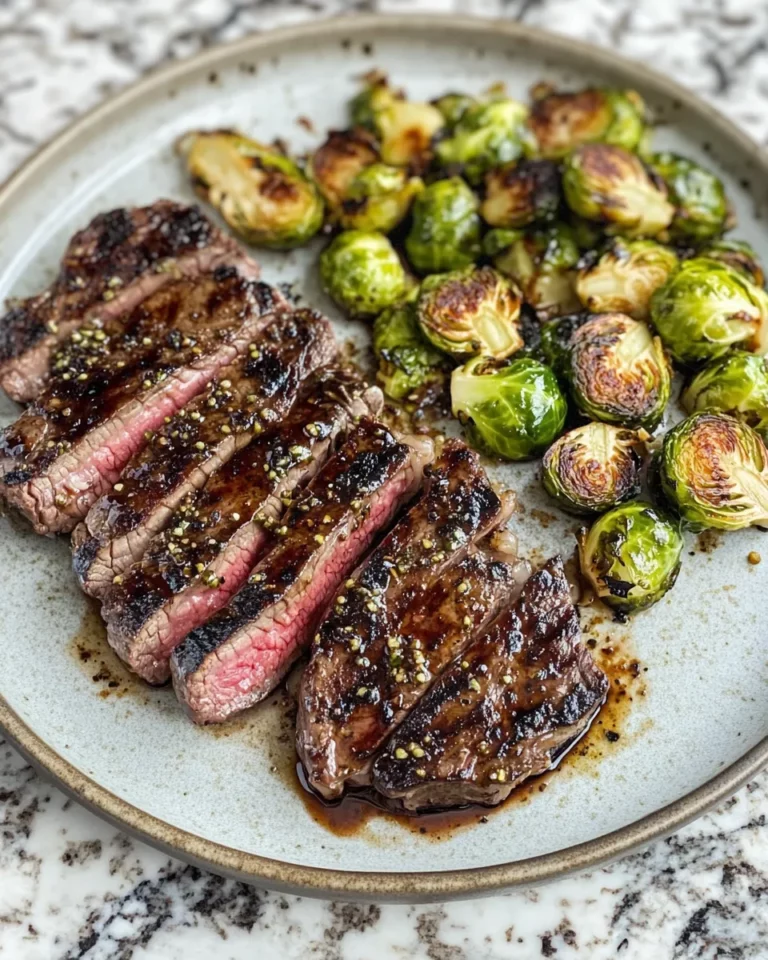
- Slice the steak: Using a sharp knife, slice the rested flank steak thinly against the grain. Cutting against the grain shortens the muscle fibers and yields more tender pieces. Aim for thin, even slices so each forkful has a bit of steak.
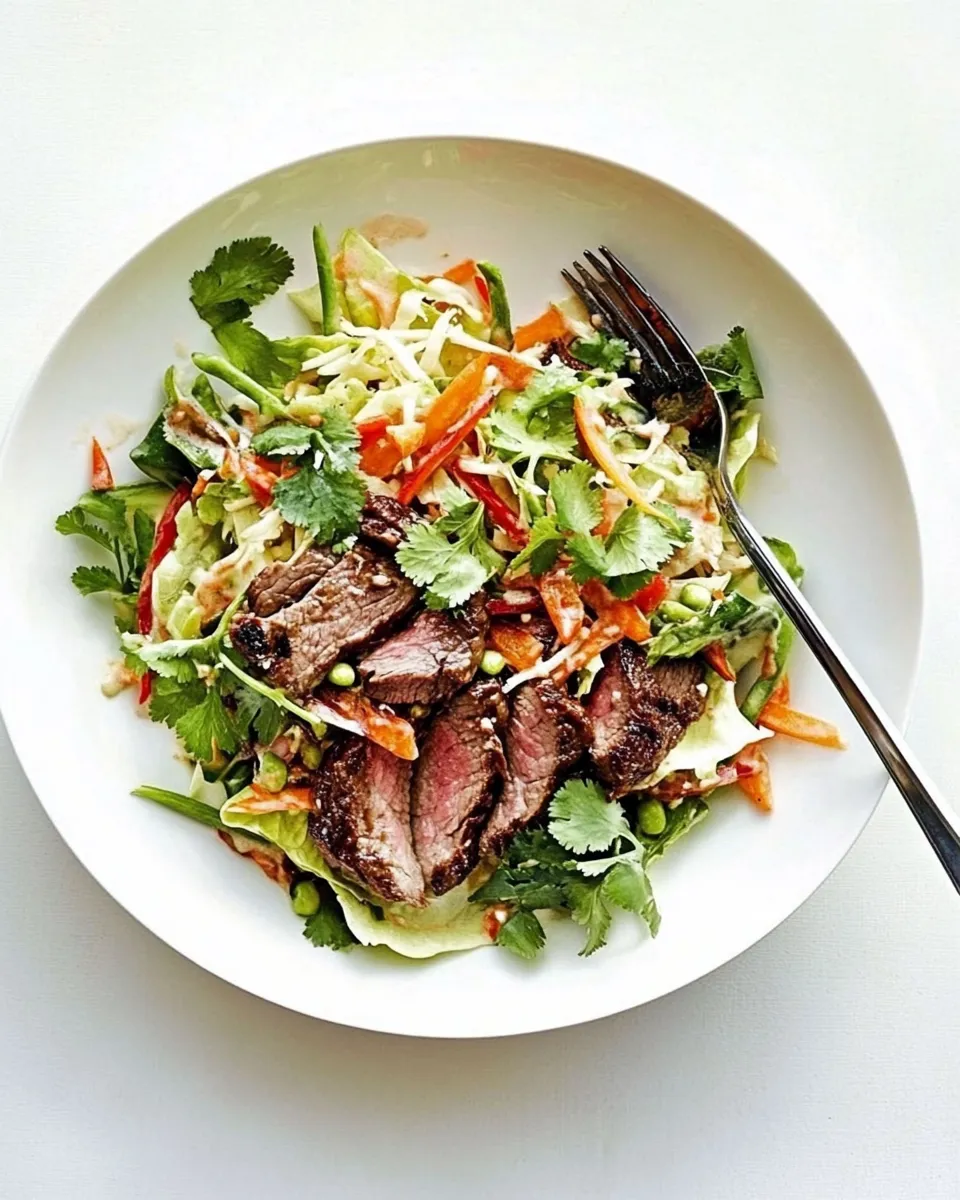
- Dress the salad platter: Arrange the dressed cabbage, bean sprouts, and carrots on a large platter or divide among individual plates. Fan the thinly sliced steak over the top of the salad.
- Add the fresh herbs: Scatter 1/4 cup fresh mint leaves, 1/4 cup fresh cilantro leaves, and 1/4 cup fresh basil leaves over the steak and salad. Lightly toss if you prefer the herbs mixed in, or leave them layered on top for visual contrast and aroma.
- Finish and serve: Drizzle any reserved dressing over the plated salad and steak. Give a final sprinkle of salt and pepper if needed and a tiny dash more Sriracha for anyone who likes extra heat. Serve immediately so the steak remains warm and the vegetables stay crisp.
Serving suggestions
This Thai Steak Salad Recipe is perfect on its own as a satisfying main, but it also pairs beautifully with a few simple sides:
- Warm jasmine rice or coconut rice for a heartier meal.
- Lightly toasted peanuts or cashews sprinkled on top for crunch.
- Thinly sliced cucumber or radishes for extra brightness and texture.
- A wedge of lime on the side for fresh squeezing at the table.
Make-ahead tips and storage
If you want to prep components in advance, make the dressing up to two days ahead and store it in an airtight container in the refrigerator. Keep the steak and the salad components separate until just before serving to prevent the greens from becoming soggy. Cooked steak will keep in the refrigerator for 2–3 days; reheat gently or serve chilled over the salad if you prefer.
Notes and variations
- Greens swap: The recipe lists 1 1/2 cups very thinly sliced cabbage or any salad greens — try napa cabbage, romaine, or a mix of baby lettuces for different textures.
- Protein variations: If you prefer a different cut or plant-based option, use the same seasoning logic and adjust cooking times: thin-sliced skirt steak, sirloin, or a hearty grilled tofu slab (pan-seared and brushed with the dressing) can all work.
- Heat level: 1 teaspoon Sriracha gives a gentle bite. Increase it to suit your taste or substitute with sliced fresh chiles for sharper heat.
- Nuts and seeds: Add toasted peanuts or sesame seeds for nuttiness and crunch. Sprinkle them on just before serving so they remain crisp.
Flavor tips
Small details make a big difference. Mince the garlic finely so it disperses through the dressing without creating harsh bites. Always slice flank steak across the grain to improve tenderness. Letting the dressing rest briefly after whisking allows the flavors to meld, which brightens the overall dish.
Why the herbs matter
Mint, cilantro, and basil are listed in equal, modest amounts for a reason: each herb brings a distinct note that, together, creates an aromatic chorus. Mint adds cooling freshness, cilantro gives citrusy, slightly peppery notes, and basil contributes a sweet, perfumed lift. Toss them in at the end to preserve their fragrance and color.
Final thoughts
This Thai Steak Salad Recipe is a reliable weeknight favorite that looks and tastes like a dish worth lingering over. It’s quick to prepare, customizable, and full of textural contrast. The balance of bright lime, savory soy and fish sauce, a whisper of sweetness, and fresh herbs is what gives the salad its signature character. Whether you’re cooking for two or hosting friends, this salad hits all the right notes and is easy to scale up.
If you love crisp vegetables with bold, balanced dressing and tender steak sliced thinly against the grain, this recipe will become one you return to again and again.
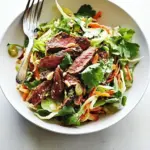
Thai Steak Salad Recipe
Ingredients
- 1 pound flank steak about 3/4" thick
- salt and pepper to taste
- 1/4 cup fresh lime juice
- 2 teaspoons brown sugar
- 1 1/4 tablespoons low sodium soy sauce
- 2 teaspoons fish sauce
- 2 teaspoons minced fresh garlic
- 1 teaspoon Sriracha or other hot chile sauce
- 1 1/2 cups very thinly sliced cabbage or salad greens
- 1 cup fresh bean sprouts
- 1/2 cup julienne-cut carrots
- 1/4 cup fresh mint leaves
- 1/4 cup fresh cilantro leaves
- 1/4 cup fresh basil leaves
Instructions
- Preheat a large grill pan or heavy skillet over medium-high heat and lightly coat with cooking spray.
- Season the flank steak evenly with salt and pepper on both sides.
- Cook the steak in the hot pan 4 minutes per side for medium-rare to medium, or until it reaches your desired doneness.
- Remove the steak from the pan and let it rest for 5 minutes, then slice thinly across the grain.
- In a small bowl, whisk together the lime juice, brown sugar, soy sauce, fish sauce, minced garlic, and Sriracha to make the dressing.
- In a large bowl, combine the sliced cabbage or greens, bean sprouts, julienned carrots, mint, cilantro, and basil.
- Add 6 tablespoons of the dressing to the cabbage mixture and toss to coat evenly.
- Toss the sliced steak with the remaining 2 tablespoons of dressing, then add the steak to the salad and toss gently to combine.
Equipment
- Grill Pan or Skillet
- Measuring Spoons
- Measuring cup
- Small Bowl
- Large Bowl
- Knife
- Cutting Board
- Tongs
Notes
- Recipe adapted from The Great Cook by James Briscione.
- Photo credit: Helene Dujardin.
- Cut the steak across the grain for tender slices.