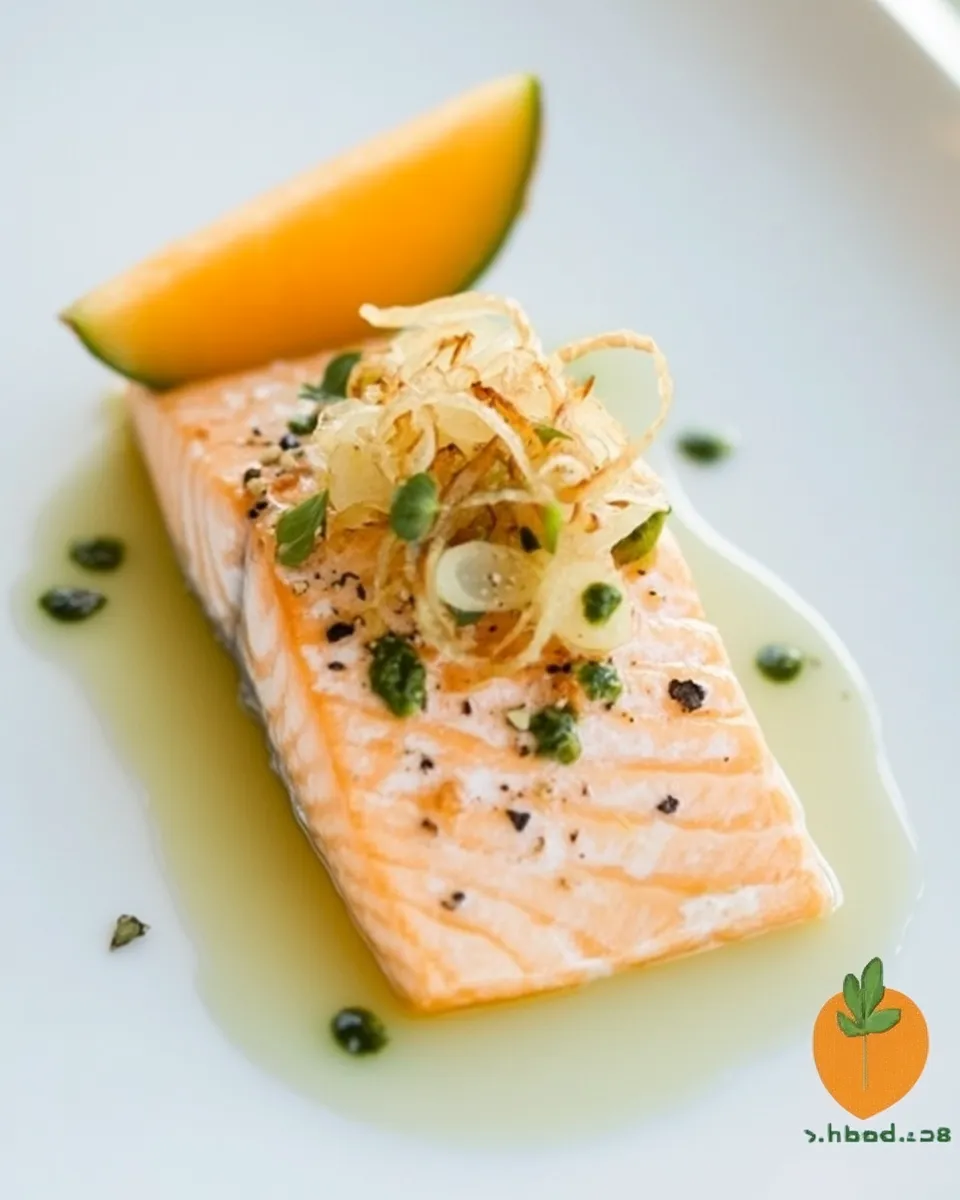
Salmon with Cantaloupe and Fried Shallots
This bright, balanced dish brings together pan-seared salmon, a lively horseradish-lime vinaigrette, juicy cantaloupe, tangy buttermilk, and crisp fried shallots. It’s perfect for a weeknight dinner that feels special or a weekend meal for guests. The flavors sing — the salmon’s richness meets the cantaloupe’s sweetness, while fried shallots add crunch and the vinaigrette ties it all together with a punch of umami and citrus. Below you’ll find a clear ingredients list and step-by-step instructions so you can make this confidently at home.
Why this works

Protein, fruit, and crunch: the combination keeps the plate exciting. The vinaigrette brings acidity and saltiness to cut through the salmon’s fattiness. Buttermilk and lime zest add a cool, tangy counterpoint for the cantaloupe, and the fried shallots offer texture and a toasty onion flavor. Together, these elements create a balanced, layered dish that reads light but satisfying.
Ingredients
Vinaigrette
- 2 tablespoons freshly grated horseradish
- 1 1/2 tablespoons fresh lime juice
- 1 tablespoon Asian fish sauce
- 1/2 tablespoon light brown sugar
- 1 tablespoon extra-virgin olive oil
- Salt and freshly ground pepper, to taste
Fried Shallots
- Vegetable oil, for frying
- 2 large shallots, thinly sliced crosswise and separated into rings
- Cornstarch, for dusting
- Salt, to finish
Salmon and Garnishes
- Four 6-ounce, skin-on salmon fillets
- Salt and freshly ground pepper
- 1 tablespoon vegetable oil
- 1/3 small cantaloupe, scooped into small balls or cut into 1/4-inch dice (about 1 cup)
- 1/2 cup buttermilk
- 1 teaspoon finely grated lime zest
- Freshly grated horseradish, for finishing (quantity to taste)
- 1/4 cup celery leaves
Notes on ingredients and swaps
Everything listed is ready to use as written. If you prefer a vegetarian umami boost instead of the Asian fish sauce, use a teaspoon of soy sauce or tamari diluted with a splash of water to keep the balance of salt and savory flavors — however, the given ingredient list uses Asian fish sauce for its distinct savory depth.
Make-ahead and serving tips
- You can make the vinaigrette and fried shallots up to a day ahead. Store vinaigrette chilled in an airtight container and re-whisk before using. Keep fried shallots at room temperature in a paper-lined container to preserve crispness.
- Salmon is best cooked just before serving. If you must reheat, warm gently in a low oven (250°F / 120°C) wrapped loosely in foil to avoid overcooking.
- Serve this dish plated with the cantaloupe tossed with buttermilk and lime zest on the side, or scatter across the salmon for a more integrated presentation. Finish with extra horseradish and celery leaves for brightness.
Step-by-step instructions
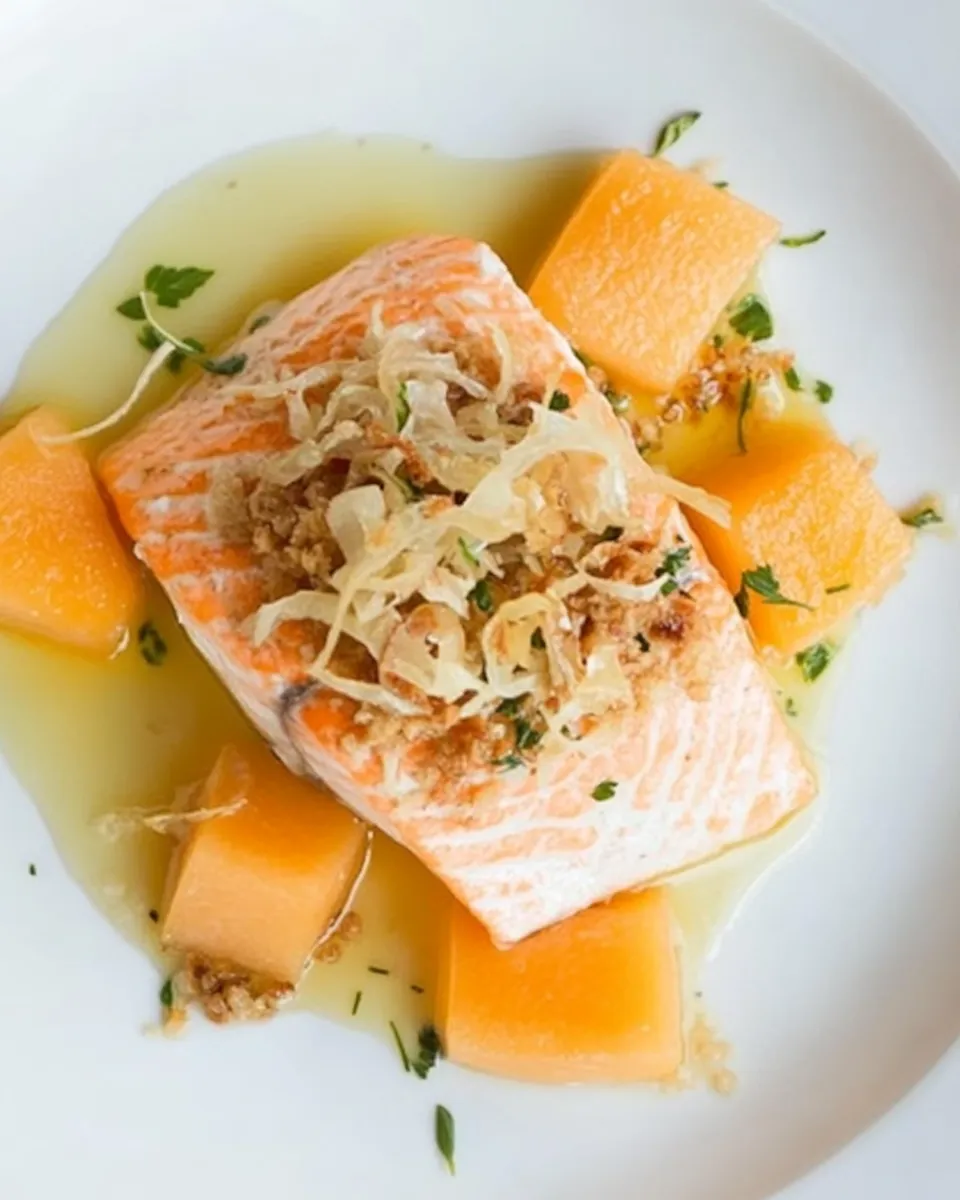
Follow these clear steps in order. The recipe maintains the original ingredient amounts and sequence, but the directions are rewritten for clarity and ease of execution.
1. Prepare the vinaigrette
- Grate 2 tablespoons of fresh horseradish and place it in a small bowl.
- Add 1 1/2 tablespoons of fresh lime juice and 1 tablespoon of Asian fish sauce to the bowl.
- Stir in 1/2 tablespoon light brown sugar until the sugar dissolves.
- Whisk in 1 tablespoon extra-virgin olive oil until the mixture emulsifies and becomes slightly glossy.
- Taste and season with salt and freshly ground pepper as needed. Set the vinaigrette aside at room temperature while you prepare the other components.
2. Make the fried shallots
- Pour enough vegetable oil into a medium saucepan or small deep skillet to reach about 1 to 1 1/2 inches up the sides. Heat the oil over medium heat until a small piece of shallot sizzles when dropped in — you’re aiming for about 325–350°F (160–175°C) if you use a thermometer.
- While the oil heats, separate 2 large shallots into rings and pat them dry. Lightly dust the shallot rings with cornstarch — shake off excess so they’re evenly coated but not clumpy.
- Working in batches so you don’t overcrowd the pan, fry the dusted shallot rings until they are deep golden brown and crisp, about 2–4 minutes per batch depending on thickness and oil temperature. Stir gently with a slotted spoon to ensure even browning.
- Remove the shallots with a slotted spoon and drain on a paper towel-lined plate. Immediately season lightly with salt while they’re hot so the salt sticks. Repeat until all shallots are fried.
- Let the fried shallots cool and crisp fully before using. They can be stored in an airtight container at room temperature for a day or two, but are best on the day they’re made.
3. Prepare the cantaloupe mixture
- Scoop 1/3 small cantaloupe into small balls or cut it into 1/4-inch dice to yield about 1 cup. Place the cantaloupe pieces in a small bowl.
- Add 1/2 cup buttermilk and 1 teaspoon finely grated lime zest to the cantaloupe. Gently toss to combine so the fruit is lightly coated with the buttermilk and zest.
- Taste and adjust: if you want a brighter tang, add a small squeeze of lime juice; if the cantaloupe is exceptionally sweet, keep the buttermilk amount as written to balance flavors.
- Cover and refrigerate if making ahead. Bring to cool room temperature before serving if you prefer it not ice-cold.
4. Cook the salmon
- Pat four 6-ounce, skin-on salmon fillets dry with paper towels. Season both sides with salt and freshly ground pepper.
- Heat 1 tablespoon vegetable oil in a large nonstick or stainless steel skillet over medium-high heat until it shimmers.
- Place the salmon fillets skin-side down in the skillet. Press each fillet gently with a spatula for the first 20–30 seconds to prevent curling and to ensure full contact between the skin and the pan.
- Cook the salmon on the skin side until the skin is crisp and the fish is cooked about two-thirds of the way through, about 4–6 minutes depending on thickness.
- Flip the fillets and cook the flesh side for an additional 1–2 minutes, or until the salmon reaches your preferred doneness (internal temperature of 125–130°F for medium-rare to medium). Remove from the pan and let rest for a minute or two.
- If you prefer the salmon more well done, cook an extra minute per side, watching carefully to avoid drying out the fish.
5. Finish and assemble the plate
- Arrange the rested salmon fillets on plates, skin-side down or propped slightly so the skin stays crisp.
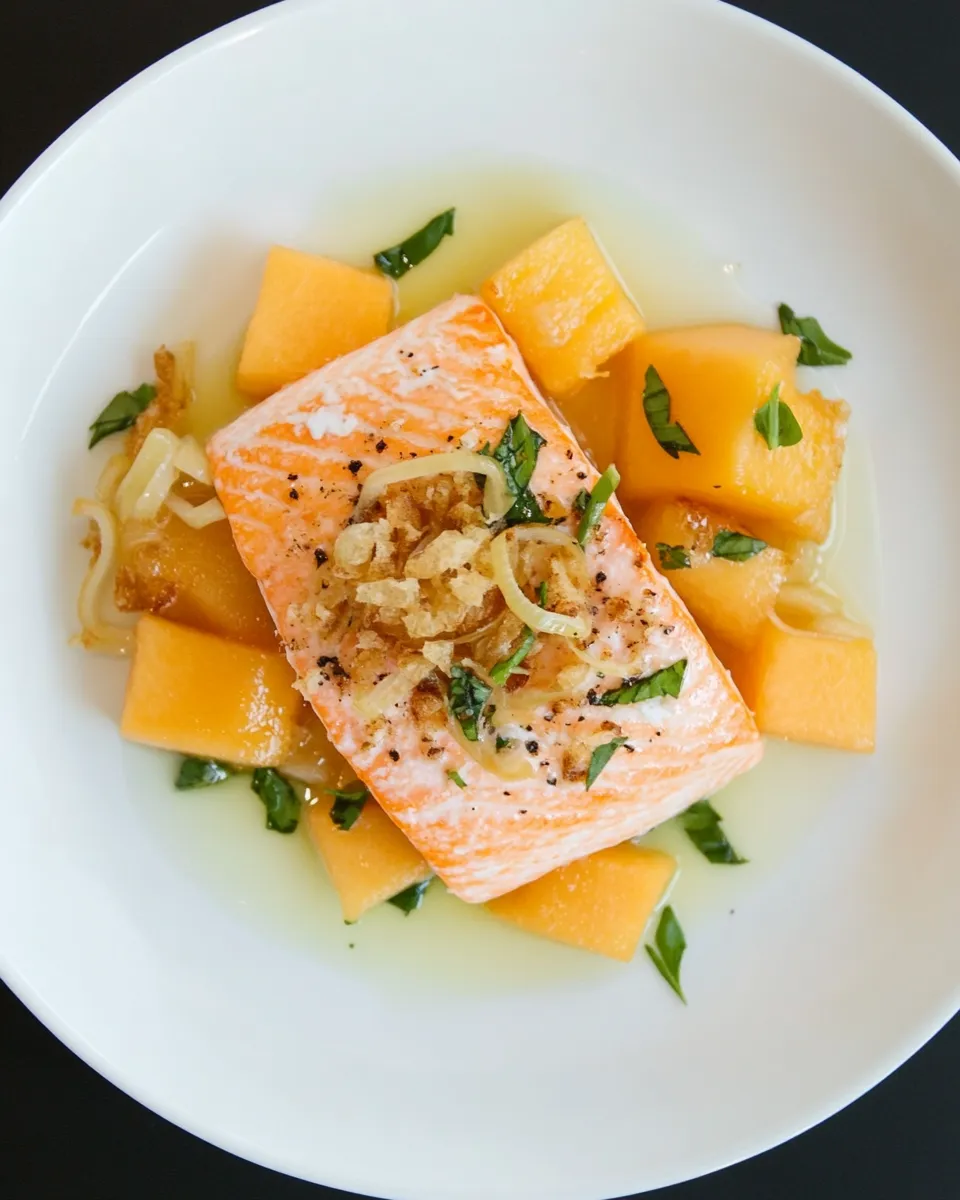
- Spoon the cantaloupe and buttermilk mixture beside or over the salmon as you like. The cool, tangy cantaloupe pairs well when placed right next to the warm fish.
- Drizzle the vinaigrette over the salmon and the cantaloupe, using it sparingly at first and adding more to taste. The vinaigrette brings horseradish heat and lime brightness that lifts every component.
- Scatter a generous pinch of the fried shallots on top of the salmon and across the cantaloupe for crunch and toasty onion flavor.
- Finish with some freshly grated horseradish to taste and tuck 1/4 cup celery leaves around the plate for a fresh, herby note.
- Serve immediately while the salmon skin is still crisp and the shallots are crunchy.
Plating ideas
For a casual presentation, serve the salmon fillet centered on a shallow bowl with cantaloupe on one side, vinaigrette drizzled in a zigzag, and fried shallots sprinkled on top. For a more refined look, use a ring to mound the cantaloupe beside the salmon and place a small heap of fried shallots on the fish, finishing with a delicate scatter of celery leaves.
Leftovers and storage
Store leftover salmon and cantaloupe separately in airtight containers in the refrigerator for up to 2 days. Keep fried shallots at room temperature in a sealed container to maintain crispness. Reheat the salmon gently in a low oven or enjoy it cold flaked over a salad. Do not store the vinaigrette and buttermilk-cantaloupe mixture combined long-term; the fruit will release liquid and change texture.
Flavor variations
- Make it spicier: add a pinch of red pepper flakes to the vinaigrette or a smear of chili oil over the salmon.
- Herb swap: substitute some of the celery leaves with mint or basil for a brighter, herb-forward twist.
- Crunch alternative: if you prefer not to fry, toast sliced almonds or pepitas and sprinkle them on at the end.
Wrapping up
This Salmon with Cantaloupe and Fried Shallots recipe balances sweet, savory, tangy, and crunchy elements to create a dish that tastes thoughtful without being fussy. The clear step-by-step process makes it approachable whether you’re cooking for two or four. Enjoy the interplay between warm, pan-seared salmon and the cool, citrus-laced cantaloupe — a combination that surprises in the best way.
If you make this, serve it with simple sides like steamed greens or a light rice pilaf to let the dish shine. Happy cooking!
Salmon with Cantaloupe and Fried Shallots
Ingredients
- 2 tablespoons freshly grated horseradish
- 1 1/2 tablespoons fresh lime juice
- 1 tablespoon Asian fish sauce
- 1/2 tablespoon light brown sugar
- 1 tablespoon extra-virgin olive oil
- salt and freshly ground pepper to taste
- vegetable oil for frying (about 1/4 inch in skillet)
- 2 large shallots, thinly sliced crosswise and separated into rings
- cornstarch for dusting
- 4 salmon fillets (6-ounce each), skin-on
- 1 tablespoon vegetable oil for searing salmon
- 1/3 small cantaloupe, scooped into small balls or cut into 1/4-inch dice (about 1 cup)
- 1/2 cup buttermilk
- 1 teaspoon finely grated lime zest
- freshly grated horseradish for sprinkling
- 1/4 cup celery leaves
Instructions
- Make the vinaigrette: whisk together 2 tablespoons grated horseradish, 1 1/2 tablespoons lime juice, 1 tablespoon fish sauce, 1/2 tablespoon light brown sugar and 1 tablespoon olive oil; season with salt and pepper to taste.
- Prepare fried shallots: heat about 1/4 inch vegetable oil in a large skillet over medium heat until shimmering. Dust the shallot rings with cornstarch in a colander, shaking off excess.
- Add coated shallots to the hot oil in an even layer and fry, stirring occasionally, until browned and crisp, about 3–4 minutes. Transfer with a slotted spoon to paper towels and season lightly with salt.
- Preheat the oven to 400°F (200°C). Pat the salmon fillets dry and season both sides with salt and pepper.
- Heat 1 tablespoon vegetable oil in a large oven-safe nonstick skillet over high heat until shimmering. Add the salmon, skin side down, and sear until the skin is browned and crisp, about 3 minutes.
- Flip the fillets and transfer the skillet to the preheated oven; cook about 3 minutes more, or until the salmon is just cooked through.
- Assemble: divide the cantaloupe among four shallow bowls and drizzle each with buttermilk; season lightly with salt.
- Place a salmon fillet on each bowl of cantaloupe, spoon the vinaigrette over the fish, then sprinkle with lime zest and additional grated horseradish to taste.
- Garnish each serving with celery leaves and the fried shallots, then serve immediately.
Equipment
- Small Bowl
- Large skillet or frying pan
- Slotted Spoon
- Paper Towels
- Colander or sieve
- nonstick oven-safe skillet
- melon baller or paring knife
Notes
- Dust shallots well with cornstarch for extra crispness.
- Use a melon baller for uniform cantaloupe pieces.
- Pat salmon dry to help the skin crisp.
- Adjust horseradish to taste for more or less heat.