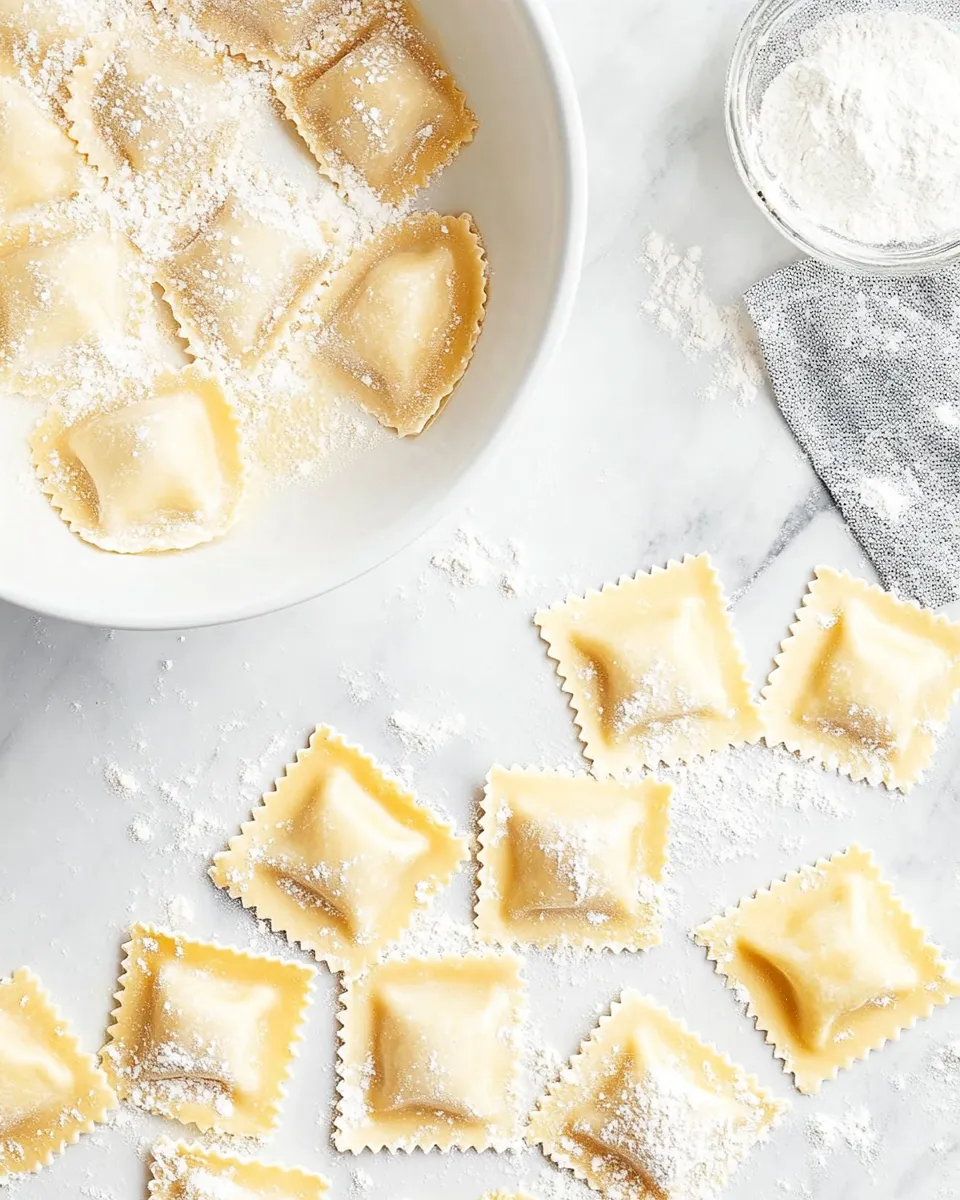
How to Make Homemade Ravioli: Step-by-Step Tutorial
There’s something deeply satisfying about making stuffed pasta from scratch: the quiet rhythm of rolling dough, the bright smell of fresh basil, and the first tender bite that gives way to a creamy, cheesy filling. In this step-by-step tutorial, I’ll walk you through How to Make Homemade Ravioli: Step-by-Step Tutorial using a simple, pantry-friendly ingredient list. This method keeps things approachable for home cooks while delivering restaurant-worthy results. Read through the full guide, gather your ingredients, and let’s get rolling.
Why make homemade ravioli?

Homemade ravioli transforms a few everyday ingredients into a comforting, elegant meal. Compared with store-bought pasta, handmade ravioli has a tender bite and a filling you can tailor to your taste. This recipe uses just a handful of ingredients and focuses on technique so you’ll build confidence and a delicious dinner in one session.
Ingredient list
- 2 cups all purpose flour
- 3 eggs
- 1/2 tsp salt
- 1/2 tsp extra virgin olive oil
- 1 cup ricotta cheese
- 1/8 lb Parmigiano Reggiano cheese, finely grated
- 1 egg
- 2 tbsp fresh basil, chopped
- salt to taste
- black pepper to taste
- 2 tbsp butter
- 1/4 cup heavy cream
- 1/2 clove garlic, finely minced with microplane
- 1/2 cup pasta water, reserved from boiling ravioli (may not use all of it, use your judgement)
- 3/4 cup Parmigiano Reggiano cheese, finely grated
- fresh basil chiffonade, for garnish (optional)
Equipment
- Large work surface or mixing bowl
- Pasta roller or rolling pin
- Sharp knife or ravioli cutter
- Mixing bowls and measuring spoons/cups
- Large pot for boiling
- Slotted spoon or spider
- Skillet for sauce
Prep and workflow overview
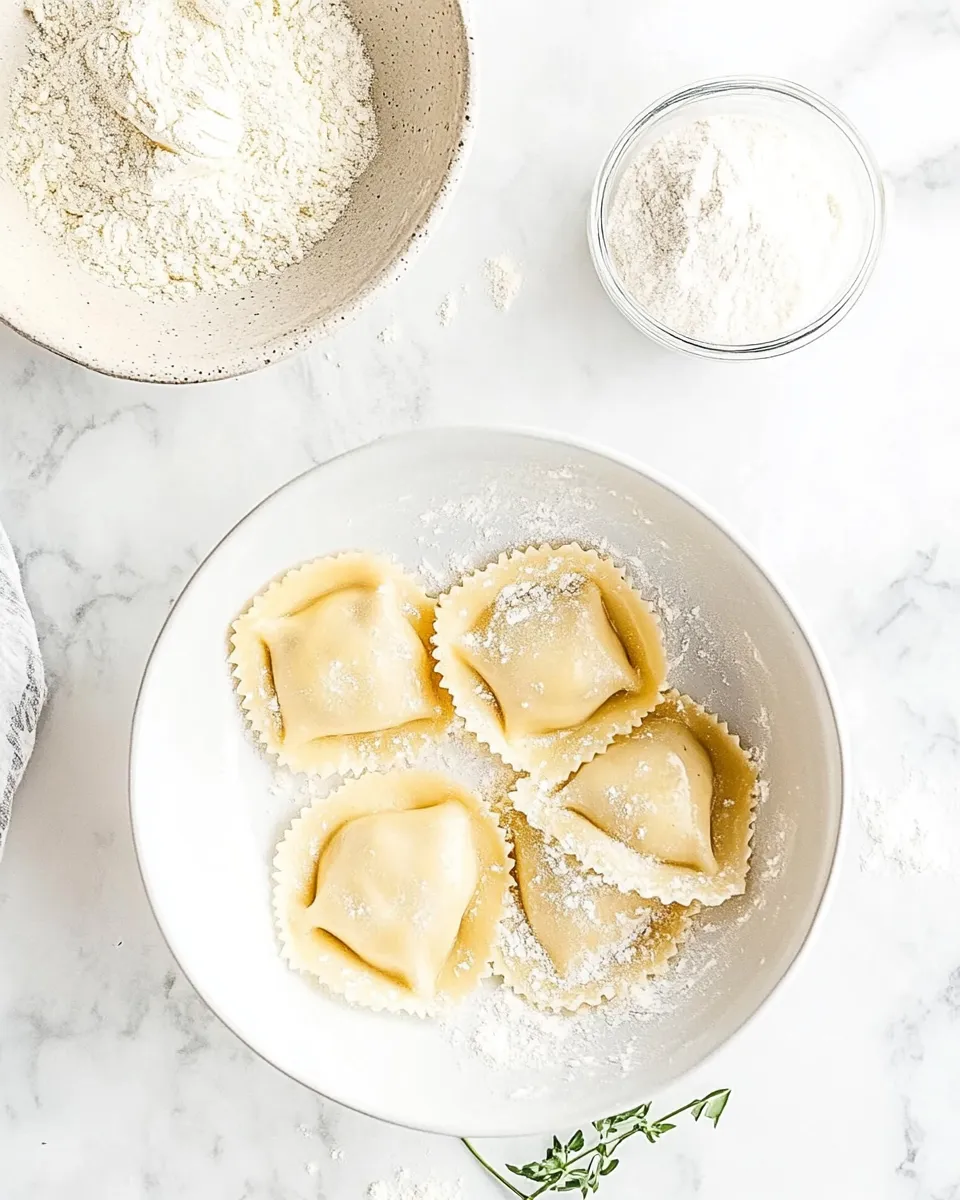
To keep things organized, set up three stations: dough, filling, and assembly. The dough needs some resting time, so start there. While it rests you can mix the filling, then roll and fill the pasta, and finally cook and dress the ravioli with a simple butter-Parmigiano sauce.
Step-by-step directions
Make the pasta dough
- On a clean work surface, mound 2 cups all purpose flour and make a large well in the center. Crack 3 eggs into the well, add 1/2 tsp salt and 1/2 tsp extra virgin olive oil.
- Using a fork, gently whisk the eggs and gradually incorporate the flour from the inner rim of the well. Keep pulling flour in a little at a time so the eggs don’t escape the well.
- When the mixture becomes shaggy and no longer manageable with a fork, begin kneading with your hands. Knead the dough for about 8–10 minutes until it’s smooth, elastic, and slightly tacky. If it feels too dry, wet your hands and continue; if it’s too sticky, dust with a little extra flour—use caution to avoid adding too much.
- Form the dough into a ball, wrap it tightly in plastic wrap, and let it rest at room temperature for at least 30 minutes. This relaxes the gluten and makes rolling much easier.
Prepare the ricotta filling
- In a medium bowl combine 1 cup ricotta cheese and 1/8 lb Parmigiano Reggiano cheese, finely grated. Add 1 egg and 2 tbsp fresh basil, chopped.
- Season the mixture with salt to taste and black pepper to taste. Stir gently until evenly incorporated. The filling should be creamy and hold together; if it seems watery, drain the ricotta on paper towel or a fine sieve briefly before using.
- Cover the bowl and set the filling in the refrigerator while you roll out the pasta sheets.
Roll and shape the pasta sheets
- Unwrap the rested dough and divide it into 4 even pieces. Work with one piece at a time and keep the remaining pieces wrapped so they don’t dry out.
- If you’re using a pasta machine, flatten a piece with your hands into a rough rectangle and pass it through the widest setting once. Fold it in thirds, press lightly, and pass it again. Repeat this folding and passing 2–3 times to create a smooth sheet, then gradually reduce the roller setting, passing the sheet through each thinner setting until you reach a thin but still strong thickness suitable for ravioli (typically 6–8 on many machines). If using a rolling pin, roll thinly and evenly to roughly the same thickness.
- Lay the sheet on a lightly floured surface. Trim the edges so you have a clean rectangle without ragged parts.
Assemble the ravioli
- On one pasta sheet, use a teaspoon or a small cookie scoop to place uniform mounds of filling about 1 to 1.5 inches apart. Keep the filling mounds at least 1/2 inch away from the edges and from each other so you can seal the pasta.
- Brush a little water or a beaten egg along the edges and between the filling mounds to help seal. Carefully lay a second sheet of pasta over the first, pressing gently around each mound to push out air and seal the two sheets together. Work from the center outward to avoid trapping air pockets.
- Press the dough between each mound to fully seal, then cut the ravioli into individual squares with a knife or ravioli cutter. Make sure each raviolo is sealed on all sides; press edges firmly with a fork or your fingers if necessary.
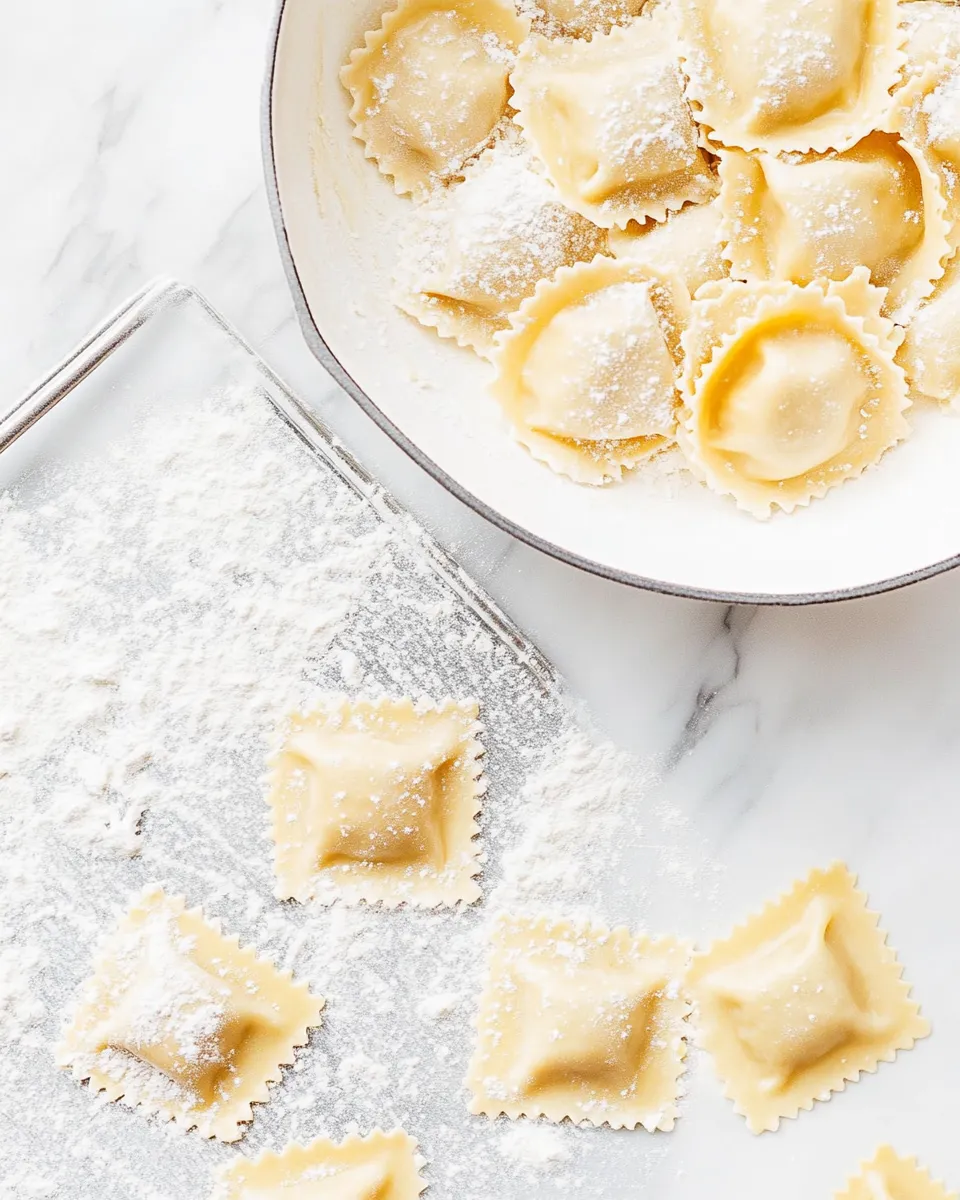
- Place finished ravioli on a lightly floured tray or a sheet of parchment, leaving a little space between them. Repeat the process with the remaining dough and filling. If you have leftover filling, store it refrigerated for another use within a day or two.
Cook the ravioli
- Bring a large pot of salted water to a gentle rolling boil. Salt generously so the pasta is seasoned from the inside out.
- Working in batches if necessary, gently add ravioli to the boiling water. Stir once immediately to prevent sticking. Fresh ravioli cook quickly—typically 2 to 4 minutes—until they float to the surface and the pasta feels tender but not mushy.
- Use a slotted spoon or spider to transfer cooked ravioli directly to the skillet with the sauce, or reserve them briefly on a tray if your sauce isn’t ready yet. Reserve 1/2 cup pasta water as you cook—the recipe lists 1/2 cup pasta water reserved from boiling ravioli (may not use all of it, use your judgement).
Make the butter-Parmigiano sauce
- In a large skillet over low to medium heat, melt 2 tbsp butter gently—do not let it brown.
- Add 1/2 clove garlic, finely minced with a microplane, and cook briefly for about 30 seconds until fragrant. Keep the heat low to avoid burning the garlic.
- Pour in 1/4 cup heavy cream and stir to combine. Allow the cream to warm through and thicken slightly for 1–2 minutes.
- Gradually stir in 3/4 cup Parmigiano Reggiano cheese, finely grated, until the sauce becomes smooth and slightly glossy. If the sauce is too thick, add small splashes of the reserved pasta water (use your judgement; the recipe calls for up to 1/2 cup) to loosen the sauce and achieve a silky consistency that will coat the ravioli.
- Season the sauce with salt to taste and black pepper to taste. Taste and adjust until the balance of cream, butter, and cheese feels right.
Toss and serve
- Add the drained ravioli to the skillet with the sauce and gently toss to coat, being careful not to break the pasta. Warm through for a minute so the ravioli absorb some sauce and the flavors meld.
- If the sauce needs thinning, add a tablespoon or two of the reserved pasta water until you reach a silky coating that clings to the ravioli.
- Remove from heat and finish with a scattering of fresh basil chiffonade on top for brightness and color. Serve immediately, offering extra grated Parmigiano Reggiano at the table.
Troubleshooting and tips
- If the dough is too sticky while kneading, dust your hands and the surface with a little flour, but avoid adding too much because it will dry out the dough.
- Resting the dough is important. If you skip the rest, the pasta will resist rolling and can tear easily.
- When sealing ravioli, remove as much air as possible from around the filling—air pockets expand during cooking and can cause the pasta to burst.
- Cook ravioli in gentle boiling water. A vigorous, rolling boil can toss and tear delicate stuffed pasta.
- Reserve pasta water. Its starch helps the sauce cling to the ravioli and creates a silky finish.
Variations and add-ins
This ricotta-Parmigiano filling is a classic, but you can customize it easily. Mix in sautéed mushrooms, wilted spinach, lemon zest, or finely chopped roasted red pepper to change the flavor profile. For a richer sauce, add a splash more cream or a knob of extra butter. For a bright finish, finish the plated ravioli with a squeeze of lemon and extra basil.
Make ahead and storage
You can prepare ravioli and freeze them before cooking: arrange them on a tray so they don’t touch, freeze until solid, then transfer to an airtight container or bag. Cook frozen ravioli straight from the freezer, adding an extra minute or two to the cooking time. Cooked leftover ravioli will keep in the refrigerator for 2–3 days—reheat gently in a skillet with a splash of cream or broth to revive the sauce.
Final notes
How to Make Homemade Ravioli: Step-by-Step Tutorial is a satisfying project that rewards patience and simple ingredients. With 2 cups all purpose flour and 3 eggs forming the dough, a creamy filling made from 1 cup ricotta cheese, 1/8 lb Parmigiano Reggiano, and 2 tbsp fresh basil, and a finishing sauce of butter, cream, garlic, and more Parmigiano Reggiano, you’ll end up with delicate parcels of comfort. Follow the steps, keep your workspace organized, and taste as you go. Soon you’ll be making ravioli with confidence—and impressing anyone lucky enough to sit down at your table.
Enjoy your homemade ravioli. Buon appetito!

How to Make Homemade Ravioli: Step-by-Step Tutorial
Ingredients
- 2 cups all purpose flour
- 3 eggs
- 1/2 tsp salt
- 1/2 tsp extra virgin olive oil
- 1 cup ricotta cheese
- 1/8 lb Parmigiano-Reggiano cheese, finely grated
- 1 egg (for filling)
- 2 tbsp fresh basil, chopped
- salt to taste (for filling and sauce)
- black pepper to taste
- 2 tbsp butter
- 1/4 cup heavy cream
- 1/2 clove garlic, finely minced (use a microplane)
- 1/2 cup pasta water, reserved from boiling ravioli (may not use all)
- 3/4 cup Parmigiano-Reggiano cheese, finely grated (for sauce and finishing)
- fresh basil chiffonade, for garnish (optional)
Instructions
- Mound the 2 cups of flour on a clean work surface and make a deep well in the center.
- Crack 3 eggs into the well, add 1/2 tsp salt and 1/2 tsp olive oil, then beat the eggs with a fork while gradually pulling flour into the center until a shaggy dough forms.
- Use your hands or a bench scraper to bring the dough together, adding a little more flour if sticky or a splash of water if too dry.
- Knead the dough for 8–10 minutes until smooth and elastic, wrap in plastic wrap, and let rest for about 20 minutes.
- While the dough rests, make the filling: combine 1 cup ricotta, 1/8 lb finely grated Parmigiano-Reggiano, 1 egg, 2 tbsp chopped basil, and salt and pepper to taste in a bowl; stir until smooth and set aside.
- Lightly flour a baking sheet and set aside. Unwrap the dough, cut into four pieces, and keep unused sections wrapped.
- On a well-floured surface, roll one section of dough with a floured rolling pin from the center outward, turning frequently, until very thin and long.
- Spoon teaspoon-sized mounds of filling about 1½–2 inches apart across the sheet of dough, taking care not to overfill.
- Fold the top layer of dough over the filling, press around each mound to remove air, then use a floured ravioli stamp or cutter to seal and cut each ravioli; place on the floured baking sheet.
- Gather leftover dough, form into a ball, wrap and rest while you finish the remaining sections.
- Optional: freeze trays of ravioli in a single layer for 24 hours, then transfer to freezer bags for storage.
- To cook, bring a large pot of salted water to a boil, add ravioli, and stir gently; they are done when they float to the top, then scoop out about 1/2 cup of pasta water and drain the ravioli, returning them to the hot pot (burner off).
- In a small saucepan, melt 2 tbsp butter, grate in 1/2 clove garlic, then add 1/4 cup heavy cream, 3/4 cup grated Parmigiano-Reggiano, and salt and pepper to taste; stir 1–2 minutes until the sauce thickens, adding reserved pasta water as needed to reach desired consistency.
- Toss the cooked ravioli gently with the sauce and serve immediately, garnished with chiffonade basil if desired.
Equipment
- clean work surface or large cutting board
- Fork
- bench scraper (optional)
- Plastic Wrap
- Rolling Pin
- Baking Sheet
- Large Pot
- Small Saucepan
Notes
- Resting the dough makes it easier to roll.
- Don't overfill ravioli to prevent bursting while cooking.
- Use reserved pasta water to thin the sauce as needed.
- Keep unused dough wrapped to prevent drying.