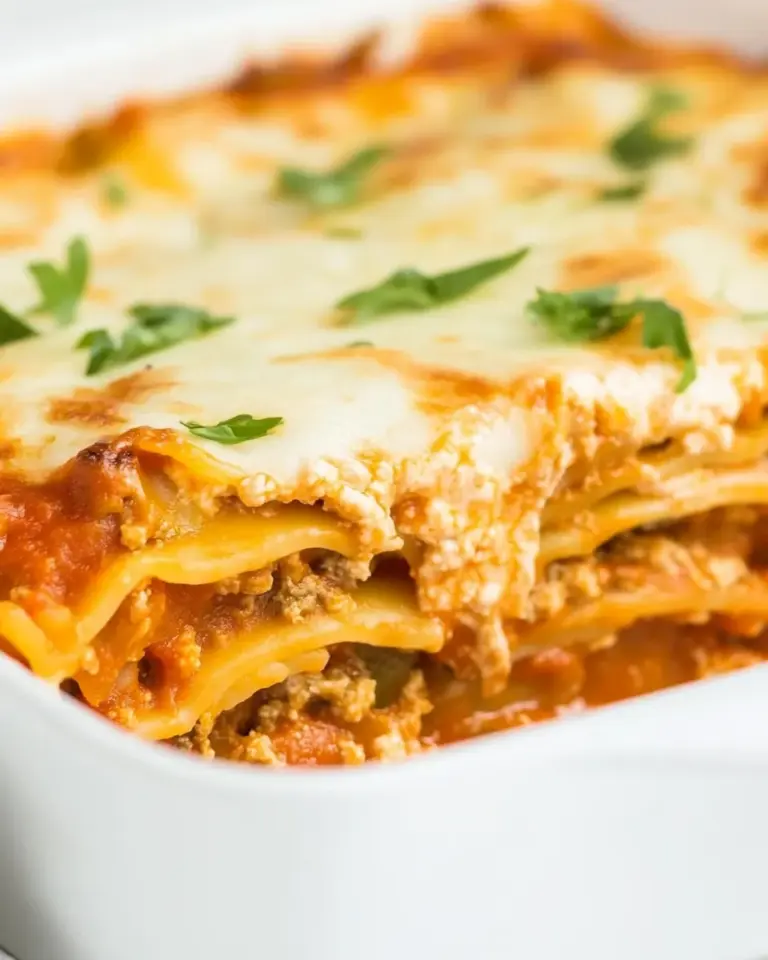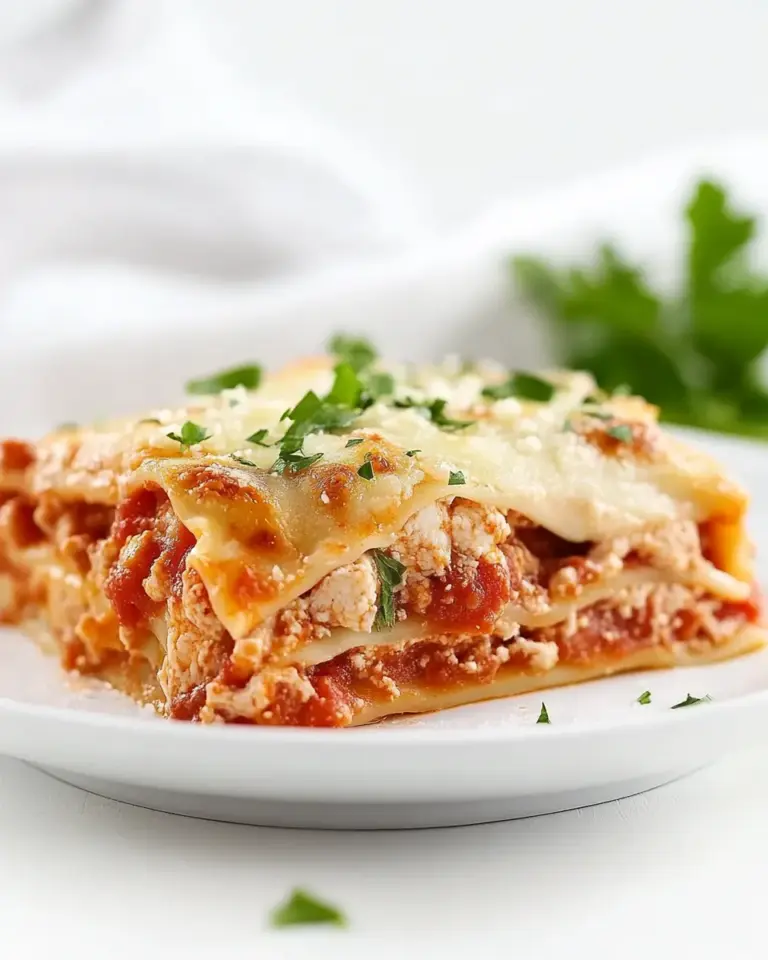
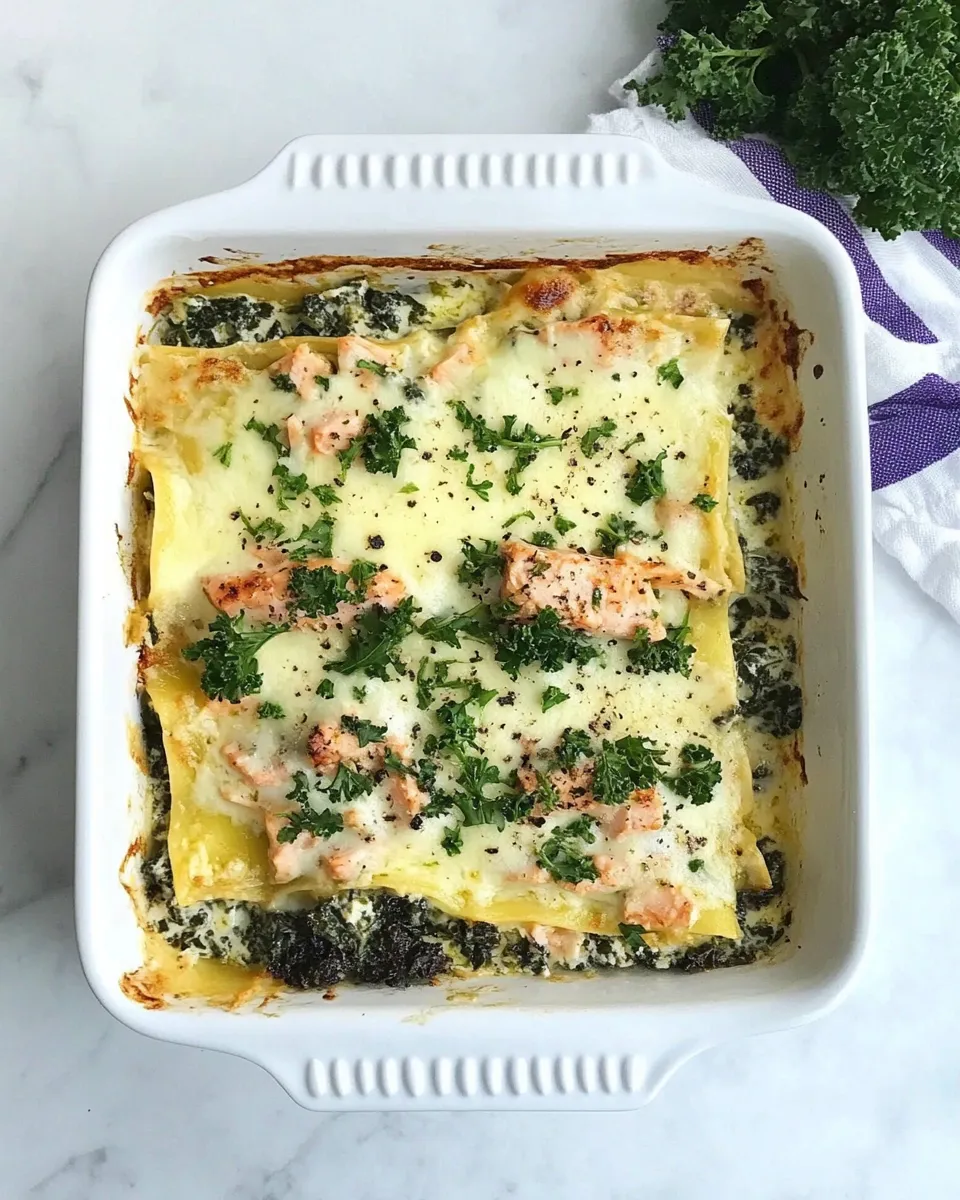
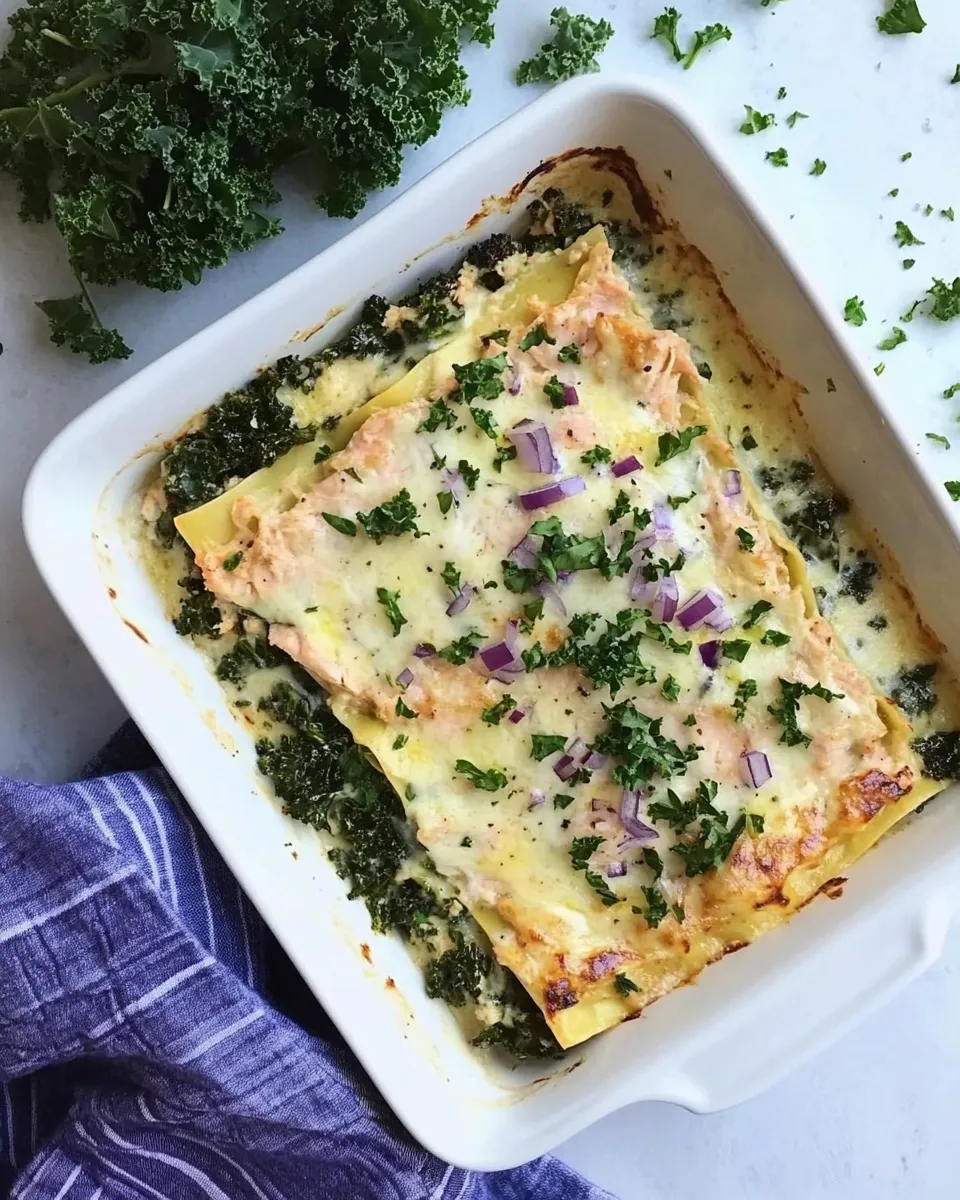
Superfood Salmon Lasagna with Kale and Spinach
This Superfood Salmon Lasagna with Kale and Spinach is a bright, nutrient-dense twist on a comfort classic. Layers of tender dry lasagne sheets, an herby ricotta-salmon filling, sautéed greens, and a whisper of lemon and chili give every forkful a lively balance of creaminess and freshness. It’s the kind of dish that looks celebratory on the table yet comes together with straightforward techniques—perfect for weeknight family dinners or a relaxed weekend dinner party.
Why you’ll love this recipe

- Vibrant flavor: Fresh salmon, lemon zest, and a little chili lift the richness of cheese and pasta.
- Nutrient-packed: Kale and baby spinach add color, texture, and vitamins to every layer.
- Textural contrast: Firm lasagne sheets meet flaky salmon and silky ricotta for satisfying bites.
- Simple technique: No complicated sauces—just gentle sautéing, layering, and baking.
Ingredients
Use 8–10 dry lasagne sheet (I use Garofalo)
- 1 leek, trimmed, washed and cut into thin slices
- 10 oz / 300 g baby spinach leaves
- 7 oz / 200 gr chopped kale leaves
- 1 garlic cloves, peeled and crushed
- 400 g fresh skinless salmon fillets, cubed
- zest of 1 lemon
- 1 small red chili pepper, finely chopped (optional)
- 100 g parmesan cheese, grated
- 4 tablespoon fresh chopped chives
- 4 tablespoon fresh chopped parsley
- a pinch of nutmeg
- extra virgin olive oil
- ½ cup fresh ricotta
- a splash of milk/water
- a generous pinch of ground nutmeg
- salt & white pepper
Prep notes
Before you start, preheat the oven to 180°C (350°F). Prepare a lasagna dish roughly 22 x 30 cm (9 x 13 in) or similar. Keep vegetables and herbs ready, and cube the salmon into uniform pieces so it cooks evenly. If you prefer a milder finish, leave out the red chili pepper; add it if you like a hint of heat.
Step-by-step instructions
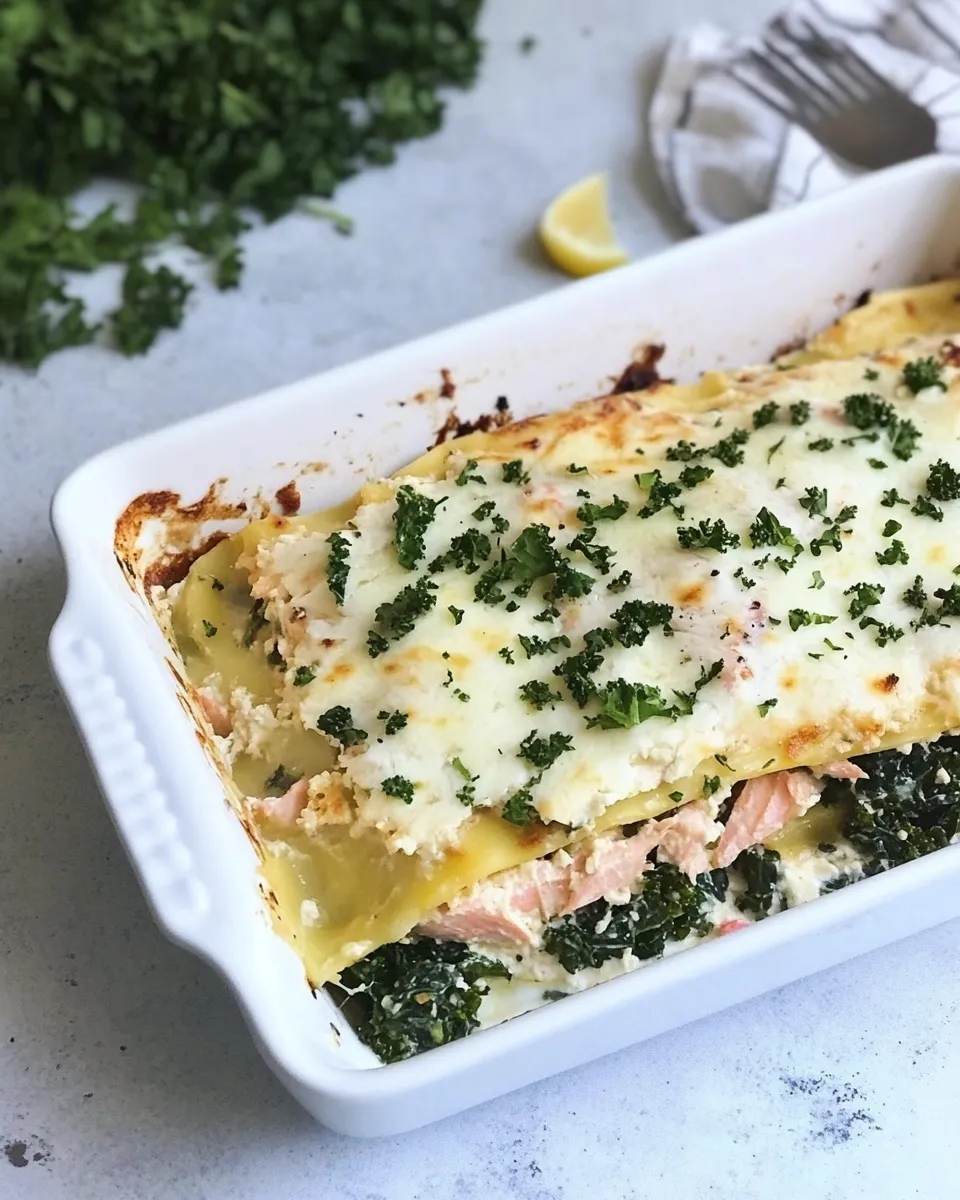
1. Sauté the leek and garlic.
Heat a generous splash of extra virgin olive oil in a large sauté pan over medium heat. Add the sliced leek and cook, stirring occasionally, until softened and lightly golden, about 5–7 minutes. Add the crushed garlic and cook for 30–60 seconds until fragrant. Season with a pinch of salt and white pepper.
2. Wilt the greens.
Add the chopped kale to the pan first and cook until it begins to soften, about 3 minutes. Then add the baby spinach leaves in batches, stirring until they’re fully wilted. If the pan becomes dry, add a splash of water or olive oil. Once the greens are tender, transfer them to a bowl and set aside to cool slightly. Taste and adjust seasoning with salt and white pepper; add the generous pinch of ground nutmeg to the greens and stir through.
3. Prepare the salmon mixture.
In a mixing bowl, combine the cubed fresh skinless salmon fillets, the zest of 1 lemon, and the finely chopped small red chili pepper if using. Sprinkle in a pinch of nutmeg and season lightly with salt and white pepper. Gently fold in the ½ cup fresh ricotta, 100 g grated parmesan cheese, 4 tablespoon chopped chives, and 4 tablespoon chopped parsley. If the mixture feels too thick to spread, add a splash of milk or water to loosen it slightly. Keep the mixture cool in the refrigerator while you assemble the lasagna.
4. Layer the lasagna sheets.
Pour a thin film of extra virgin olive oil or a couple of tablespoons of the reserved sauté liquid into the bottom of your lasagna dish to prevent sticking. Place a single layer of dry lasagne sheet (Garofalo works well) across the base. Use 8–10 dry lasagne sheet in total distributed over the layers; you should end up with around three layers of pasta depending on the size of your dish and how many sheets you choose to overlap.
5. Build the first layers.
Spread one-third of the salmon-ricotta mixture evenly over the first lasagne sheet layer. Top the salmon mixture with one-third of the sautéed greens, spreading them into an even layer. Sprinkle a light grating of parmesan over the greens. Add another lasagne sheet to form the next layer.
6. Repeat layering.
Spread another third of the salmon-ricotta mixture on the second sheet, followed by the second third of the greens and another light sprinkle of parmesan. Add the third lasagne sheet and finish with the remaining salmon mixture and greens. If you have any sheets left, use them to create a top layer of pasta. Dust the top with the remaining parmesan cheese and a final tiny pinch of nutmeg for aroma.
7. Finish and bake.
Cover the dish loosely with foil and place it in the preheated oven. Bake at 180°C (350°F) for 25–30 minutes covered, then remove the foil and bake for an additional 10–12 minutes until the top is golden and bubbling and the salmon is cooked through. The internal temperature of the salmon should reach a safe, flaky texture; if you used thicker cubes, add a few minutes as needed.
8. Rest and garnish.
Remove the lasagna from the oven and let it rest for 10 minutes before slicing. This short rest helps the layers settle and makes serving neater. Garnish with a few extra tablespoons of fresh chopped chives and parsley and an extra twist of lemon zest for brightness. Serve warm with a simple green salad or roasted vegetables.
Tips for success
- Use consistent salmon cubes so they cook uniformly. Smaller cubes cook faster and distribute through the dish more evenly.
- If your lasagne sheets seem too dry, brush them lightly with water or milk so they soften during baking and avoid a chalky texture.
- Adjust salt carefully—both parmesan and ricotta contribute saltiness, so season the salmon filling with restraint and taste before layering.
- For extra creaminess, stir an additional tablespoon of olive oil into the ricotta before folding it into the salmon mixture.
Variations and substitutions
- If you don’t eat fish, swap the salmon for an equal weight of cubed firm tofu or a plant-based fish alternative, seasoning similarly to keep the bright lemon-chive profile.
- To make it dairy-free, use a plant-based ricotta and substitute a nut-based or nutritional yeast blend for the parmesan.
- For a cheesier top, scatter an additional 30–50 g of grated parmesan before the final uncovered bake.
Make-ahead and storage
This lasagna reheats beautifully. Assemble the lasagna up to the point of baking, cover tightly with foil, and refrigerate for up to 24 hours before baking. Baked leftovers keep in an airtight container in the refrigerator for up to 3 days. Reheat in a preheated oven at 160°C (325°F) for 15–20 minutes or until warmed through; individual portions also reheat well in the microwave.
Nutritional notes
This recipe balances protein-rich salmon with iron- and vitamin-packed greens. Using a mix of kale and baby spinach provides different textures and a broader nutritional profile, and lemon zest brightens flavors without added sodium. The lasagne sheets give slow-burning energy, while fresh herbs add micronutrients and a fresh aroma.
Serving suggestions
Serve slices of this Superfood Salmon Lasagna with Kale and Spinach alongside a crisp, acidic salad—think arugula with lemon vinaigrette or shaved fennel with orange segments—to cut through the richness. Light steamed vegetables or a simple tomato salad also complement the layers without overpowering the salmon’s delicate flavor.
Final thoughts
This Superfood Salmon Lasagna with Kale and Spinach manages to feel both indulgent and wholesome. It’s comforting without being heavy, and the lemon, herbs, and a subtle hit of chili bring the whole dish to life. Whether you’re feeding family or entertaining friends, it’s a reliably impressive centerpiece that celebrates fresh ingredients and straightforward baking.
Superfood Salmon Lasagna with Kale and Spinach
Ingredients
- 8-10 sheets dry lasagne sheets (e.g., Garofalo)
- 1 leek, trimmed, washed and thinly sliced
- 10 oz baby spinach leaves about 300 g
- 7 oz chopped kale leaves about 200 g
- 1 clove garlic, peeled and crushed
- 400 g fresh skinless salmon fillets, cubed
- 1 lemon, zested zest of 1 lemon
- 1 small red chili pepper, finely chopped optional
- 100 g Parmesan cheese, grated
- 4 tbsp fresh chives, chopped
- 4 tbsp fresh parsley, chopped
- a pinch ground nutmeg
- extra virgin olive oil for cooking and to grease the dish
- 1/2 cup fresh ricotta
- a splash milk or water to loosen ricotta
- salt
- white pepper
Instructions
- Heat the oven to 180°C (360°F/Gas 4).
- Bring a large pot of lightly salted water to a boil. Blanch lasagne sheets one at a time for 1 minute, then drain and pat dry on a kitchen towel.
- Make the ricotta sauce by blending the ricotta with a splash of milk or water until smooth and creamy; season with salt, white pepper and a pinch of nutmeg. Adjust liquid for desired consistency.
- Heat a large skillet over medium-low heat and add a glug of olive oil. Sauté the crushed garlic and chopped chili (if using) briefly until fragrant.
- Add the sliced leeks to the skillet and cook gently until softened.
- Add the spinach and kale, cover and cook 2–3 minutes, then uncover and sauté until wilted and any excess liquid has evaporated; add a splash of water if it begins to stick.
- Halfway through cooking the greens, add the cubed salmon and cook until it turns pale pink and is just cooked through. Season the mixture with salt, white pepper, lemon zest and a pinch of nutmeg.
- Grease the bottom of a large ovenproof dish with a little olive oil and spread a thin layer of the ricotta sauce over it.
- Layer the lasagna: place lasagne sheets, then half of the cooked vegetable and salmon mixture, sprinkle half the chopped chives and parsley, and spoon over more ricotta sauce. Repeat with another layer of sheets and the remaining filling.
- Finish with a final layer of ricotta sauce and sprinkle the grated Parmesan evenly over the top.
- Bake for 20–25 minutes until the top is golden and bubbling. Allow to rest a few minutes before serving.
Equipment
- Large Pot
- Large Skillet
- Blender or food processor
- ovenproof baking dish
- Kitchen Towel
- Spatula or Wooden Spoon
Notes
- Parboiling the lasagne sheets briefly helps prevent a dry lasagna.
- If short on time, you can use dry sheets without boiling, but the dish may be drier.