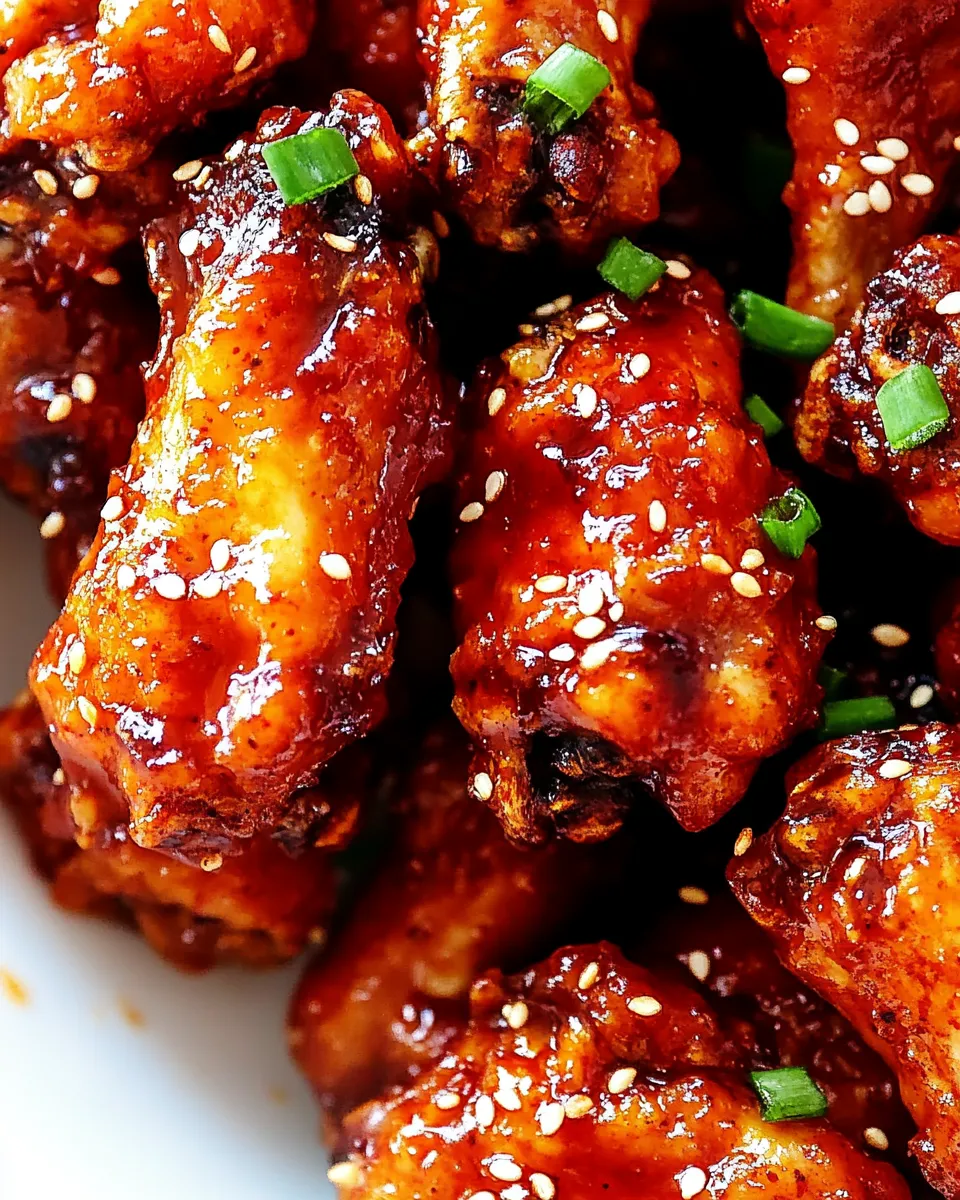
Spicy Korean Chicken Wings
These wings are the kind I make when friends drop by without warning. Crispy, sticky, and unapologetically spicy, they balance the tang of rice vinegar with the savory depth of gochujang. The method is straightforward: low-and-slow to render fat, then a blast of high heat for crispness, finished with a glossy, garlicky sauce.
No special skills required. You’ll need a little patience, basic kitchen gear, and a willingness to get your hands a bit saucy at the end. Follow the timing and the sauce steps closely and you’ll get wings that hold up whether you serve them as a party snack or a weeknight dinner.
I test this recipe until the texture and flavor land where I want them: crisp skin, tender interior, and a sauce that clings without sliding off. Read through the whole post for tips, common mistakes, and storage notes. Then preheat the oven and make space on the counter—these go fast.
Ingredients at a Glance

- 1 1/2–2 lbs chicken wings — the main ingredient; wings with tips removed or whole both work, just make sure they’re dry before seasoning.
- 2 teaspoons baking powder — helps dry the skin and create crispness in the oven.
- 1 teaspoon salt — seasons the wings and helps draw moisture from the skin.
- 1 tablespoon oil (I used sesame oil) — a small amount to prevent sticking and add a mild toasty flavor if you use sesame oil.
- 4 cloves garlic, minced — gives the sauce its aromatic backbone.
- 2 tablespoons ginger, minced — adds warmth and brightness to balance the heat.
- 2 tablespoons white sugar — sweetens the sauce; white or brown both work (see notes).
- 1 tablespoon rice vinegar — brings acidity to cut the richness.
- 2 tablespoons soy sauce — adds saltiness and umami to the sauce.
- 4 tablespoons gochujang — the spicy, savory Korean chili paste that defines the sauce.
- 2 tablespoons butter — rounds the sauce and gives a glossy finish.
- 2 tablespoons honey — for sticky sweetness and balance with the heat.
- Toasted sesame seeds — garnish for nuttiness and crunch contrast.
- Chopped green onions — fresh garnish to add color and a sharp note.
- Crushed toasted peanuts — optional garnish for texture and a nutty finish.
Spicy Korean Chicken Wings, Made Easy
- Preheat the oven to 250°F. Line a large baking sheet with aluminum foil and insert a wire rack. If desired, lightly brush the rack with a small amount of the 1 tablespoon oil to help prevent sticking.
- Pat the 1 1/2–2 lbs chicken wings dry with paper towels. Place the wings in a large bowl.
- Add 2 teaspoons baking powder and 1 teaspoon salt to the bowl with the wings. Toss the wings until they are evenly coated.
- Arrange the wings in a single layer on the prepared wire rack, making sure the wings are not touching each other.
- Place the baking sheet on the lower oven rack and bake at 250°F for 30 minutes.
- While the wings bake, prepare the sauce. In a saucepan over medium heat, add the remaining 1 tablespoon oil. Sauté 4 cloves minced garlic and 2 tablespoons minced ginger for about 2–3 minutes, until fragrant.
- Add 2 tablespoons white (or brown) sugar, 1 tablespoon rice vinegar, 2 tablespoons soy sauce, 4 tablespoons gochujang, 2 tablespoons butter, and 2 tablespoons honey to the pan. Reduce heat to low and cook, stirring, for about 3 minutes until the sauce is smooth and combined. Turn off the heat and leave the sauce on the stove.
- After the initial 30 minutes, increase the oven temperature to 425°F. Move the baking sheet to the upper oven rack and continue baking the wings for an additional 45 minutes, or until the wings are golden brown and crispy.
- Remove the wings from the oven and place them in a large bowl. Pour the prepared spicy sauce over the wings and gently toss until the wings are evenly coated.
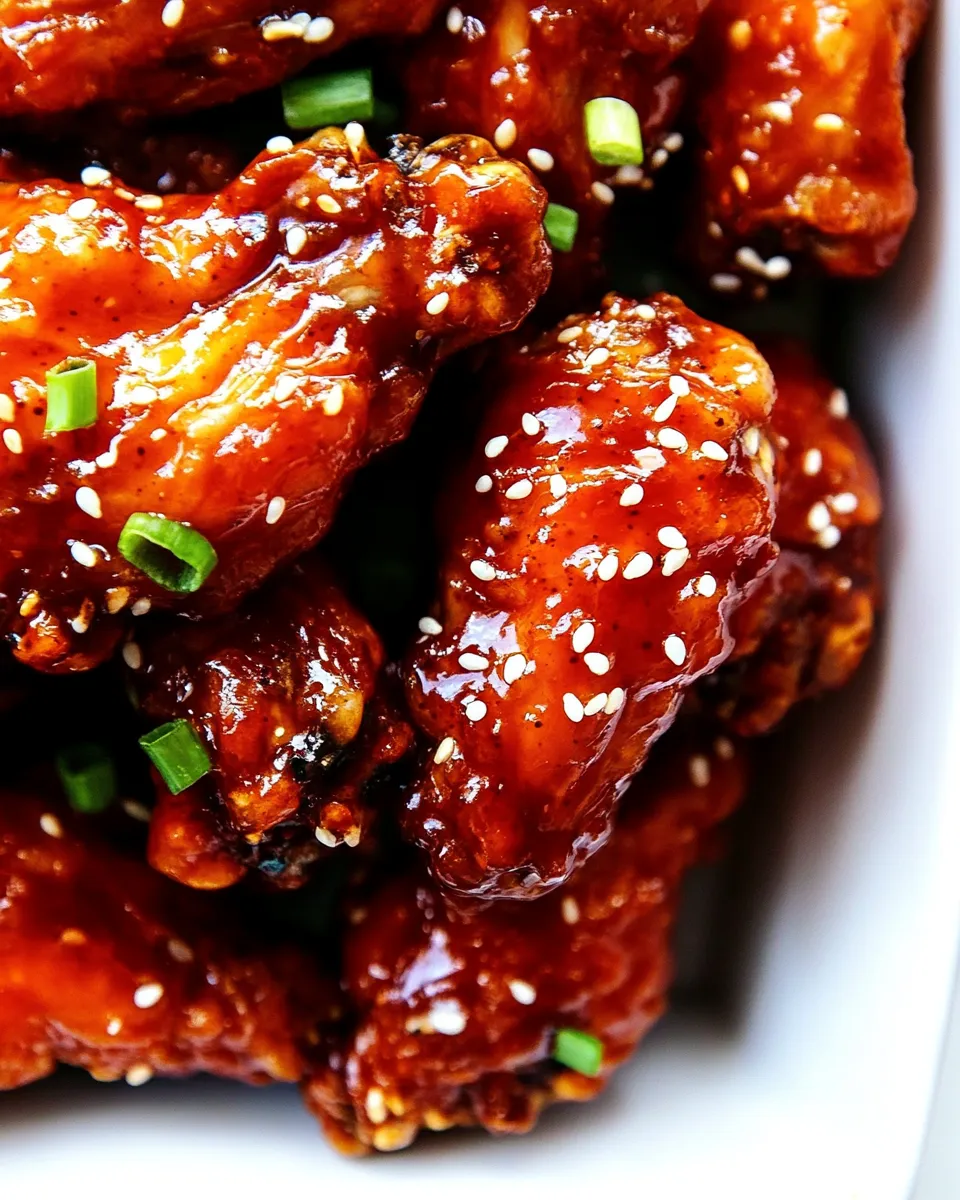
- Transfer the sauced wings to a serving plate and sprinkle with toasted sesame seeds, chopped green onions, and crushed toasted peanuts. Serve immediately.
Reasons to Love Spicy Korean Chicken Wings
These wings combine a few smart techniques for maximum flavor and texture. Baking with baking powder dries the skin and promotes crispness without deep-frying. The two-stage oven temperature gives you rendered fat and then high heat to brown and crisp. The sauce is bold but balanced: gochujang provides heat and fermentation depth, while sugar and honey give sticky caramelized glaze.
They’re flexible. Scale the recipe up for a crowd. Serve them as a snack, main, or party platter. They travel well to potlucks if you toss them in sauce just before serving so the skin stays crisper longer.
International Equivalents
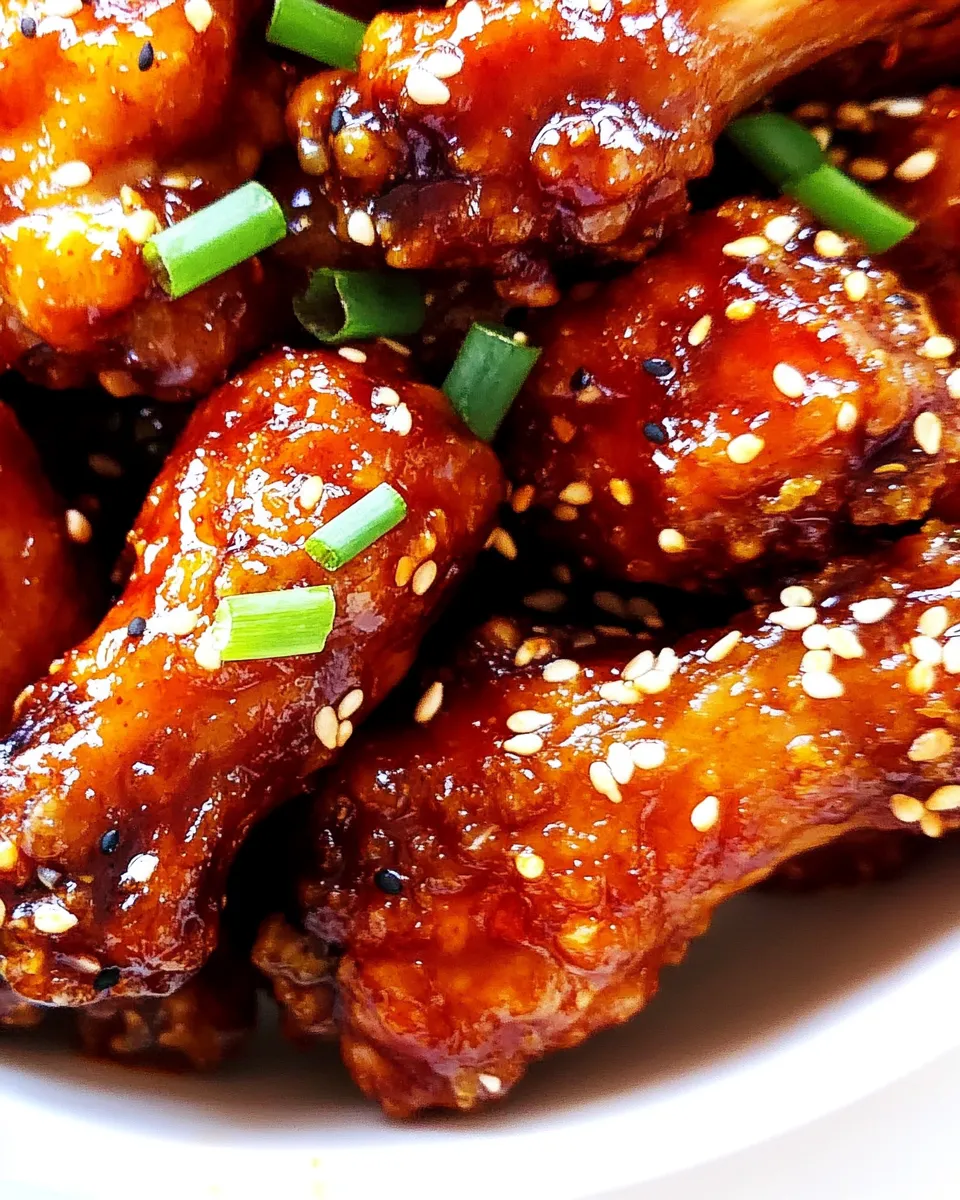
This recipe sits in a family of sauced, glazed wings across many cuisines. Think of Korean yangnyeom tongdak (sweet-spicy glazed wings), American buffalo wings (sauce-forward and sticky), and Chinese-style sticky soy wings. Each uses a balance of heat, sweet, acid, and fat to coat the wing and make it irresistible. The main difference here is gochujang’s fermented chili flavor, which gives the wings a uniquely Korean profile.
Kitchen Gear Checklist
- Large baking sheet — to catch drippings and support the rack.
- Wire rack that fits inside the baking sheet — critical for airflow and even crisping.
- Large mixing bowl — for seasoning and tossing the wings.
- Saucepan — to cook and combine the sauce ingredients.
- Tongs — for moving wings between tray, bowl, and serving plate without losing sauce.
- Measuring spoons and a tablespoon — for precise seasoning and sauce balance.
- Paper towels — for drying wings thoroughly before coating.
Mistakes That Ruin Spicy Korean Chicken Wings
Don’t skip drying the wings. Moist skin steams instead of crisps. Pat them well with paper towels before adding baking powder and salt.
Too much baking powder or uneven coating will create a metallic aftertaste or odd texture. Stick to the specified 2 teaspoons for the listed amount of wings and toss to distribute evenly.
Overcrowding the rack is a common error. If wings touch, steam builds up and you lose crispness. Leave space so hot air circulates freely.
Adding the sauce too early can soften the skin. Wait until the wings are fully baked and crispy before tossing them in the sauce. If you must make them in advance, keep sauce and wings separate until serving.
Make It Diet-Friendly
Want to cut calories or sugar? Reduce the 2 tablespoons of white sugar and the 2 tablespoons of honey—start by halving them and taste the sauce as it simmers. The sauce will still have depth from gochujang and soy sauce. You can also trim visible fat from wings before cooking, or use fewer wings per serving paired with a big vegetable side to balance the meal.
To lower sodium, use less salt in the initial seasoning (but keep the baking powder amount) and rely on the 2 tablespoons soy sauce for most of the saltiness—just be aware this will change the total sodium slightly. If someone needs a stricter low-sodium approach, omit or reduce the soy sauce and increase rice vinegar slightly for brightness.
Chef’s Rationale
I use a two-step bake because it deliberately solves two problems. First, the low 250°F stage melts fat and begins to dry the skin without overbrowning. Second, the 425°F blast finishes with color and crispness. Baking powder is a texture trick: it raises skin pH slightly and creates tiny bubbles that lead to crunch.
The sauce is built on aromatics and controlled heat. Sautéing garlic and ginger in a tablespoon of oil releases essential flavor compounds without burning. Adding sugar, honey, and butter gives the sauce body and shine, while rice vinegar and soy sauce balance sweet and savory. Gochujang is the backbone; its fermented depth keeps the glaze interesting, not just hot.
How to Store & Reheat
Store leftover wings in an airtight container in the refrigerator for up to 3 days. Keep the sauce separate from the wings if you can—this helps preserve some crispness. If the wings are already sauced, they’ll still taste great but the skin will soften over time.
To reheat and recover crispness: preheat the oven to 400°F. Arrange wings on a wire rack set over a baking sheet and heat for 8–12 minutes, watching carefully so they don’t burn. For faster reheating, use an air fryer at 375°F for 4–6 minutes. If you kept sauce separate, warm it briefly in a saucepan over low heat and toss wings just before serving.
Spicy Korean Chicken Wings FAQs
Can I make these ahead? Yes. Bake the wings and cool completely. Store wings and sauce separately. Reheat the wings in the oven or air fryer and toss with warmed sauce just before serving.
How spicy are these? The heat level depends on the gochujang used. It’s usually moderately spicy with a sweet and savory profile. Reduce overall heat by using a bit less gochujang, or increase it if you want more kick.
Can I use drumettes or thighs instead? Yes. Cooking time may vary. Bone-in thighs will need longer at the high-heat stage to reach the same crispness and internal doneness. Keep the initial low-temperature step to render fat, then crisp at high heat.
Why baking powder and not baking soda? Baking powder helps dry the skin and promotes browning without imparting a soapy taste that excess baking soda can cause. It’s the safer choice for crisping poultry skin in the oven.
My sauce is too thick/thin — what should I do? If too thick, whisk in a teaspoon of hot water at a time until you reach desired consistency. If too thin, simmer a little longer on low heat to reduce and thicken, watching so it doesn’t burn.
Final Thoughts
These Spicy Korean Chicken Wings are reliable, bold, and crowd-pleasing. The technique is repeatable: dry, bake low, blast high, and glaze with a carefully balanced sauce. The result is crisp skin, tender meat, and a sticky, spicy finish that invites seconds.
Make them for a game day or a casual dinner. Keep garnishes simple—sesame seeds, green onions, and crushed peanuts lift texture and flavor without overwhelming the wings’ core profile. Small adjustments—less honey for a leaner glaze, slightly less gochujang for a milder heat—let you tailor the recipe to your table.
Now, turn on the oven, gather your ingredients, and enjoy the process. These wings reward a little attention and taste even better for it.
Spicy Korean Chicken Wings
Ingredients
Ingredients
- 1 1/2-2 lbschicken wings
- 2 teaspoonsbaking powder
- 1 teaspoonsalt
- 1 tablespoonoilI used sesame oil
- 4 clovesgarlicminced
- 2 tablespoonsgingerminced
- 2 tablespoonswhite sugaror brown sugar for a deeper flavor you can also use honey or maple syrup
- 1 tablespoonrice vinegar
- 2 tablespoonssoy sauce
- 4 tablespoonsgochujang
- 2 tablespoonsbutter
- 2 tablespoonshoney
- toasted sesame seeds
- chopped green onions
- crushed toasted peanuts
Instructions
Instructions
- Preheat the oven to 250°F. Line a large baking sheet with aluminum foil and insert a wire rack. If desired, lightly brush the rack with a small amount of the 1 tablespoon oil to help prevent sticking.
- Pat the 1 1/2–2 lbs chicken wings dry with paper towels. Place the wings in a large bowl.
- Add 2 teaspoons baking powder and 1 teaspoon salt to the bowl with the wings. Toss the wings until they are evenly coated.
- Arrange the wings in a single layer on the prepared wire rack, making sure the wings are not touching each other.
- Place the baking sheet on the lower oven rack and bake at 250°F for 30 minutes.
- While the wings bake, prepare the sauce. In a saucepan over medium heat, add the remaining 1 tablespoon oil. Sauté 4 cloves minced garlic and 2 tablespoons minced ginger for about 2–3 minutes, until fragrant.
- Add 2 tablespoons white (or brown) sugar, 1 tablespoon rice vinegar, 2 tablespoons soy sauce, 4 tablespoons gochujang, 2 tablespoons butter, and 2 tablespoons honey to the pan. Reduce heat to low and cook, stirring, for about 3 minutes until the sauce is smooth and combined. Turn off the heat and leave the sauce on the stove.
- After the initial 30 minutes, increase the oven temperature to 425°F. Move the baking sheet to the upper oven rack and continue baking the wings for an additional 45 minutes, or until the wings are golden brown and crispy.
- Remove the wings from the oven and place them in a large bowl. Pour the prepared spicy sauce over the wings and gently toss until the wings are evenly coated.
- Transfer the sauced wings to a serving plate and sprinkle with toasted sesame seeds, chopped green onions, and crushed toasted peanuts. Serve immediately.
Equipment
- Baking Sheet
- Wire Rack
- Large Bowl
- Saucepan
- Aluminum Foil
- Paper Towels
- Oven
Notes
Corn starch can be used on your chicken wings instead of baking powder.
For faster cooking with crispier chicken skin, you can air fry your chicken wings. Just fry at 390 for five minutes per side.
Add more salt and black pepper to your sauce (to taste) before serving.
I make sure to pat the wings dry with paper towels before adding any seasoning. This helps the skin crisp up better in the oven.
I always toss the wings in the sauce while they’re still hot from the oven. The sauce clings better and soaks into the crispy skin.