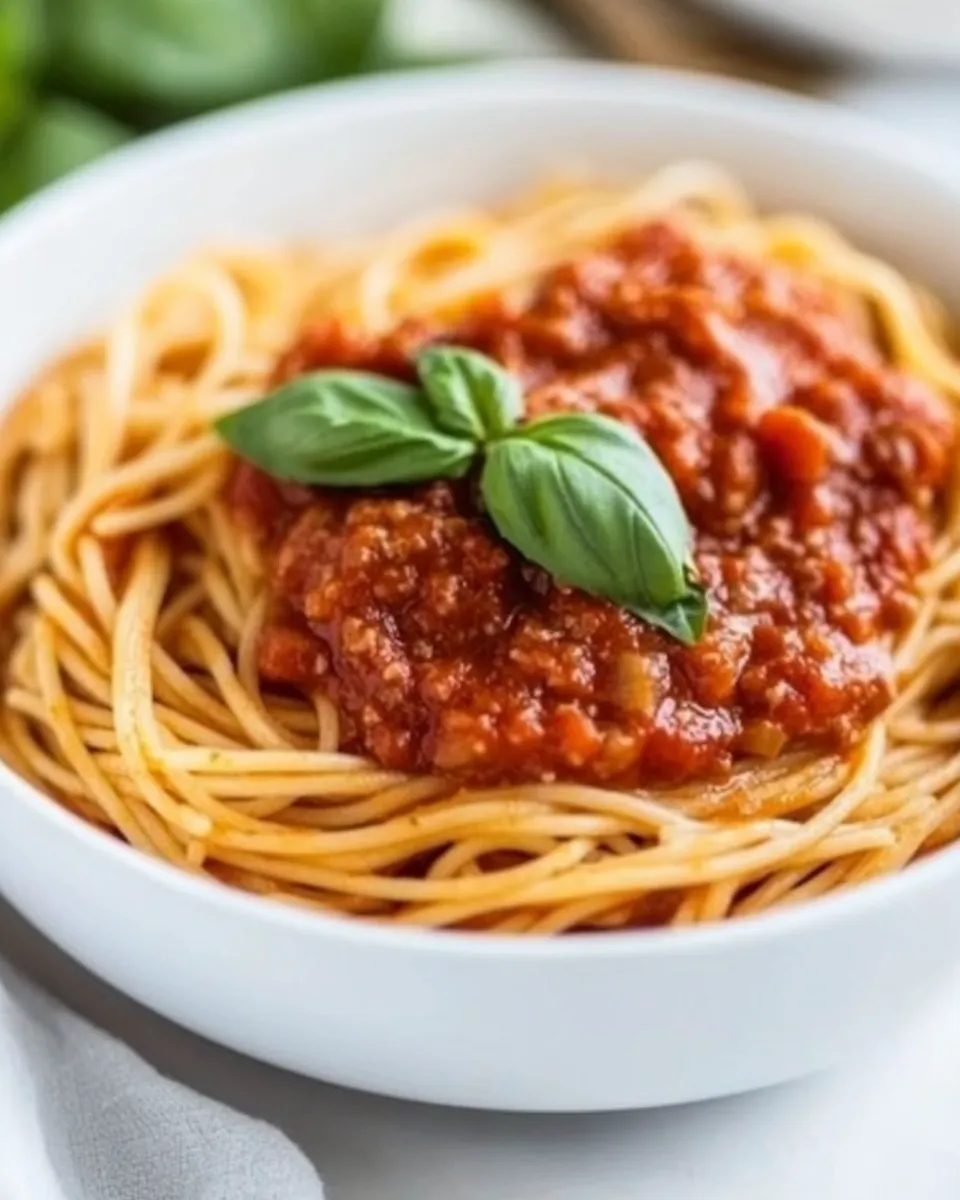
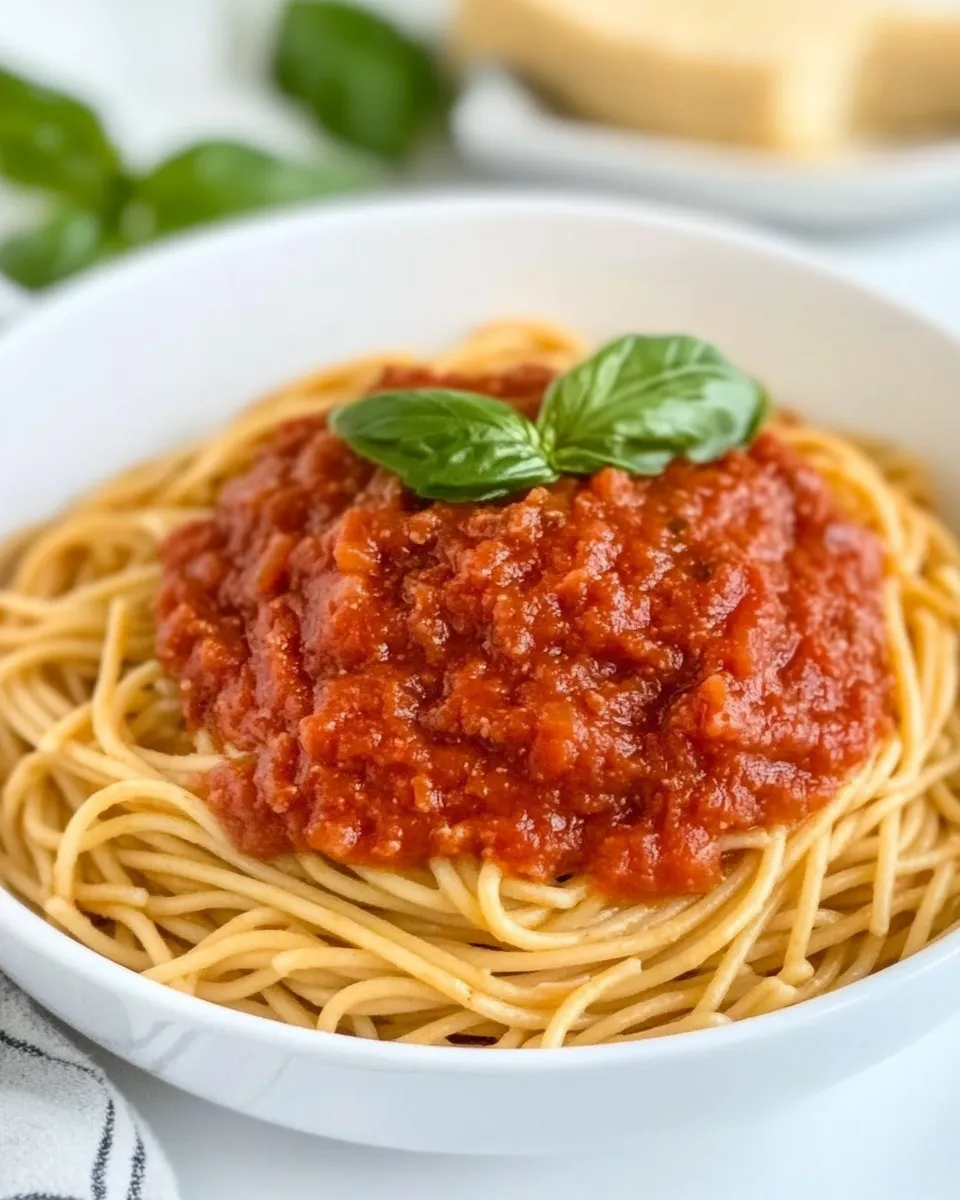
Spaghetti Marinara
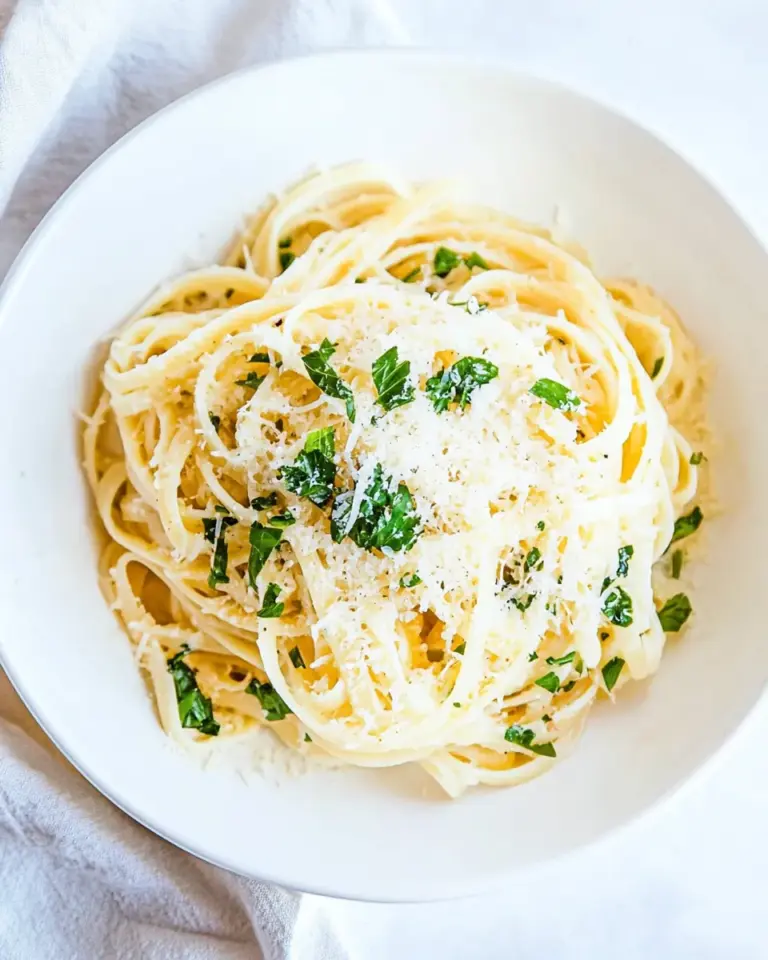
Spaghetti Marinara is one of those timeless, weeknight-friendly meals that always feels special. It’s simple, saucy, and comforting—the kind of dinner that gathers people around the table without much fuss. This version focuses on clean, straightforward flavors: sweet stewed tomatoes, robust crushed tomatoes, bright parsley, and a gentle balance of dried herbs. The sauce simmers long enough to deepen in flavor but stays uncomplicated so you can make it on a busy evening and still serve something that tastes like you spent hours in the kitchen.
The list below gives you everything you need to make this classic. The recipe is easy to scale if you’re cooking for more or fewer people, and the sauce keeps beautifully for leftovers—perfect for lunch the next day or reheated with a splash of water to refresh the texture.
Ingredients

- ▢16ounces spaghetti, or other pasta
- ▢2 tablespoons olive oil
- ▢1 onion, finely diced
- ▢6 cloves garlic, pressed
- ▢29 ounces stewed tomatoes, (2 cans)
- ▢28 ounces crushed tomatoes, (1 large can)
- ▢2 tablespoons tomato paste
- ▢1 cup chicken broth
- ▢1/3 cup chopped fresh parsley
- ▢1 tablespoon granulated sugar
- ▢2 teaspoons dried oregano
- ▢1 teaspoon dried basil
- ▢2 teaspoons salt
- ▢1 teaspoon ground black pepper
About the Ingredients
The ingredient lineup is intentionally straightforward. Use a good-quality olive oil to sauté the aromatics; it contributes flavor without overpowering the tomato character. Finely diced onion and pressed garlic create the aromatic base—take care not to brown them too dark so the sauce stays bright. Combining stewed and crushed tomatoes yields texture and body: the stewed tomatoes add small pieces that give the sauce substance, while the crushed tomatoes create a silky backdrop. Tomato paste deepens the tomato intensity; chicken broth thins and rounds the sauce while adding savory depth. Fresh parsley at the end adds a herbal lift, and the sugar, oregano, basil, salt, and pepper bring everything into balance.
Taste and Texture Notes
This Spaghetti Marinara sits between rustic and refined. It’s not a chunky ragù nor an ultra-smooth purée—there’s a pleasant mix of texture from the two kinds of canned tomatoes. If you prefer a smoother sauce, use an immersion blender for a few pulses before simmering. If you like more bite, reserve some of the stewed tomatoes and stir them in at the end so they remain more intact. The seasoning is measured to be reliable, but always taste and adjust at the end because tomatoes can vary in sweetness and acidity.
Equipment
- Large pot for boiling pasta
- Large skillet or medium saucepan for the sauce
- Wooden spoon or spatula
- Colander
- Knife and cutting board
Step-by-Step Instructions
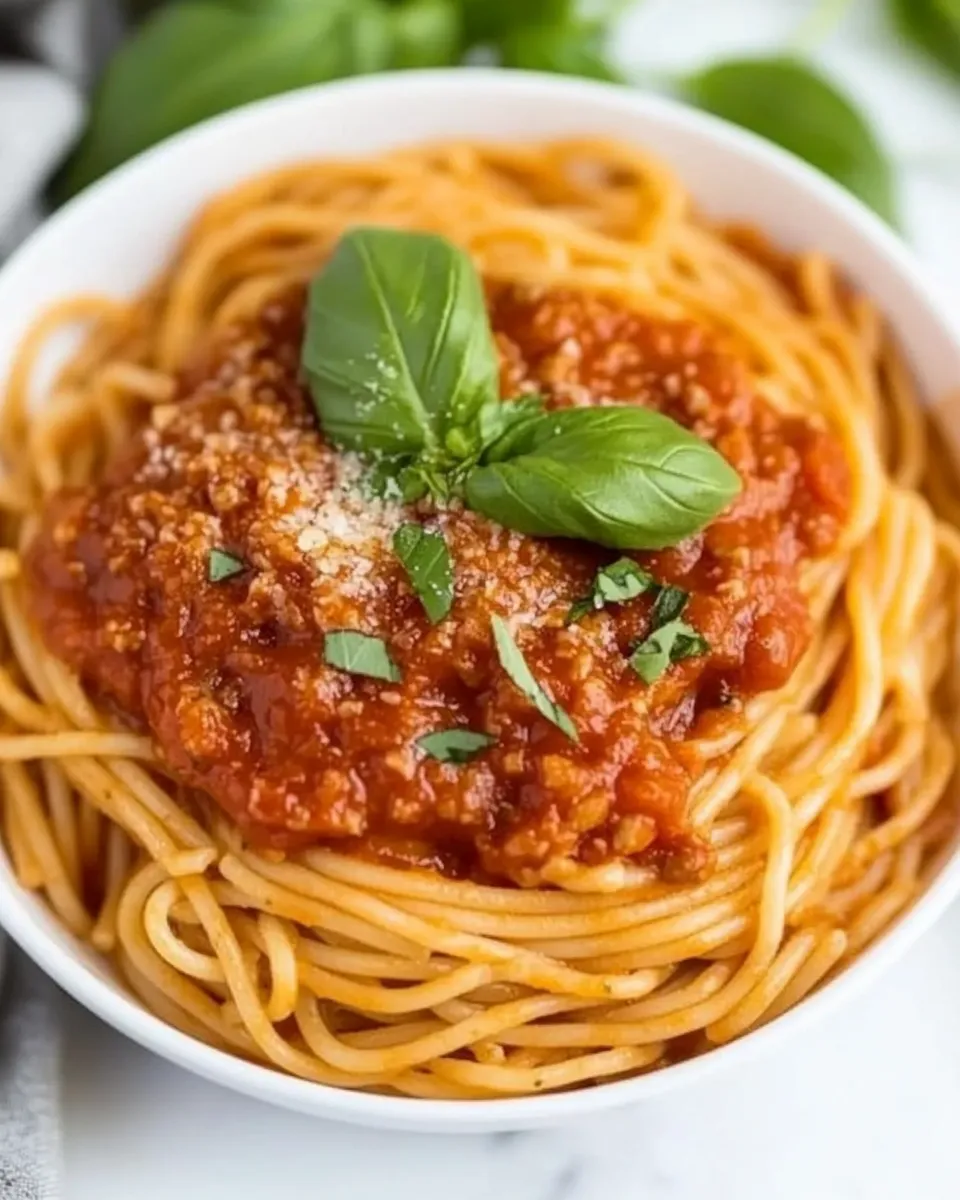
Follow these steps exactly as written to reproduce the recipe reliably. The directions are rewritten for clarity while preserving the order and ingredient quantities from the list above.
- Bring a large pot of water to a rolling boil. Add a generous pinch of salt, then add 16 ounces spaghetti (or your chosen pasta) and cook according to the package directions until al dente. Reserve about 1 cup of the pasta cooking water, then drain the pasta in a colander and set aside.
- While the pasta cooks, heat 2 tablespoons olive oil in a large skillet or medium saucepan over medium heat. When the oil shimmers, add 1 onion, finely diced. Sauté, stirring occasionally, until the onion is soft and translucent—about 5 to 7 minutes. Do not let it brown; keep the heat moderate so the onion sweetens without charring.
- Add 6 cloves garlic, pressed, to the skillet with the softened onion. Cook for about 30 seconds to 1 minute, stirring constantly, until the garlic becomes fragrant. Be careful not to let the garlic turn brown, as that will introduce bitterness.
- Stir in 2 tablespoons tomato paste and cook for 1 to 2 minutes, allowing the paste to caramelize slightly. This step intensifies the tomato flavor and gives the sauce depth.
- Pour in the 29 ounces stewed tomatoes (two cans) and the 28 ounces crushed tomatoes (one large can). Break up any large tomato pieces with your spoon as you add them so the sauce becomes cohesive. Stir until the tomato mixture is evenly combined with the aromatics and tomato paste.
- Add 1 cup chicken broth to the pan, stirring to incorporate. The broth loosens the sauce and adds savory complexity. If you prefer a vegetarian swap, you could use vegetable broth; however, follow the ingredient list as written for the quantities provided.
- Season the sauce by stirring in 1 tablespoon granulated sugar, 2 teaspoons dried oregano, 1 teaspoon dried basil, 2 teaspoons salt, and 1 teaspoon ground black pepper. Taste after the sauce has simmered for a bit and adjust the salt or sugar if needed to suit your tomatoes and personal preference.
- Reduce the heat to low and let the sauce simmer gently, uncovered, for 15 to 20 minutes. Stir occasionally to prevent sticking and to meld the flavors. If the sauce thickens too much, add a splash of the reserved pasta cooking water or more broth to reach your desired consistency.
- Once the sauce has reduced and the flavors have come together, stir in 1/3 cup chopped fresh parsley. Turn off the heat and let the parsley wilt into the sauce for a minute or two to preserve its fresh color and bright flavor.
- Taste the sauce one last time and adjust the seasoning if necessary. Return the drained pasta to the pot or place the pasta back into the large skillet with the sauce. Toss the pasta and sauce together over low heat for 1 to 2 minutes so the noodles absorb some sauce. If the mixture seems dry, add a bit of the reserved pasta cooking water, one tablespoon at a time, until the sauce coats the pasta to your liking.
- Serve the spaghetti immediately, dividing it among plates or bowls. Garnish with a sprinkle of extra chopped parsley or a grind of black pepper if desired. Enjoy your meal while hot.
Make-Ahead, Storage, and Reheating
This Spaghetti Marinara keeps well. Store the sauce in an airtight container in the refrigerator for up to 4 days. If you’ve already combined the pasta with the sauce, it will keep for 2 to 3 days—pasta will continue to absorb liquid and soften, so it’s best to refrigerate pasta and sauce separately if you want the freshest texture.
To reheat the sauce, warm it in a skillet over medium-low heat with a splash of water or broth to loosen it. For reheating pasta with sauce, add a little reserved pasta water or broth and heat gently, tossing until evenly warmed. You can also reheat in the microwave, stirring occasionally, until hot throughout.
Variations and Serving Suggestions
Keep this recipe as written for a reliable classic, or try one of these simple variations to personalize your dinner:
- Add cooked vegetables: Stir in sautéed mushrooms, bell peppers, or spinach in step 9 for extra color and nutrition.
- Make it spicy: Add 1/4 to 1/2 teaspoon red pepper flakes during step 7 for heat.
- Cheesy finish: Top each serving with grated Parmesan or a sprinkle of Pecorino Romano just before serving.
- Olive and caper accent: Stir in 1/4 cup chopped olives and 1 tablespoon capers at the end for a salty, briny twist.
Serving Size and Nutrition Notes
This recipe yields about 4 generous servings. The dish is tomato-forward with a moderate amount of olive oil and broth for richness. If you’re tracking nutrition, the primary sources of sodium are the broth and canned tomatoes, so choose low-sodium broth or canned tomatoes if you prefer to reduce salt. The sugar measurement is small and only used to balance acidity; you can omit it if your canned tomatoes are already quite sweet.
Final Tips for Success
- Use quality canned tomatoes: They make a huge difference in the flavor of the sauce.
- Don’t rush the onion and garlic step: Soft, translucent onion and properly cooked garlic create a flavorful base without bitterness.
- Reserve pasta water: The starchy cooking water helps the sauce cling to the noodles and smooths the texture when you toss them together.
- Taste and adjust: Tomatoes vary, so finish the sauce with a quick taste and tweak salt or sugar as needed.
This Spaghetti Marinara is a dependable go-to—comforting, adaptable, and ready any night of the week. With a few pantry staples and a short simmer, you get a satisfying plate of pasta that feels both simple and special. Enjoy.
Spaghetti Marinara
Ingredients
- 16 ounces spaghetti or other pasta
- 2 tablespoons olive oil
- 1 onion, finely diced
- 6 cloves garlic, pressed
- 29 ounces stewed tomatoes (about 2 cans)
- 28 ounces crushed tomatoes (1 large can)
- 2 tablespoons tomato paste
- 1 cup chicken broth
- 1/3 cup fresh parsley, chopped
- 1 tablespoon granulated sugar
- 2 teaspoons dried oregano
- 1 teaspoon dried basil
- 2 teaspoons salt
- 1 teaspoon ground black pepper
Instructions
- Heat the olive oil in a large pot or Dutch oven over medium heat.
- Add the finely diced onion and sauté until translucent, about 5–7 minutes.
- Add the pressed garlic and cook, stirring, for 30–60 seconds until fragrant.
- Stir in the stewed tomatoes, crushed tomatoes, tomato paste, and chicken broth.
- Add the chopped parsley, sugar, oregano, basil, salt, and black pepper; stir to combine.
- Bring the sauce to a simmer, cover, and cook for 20–30 minutes, stirring occasionally; simmer longer if desired for deeper flavor.
- If you prefer a smoother sauce, use an immersion blender to blend until you reach the desired texture; otherwise break up larger tomato pieces with a wooden spoon.
- Meanwhile, cook the spaghetti according to package directions until al dente, then drain in a colander.
- Return the drained pasta to the pot with the sauce and toss to coat, or serve the pasta plain and ladle the marinara over individual portions.
Equipment
- Large Pot or Dutch Oven
- Wooden Spoon
- Colander
- immersion blender (optional)
Notes
- Beef or vegetable broth can replace the chicken broth.
- Cool sauce completely before freezing in a freezer-safe container.
- Store refrigerated leftovers in an airtight container for 3–5 days.
- Frozen sauce keeps up to 6 months.
- Thaw overnight in the fridge before reheating on the stove.
- This recipe yields about 8 cups of marinara and can be doubled or halved as needed.