School Cafeteria Spaghetti & Meat Sauce
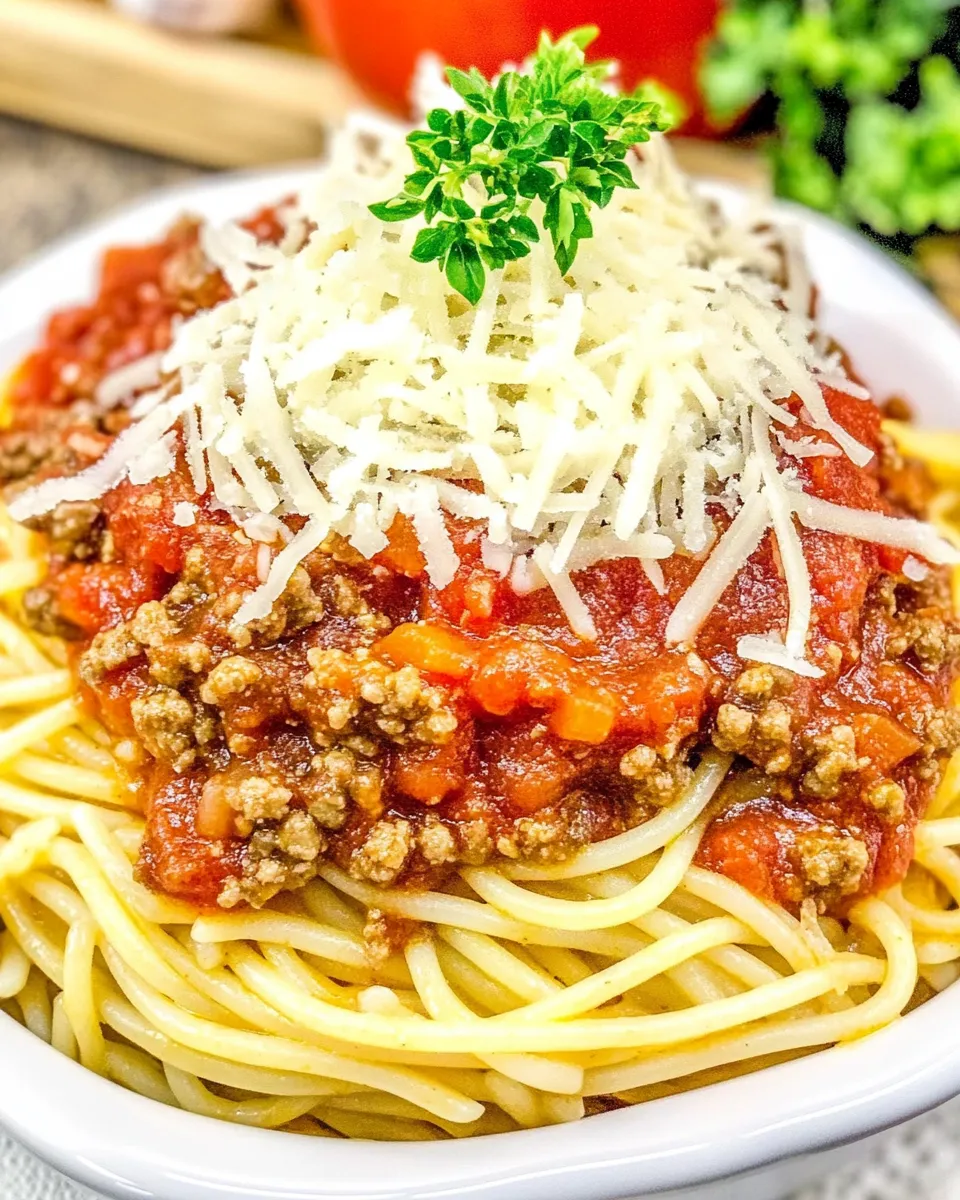
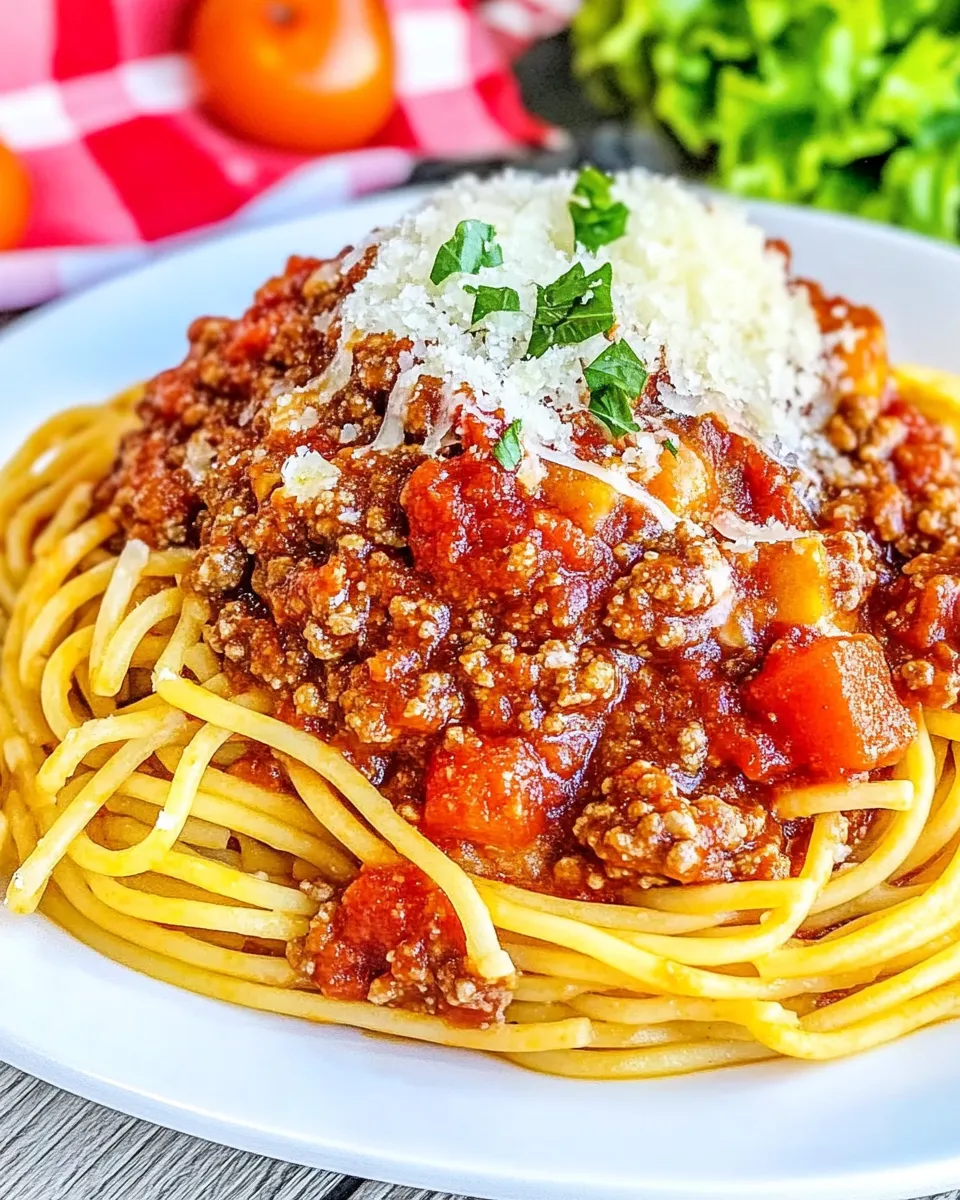
This is the kind of recipe that brings back lunchroom memories: simple, comforting, and made to feed a crowd. The School Cafeteria Spaghetti & Meat Sauce in this recipe is built from pantry staples and bold dried herbs, producing a generous pot of sauce that clings to strands of spaghetti. It’s unfussy, cozy, and perfect for a weeknight dinner or for serving a group.
Why this version works

There’s a nostalgic charm to spaghetti made the cafeteria way — straightforward seasoning, a tomato-forward base, and plenty of meat. This version leans on dried herbs and pantry tomatoes to create a robust, savoury sauce without needing long simmer times or specialty ingredients. Using lean ground beef keeps the texture meaty without excessive grease, and tomato paste gives the sauce body while whole canned tomatoes contribute bright tomato flavor and pleasing chunks.
Ingredients
- 2¾ lb lean ground beef
- 2 Tbsp dried minced onions
- 1½ tsp garlic powder
- ½ tsp black pepper
- ½ tsp salt
- 1 (28-oz) can whole tomatoes, undrained
- 1½ (6-oz) cans tomato paste
- 2 cups water
- 4 tsp dried basil
- 4 tsp dried oregano
- 2½ tsp dried marjoram
- 1½ tsp dried thyme
- 1 lb spaghetti, cooked
Tried-and-true equipment
- Large heavy-bottomed pot or Dutch oven (for the sauce and to brown the meat)
- Large pot for boiling spaghetti
- Wooden spoon or sturdy spatula
- Colander to drain pasta
- Measuring spoons and cups
Prep notes
- Have the spaghetti cooked just before the sauce finishes so it’s hot and ready to toss.
- Because the recipe uses dried herbs, there’s no need to chop fresh herbs — just measure and add.
- Keep the canned tomatoes nearby; you’ll add them whole to retain chunky texture, then break them up in the pot.
Step-by-step directions
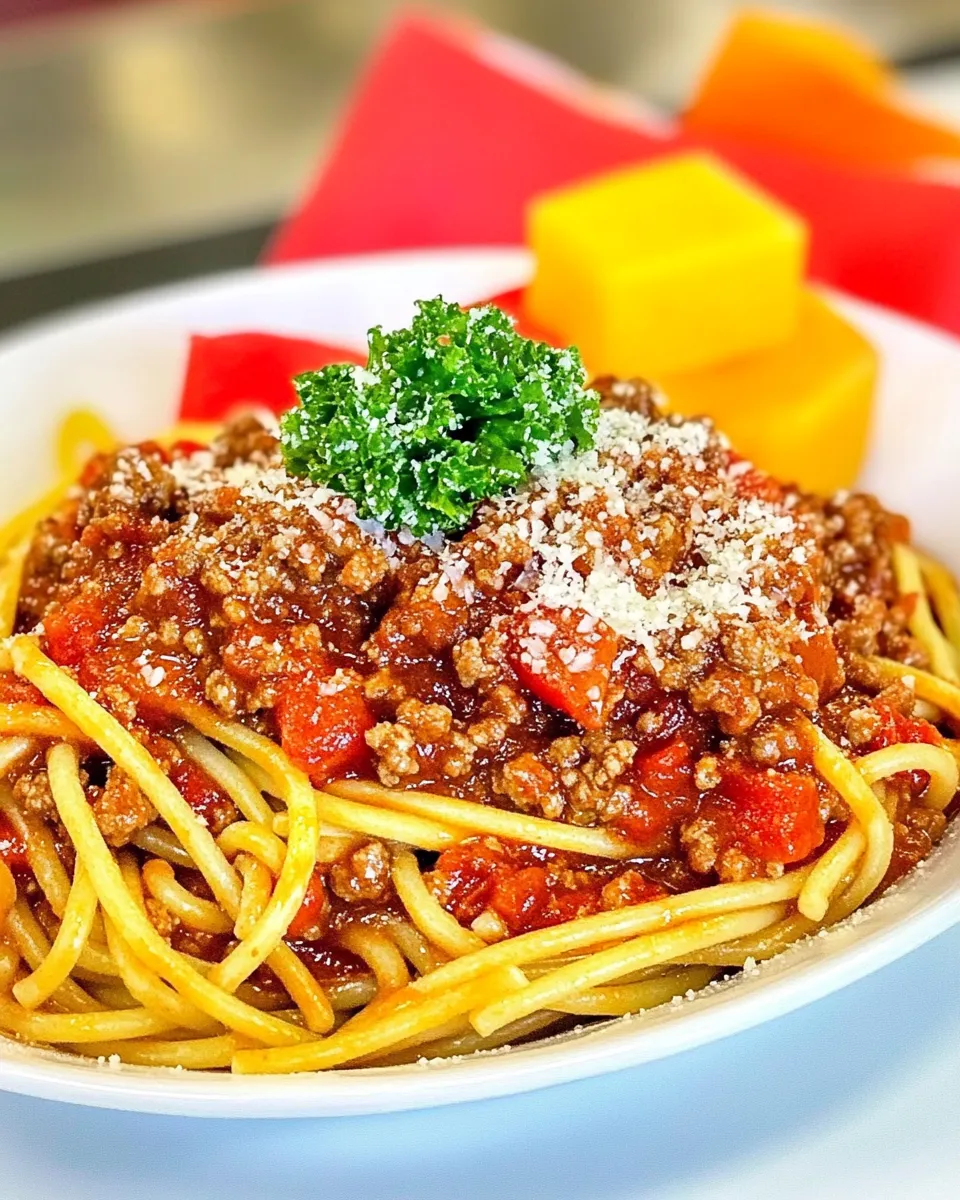
Follow these steps in order to make the most classic, cafeteria-style spaghetti and meat sauce. Ingredient quantities must be used exactly as listed above for consistent results.
- Heat the large pot or Dutch oven over medium-high heat. Add the entire amount of 2¾ lb lean ground beef to the hot pot. Use a sturdy spatula or wooden spoon to break the meat into smaller pieces as it browns. Cook until the beef is fully browned and no pink remains, about 8–12 minutes depending on your heat and pot size.
- Once the beef is browned, drain any excess grease from the pot if desired. Return the browned beef to the pot and keep the heat at medium.
- Add 2 Tbsp dried minced onions, 1½ tsp garlic powder, ½ tsp black pepper, and ½ tsp salt directly to the cooked beef. Stir thoroughly so the spices coat the meat and release their flavor. Cook for 1–2 minutes to toast the dried onion and bloom the spices.
- Pour in the entire 28-oz can of whole tomatoes, undrained. Use your spoon to break the whole tomatoes into bite-sized pieces right in the pot. The undrained juices will help form the sauce base.
- Stir in 1½ (6-oz) cans tomato paste and 2 cups water. Mixing the tomato paste into the tomato and beef mixture adds thickness and deep tomato flavor. Make sure the paste is fully incorporated so there are no streaks or clumps.
- Add the dried herbs: 4 tsp dried basil, 4 tsp dried oregano, 2½ tsp dried marjoram, and 1½ tsp dried thyme. Stir to evenly distribute the herbs through the sauce.
- Bring the sauce to a gentle simmer over medium heat, then reduce the heat to low to maintain a low, steady simmer. Let the sauce cook, uncovered, for at least 20–30 minutes, stirring occasionally to prevent sticking. This allows flavors to meld and the sauce to thicken slightly. If you prefer a thicker sauce, simmer a bit longer, but keep stirring every few minutes to avoid scorching.
- While the sauce simmers, cook 1 lb spaghetti according to the package directions in a separate large pot of salted boiling water. Cook until the spaghetti reaches al dente — tender but with a slight bite. Drain the pasta in a colander and return it to the pot, or keep it in the colander while the sauce finishes.
- Taste the sauce and adjust seasoning if needed. Because quantities are specified, you may find the salt and pepper level is already balanced, but add a pinch more salt or pepper if you prefer. When the sauce is done, either toss the cooked spaghetti with the sauce in the large pot to coat the noodles evenly, or serve the spaghetti on plates and ladle the meat sauce on top to preserve the cafeteria-style presentation.
- Serve piping hot. This recipe makes a generous amount, so it’s perfect for a family meal or for serving several guests. Leftovers store well in the fridge for a few days and reheat easily on the stove or in the microwave.
Serving suggestions
For an authentic cafeteria vibe, serve the School Cafeteria Spaghetti & Meat Sauce with simple sides:
- Steamed or roasted vegetables, like green beans or carrots
- Warm garlic bread or dinner rolls
- A crisp green salad with a light vinaigrette
- Grated cheese for sprinkling on top
Make-ahead and storage
This sauce is very forgiving and stores nicely. Keep it in an airtight container in the refrigerator for up to 3–4 days. To freeze, cool the sauce completely, portion it into freezer-safe containers, and freeze for up to 3 months. Thaw overnight in the refrigerator before reheating gently on the stove with a splash of water if it’s too thick.
Troubleshooting
- If the sauce tastes flat: let it simmer longer, or add a pinch more salt to lift the flavors.
- If the sauce is too acidic: a small pinch of sugar (start with ¼ tsp) can balance brightness, added gradually until desired taste is reached.
- If the sauce is too thin: simmer uncovered until reduced, stirring frequently to avoid burning.
- If the sauce is too thick: stir in a few tablespoons of water or reserved pasta cooking water to reach the desired consistency.
Notes on ingredients
All ingredient amounts are preserved exactly as listed to maintain the intended flavor and yield. The use of dried herbs gives this sauce stable, consistent flavor, which is ideal for batch cooking. The recipe focuses on available pantry elements to mirror the practical spirit of cafeteria cooking.
Final thoughts
There’s comfort in straightforward recipes that deliver dependable results. This School Cafeteria Spaghetti & Meat Sauce is no-frills, packed with savory beef and robust tomato flavors, and built to feed a table. It’s a recipe that’s easy to make on any night and even easier to love.
School Cafeteria Spaghetti & Meat Sauce
Ingredients
- 2 3/4 lb lean ground beef
- 2 tbsp dried minced onion
- 1 1/2 tsp garlic powder
- 1/2 tsp black pepper
- 1/2 tsp salt
- 1 28-oz can whole tomatoes, undrained
- 1 1/2 6-oz cans tomato paste
- 2 cups water
- 4 tsp dried basil
- 4 tsp dried oregano
- 2 1/2 tsp dried marjoram
- 1 1/2 tsp dried thyme
- 1 lb spaghetti, cooked
Instructions
- Heat the 12-inch non-stick skillet over medium-high heat. Add the lean ground beef and brown thoroughly, breaking it up with a meat masher or spatula; drain excess fat.
- Reduce heat to medium. Add the dried minced onion, garlic powder, black pepper, and salt to the skillet and stir to combine with the beef.
- Add the whole tomatoes (undrained), tomato paste, and water to the skillet. Break up the whole tomatoes with a spoon or your hands, then stir in the dried basil, oregano, marjoram, and thyme until evenly distributed.
- Bring the sauce to a boil, then reduce heat to low and simmer, uncovered, for 30 to 45 minutes, stirring occasionally, until flavors meld and sauce thickens.
- Meanwhile, cook the spaghetti in a large pot of salted boiling water according to package directions; drain in a colander.
- Add the cooked spaghetti to the skillet with the sauce and toss gently until the pasta is evenly coated. Serve hot.
Equipment
- 12-inch Non-Stick Skillet
- meat masher or spatula
- large pot (for cooking spaghetti)
- Colander
Notes
- You can substitute ground turkey or Italian sausage for ground beef.
- Use this sauce on any pasta you have on hand.
- If you don’t have marjoram, substitute oregano.
- Break the whole tomatoes with your hands or a spoon before adding if you prefer a chunkier texture.
- To convert fresh herbs to dried, use 1 tablespoon fresh for 1 teaspoon dried.
- One 6-oz can of tomato paste contains about 10 tablespoons, so 1½ cans (9 oz) equals the recipe amount.