
Ricotta Cookies
These ricotta cookies strike a balance between tender, cakey texture and bright, citrusy flavor. They’re the kind of cookie you can make when you want something a little lighter than a butter cookie but still comforting. They keep well and take glazes beautifully, which makes them perfect for weekday baking or a small celebration.
I bake these when I want a simple, reliable treat that looks dressed up with minimal effort. The ricotta keeps the crumb moist and soft, and the lemon adds lift so the cookies never feel heavy. You get a delicate cookie that holds its shape and finishes quickly under a thin glaze.
Below you’ll find the ingredient list, every step exactly as written, troubleshooting tips, and a few variations for holidays. Read through once, gather your tools, and the process will flow. These cookies are forgiving and a great project whether you’re baking for friends or just for yourself.
Gather These Ingredients

- 2 cups (270 g) all purpose flour — the structure of the cookie; measure by weight if possible for consistency.
- ¾ teaspoon baking soda — leavening that gives a slight lift and tender crumb.
- ¼ teaspoon salt — balances sweetness and enhances flavor.
- ½ cup (113 g) unsalted butter, softened — provides richness; soften to room temperature for even creaming.
- ¾ cup (170 g) granulated sugar — sweetens and helps with lightness when creamed with butter.
- 8 ounces (225 g) whole-milk ricotta cheese — keeps the cookies moist and tender; use whole-milk ricotta for best texture.
- 1 large egg (at room temperature) — binds the dough and adds structure.
- 2 teaspoons pure vanilla extract — depth of flavor; use pure extract for the cleanest taste.
- 1 lemon — 1 teaspoon lemon zest and 1 tablespoon lemon juice — zest for aroma, juice for a subtle tang that brightens the cookie.
- 1 cup (130 g) powdered sugar — for the glaze; sift if clumpy to keep glaze smooth.
- 1 tablespoon melted unsalted butter — enriches the glaze and adds slight sheen.
- ½ teaspoon pure vanilla extract — flavor for the glaze; matches the cookie base.
- 2 tablespoons milk — thins the glaze to a dipping consistency; add more sparingly if needed.
- Sprinkles — optional decoration; add immediately after glazing so they adhere before the glaze sets.
Ricotta Cookies: From Prep to Plate
- In a medium bowl whisk together 2 cups (270 g) all-purpose flour, 3/4 teaspoon baking soda, and 1/4 teaspoon salt. Set the dry mixture aside.
- In a large bowl, using a hand mixer (or stand mixer with paddle), beat 1/2 cup (113 g) softened unsalted butter and 3/4 cup (170 g) granulated sugar on medium speed until light and creamy, about 2–3 minutes.
- Add 8 ounces (225 g) whole-milk ricotta to the butter mixture and beat on medium-low until fully incorporated and smooth.
- Add 1 large egg (room temperature) and 2 teaspoons pure vanilla extract; beat until combined.
- Add 1 teaspoon lemon zest and 1 tablespoon lemon juice (from 1 lemon) and mix until evenly distributed.
- Add the reserved dry ingredients to the wet ingredients and mix on low speed just until there are no streaks of flour and the dough is evenly combined. Do not overmix.
- Cover the bowl tightly with plastic wrap and chill the dough in the refrigerator for at least 2 hours or up to 5 days.
- When ready to bake, preheat the oven to 350°F (180°C) (160°C fan). Line a baking sheet with parchment paper or a silicone baking mat.
- Use a tablespoon cookie scoop or measure 1 tablespoon of dough per cookie and drop mounds of dough onto the prepared baking sheet, spacing cookies about 1.5–2 inches apart.
- Bake one sheet at a time for 12–14 minutes, or until the cookies are set and the bottoms are lightly golden. Remove from oven and let cookies cool on the baking sheet for 5 minutes, then transfer to a wire cooling rack. Allow cookies to cool completely before glazing.
- To make the glaze, whisk together 1 cup (130 g) powdered sugar, 1 tablespoon melted unsalted butter, 1/2 teaspoon pure vanilla extract, and 2 tablespoons milk in a small bowl until smooth. If the glaze is too thick, add additional milk 1/4 teaspoon at a time until it reaches a dipping consistency.
- Dip the top of each cooled cookie into the glaze, return it to the wire rack, and immediately decorate with sprinkles before the glaze sets. Allow glaze to set before serving.
Why Ricotta Cookies is Worth Your Time
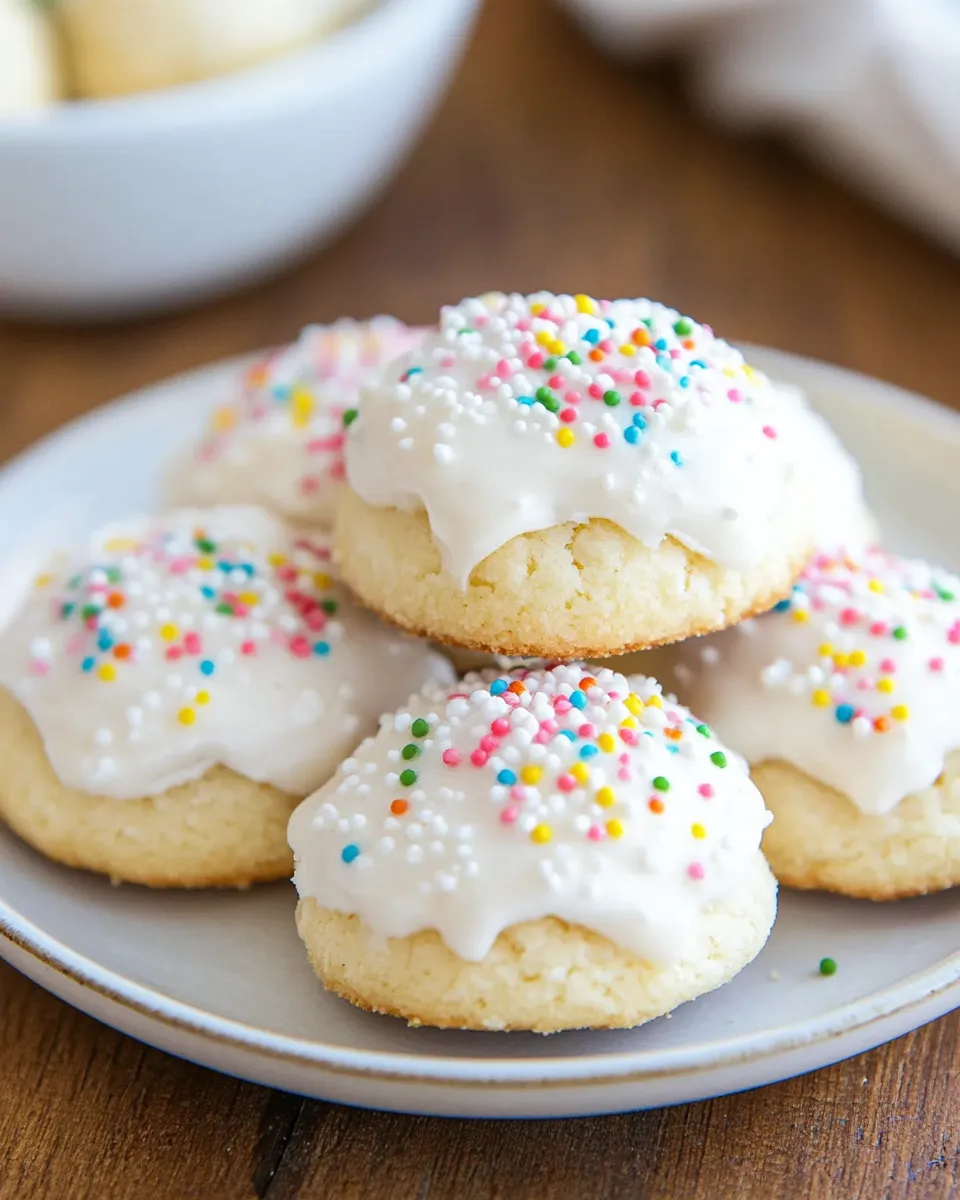
These cookies reward a small amount of planning with reliably great results. Chilling the dough softens flavors and firms up the ricotta and butter so the cookies bake into tender, uniform mounds instead of spreading flat. The ricotta creates a moist crumb without relying on large amounts of butter, and the lemon keeps things bright so the cookies feel fresh rather than cloying.
They’re also visually appealing when glazed. A thin dip-and-sprinkle finish makes them look special with minimal effort. Finally, the recipe scales well—make a single batch for a week of treats or double it for a party.
If You’re Out Of…
- Ricotta — swap for thick whole-milk Greek yogurt if necessary; expect a slightly tangier flavor and a small change in texture.
- Lemon — use 1/2 teaspoon lemon extract or a splash of orange juice for citrus brightness if fresh lemons are unavailable.
- Unsalted butter — if using salted butter, omit extra salt and taste the dough before baking; reduce any added salt slightly.
- Milk for glaze — any neutral milk (dairy or unsweetened plant milk) will thin the glaze; add in very small increments to hit the desired consistency.
- Sprinkles — use finely chopped nuts, lemon zest, or a dusting of powdered sugar instead of sprinkles for a different finish.
Must-Have Equipment

- Mixing bowls — at least one medium and one large for dry and wet components.
- Hand mixer or stand mixer with paddle — creaming the butter and ricotta is easiest and most consistent with a mixer.
- Measuring spoons and cups (or a kitchen scale) — a scale gives the most accurate results, especially for flour and ricotta.
- Tablespoon cookie scoop or spoon — keeps cookie sizes uniform so they bake evenly.
- Baking sheet and parchment paper or silicone mat — prevents sticking and promotes even browning.
- Wire cooling rack — cools cookies fully before glazing to prevent glaze from sliding off.
- Small bowl and whisk — for a lump-free glaze.
Pitfalls & How to Prevent Them
Common issues and quick fixes
- Cookies spreading too much — make sure the butter is softened, not melted; chilling the dough for at least 2 hours helps. Also, bake one sheet at a time so the oven heat stays consistent.
- Dry, crumbly cookies — don’t overmix after adding flour. Mix only until no streaks of flour remain. Overmixing develops gluten and dries the crumb.
- Glaze sliding off — wait until cookies are completely cool before glazing. If glaze is too thin, thicken slightly with more powdered sugar rather than rushing with extra glaze.
- Uneven browning — space cookies evenly and rotate the pan halfway through baking if your oven has hot spots.
Holiday-Friendly Variations
These cookies are a great canvas for seasonal flavors. A small change to the glaze or decoration can make them holiday-ready without altering the cookie dough.
- Christmas — add a drop of almond extract to the glaze, dip, and top with red and green sprinkles or finely chopped pistachios.
- Valentine’s Day — tint the glaze pink with a drop of concentrated beet juice or a tiny bit of food coloring and finish with heart sprinkles.
- Spring/Easter — fold 1/4 cup finely chopped candied citrus peel into the dough, or use pastel sprinkles on top.
- Autumn — swap the lemon for 1 teaspoon ground cinnamon and 1/2 teaspoon nutmeg in the dough; finish with a maple glaze (replace part of the milk with 1 tablespoon maple syrup).
Chef’s Rationale
Ricotta is the hero here: it adds moisture and a subtle milky tang that keeps the cookie soft without excess butter. The creaming step incorporates air and lightens the texture, while the brief low-speed mixing with flour prevents gluten overdevelopment. Chilling firms the dough so the cookies bake up as neat domes rather than spreading. The glaze is intentionally thin so it settles into a translucent coating that showcases the cookie’s top and accepts sprinkles.
Make-Ahead & Storage
Make-ahead
The dough can be chilled for at least 2 hours and up to 5 days, which makes it ideal for a make-ahead plan. Scoop and freeze unbaked dough mounds on a sheet pan, then transfer to a sealed container; bake from frozen, adding 1–2 minutes to the bake time.
Storage
Store glazed cookies in a single layer in an airtight container at room temperature for up to 3 days. For longer storage, freeze baked cookies without glaze in a single layer until solid, then stack with parchment between layers in a freezer-safe container for up to 3 months. Thaw at room temperature and re-glaze if desired.
Handy Q&A
- Can I use part-skim ricotta? — Yes, but whole-milk ricotta gives the best richness and texture.
- Why chill the dough? — Chilling firms the dough and improves flavor melding; it also prevents excess spread during baking.
- Can I skip the glaze? — Absolutely. The cookies are pleasant plain. The glaze mainly adds sweetness and visual appeal.
- My glaze is lumpy — what now? — Sift the powdered sugar or whisk vigorously to break up clumps. A small sieve is helpful for extra-smooth glaze.
- Can I make these larger? — Yes, increase scoop size, but bake longer and watch for edges to lightly brown while the centers set.
Bring It Home
Ricotta cookies are one of those recipes that look like effort and bake like comfort. Small details—room-temperature egg, properly softened butter, and chilling—make a big difference but are easy to follow. If you want an approachable cookie that still feels a little special, this is a dependable choice. Bake a batch, dip them in glaze, and don’t forget to leave a few out for friends who will ask for the recipe.

Ricotta Cookies
Ingredients
Ingredients
- ?2 cups 270 gall purpose flour
- ?3/4 teaspoonbaking soda
- ?1/4 teaspoonsalt
- ?1/2 cup 113 gunsalted buttersoftened
- ?3/4 cup 170 ggranulated sugar
- ?8 ounces 225 gwhole milk ricotta cheese
- ?1 largeeggat room temperature
- ?2 teaspoonspure vanilla extract
- ?1 lemon1 teaspoon lemon zest and 1 tablespoon lemon juice
- ?1 cup 130 gpowdered sugar
- ?1 tablespoonmelted unsalted butter
- ?1/2 teaspoonpure vanilla extract
- ?2 tablespoonsmilk
- ?Sprinkles
Instructions
Instructions
- In a medium bowl whisk together 2 cups (270 g) all-purpose flour, 3/4 teaspoon baking soda, and 1/4 teaspoon salt. Set the dry mixture aside.
- In a large bowl, using a hand mixer (or stand mixer with paddle), beat 1/2 cup (113 g) softened unsalted butter and 3/4 cup (170 g) granulated sugar on medium speed until light and creamy, about 2–3 minutes.
- Add 8 ounces (225 g) whole-milk ricotta to the butter mixture and beat on medium-low until fully incorporated and smooth.
- Add 1 large egg (room temperature) and 2 teaspoons pure vanilla extract; beat until combined.
- Add 1 teaspoon lemon zest and 1 tablespoon lemon juice (from 1 lemon) and mix until evenly distributed.
- Add the reserved dry ingredients to the wet ingredients and mix on low speed just until there are no streaks of flour and the dough is evenly combined. Do not overmix.
- Cover the bowl tightly with plastic wrap and chill the dough in the refrigerator for at least 2 hours or up to 5 days.
- When ready to bake, preheat the oven to 350°F (180°C) (160°C fan). Line a baking sheet with parchment paper or a silicone baking mat.
- Use a tablespoon cookie scoop or measure 1 tablespoon of dough per cookie and drop mounds of dough onto the prepared baking sheet, spacing cookies about 1.5–2 inches apart.
- Bake one sheet at a time for 12–14 minutes, or until the cookies are set and the bottoms are lightly golden. Remove from oven and let cookies cool on the baking sheet for 5 minutes, then transfer to a wire cooling rack. Allow cookies to cool completely before glazing.
- To make the glaze, whisk together 1 cup (130 g) powdered sugar, 1 tablespoon melted unsalted butter, 1/2 teaspoon pure vanilla extract, and 2 tablespoons milk in a small bowl until smooth. If the glaze is too thick, add additional milk 1/4 teaspoon at a time until it reaches a dipping consistency.
- Dip the top of each cooled cookie into the glaze, return it to the wire rack, and immediately decorate with sprinkles before the glaze sets. Allow glaze to set before serving.
Equipment
- Mixing Bowl
- Hand Mixer
- Small cookie scoop, 1 tablespoon
- Baking sheet, half size
- Silicone mat
- Wire Rack
Notes
To avoid making a floury mess, add half of the flour mixture in at a time, and mix on low. If using a hand mixer, do this at the lowest speed possible (make sure that your mixer has this option!).
The cookies must be cooled completely before adding the glaze, if you don’t wait the glaze might melt.
It’s important that your cookies are uniform in size, this will make sure that they bake evenly.
If you want to make the cookies very round, roll them very quickly between your palms. The dough will be very soft to work with, so you will need to use a cookie scoop to quickly portion out the dough.