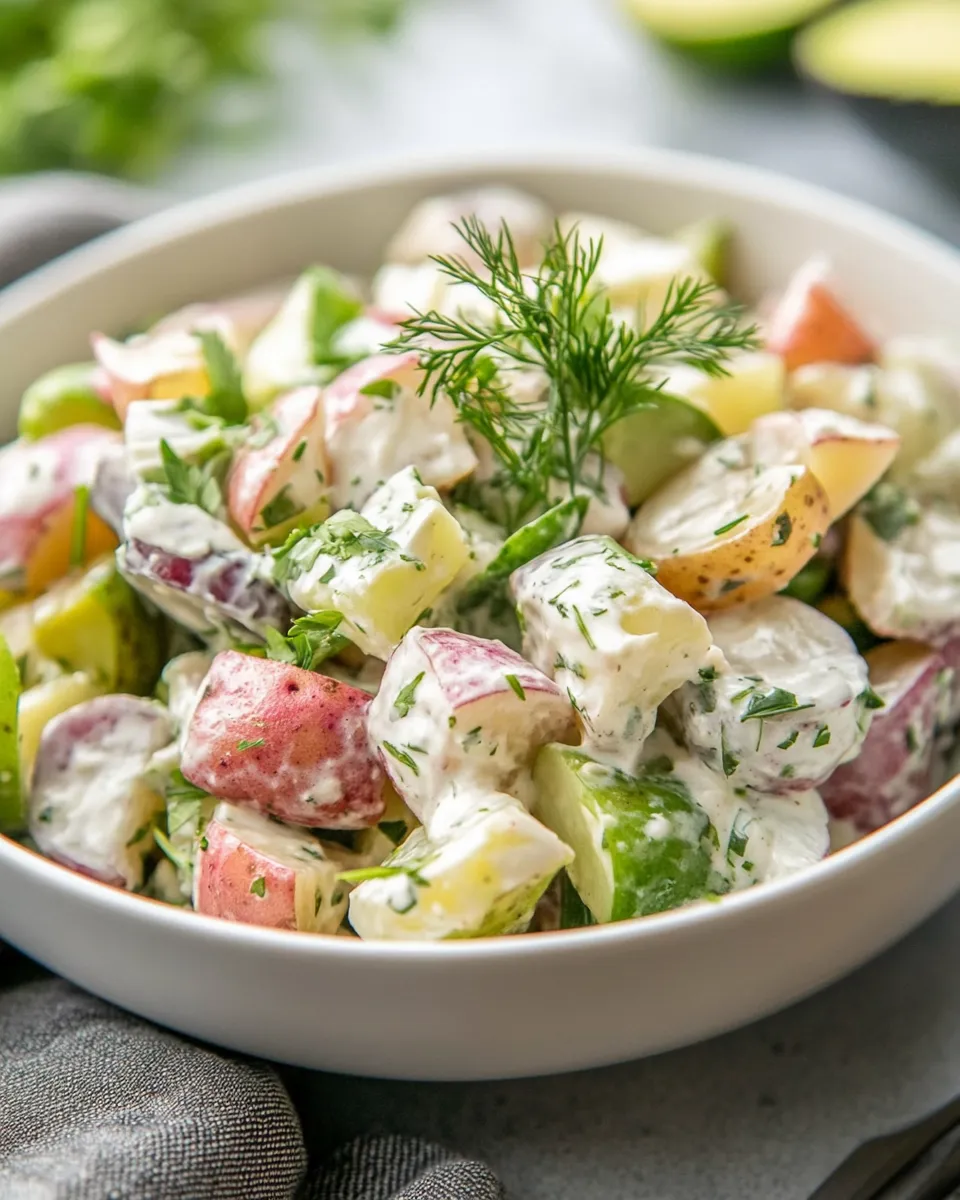
Red Potato Salad
Red potato salad is one of those dishes that shows up at every good cookout and family dinner for a reason: it’s forgiving, bright, and endlessly adaptable. The small red potatoes hold their shape, the lemon and dill keep things fresh, and the mayo-sour cream base makes it feel comforting without being heavy. I make this version when I want something that travels well and still tastes like I took time to care for it.
If you’re short on time, you can follow the steps below and have a crowd-pleasing side in under an hour plus chilling time. If you want to tweak it, I’ll give swaps and pointers so you get the texture and flavor you prefer. This is practical cooking—clear steps, honest tips, and options that actually work.
Make it a day ahead whenever you can. The flavors settle, textures relax, and it’s one less thing to fuss with when company arrives.
Ingredient Checklist

- 2 pounds small red potatoes — the backbone of the salad; their thin skins mean no peeling and they stay firm after boiling.
- 1 small red onion (finely diced) — adds a sharp, crunchy note; dice small so it blends with the potatoes.
- 1 stalk celery (finely diced) — brings crispness and a fresh counterpoint to the creamy dressing.
- 2 tablespoons fresh lemon juice — brightens the potatoes and keeps the flavors lively.
- 1/2 cup mayonnaise (regular or light) — the primary creamy binder; choose regular for richness or light for fewer calories.
- 1/2 cup sour cream or Greek yogurt — adds tang and creaminess; yogurt gives a bit more tang and protein.
- 1/2 teaspoon kosher salt — seasons the salad; start here and adjust after chilling if needed.
- 1/4 teaspoon ground black pepper — simple seasoning to balance the acidity.
- 1/4 cup fresh dill (finely chopped) — the herb that makes this salad feel fresh and summery; chop finely so it distributes evenly.
Make Red Potato Salad: A Simple Method
- Scrub the 2 pounds small red potatoes and place them whole in a large saucepan. Cover with cold water by 1 inch and bring to a boil. Cook until a fork easily pierces the potatoes, about 15–20 minutes.
- Drain the potatoes and let them cool until they are easy to handle, about 10 minutes. Cut into bite-sized pieces and transfer to a large bowl.
- Add the 2 tablespoons fresh lemon juice to the warm potato pieces and toss gently to coat.
- Add the 1 small red onion (finely diced) and 1 stalk celery (finely diced) to the potatoes and toss to combine.
- In a separate bowl, whisk together 1/2 cup mayonnaise, 1/2 cup sour cream or Greek yogurt, 1/4 cup fresh dill (finely chopped), 1/2 teaspoon kosher salt, and 1/4 teaspoon ground black pepper until smooth.
- Pour the dressing over the potato mixture and stir gently until the potatoes, onion, and celery are evenly coated.
- Cover and refrigerate at least 2 hours, or overnight, to chill and allow the flavors to meld. Stir gently before serving.
The Upside of Red Potato Salad
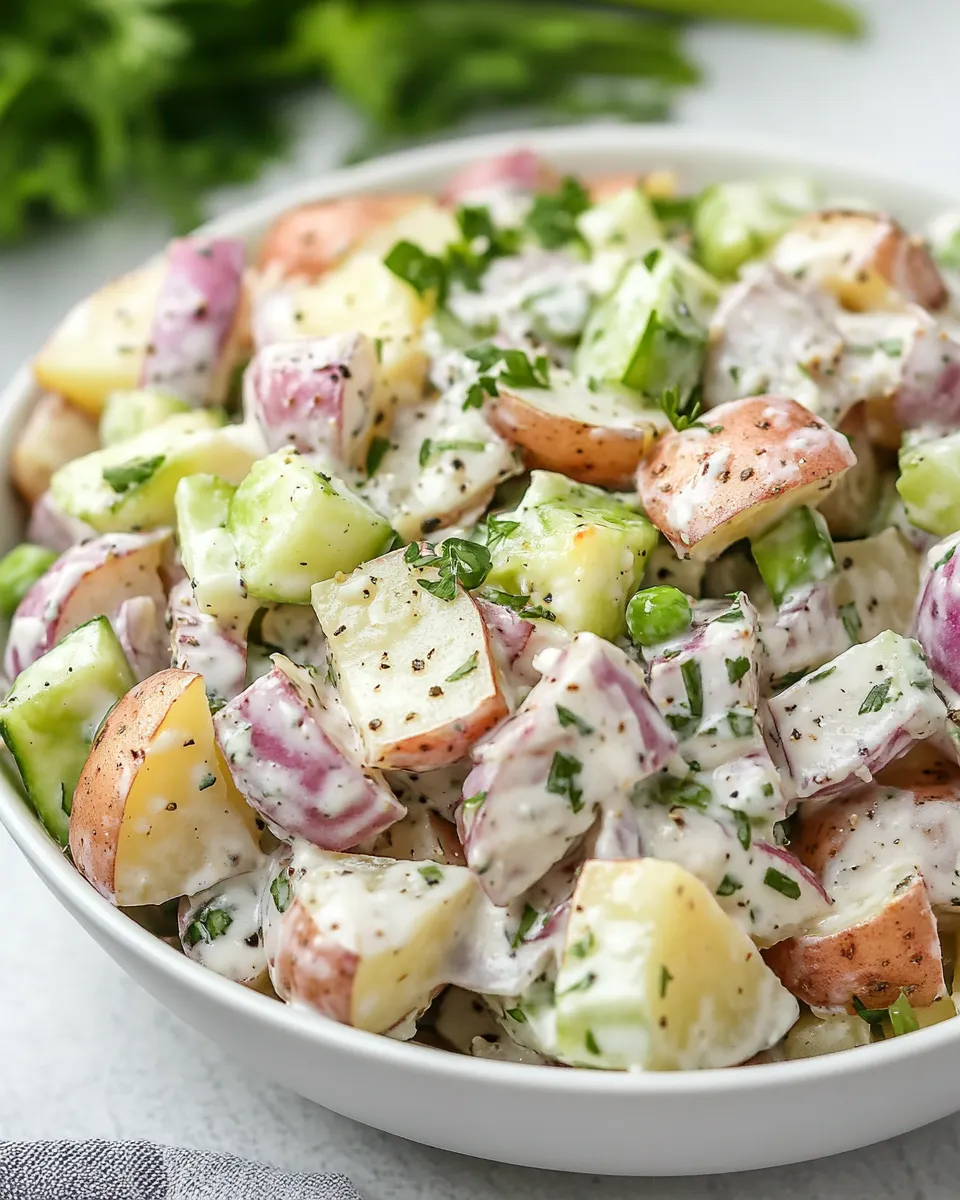
This salad hits several practical notes: it’s easy to scale up, it keeps well in the fridge, and it balances creamy and bright without needing complicated ingredients. The potatoes maintain structure so you don’t end up with a mashed mess. The lemon juice helps the dressing cling to the warm potatoes, which lets flavors penetrate sooner.
It’s a great make-ahead side. If you prepare it the night before, the flavors calm and harmonize. That means less last-minute fuss and more relaxed hosting. Also, since most of the components are pantry-stable or easy to find, it’s a reliable go-to for unexpected guests.
Vegan & Vegetarian Swaps
Vegetarian? You’re already set—this recipe contains no meat. For vegans, swap the mayonnaise and sour cream for plant-based equivalents. Use a vegan mayonnaise that you like and a plain unsweetened plant yogurt or a vegan sour cream. Keep the lemon and fresh dill as written; they’re key to keeping the salad bright.
If you want to increase the herbiness without adding animal products, add more dill (to taste) or extra lemon juice for zip. Make swaps without changing the amounts in the original recipe and taste as you go, especially with vegan alternatives that can differ in tang and thickness.
Gear Up: What to Grab
Essentials
- Large saucepan — for boiling whole potatoes evenly.
- Large mixing bowl — gives you room to toss without breaking the potatoes.
- Small bowl and whisk — for mixing the dressing until smooth.
- Sharp knife and cutting board — to dice onion and celery and cut cooled potatoes.
- Colander — for draining the potatoes cleanly.
Nice to have
- Slotted spoon — handy for moving potatoes without excess water.
- Measuring spoons and cups — for consistent seasoning and dressing ratios.
- Plastic wrap or airtight container — for chilling and storing.
Errors to Dodge
- Overcooking the potatoes — cook until a fork just pierces them. Overdone potatoes fall apart when you mix and produce a gluey texture.
- Cutting potatoes too early — cut them after they’ve cooled enough to handle. Too-warm potatoes are fragile and will mash while you stir.
- Adding dressing while potatoes are piping hot — warm is fine (it helps absorb flavor), but very hot potatoes can make the dressing separate or thin out too much. Let them rest about 10 minutes.
- Under-seasoning — salt and lemon are both essential. Add the base amounts listed, then taste after chilling and adjust sparingly.
- Skipping the chill time — flavors need at least 2 hours to meld. Serve too soon and the salad tastes disjointed.
Tailor It to Your Diet
Want a lighter version? Use the listed option of light mayonnaise and choose Greek yogurt instead of sour cream. Greek yogurt will give tang and a bit more protein while cutting fat. If you’re watching sodium, start with less than the listed salt and add it after the chill so you don’t overdo it.
Gluten-free? This recipe is naturally gluten-free as written. Keto or low-carb? Potatoes are high in starch, so this salad doesn’t fit well into strict low-carb plans. If you follow a stricter diet, consider serving smaller portions alongside lower-carb dishes.
Author’s Commentary
I keep a simple potato salad like this in regular rotation because it’s honest food: straightforward to make, forgiving, and satisfying. I prefer the combination of mayo and sour cream for a balanced texture—mayonnaise lends silk, sour cream brings a gentle tang. Fresh dill is non-negotiable in my kitchen for this salad; it lifts the whole dish.
When I’m short on time, I’ll dice the onion and celery a day ahead and store them in the fridge. The potatoes are best when you boil them whole and cut them after a short rest. That little extra patience changes the final texture in a way guests notice, even if they can’t explain why.
Freezer-Friendly Notes
Mayonnaise- and sour-cream–based salads don’t freeze well. The emulsion can break and the texture of the potatoes changes, becoming mealy or watery once thawed. If you want to prep in advance and freeze, cook and freeze plain potatoes separately (without dressing) for use in hot dishes later, but don’t freeze the finished salad.
If you must store leftovers for longer than a few days, keep the salad chilled and consume it within 3–4 days. For the best quality, make the salad fresh or make components ahead and assemble just before serving.
Popular Questions
- How long does this keep in the fridge? Store in an airtight container and use within 3–4 days for best texture and safety.
- Can I make it the night before? Yes. In fact, chilling overnight improves flavor melding. Stir gently before serving.
- Can I use other potatoes? You can, but red potatoes are recommended because they maintain their shape. Waxy varieties hold up better than starchy ones like russets.
- Do I have to use fresh dill? Fresh dill gives the best flavor. If you only have dried dill, use sparingly—start with a small pinch and adjust, as dried herbs are more concentrated but also different in flavor.
- Is lemon juice necessary? Yes—acid balances the creaminess. You can reduce it slightly if you prefer a milder bright note, but don’t skip it entirely.
The Last Word
This Red Potato Salad is one of those versatile sides that does the heavy lifting at gatherings—simple to scale, easy to tweak, and reliably good. Follow the method, respect the chill time, and make the small tweaks that suit your tastes. The result is a salad that feels fresh, looks pretty on the plate, and keeps people coming back for a spoonful or two more.

Red Potato Salad
Ingredients
Ingredients
- ?2 poundssmall red potatoes
- ?1 smallred onionfinely diced
- ?1 stalkceleryfinely diced
- ?2 tablespoonsfresh lemon juice
- ?1/2 cupmayonnaiseregular or light
- ?1/2 cupsour creamor Greek yogurt
- ?1/2 teaspoonkosher salt
- ?1/4 teaspoonground black pepper
- ?1/4 cupfresh dill
Instructions
Instructions
- Scrub the 2 pounds small red potatoes and place them whole in a large saucepan. Cover with cold water by 1 inch and bring to a boil. Cook until a fork easily pierces the potatoes, about 15–20 minutes.
- Drain the potatoes and let them cool until they are easy to handle, about 10 minutes. Cut into bite-sized pieces and transfer to a large bowl.
- Add the 2 tablespoons fresh lemon juice to the warm potato pieces and toss gently to coat.
- Add the 1 small red onion (finely diced) and 1 stalk celery (finely diced) to the potatoes and toss to combine.
- In a separate bowl, whisk together 1/2 cup mayonnaise, 1/2 cup sour cream or Greek yogurt, 1/4 cup fresh dill (finely chopped), 1/2 teaspoon kosher salt, and 1/4 teaspoon ground black pepper until smooth.
- Pour the dressing over the potato mixture and stir gently until the potatoes, onion, and celery are evenly coated.
- Cover and refrigerate at least 2 hours, or overnight, to chill and allow the flavors to meld. Stir gently before serving.
Equipment
- Large Saucepan
- Large Bowl
- Whisk
Notes
The potatoes are seasoned as they’re cooked in salted water and absorb a small amount of the salt, then they are tossed with lemon juice for extra flavor.
Make sure not to overcook the potatoes, the cooking time can vary depending on the variety and size of red potatoes you’re using. Just cook until the potatoes are fork-tender.
Cut the potatoes into halves or quarters depending on the size of your baby potatoes. Try to cut even pieces that are not too big for eating.
It’s important to refrigerate the potato salad before serving. I usually chill it for at least 6 hours, but overnight is even better (but you can do 2 hours if in a rush).
Store the leftovers in an airtight container in the fridge for up to 3 days.