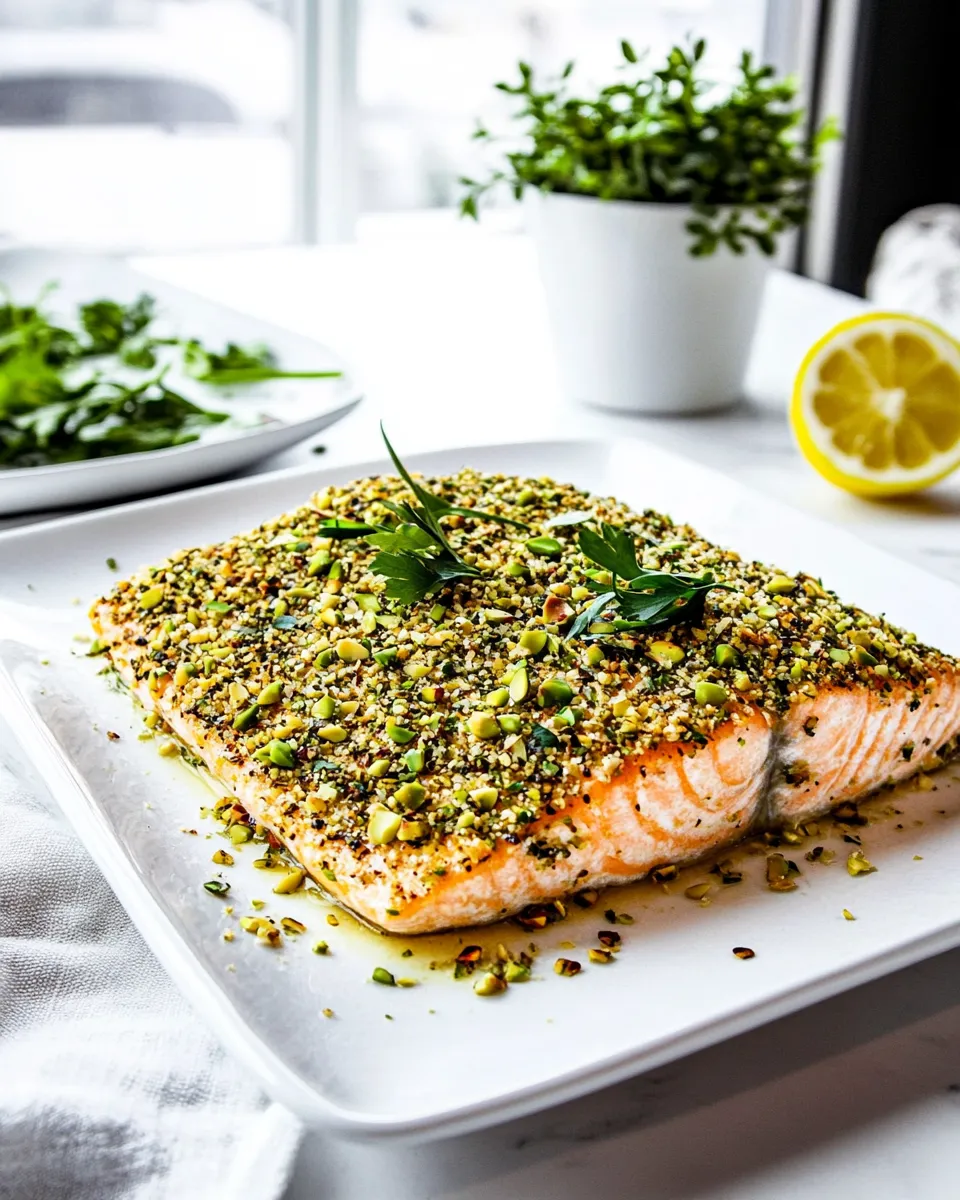
Pistachio Crusted Baked Salmon
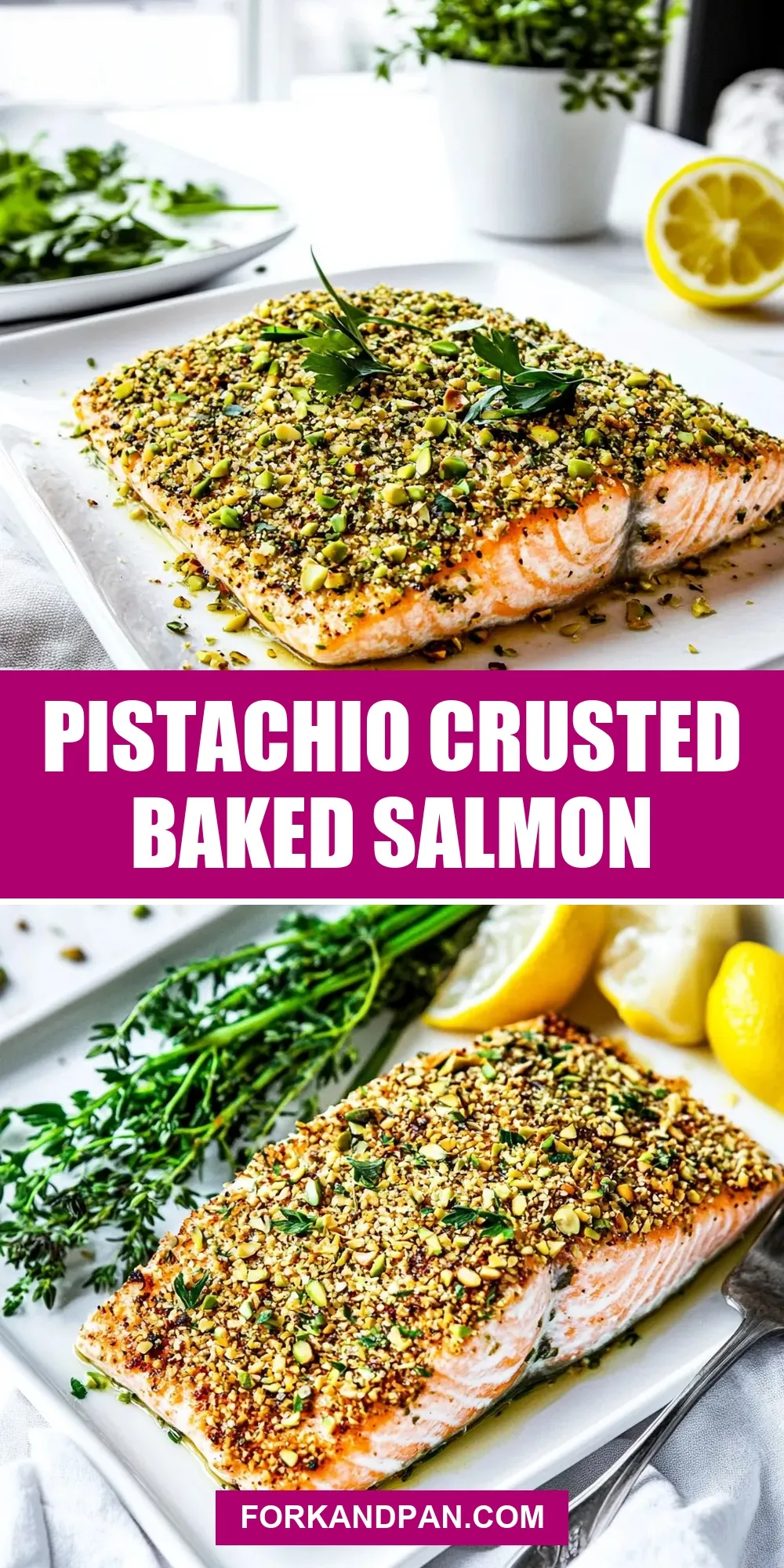
I like recipes that feel special without asking for an hour in the kitchen. This pistachio-crusted baked salmon is one of those dishes: bright, textured, and quick enough for a weeknight but elegant enough for guests. The pistachio crust gives a buttery crunch while a lemon-honey glaze keeps the fish moist and balanced.
The method is straightforward. You build a simple lemon-honey-Dijon glaze, press a crunchy pistachio-panko-Parmesan mix on top of a whole salmon fillet, and roast until just flaky. Timing matters more than technique, so I’ll walk you through how to avoid dry fish and a soggy crust.
Read on for everything you need — ingredients, step-by-step instructions, troubleshooting, and sensible swaps if something’s out of season or budget. This is the kind of recipe you can memorize and adapt without losing what makes it great.
What You’ll Need

- 1 1/2 pound whole salmon fillet, skin on — the centerpiece; skin helps hold the fillet together while roasting and keeps the flesh moist.
- Kosher salt and freshly ground black pepper — basic seasoning; salt brings out sweetness, pepper adds a little bite.
- 1 tablespoon fresh lemon juice — brightens the glaze and balances the richness of the fish and pistachios.
- 2 teaspoons olive oil — helps the glaze spread and adds a touch of fat for flavor.
- 2 teaspoons honey — gives a subtle sweetness that helps the crust brown and hold together.
- 1 teaspoon Dijon mustard — adds a mild tang and helps emulsify the glaze.
- 1 clove fresh garlic, minced — a little savory depth in the glaze; avoid overpowering the salmon.
- 1/4 cup panko — light breadcrumbs that create a crisp crust without weighing the fish down.
- 1/3 cup crushed pistachios — the defining crunch and flavor; no need to shell past the amount listed.
- 2 tablespoons freshly grated Parmesan cheese — savory, salty binder for the crust; freshly grated melts and adheres better than pre-grated.
- Zest of 1 lemon — concentrated citrus aroma for the crust; adds lift without extra liquid.
- Lemon wedges for serving, optional — for finishing and adding extra brightness at the table.
Mastering Pistachio Crusted Baked Salmon: How-To
- Preheat the oven to 400 degrees F. Line a large rimmed baking sheet with parchment paper.
- Place the 1 1/2 pound whole salmon fillet skin-side down on the prepared baking sheet. Pat the top and sides dry with paper towels. Season the top and sides with kosher salt and freshly ground black pepper. Set aside.
- In a small bowl, whisk together 1 tablespoon fresh lemon juice, 2 teaspoons olive oil, 2 teaspoons honey, 1 teaspoon Dijon mustard, and 1 clove minced fresh garlic until combined.
- In a separate small bowl, combine 1/4 cup panko, 1/3 cup crushed pistachios, 2 tablespoons freshly grated Parmesan cheese, and the zest of 1 lemon. Stir to mix evenly.
- Drizzle the lemon-honey mixture evenly over the top of the salmon (a spoon or pastry brush works well). It’s fine if some of the mixture runs off onto the parchment.
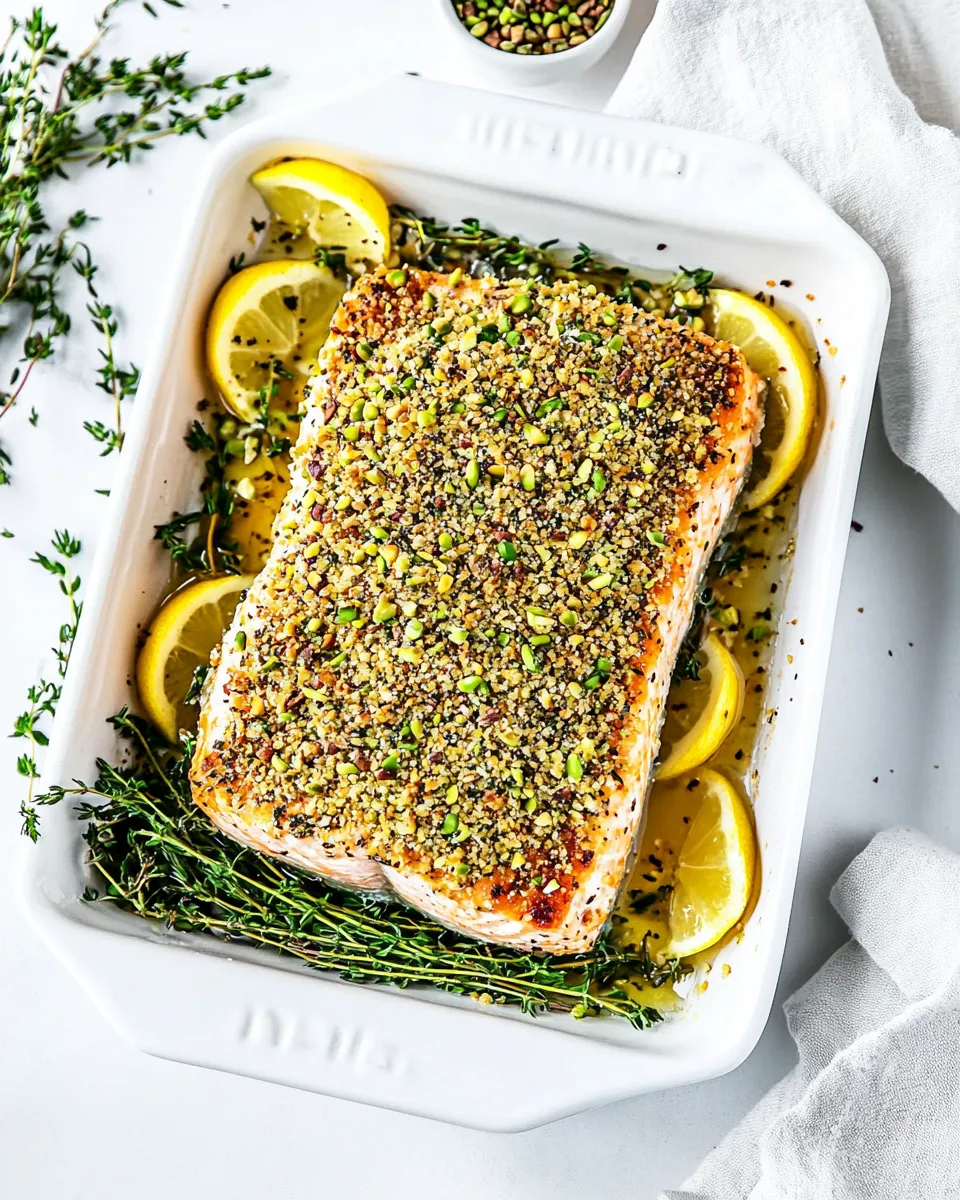
- Sprinkle the pistachio-panko mixture evenly over the top of the salmon. Gently press the mixture onto the fish so it adheres, taking care not to press so hard that the fillet breaks apart.
- Bake on the middle oven rack for 10 to 14 minutes, or until the salmon flakes easily with a fork and the internal temperature in the thickest part reaches 125 to 130 degrees F. Cooking time will vary with the thickness of the fillet.
- Remove the salmon from the oven and serve immediately with lemon wedges, if desired.
Why I Love This Recipe
It’s fast. From pan to plate in under 30 minutes if you prep the garnish while the oven is warming. That makes it a reliable weeknight hero.
It’s textural. The contrast between the tender, silky salmon and the crunchy pistachio-panko topping is irresistible. The lemon-honey-Dijon glaze ties everything together, giving both brightness and a gentle glaze to help the crust adhere.
It’s flexible. You can scale the recipe for a small family dinner or a larger gathering without losing integrity. The flavors are familiar but elevated — people notice the crust, and it reads as thoughtful without being fussy.
Budget & Availability Swaps
- Nut swap: If pistachios are pricey or unavailable, use a neutral chopped nut like almonds or walnuts. Toast them briefly to boost flavor.
- Breadcrumb option: If you don’t have panko, regular breadcrumbs will work — the crust will be denser, so watch texture.
- Cheese flexibility: If Parmesan is hard to find, a similar hard cheese (like Pecorino) can work; use sparingly to avoid overpowering the pistachios.
- Salmon alternatives: If a whole fillet isn’t available, you can adapt the technique for salmon portions; reduce baking time and check doneness earlier.
Equipment & Tools
- Baking sheet with a rim — keeps juices contained and gives even heat distribution.
- Parchment paper — prevents sticking and makes cleanup effortless.
- Small bowls — one for the glaze, one for the crust mix to keep things tidy.
- Spoon or pastry brush — to spread the lemon-honey glaze evenly.
- Sharp knife and cutting board — for zesting and any trimming of the fillet.
- Instant-read thermometer — optional but the most reliable way to hit 125–130°F without guessing.
Troubles You Can Avoid
Overcooking is the most common issue. Salmon goes from perfect to dry fast. Aim for 125–130°F in the thickest part; the fish will carryover cook a few degrees after you remove it from the oven. Check at the earlier end of the time range if your fillet is thinner than 1 inch.
A soggy crust happens when the glaze is too wet or the panko isn’t dry. Don’t over-do the glaze; a thin, even drizzle is enough. If your panko or pistachios feel soft, toast them briefly in a dry skillet to remove excess moisture before mixing.
Pressing too hard to make the crust stick can split the fillet. Gently press so the mixture adheres but the flesh keeps its shape.
Spring to Winter: Ideas
Spring
Serve with a crisp green salad, young asparagus, or a pea-mint purée. Bright, herb-forward sides keep the plate fresh.
Summer
Offer a tomato-cucumber salad or grilled corn. Serve the salmon at room temperature for an alfresco meal.
Fall
Roasted root vegetables and a warm grain salad pair nicely. The nutty crust stands up to heartier sides.
Winter
Think braised greens or a citrusy braised fennel; a little acid helps cut through richer winter sides and the crust’s oiliness.
Notes on Ingredients
Salmon: Skin-on whole fillets hold shape better and keep moisture locked in. Pat the surface dry so the glaze and crust adhere rather than slide off.
Lemon juice and zest: Juice goes into the glaze for acidity; zest goes into the crust so you get citrus aroma without extra liquid that could loosen the coating.
Olive oil, honey, Dijon, garlic: These combine into a thin emulsion that flavors the fish and acts as an adhesive. Use just enough to coat the surface.
Panko and pistachios: Panko gives lift and airiness to the crust; pistachios give the signature crunch and flavor. Crushing the pistachios to a coarse crumb keeps textural contrast.
Parmesan: Adds savory depth and a touch of salt to the crust. Freshly grated is best; pre-grated powders don’t bind or melt the same way.
Refrigerate, Freeze, Reheat
Refrigerate: Store cooked salmon in an airtight container in the fridge for up to 3 days. The crust will soften over time but the flavor remains nice.
Freeze: I don’t recommend freezing a fully crusted cooked fillet if you care about texture — the crust will lose its crunch. If you must freeze, wrap tightly and use within 1 month. Thaw slowly in the fridge before reheating.
Reheat: To retain as much texture as possible, reheat gently in a 300°F oven on a lined baking sheet until just warmed through (about 8–12 minutes depending on thickness). A quick blast under a broiler for 30–60 seconds can revive some crunch, but watch closely to avoid drying the fish.
Handy Q&A
Q: Can I use individual salmon portions instead of a whole fillet?
A: Yes. Baking time will be shorter—start checking around 6–8 minutes depending on thickness. Aim for the same internal temperature range.
Q: My crust fell off. What went wrong?
A: Most likely the glaze was too thin or you didn’t press the crust gently enough to adhere. Pat the top of the fillet dry, apply a modest glaze, and press the crust just enough to make contact.
Q: How do I know when the pistachios are sufficiently crushed?
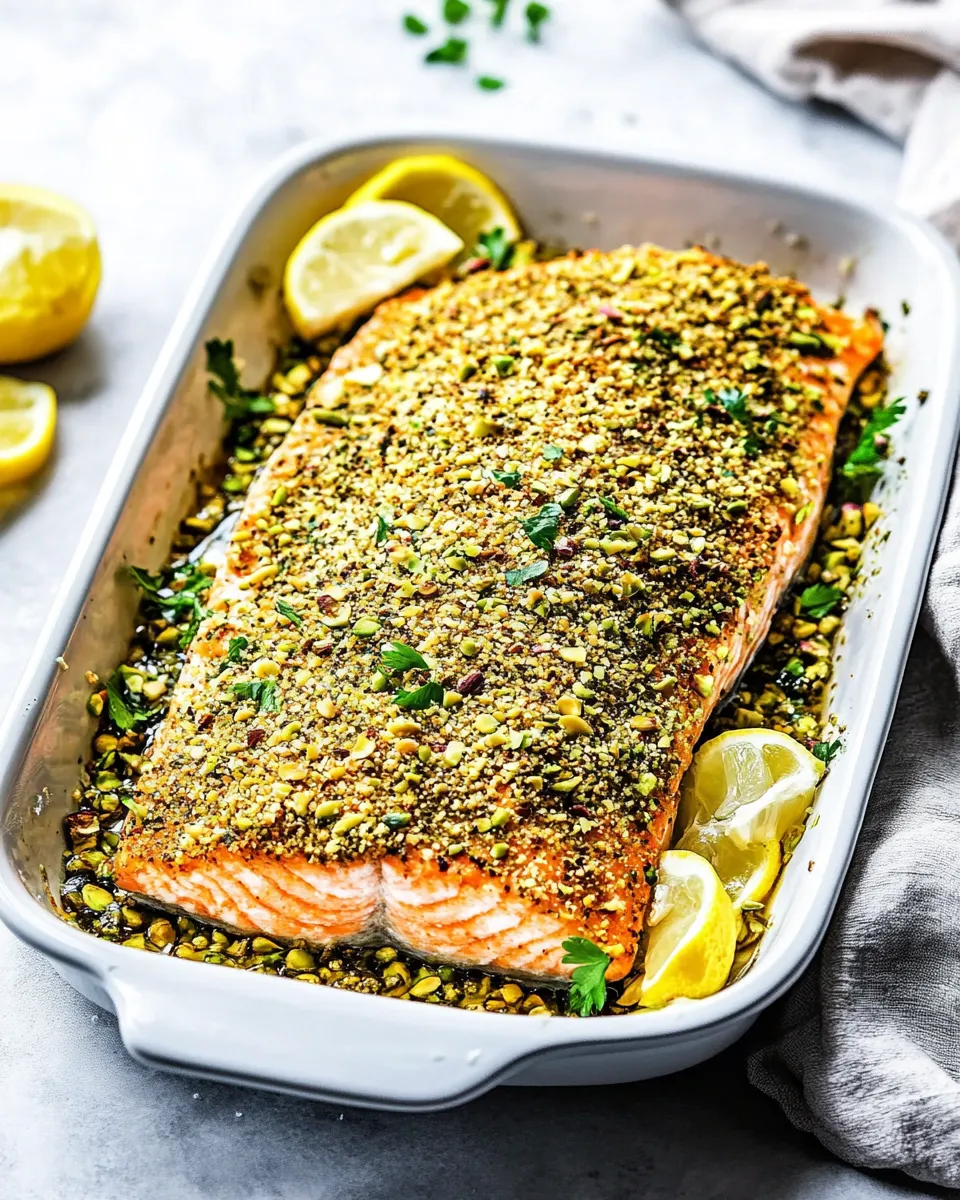
A: You’re aiming for a coarse crumb: no large chunks, but not powder. The crust should have visible green bits for texture and color.
Q: Is the 125–130°F target safe?
A: Yes. This range yields moist, medium-rare salmon that flakes easily. If you prefer fully opaque, cook to a few degrees higher, but expect drier flesh.
Bring It Home
This pistachio crusted baked salmon is the kind of recipe I come back to because it’s reliable, fast, and feels restaurant-worthy with minimal fuss. The balance of sweet, bright, and crunchy is immediate, and it’s forgiving if you keep an eye on time and temperature. Try it once exactly as written to learn the timing for your oven. Once you’re comfortable, tweak the crust or sides to match what’s in season or on sale.
If you try it, let me know how the crust turned out and what you served alongside it. Small adjustments—like a little extra lemon zest or a different nut—can make the recipe your own without losing what makes it work.
Pistachio Crusted Baked Salmon
Ingredients
Ingredients
- 1 1/2 poundwhole salmon fillet skin on
- Kosher salt and freshly ground black pepper
- 1 tablespoonfresh lemon juice
- 2 teaspoonsolive oil
- 2 teaspoonshoney
- 1 teaspoonDijon mustard
- 1 clovefresh garlic minced
- 1/4 cuppanko
- 1/3 cupcrushed pistachios
- 2 tablespoonsfreshly grated Parmesan cheese
- Zest of 1 lemon
- Lemon wedgesfor serving optional
Instructions
Instructions
- Preheat the oven to 400 degrees F. Line a large rimmed baking sheet with parchment paper.
- Place the 1 1/2 pound whole salmon fillet skin-side down on the prepared baking sheet. Pat the top and sides dry with paper towels. Season the top and sides with kosher salt and freshly ground black pepper. Set aside.
- In a small bowl, whisk together 1 tablespoon fresh lemon juice, 2 teaspoons olive oil, 2 teaspoons honey, 1 teaspoon Dijon mustard, and 1 clove minced fresh garlic until combined.
- In a separate small bowl, combine 1/4 cup panko, 1/3 cup crushed pistachios, 2 tablespoons freshly grated Parmesan cheese, and the zest of 1 lemon. Stir to mix evenly.
- Drizzle the lemon-honey mixture evenly over the top of the salmon (a spoon or pastry brush works well). It’s fine if some of the mixture runs off onto the parchment.
- Sprinkle the pistachio-panko mixture evenly over the top of the salmon. Gently press the mixture onto the fish so it adheres, taking care not to press so hard that the fillet breaks apart.
- Bake on the middle oven rack for 10 to 14 minutes, or until the salmon flakes easily with a fork and the internal temperature in the thickest part reaches 125 to 130 degrees F. Cooking time will vary with the thickness of the fillet.
- Remove the salmon from the oven and serve immediately with lemon wedges, if desired.
Equipment
- large rimmed baking sheet
- Parchment Paper
- Small Bowl
- spoon or pastry brush
- Paper Towels
- Fork
- Oven