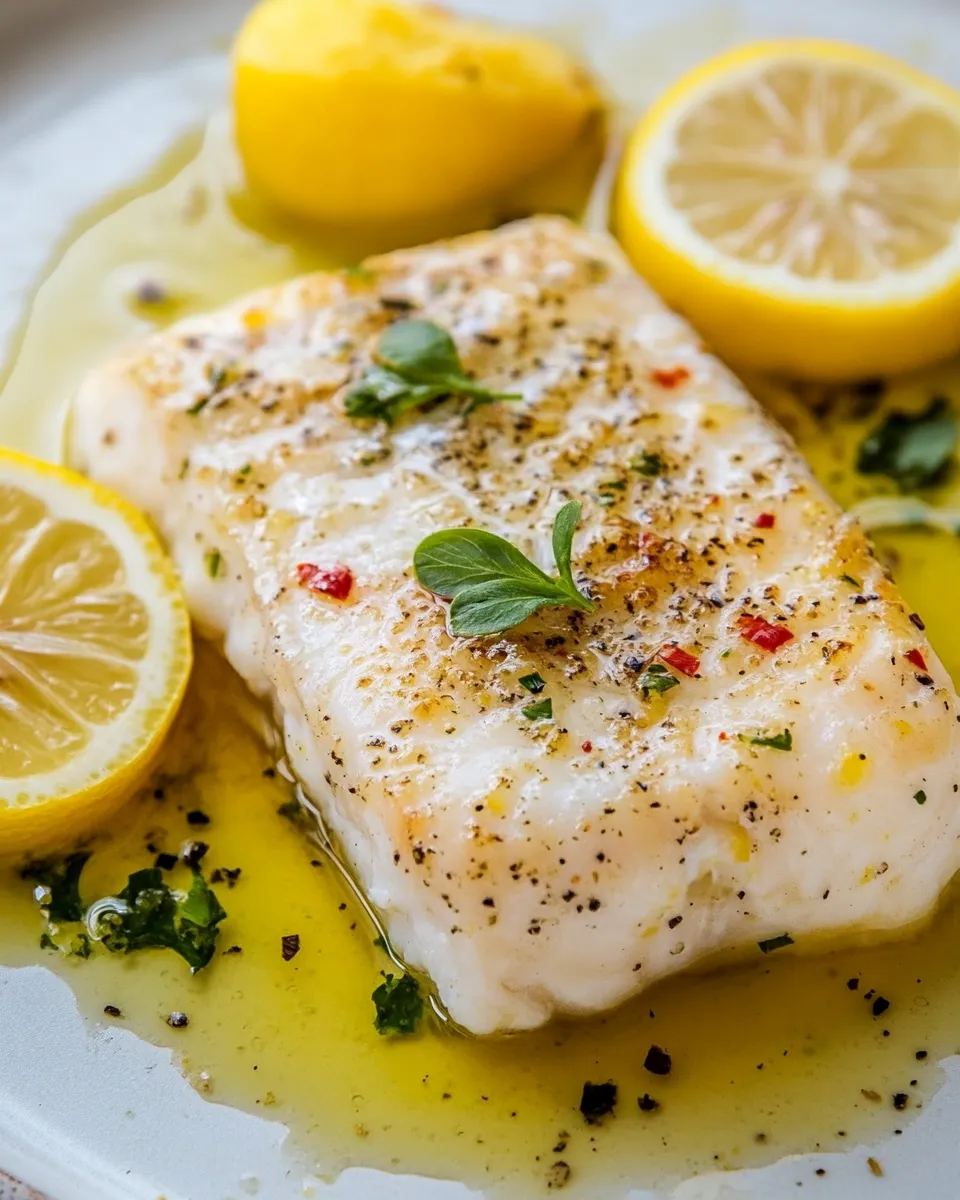
Lemon Baked Cod
I fell for this dish the first time I wanted dinner to be fast, honest, and good. Lemon Baked Cod is exactly that: minimal hands-on time, bright lemon flavor, and flaky white fish that feels like a little kitchen win. It’s the kind of weeknight recipe I return to when I want something healthy without fuss.
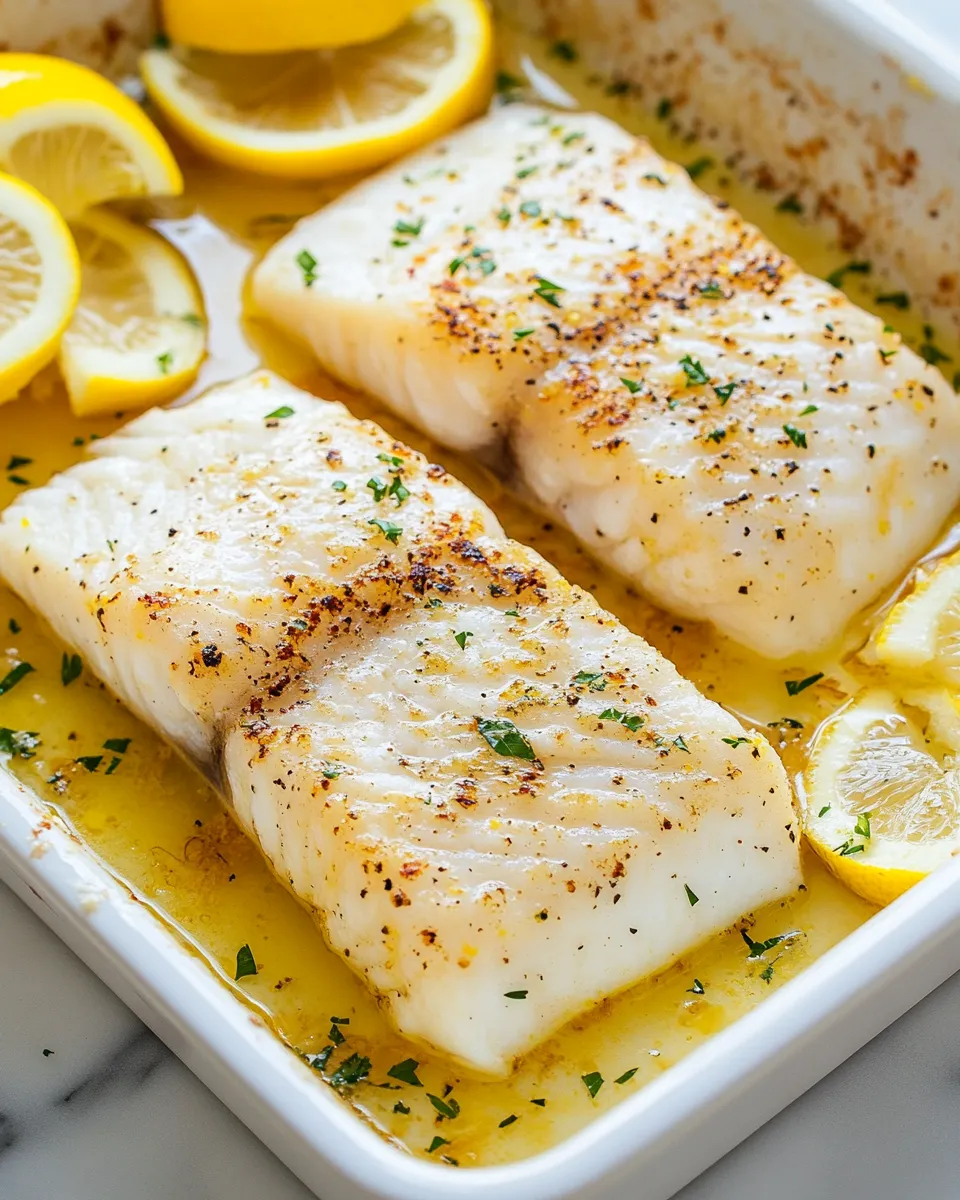
The recipe reads like a checklist — oil, salt, pepper, garlic powder, lemon, parsley — but the result is anything but boring. Baking keeps the cod tender and prevents over-handling. A quick squeeze of lemon and a scatter of parsley at the end refresh the whole plate.
I’ll walk you through the exact steps, explain why each ingredient matters, point out the mistakes I’ve learned to avoid, and give storing and reheating tips so leftovers behave themselves. If you want a dependable fish dinner that’s both accessible and elegant, stay with me.
The Ingredient Lineup

Ingredients
- 4 (5-6 oz) cod fillets about ½” thick, skinless and boneless — The main protein; choose firm fillets that are roughly equal in thickness so they cook evenly.
- 2 tablespoons olive oil — Coats the fillets, helps carry seasoning, and prevents sticking while promoting gentle browning.
- ½ teaspoon salt — Enhances the fish’s natural flavor; split the seasoning as instructed to season both sides evenly.
- ¼ teaspoon ground black pepper — Adds a touch of warmth and contrast; modest amount keeps the lemon profile bright.
- ¼ teaspoon garlic powder — Provides savory depth without the texture or risk of burning that fresh garlic can bring in the oven.
- 1 lemon — Used both for slices and for fresh juice; the acidity lifts and brightens the cod.
- 1 tablespoon fresh parsley leaves — Finishing herb for color and a mild, herbal lift.
Cooking (Lemon Baked Cod): The Process
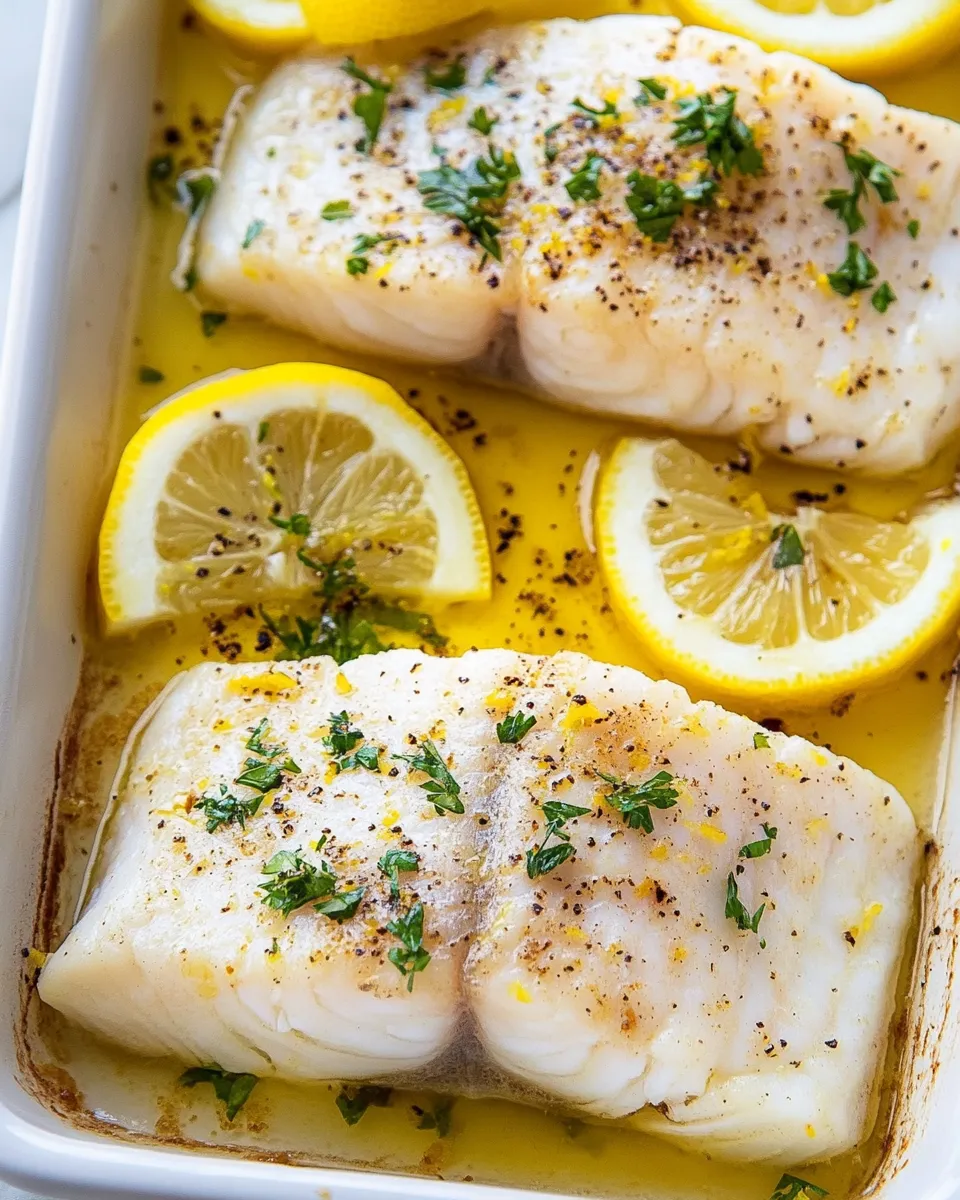
- Preheat the oven to 400°F (200°C).
- Pat the 4 cod fillets dry with paper towels and arrange them in a single layer in a baking dish.
- Drizzle the 2 tablespoons olive oil evenly over the fillets and brush or rub to coat both sides.
- Sprinkle the 1/2 teaspoon salt, 1/4 teaspoon ground black pepper, and 1/4 teaspoon garlic powder evenly over the fillets: sprinkle half of each seasoning on the top, flip each fillet, then sprinkle the remaining half on the bottom.
- Cut the 1 lemon into slices. Squeeze the lemon (or the remaining lemon halves) to drizzle fresh lemon juice over the fillets, then place a few lemon slices on top of the fish.
- Bake in the preheated oven for 12–15 minutes, starting to check at 12 minutes. The cod is done when it is opaque throughout and flakes easily with a fork.
- Chop the 1 tablespoon fresh parsley leaves and sprinkle over the baked cod before serving.
Top Reasons to Make Lemon Baked Cod
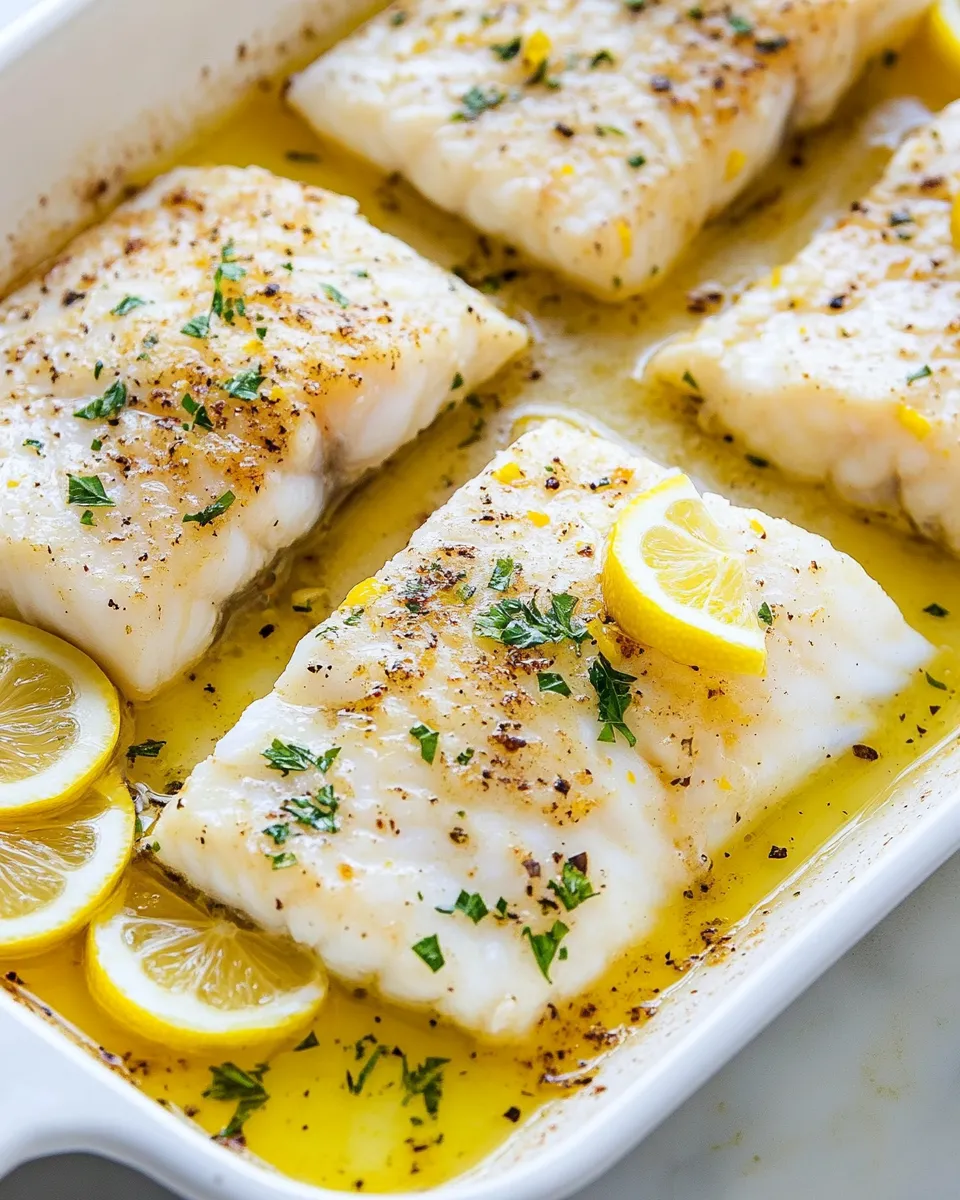
There are practical reasons this recipe lives on heavy rotation in my kitchen.
- Speed: From fridge to table in about 20 minutes. Minimal prep, minimal cleanup.
- Reliability: A predictable bake time and a clear doneness test — opaque and flakes with a fork — make this easy even when you’re distracted.
- Flavor balance: Acid from the lemon cuts through the richness of the fish and olive oil, garlic powder adds savory backbone, and parsley finishes with freshness.
- Healthy: Lean protein, simple fats, and bright aromatics — a good fit for many dietary goals without complicated swaps.
- Versatility: It plays well beside grains, salads, or roasted vegetables. It’s easy to dress up or keep honest and simple.
Dairy-Free/Gluten-Free Swaps
Good news: this dish is already dairy-free and gluten-free as written. The formula is intentionally sparse, which leaves room for you to adapt without needing substitutes.
If you need to tweak textures or flavors, rely on techniques rather than adding dairy or gluten-based ingredients: for example, a light glaze of the olive oil and lemon juice left in the pan can add gloss and moisture when reheating, or fresh herbs at the end boost perceived richness without dairy.
Gear Up: What to Grab
- Baking dish — roomy enough for the fillets to sit in a single layer; a ceramic or glass dish works well for even heat.
- Paper towels — for patting the fillets dry to ensure a good sear-like finish and even seasoning adhesion.
- Small bowl or measuring spoons — to portion salt, pepper, and garlic powder so you can split them evenly.
- Tongs or a fish spatula — helpful when you flip the fillets to season the bottom sides.
- Citrus knife or paring knife — for slicing the lemon cleanly into rounds for topping and squeezing.
- Fork — to test the doneness: the fish should flake easily and be opaque throughout.
Avoid These Mistakes
I’ve burned, overcooked, and under-seasoned enough fish to have a short list of things to watch out for.
- Skipping the pat-dry step. If the fillets are wet, the oil and seasonings won’t cling and the surface won’t bake evenly.
- Overcrowding the pan. Fillets need a single layer with space around them — crowding steams the fish and lengthens cook time.
- Not splitting the seasoning. The simple act of seasoning both sides ensures balanced flavor; missing the bottom side makes the dish taste one-note.
- Walking away too early. Start checking at 12 minutes. Fish can go from perfect to dry quickly, especially with thin fillets.
- Using old lemon. Fresh lemon juice brightens the fish; a dull citrus will leave the dish flat.
Fresh Takes Through the Year
This recipe is a blank canvas for seasonal changes without changing the core method.
- Spring: Serve with quick-sautéed greens or a simple salad to keep the plate light.
- Summer: Pair with a tomato-and-cucumber salad or grilled vegetables for a cooling contrast to the warm fish.
- Fall: Add a side of roasted root vegetables to introduce earthier flavors and heartier textures.
- Winter: Serve over grains or mashed root vegetables for a comforting, warming meal while the lemon keeps it from feeling heavy.
Flavor Logic
Understanding why each component is included helps you adapt the dish confidently.
- Olive oil: Provides a thin protective layer that promotes even heat transfer and prevents severe sticking. It also carries flavor and helps the dry seasonings adhere.
- Salt: Draws out flavor and firms the fish slightly. Splitting the salt ensures both surface and interior seasoning.
- Pepper and garlic powder: Black pepper gives a gentle bite; garlic powder adds savory depth without risking burnt fresh garlic in the oven.
- Lemon: The acid brightens the delicate cod, balancing its natural sweetness and the oil’s mouthfeel.
- Parsley: Freshness at the finish; it adds color and a subtle herbal note that complements citrus.
Cooling, Storing & Rewarming
Leftovers are easy to manage if you follow a couple of simple rules.
- Cooling: Let the fish rest at room temperature no more than 30–60 minutes before refrigerating. Place it in a shallow container so it cools quickly.
- Storing: Refrigerate in an airtight container for up to 2 days. The texture will change slightly (it’s best eaten the same day, but refrigerated leftovers are fine for lunches or light dinners).
- Rewarming: Gently reheat in a 300°F (150°C) oven for about 8–10 minutes, or until just warmed through. A quick reheat preserves moisture better than a high heat blast. If using a microwave, use short intervals at medium power to avoid drying out.
- Salads and bowls: Cold flaked leftovers are excellent in salads, grain bowls, or wrapped into sandwiches — the lemon and parsley keep the flavor lively even when chilled.
Ask & Learn
Here are answers to the questions I get most often when people try this at home.
- How do I know the fish is done? It should be opaque all the way through and flake easily with a fork. Start checking at 12 minutes.
- Can I use frozen cod? Yes — thaw fully and pat dry before seasoning. Excess ice or water will interfere with browning and seasoning adhesion.
- What if my fillets are thicker or thinner? Thicker fillets may need a few extra minutes; thinner fillets will finish sooner. Adjust cook time and watch closely.
- Can I prep ahead? You can measure the dry seasonings and slice the lemon ahead of time. For best texture, oil and season the fish right before baking.
In Closing
This Lemon Baked Cod recipe is one of those dependable tricks that makes weeknights smoother. It’s quick, forgiving, and tastes brighter than its ingredient list suggests. Keep the method in mind — dry the fish, oil it, season both sides, add lemon, and bake until opaque — and you’ll have good results every time.
Make it your own by adjusting sides and timing to fit the rest of your meal. And if you come back to this recipe next month, you’ll find it just as easy to dress up as to strip back to basics. Happy baking — and if you try it, tell me how you served it.

Lemon Baked Cod
Ingredients
Ingredients
- ?4 5-6 ozcod filletsabout 1/2" thick, skinless and boneless
- ?2 tablespoonsolive oil
- ?1/2 teaspoonsalt
- ?1/4 teaspoonground black pepper
- ?1/4 teaspoongarlic powder
- ?1 lemon
- ?1 tablespoonfresh parsley leaves
Instructions
Instructions
- Preheat the oven to 400°F (200°C).
- Pat the 4 cod fillets dry with paper towels and arrange them in a single layer in a baking dish.
- Drizzle the 2 tablespoons olive oil evenly over the fillets and brush or rub to coat both sides.
- Sprinkle the 1/2 teaspoon salt, 1/4 teaspoon ground black pepper, and 1/4 teaspoon garlic powder evenly over the fillets: sprinkle half of each seasoning on the top, flip each fillet, then sprinkle the remaining half on the bottom.
- Cut the 1 lemon into slices. Squeeze the lemon (or the remaining lemon halves) to drizzle fresh lemon juice over the fillets, then place a few lemon slices on top of the fish.
- Bake in the preheated oven for 12–15 minutes, starting to check at 12 minutes. The cod is done when it is opaque throughout and flakes easily with a fork.
- Chop the 1 tablespoon fresh parsley leaves and sprinkle over the baked cod before serving.
Equipment
- Baking Dish
Notes
To reheat, place in a pan and reheat over the stove until it’s warmed enough to your liking.