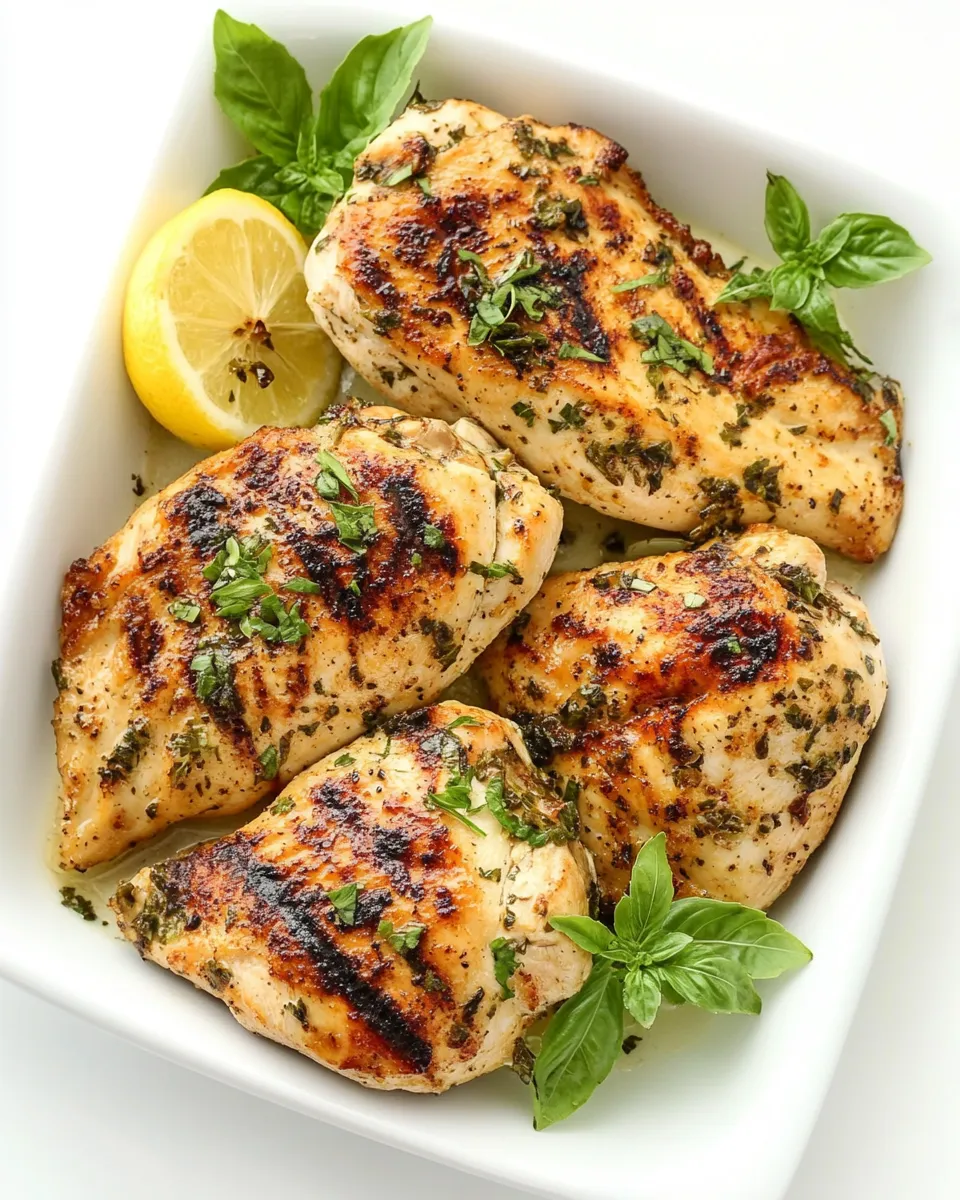
Greek Lemon Chicken
This is the kind of weeknight recipe I turn to when I want something bright, satisfying, and unfussy. The lemon and garlic cut through the richness of the chicken, and the dried herbs keep the pantry tidy without sacrificing flavor. It’s a simple grill-forward dish that feels like a small celebration on the plate.
I like that it’s straightforward to prep and forgiving on timing — marinate for a couple of hours or up to five if your schedule allows. The result is juicy chicken with a citrus-kissed crust that pairs beautifully with a quick salad, roasted vegetables, or a scoop of herby rice.
Below you’ll find everything you need: the exact ingredients, step-by-step instructions, troubleshooting tips, equipment notes, and storage advice. If you want dinner with real flavor and zero drama, this is the recipe to bookmark.
What’s in the Bowl

This recipe keeps the ingredient list short and purposeful. Olive oil forms the base of the marinade, lemon supplies the acid and brightness, and a mix of dried Mediterranean herbs gives the chicken that classic Greek profile. Garlic brings depth, and a final sprinkle of fresh parsley wakes the whole dish up.
You don’t need fancy components to get great results—just good lemons, a reliable extra-virgin olive oil, and a few pantry herbs. The method focuses on even thickness and a hot grill so you get fast, even cooking that stays juicy inside.
Ingredients
- 4(6 oz) boneless skinless chicken breast halves* — main protein; pound to even thickness for uniform cooking.
- 1/3cupolive oil, plus more for brushing grill — fat to carry flavor and keep the chicken moist; use extra-virgin if you like the fruitiness.
- 1Tbsplemon zest — concentrated lemon flavor that brightens the marinade.
- 1/3cupfresh lemon juice — provides acid to tenderize and flavor the meat.
- 4clovesgarlic, minced (1 1/2 Tbsp) — aromatic backbone; mince finely so it distributes evenly.
- 2tspdried oregano — the classic Greek herb; adds earthiness and aroma.
- 1/2tspdried basil — subtle sweetness to balance the oregano.
- 1/2tspdried thyme — a savory note that supports the herb mix.
- 1/2tspdried rosemary, crushed — a little goes a long way; crushing releases oils and prevents tough needles in the finished dish.
- Salt and freshly ground black pepper — essential for seasoning; add to taste but remember salt helps the meat retain moisture.
- Chopped fresh parsley, for serving — fresh finish; adds color and a clean herbal pop.
Greek Lemon Chicken: Step-by-Step Guide
- Place the chicken breasts on a cutting board and, using the flat side of a meat mallet, pound thicker parts to an even thickness.
- In a small bowl, whisk together 1/3 cup olive oil, lemon zest, fresh lemon juice, minced garlic, dried oregano, dried basil, dried thyme, crushed dried rosemary, and salt and freshly ground black pepper to taste.
- Put the chicken into a gallon-size resealable bag, pour in the olive oil mixture, press out excess air, seal the bag, and rub the marinade over the chicken so each piece is coated. Refrigerate 2 to 5 hours, rotating the bag and moving the chicken around halfway through if possible.
- Preheat the grill to medium-high (about 425–450°F).
- Brush the grill grates lightly with olive oil.
- Remove the chicken from the bag, discard the marinade, and let excess marinade drip off.
- Place the chicken on the preheated grill, close the lid, and grill about 4 minutes per side, or until an instant-read thermometer inserted into the thickest part registers 160–165°F.
- Transfer the chicken to a plate, let rest 5 minutes, garnish with chopped fresh parsley, and serve immediately.
What Makes This Recipe Special
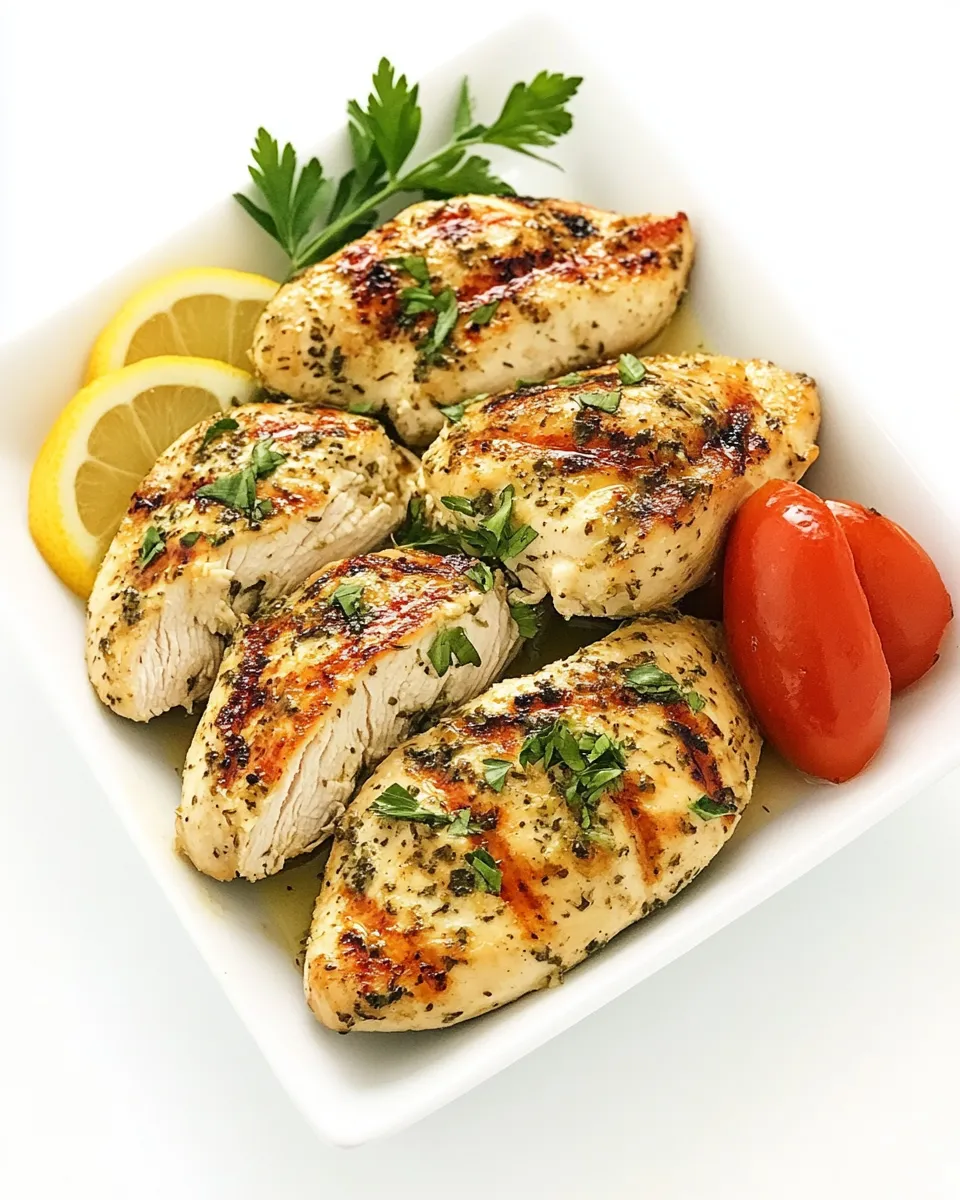
There are three simple things that elevate this dish: balance, technique, and timing. The lemon zest and juice work together — zest gives intense citrus oil, juice provides bright acidity. Together they deliver layered lemon flavor, not just a single-note sourness.
Pounding the breasts to an even thickness fixes one of the most common home-cook problems: uneven cooking. The outside crisps and the inside cooks through at the same time, so you avoid dried-out edges and undercooked centers.
Finally, the short grill time at medium-high heat locks in juices while building a savory char. The result feels both rustic and refined, perfect for weeknights or for serving guests without fuss.
No-Store Runs Needed
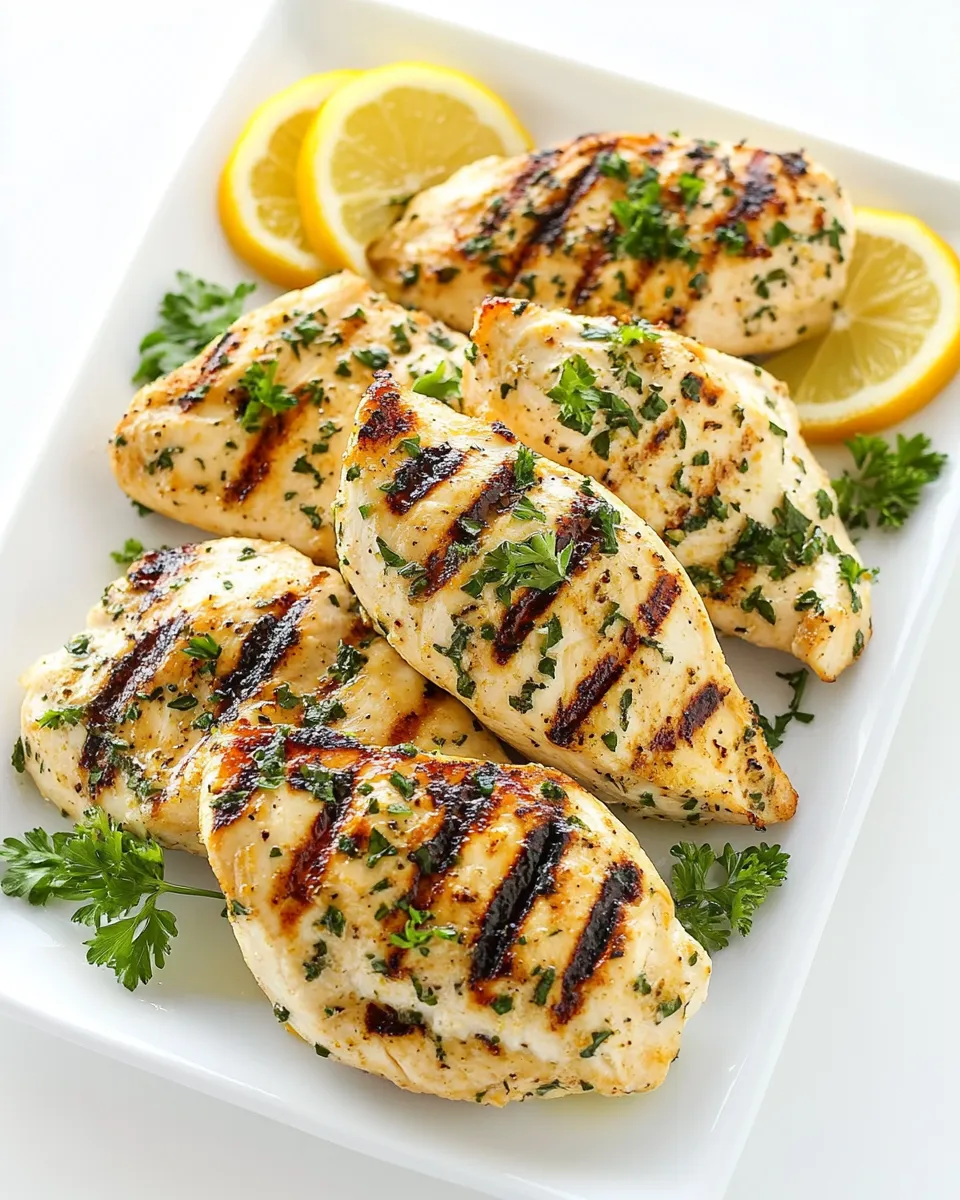
If you keep a few staples on hand, this recipe practically cooks itself. Olive oil, garlic, dried oregano, thyme, basil, and rosemary are pantry constants in most kitchens. Lemons are the only fresh item you’ll definitely need besides the chicken and parsley.
Want to make this with what’s already in your fridge? Use bottled lemon juice in a pinch, but add extra zest if you have one lemon to intensify the citrus notes. If you’re out of one dried herb, omit it rather than trying to recreate the blend with too many substitutes.
Equipment Breakdown
You don’t need specialized tools to make excellent Greek Lemon Chicken, but a few items make the job easier and more consistent.
- Meat mallet or rolling pin — evens out the chicken thickness for predictable cooking.
- Gallon-size resealable bag — convenient for marinating and rubbing the flavors in with minimal cleanup.
- Instant-read thermometer — priceless for accuracy; it prevents overcooking and ensures food safety.
- Grill (gas or charcoal) — gives that quick, clean sear. If you don’t have a grill, use a heavy skillet or grill pan over medium-high heat and follow the same internal temperature target.
- Tongs — for safe, secure flipping without piercing the meat and releasing juices.
Missteps & Fixes
- Problem: Chicken cooks unevenly. — Fix: Pound to an even thickness before marinating so both thin and thick parts finish at the same time.
- Problem: Marinade makes the grill flare up. — Fix: Let excess marinade drip off and pat the pieces lightly before they hit the grates; brush the hot grates with oil to reduce sticking.
- Problem: Chicken ends up dry. — Fix: Don’t overcook. Pull the chicken at 160°F and let it rest to reach the safe range (carryover brings it to 165°F). Use an instant-read thermometer rather than guessing by time alone.
- Problem: Too bitter from lemon. — Fix: If the lemon flavor tastes sharp, a small pinch of sugar in the marinade balances the acidity. Use sparingly—this is optional.
Better Choices & Swaps
Swap ideas let you adapt this recipe to what you prefer or have on hand. They won’t change the method, just the flavor or texture.
- Chicken thighs instead of breasts — choose boneless skinless thighs for juicier, more forgiving meat; reduce grill time slightly and still use a thermometer.
- Fresh herbs in place of dried — if you have fresh oregano, basil, or thyme, use roughly three times the amount of fresh herbs to replace dried, but don’t overload the marinade.
- Oven or skillet method — cook on a hot cast-iron skillet for about 4–5 minutes per side, or roast at 425°F until the same internal temperature is reached.
- Olive oil alternatives — avocado oil works well for high heat; it has a neutral flavor if you prefer less fruity notes.
Little Things that Matter
Small details shift this from “good” to “memorable.” Zesting before juicing captures the aromatic oils you’d otherwise lose. Crushing the dried rosemary releases the fragrant oils and prevents its pointy texture from dominating bites.
Rotate the bag while the chicken marinates so every part gets coated. It’s a small step but it ensures consistent flavor throughout. And don’t skip the five-minute rest after grilling—this short pause lets juices redistribute so every slice stays moist.
Keep It Fresh: Storage Guide
Store any cooled leftover chicken in an airtight container in the refrigerator for up to 3–4 days. To reheat, use a low oven (about 300°F) covered with foil for 10–15 minutes or until warmed through—this prevents drying out. Slices reheated gently in a skillet with a splash of water or broth also work well.
For longer storage, freeze cooled chicken in a freezer-safe bag or container for up to 2 months. Thaw overnight in the refrigerator before reheating. Note that frozen and then reheated chicken will be slightly less tender than freshly grilled, but the lemon-herb flavor still carries through nicely.
FAQ
Can I marinate the chicken longer than 5 hours? Yes, but I wouldn’t recommend marinating much past 8 hours. The acid from the lemon juice can start to break down the proteins and make the texture mushy if left too long.
Do I have to use a grill? No. A heavy skillet or grill pan works fine. Aim for a medium-high heat so you get that quick sear and similar cook time. The internal temperature target remains the same.
Why discard the marinade? The used marinade has been in contact with raw chicken. Discard it to avoid any risk of foodborne illness. If you want a sauce, reserve some marinade separately before adding raw chicken, or simmer the used marinade for several minutes to make it safe.
What side dishes pair well? Simple choices shine here: Greek salad, roasted potatoes, lemony rice, or a bright tabbouleh. A dollop of tzatziki also complements the lemon and herbs beautifully.
Before You Go
This Greek Lemon Chicken is exactly the recipe to keep in regular rotation: short ingredient list, quick grill time, and flavors that feel both fresh and familiar. Prep is forgiving, and the technique teaches reliable habits—pound evenly, use acid thoughtfully, and always check temperature instead of relying solely on time.
Make a double batch if you like to have cooked chicken on hand for salads or sandwiches throughout the week. And if you try a swap—thighs, different herbs, or a skillet—come back and tell me how it turned out. I love hearing the little tweaks people make that end up being their go-to.
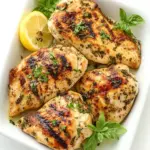
Greek Lemon Chicken
Ingredients
Ingredients
- 4 6 oz boneless skinless chicken breast halves*
- 1/3 cupolive oil plus more for brushing grill
- 1 Tbsplemon zest
- 1/3 cupfresh lemon juice
- 4 clovesgarlic minced (1 1/2 Tbsp)
- 2 tspdried oregano
- 1/2 tspdried basil
- 1/2 tspdried thyme
- 1/2 tspdried rosemary crushed
- Salt and freshly ground black pepper
- Chopped fresh parsley for serving
Instructions
Instructions
- Place the chicken breasts on a cutting board and, using the flat side of a meat mallet, pound thicker parts to an even thickness.
- In a small bowl, whisk together 1/3 cup olive oil, lemon zest, fresh lemon juice, minced garlic, dried oregano, dried basil, dried thyme, crushed dried rosemary, and salt and freshly ground black pepper to taste.
- Put the chicken into a gallon-size resealable bag, pour in the olive oil mixture, press out excess air, seal the bag, and rub the marinade over the chicken so each piece is coated. Refrigerate 2 to 5 hours, rotating the bag and moving the chicken around halfway through if possible.
- Preheat the grill to medium-high (about 425–450°F).
- Brush the grill grates lightly with olive oil.
- Remove the chicken from the bag, discard the marinade, and let excess marinade drip off.
- Place the chicken on the preheated grill, close the lid, and grill about 4 minutes per side, or until an instant-read thermometer inserted into the thickest part registers 160–165°F.
- Transfer the chicken to a plate, let rest 5 minutes, garnish with chopped fresh parsley, and serve immediately.
Equipment
- Grill
- Meat Mallet
- Small Bowl
- gallon-size resealable bag
- Instant-read thermometer
- Plate
Notes
Recipe source: Cooking Classy