

Goat Cheese Crostini Canapes
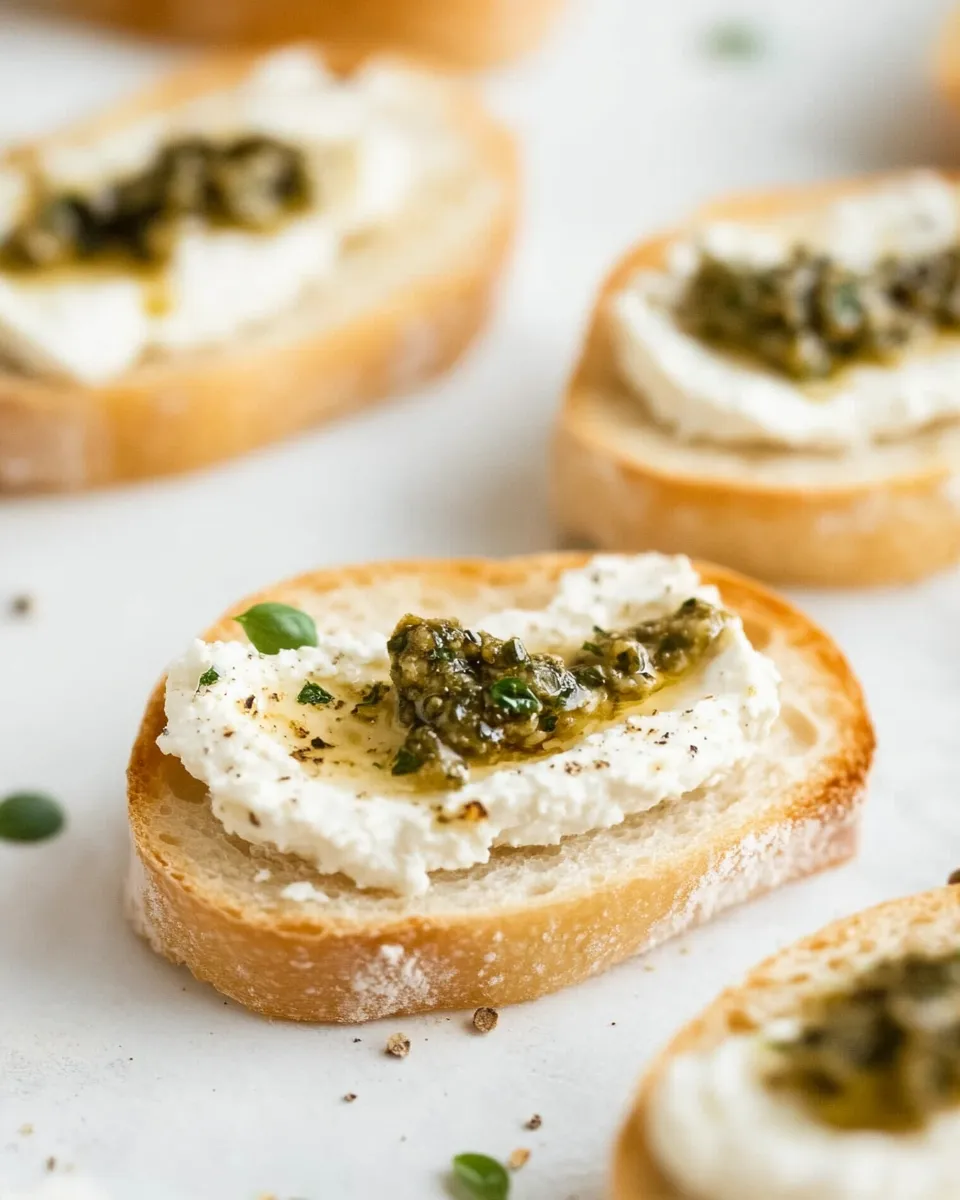
These Goat Cheese Crostini Canapes are one of my go-to hors d’oeuvres for small gatherings and busy weeknight treats alike. They come together quickly, rely on pantry-friendly components, and look far more special than the time they take. The creaminess of the goat cheese paired with a smear of pesto gives bright, herb-forward flavor with minimal effort.
I love recipes that are honest about what they ask from you: a little mixing, a short chill, and a few minutes of assembly. No elaborate cooking or precise techniques. That practicality makes this canapé perfect for last-minute guests, potlucks, or a simple pre-dinner nibble alongside a glass of wine.
Below you’ll find everything I use, the exact steps I follow, sensible swaps, and the mistakes to avoid so your crostini come out reliably excellent. Read through the notes before you start; a quick prep habit saves time and yields a prettier platter.
What We’re Using

- 8 ounces goat cheese — softened at room temperature; provides a tangy, creamy base that cuts through richer bites.
- 8 ounces cream cheese — softened at room temperature; smooths the texture and makes the spread easy to pipe or spoon.
- 1/2 teaspoon garlic powder — a subtle garlic backbone without the risk of raw-garlic bite.
- 1/4 teaspoon fresh cracked black pepper — adds gentle heat and complexity; freshly cracked is brighter than pre-ground.
- 24 crostini or toasted baguette slices — the crunchy vehicle for the cheese; toast until crisp but not burnt.
- 1/2 cup pesto — divides across all crostini to add herb and olive-oil flavor; choose basil pesto for classic pairing.
- chopped fresh basil or parsley — to garnish (optional); a little green lifts the presentation and aroma.
Directions: Goat Cheese Crostini Canapes
- Put the 8 ounces softened goat cheese and 8 ounces softened cream cheese into a medium bowl.
- Add 1/2 teaspoon garlic powder and 1/4 teaspoon fresh cracked black pepper. Mix until the cheeses are fully combined and smooth (use a hand mixer, wooden spoon, or sturdy fork).
- Transfer the cheese mixture to an airtight container and refrigerate for at least 1 hour to let the flavors meld and to firm the mixture slightly.
- When ready to assemble, stir the chilled cheese mixture briefly to make it spreadable if it has become very firm. Place the 24 crostini or toasted baguette slices on a serving platter.
- Spread about 1/2 tablespoon of the cheese mixture onto each crostini.
- Spoon pesto on top of each crostini, dividing the 1/2 cup of pesto among the 24 crostini.
- Garnish each canapé with chopped fresh basil or parsley if desired, and serve immediately.
Why It’s My Go-To
There are a few reasons I return to this recipe over and over. First, it’s fast without feeling rushed. The hands-on time is short: mixing, chilling, and assembly—no stovetop or oven required if you buy premade crostini. That matters when I want to spend time with guests rather than hovering in the kitchen.
Second, the flavor profile is balanced and crowd-pleasing. Goat cheese brings a bright, tangy note while cream cheese mellows and adds spreadability. Pesto adds an instant herb hit and gloss. Together they create a layered bite that feels thoughtful but isn’t finicky.
Finally, the recipe is forgiving. It tolerates small changes in proportions, accepts a range of toppings, and scales well. Whether you need 12 or 60 canapés, the technique holds.
Ingredient Swaps & Substitutions
Cheese swaps
- Swap part or all of the cream cheese with mascarpone for a softer, slightly sweeter spread if you prefer less tang.
- Use a mild fresh goat cheese from a log or a slightly aged chèvre for a firmer texture—both work, but texture will vary.
Pesto and herb alternatives
- If you don’t have basil pesto, try sun-dried tomato pesto or a spoonful of tapenade to change the flavor profile—both are bolder, so use a little less.
- Swap basil garnish for flat-leaf parsley or chives depending on what you have on hand; each brings a fresh aromatic note.
Bread options
- Replace crostini with thinly sliced, toasted sourdough or rye for a different crunch and flavor contrast.
- For a gluten-free option, use toasted gluten-free baguette slices or sturdy crackers that can hold a spread.
Equipment at a Glance

You don’t need fancy tools for these canapés. Here’s what I reach for every time:
- Medium mixing bowl — for combining the cheeses.
- Hand mixer or sturdy fork/wooden spoon — a hand mixer gives the smoothest finish; fork or spoon works fine if you don’t mind a bit more elbow grease.
- Airtight container — for chilling the cheese mixture so it firms slightly and flavors marry.
- Spoon or small offset spatula — for spreading the cheese evenly on each crostini.
- Spoon or small cookie scoop — handy to portion the pesto consistently across bites.
Avoid These Mistakes
- Don’t skip softening the cheeses. Cold, hard cheeses are hard to mix and will make lumpy spreads.
- Avoid over-toasting the crostini. They should be crisp but not browned to the point of bitterness.
- Don’t overdress with pesto. Too much will overpower the delicate tang of the goat cheese. Follow the portion guideline for balance.
- Don’t assemble too far ahead. Assembled crostini can get soggy; assemble close to serving time for best texture unless you follow the make-ahead notes below.
Seasonal Spins
Use the recipe as a base and riff depending on what’s in season. In spring, add a halved cherry tomato or a pea shoot for freshness. Summer invites thinly sliced peaches or grilled corn kernels for sweetness and texture. In fall, top with a small spoonful of fig jam or a sliver of roasted pear for a touch of earth and sweetness. In winter, a cranberry relish or a sprinkle of toasted walnuts adds seasonal depth.
Keep amounts modest so the pesto and cheese remain the stars. Small, contrasting garnishes highlight the crostini without competing.
What I Learned Testing
When I first tried this recipe, I treated the cheeses like a single ingredient and mixed them cold—big mistake. Softening them first makes mixing effortless and the final texture silkier. A brief chill after mixing improved flavor melding; the garlic powder lost its edge and rounded into the cheese rather than sitting sharp on the tongue.
I also tested different pesto volumes. Half a cup across 24 crostini gives a balanced herb lift without drowning the cheese. Anything much higher and the pesto dominates. Finally, I experimented with garnishes—herbs are simple and reliable, but small contrasts like toasted pine nuts or a light drizzle of aged balsamic can take the canapés somewhere special for events.
Meal Prep & Storage Notes
Prepare the cheese mixture up to two days ahead and keep it tightly sealed in the refrigerator. The chill helps the flavors marry and firms the mixture, which makes portioning neater. When you’re ready to serve, let the mixture sit at room temperature for 10–15 minutes and stir briefly to restore spreadability.
Store leftover assembled crostini in a single layer in the fridge for up to 24 hours. Cover them lightly with plastic wrap. After that, the crostini can soften and lose crunch. The cheese mixture itself will keep 4–5 days refrigerated in an airtight container. I don’t recommend freezing the assembled crostini; the bread will become soggy when thawed. You can freeze the cheese mixture for up to one month—thaw overnight in the fridge before using.
Frequently Asked Questions
Can I use flavored goat cheese? Yes. A herbed goat cheese or honey-infused variety will change the flavor profile—reduce additional herbs or sweet garnishes to keep balance.
What if my cheese mixture is too firm after chilling? Stir it briefly or let it sit at room temperature for 10–15 minutes. If needed, work it with a spoon or mixer for a few seconds to loosen without warming it fully.
How can I make these bite-sized for a buffet? Use smaller crostini or cut baguette slices thinner and reduce the cheese portion to a scant 1/2 tablespoon per piece. Keep garnish smaller so guests can pop the bites in one go.
Is homemade pesto necessary? No. Good-quality store-bought pesto works fine and saves time. Taste it first; if it’s very salty or strong, use a little less per crostini.
Time to Try It
These Goat Cheese Crostini Canapes are quick to put together and reliably charming on a platter. Start by softening the cheeses, mix once, and pop the mixture in the fridge while you get the crostini ready. Assemble right before guests arrive for the best texture. You’ll have a platter that looks like you spent far longer on it than you actually did—and that’s exactly the kind of entertaining I love.

Goat Cheese Crostini Canapes
Ingredients
Ingredients
- 8 ouncesgoat cheesesoftened at room temperature
- 8 ouncescream cheesesoftened at room temperature
- 1/2 teaspoongarlic powder
- 1/4 teaspoonfresh cracked black pepper
- 24 crostini or toasted baguette slices
- 1/2 cuppesto
- chopped fresh basil or parsleyto garnish optional
Instructions
Instructions
- Put the 8 ounces softened goat cheese and 8 ounces softened cream cheese into a medium bowl.
- Add 1/2 teaspoon garlic powder and 1/4 teaspoon fresh cracked black pepper. Mix until the cheeses are fully combined and smooth (use a hand mixer, wooden spoon, or sturdy fork).
- Transfer the cheese mixture to an airtight container and refrigerate for at least 1 hour to let the flavors meld and to firm the mixture slightly.
- When ready to assemble, stir the chilled cheese mixture briefly to make it spreadable if it has become very firm. Place the 24 crostini or toasted baguette slices on a serving platter.
- Spread about 1/2 tablespoon of the cheese mixture onto each crostini.
- Spoon pesto on top of each crostini, dividing the 1/2 cup of pesto among the 24 crostini.
- Garnish each canapé with chopped fresh basil or parsley if desired, and serve immediately.
Equipment
- Medium Bowl
- Hand Mixer
- Wooden Spoon
- sturdy fork
- Airtight container
- Serving Platter