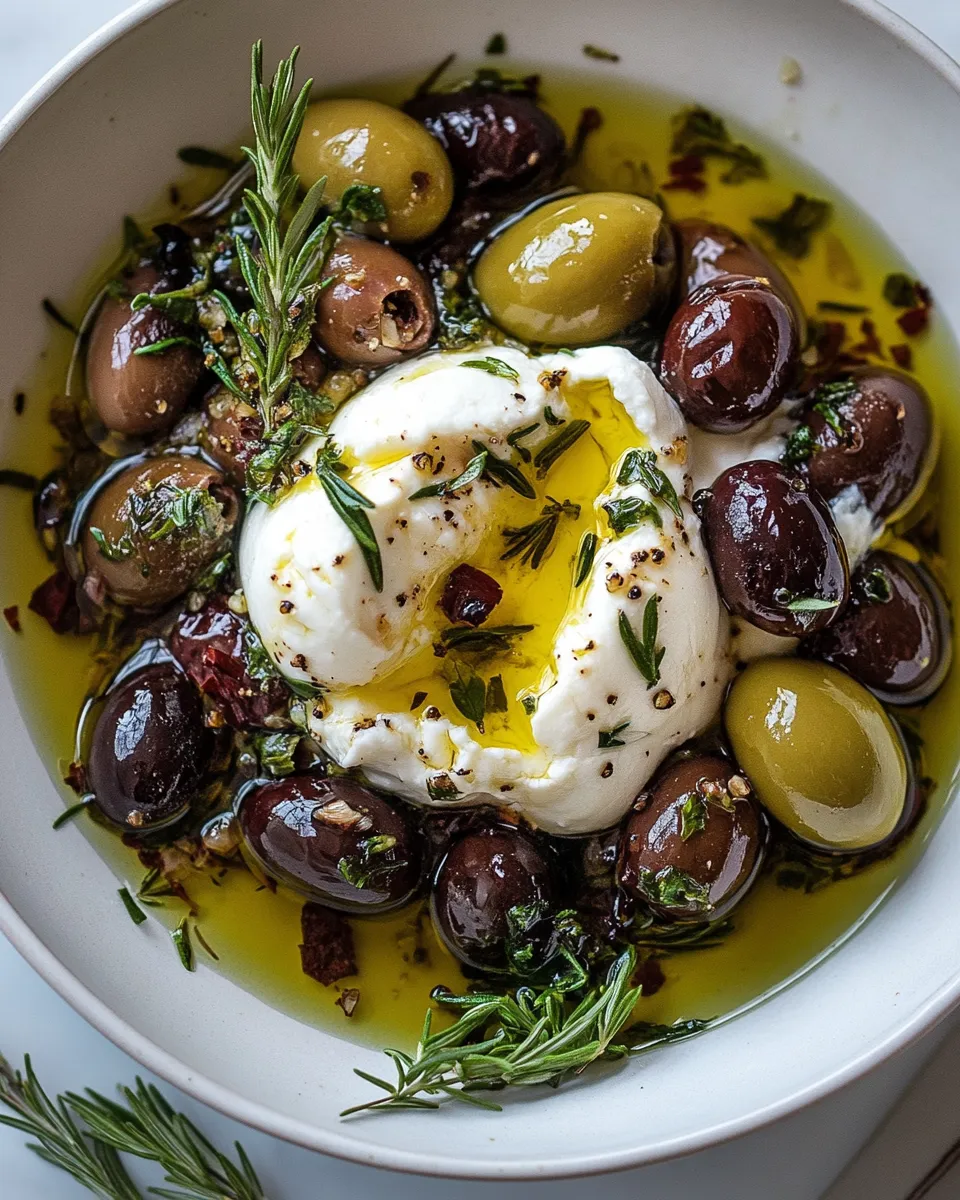
Garlic Herb Roasted Olives with Burrata.
Simple, shareable, and oddly addictive — this is one of those small plates that makes a good night feel intentional. Roasted olives take on a new life when you roast them in olive oil with garlic, herbs, and a hot lemon. Then you nestle torn burrata into the sizzling oil and let the cheese warm just enough to soften without losing its creamy center. Finish with honey and fresh herbs and you have an appetizer that looks like you spent all afternoon, even if you didn’t.
I like serving this straight from the oven with thick slices of toasted country bread. People scoop the warm olives and oil, pull strings of burrata, and savor the contrast between salty, sweet, herbal, and tangy — it’s small bites, big flavor. It’s also forgiving: the flavors meet quickly and clearly, so even a first attempt tastes impressive.
Below you’ll find the ingredients, exact method, and practical notes for getting reliably great results. No fuss, just clear steps and tips so your roasted olives and burrata are the hit of the table.
What’s in the Bowl

Ingredients
- 2 cups mixed olives, pitted — the salty backbone; use a mix for contrast (green, black, Kalamata).
- 1/3 cup extra virgin olive oil — roasts the aromatics and carries flavor; use good quality but not necessarily your most expensive bottle.
- 6 cloves garlic, smashed — provides roasted sweetness and punch; smashing speeds flavor release.
- 1 shallot, quartered — offers gentle onion sweetness and browns beautifully.
- 1 lemon, quartered — adds bright acidity when roasted and releases essential oils.
- 2 sprigs fresh thyme — subtle woodsy notes; keep whole for easy removal if desired.
- 2 sprigs fresh oregano — savory, slightly minty edge; pairs well with olives.
- chili flakes — a big pinch for warmth; adjust to taste.
- 3-4 balls burrata cheese, at room temperature — the creamy counterpoint; bring to room temp so it warms without splitting.
- 2-3 tablespoons honey — balances salt and heat; drizzle after roasting.
- black pepper — freshly ground for finish.
- fresh basil and or dill, for serving — fresh herbs brighten and add scent.
Method: Garlic Herb Roasted Olives with Burrata
- If the burrata is not already at room temperature, set the 3–4 balls out to warm while you preheat the oven to 450°F.
- In an ovenproof baking dish, combine 2 cups mixed olives, 1/3 cup extra virgin olive oil, 6 smashed garlic cloves, 1 quartered shallot, 1 quartered lemon, 2 sprigs fresh thyme, 2 sprigs fresh oregano, and a big pinch of chili flakes. Spread everything into a single layer so the garlic and shallot can brown.
- Roast, uncovered, for 20–25 minutes, until the garlic turns golden and the oil is sizzling. Carefully remove the dish from the oven.
- While the olives roast or immediately after removing the dish, dab the burrata dry of any liquid with a clean towel or paper towel. Tear or break the 3–4 balls of burrata into large pieces and place them into the hot oil and olives, nestling them so they sit in the oil.
- Let the dish sit off the heat for about 5 minutes to warm the burrata. Then drizzle 2–3 tablespoons honey over the burrata and olives, add freshly ground black pepper to taste, and scatter fresh basil and/or dill over the top.
- Serve warm with toasted bread.
Why You’ll Love This Recipe
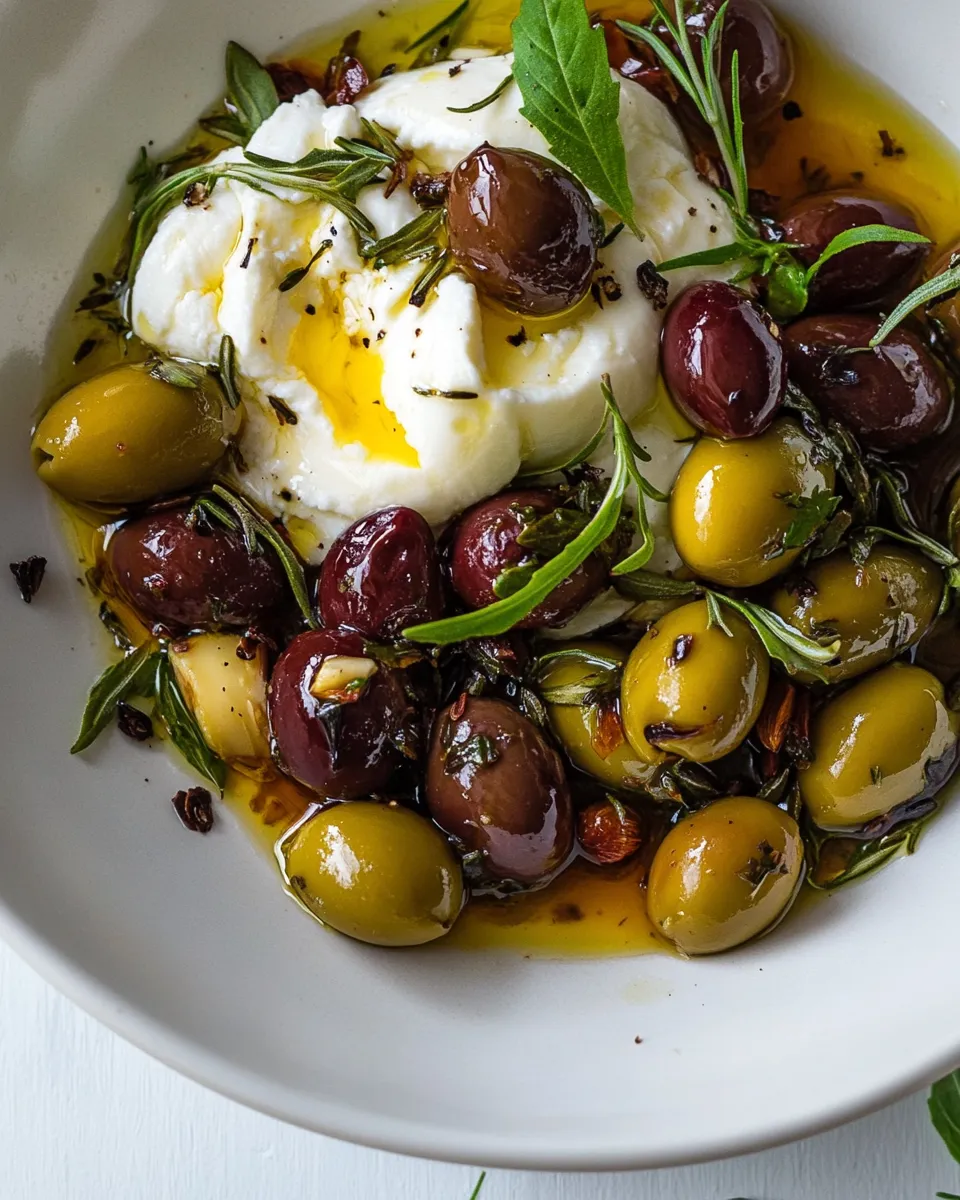
First, it’s fast. From preheat to table in about 30 minutes. Second, the textures sing: the olives are tender and slightly blistered, the garlic and shallot caramelize, and the burrata gives a creamy, cooling contrast. Third, it looks special. A modest baking dish transforms into a centerpiece with little effort.
The flavor balance is immediate: salty olives meet sweet honey, herbal notes cut through richness, and lemon keeps it lively. It’s an easy crowd-pleaser for casual dinners, weekend brunches, or when you need an elegant starter without fuss. And it scales well: double the olives and use a larger pan to feed a group.
Flavor-Forward Alternatives
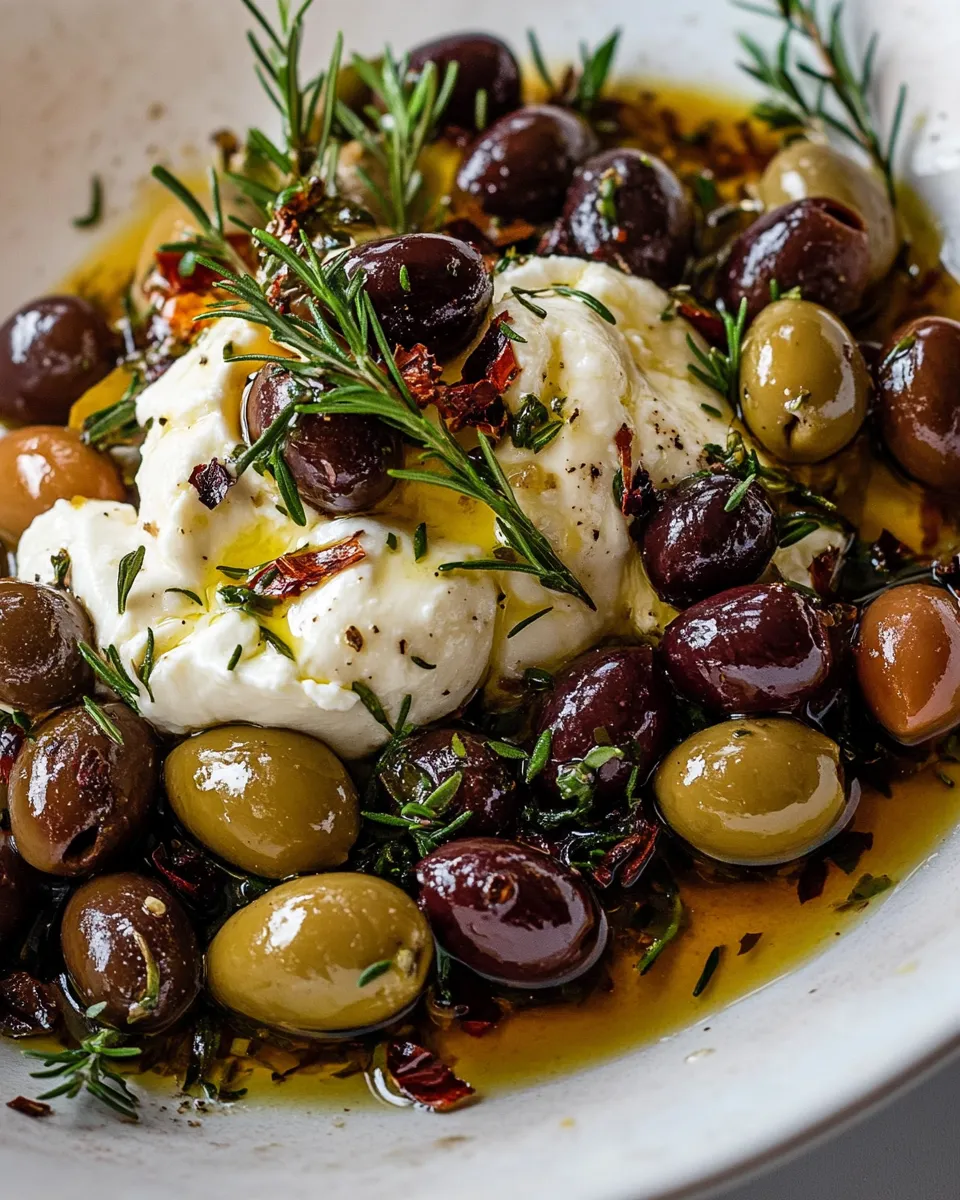
- Smoky finish: Add a small pinch of smoked paprika before roasting for a warm, smoky edge.
- Spicy kick: Swap chili flakes for shaved chile or add a fresh sliced jalapeño for more immediate heat.
- Herb swap: Replace oregano and thyme with rosemary and sage for a woodier profile.
- Citrus variation: Use orange or grapefruit quarters instead of lemon for a sweeter citrus twist.
- Nutty crunch: Scatter toasted pine nuts or chopped almonds over the finished dish for texture.
Tools & Equipment Needed
You don’t need fancy gear. A few straightforward tools make this dish effortless and reliable.
Essentials
- Ovenproof baking dish: A ceramic or cast-iron dish that holds the olives in a single layer works best.
- Sharp knife: For quartering the shallot and lemon and tearing the burrata.
- Paper towel or clean kitchen towel: To dab burrata dry before adding it to hot oil.
- Oven mitts: For safe removal of a hot dish.
- Toaster or skillet: To make the toasted bread for serving.
Problems & Prevention
Here are common pitfalls and how to avoid them.
- Burrata splits or goes watery: Bring it to room temperature and dab off excess liquid. Add it after roasting and let it warm gently off the heat.
- Garlic burns: Smash the cloves and arrange them so they contact oil, but don’t overcrowd the pan. A single layer helps even browning.
- Olives don’t infuse oil: Use the 450°F roast time. If your oven runs cool, extend by a few minutes until the oil is sizzling and garlic is golden.
- Too salty: Choose a mix of briny and milder olives, rinse if necessary, and balance with the honey and lemon.
- Cold burrata: Cold cheese will cool the oil and reduce aroma. Always bring it to room temperature first.
Year-Round Variations
This recipe adapts to seasons with small swaps:
- Spring: Add chopped spring garlic scapes or a scatter of fresh peas after roasting for brightness.
- Summer: Use the freshest herbs—basil, dill, or mint—to finish. Add halved cherry tomatoes right at the end for a juicy pop.
- Autumn: Roast a few small mushrooms with the olives for earthiness. Substitute rosemary for oregano.
- Winter: Use roasted fennel or a splash of aged balsamic to add depth. A few roasted pear slices can work nicely with honey.
Flavor Logic
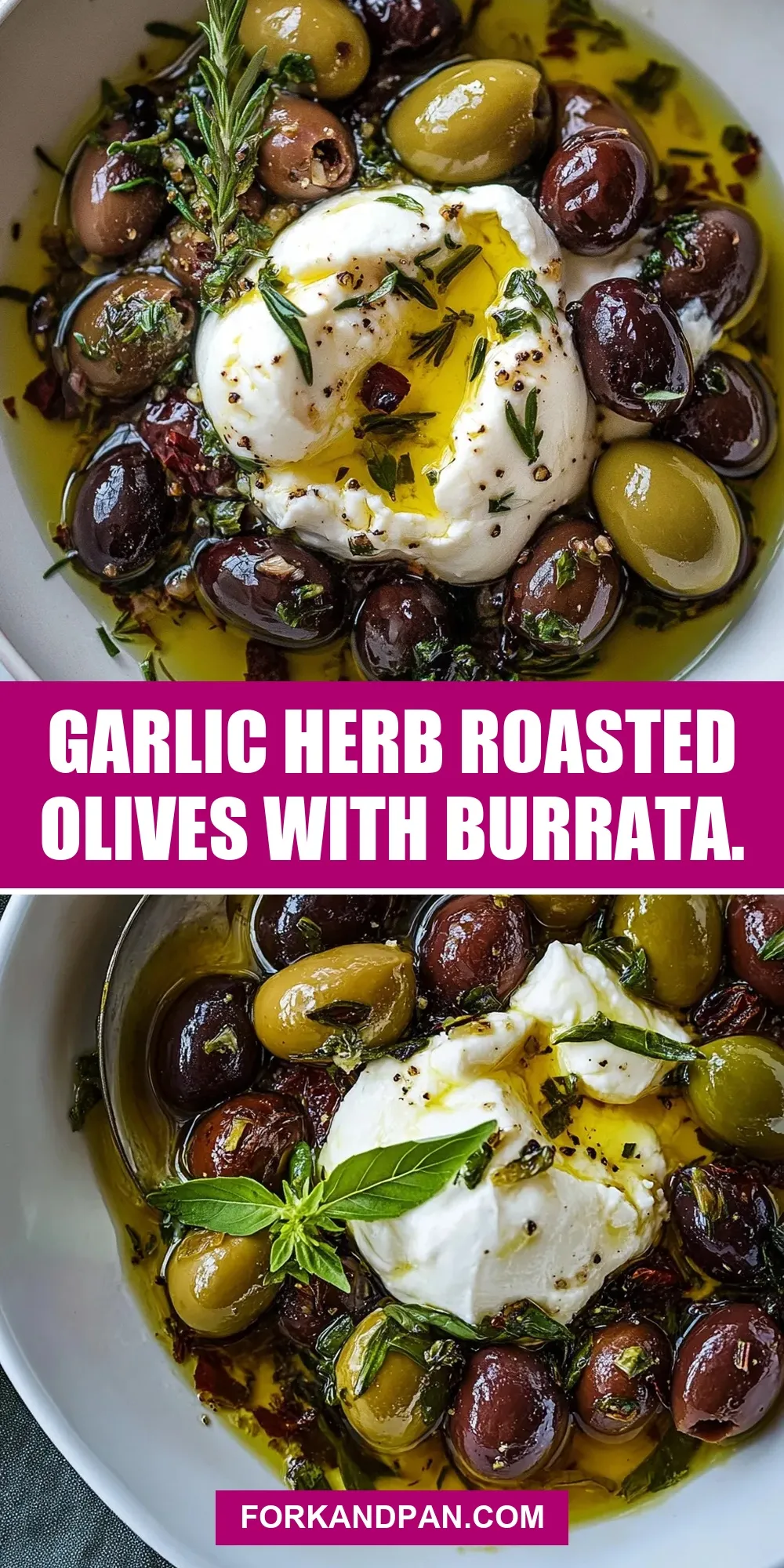
Why this combination works: olives bring concentrated umami and salinity. Roasting softens their bite and releases oil-soluble flavors. Garlic and shallot caramelize and add sweet-savory depth. Lemon supplies volatile oils and brightness that cut through richness. Fresh herbs add aromatic lift and a green note. Honey bridges the gap between salty and acidic—creating a round, balanced finish. Burrata’s cool creaminess both contrasts and brings everything together; it mellows the brine and lets the olive flavors sing.
The roast step concentrates flavors in the oil; that oil becomes the serving medium. Dipping bread into that oil is as important as the olives themselves. Think of the dish as a composed flavor landscape where oil, heat, and a few high-quality components create complexity with minimal esforço.
Refrigerate, Freeze, Reheat
Storage is straightforward, but quality changes after the first day.
- Refrigerate: Leftovers keep in an airtight container for up to 3 days. The olives are fine, but the texture of warmed burrata will change — it becomes denser as it cools.
- Freeze: Do not freeze the assembled dish with burrata. Olives can be frozen separately (oil and all) for up to 2 months, but thawed olives will be softer.
- Reheat: Reheat olives gently in a low oven (300–325°F) until warmed through. Add fresh burrata after reheating rather than warming the leftover cheese.
Questions People Ask
Will any type of olive work? Yes. Use a mix you like. A combination of briny and milder olives provides balance. Avoid super-salty single-variety jars unless you rinse them.
Can I substitute burrata? You can use fresh mozzarella if you prefer a firmer cheese, but you’ll lose the creamy core that makes this dish special. Stracciatella or a high-quality fresh mozzarella are decent alternatives.
Is honey essential? Honey balances the salt and adds sticky-sweet contrast, but you can omit it or use a drizzle of balsamic reduction for a different kind of sweetness and acidity.
How spicy is it? The recipe calls for a big pinch of chili flakes. Adjust to your tolerance. The heat is a background note, not the star.
Do I need to pit the olives? Use pitted olives for easy eating and safer sharing. If you only have olives with pits, warn guests and consider leaving them in larger serving pieces.
Ready, Set, Cook
Preheat your oven to 450°F and bring the burrata to room temperature. Arrange the olives and aromatics in a single layer in an ovenproof dish, roast until the oil sizzles and garlic is golden, then nestle torn burrata into the hot oil. Let it rest five minutes, then finish with honey, pepper, and herbs. Serve with sturdy toasted bread and let people scoop, smear, and savor.
That’s it. No complicated technique, just straightforward steps that highlight good ingredients. The contrasts are immediate on the palate — salty and sweet, warm and cool, briny and floral. Make it for company or for a quiet night in; either way, you’ll find the dish gives a little lift to whatever else you’re serving.
Garlic Herb Roasted Olives with Burrata.
Ingredients
Ingredients
- 2 cupsmixed olives pitted
- 1/3 cupextra virgin olive oil
- 6 clovesgarlic smashed
- 1 shallot quartered
- 1 lemon quartered
- 2 sprigsfresh thyme
- 2 sprigsfresh oregano
- chili flakes
- 3-4 ballsburrata cheese at room temperature
- 2-3 tablespoonshoney
- black pepper
- fresh basil and or dill for serving
Instructions
Instructions
- If the burrata is not already at room temperature, set the 3–4 balls out to warm while you preheat the oven to 450°F.
- In an ovenproof baking dish, combine 2 cups mixed olives, 1/3 cup extra virgin olive oil, 6 smashed garlic cloves, 1 quartered shallot, 1 quartered lemon, 2 sprigs fresh thyme, 2 sprigs fresh oregano, and a big pinch of chili flakes. Spread everything into a single layer so the garlic and shallot can brown.
- Roast, uncovered, for 20–25 minutes, until the garlic turns golden and the oil is sizzling. Carefully remove the dish from the oven.
- While the olives roast or immediately after removing the dish, dab the burrata dry of any liquid with a clean towel or paper towel. Tear or break the 3–4 balls of burrata into large pieces and place them into the hot oil and olives, nestling them so they sit in the oil.
- Let the dish sit off the heat for about 5 minutes to warm the burrata. Then drizzle 2–3 tablespoons honey over the burrata and olives, add freshly ground black pepper to taste, and scatter fresh basil and/or dill over the top.
- Serve warm with toasted bread.
Equipment
- Oven
- ovenproof baking dish
- towel or paper towel