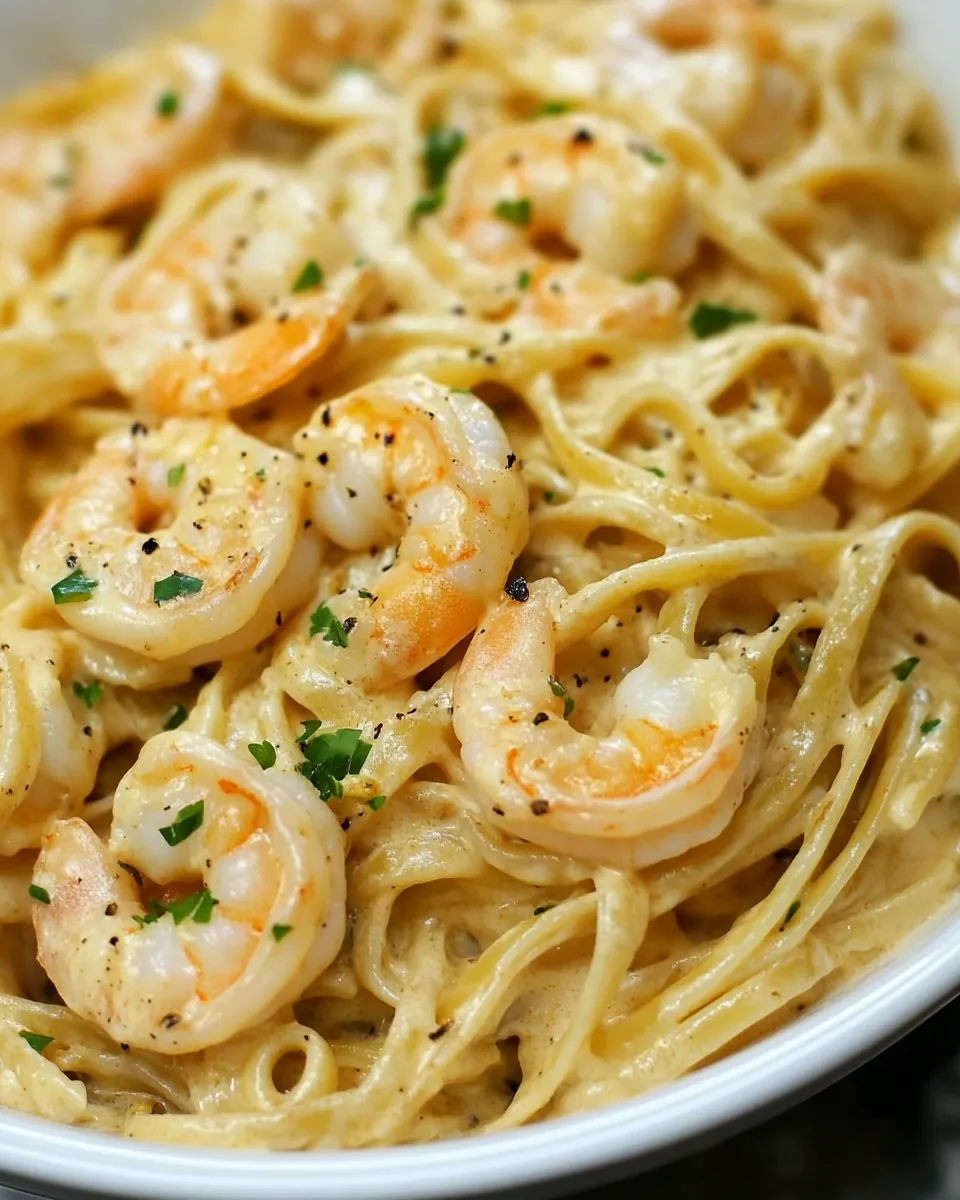
Creamy Garlic Shrimp Pasta
This is the kind of weeknight dinner that looks like you fussed for an hour but actually comes together fast. Tender shrimp, a silky garlic-cream sauce, and perfectly cooked linguine—comfort without ceremony. I make this when friends drop by or when I want dinner to feel a little special with minimal effort.
It’s straightforward. You’ll cook the pasta, sear the shrimp, and bring everything together in one skillet. The reserved pasta water is the secret to a sauce that clings to every strand of linguine. Little moves, big payoff.
Ingredients at a Glance

- 8 ounces (225 grams) linguine pasta — the long noodles catch the cream sauce nicely; cook to al dente.
- 1 tablespoon olive oil — for a hot pan and a quick sear on the shrimp.
- 1 ½ tablespoons butter, divided — adds richness; part goes in the pan for flavor, part for the sauce finish.
- 1 pound (450 grams) raw shrimp — buy frozen, peeled, and deveined shrimp; thaw and pat dry before seasoning.
- ½ teaspoon salt — seasons both the shrimp and helps flavor the pasta water.
- ¼ teaspoon ground black pepper — adds background heat; adjust to taste at the end.
- 1 tablespoon Old Bay seasoning — optional; if you like, use smoked paprika or Cajun instead (already suggested).
- 1 clove garlic, minced — the aromatic backbone; add late so it doesn’t brown.
- ½ cup (120 ml) heavy cream — makes the silky sauce (double cream in the UK).
- ½ cup (40 grams) Parmesan, grated — melts into the sauce and gives salty, nutty depth.
- ¼ cup chopped fresh parsley — brightens the dish at the end; add just before serving.
Creamy Garlic Shrimp Pasta: From Prep to Plate
- Bring a large pot of water to a rolling boil. Add the 8 ounces (225 g) linguine and cook according to package directions until al dente. Before draining, scoop out and reserve 1 cup of the pasta cooking water, then drain the pasta and set it aside.
- If your 1 pound (450 g) shrimp are frozen, thaw them and pat dry. In a small bowl, combine 1/2 teaspoon salt, 1/4 teaspoon ground black pepper, and 1 tablespoon Old Bay seasoning (optional). Season the shrimp evenly with this mixture.
- Heat a large skillet over medium heat. Add 1 tablespoon olive oil and 1 tablespoon of the butter. When the butter has melted and the oil is hot, add the shrimp in a single layer (work in batches if needed to avoid crowding).
- Cook the shrimp until pink and opaque, about 1–2 minutes per side. Remove cooked shrimp to a plate and set aside.
- Reduce the heat to medium-low. In the same skillet, melt the remaining 1/2 tablespoon butter. Add the 1 clove minced garlic and cook for about 30 seconds, until fragrant (do not let it brown).
- Pour in the 1/2 cup (120 ml) heavy cream and scrape the pan with a spatula to loosen any browned bits. Bring the cream to a gentle simmer.
- Stir in the 1/2 cup (40 g) grated Parmesan until melted and the sauce is smooth. If the sauce is too thick, loosen it gradually with some of the reserved pasta water (add a little at a time, using up to the reserved 1 cup) until you reach your desired consistency. Taste and adjust with a little more pepper if needed.
- Add the drained linguine to the sauce and toss until well coated. Return the cooked shrimp to the skillet and toss gently just until the shrimp are reheated, about 30 seconds.
- Remove from heat, sprinkle with the 1/4 cup chopped fresh parsley, toss briefly, and serve immediately.
Why This Recipe is a Keeper
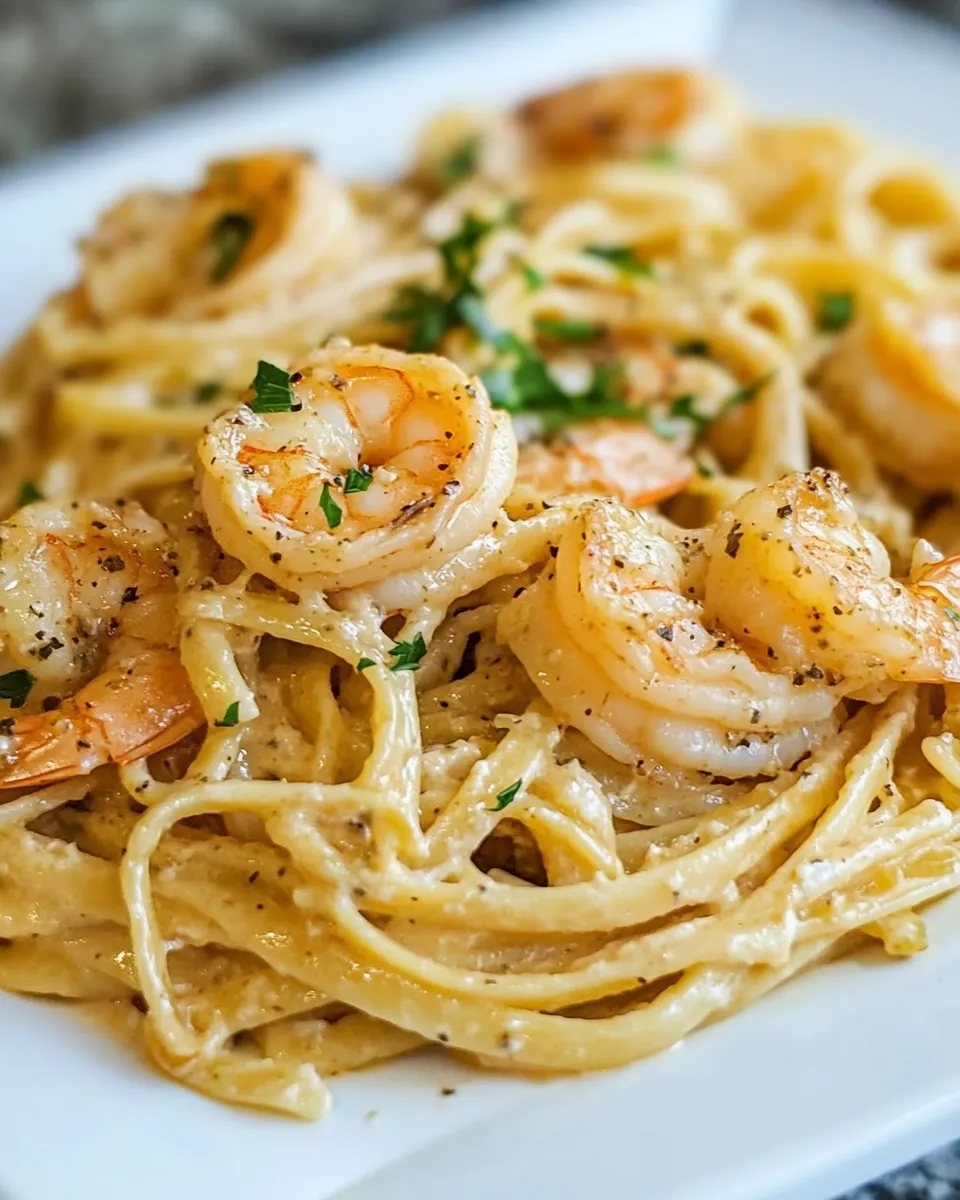
It delivers on three things I always look for: speed, flavor, and fuss-free technique. You get restaurant-style results with a handful of steps. The sauce is creamy without being heavy because the cooking water lightens it and helps it cling to the pasta.
Shrimp cooks fast and shows you results in minutes, and that quick turnaround makes this dish a staple on busy nights. The method scales well. Double the shrimp for company; halve everything for a solo supper. It’s forgiving, and the flavor holds up well if you need to make it ahead and reheat gently.
Ingredient Flex Options
- Old Bay seasoning — optional in the recipe. Use it for a slightly briny, savory lift; if you skip it, the dish is still bright with salt, pepper, garlic, and Parmesan.
- Heavy cream — the recipe calls for 1/2 cup. If you prefer a lighter finish, use less cream and rely on more reserved pasta water to reach the consistency you want.
- Parmesan — 1/2 cup gives the sauce body and umami. Add gradually and taste so the sauce doesn’t become too salty.
- Linguine — the recipe specifies 8 ounces. Any long pasta you already have will work similarly; the technique doesn’t change.
Equipment at a Glance
- Large pot — for boiling pasta and reserving pasta water.
- Large skillet — a wide, heavy-bottomed pan helps sear shrimp and build the sauce.
- Spatula or tongs — for tossing pasta and scraping browned bits.
- Measuring spoons & cups — for accurate seasoning and cream measurement.
Watch Outs & How to Fix
Shrimp overcooks fast. It’s the top cause of a rubbery final dish. Watch for the shrimp to turn pink and opaque; 1–2 minutes per side is usually enough. Remove them as soon as they’re done and reheat briefly in the sauce.
If the sauce separates or looks greasy, it’s usually because the heat was too high when the cream was added. Lower the heat immediately and whisk in a tablespoon or two of the reserved pasta water to bring it back together. If it’s thin, add more Parmesan a little at a time until it thickens; if it’s too thick, add more pasta water gradually.
Better-for-You Options
You can nudge this dish toward lighter without changing the essence of it. Reduce the heavy cream by a quarter and increase the pasta water used to loosen the sauce; you’ll keep creaminess with fewer calories. Cut back on the butter slightly—1 tablespoon total still gives flavor. Use less Parmesan if you need to lower sodium, and finish with plenty of parsley for brightness.
Cook’s Notes
Timing is everything. Start the pasta before you touch the shrimp so both elements finish around the same time. Reserve the pasta water before you drain—don’t skip this step. It’s how the sauce gets glossy and silky without adding more cream.
Flavor adjustments
- Salt — the recipe includes 1/2 teaspoon for the shrimp; remember pasta water should be salty too. Taste the sauce before you add more salt because Parmesan contributes a lot.
- Pepper — 1/4 teaspoon is a baseline. Freshly ground black pepper right at the end adds a nice bite.
Storage Pro Tips
Leftovers keep in the fridge for 2 days in a sealed container. The sauce firms up as it cools. To reheat, warm gently in a skillet over low heat with a splash of water (or some of the original reserved pasta water if you have it) and toss until creamy and just heated through. Don’t microwave from cold on high—shrimp will overcook.
Do not freeze the finished dish with cream; the texture of the sauce will change. If you want to prep ahead, cook the pasta and shrimp separately. Store them chilled and combine in a skillet with fresh cream and Parmesan when you’re ready to serve.
Reader Questions
Can I use pre-cooked shrimp?
You can, but treat pre-cooked shrimp gently. Add them to the sauce at the very end just to warm them through for 30–45 seconds. They won’t need the sear time that raw shrimp do.
Is there a substitute for heavy cream?
The recipe is written for heavy cream. Reducing it and using more reserved pasta water can make the sauce lighter, but other dairy substitutes will change texture and flavor. If you’re looking to reduce richness, lower the cream amount and rely on starchy pasta water to build silkiness.
How do I get the sauce to cling better?
The trick is starchy pasta water. Add it slowly while stirring until the sauce reaches the glossy, clingy consistency you want. Also, toss the pasta directly in the skillet with the sauce rather than pouring sauce over plated pasta.
See You at the Table
This is the sort of recipe to keep in your repertoire when you want something quick that still feels like an occasion. It’s flexible, fast, and forgiving—three qualities I value on a busy night. Follow the steps, watch the shrimp, and use your reserved pasta water like a tiny magic trick. Come back and tell me how you served it or what tweak you made; I love hearing variations.
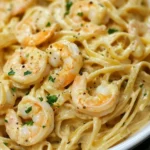
Creamy Garlic Shrimp Pasta
Ingredients
Ingredients
- ?8 ounces 225 gramslinguine pasta
- ?1 tablespoonolive oil
- ?1 1/2 tablespoonsbutterdivided
- ?1 pound 450 gramsraw shrimpbuy frozen, peeled, and deveined shrimp
- ?1/2 teaspoonsalt
- ?1/4 teaspoonground black pepper
- ?1 tablespoonOld bay seasoningoptional – or smoked paprika or cajun
- ?1 clovegarlicminced
- ?1/2 cup 120 mlheavy cream(double cream in the UK)
- ?1/2 cup 40 gramsparmesangrated
- ?1/4 cupchopped fresh parsleychopped
Instructions
Instructions
- Bring a large pot of water to a rolling boil. Add the 8 ounces (225 g) linguine and cook according to package directions until al dente. Before draining, scoop out and reserve 1 cup of the pasta cooking water, then drain the pasta and set it aside.
- If your 1 pound (450 g) shrimp are frozen, thaw them and pat dry. In a small bowl, combine 1/2 teaspoon salt, 1/4 teaspoon ground black pepper, and 1 tablespoon Old Bay seasoning (optional). Season the shrimp evenly with this mixture.
- Heat a large skillet over medium heat. Add 1 tablespoon olive oil and 1 tablespoon of the butter. When the butter has melted and the oil is hot, add the shrimp in a single layer (work in batches if needed to avoid crowding).
- Cook the shrimp until pink and opaque, about 1–2 minutes per side. Remove cooked shrimp to a plate and set aside.
- Reduce the heat to medium-low. In the same skillet, melt the remaining 1/2 tablespoon butter. Add the 1 clove minced garlic and cook for about 30 seconds, until fragrant (do not let it brown).
- Pour in the 1/2 cup (120 ml) heavy cream and scrape the pan with a spatula to loosen any browned bits. Bring the cream to a gentle simmer.
- Stir in the 1/2 cup (40 g) grated Parmesan until melted and the sauce is smooth. If the sauce is too thick, loosen it gradually with some of the reserved pasta water (add a little at a time, using up to the reserved 1 cup) until you reach your desired consistency. Taste and adjust with a little more pepper if needed.
- Add the drained linguine to the sauce and toss until well coated. Return the cooked shrimp to the skillet and toss gently just until the shrimp are reheated, about 30 seconds.
- Remove from heat, sprinkle with the 1/4 cup chopped fresh parsley, toss briefly, and serve immediately.
Equipment
- Saucepan
- Skillet
- Spatula
Notes
Don’t forget to reserve about a cup of the pasta cooking water, it’s quite starchy and great for loosening up the sauce. You will most probably need much less than a cup, but to stay on the safe side I always reserve 1 cup and drain the rest.
This pasta makes 4 normal servings, or 3 big ones.
Storein the fridge in a sealed container for up to 3 days.
Reheatthe pasta in a skillet over low-medium heat, and add a splash of water to loosen the sauce. Do the same if using the microwave. I don’t recommend freezing this creamy shrimp pasta.