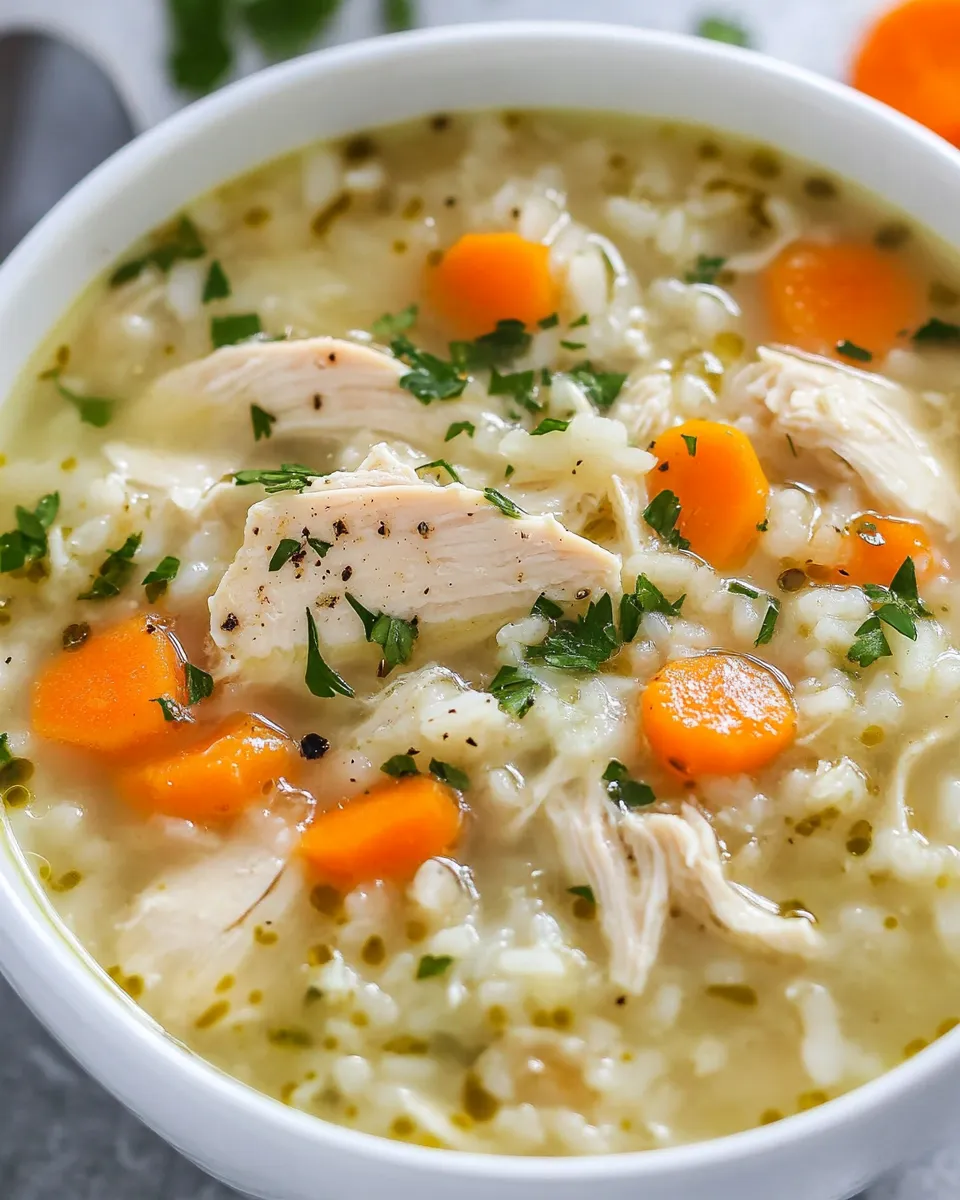
Chicken and Rice Soup
This Chicken and Rice Soup is the kind of bowl you reach for when you want something honest and restorative. It’s straightforward to make, built on pantry staples, and finishes with a bright squeeze of lemon so each spoonful feels fresh instead of heavy. I like recipes that work hard without asking too much of you — this is one of them.
You’ll get a clear, comforting broth, tender chicken, and rice that swells into the pot so the soup feels substantial. The aromatics — onion, garlic, carrots, celery — do the familiar work, while the dried parsley and dill play a quiet, herbaceous background. Turmeric adds a soft color and warmth without overtly changing the profile.
Below I walk through the exact steps, show how to avoid common pitfalls, and offer simple tweaks that use only what’s already in the recipe. There’s no fuss, just practical tips so you get reliable results every time.
Ingredient Checklist

- 1 tablespoon oil or butter — fat for softening the vegetables and building the soup’s base flavor; choose oil for a neutral profile or butter for a richer finish.
- 1 large onion, diced — foundation aromatics; cook until translucent to release sweetness.
- 4 large carrots, diced — add sweetness and body; dice to a similar size as the celery for even cooking.
- 5 celery stalks, diced — provides savory balance and texture; include the leafy tops if they’re fresh for extra flavor.
- 4 garlic cloves, minced — brightens the broth; add after the vegetables to avoid burning.
- 1 cup long-grain white rice, uncooked — gives the soup substance; long-grain stays light and separate rather than clumping.
- 1 pound chicken — main protein; use boneless breasts or thighs depending on preference (see notes below).
- 1 teaspoon salt — seasoning baseline; adjust at the end after tasting.
- 1 teaspoon pepper — for peppery lift; grind fresh if possible.
- 1 tsp dried parsley — herb note that supports the lemon at the end.
- 1 tsp dried dill — gives a subtle brightness that pairs nicely with lemon.
- 1/4 teaspoon turmeric — gentle color and warmth; a little goes a long way.
- 1/2 teaspoon garlic powder — deepens the garlic presence without extra chopping.
- 5 cups chicken broth — the liquid body of the soup; add more as needed if rice absorbs too much.
- 2 lemons, juiced — acidity at the end to brighten and lift the whole bowl.
Chicken and Rice Soup: From Prep to Plate
- Heat 1 tablespoon oil or butter in a large soup pot or Dutch oven over medium heat.
- Add 1 large diced onion, 4 large diced carrots, and 5 diced celery stalks. Cook, stirring occasionally, 6–8 minutes until the carrots begin to soften and the onions are translucent. (Optional: to speed this step, add about 1 tablespoon water, cover, and cook 2–3 minutes.)
- Add 4 minced garlic cloves and cook 30–60 seconds, until fragrant.
- Add 1 pound chicken and 1 cup uncooked long-grain white rice, then add 1 teaspoon salt, 1 teaspoon pepper, 1 teaspoon dried parsley, 1 teaspoon dried dill, 1/4 teaspoon turmeric, and 1/2 teaspoon garlic powder. Stir briefly to combine.
- Pour in 5 cups chicken broth, stir, bring the pot to a boil, then reduce heat to a gentle simmer.
- Simmer about 30 minutes, stirring every 10 minutes, until the rice and vegetables are tender and the chicken is cooked through (no pink inside, or 165°F internal temperature). Add more chicken broth as needed if the rice absorbs too much liquid.
- Remove the chicken from the pot, shred it with forks, and return the shredded chicken to the soup.
- Stir in the juice of 2 lemons, taste, and adjust salt and pepper as desired. Serve.
What Makes This Recipe Special
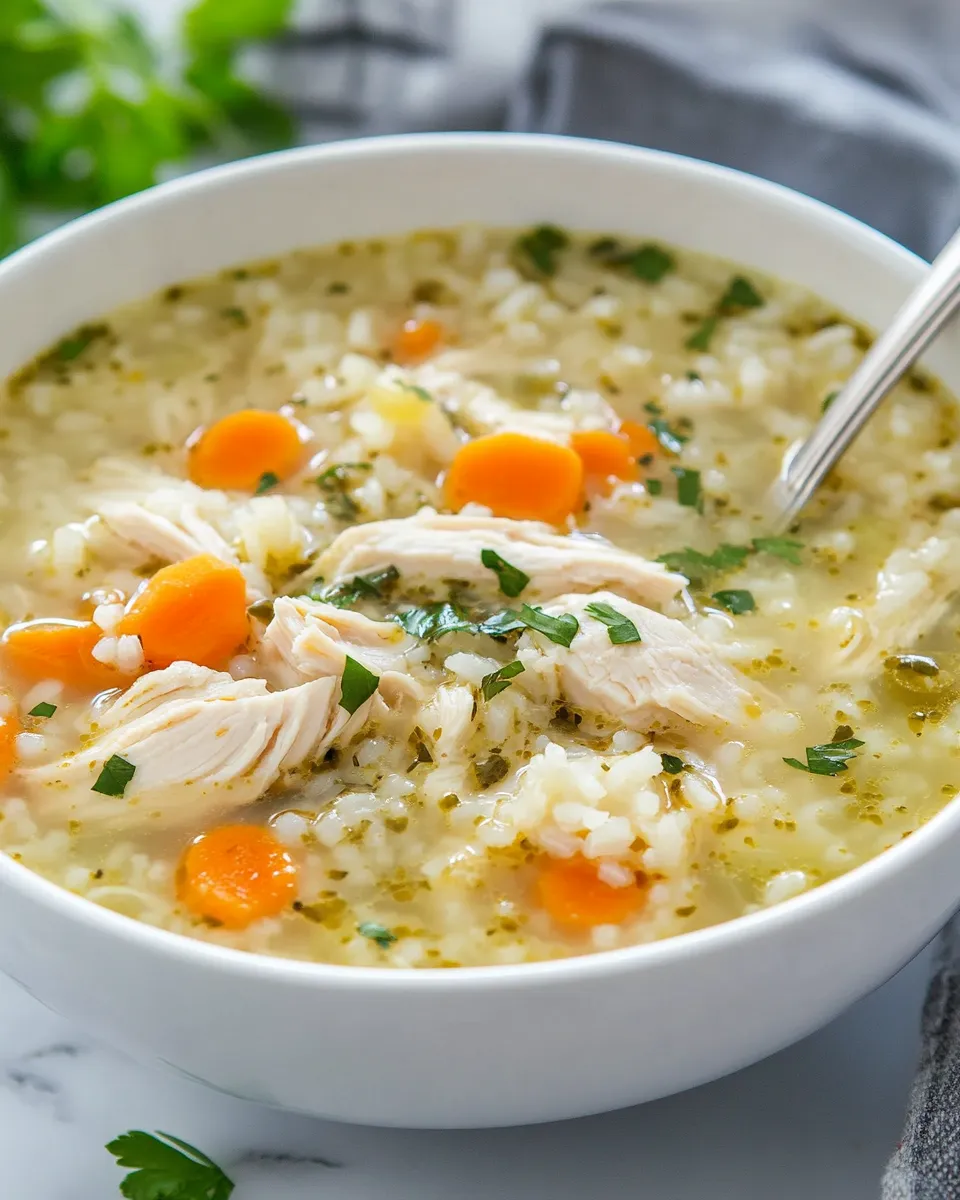
This recipe shines because of its balance: restrained seasoning, long-grain rice that keeps the broth light, and a finishing hit of lemon that turns a simple soup into something memorable. The dried herbs — parsley and dill — are modest but intentional; they complement lemon and give the soup a slightly herbal finish without needing fresh herbs.
The technique is forgiving. You’re allowed to simmer gently while the rice cooks, and the recipe anticipates that the rice will absorb liquid — the instructions explicitly allow adding broth as needed. That flexibility means it works whether you’re following the recipe exactly or stretching it to feed a few more people.
Flavor-Forward Alternatives
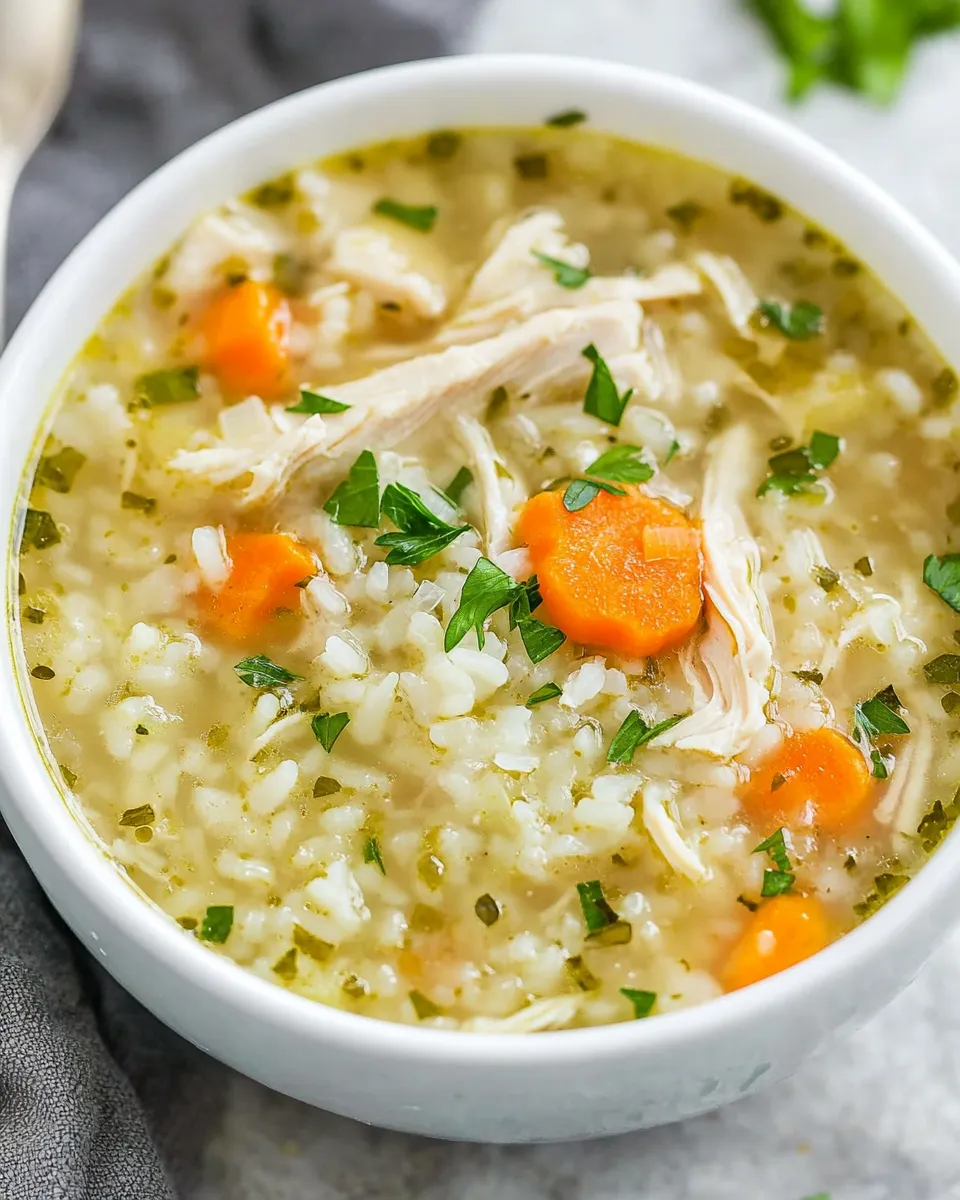
Instead of adding new, unfamiliar ingredients, push the flavors already present:
- Make it brighter: Add a little more lemon juice at the end, a teaspoon at a time, until it pops for you.
- Herb-forward: Increase the dried dill or parsley by 1/2 teaspoon each if you want a fresher, greener note.
- Richer finish: Use butter instead of oil for the initial sauté to give the broth a silkier mouthfeel.
- Deeper garlic: If you want stronger garlic flavor without adding raw garlic, keep the garlic powder as listed and ensure the fresh garlic cooks briefly but doesn’t brown.
Before You Start: Equipment
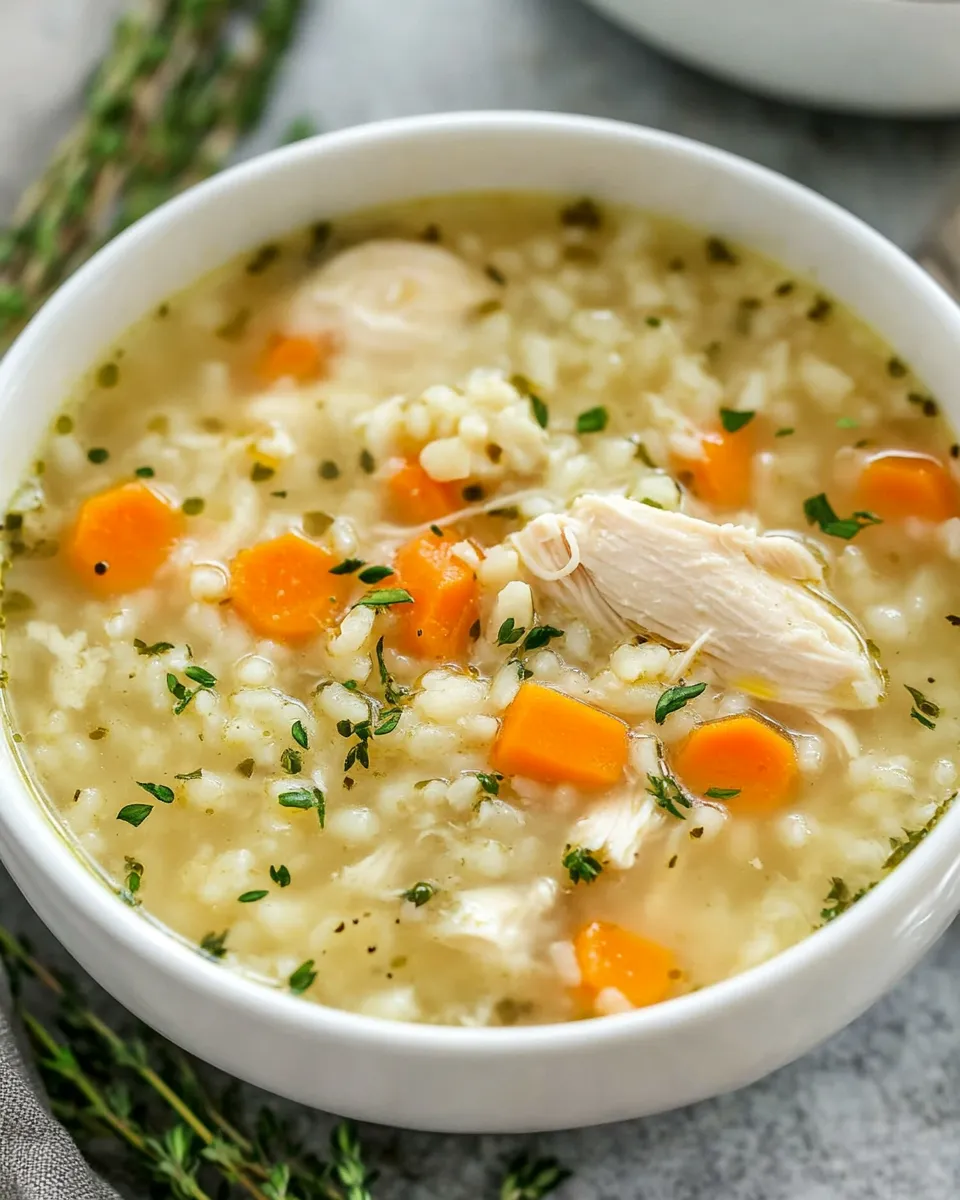
You don’t need anything fancy, just reliable basics:
- Large soup pot or Dutch oven — for even heat and enough room for rice expansion.
- Sharp chef’s knife and cutting board — for clean, consistent dice on onion, carrot, and celery.
- Measuring cups and spoons — the rice-to-broth ratio matters for texture.
- Wooden spoon or heatproof spatula — for occasional stirring.
- Tongs or forks — to remove and shred the chicken.
Learn from These Mistakes
There are a few common missteps that turn a good pot into something merely adequate:
Overcooking the rice: Long-grain white rice will swell and soften within the simmer time. If left to simmer with no added liquid, it will absorb too much and the soup will become thick. Check at the 20–25 minute mark and add a splash of broth if it looks dry.
Burning the garlic: Garlic becomes bitter quickly if it’s cooked too long or at too high heat. Add it after the vegetables have softened and cook just 30–60 seconds until fragrant.
Under-seasoning at the start: The recipe gives 1 teaspoon salt and 1 teaspoon pepper. Those are a baseline; always taste after the lemon is added and adjust. Lemon brightens flavors, and you may find you want a touch more salt to balance it.
Substitutions by Diet
Keep changes minimal and use what’s already in the recipe where possible:
- Dairy-free: Use the listed oil instead of butter for sautéing.
- Lower-sodium: Use less than the listed salt and add more to taste at the end. If you have lower-sodium chicken broth on hand, use that and compensate with a touch more lemon if it tastes flat.
- Gluten-free: This recipe is naturally gluten-free as written — long-grain white rice and chicken broth (confirm gluten-free label if using store-bought broth) keep it safe for gluten-sensitive diners.
- Protein preference: If you prefer dark meat texture, use boneless chicken thighs; the quantity remains the same.
Behind-the-Scenes Notes
Little choices change texture more than flavor here. Long-grain rice stays relatively separate and keeps the broth thinner; short-grain rice will thicken the soup more as it releases starch. The recipe calls for long-grain specifically to keep the mouthfeel light.
Turmeric is included in a small amount for color and gentle warmth, not for curry-like flavor. If you’re cooking for someone who is unfamiliar with turmeric’s look, it will give the broth a pleasant golden hue without altering the soup into a different cuisine.
Shredding the chicken after cooking instead of cooking pre-shredded meat in the pot helps keep the shredded pieces evenly coated in broth and lets you control the size of the shreds for better texture.
Best Ways to Store
Cool the soup to room temperature, then refrigerate in airtight containers for up to 3–4 days. Rice continues to absorb liquid in the fridge, so expect the soup to look thicker when cold. Reheat gently on the stove and add a bit of hot water or broth to loosen it if needed.
For longer storage, freeze in portion-sized containers for up to 3 months. Thaw overnight in the fridge and reheat on the stove. If you plan to freeze a portion, consider undercooking the rice slightly so the texture holds up better after freezing and reheating.
Chicken and Rice Soup Q&A
Q: Can I use pre-cooked chicken?
A: Yes. If using pre-cooked chicken, add it back to the pot toward the end of the rice’s cooking time to warm through. Because the source directions call for raw chicken to cook with the rice, reduce the simmer time or add the pre-cooked chicken in step 7 after removing any whole pieces for shredding.
Q: My rice soaked up all the broth. How do I fix it?
A: Add hot chicken broth a little at a time while reheating until you reach the desired consistency. The recipe anticipates this, so keeping extra broth on hand is helpful.
Q: Can I make this ahead?
A: Yes. Make it a day ahead and reheat. Flavors will deepen, but the rice will absorb more liquid, so plan to add a splash of broth or water when reheating.
Q: Is lemon necessary?
A: The lemon juice brightens the finished soup and balances the starch and fat. If you prefer less acidity, start with half a lemon and taste before adding the second.
Q: How do I check chicken is done?
A: Cut into the thickest piece to ensure no pink remains, or use an instant-read thermometer — the internal temperature should be 165°F.
In Closing
This Chicken and Rice Soup is straightforward, forgiving, and purposefully unpretentious. It rewards a little attention — translucent onions, gentle simmer, and a final squeeze of lemon — and gives back a bowl that’s both filling and bright. Use what you have on hand, make small adjustments to suit your taste, and treat the recipe as a reliable template you can return to whenever you need a simple, satisfying meal.
Enjoy a bowl, and remember: adjust salt and lemon at the end. Those two small moves turn good soup into a very good one.
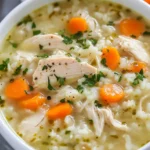
Chicken and Rice Soup
Ingredients
Ingredients
- 1 tablespoonoil or butter
- 1 large oniondiced
- 4 large carrotsdiced
- 5 celery stalksdiced
- 4 garlic clovesminced
- 1 cuplong grain white riceuncooked
- 1 poundchickensee note for types
- 1 teaspoonsaltmore as desired
- 1 teaspoonpeppermore as desired
- 1 tspdried parsley
- 1 tspdried dill
- 1/4 teaspoonturmeric
- 1/2 teaspoongarlic powder
- 5 cupschicken brothmore as needed/desired
- 2 lemonsjuiced
Instructions
Instructions
- Heat 1 tablespoon oil or butter in a large soup pot or Dutch oven over medium heat.
- Add 1 large diced onion, 4 large diced carrots, and 5 diced celery stalks. Cook, stirring occasionally, 6–8 minutes until the carrots begin to soften and the onions are translucent. (Optional: to speed this step, add about 1 tablespoon water, cover, and cook 2–3 minutes.)
- Add 4 minced garlic cloves and cook 30–60 seconds, until fragrant.
- Add 1 pound chicken and 1 cup uncooked long-grain white rice, then add 1 teaspoon salt, 1 teaspoon pepper, 1 teaspoon dried parsley, 1 teaspoon dried dill, 1/4 teaspoon turmeric, and 1/2 teaspoon garlic powder. Stir briefly to combine.
- Pour in 5 cups chicken broth, stir, bring the pot to a boil, then reduce heat to a gentle simmer.
- Simmer about 30 minutes, stirring every 10 minutes, until the rice and vegetables are tender and the chicken is cooked through (no pink inside, or 165°F internal temperature). Add more chicken broth as needed if the rice absorbs too much liquid.
- Remove the chicken from the pot, shred it with forks, and return the shredded chicken to the soup.
- Stir in the juice of 2 lemons, taste, and adjust salt and pepper as desired. Serve.
Equipment
- Large soup pot or Dutch oven
- Measuring Cups
- Measuring Spoons
- Forks
Notes
My first choice is skinless boneless chicken thighs. The fat really works in favor in soups but this route makes removing and shredding the chicken a bit easier.
Otherwise, really any chicken pieces will also work. Go for a variety even! Bone-in thighs and drumsticks are great. No need to remove the skin, but you'll have to really make sure to remove all the pieces from the soup before returning!
I've also made this soup countless times with chicken breasts. It's leaner, so can overcook and since there's no fat, it doesn't quite get that flavor going, but it works just great and we use them often here.