Balsamic Rosemary Onion Jam
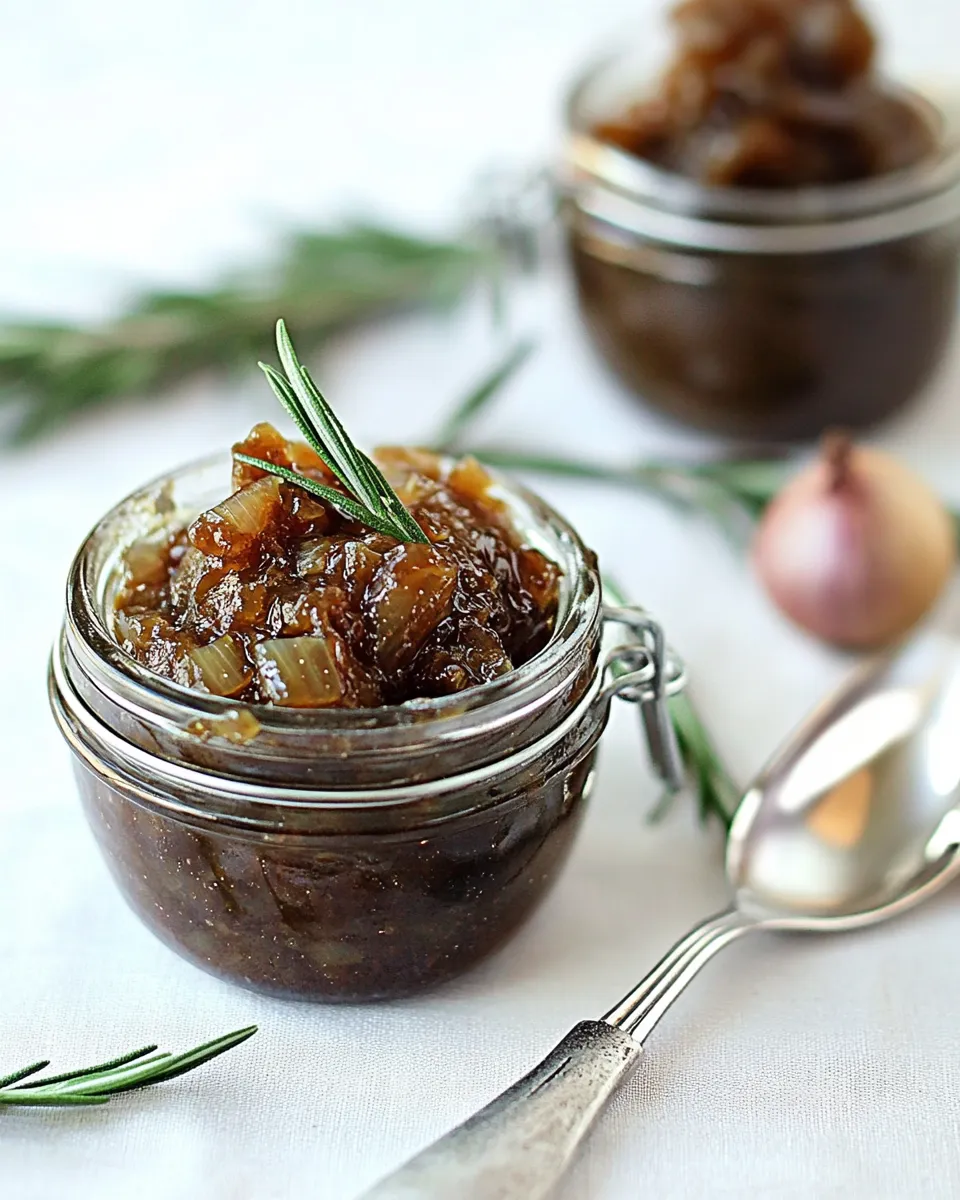
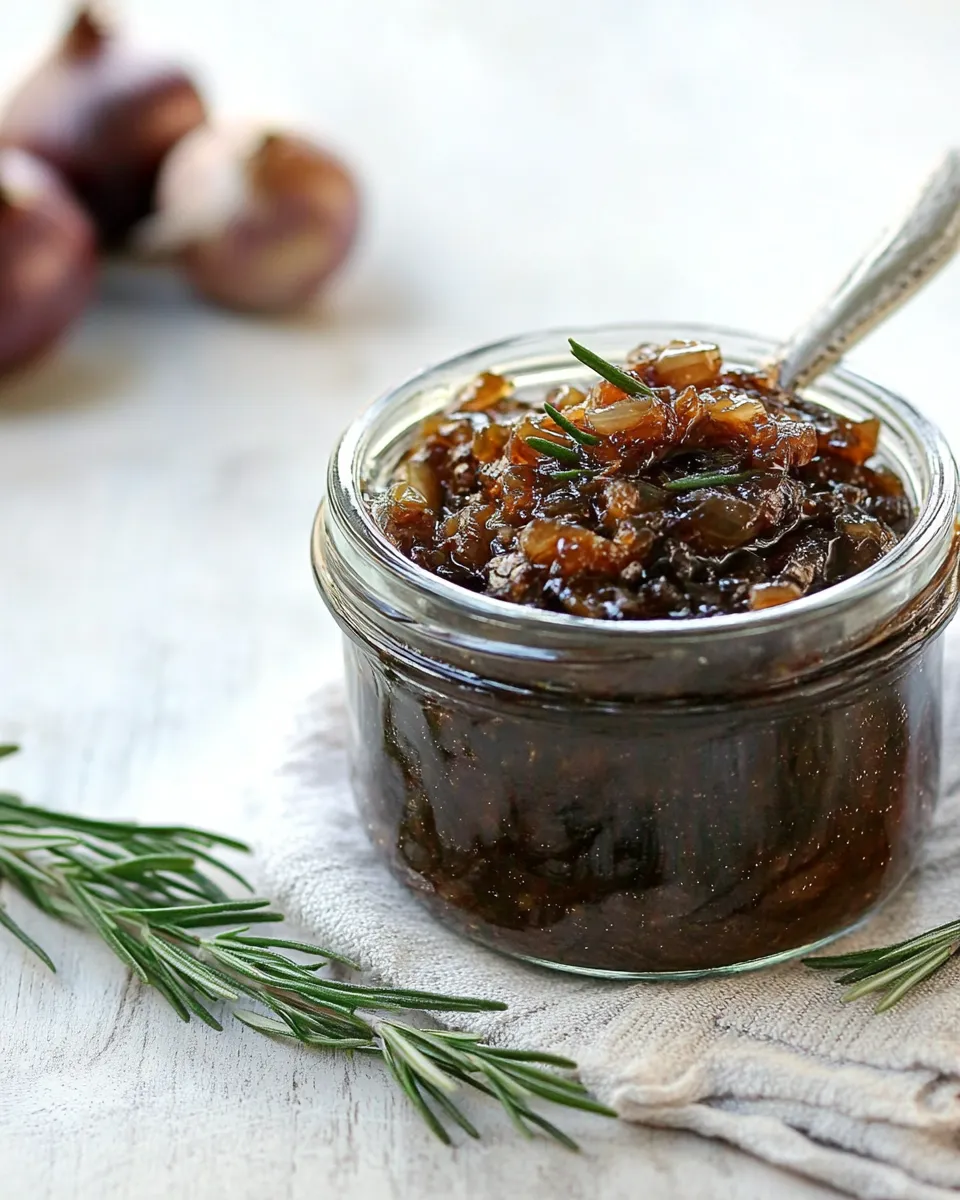
This onion jam is one of those small projects in the kitchen that pays off every time. It’s slow-cooked, simple, and leans on caramelized onions, a splash of balsamic, brown sugar, and a whisper of rosemary to turn plain sliced onions into something savory-sweet and layered. Use it on toast, with cheese, or to elevate a sandwich — it keeps things honest and flavorful without fuss.
I make a batch at the start of the week and reach for it constantly. The process asks for a little patience and moderate heat; in return you get deep brown onions and a glossy, jam-like finish that keeps well in the fridge. I’ll walk you through the exact steps, explain the equipment I prefer, and share tips to avoid burning and to tweak the flavor.
Below you’ll find the ingredients, the step-by-step method I follow every time, and practical notes for storage, substitutions, and troubleshooting. Ready to make a jar of Balsamic Rosemary Onion Jam you’ll actually use? Let’s get to it.
What You’ll Gather

Ingredients
- 2 tablespoons olive oil — for sautéing the onions; choose a neutral extra virgin or regular olive oil to start the caramelization.
- 4 large onions, thinly sliced (about 10 cups sliced) — the star ingredient; slice uniformly so they cook evenly.
- 3 tablespoons balsamic vinegar — adds bright acidity and depth; use a vinegar you enjoy the flavor of.
- 2 tablespoons brown sugar — balances the vinegar and helps the onions caramelize into jammy sweetness.
- 1 1/2 teaspoons finely chopped fresh rosemary or 1/2 teaspoon dried rosemary — aromatic herb note; finely chop fresh so it distributes evenly.
- 1/4 teaspoon kosher salt — seasons and helps draw moisture from the onions; adjust slightly to taste if using a different salt.
- 1/4 teaspoon freshly ground black pepper — a finishing touch for warmth and balance; grind fresh if possible.
Build Balsamic Rosemary Onion Jam Step by Step
- Heat 2 tablespoons olive oil in a large skillet over medium heat until the oil shimmers.
- Add 4 large onions (thinly sliced, about 10 cups) to the skillet and spread them into an even layer.
- Cook the onions, stirring every 3–5 minutes, until they are soft, translucent, and just beginning to brown, about 20 minutes. If they brown too quickly, reduce the heat to medium-low.
- Stir in 3 tablespoons balsamic vinegar, 2 tablespoons brown sugar, 1 1/2 teaspoons finely chopped fresh rosemary (or 1/2 teaspoon dried), 1/4 teaspoon kosher salt, and 1/4 teaspoon freshly ground black pepper, scraping up any browned bits from the pan.
- Continue to cook, stirring every few minutes, until most of the liquid has evaporated, the onions are dark brown, and the mixture is reduced to about 3/4 cup, about 40 minutes more. Adjust the heat as needed to keep the onions from burning.
- Remove the skillet from the heat and let the onion jam cool to room temperature.
- Transfer the cooled jam to a glass jar or airtight container and refrigerate for up to 1 week.
Why I Love This Recipe
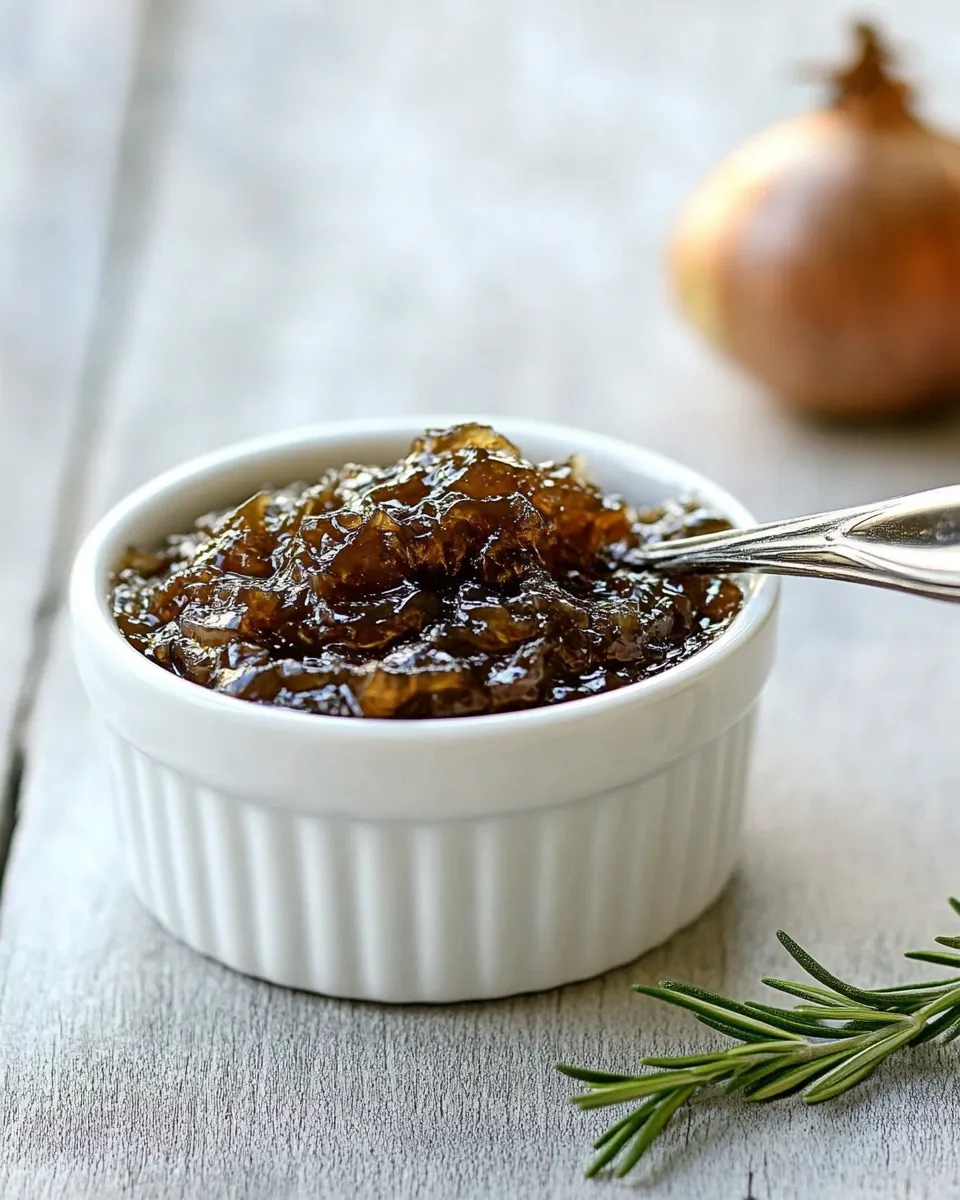
This jam concentrates ordinary onions into something almost silk-like and wildly versatile. The balsamic lifts the sweetness and keeps the flavor from tasting one-note, while rosemary gives a piney, savory anchor that keeps the jam from being cloying. The texture is soft and spreadable but still has body — it clings to a knife and a slice of bread without running off.
It’s also low-effort in ingredients and technique. No special equipment, no complicated timing: mostly you wait at a reasonable pace and stir. That simplicity makes it repeatable. Once you make it, you’ll find dozens of ways to use it — that alone makes this a refrigerator staple in my kitchen.
Ingredient Flex Options
- Onions — the recipe calls for 4 large onions; mix varieties if you like a deeper flavor profile (for example, two yellow and two sweet onions). I stick to the declared amount but slice them uniformly to ensure even caramelization.
- Rosemary — recipe gives fresh or dried quantities. Fresh is brighter; dried is more concentrated. If using dried, make sure it’s not old or dusty — it will affect aroma.
- Balsamic vinegar — a good-quality balsamic will add richer flavor; don’t swap for light vinegars without adjusting sugar, because the balsamic’s sweetness and body matter here.
- Brown sugar — the specified 2 tablespoons adds texture and caramelization. If you prefer less sweetness, try 1 1/2 tablespoons, but don’t eliminate it entirely; it supports the jam structure.
- Salt and pepper — the recipe amounts are starting points. Taste at the end and add a tiny pinch more salt if the onions need lifting.
Before You Start: Equipment
Use a large, heavy-bottomed skillet — cast iron or stainless steel works well. The wide surface helps water evaporate so the onions can brown instead of steam. A good heat distributor also prevents hot spots that cause burning.
Tools to have on hand:
- A sharp chef’s knife and a cutting board for thin, uniform slicing.
- A heatproof spatula or wooden spoon for frequent stirring and scraping up browned bits.
- A glass jar or airtight container for cooling and storage.
Troubleshooting Tips
Onions browning too fast
If the onions begin to brown immediately and burn in spots, lower the heat to medium-low. Heavy-bottom pans can retain heat; you may need to lift the pan off the burner for a minute to cool it slightly. Stir more frequently until the pan temperature stabilizes.
Onions steaming instead of caramelizing
When the pan is crowded or the heat is too low, onions will release moisture and steam. Spread the onions into an even layer and maintain medium to medium-low heat as directed. If needed, remove some excess moisture by letting the onions cook uncovered a bit longer between stirs so liquid can evaporate.
Jam is too runny at the end
If, after the 40-minute reduction, the mixture hasn’t tightened to about 3/4 cup, continue cooking a little longer, stirring every few minutes, until it reaches the consistency you want. Increase heat very slightly, but watch carefully — sugars can scorch quickly.
Jam tastes flat
Taste after reduction and cooling. If it needs brightness, add a tiny splash more balsamic (start with 1/2 teaspoon). If it needs salt, add a pinch. Small adjustments go a long way.
Better-for-You Options
- Reduce sugar — you can cut brown sugar slightly (to 1 1/2 tablespoons) if you prefer less sweetness; the balsamic will still help balance flavor.
- Oil choice — use an olive oil with lower polyphenols or a light-tasting oil if you’re sensitive to strong olive oil flavors. The amount stays the same: 2 tablespoons.
- Low-sodium option — reduce kosher salt to 1/8 teaspoon and adjust at the end to taste; this keeps sodium lower while allowing flavors to develop.
Cook’s Commentary
I time this recipe in two stages: the initial softening for 20 minutes, then the acid-and-sugar stage for about 40 minutes. That split helps me manage color and flavor development. If you rush the first stage by using high heat, you’ll get uneven color. If you rush the second stage, the jam won’t reach the silky consistency that makes it worth the effort.
When scraping up the browned bits after adding the balsamic, you’re adding concentrated flavor. Don’t skip that step; those browned bits are pure umami. And let the jam cool before sealing the jar — sealing while hot traps condensation and shortens shelf life.
Save for Later: Storage Tips
Once the jam cools to room temperature, transfer it to a clean glass jar or airtight container. Refrigerate and use within 1 week as directed. For longer storage, freeze in a freezer-safe container for up to 3 months — leave a little headspace because the mixture may expand.
To thaw, move the jar to the refrigerator overnight. Reheat gently on the stovetop if you want it warm for serving; add a teaspoon or two of water if it seems tight or stuck to the jar sides.
Quick Q&A
- Can I can this batch? — This recipe is written for refrigeration and short-term use. If you want to can it, follow tested water-bath canning guidelines and pH recommendations; I recommend looking up a trusted canning source first.
- Can I use dried rosemary only? — Yes. The recipe gives 1 1/2 teaspoons fresh or 1/2 teaspoon dried. Use dried if that’s what you have and taste at the end.
- Will other acids work instead of balsamic? — Lemon or white wine vinegar will change the flavor profile. Balsamic contributes sweetness and body; if substituting, reduce or omit sugar and taste as you go.
- How long does it stay good in the fridge? — Up to 1 week in an airtight container, per the recipe directions.
Ready to Cook?
Gather the ingredients, heat the skillet, and give the onions the time they deserve. Follow the steps as written, watch the heat, and you’ll end up with a glossy, savory-sweet jam that transforms sandwiches, cheese plates, and simple weeknight meals. Make it once and you’ll understand why I keep a jar in my fridge at all times.
If you try this recipe, leave a note about how you used the jam — on a burger, dolloped on roasted vegetables, or simply spread on buttered toast. Those little serving ideas are the best part of making something so straightforward and versatile.
Balsamic Rosemary Onion Jam
Ingredients
Ingredients
- 2 tablespoons olive oil
- 4 large onions thinly sliced (about 10 cups sliced)
- 3 tablespoons balsamic vinegar
- 2 tablespoons brown sugar
- 1 1/2 teaspoons finely chopped fresh rosemary or 1/2 teaspoon dried rosemary
- 1/4 teaspoon kosher salt
- 1/4 teaspoon freshly ground black pepper
Instructions
Instructions
- Heat 2 tablespoons olive oil in a large skillet over medium heat until the oil shimmers.
- Add 4 large onions (thinly sliced, about 10 cups) to the skillet and spread them into an even layer.
- Cook the onions, stirring every 3–5 minutes, until they are soft, translucent, and just beginning to brown, about 20 minutes. If they brown too quickly, reduce the heat to medium-low.
- Stir in 3 tablespoons balsamic vinegar, 2 tablespoons brown sugar, 1 1/2 teaspoons finely chopped fresh rosemary (or 1/2 teaspoon dried), 1/4 teaspoon kosher salt, and 1/4 teaspoon freshly ground black pepper, scraping up any browned bits from the pan.
- Continue to cook, stirring every few minutes, until most of the liquid has evaporated, the onions are dark brown, and the mixture is reduced to about 3/4 cup, about 40 minutes more. Adjust the heat as needed to keep the onions from burning.
- Remove the skillet from the heat and let the onion jam cool to room temperature.
- Transfer the cooled jam to a glass jar or airtight container and refrigerate for up to 1 week.
Equipment
- Large Skillet
- Glass Jar
- Airtight container