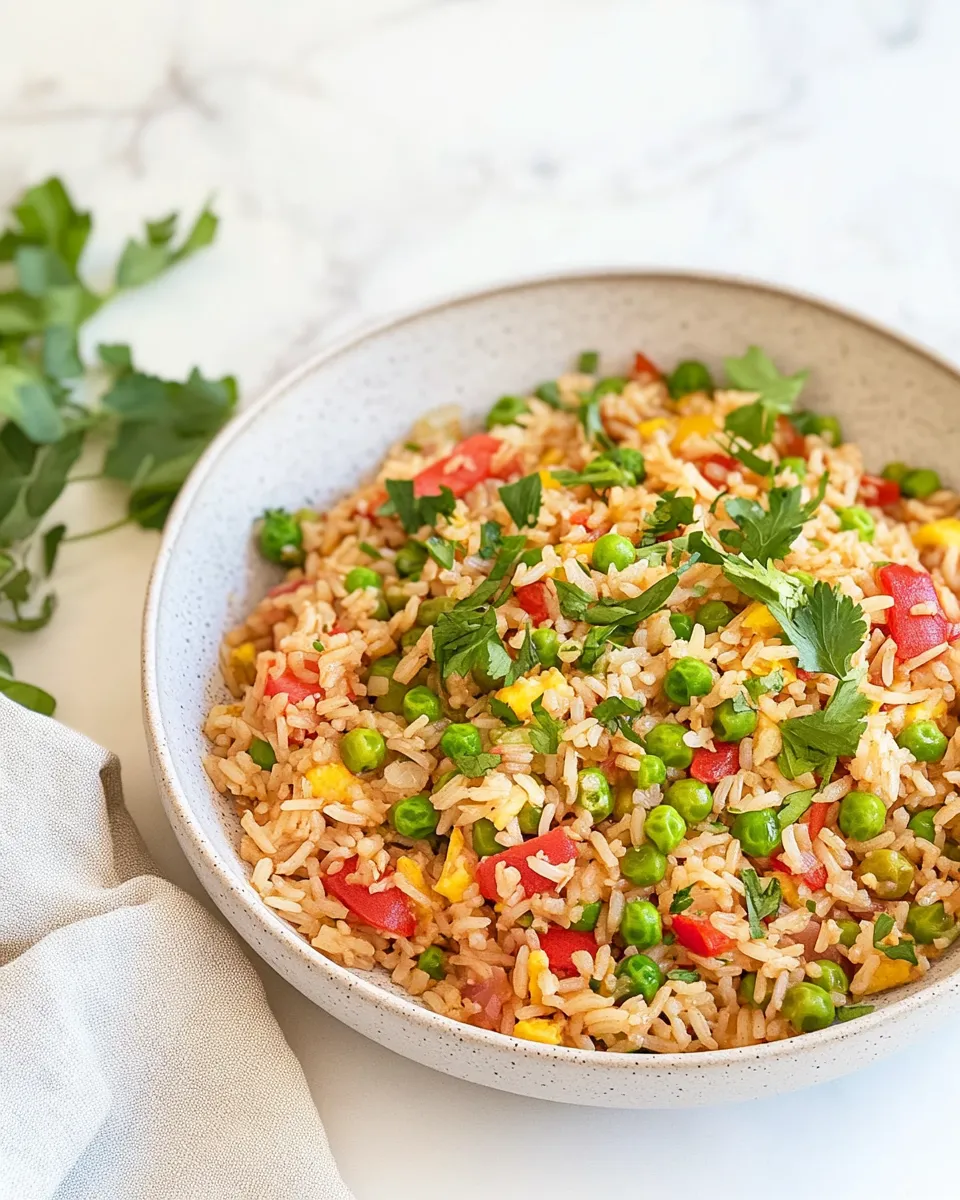
Vegan Fried Rice
I make this Vegan Fried Rice on repeat because it’s fast, forgiving, and genuinely satisfying — the kind of weeknight dinner that feels like a treat without demanding hours or fancy equipment. It’s built on simple pantry staples and whatever vegetables you have on hand, and it comes together in one skillet so cleanup is easy. No complicated technique, just a few small moves that make the flavors pop.
What I love most is how adaptable it is. The recipe below is intentionally straightforward: clear steps, exact seasoning guidance, and timing you can trust. Whether you’re cooking for one, feeding a family, or batch-cooking for the week, this version scales easily and keeps well in the fridge.
Below you’ll find the ingredient notes, step-by-step instructions (kept exactly as written), troubleshooting tips, and sensible swaps so you can make it your own without second-guessing. Let’s get cooking.
What’s in the Bowl

- 1 tablespoon vegetable oil — the neutral high-heat fat for quick stir-frying.
- 1 small yellow onion, diced — builds savory sweetness as it softens.
- 2 cloves garlic, minced — aromatic foundation; add toward the end of the onion step so it doesn’t burn.
- 1 teaspoon grated fresh ginger (optional) — bright, spicy lift if you like a little zing.
- 3 green onions, sliced (white and green parts separated) — whites flavor the base; greens finish the dish as a fresh garnish.
- 1 red bell pepper, diced — color and a touch of sweetness; keeps a bit of crunch when cooked briefly.
- 1 cup frozen peas and carrots mix — convenient, balanced veg; no need to thaw fully if you’ll cook a bit longer.
- 3 cups cooked brown rice, preferably chilled — chilled rice separates better and fries up without getting gummy.
- 2–3 tablespoons low-sodium soy sauce or tamari — main seasoning and color; start with 2 and add up to 3 to taste.
- 1 teaspoon toasted sesame oil — finishing flavor; small amount goes a long way.
- Salt and black pepper to taste — final seasoning adjustments after the soy sauce.
Vegan Fried Rice, Made Easy
- Prep the ingredients: dice 1 small yellow onion; mince 2 cloves garlic; grate 1 teaspoon grated fresh ginger if using; slice 3 green onions and separate the white and green parts; dice 1 red bell pepper; have 1 cup frozen peas and carrots mix thawed or ready; fluff and break up clumps in 3 cups cooked brown rice (preferably chilled).
- Heat 1 tablespoon vegetable oil in a large skillet or wok over medium-high heat until shimmering.
- Add the diced onion and cook, stirring occasionally, until translucent, about 3–4 minutes.
- Add the minced garlic, the grated ginger (if using), and the white parts of the sliced green onions. Cook, stirring, until fragrant, about 30–60 seconds.
- Add the diced red bell pepper and cook, stirring, for about 2–3 minutes. Then add the 1 cup frozen peas and carrots mix and cook until the vegetables are tender, another 2–3 minutes.
- Push the vegetables to one side of the skillet. Add the 3 cups cooked brown rice to the cleared side and break up any remaining clumps with your spatula so the rice separates.
- Drizzle 2 tablespoons low-sodium soy sauce or tamari over the rice and stir to combine. Taste and, if you prefer more saltiness or color, add up to 1 more tablespoon (for a total of 3 tablespoons).
- Combine the rice and vegetables, mixing thoroughly so the soy sauce is evenly distributed.
- Stir in 1 teaspoon toasted sesame oil and cook, stirring frequently, for another 2–3 minutes until everything is heated through.
- Season with salt and black pepper to taste. Remove from heat and garnish with the green parts of the 3 green onions before serving.
Why This Recipe Works
The technique is simple but purposeful. Chilling the rice ahead of time prevents clumping and keeps each grain separate during frying, so you get that classic texture rather than a mashed-together result. Browning the onion and using the white parts of the green onions early on builds a savory base; garlic and ginger are added later so they contribute aroma without burning.
Separating vegetables and rice during the cooking process gives both a chance to reach the right texture — tender-crisp for the veg, lightly toasted for the rice. The soy sauce salts and flavors the rice uniformly, while the toasted sesame oil at the end gives a rounded, nutty finish that makes the dish feel complete.
What to Use Instead
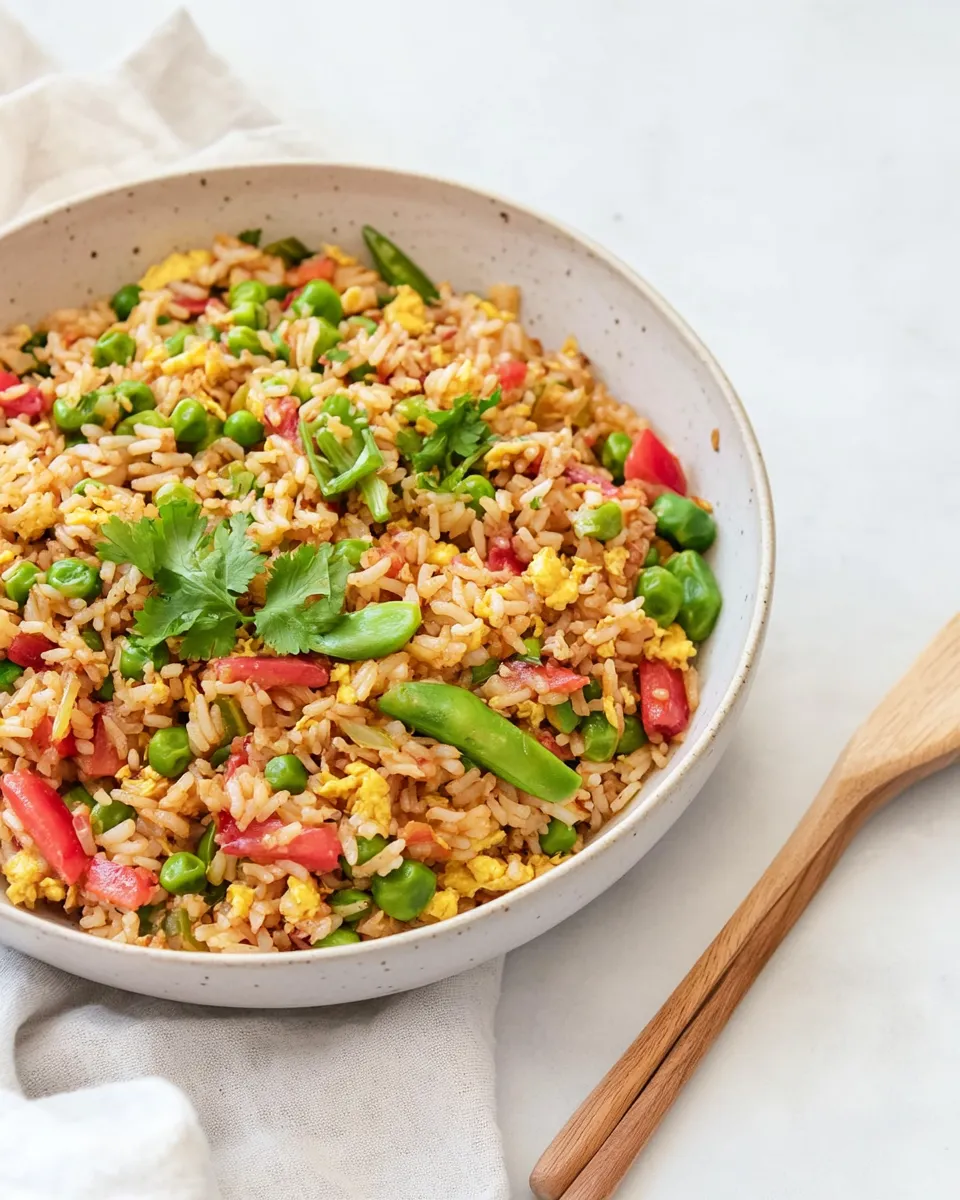
Rice and grains
- White rice: If you only have white rice, use day-old cooked white rice for better texture. Freshly cooked white rice can be stickier, so chill it if possible.
- Other grains: Millet or quinoa can work in a pinch; they’ll change the flavor and texture but still create a hearty bowl.
Sauces & seasoning
- Tamari: Use tamari if you need gluten-free umami; it swaps in directly for soy sauce.
- Less sodium: Start with the lower amount of soy sauce and add salt separately only if needed.
Essential Tools for Success
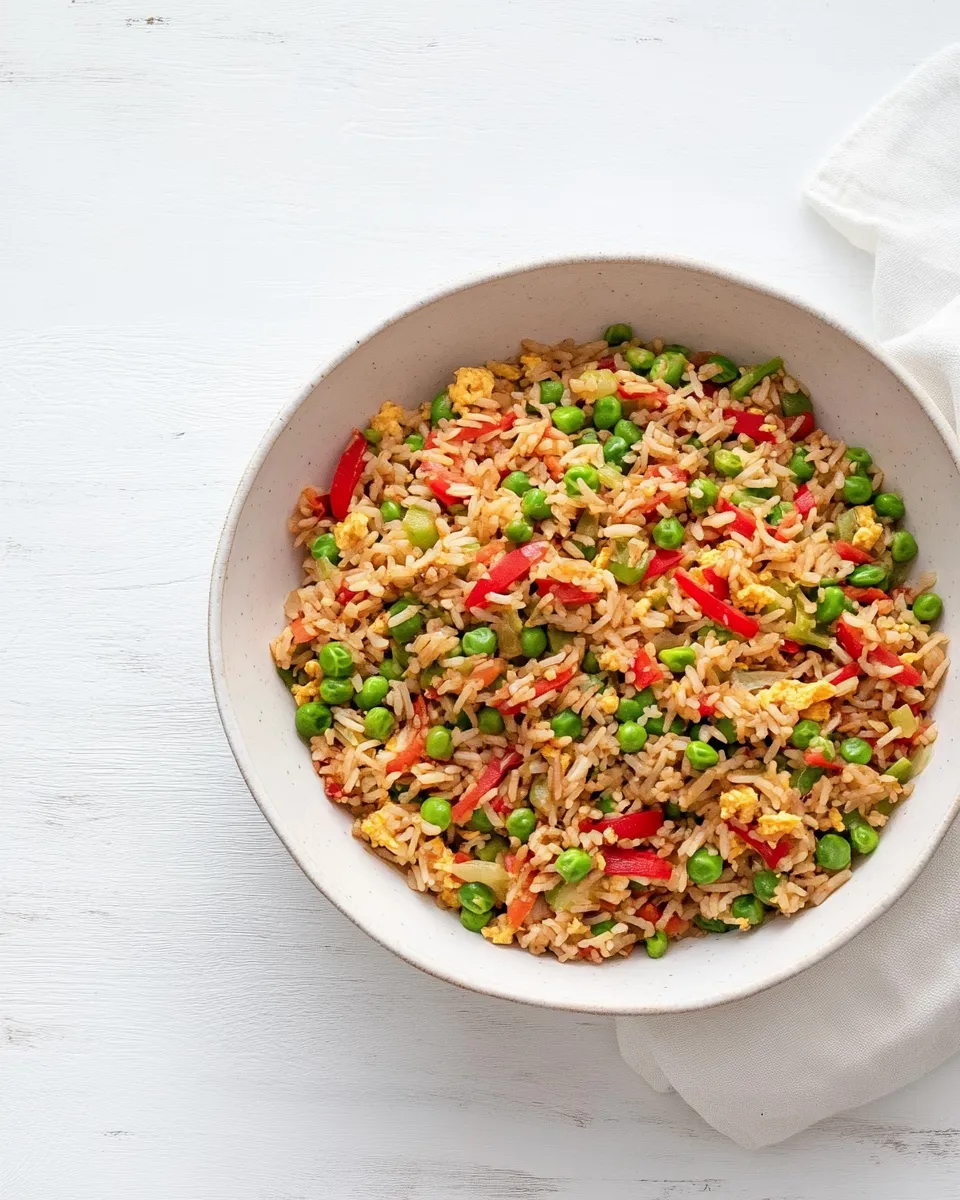
- Large skillet or wok — gives you high heat and room to push vegetables to the side and stir-fry rice.
- Sturdy spatula — useful for breaking up rice clumps and scraping the pan so nothing sticks.
- Cutting board and sharp knife — quick, even dicing makes everything cook uniformly.
- Pre-measured bowls — mise en place speeds the process and prevents overcooking while you chop.
Things That Go Wrong
- Gummy rice: Usually from using freshly cooked warm rice. Fix: chill the rice or spread it on a tray to cool, then separate clumps before frying.
- Burned garlic: Garlic added too early will scorch and turn bitter. Fix: add garlic only after the onions are softened and cook for just 30–60 seconds.
- Soggy vegetables: Overcrowding the pan or cooking without enough heat can steam vegetables. Fix: use a hot pan, work in batches if necessary, and keep stir-frying rather than covering the pan.
- Too salty or dark: Excess soy sauce can overpower the dish. Fix: reduce soy sauce next time and rely on a final salt adjustment; add a squeeze of citrus or a splash of water to balance if it’s already too salty.
Dietary Swaps & Alternatives
- Gluten-free: Use tamari or a certified gluten-free soy sauce in place of regular soy sauce.
- Oil-free: Use a nonstick skillet and a couple of tablespoons of vegetable broth to sauté the aromatics instead of oil; add more as needed to prevent sticking.
- Lower sodium: Start with 2 tablespoons soy sauce and omit added salt; you can finish with a squeeze of fresh lime to enhance flavor without sodium.
- Protein additions: If you want more protein, add cubed baked tofu or cooked edamame; toss in near the end to warm through.
Author’s Commentary
I test a lot of weeknight rice bowls and this Vegan Fried Rice keeps rising to the top because it reliably tastes great with minimal effort. The structure — aromatics, vegetables, rice, sauce, finish oil — is a template I use for all kinds of stir-fries and fried rices. If you stick to the order, it’s hard to mess up.
Personally, I often double the vegetables because I love the color and crunch. I also sometimes fold in a few toasted sesame seeds or a drizzle of chili oil at the end for heat. Those are optional flourishes; the base version here is balanced and satisfying on its own.
Freezer-Friendly Notes
This fried rice freezes well for short-term storage. Cool completely, portion into airtight containers or freezer bags, and freeze for up to 2 months. To reheat, thaw overnight in the fridge if possible, then reheat in a skillet over medium heat with a splash of water or oil to loosen. Microwaving works in a pinch; stir halfway through to ensure even heating. Textures soften after freezing, so freezing is best for convenience rather than preserving crispness.
Vegan Fried Rice Q&A
- Q: Can I make this in advance? A: Yes. Cook fully, cool, and store in the fridge for up to 4 days. Reheat in a skillet so it regains some texture.
- Q: Can I use freshly cooked rice? A: Fresh rice can be stickier; spread it out to cool or chill before frying to reduce clumping.
- Q: Is there a way to make it oil-free? A: Yes. Use a nonstick pan and sauté with a small amount of vegetable broth, adding more as needed to prevent sticking.
- Q: Can I add other vegetables? A: Absolutely. Just adjust cooking times so firmer vegetables get a head start and delicate ones go in later.
Ready to Cook?
Gather your ingredients, prep your vegetables, and have your chilled rice handy — the cooking itself takes about 15 minutes. Follow the step-by-step directions above and don’t be afraid to taste as you go, adding the extra tablespoon of soy sauce only if you want more color or saltiness. This Vegan Fried Rice is reliable, quick, and perfect for using up leftovers while still feeling like a complete meal. Enjoy — and share a photo if you try it; I love seeing the variations people make.
Vegan Fried Rice
Ingredients
Ingredients
- 1 tablespoonvegetable oil
- 1 small yellow oniondiced
- 2 clovesgarlicminced
- 1 teaspoongrated fresh gingeroptional
- 3 green onionssliced white and green parts separated
- 1 red bell pepperdiced
- 1 cupfrozen peas and carrots mix
- 3 cupscooked brown ricepreferably chilled
- 2-3 tablespoonslow-sodium soy sauce or tamari
- 1 teaspoontoasted sesame oil
- Salt and black pepper to taste
Instructions
Instructions
- Prep the ingredients: dice 1small yellow onion; mince 2clovesgarlic; grate 1teaspoongrated fresh ginger if using; slice 3green onions and separate the white and green parts; dice 1red bell pepper; have 1cupfrozen peas and carrots mix thawed or ready; fluff and break up clumps in 3cupscooked brown rice (preferably chilled).
- Heat 1tablespoonvegetable oil in a large skillet or wok over medium-high heat until shimmering.
- Add the diced onion and cook, stirring occasionally, until translucent, about 3–4 minutes.
- Add the minced garlic, the grated ginger (if using), and the white parts of the sliced green onions. Cook, stirring, until fragrant, about 30–60 seconds.
- Add the diced red bell pepper and cook, stirring, for about 2–3 minutes. Then add the 1cupfrozen peas and carrots mix and cook until the vegetables are tender, another 2–3 minutes.
- Push the vegetables to one side of the skillet. Add the 3cupscooked brown rice to the cleared side and break up any remaining clumps with your spatula so the rice separates.
- Drizzle 2tablespoonslow-sodium soy sauce or tamari over the rice and stir to combine. Taste and, if you prefer more saltiness or color, add up to 1 more tablespoon (for a total of 3 tablespoons).
- Combine the rice and vegetables, mixing thoroughly so the soy sauce is evenly distributed.
- Stir in 1teaspoontoasted sesame oil and cook, stirring frequently, for another 2–3 minutes until everything is heated through.
- Season with salt and black pepper to taste. Remove from heat and garnish with the green parts of the 3green onions before serving.
Equipment
- Large Skillet or Wok
- Spatula