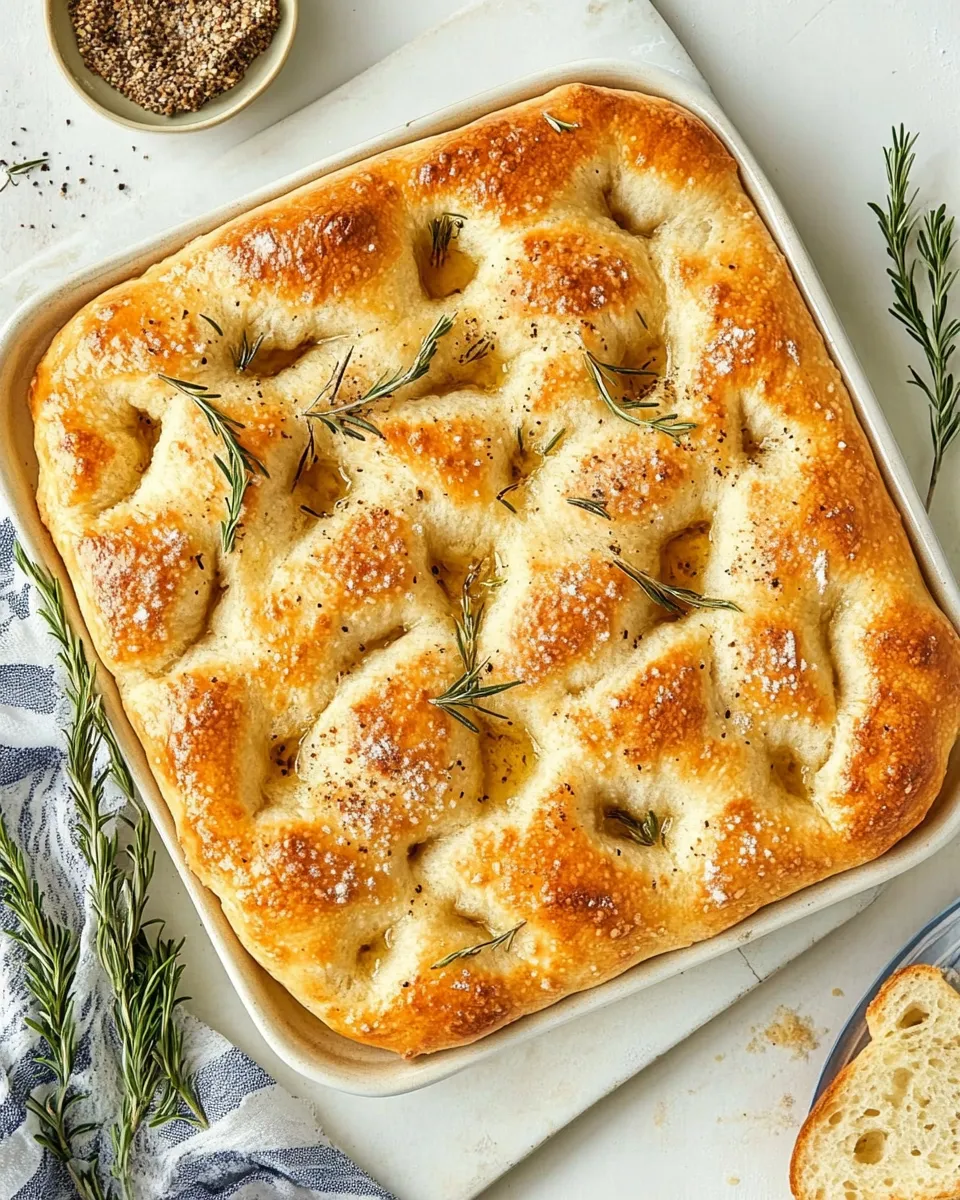
Easy Homemade Focaccia
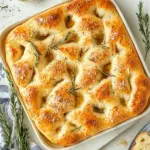
I make this focaccia every few weeks. It’s the kind of bread that forgives a busy afternoon: the dough is forgiving, the hands-on time is short, and the result is a golden, olive-oil-rich slab that pulls apart in airy, tender pieces. No fancy equipment, no complicated kneading. Just a little patience while the dough rests and the reward of something warm and fragrant to slice and serve.
Follow the steps below and you’ll have a reliable focaccia that works for sandwiches, a bread basket, or as the centerpiece for a simple meal. I keep the topping classic—rosemary and garlic infused in olive oil—because it’s bright, herbal, and pairs with everything, but there’s room to personalize once you’ve got the basic method down.
This post walks you through ingredients, the step-by-step method, sensible swaps, common mistakes and how to fix them, gear you’ll actually use, and how to make this ahead of time so it fits into a weekday rhythm. Read the method closely, then make it — you’ll be glad you did.
The Ingredient Lineup

- 3 ¾ cups all-purpose flour or bread flour — the structure of the focaccia; bread flour gives more chew, AP flour keeps it tender.
- 1 ½ cups warm water — hydrates the dough and wakes the yeast; “warm” should feel like a warm bath, not hot.
- 2 ¼ tsp active dry yeast (I use one packet sachet) — the leavening; check the date on the packet for best rise.
- ½ tsp granulated sugar — feeds the yeast gently for a reliable foam in the starter.
- 1 ½ tsp salt for the dough — essential for flavor and helps the dough strengthen; keep it away from direct contact with yeast when mixing.
- 2 tsp olive oil for the dough — adds richness and helps the crumb stay soft.
- ¼ cup olive oil for the rosemary-garlic oil — the finishing oil that flavors the crust and creates those glossy pockets.
- ⅓ cup fresh rosemary (optional as it’s quite punchy) — gives a classic herb note; use less if you prefer subtler flavor.
- 4 cloves garlic, peeled and smashed or sliced — infuses the oil with bright, savory aroma; smashed pieces are easier to fish out if you prefer.
- ¾ tsp coarse salt for sprinkling on top — crunchy and salty finish; flaky sea salt works beautifully.
Cook Homemade Focaccia Like This
- In a large bowl whisk together 3 3/4 cups all-purpose or bread flour and 1 1/2 tsp salt.
- In a small bowl or measuring cup combine 1 1/2 cups warm water, 2 1/4 tsp active dry yeast, and 1/2 tsp granulated sugar. Stir gently and let sit about 30 minutes, until foamy.
- Pour the foamy yeast mixture into the flour mixture. Stir with a spoon or your hands until a shaggy, sticky dough forms.
- Drizzle in 2 tsp olive oil (for the dough). Knead gently in the bowl for 1–2 minutes until the oil is mostly absorbed. The dough will be soft and sticky.
- Line a 9×13 inch (approx. 23×33 cm) baking pan with parchment paper. Pour a little of the 1/4 cup olive oil (for the rosemary-garlic oil) into the lined pan to lightly grease it; reserve the remaining oil in a small pot or cup for the rosemary-garlic infusion.
- Transfer the dough into the greased pan. Lightly oil your fingers (use a bit of the reserved oil) and gently press the dough to start spreading it toward the edges—don’t worry about perfection.
- Cover the pan with a clean kitchen towel or plastic wrap and let the dough rest in a warm spot for 2 hours, until puffed.
- With oiled fingers, gently pull each edge of the dough toward the center (top, bottom, left, right). Cover again and let the dough rest a further 2 hours.
- While the dough rests the second time, prepare the rosemary-garlic oil: place the reserved olive oil in a small pot over medium-low heat. Add 1/3 cup fresh rosemary (optional) and 4 cloves garlic, peeled and smashed or sliced. Warm gently for 5–10 minutes to infuse the flavors, taking care the garlic does not brown. Remove from heat and let the oil cool completely.
- After the second rest (and once the infused oil is cool), lightly oil your fingers and press your fingertips all over the surface of the dough to create the characteristic focaccia dimples.
- Drizzle the cooled rosemary-garlic oil evenly over the dough. Sprinkle 3/4 tsp coarse salt on top. You may leave the rosemary and garlic on the surface or remove them before baking, as you prefer.
- Preheat your oven to 465°F (240°C) while you finish the topping. Bake the focaccia in the preheated oven for about 20 minutes, until golden brown on top and cooked through. Remove from the oven and cool slightly before slicing and serving.
Why This Homemade Focaccia Stands Out
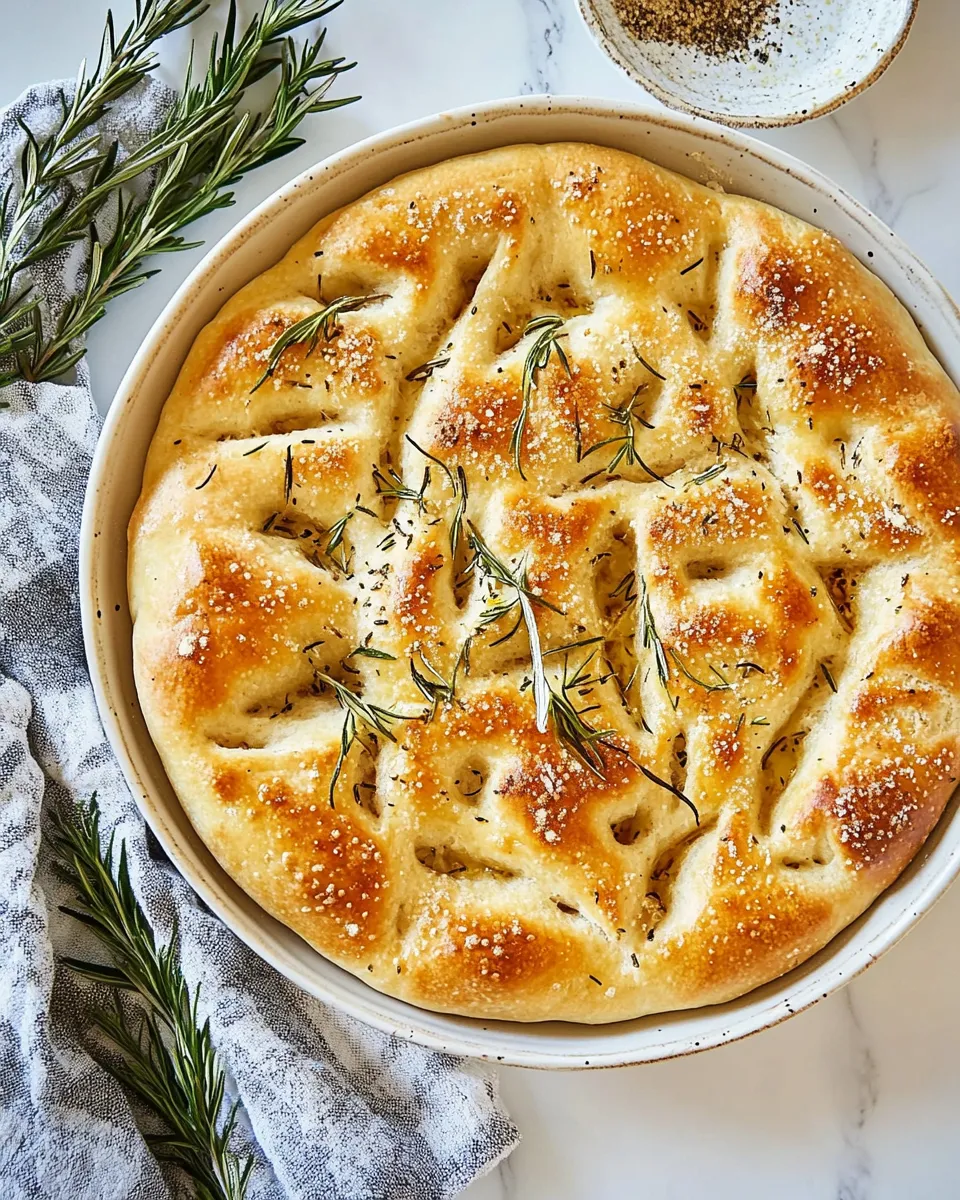
This focaccia is about balance: a soft, open crumb from a wet, minimal-knead dough and a crisp, olive-oil-rich crust from the generous oil in the pan and on top. The two long rests — two hours, then another two after you stretch the dough — are what build flavor and the bouncy texture you want without complicated folding or punch-downs.
The rosemary-garlic oil is simple but transformative. Gently warming the oil with rosemary and garlic extracts their aromatics without browning the garlic, so you get a clean herbal note and mellow garlic that infuses the crust as it bakes. The coarse salt on top finishes it with that bakery-style pop of seasoning.
Swap Guide
Want to change something? Fine. Here are sensible swaps that won’t break the method:
- Flour: Bread flour gives more chew; all-purpose yields a slightly softer crumb. Both work with the same measurements.
- Oil: Use extra-virgin olive oil for flavor; a neutral oil can work if needed but you’ll lose that classic olive note.
- Herbs: If rosemary is too strong, try a few thyme sprigs or a sprinkle of dried oregano after baking (no extra water required).
- Salt: Flaky sea salt is ideal for top-sprinkling, but kosher salt or coarse salt will also give a good finish.
Gear Up: What to Grab
You don’t need special gear. A few things make life easier and the result more consistent:
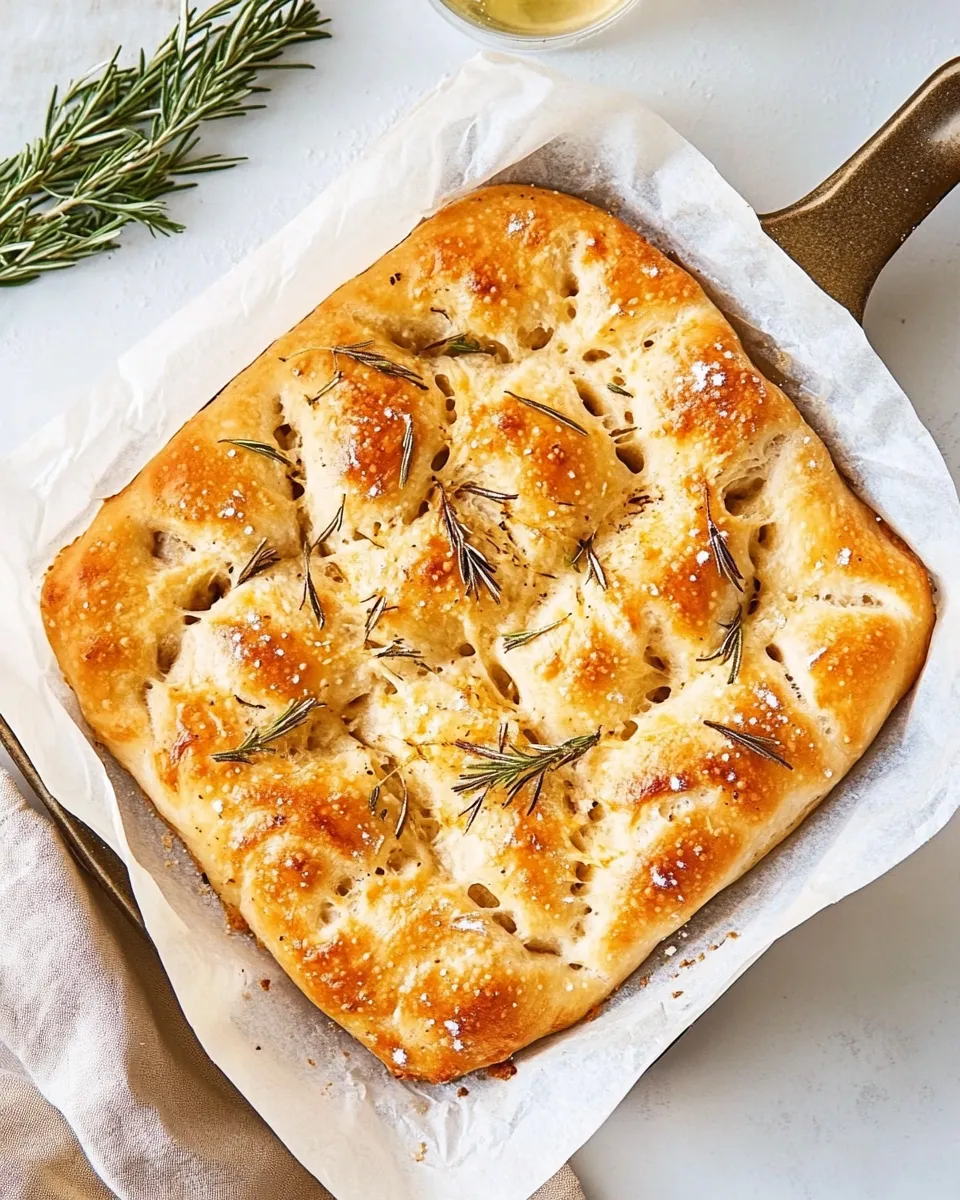
- 9×13 inch baking pan: That’s the size called for in the method; it yields the right thickness.
- Large mixing bowl: Big enough to stir and let the dough rise without spilling.
- Measuring cups and spoons: Accuracy for flour and salt matters here more than you’d think.
- Parchment paper: Keeps the focaccia from sticking and lets you lift it from the pan cleanly.
- Small saucepan: For gently infusing the oil with rosemary and garlic.
Missteps & Fixes
Common issues and quick recoveries
- Dough didn’t rise: The yeast didn’t foam after 30 minutes. Discard and start over with fresh yeast, or try warming the water slightly (it should be warm to the touch, not hot).
- Dough too sticky to handle: This dough is meant to be soft and sticky. Oil your hands and the pan liberally. If it’s impossibly sticky, let it rest covered for 15–20 minutes and try again.
- Uneven browning: Rotate the pan halfway through baking if your oven has hot spots. If the top finishes too quickly, tent with foil and finish cooking.
- Dense crumb: Underproofing is the usual culprit. Make sure the dough puffs during both the first and second rests. Give it more time in a slightly warmer spot if needed.
Make It Your Way
This focaccia is a great canvas. Tear off a piece, drizzle with a bit more olive oil and a wedge of lemon, or use thick slices for sandwiches filled with roasted vegetables, deli meats, or simple mozzarella and tomatoes. Add toppings before baking—think thinly sliced onions, halved cherry tomatoes, or olives—but keep them light so the dough still bakes through in the 20 minutes called for.
If you want herbs baked into the crust, press a few whole sprigs lightly into the dough after dimpling and before drizzling the oil. If you prefer bright herb flavor after baking, sprinkle chopped fresh herbs on immediately as the bread comes out of the oven.
Behind the Recipe
I developed this version by focusing on technique rather than fuss. The flour ratio, simple knead, and two long rests let gluten develop slowly and flavor deepen. The hot, short bake at 465°F produces a crisp top without drying the interior. The rosemary-garlic oil is a low-effort, high-return step that lifts the whole loaf.
Small details matter: warm water that’s too hot will kill yeast; salt directly added to dry yeast can slow its activity; oil your hands to handle the dough rather than adding extra flour. These practical choices give consistent results.
Make Ahead Like a Pro
This dough is forgiving when planned ahead. To make ahead:
- Refrigerate after the first spread: After you transfer the dough to the greased pan and press it out, cover tightly and refrigerate overnight. Bring it to a warm spot and continue with the second pull-and-rest step the next day, then proceed with the infused oil and bake.
- Fully bake and freeze: Bake the focaccia, cool completely, slice, and freeze in airtight bags. Reheat at 350°F (175°C) for 8–12 minutes from frozen or until warmed through.
Common Questions
Can I use instant yeast instead of active dry? Yes. Use the same amount and you can skip the 30-minute foam step, mixing the yeast directly into the warm water and flour, but allowing the same total proofing time is still important.
Do I have to use fresh rosemary? Fresh rosemary is recommended for flavor, but dried can be used sparingly. If using dried, add less and sprinkle it on after baking to keep the herb’s essence bright.
How thick should the focaccia be? The 9×13 pan with the given quantities yields a focaccia roughly an inch to an inch and a half thick after baking. If you prefer a thinner sheet, use a larger pan, but adjust baking time if needed.
The Last Word
This Homemade Focaccia is accessible and reliably delicious. It’s forgiving for beginners and satisfying for anyone who loves bread. The method is straightforward: trust the rests, be gentle with the dough, and let the infused oil do the aromatic work. Make one now, and you’ll find it becomes a kitchen staple for everything from weeknight dinners to casual entertaining.
Easy Homemade Focaccia
Ingredients
Ingredients
- 3 3/4 cupsall-purpose flouror bread flour
- 1 1/2 cupswarm water
- 2 1/4 tspactive dry yeastI use one packet sachet
- 1/2 tspgranulated sugar
- 1 1/2 tspsaltfor the dough
- 2 tspolive oilfor the dough
- 1/4 cupolive oilfor the rosemary-garlic oil
- 1/3 cupfresh rosemaryoptional as it's quite punchy
- 4 clovesgarlicpeeled and smashed or sliced
- 3/4 tspcoarse saltfor sprinkling on top
Instructions
Instructions
- In a large bowl whisk together 3 3/4 cups all-purpose or bread flour and 1 1/2 tsp salt.
- In a small bowl or measuring cup combine 1 1/2 cups warm water, 2 1/4 tsp active dry yeast, and 1/2 tsp granulated sugar. Stir gently and let sit about 30 minutes, until foamy.
- Pour the foamy yeast mixture into the flour mixture. Stir with a spoon or your hands until a shaggy, sticky dough forms.
- Drizzle in 2 tsp olive oil (for the dough). Knead gently in the bowl for 1–2 minutes until the oil is mostly absorbed. The dough will be soft and sticky.
- Line a 9×13 inch (approx. 23×33 cm) baking pan with parchment paper. Pour a little of the 1/4 cup olive oil (for the rosemary-garlic oil) into the lined pan to lightly grease it; reserve the remaining oil in a small pot or cup for the rosemary-garlic infusion.
- Transfer the dough into the greased pan. Lightly oil your fingers (use a bit of the reserved oil) and gently press the dough to start spreading it toward the edges—don’t worry about perfection.
- Cover the pan with a clean kitchen towel or plastic wrap and let the dough rest in a warm spot for 2 hours, until puffed.
- With oiled fingers, gently pull each edge of the dough toward the center (top, bottom, left, right). Cover again and let the dough rest a further 2 hours.
- While the dough rests the second time, prepare the rosemary-garlic oil: place the reserved olive oil in a small pot over medium-low heat. Add 1/3 cup fresh rosemary (optional) and 4 cloves garlic, peeled and smashed or sliced. Warm gently for 5–10 minutes to infuse the flavors, taking care the garlic does not brown. Remove from heat and let the oil cool completely.
- After the second rest (and once the infused oil is cool), lightly oil your fingers and press your fingertips all over the surface of the dough to create the characteristic focaccia dimples.
- Drizzle the cooled rosemary-garlic oil evenly over the dough. Sprinkle 3/4 tsp coarse salt on top. You may leave the rosemary and garlic on the surface or remove them before baking, as you prefer.
- Preheat your oven to 465°F (240°C) while you finish the topping. Bake the focaccia in the preheated oven for about 20 minutes, until golden brown on top and cooked through. Remove from the oven and cool slightly before slicing and serving.
Notes
Yeast likes it warm (not steamy-hot)
Dimples, not drama
The oil is everything
She keeps well, but she shines fresh
When you’re baking