
Zeppole Recipe
Zeppole are simple, joyful fried dough—crispy on the outside, tender and hollowed inside—perfect for a weekend treat or a festival-style indulgence at home. They take a little attention during the frying step, but otherwise the technique is straightforward: a classic choux-based dough that puffs and sets in hot oil, finished with a dusting of confectioners’ sugar.
I write this recipe for busy home cooks who want a reliable result without fuss. The ingredients list is short and familiar. The method follows a single-bowl dough-to-fry workflow and gives clear timing so you can plan the rest of your meal or dessert around the 10–15 minutes of active work.
Below you’ll find a clear ingredient breakdown, step-by-step instructions that mirror the tested source, troubleshooting tips, equipment notes, and sensible ways to adjust the recipe to fit dietary needs or make-ahead plans. Read through once, then gather your pans and let’s fry.
Ingredient Breakdown

Ingredients
- 1/2 cup water — Provides part of the liquid for the choux dough; helps create steam for puffing.
- 1/2 cup whole milk — Adds fat and flavor; contributes to a tender interior and richer taste.
- 8 Tbsp unsalted butter — Melts into the liquid base to enrich the dough; unsalted gives you control over seasoning.
- 1 tsp granulated sugar — Small amount to feed browning and add a touch of sweetness to the dough.
- 1/4 tsp salt — Balances flavor; essential even in sweet fried dough.
- 1 cup all-purpose flour — The structure builder; measured and added all at once to form the choux dough.
- 4 large eggs, room temperature — Bind and thin the dough to the right pipeable consistency; room temperature eggs incorporate more evenly.
- oil for frying, such as peanut oil or vegetable oil — Neutral oil with a high smoke point keeps the zeppole crisp without off-flavors. Use enough oil so they can float freely.
- 1/4 cup confectioners sugar, to dust — Classic finish; dust while the zeppole are warm so the sugar adheres.
Zeppole: From Prep to Plate
- In a large 3‑quart saucepan, combine 1/2 cup water, 1/2 cup whole milk, 8 Tbsp unsalted butter, 1 tsp granulated sugar, and 1/4 tsp salt. Heat over medium, stirring frequently, until the butter melts and the mixture comes to a boil.
- Remove the pan from the heat and add 1 cup all‑purpose flour all at once. Stir vigorously with a wooden spoon until the flour is fully incorporated and a rough dough forms.
- Return the pan to medium heat and stir constantly for 1 1/2 to 2 minutes, until the dough looks smooth and a thin film forms on the bottom of the pan (this drives off extra moisture).
- Transfer the dough to a large mixing bowl. Using an electric mixer on medium speed, beat the dough for 1 minute to cool it slightly.
- Add 4 large eggs, room temperature, one at a time, beating until each egg is fully incorporated before adding the next. After all eggs are added, beat for 1 more minute until the dough is smooth and falls in a thick ribbon when you lift the whisk.
- Fit a piping bag with a 1/2‑inch round tip, or use a large zip‑top bag and cut a 1/2‑inch opening in a corner. Transfer the dough into the prepared bag.
- Heat oil for frying (such as peanut or vegetable oil) in a deep fryer or a heavy Dutch oven with a thermometer attached until it reaches 375°F. Use enough oil so the zeppole can float freely; take care to avoid splashes.
- Hold the piping bag close to the oil surface and pipe 1‑inch lengths of dough directly into the hot oil, cutting the dough as you pipe. Pipe nearer the surface to reduce splattering.
- Fry the zeppole 4–5 minutes total, turning once halfway through if they do not turn on their own, until golden brown and cooked through.
- Remove the zeppole with a slotted spoon and drain briefly on a paper‑towel‑lined plate to absorb excess oil.
- Dust the warm zeppole with 1/4 cup confectioners sugar and serve.
Why You’ll Keep Making It
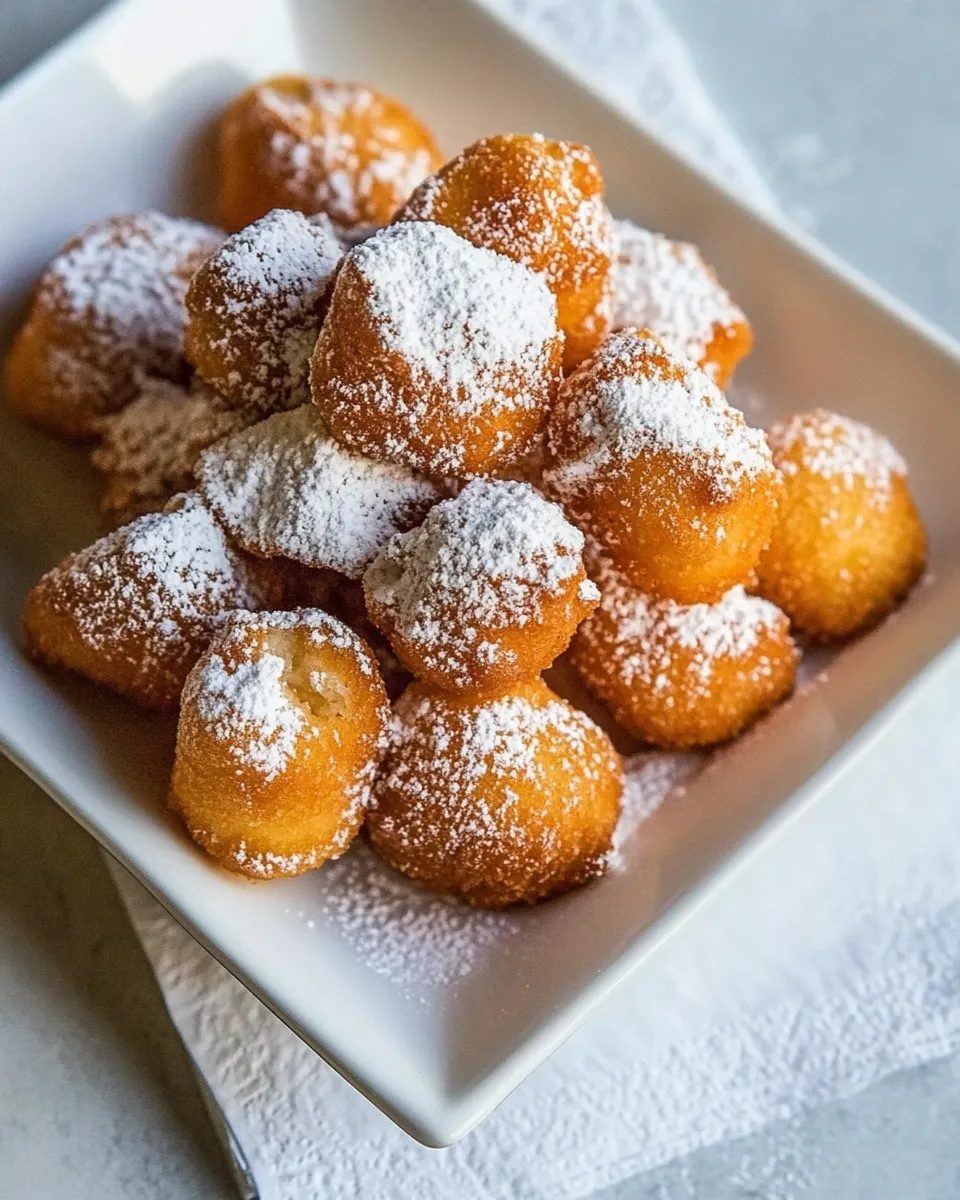
Zeppole deliver big reward for a small ingredient list. They’re quick to mix, and once you’ve mastered the dough consistency and frying temperature, they come out consistent every time. The texture is what keeps people reaching for seconds: a crisp shell gives way to a hollow, tender interior that’s perfect for sprinkling or filling.
They work for many occasions: a casual dessert after a weeknight meal, a crowd-pleasing brunch item, or an easy treat to bring to a potluck. Because the dough is neutral, you can dress them up many ways—fruit preserves, pastry cream, ricotta sweetened with a touch of honey—so they feel new each time you make them.
Healthier Substitutions

If you want to lighten things without losing the essence of zeppole, focus on small swaps and portion control. Frying is integral to the classic result, but you can reduce fat by limiting portion size or using an air fryer for a different, less oily texture (results will not be identical).
Other easy adjustments:
- Swap whole milk for lower-fat milk or a fortified plant milk to cut calories from the dough liquid.
- Use a neutral oil with a higher smoke point and change the oil frequently if you make many batches—cleaner oil tastes fresher.
- Skip heavy fillings and instead dust more sparingly with confectioners’ sugar or serve with a side of fresh fruit to balance the richness.
Equipment at a Glance
- Heavy 3‑quart saucepan — Holds the boiling liquid for the choux base and gives even heat.
- Wooden spoon — Best for vigorous stirring when you add the flour.
- Electric mixer — Helps incorporate eggs quickly and reach the right dough texture; hand-whisking will take longer.
- Piping bag with 1/2‑inch round tip or zip-top bag — For consistent 1‑inch portions.
- Deep fryer or heavy Dutch oven and candy/deep-fry thermometer — Temperature control at 375°F is key to golden, non-greasy zeppole.
- Slotted spoon and paper towels — For safe removal and gentle draining.
Problems & Prevention
My zeppole are flat, not puffed
That usually means the dough was too wet or the eggs were added too quickly. Make sure you cooked the dough on the stovetop until a thin film forms on the bottom (step 3)—this removes excess moisture. Add eggs one at a time and fully incorporate each before adding the next.
They absorb too much oil / are greasy
Oil temperature is the most common culprit. Keep the oil at 375°F and fry in small batches so the oil temperature doesn’t drop too much when you add dough. Drain briefly on paper towels and serve while warm.
Uneven browning or doughy centers
If the exterior browns too quickly while the inside remains undercooked, the oil may be too hot. Lower the temperature slightly and fry a tester zeppola to fine-tune. A 4–5 minute total fry time at 375°F should yield cooked-through centers.
Fit It to Your Goals
If you’re aiming for speed: prepare the dough and transfer to the piping bag ahead of frying, then fry all at once to serve hot. For hosting: fry in batches and hold the cooked zeppole on a cooling rack in a warm oven (not too hot, 200°F max) for short periods—dust with sugar just before serving.
If you want showmanship: pipe slightly larger rounds and serve each with a small ramekin of warm chocolate or lemon curd for dipping. For kid-friendly bites: make mini zeppole and let kids sprinkle their own finishing sugar.
Cook’s Notes
- Egg temperature matters. Using room-temperature eggs helps them incorporate smoothly and produces consistent dough texture.
- Consistency note: the finished dough should be pipeable but thick—when lifted with a whisk it will fall in a thick ribbon. If too stiff, beat a touch longer after adding eggs; if too loose, you’ve likely over-mixed or added eggs too quickly.
- Safety first: pipe close to the oil surface to minimize splatter. Keep a splatter guard nearby if you’re nervous, and never leave hot oil unattended.
- Serving tip: dust with confectioners’ sugar while warm so it adheres; if you wait too long the sugar may not stick as well.
Make Ahead Like a Pro
You can prepare the choux dough through step 5 (up to and including adding and beating in the eggs), then chill it in the refrigerator for up to 24 hours. When ready to fry, bring the dough back to room temperature, briefly re-whip with the mixer just to loosen, transfer to the piping bag, and proceed with frying.
Alternatively, fry zeppole up to a few hours ahead and keep them loose on a rack in a low oven (200°F) for short-term holding. Re-crisping in a preheated 350°F oven for 3–4 minutes refreshes them if they’ve lost crunch, but dust with confectioners’ sugar only after re-warming.
Zeppole Q&A
Can I freeze the dough or finished zeppole?
Choux dough does not freeze well once eggs are incorporated—the texture may change. Finished zeppole can be frozen after frying: cool completely, freeze on a tray, then transfer to a sealed container for up to a month. Reheat in a 350°F oven until crisp, then dust with sugar.
What oil is best for frying?
Neutral oils with high smoke points—peanut or vegetable oil—work best. They give a clean flavor and handle the high frying temperature without burning.
Can I fill zeppole?
Yes. Classic versions are hollow and can be filled with pastry cream or sweetened ricotta. To fill, use a piping tip inserted into the side and pipe the filling gently into the center once the zeppole are cool enough to handle.
Bring It Home
Zeppole are a modest, satisfying treat that reward attention to technique more than fancy ingredients. Keep the dough and steps simple, respect the frying temperature, and you’ll have golden puffs that disappear fast. They’re versatile—serve them plain dusted with sugar, fill them, or offer a dip—so you can adapt them to seasons and guests.
Make a small batch the first time to get comfortable with piping and frying. Once you’ve got the rhythm, they’re a repeatable, crowd-pleasing dessert you’ll be glad you added to your repertoire.

Zeppole Recipe
Ingredients
Ingredients
- 1/2 cupwater
- 1/2 cupwhole milk
- 8 Tbspunsalted butter
- 1 tspgranulated sugar
- 1/4 tspsalt
- 1 cupall-purpose flour
- 4 large eggs room temperature
- oil for frying such as peanut oil or vegetable oil
- 1/4 cupconfectioners sugar to dust
Instructions
Instructions
- In a large 3‑quart saucepan, combine 1/2 cup water, 1/2 cup whole milk, 8 Tbsp unsalted butter, 1 tsp granulated sugar, and 1/4 tsp salt. Heat over medium, stirring frequently, until the butter melts and the mixture comes to a boil.
- Remove the pan from the heat and add 1 cup all‑purpose flour all at once. Stir vigorously with a wooden spoon until the flour is fully incorporated and a rough dough forms.
- Return the pan to medium heat and stir constantly for 1 1/2 to 2 minutes, until the dough looks smooth and a thin film forms on the bottom of the pan (this drives off extra moisture).
- Transfer the dough to a large mixing bowl. Using an electric mixer on medium speed, beat the dough for 1 minute to cool it slightly.
- Add 4 large eggs, room temperature, one at a time, beating until each egg is fully incorporated before adding the next. After all eggs are added, beat for 1 more minute until the dough is smooth and falls in a thick ribbon when you lift the whisk.
- Fit a piping bag with a 1/2‑inch round tip, or use a large zip‑top bag and cut a 1/2‑inch opening in a corner. Transfer the dough into the prepared bag.
- Heat oil for frying (such as peanut or vegetable oil) in a deep fryer or a heavy Dutch oven with a thermometer attached until it reaches 375°F. Use enough oil so the zeppole can float freely; take care to avoid splashes.
- Hold the piping bag close to the oil surface and pipe 1‑inch lengths of dough directly into the hot oil, cutting the dough as you pipe. Pipe nearer the surface to reduce splattering.
- Fry the zeppole 4–5 minutes total, turning once halfway through if they do not turn on their own, until golden brown and cooked through.
- Remove the zeppole with a slotted spoon and drain briefly on a paper‑towel‑lined plate to absorb excess oil.
- Dust the warm zeppole with 1/4 cup confectioners sugar and serve.
Equipment
- 3-quart saucepan
- Wooden Spoon
- Electric Mixer
- piping bag (or zip-top bag)
- deep fryer or heavy Dutch oven
- Thermometer
- Slotted Spoon
- Paper Towels
Notes
*
To Portion Batter –
You can also use 2 spoons to scoop batter into the hot oil, or pipe dough onto small pieces of parchment paper and put them dough-side-down into the hot oil.
*
Nutrition label
is an estimate only as oil content is difficult to gauge.