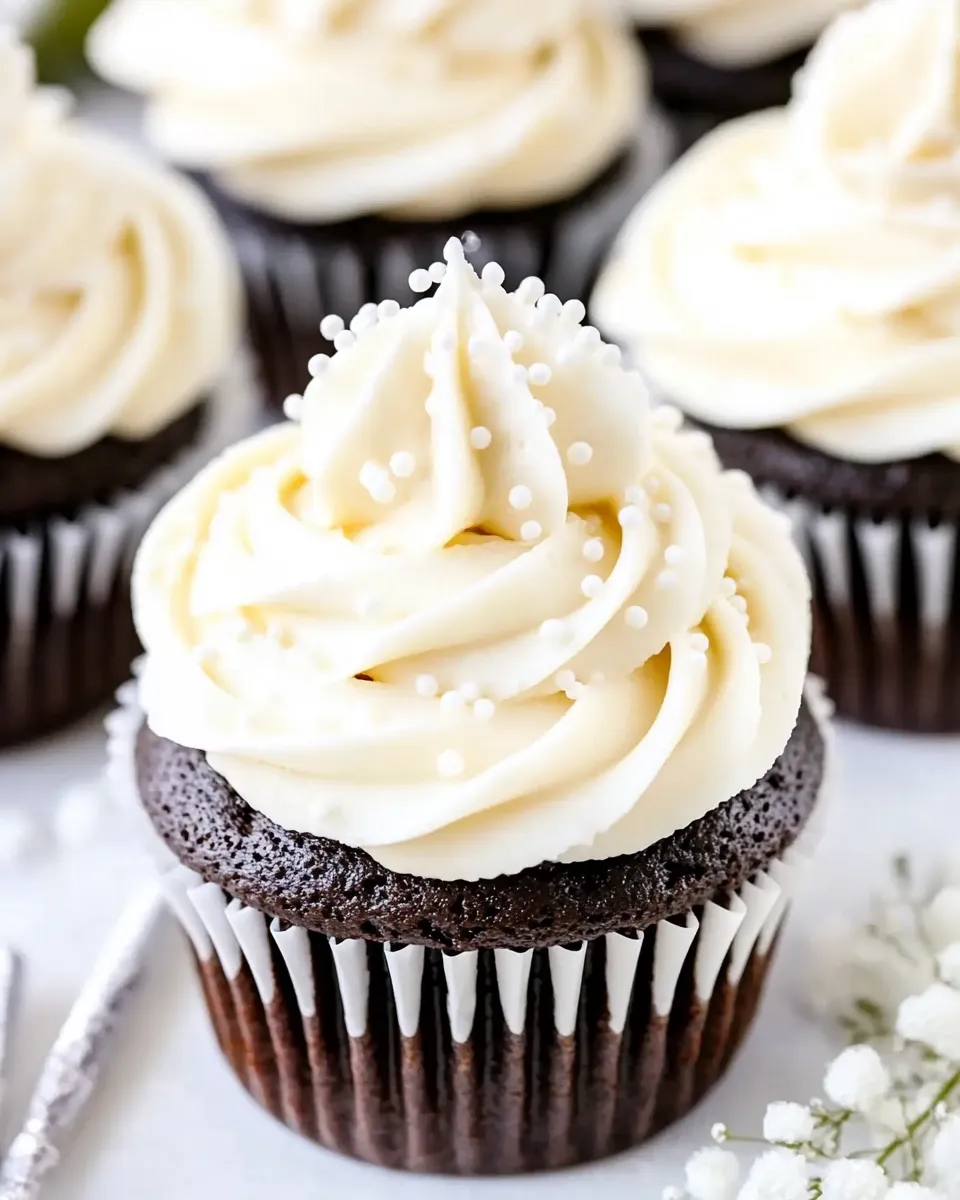
Vanilla Buttercream Topped Cocoa Cupcakes
I make a lot of cupcakes. These Cocoa Cupcakes with a clean vanilla buttercream finish are the ones I reach for when I want chocolate that feels classic and unfussy. The crumb is tender, the cocoa flavor is honest (not overly sweet), and the vanilla buttercream on top brings the kind of balance that turns a simple cupcake into something you’ll bake again and again.
This recipe is practical and straightforward. You’ll move from dry ingredients to batter to tray in a few predictable stages. Nothing fancy is required—no melted chocolate, no tempering—so it’s an excellent weekday bake or a last-minute dessert for friends.
I’ll walk you through the ingredients with tips, show the exact step-by-step method, and cover the gear and common missteps that save time and keep results reliable. If you want a dependable cocoa cupcake that pairs perfectly with a bright vanilla buttercream, this is it.
Ingredient Breakdown

Ingredients
- ½ cup cocoa powder (not Dutch-processed) — Provides chocolate flavor and color; use regular natural cocoa for the recipe’s rise and acidity balance.
- ¾ cup flour — All-purpose flour gives structure; measure by spooning into the cup and leveling for accuracy.
- ½ teaspoon baking soda — Helps leaven the cupcakes and works with the acids in the batter for lift.
- ¾ teaspoon baking powder — Adds extra lift and lightness to the crumb.
- ¼ teaspoon salt — Balances sweetness and enhances cocoa flavor.
- 2 eggs, at room temperature — Binders that provide structure and richness; room temperature eggs mix more evenly.
- ½ cup sugar — Granulated sugar for sweetness and tender crumb.
- ½ cup brown sugar — Adds moisture and a hint of caramel complexity.
- ⅓ cup vegetable oil — Keeps the cupcakes tender and moist; neutral-flavored oil is best.
- 1 teaspoon vanilla extract — Aromatic backbone that lifts both cake and buttercream.
- ½ teaspoon coffee extract (may add more vanilla if you don’t have coffee extract) — Small boost to chocolate flavor; optional but recommended for depth.
- ½ cup buttermilk, at room temperature — Adds tang and reacts with leaveners to create a light crumb; room temperature prevents batter from seizing.
Vanilla Buttercream Topped Cocoa Cupcakes Made Stepwise
- Preheat the oven to 350°F. Line two muffin tins with 14 liners (or one muffin tin with 12 liners plus two liner-lined ramekins) and set aside.
- In a medium bowl, whisk together the cocoa powder, flour, baking soda, baking powder, and salt until evenly combined. Set aside.
- In a large bowl, whisk the eggs, sugar, brown sugar, vegetable oil, vanilla extract, and coffee extract until smooth.
- Add about one-third of the dry ingredient mixture to the egg mixture and whisk until just combined.
- Add half of the buttermilk (1/4 cup) and whisk until incorporated.
- Add the next one-third of the dry mixture and whisk until just combined.
- Add the remaining buttermilk (1/4 cup) and whisk until incorporated.
- Add the remaining dry mixture and whisk until the batter is uniform and no large streaks of dry ingredients remain; do not overmix.
- Divide the batter among the prepared liners, filling each about halfway (this recipe yields approximately 14 cupcakes). Bake for 18–20 minutes, or until a toothpick inserted into the center comes out clean or with a few moist crumbs.
- Let the cupcakes cool in the pans for about 10 minutes, then transfer them to a wire rack to cool completely.
- When the cupcakes are completely cooled, frost with your preferred vanilla buttercream or other frosting of choice (frosting ingredients and amounts are not provided in the ingredient list). Pipe or spread as desired.
What Makes This Recipe Special
Several practical choices give these cupcakes their dependable results. First, the combination of baking soda and baking powder provides consistent lift without depending on a single leavener. That helps the cupcakes rise evenly even when oven temperature varies slightly.
The use of both granulated and brown sugar is intentional. Granulated sugar gives structure and straightforward sweetness; brown sugar keeps the crumb moist and lends a faint caramel note. The outcome is a cupcake that’s not just chocolatey but layered in flavor.
Coffee extract—used sparingly—does what a small touch of espresso powder does in many cakes: it enhances chocolate without tasting like coffee. If you skip it, increase the vanilla slightly to keep the profile balanced. Finally, vegetable oil keeps the crumb moist in a way butter sometimes does not, which is why these cupcakes stay tender for longer.
Easy Ingredient Swaps
Keep swaps minimal and purposeful. If you don’t have coffee extract, the recipe itself notes you can increase the vanilla extract—use an extra ¼ to ½ teaspoon depending on preference. That keeps the flavor bright without introducing bitterness.
If you prefer a slightly denser crumb, you can reduce the oil by a tablespoon, but expect the texture to shift. Because I work from the provided ingredient list, I recommend sticking with the amounts as written for reliable results. Small tweaks are fine; large substitutions change the structure and may require technique adjustments.
Setup & Equipment
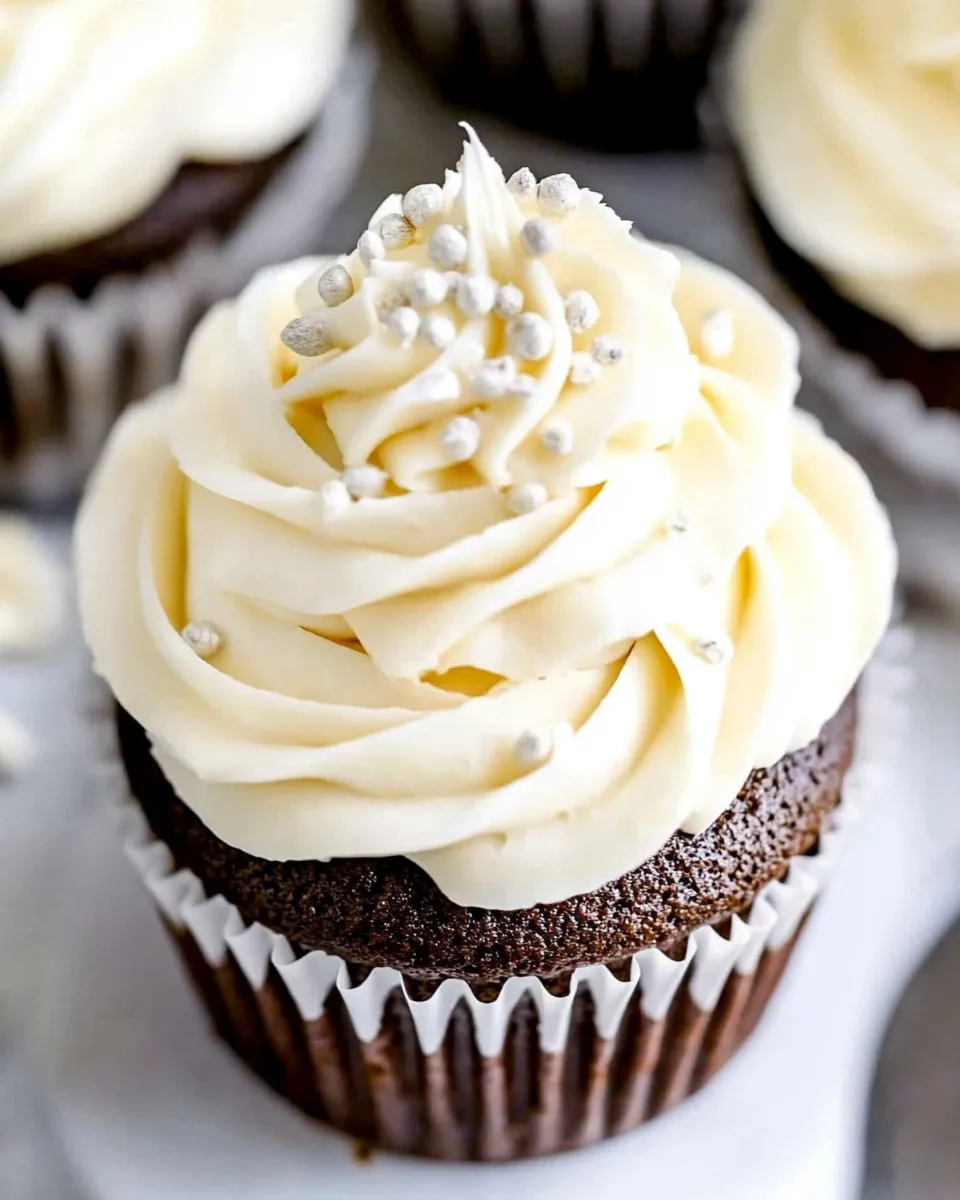
Use two standard muffin tins if you have them; lining them with paper liners speeds removal and cleanup. If you only have one tin, the instructions give an alternative—12 liners plus two liner-lined ramekins—so you still bake the full batch in one go.
Measure ingredients accurately. Cocoa and flour should be spooned into the measuring cup and leveled rather than scooped to avoid packing. Room-temperature eggs and buttermilk make an emulsion easier to achieve, keeping the batter smooth and preventing a greasy texture.
A wire rack is essential for cooling. Hot cupcakes left in a pan continue cooking and can steam on the bottom, which softens the liner and changes texture. Ten minutes in the pan, then transfer to the rack: that’s the sweet spot.
Avoid These Mistakes
Common pitfalls and how to fix them
- Overmixing the batter — The instructions repeatedly say “just combined.” When you mix too long after adding the dry ingredients, gluten develops and you get dense cupcakes. Stop when streaks disappear.
- Filling liners too full — Fill about halfway as directed. Overfilled cups boil over and flatten; underfilled cups will be small and dry.
- Skipping the rest time for cooling — Frosting warm cupcakes leads to melting or sliding frosting. Always cool completely on a wire rack before decorating.
- Using the wrong cocoa — The recipe specifies natural (not Dutch-processed) cocoa. Using Dutch-processed can alter acidity and rise.
Fresh Takes Through the Year
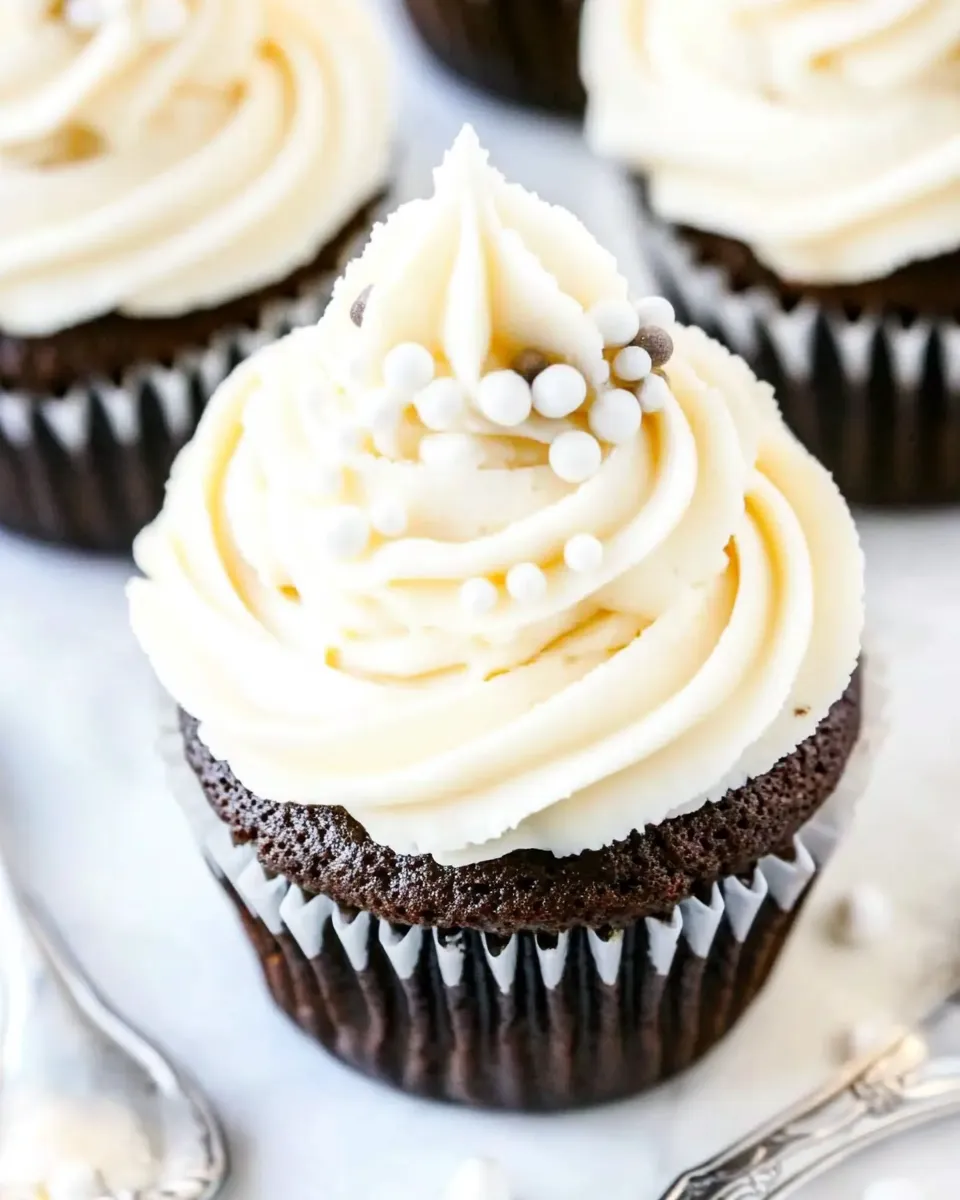
These cupcakes are a great blank slate. Around holidays I keep things simple: a generous swirl of vanilla buttercream and a dusting of cocoa or a few sprinkles for color. In winter, a small sprinkle of flaky sea salt over the buttercream highlights the chocolate. In warmer months, a light garnish—thinly sliced berries or a single freeze-dried raspberry—adds contrast without overpowering the vanilla topping.
For birthday or party baking, pipe the buttercream with different tips for texture—rosettes, stars, or a smooth flat top. The cupcake itself stays neutral enough to pair with many frostings; that’s why the recipe uses the wording “preferred vanilla buttercream or other frosting of choice” in the final step.
Recipe Notes & Chef’s Commentary
Keep the process methodical. The recipe alternates dry ingredients and buttermilk in thirds; that technique avoids lumps and gives you control over consistency. If you dump all the wet into the dry at once and overmix to remove lumps, you risk a tougher crumb. Alternate additions and fold or whisk gently.
Eggs at room temperature emulsify better with oil, creating a uniform batter. If your kitchen is cold, set eggs in a bowl of warm (not hot) water for a few minutes before starting.
About yield: the recipe yields about 14 cupcakes as written. If you prefer larger or smaller sizes, adjust bake time and check with a toothpick. The window of 18–20 minutes is a guideline; ovens vary. Trust the toothpick test.
Shelf Life & Storage
Unfrosted cupcakes keep at room temperature in an airtight container for 1–2 days. Because these use oil, they stay moist, but freshness will decline after that. Refrigerate if you need to keep them longer—up to 4 days—but bring cupcakes to room temperature before serving for the best texture.
Frosted cupcakes with vanilla buttercream can sit at room temperature for a day if your kitchen is cool. If it’s warm, refrigerate them in an airtight container to protect the buttercream. Chilled, they can last 4–5 days. When storing in the fridge, let them sit on the counter 30–60 minutes before serving so the buttercream softens.
For longer storage, freeze unfrosted cupcakes in a single layer on a tray until solid, then transfer to a freezer bag for up to 3 months. Thaw in the fridge or at room temperature. If frozen after frosting, flash-freeze the iced cupcakes first to help preserve the piped shape, then store in a rigid container.
Frequently Asked Questions
Can I make this gluten-free?
The ingredient list calls for ¾ cup flour. For a gluten-free version you would need a one-to-one gluten-free flour blend formulated for cakes and possibly a binding agent; that requires testing and is not part of the source recipe. If you go that route, expect some texture differences.
Can I use Dutch-processed cocoa?
The recipe specifies natural cocoa (not Dutch-processed). Dutch-processed cocoa is less acidic and can change how the leaveners behave, so stick to natural cocoa for predictable rise and balance.
What if I don’t have buttermilk?
The recipe depends on buttermilk for acidity and texture. If you must substitute, use a room-temperature cultured or soured milk product; keep in mind the recipe was written for buttermilk specifically, so results may vary.
Why alternately add dry ingredients and buttermilk?
This method ensures even mixing without overworking the batter. It distributes moisture and gives you control over the final consistency.
Serve & Enjoy
Serve these Cocoa Cupcakes at room temperature with a generous swirl of vanilla buttercream. They’re unfussy, crowd-pleasing, and pair well with coffee, milk, or a simple pot of tea. If you’re bringing them to a party, transport them in a single layer in a sturdy box with non-slip liners or in a cupcake carrier to keep the tops pristine.
Make the batch exactly as written the first time. Learn how they behave in your oven. After that, small personalizations—sprinkles, a dusting of cocoa, or a tiny shard of chocolate—are easy and fun. Enjoy the steady, reliable chocolate and the soft, bright vanilla on top. Bake, frost, and share.
Vanilla Buttercream Topped Cocoa Cupcakes
Ingredients
Ingredients
- 1/2 cup cocoa powder not Dutch-processed
- 3/4 cup flour
- 1/2 teaspoon baking soda
- 3/4 teaspoon baking powder
- 1/4 teaspoon salt
- 2 eggs at room temperature
- 1/2 cup sugar
- 1/2 cup brown sugar
- 1/3 cup vegetable oil
- 1 teaspoon vanilla extract
- 1/2 teaspoon coffee extract may add more vanilla if you don't have coffee extract
- 1/2 cup buttermilk at room temperature
Instructions
Instructions
- Preheat the oven to 350°F. Line two muffin tins with 14 liners (or one muffin tin with 12 liners plus two liner-lined ramekins) and set aside.
- In a medium bowl, whisk together the cocoa powder, flour, baking soda, baking powder, and salt until evenly combined. Set aside.
- In a large bowl, whisk the eggs, sugar, brown sugar, vegetable oil, vanilla extract, and coffee extract until smooth.
- Add about one-third of the dry ingredient mixture to the egg mixture and whisk until just combined.
- Add half of the buttermilk (1/4 cup) and whisk until incorporated.
- Add the next one-third of the dry mixture and whisk until just combined.
- Add the remaining buttermilk (1/4 cup) and whisk until incorporated.
- Add the remaining dry mixture and whisk until the batter is uniform and no large streaks of dry ingredients remain; do not overmix.
- Divide the batter among the prepared liners, filling each about halfway (this recipe yields approximately 14 cupcakes). Bake for 18–20 minutes, or until a toothpick inserted into the center comes out clean or with a few moist crumbs.
- Let the cupcakes cool in the pans for about 10 minutes, then transfer them to a wire rack to cool completely.
- When the cupcakes are completely cooled, frost with your preferred vanilla buttercream or other frosting of choice (frosting ingredients and amounts are not provided in the ingredient list). Pipe or spread as desired.
Equipment
- Muffin Tin
- Muffin liners
- Ramekins
- Medium Bowl
- Large Bowl
- Whisk
- Wire Rack
Notes
Frosting ingredients and amounts are not provided in the ingredient list.