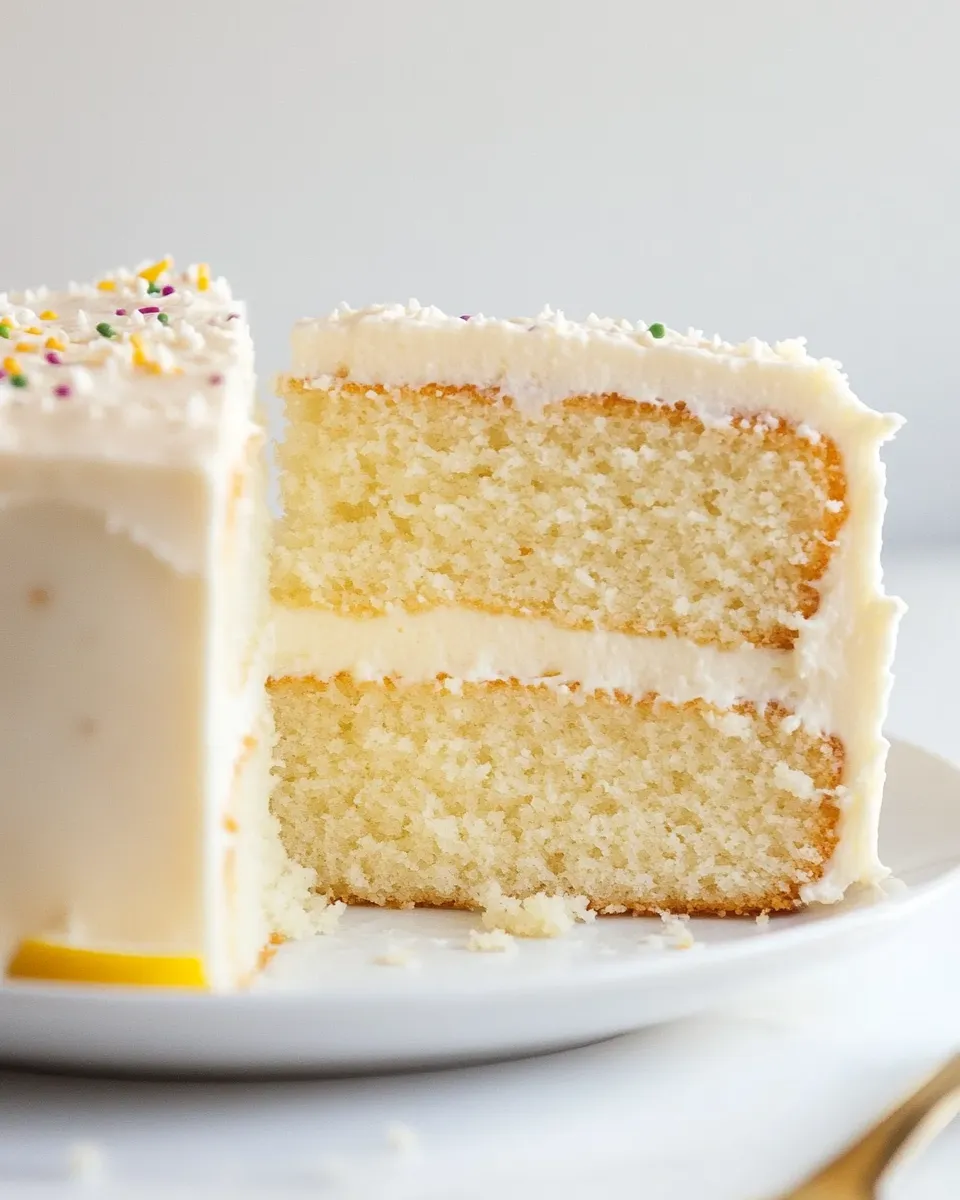
The Absolute Best White Cake
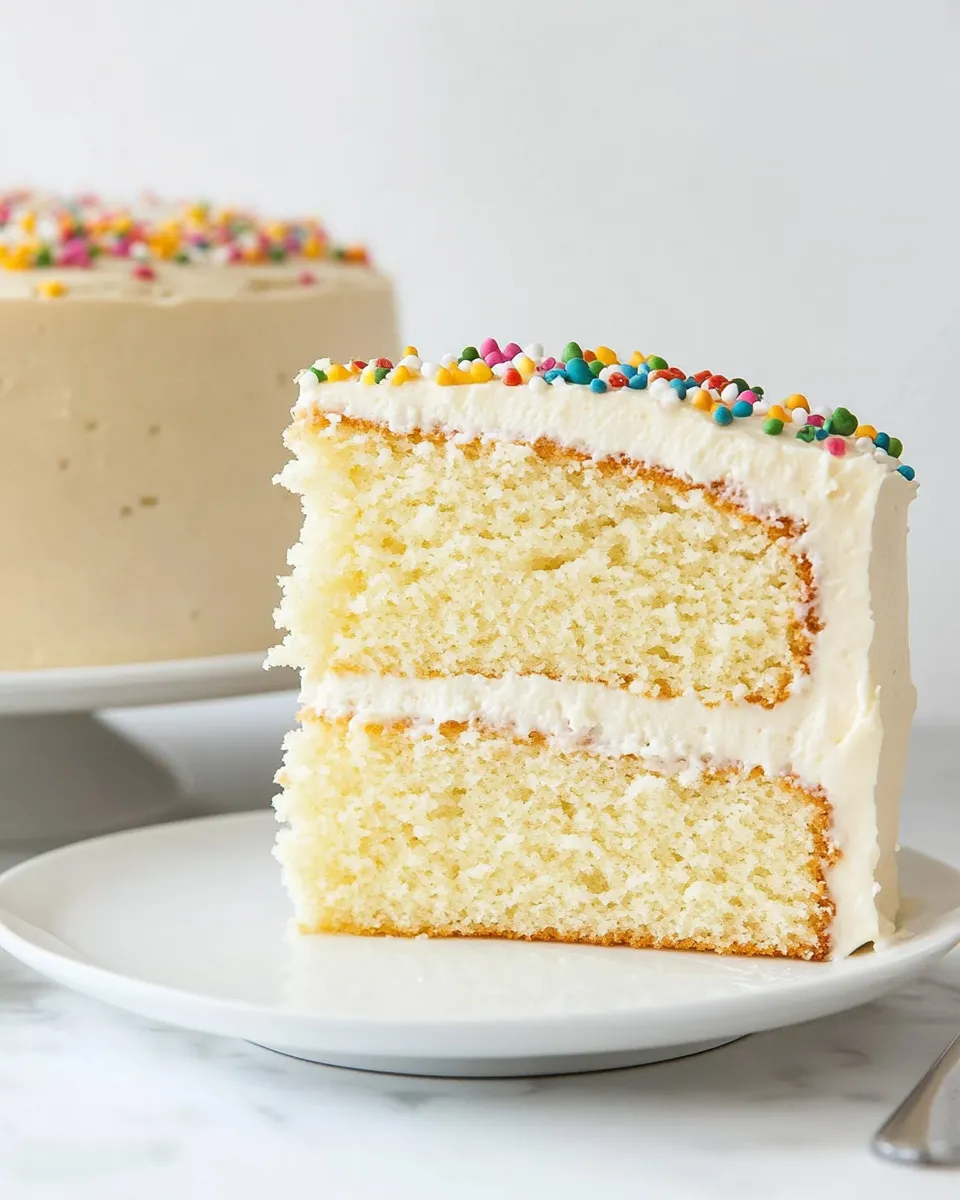
This is my practical, no-nonsense take on the classic white cake: tender crumb, pure flavor, and reliably even rise. I developed this version after testing a few variables—mixing order, folding technique, and the role of whipped egg whites—until the crumb was light without being fragile.
No fluff, just the techniques that matter. You’ll find clear steps, the exact ingredient list I used, and tips that stop common mistakes before they happen. This cake is forgiving, but a few small choices make a big difference.
Make it for birthdays, layer cakes, or whenever you want a cake that takes frosting well and tastes clean and buttery. Read through the equipment and gotchas before you start—those short checks save time and make the bake more predictable.
What You’ll Gather

Before you begin, gather the ingredients and clear a little counter space. Have your pans prepped and a wire rack ready for cooling. Many problems show up because something was missing mid-bake.
Ingredients
- 2 ¼ cups cake flour — fine texture keeps the crumb tender; sift to remove lumps and aerate.
- 1 ½ cups granulated sugar — primary sweetener and contributes to structure and browning.
- 2 teaspoons baking powder — the main leavening agent; ensures a steady rise.
- ½ teaspoon baking soda — helps with lift and balances acidity from the buttermilk.
- ½ teaspoon salt — enhances the cake’s overall flavor; don’t skip.
- 1 cup buttermilk — adds tang and tenderizes the crumb; brings moisture and reaction with baking soda.
- ¼ cup milk — thins the batter slightly so it’s easy to pour; keeps texture soft.
- 2 teaspoons vanilla extract — the backbone of the flavor profile; use pure if possible.
- ½ teaspoon almond extract — optional; adds a subtle, classic note that lifts the cake.
- ½ cup vegetable oil — keeps the cake moist and extends freshness; room temperature is fine.
- 4 large room-temperature egg whites — whipped and folded in for lift and airy texture; room temp whites whip more easily.
Directions: White Cake
- Preheat the oven to 350°F (175°C). Spray two 8-inch round cake pans with non-stick cooking spray and set them aside.
- In a large mixing bowl or the bowl of a stand mixer, sift together 2 ¼ cups cake flour, 1 ½ cups granulated sugar, 2 teaspoons baking powder, ½ teaspoon baking soda, and ½ teaspoon salt.
- Add 1 cup buttermilk, ¼ cup milk, 2 teaspoons vanilla extract, ½ teaspoon almond extract (optional), and ½ cup vegetable oil to the same bowl. With the paddle attachment or an electric hand mixer on low speed, mix just until the ingredients are fully combined and no large dry streaks remain. Scrape the bowl sides as needed.
- In a clean, dry bowl, add 4 large room-temperature egg whites. Using a hand mixer, beat the egg whites until medium-stiff peaks form (peaks should hold their shape but the tips may curl slightly).
- Gently fold the whipped egg whites into the batter in two additions using a rubber spatula. Fold carefully until the batter is uniform—do not overmix or deflate the whites.
- Divide the batter evenly between the two prepared 8-inch pans and smooth the tops gently.
- Bake on the center oven rack for about 30–35 minutes, or until a toothpick inserted into the center comes out clean and the cake springs back when lightly pressed.
- Let the cakes cool in the pans on a wire rack for 10–15 minutes. Run a knife around the pan edges, invert the cakes onto the rack, and cool completely before frosting or serving.
The Upside of White Cake
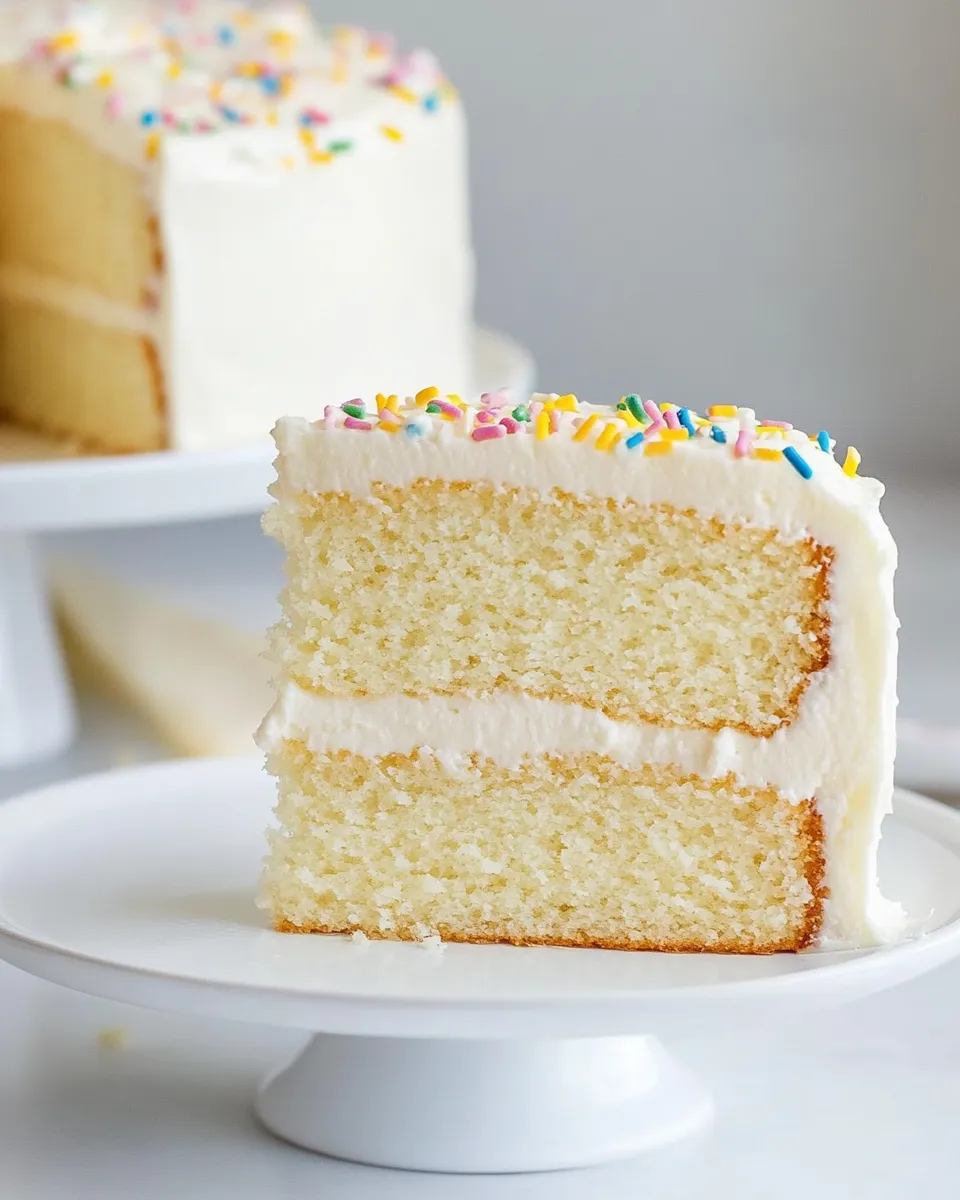
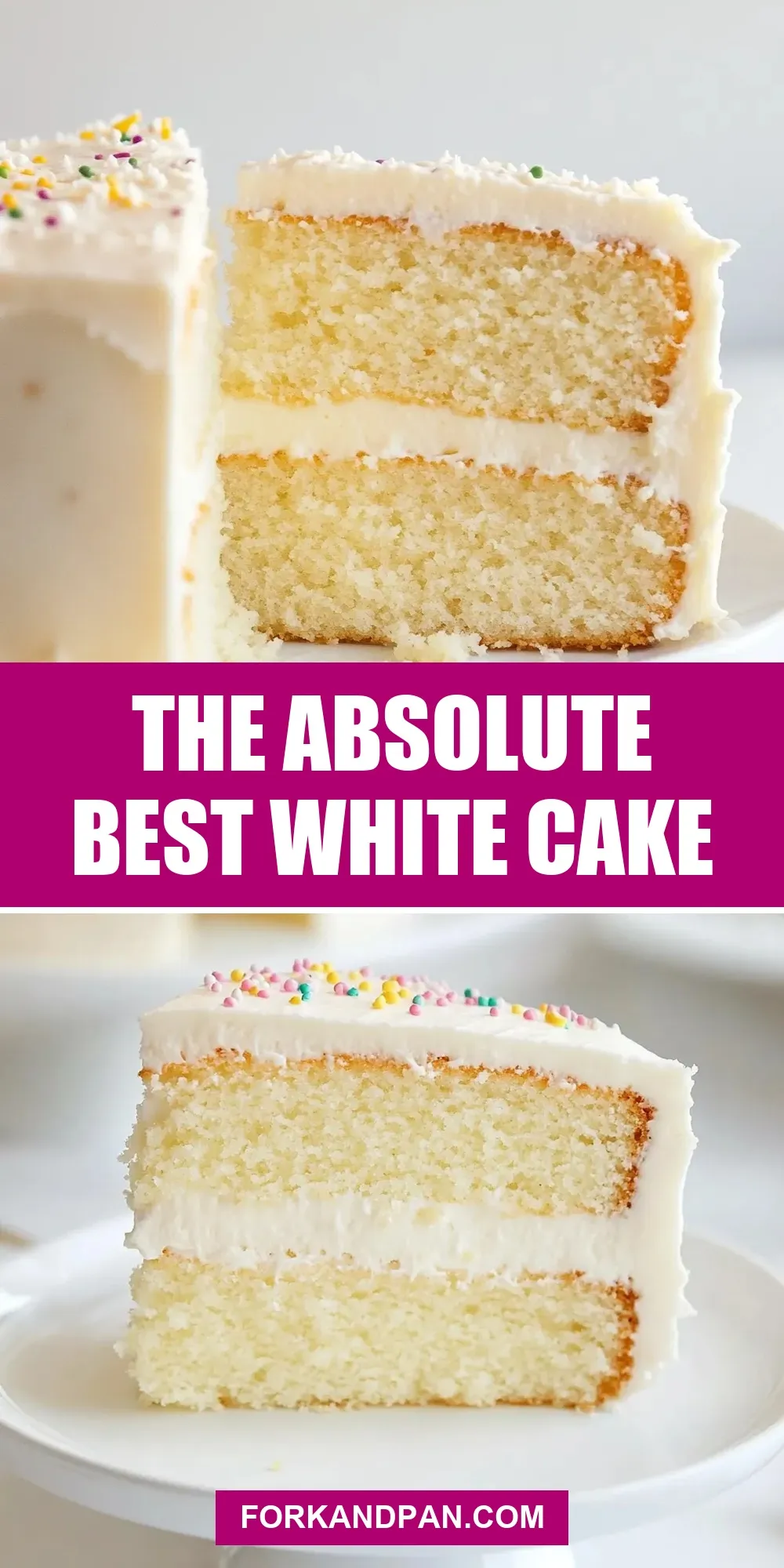
White cake is a wonderfully flexible base. Its mild flavor lets frostings and fillings shine—vanilla buttercream, fruit curds, or a light whipped cream all work beautifully. Because the crumb is fine, it stacks evenly for tall layer cakes and holds up well under multiple layers of frosting.
This particular recipe balances richness and airiness. Vegetable oil keeps a moist crumb that doesn’t dry out quickly, while the whipped egg whites provide lift without a dense texture. The buttermilk adds a gentle tang that makes the sweetness taste more elegant, not cloying.
Vegan & Vegetarian Swaps
Vegetarian: This recipe is already vegetarian (no yolks or gelatin), so no swap is required.
Vegan: The core of this recipe relies on egg whites and dairy. To make a vegan version, you would need several changes—egg replacer for the whipped whites (aquafaba can be whipped but behaves differently), a plant-based milk plus an acid to mimic buttermilk, and a neutral oil as written. If you want a vegan conversion, I can walk through that separately since it affects texture and timing considerably.
Before You Start: Equipment
Good tools make the process predictable. Here’s what I use every time:
Must-haves
- Two 8-inch round cake pans, same size and depth—even pans bake evenly.
- Electric hand mixer or stand mixer—one to mix batter, and one to whip egg whites if you don’t want to switch bowls.
- Mixing bowls—one large for the batter, one clean and dry for the egg whites.
- Rubber spatula—for gentle folding and scraping.
- Wire cooling rack—cakes must cool on a rack to avoid soggy bottoms.
- Oven thermometer (optional but helpful)—to confirm your oven runs true to temperature.
Easy-to-Miss Gotchas
Watch these—each is small but can change the final cake:
Room temperature egg whites: If they’re too cold they won’t whip well. Take them out 20–30 minutes before you start.
Clean mixing bowl for whites: Any fat or oil residue prevents egg whites from whipping to medium-stiff peaks. Use a dry, grease-free bowl and whisk.
Don’t overmix after folding: Stirring too aggressively deflates the whipped whites and yields a dense cake. Fold with a gentle scoop-and-turn motion until streaks disappear.
Even pan fill: Divide batter evenly between pans. Use a kitchen scale if you want precision—uneven cakes lead to uneven baking and trimming.
Smart Substitutions
Use these if you need to swap, but understand trade-offs:
Vegetable oil: You can substitute melted, cooled unsalted butter for a slightly richer flavor. That will change texture a bit and can shorten shelf life slightly; reduce the butter by 1–2 tablespoons if it’s very liquid.
Buttermilk: If you don’t have buttermilk, make a quick buttermilk by adding 1 tablespoon of white vinegar or lemon juice to the 1 cup milk, let sit 5 minutes. That acidity is important for the baking soda to function correctly.
Almond extract: It’s optional. If you don’t like almond, omit it and add a fractional increase in vanilla (up to 1 teaspoon total) for more vanilla-forward flavor.
If You’re Curious
Why whip egg whites separately? Separately whipped egg whites trap air that expands in the oven, giving lift without making the crumb heavy. Folding them in gently preserves that trapped air. The trade-off is a more delicate crumb than a fully creamed-butter-and-whole-egg cake, but it’s ideal for the airy white cake profile.
Why cake flour? Cake flour has lower protein than all-purpose flour, which limits gluten formation and keeps the cake tender. If you must use all-purpose flour, remove 2 tablespoons per cup and replace with cornstarch to mimic cake flour’s lower protein—though results will differ slightly.
Leftovers & Meal Prep
Storage: Once frosted, store slices in an airtight container in the fridge for up to 4 days. If unfrosted, wrap layers tightly in plastic wrap and freeze up to 2 months—thaw in the fridge overnight before frosting.
Make-ahead options: Bake the layers a day or two ahead and keep them wrapped at room temperature or in the fridge depending on your climate. For longer plans, freeze and thaw as mentioned. For party prep, assemble and frost the day of serving for the freshest look.
Common Qs About White Cake
Q: Can I use whole eggs instead of egg whites? A: You could, but this recipe is designed for whipped whites to achieve a very light crumb. If you use whole eggs, the texture and rise will change and you’ll need a different mixing technique.
Q: My cake domed or cracked—what went wrong? A: A hot oven, uneven heat, or overfilling pans can cause doming. Check oven temp with a thermometer and fill pans no more than two-thirds full. If the top browns too quickly, tent lightly with foil mid-bake.
Q: Why did my egg whites collapse? A: Overbeating or folding too aggressively will collapse them. Stop whipping at medium-stiff peaks and fold gently into the batter in two additions.
Serve & Enjoy
For presentation, level the tops gently with a serrated knife if needed, stack with your chosen filling, and frost. Vanilla buttercream, Swiss meringue buttercream, or a thin layer of jam and whipped cream are classic choices. Garnish with fresh berries, edible flowers, or a light dusting of powdered sugar for a simple finish.
Slice with a sharp, clean knife wiped between cuts for neat portions. Serve at room temperature for the best flavor and texture—take chilled frosted cake out 20–30 minutes before serving.
This white cake is dependable, straightforward, and suited to customization. Follow the steps, mind the gotchas, and you’ll have layers that stack, slice, and taste like a classic done right.
The Absolute Best White Cake
Ingredients
Ingredients
- 2 1/4 cupscake flour
- 1 1/2 cupsgranulated sugar
- 2 teaspoonsbaking powder
- 1/2 teaspoonbaking soda
- 1/2 teaspoonsalt
- 1 cupbuttermilk
- 1/4 cupmilk
- 2 teaspoonsvanilla extract
- 1/2 teaspoonalmond extractoptional
- 1/2 cupvegetable oil
- 4 largeroom temperature egg whites
Instructions
Instructions
- Preheat the oven to 350°F (175°C). Spray two 8-inch round cake pans with non-stick cooking spray and set them aside.
- In a large mixing bowl or the bowl of a stand mixer, sift together 2 ¼ cups cake flour, 1 ½ cups granulated sugar, 2 teaspoons baking powder, ½ teaspoon baking soda, and ½ teaspoon salt.
- Add 1 cup buttermilk, ¼ cup milk, 2 teaspoons vanilla extract, ½ teaspoon almond extract (optional), and ½ cup vegetable oil to the same bowl. With the paddle attachment or an electric hand mixer on low speed, mix just until the ingredients are fully combined and no large dry streaks remain. Scrape the bowl sides as needed.
- In a clean, dry bowl, add 4 large room-temperature egg whites. Using a hand mixer, beat the egg whites until medium-stiff peaks form (peaks should hold their shape but the tips may curl slightly).
- Gently fold the whipped egg whites into the batter in two additions using a rubber spatula. Fold carefully until the batter is uniform—do not overmix or deflate the whites.
- Divide the batter evenly between the two prepared 8-inch pans and smooth the tops gently.
- Bake on the center oven rack for about 30–35 minutes, or until a toothpick inserted into the center comes out clean and the cake springs back when lightly pressed.
- Let the cakes cool in the pans on a wire rack for 10–15 minutes. Run a knife around the pan edges, invert the cakes onto the rack, and cool completely before frosting or serving.
Equipment
- 8-inch round cake pans
- non-stick cooking spray
- Stand mixer or hand mixer
- Paddle Attachment
- Mixing Bowl
- Rubber spatula
- Wire Rack
- Knife