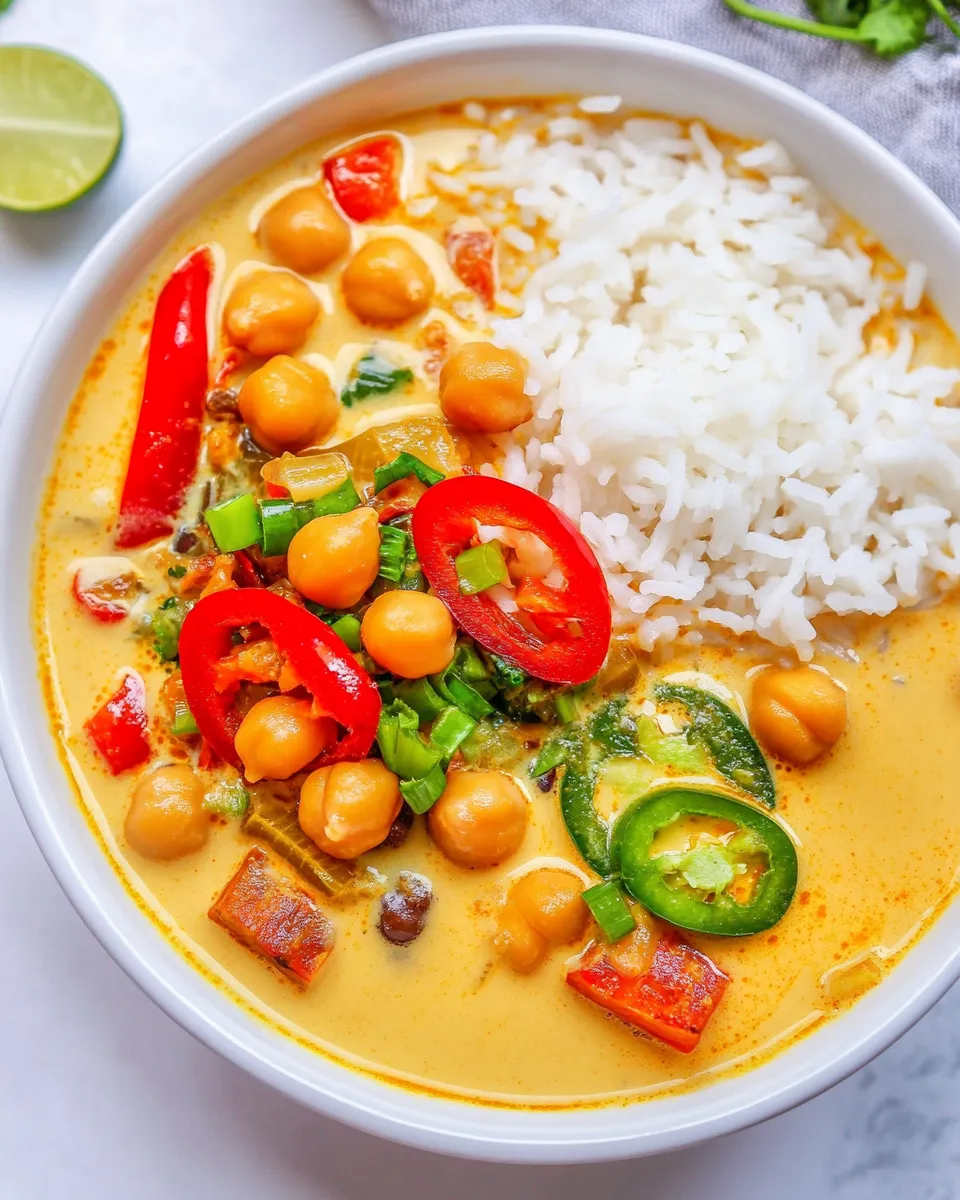
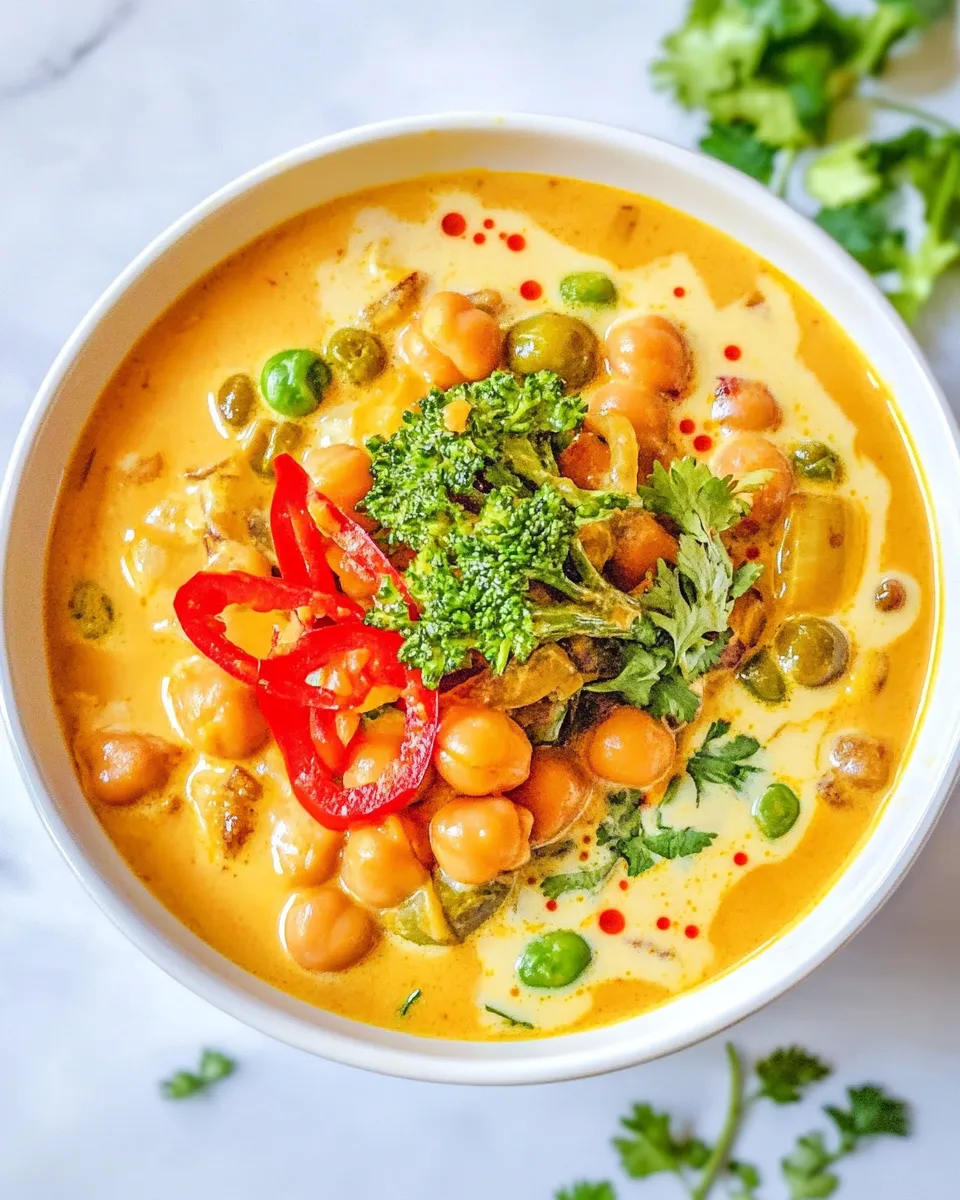
Thai Yellow Curry With Chickpeas
This curry is one of those weekday heroes that tastes like you spent hours on it but actually comes together quickly. It balances turmeric-forward warmth, mellow coconut cream, and bright lime — with chickpeas doing double duty: creamy in the sauce and crunchy if you roast a portion for topping. It’s vegetarian-friendly, pantry-accessible, and forgiving enough to make on a busy evening.
I love the way the roasted chickpeas add texture while the saucy portion keeps the dish comforting and saucy for rice or noodles. The recipe lives in the sweet spot between hands-off and flavorful: a little time sautéing aromatics, a short simmer to thicken the sauce, and the option to pop the extra chickpeas in the oven while you prep.
Below you’ll find exactly what I use, step-by-step directions that follow a single-pan flow, and practical notes for substitutions and storage. No fussy techniques — just clear steps and small tricks that lift the finished curry.
Ingredient Breakdown

- 15-ounce can chickpeas, drained and rinsed; divided — Main protein and texture; divide into two roughly equal portions so some can be roasted for topping while the rest go into the curry.
- 1 tablespoon olive oil — For tossing chickpeas before roasting; vegetable oil may be substituted if you want a higher-heat oil.
- 1 teaspoon paprika — Adds color and a mild smoky note; smoked paprika may be substituted for deeper smoke.
- ½ teaspoon salt — For the chickpea roast; helps season and draw out moisture so they crisp.
- ½ teaspoon freshly ground black pepper — Simple seasoning for the roasted chickpeas.
- 2 tablespoons coconut oil — The cooking fat for the aromatics; it complements the coconut milk but olive oil may be substituted.
- 1 small to medium sweet Vidalia onion, finely diced — Sweet base flavor; yellow or white onion may be substituted.
- 3 garlic cloves, finely minced — Essential aromatics that build depth.
- 1 tablespoon freshly grated ginger root — Bright, peppery lift; adjust to taste or use 1½ teaspoons ground ginger.
- 2 to 3 teaspoons ground turmeric — Key warm, earthy flavor and the yellow color characteristic of this curry.
- 2 teaspoons ground coriander — Adds citrusy, floral notes that complement turmeric.
- 2 to 4 tablespoons Thai yellow curry paste — The flavor backbone; choose the amount for your preferred heat and intensity (see Recipe Notes).
- 1 medium carrot, peeled and thinly sliced — Adds sweetness and bite; slices cook quickly in the simmering sauce.
- 1 medium red bell pepper, seeded and diced into bite-sized pieces — Color and sweetness; another bell pepper color may be substituted.
- 1½ cups broccoli florets — Vegetables that hold their texture; cut to small, even florets for even cooking.
- 15 ounces coconut milk — One standard can; full fat is recommended for richness but lite may be substituted.
- ½ cup vegetable broth — Adds body and thins the coconut milk slightly; water may be substituted.
- 1 tablespoon soy sauce — Salt and umami; reduced sodium is ideal, or use coconut aminos/tamari to keep it GF.
- 1 to 2 tablespoons lime juice — Bright finish; optional but recommended to balance richness.
- ¼ to ⅓ cup fresh cilantro, finely chopped for garnishing — Fresh herb finish; optional and basil may be substituted.
- 1 to 4 tablespoons light brown sugar, packed — Optional to balance heat or bitterness; adjust to taste (granulated sugar may be substituted).
- ½ teaspoon salt — Final seasoning for the curry; add to taste.
- ½ teaspoon freshly ground black pepper — Final seasoning; adjust to taste.
Make Thai Yellow Curry With Chickpeas: A Simple Method
- Drain and rinse the 15-ounce can of chickpeas and divide them into two roughly equal portions (one portion for roasting/topping, one portion for the curry). Pat the portion set aside for roasting dry with paper towels.
- If you want crispy roasted chickpeas: preheat the oven to 400°F. On a baking sheet, toss the dried portion of chickpeas with 1 tablespoon olive oil, 1 teaspoon paprika, ½ teaspoon salt, and ½ teaspoon freshly ground black pepper. Spread in a single layer and roast 12–15 minutes, shaking the pan once halfway through, until crispy and browned. Remove from the oven and set aside. If you are not roasting, keep all the chickpeas reserved for the curry.
- In a large skillet, heat 2 tablespoons coconut oil over medium-high heat until shimmering.
- Add the finely diced onion and sauté until it begins to soften, about 5 minutes, stirring occasionally.
- Add the minced garlic, 1 tablespoon grated ginger, 2–3 teaspoons ground turmeric, and 2 teaspoons ground coriander. Cook about 1 minute, stirring nearly constantly, until fragrant.
- Add 2 to 4 tablespoons Thai yellow curry paste (use the amount you prefer for heat/flavor) and cook 1–2 minutes, stirring constantly, to bloom the paste.
- Add the peeled, thinly sliced carrot, diced red bell pepper, and 1½ cups broccoli florets. Stir to coat the vegetables in the paste.
- Pour in the 15-ounce can of coconut milk, ½ cup vegetable broth, and 1 tablespoon soy sauce. Stir to combine, then add the reserved unroasted chickpeas (the other half; or all chickpeas here if you skipped roasting).
- Bring the mixture to a gentle boil, then reduce heat to a simmer. Cook uncovered about 10 minutes, stirring occasionally, until the vegetables are tender and the sauce has reduced and thickened slightly.
- Taste and adjust seasoning: add 1 to 2 tablespoons lime juice (optional but recommended), 1 to 4 tablespoons light brown sugar if you want to balance heat or bitterness (optional), and up to the remaining ½ teaspoon salt and ½ teaspoon freshly ground black pepper to taste. If you want more curry flavor or heat, add more curry paste within the 2–4 tablespoon range.
- Serve immediately, garnishing each bowl with the roasted chickpeas (if prepared) and ¼ to ⅓ cup finely chopped fresh cilantro.
Why It’s My Go-To
This dish checks a lot of boxes: it’s speedy, stores well, and relies mostly on pantry staples (a can of chickpeas and a can of coconut milk). The spice blend is tuned by the turmeric, coriander, and the yellow curry paste, which gives you powerful flavor without fuss. I often make a double batch of the curry portion and roast half the chickpeas separately so I always have topping crunch ready.
It’s forgiving on timing: the vegetables don’t need perfect knife work, and the simmer time is short. The contrast between creamy sauce and crispy chickpeas gives it a restaurant feel with minimal effort.
If You’re Out Of…
- Olive oil — Use vegetable oil in the roasting step (noted in the ingredient list).
- Smoked paprika — The recipe suggests smoked paprika as an option; plain paprika is fine if that’s what you have.
- Coconut oil — Olive oil can substitute for sautéing the aromatics.
- Fresh ginger — The ingredient notes allow 1½ teaspoons ground ginger as an alternative.
- Vegetable broth — Water is an acceptable substitute, per the ingredient notes.
- Soy sauce — Use coconut aminos or tamari to keep the dish gluten-free, as the ingredient list recommends.
- Cilantro — Basil is offered as an optional substitute for garnish in the ingredients notes.
- Chickpeas (roasted for topping) — If you skip roasting, simply use all chickpeas in the curry; you’ll lose some crunch but keep the protein and flavor.
Tools & Equipment Needed
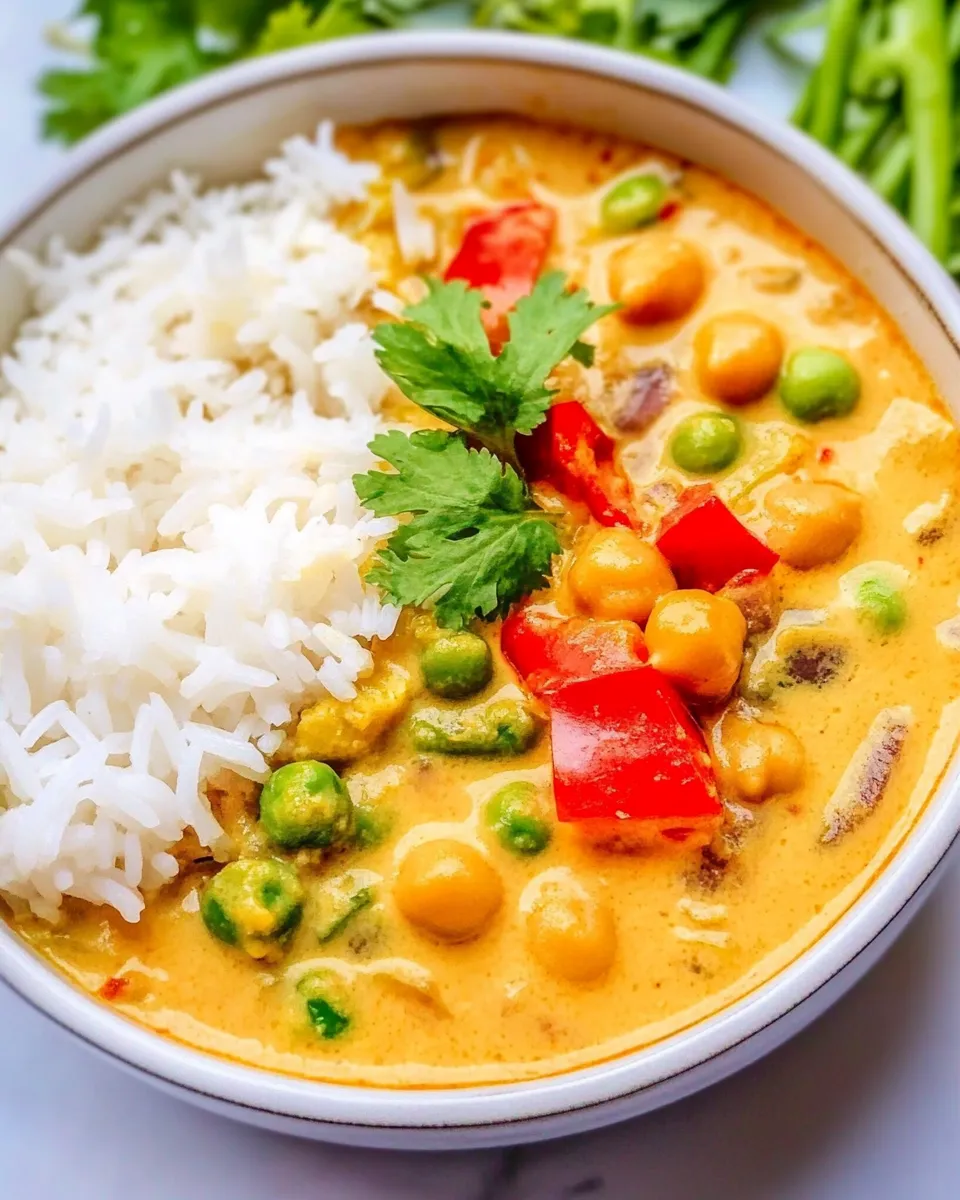
- Large skillet (at least 10–12 inch) — for sautéing and simmering the curry.
- Baking sheet — for roasting the chickpeas in a single layer.
- Can opener and colander — to drain and rinse the chickpeas.
- Spoon or spatula for stirring and tasting.
- Measuring spoons and a measuring cup — to keep curry paste and liquids in range.
What Not to Do
- Don’t skip patting the chickpeas dry if you roast them — moisture prevents crisping.
- Don’t overcrowd the baking sheet — spread the chickpeas in a single layer for even browning.
- Avoid adding the lime juice too early — add it at the end so the bright acid stays fresh and lively.
- Don’t simmer too aggressively once the coconut milk is in — a gentle simmer reduces and thickens the sauce without curdling.
- Don’t assume one amount of curry paste fits everyone — the 2–4 tablespoon range is there for a reason; add more gradually if you want more heat or intensity.
Fresh Takes Through the Year
Keep the core ratios and flavors but lean on seasonal availability that’s already supported by the recipe notes. Swap the red bell pepper color for what’s ripe at the farmers’ market. In cooler months, you can use larger florets of broccoli or add a bit more carrot for sweetness within the existing ingredient list. The recipe’s structure — aromatics, paste, veggies, coconut milk — makes it simple to toggle textures and sweetness according to what’s fresh.
Also experiment within the curry paste range: use the lower end when you want a gentler, more aromatic bowl, and the higher end when you want a bolder, spicier dinner. The light brown sugar option is a subtle seasonal lever: I add a touch more in winter for balance, and keep it minimal in the summer.
Little Things that Matter
Blooming the curry paste briefly in the oil makes a big flavor difference; it wakes up the aromatics and disperses the paste evenly. Taste and adjust: the suggested lime juice and brown sugar are optional for a reason — they’re balancing agents. Start with the lower amounts and adjust to your palate. Chop the cilantro right before serving for the brightest herb flavor. And when roasting chickpeas, listen and watch in the last few minutes — ovens vary and they can go from golden to burned quickly.
Storage & Reheat Guide
Cool the curry to room temperature within an hour and store it in an airtight container in the refrigerator for up to 4 days. The roasted chickpeas will lose crunch in the fridge; keep them separate if you can. To re-crisp the chickpea topping, spread them on a baking sheet and warm in a 350°F oven for 5–8 minutes.
Reheat the curry gently on the stovetop over medium-low heat, adding a splash of water or broth if the sauce has thickened too much. Microwave works in a pinch — cover and heat in 30- to 60-second intervals, stirring between bursts to maintain a creamy texture.
Reader Questions
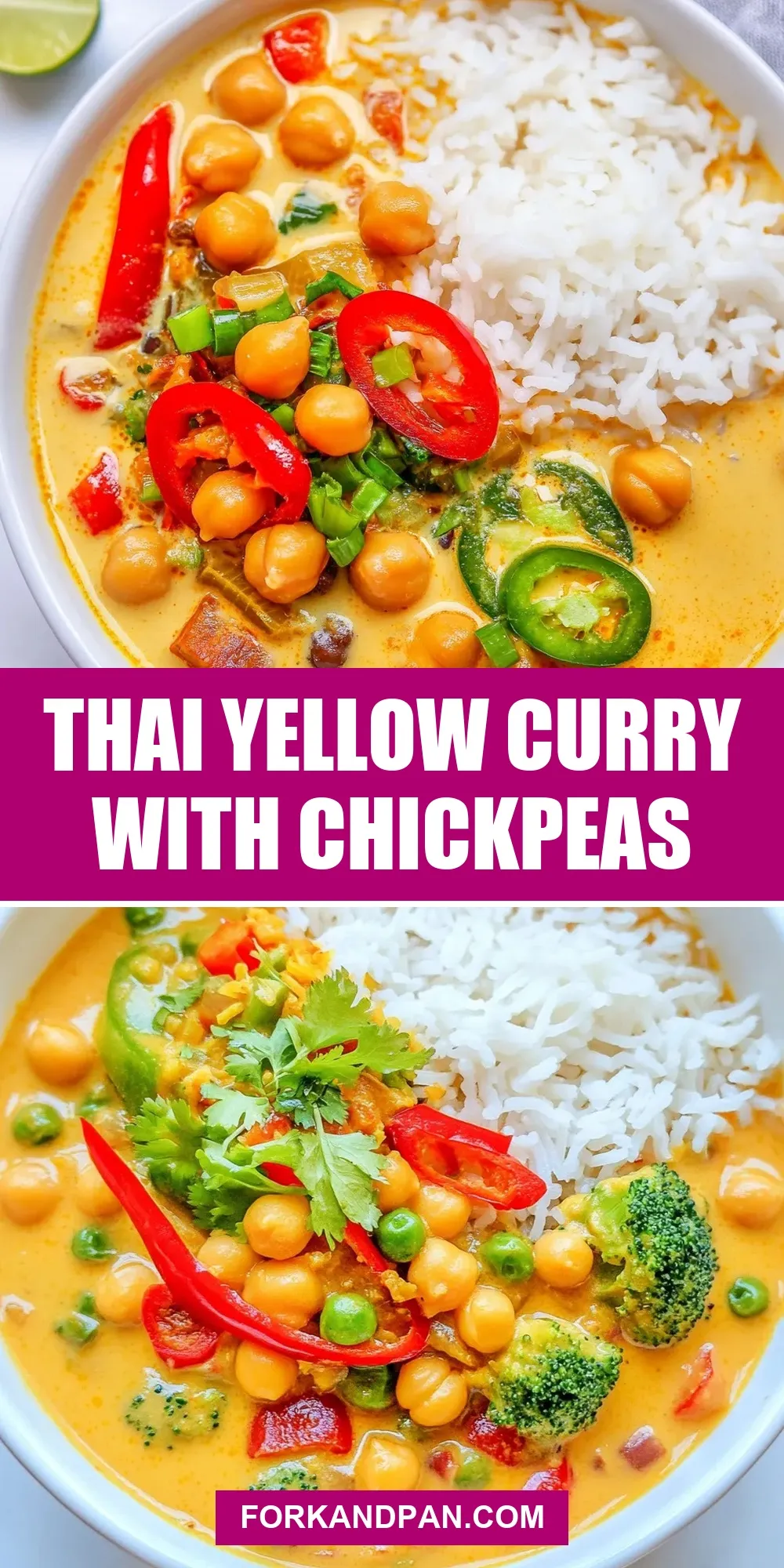
Q: Can I make this vegan? A: Yes. The recipe as written is vegetarian and vegan-friendly so long as you use a vegan curry paste (some pastes contain shrimp paste). Use tamari or coconut aminos in place of soy sauce if you need gluten-free.
Q: Is the roasted chickpea step necessary? A: No. It’s optional but highly recommended for texture. If you skip roasting, use all the chickpeas in the curry as directed in the steps.
Q: How spicy is this? A: Heat depends mostly on your curry paste choice and how much you use in the 2–4 tablespoon range. Start at 2 tablespoons if you prefer mild and increase after tasting.
Ready to Cook?
If you’ve read this far, you’re ready. Gather your can of chickpeas and coconut milk, decide how much curry paste fits your heat tolerance, and whether you’ll roast half the chickpeas. Follow the method in order: roast (optional), sauté aromatics, bloom the paste, add vegetables and liquids, simmer, taste, and finish with lime and cilantro. A simple rice or noodle on the side works well if you choose to serve one — but the curry is substantial enough on its own with the chickpeas.
Make it tonight; the flavors come together quickly and the leftovers ramp up on day two. If you try it, I’d love to hear how you adjusted the spice level or whether you went full-on roasted-chickpea crunch. Happy cooking.
Thai Yellow Curry With Chickpeas
Ingredients
Ingredients
- 15 ouncecan chickpeas drained and rinsed; divided (I use reduced sodium)
- 1 tablespoonolive oil (vegetable oil may be substituted)
- 1 teaspoonpaprika (smoked paprika may be substituted)
- 1/2 teaspoonsalt or to taste
- 1/2 teaspoonfreshly ground black pepper or to taste
- 2 tablespoonscoconut oil (olive oil may be substituted)
- 1 small to medium sweet Vidalia onion finely diced (yellow onion or white onion may be substituted)
- 3 garlic cloves finely minced
- 1 tablespoonfreshly grated ginger root or to taste (or 1 1/2 teaspoons ground ginger, or to taste)
- 2 to 3 teaspoonsground turmeric
- 2 teaspoonsground coriander
- 2 to 4 tablespoonsThai yellow curry paste or as desired and to taste, (very important see Recipe Notes, below)
- 1 medium carrot peeled and thinly sliced
- 1 mediumred bell pepper seeded and diced into bite-sized pieces (another color bell pepper may be substituted)
- 1 1/2 cupsbroccoli florets
- 15 ouncescoconut milk (one standard can, or about 14 to 15.5 ounces; full fat coconut milk recommended but lite may be substituted))
- 1/2 cupvegetable broth (water may be substituted)
- 1 tablespoonsoy sauce (I use reduced sodium; use coconut aminos or tamari if you want to keep GF)
- 1 to 2 tablespoonslime juice (optional but recommended)
- 1/4 to 1/3 cupcup fresh cilantro finely chopped for garnishing; optional, (basil may be substituted)
- 1 to 4 tablespoonslight brown sugar packed, (optional and to taste; granulated sugar may be substituted)
- 1/2 teaspoonsalt to taste
- 1/2 teaspoonfreshly ground black pepper or to taste
Instructions
Instructions
- Drain and rinse the 15-ounce can of chickpeas and divide them into two roughly equal portions (one portion for roasting/topping, one portion for the curry). Pat the portion set aside for roasting dry with paper towels.
- If you want crispy roasted chickpeas: preheat the oven to 400°F. On a baking sheet, toss the dried portion of chickpeas with 1 tablespoon olive oil, 1 teaspoon paprika, ½ teaspoon salt, and ½ teaspoon freshly ground black pepper. Spread in a single layer and roast 12–15 minutes, shaking the pan once halfway through, until crispy and browned. Remove from the oven and set aside. If you are not roasting, keep all the chickpeas reserved for the curry.
- In a large skillet, heat 2 tablespoons coconut oil over medium-high heat until shimmering.
- Add the finely diced onion and sauté until it begins to soften, about 5 minutes, stirring occasionally.
- Add the minced garlic, 1 tablespoon grated ginger, 2–3 teaspoons ground turmeric, and 2 teaspoons ground coriander. Cook about 1 minute, stirring nearly constantly, until fragrant.
- Add 2 to 4 tablespoons Thai yellow curry paste (use the amount you prefer for heat/flavor) and cook 1–2 minutes, stirring constantly, to bloom the paste.
- Add the peeled, thinly sliced carrot, diced red bell pepper, and 1½ cups broccoli florets. Stir to coat the vegetables in the paste.
- Pour in the 15-ounce can of coconut milk, ½ cup vegetable broth, and 1 tablespoon soy sauce. Stir to combine, then add the reserved unroasted chickpeas (the other half; or all chickpeas here if you skipped roasting).
- Bring the mixture to a gentle boil, then reduce heat to a simmer. Cook uncovered about 10 minutes, stirring occasionally, until the vegetables are tender and the sauce has reduced and thickened slightly.
- Taste and adjust seasoning: add 1 to 2 tablespoons lime juice (optional but recommended), 1 to 4 tablespoons light brown sugar if you want to balance heat or bitterness (optional), and up to the remaining ½ teaspoon salt and ½ teaspoon freshly ground black pepper to taste. If you want more curry flavor or heat, add more curry paste within the 2–4 tablespoon range.
- Serve immediately, garnishing each bowl with the roasted chickpeas (if prepared) and ¼ to ⅓ cup finely chopped fresh cilantro.
Equipment
- Large Skillet
- Sheet Pan
Notes
Curry Paste:
With
Mekhala Yellow Curry Paste
, half of a 3.5-ounce jar was plenty to sense a fair amount of heat. We love heat and this curry paste packs a punch. It’s not spicy if you use a teaspoon but if you use half the jar like I did, the heat creeps up on you.
Mae Ploy
is another option, and find it less spicy overall.
Storage:
Curry will keep airtight in the fridge for up to 5 days or in the freezer for up to 3-4 months. Roasted chickpeas can be stored airtight at room temp for 1-2 days. Store them separately from the curry for them to retain some crispiness. However, they’re best enjoyed freshly roasted. Reheat leftover curry in the microwave for about 30 seconds, or as desired.
Adapted from
Yellow Thai Chicken Coconut Curry
(which is a great curry to make if you want more protein from chicken)