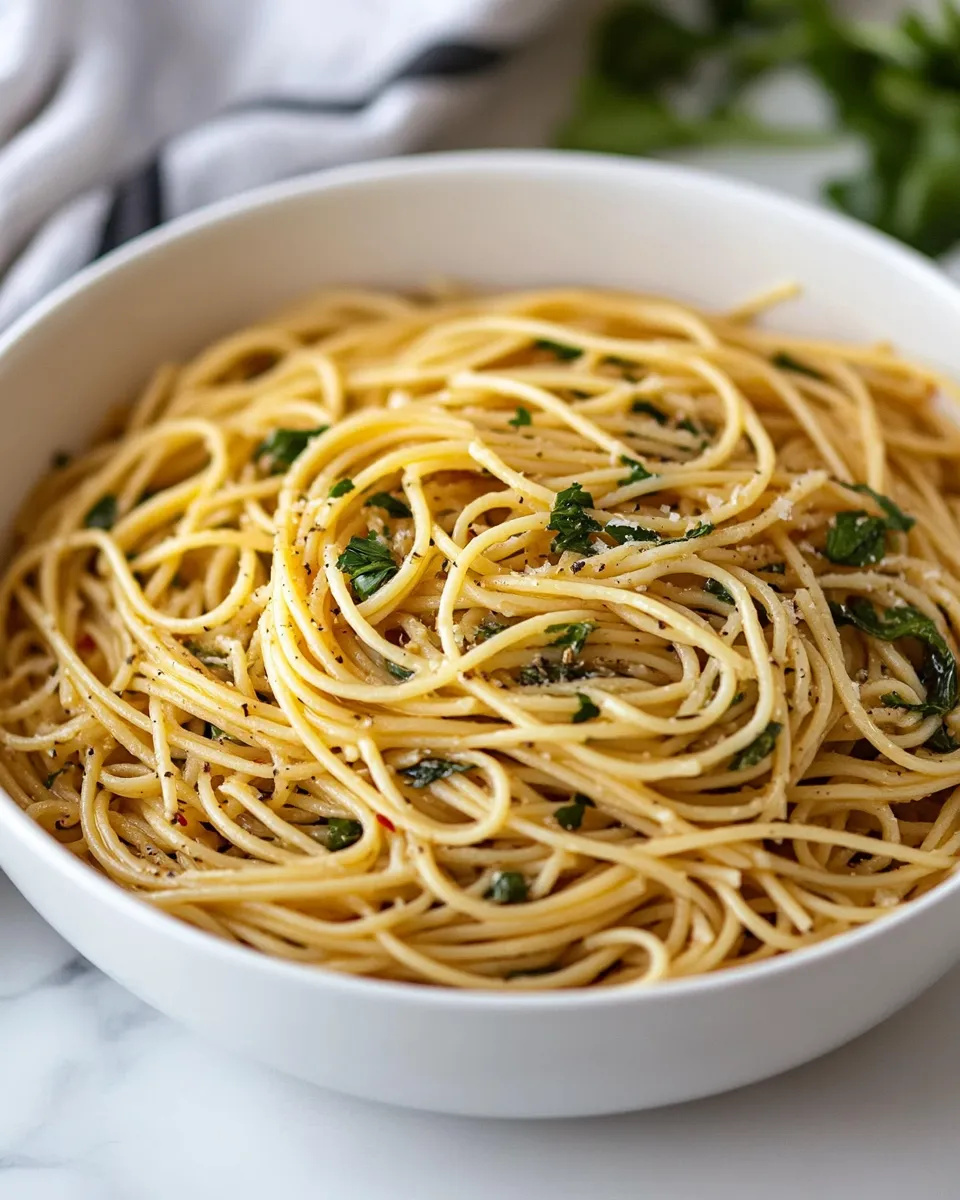
Spaghetti Aglio E Olio
There’s a reason Spaghetti Aglio E Olio lives in the center of every busy cook’s repertoire: it’s impossibly simple, deeply satisfying, and ready in the time it takes water to boil. This recipe strips pasta down to its essentials — spaghetti, garlic, olive oil, a spark of heat, and bright parsley — and elevates those few ingredients into something unexpectedly comforting. Think of it as a reminder that the very best meals don’t need to be complicated, just thoughtful.
Before we get into the step-by-step, here’s the short version: cook the spaghetti until just tender, toast thinly sliced garlic gently in extra virgin olive oil until golden and fragrant, add a pinch of red pepper flakes, toss everything together with a splash of reserved pasta water, then finish with chopped parsley and grated Parmesan if you like. The trick is to coax nutty, mellow flavor from the garlic without letting it burn and to use a little pasta water as the secret glue that binds oil and starch.
Why this version works

Some recipes load up on butter, cream, or heavy garnishes. This rendition keeps the integrity of the classic while offering optional brightness and cheesiness. Using extra virgin olive oil brings fruity, peppery notes that complement the garlic. Thinly sliced garlic toasts quickly and releases both mellow and savory flavors. A small pinch of red pepper flakes adds warmth without overwhelming the palate. Parsley brightens and adds texture, and the grated cheese provides a savory finish if desired.
Ingredients
- ▢1poundspaghetti, uncooked
- ▢6cloves garlic, thinly sliced
- ▢⅓cupextra virgin olive oil
- ▢¼teaspoonred pepper flakes
- ▢¼cupchopped parsley, optional
- ▢1cupgrated Parmesan, optional
Equipment you’ll need
- Large pot for boiling pasta
- Large skillet or frying pan (wide enough to toss spaghetti)
- Tongs or pasta fork
- Slotted spoon or measuring cup for reserving pasta water
- Sharp knife and cutting board
- Grater (if you’re using freshly grated cheese)
Taste tips
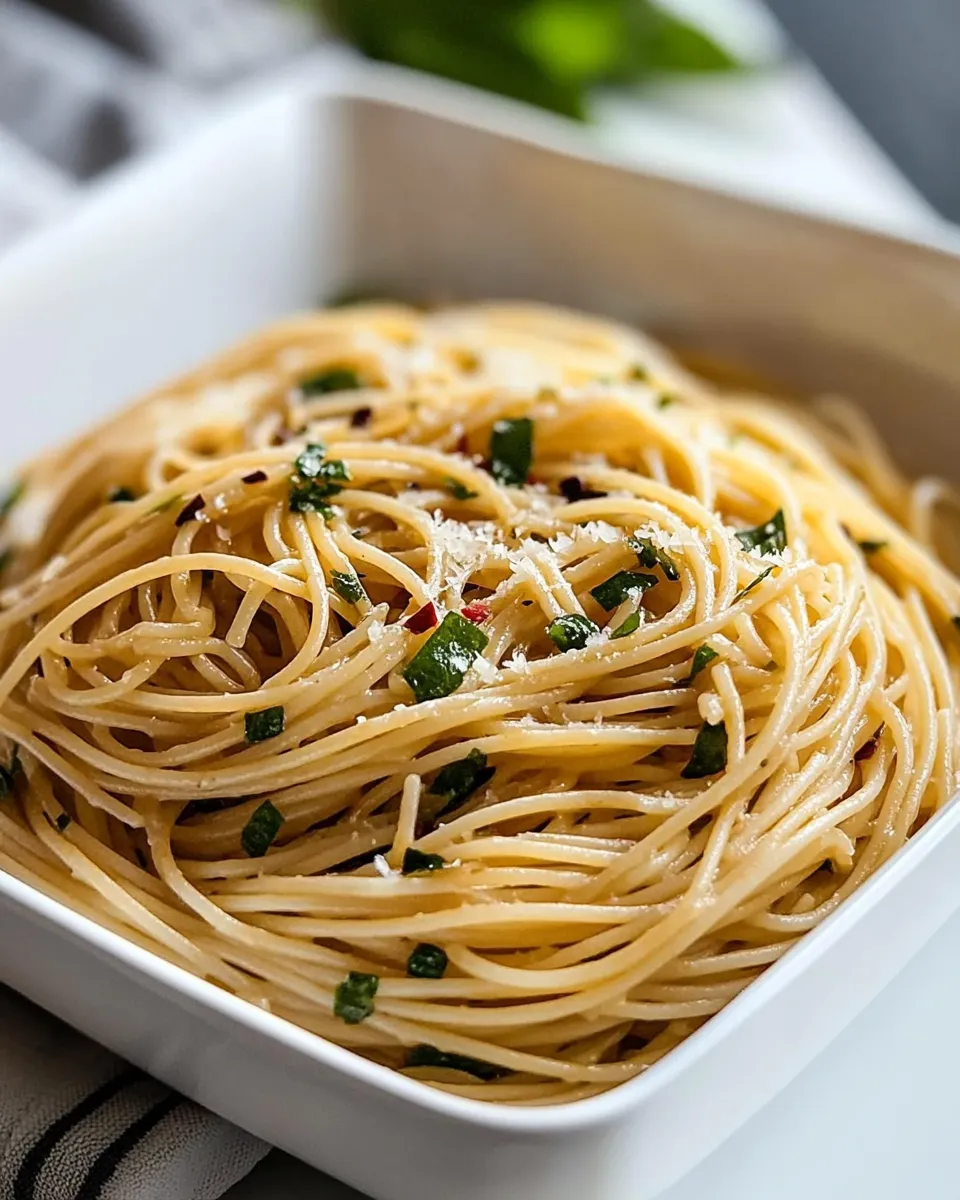
- If you like more heat, increase the red pepper flakes to taste. Add them to the oil early if you want an infused, mellow heat, or add them at the end for a sharper bite.
- Use good-quality extra virgin olive oil; it’s a main flavor component here and really makes a difference.
- Grate the Parmesan fresh if you can — pre-grated can be convenient, but fresh shavings melt and blend more smoothly.
- Reserve more pasta water if your pasta seems dry; a little liquid helps the oil emulsify into a silky sauce.
Step-by-step: Instructions
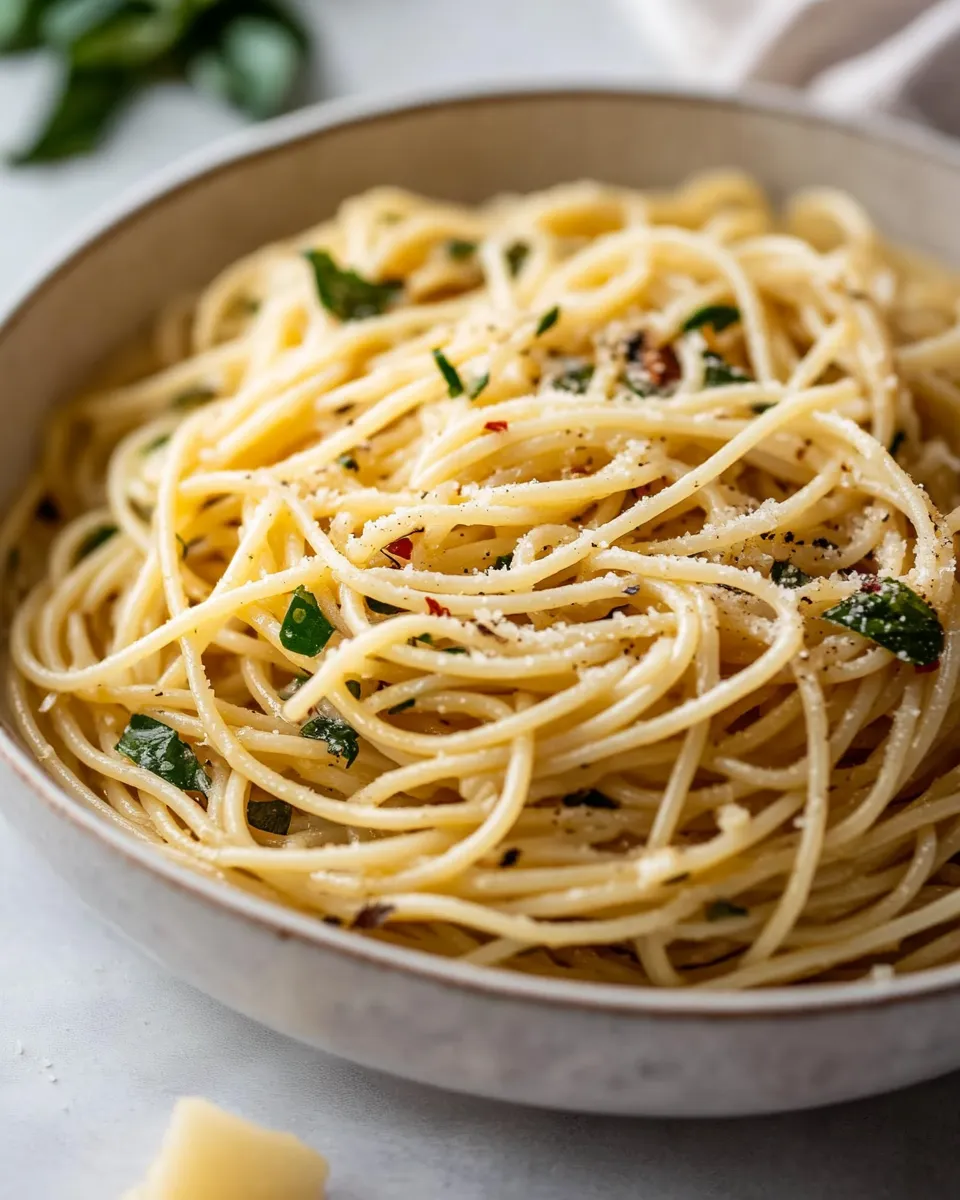
Follow these steps in order for best results. I’ve rewritten the directions into a clear, step-by-step format so you can cook confidently and avoid burned garlic or clumpy sauce.
- Bring a large pot of water to a rolling boil over high heat. Add a generous pinch of salt to the boiling water.
- Add ▢1poundspaghetti, uncooked to the pot and cook according to package directions until al dente — tender but with a slight chew. This usually takes about 8 to 10 minutes, depending on the brand. Stir occasionally to prevent the pasta from sticking.
- While the pasta cooks, prepare the garlic and parsley. Peel ▢6cloves garlic, thinly slice each clove, and set aside. If you’re using ▢¼cupchopped parsley, chop it finely and keep it near the stove.
- When the spaghetti has about 2 minutes left to cook, ladle out one cup of the hot pasta water and set it aside. This starchy water will help bind the oil to the pasta and create a silky sauce. Do not drain all the water yet.
- When the pasta is done, drain it in a colander but do not rinse. Leave the pot off the heat.
- Place a large skillet or frying pan over medium-low heat. Pour in ▢⅓cupextra virgin olive oil and allow it to warm gently for about 30 seconds. The oil should be warm but not smoking.
- Add the thinly sliced ▢6cloves garlic to the warm oil in a single layer. Cook the garlic slowly, stirring gently, until it becomes a light golden brown and fragrant. This typically takes 2 to 4 minutes. Watch carefully: garlic can go from golden to burnt very quickly, and burned garlic will taste bitter.
- Once the garlic is golden, add ▢¼teaspoonred pepper flakes to the oil and stir for about 10 seconds to release their aroma. If you prefer a milder result, add just half the amount of red pepper flakes.
- Turn the heat to low. Add the drained spaghetti to the skillet and toss it with the garlic and oil so every strand is coated. Use tongs or a pasta fork to lift and turn the pasta, ensuring even coverage.
- Pour in a splash of the reserved hot pasta water — start with about 1/4 cup — and continue tossing. The starchy water will emulsify with the oil and create a glossy, slightly thickened sauce that clings to the pasta. Add more reserved water, a tablespoon at a time, if the pasta looks too dry until you reach a silky consistency.
- If using ▢¼cupchopped parsley, add it now and toss briefly to combine. The parsley will add freshness and color.
- If using ▢1cupgrated Parmesan, sprinkle it over the tossed pasta and continue to mix gently until the cheese melts and helps bind the sauce. Taste and adjust seasoning with a little more salt and freshly ground black pepper if needed.
- Transfer the pasta to warmed bowls. Serve immediately, garnishing with extra parsley or more grated cheese if desired.
Make-ahead and storage
This dish is best enjoyed immediately because the sauce is at its creamiest right after tossing. If you need to reheat, add a splash of water or oil and warm gently in a skillet over low heat, tossing until heated through. Store leftovers in an airtight container in the refrigerator for up to 3 days. Reheat as described, and finish with a little fresh parsley to brighten the flavors.
Variations and add-ins
Spaghetti Aglio E Olio is a brilliant template for improvisation. Keep the base technique and add gently:
- Protein: Add cooked shrimp or pieces of grilled chicken for a heartier meal. Toss them in at the end to warm through.
- Vegetables: Sautéed spinach, kale, or cherry tomatoes work beautifully. Cook them briefly in the oil after the garlic so they soften and pick up flavor.
- Nutty crunch: Toasted breadcrumbs or pine nuts add texture. Mix them in just before serving.
- Lemon brightness: A little lemon zest or a squeeze of lemon juice stirred in at the end lifts the whole dish.
Common troubleshooting
- Burned garlic: If the garlic turns brown too quickly, remove the pan from heat and let it cool briefly. Unfortunately, if it’s blackened, it will taste bitter — start over with fresh oil and garlic.
- Too dry: Add reserved pasta water a tablespoon at a time until the strands are glossy and sauced.
- Sauce too oily: Emulsify better by tossing with more reserved pasta water and adding Parmesan if you’re using it; the cheese helps the oil bind to the pasta.
Serving suggestions
This dish pairs wonderfully with a crisp, green salad and a light vinaigrette to balance the oil. A simple side of roasted vegetables or a bowl of marinated olives also complements the flavors. For a complete, cozy meal, serve with crusty bread to mop up any remaining sauce.
Final thoughts
Spaghetti Aglio E Olio is a beautiful lesson in restraint: a few pantry staples, treated with care, create something soulful and satisfying. It’s quick enough for weeknights and elegant enough to serve guests. Keep the garlic thin, the oil good, and the pasta water on hand — those small attentions will make all the difference. Enjoy the quiet magic of a dish that’s honest, simple, and utterly delicious.
Recipe recap
- Cook ▢1poundspaghetti, uncooked until al dente.
- Warm ▢⅓cupextra virgin olive oil over medium-low heat.
- Thinly slice ▢6cloves garlic and gently toast until light golden.
- Add ▢¼teaspoonred pepper flakes and stir briefly.
- Toss cooked spaghetti with the garlic oil, adding reserved pasta water to emulsify.
- Stir in ▢¼cupchopped parsley and ▢1cupgrated Parmesan if using.
- Serve immediately.
Enjoy a bowl of comforting Spaghetti Aglio E Olio — simple ingredients, big flavor, and a dish you can make from memory when life gets busy.
Spaghetti Aglio E Olio
Ingredients
- 1 pound spaghetti uncooked
- 6 cloves garlic thinly sliced
- 1/3 cup extra virgin olive oil
- 1/4 teaspoon red pepper flakes
- 1/4 cup parsley chopped, optional
- 1 cup Parmesan grated, optional
Instructions
- Bring a large pot of salted water to a rolling boil, then add the spaghetti and cook until al dente according to package directions.
- While the pasta cooks, heat the olive oil in a large skillet over medium to medium-low heat.
- Add the sliced garlic to the oil and stir constantly until the garlic is just golden and fragrant, taking care not to burn it.
- Stir in the red pepper flakes, then remove the skillet from the heat.
- When the pasta is done, reserve at least 1/2 cup of the pasta cooking water, then drain the pasta.
- Transfer the drained pasta to the skillet with the garlic oil, add at least 1/2 cup of the reserved pasta water, and toss thoroughly to coat. Add more pasta water as needed to loosen the sauce.
- If using, add the chopped parsley and grated Parmesan, tossing lightly to combine.
- Serve immediately.
Equipment
- Large Pot
- Large Skillet
- Colander
- Knife
- Cutting Board
- Tongs or pasta fork
Notes
- Nutrition is calculated using the parsley and Parmesan cheese.