Pistachio Amaretti Cookies
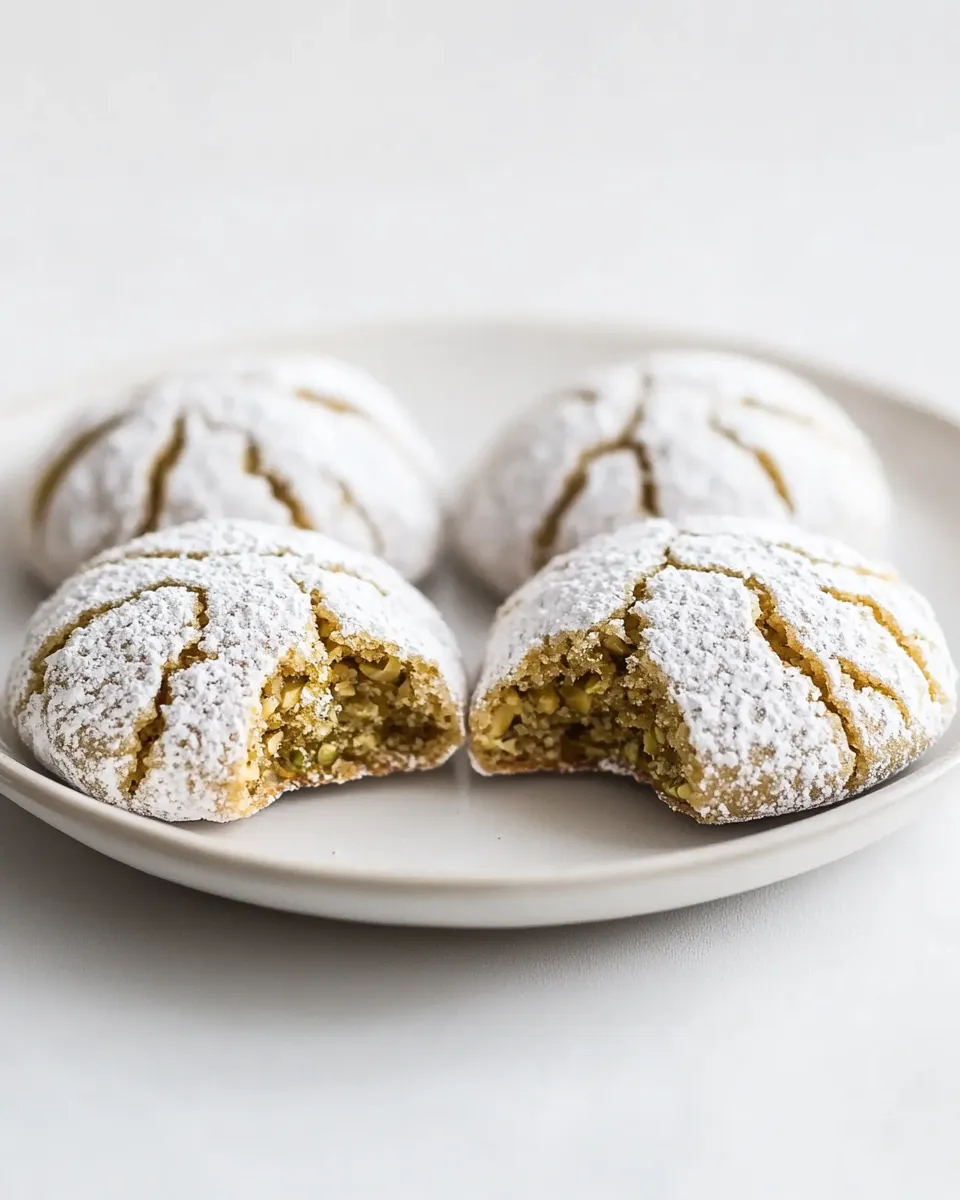
These cookies are a tidy, reliable way to put pistachios center stage without fuss. They’re light, chewy inside with a slightly crisp exterior, and the gentle almond-pistachio marriage is exactly what you want with an afternoon coffee or to pack into a gift tin. The method focuses on drying the nut flours first so the cookies keep their shape and texture.
I test recipes the way I live: practical and a little picky about small details that make a big difference. This version uses sifted nut flours, a whipped egg-white binder, and a dusting of confectioners’ sugar to get that classic crackled top. Follow the temperatures and the order; they matter.
Below you’ll find everything from a clear ingredients list to step-by-step directions, troubleshooting, gear suggestions, and answers to common questions. Read through the Notes and Common Errors sections before you start — a few small adjustments up front will save time and deliver exactly the cookies you want.
Ingredients

- 1 cup (100g) almond flour or very finely ground almonds, sifted — provides structure and a gentle almond flavor; sift to remove lumps so the dough stays smooth.
- 1 cup (100g) pistachio flour or very finely ground pistachios, sifted — the pistachio backbone; sifting and toasting concentrates flavor and removes moisture.
- 1 cup (200g) granulated sugar — sweetens and helps build structure with the egg whites; evenly incorporate for consistent texture.
- 1/4 teaspoon salt — balances sweetness and enhances the nutty flavors; add with the dry mix.
- 2 large egg whites (60g) — the binder; beaten to soft peaks to give the cookies lift and a tender interior.
- 1/2 teaspoon lemon juice — stabilizes the egg whites so they hold soft peaks.
- 1/2 teaspoon pistachio extract — concentrated flavor; small amount goes a long way and amplifies the pistachio notes.
- confectioners’ sugar, as needed — for dusting and creating the classic crackled surface; dust hands and roll cookies in it before baking.
What to Buy
Buy fine, fresh nut flours or prepare them at home by grinding shelled, unsalted nuts very finely and sifting. Freshness matters more than expensive brands; older nut flours can be bitter or oily. If possible, buy unsalted pistachios and grind them yourself or source a reputable pistachio flour so you control texture and flavor.
Pick up confectioners’ sugar and a reliable bottle of pistachio extract. The extract is optional but it nudges the profile from “nice” to “distinct.” Also have a carton of eggs, granulated sugar, and a small jar of lemon juice on hand.
From Start to Finish: Pistachio Amaretti Cookies
- Preheat oven to 170°F (the lowest setting on most ovens). Line a rimmed baking sheet with parchment paper. Spread the sifted almond flour and sifted pistachio flour in an even layer on the sheet.
- Bake the nut flours at 170°F for 30–45 minutes, stirring or shaking the pan once or twice, until the flours are dry and lightly toasty. This removes excess moisture so the cookies hold their shape. Let the flours cool completely on the baking sheet.
- Once cooled, transfer the dried nut flours to a large bowl.
- Increase oven temperature to 300°F. Prepare your baking sheet(s): stack two matching, heavyweight, light- to medium-colored cookie sheets one inside the other if you have them (this helps prevent excessive browning), and line with parchment paper or a silicone baking mat. If you do not stack sheets, use a single lined sheet and watch baking time closely.
- Add the granulated sugar (1 cup) and 1/4 teaspoon salt to the cooled nut flours and whisk until evenly combined.
- In a clean mixing bowl or the bowl of a stand mixer fitted with the whisk attachment, combine the 2 large egg whites and 1/2 teaspoon lemon juice. Whisk until the egg whites hold soft peaks.
- Add the beaten egg whites and 1/2 teaspoon pistachio extract to the dry ingredients. Stir until the mixture forms a soft, sticky dough; if needed, gently knead with your hands to bring it together.
- Lightly dust your hands with confectioners’ sugar. Use a small cookie scoop to portion the dough into 1-inch balls. Roll each portion into a smooth ball, then roll each ball in confectioners’ sugar to coat.
- Arrange the coated balls on the prepared baking sheet, leaving about 1 inch between cookies.
- Bake at 300°F for 30–35 minutes, until the tops are cracked and the bottoms are just barely golden. If you did not use doubled cookie sheets, begin checking at about 25 minutes because they may brown sooner. For crunchier cookies, bake an additional ~5 minutes or until the tops begin to brown.
- Remove the cookies from the oven and let them rest on the baking sheet for a few minutes. Transfer cookies to wire racks to cool completely.
- Store cooled cookies at room temperature in an airtight container or bag for up to 5 days.
Small, practical baking tips
- Dry the nut flours completely at 170°F — that single step fixes many texture problems.
- Stacking cookie sheets acts as a heat buffer and prevents bottoms from over-browning.
- Dust hands with confectioners’ sugar to keep the dough from sticking and to create a uniform crackle.
Why Cooks Rave About It
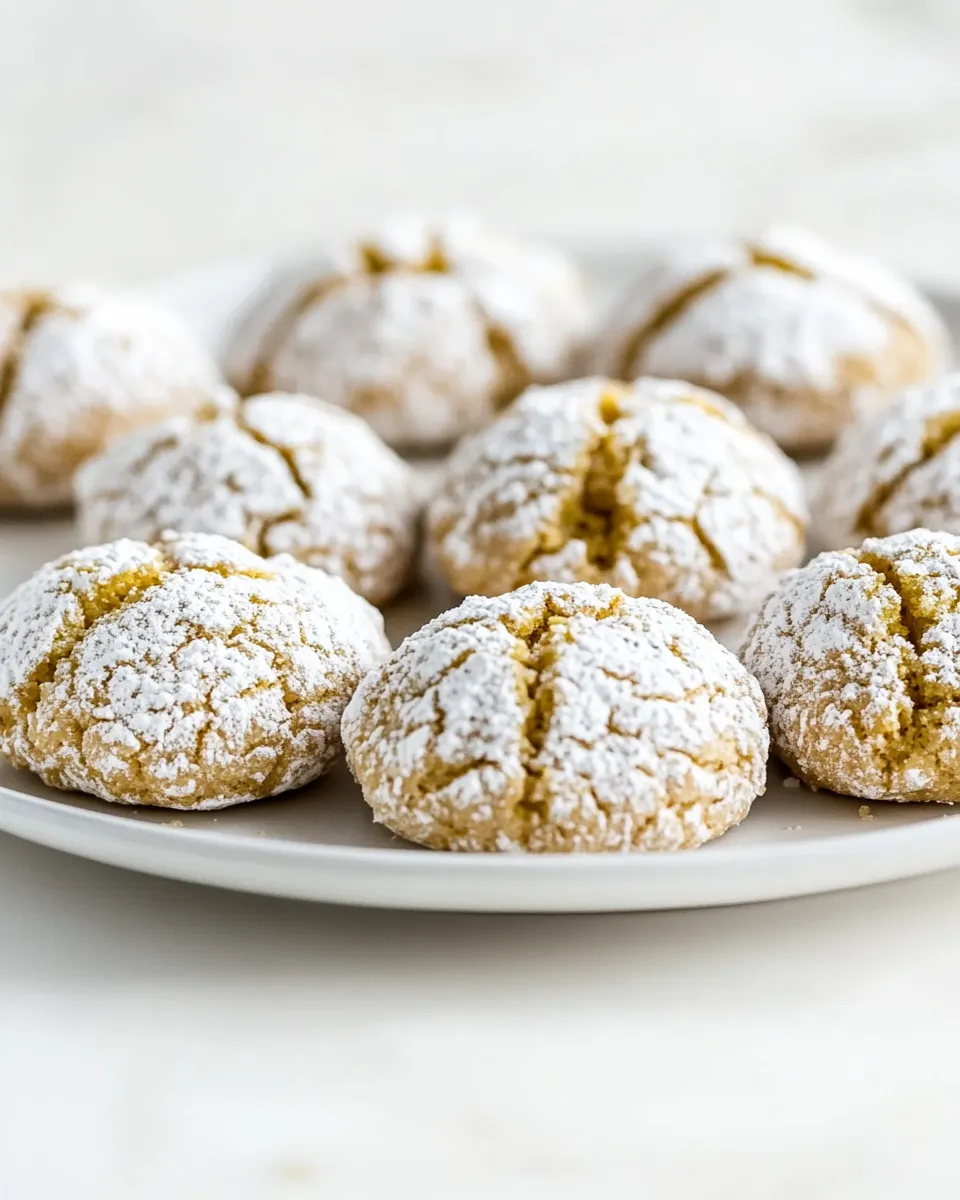
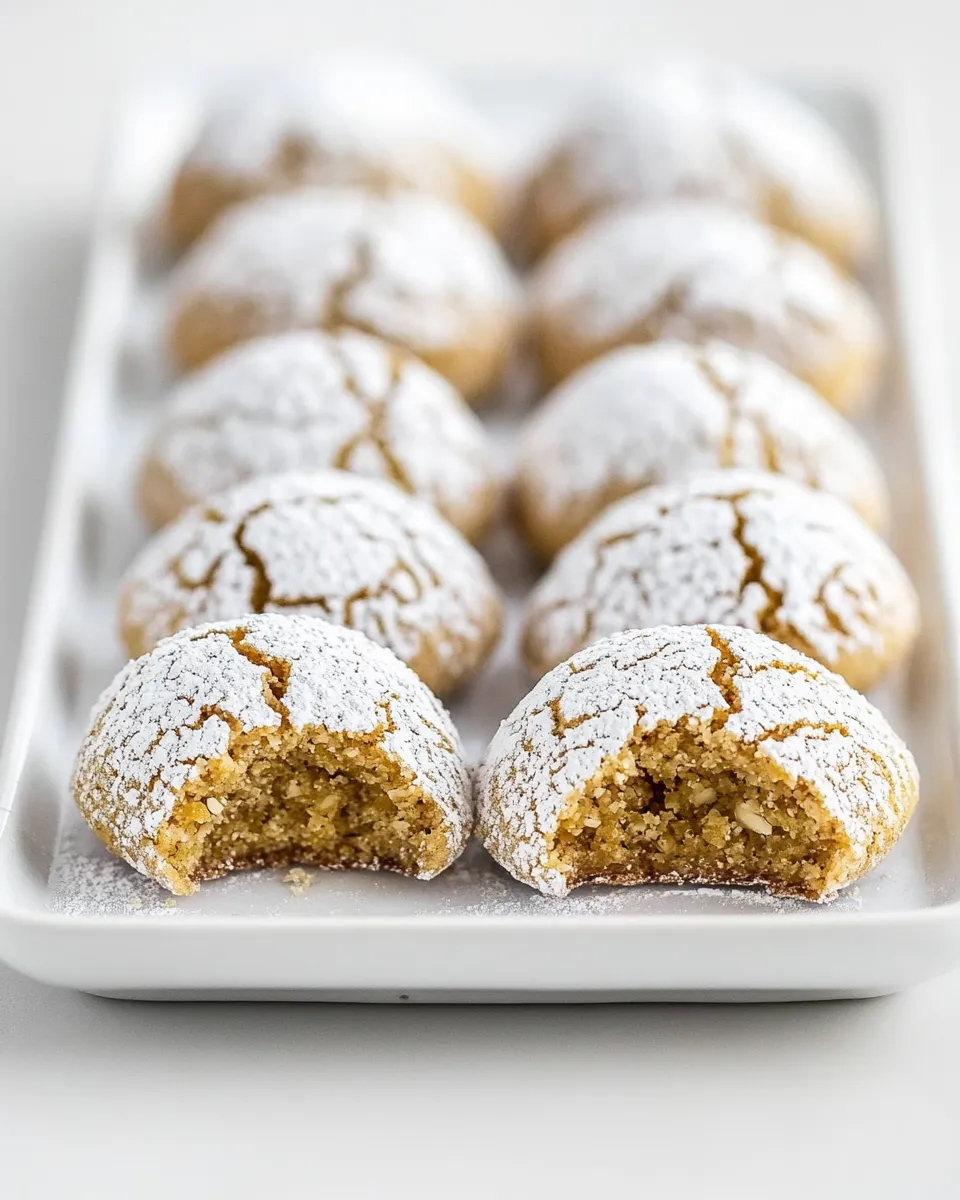
Texturally these cookies strike a pleasant balance: a cracked, slightly crisp exterior and a soft, chew-forward interior. The double-nut base—almond plus pistachio—keeps the flavor complex without being cloying. The method is straightforward but precise: drying flours, whipping whites to soft peaks, and using a small scoop all add consistency. They feel artisanal but are achievable on a busy weeknight.
What to Use Instead
- Almond flour or very finely ground almonds — if your almond flour is coarse, pass it through a fine mesh or re-grind and sift before use.
- Pistachio flour or very finely ground pistachios — you can prepare this by pulsing shelled pistachios in a food processor and sifting; work in short bursts so the nuts don’t turn buttery.
- Pistachio extract — if you don’t have it, omit it; the cookies will still be pistachio-forward thanks to the pistachio flour.
- Confectioners’ sugar — necessary for the classic exterior; if you’re out, be aware the visual crackle will be less pronounced without it.
Kitchen Gear Checklist
- Rimmed baking sheet(s)
- Parchment paper or silicone baking mat
- Stand mixer with whisk attachment or a clean mixing bowl and hand whisk
- Fine mesh sieve or sifter
- Small cookie scoop (about 1 inch)
- Wire cooling racks
- Spatula and mixing bowls
Common Errors (and Fixes)
- Cookies spread too much. Fix: Make sure the nut flours are fully dried at 170°F before mixing. Excess moisture in the flours softens the dough and causes spreading.
- Tops don’t crack. Fix: Roll dough balls thoroughly in confectioners’ sugar and avoid overworking the dough; the sugar coating helps create the signature crackle.
- Bottoms brown too quickly. Fix: Stack two cookie sheets or use light-colored heavyweight pans. Also check earlier than the indicated time if you use single thin sheets.
- Dry, crumbly interior. Fix: Don’t overbake; remove at the earlier end of the time range for a softer interior. Also be sure to whip the egg whites only to soft peaks — overwhipped whites can change texture.
Make It Diet-Friendly
This recipe already uses egg whites rather than whole eggs, which reduces fat compared with some butter-based cookies. For portion-controlled baking, scoop smaller balls and reduce serving size rather than altering the recipe’s balance. If you prefer less sugar, understand sweetness helps structure and appearance here; cutting it will affect spread, crackle, and chew.
Keep servings modest and pair one or two cookies with a strong black tea or coffee. That’s a practical approach that keeps the overall eating experience lighter without changing ingredient ratios.
Behind the Recipe

Amaretti are Italian almond cookies with a long history; they can range from dense and chewy to crisp and meringue-like. This pistachio twist borrows the amaretti idea but brings pistachios into the core mix for color and flavor. Toasting the nut flours at low temperature is a technique I use often: it reduces residual moisture from freshly ground nuts and deepens flavor without browning or cooking them fully.
The sugar and whipped egg whites act the way a meringue would in other cookie recipes, creating lift and the characteristic cracked surface. A light dusting of confectioners’ sugar before baking finishes the look and helps with texture.
Freezer-Friendly Notes
You can freeze the baked cookies in an airtight container or freezer bag. Place sheets of parchment between layers to prevent sticking. When ready to eat, bring them to room temperature on a rack — they thaw quickly and retain texture well if packaged airtight while frozen. For best results, avoid repeated thawing and refreezing.
Common Qs About Pistachio Amaretti Cookies
- Q: Can I make the dough ahead?
A: You can portion and sugar-coat the balls, then freeze them raw on a tray before transferring to a bag. Bake from frozen, adding a few minutes to the baking time and watch for browning. - Q: Why dry the nut flours?
A: Drying at 170°F removes excess moisture from freshly ground nuts. That helps the cookies hold shape, prevents excess spreading, and intensifies the nut flavor. - Q: How will I know the cookies are done?
A: They’re done when the tops are cracked and the bottoms are just barely golden. For a crunchier texture, bake a few minutes longer until the tops show light browning. - Q: How long do they keep?
A: Store cooled cookies at room temperature in an airtight container or bag. They keep well for the storage window noted in the directions.
Save & Share
Bookmark this page or save the recipe to your favorite recipe manager so you can refer back to the oven temperatures and the drying step — those two details change everything. If you share a batch, tell the recipient to let the cookies come to room temperature after any chilling or freezing for the best texture. Tiny, careful steps yield the best pistachio amaretti: dry the flours, whip the whites to soft peaks, and watch the oven the first time.
If you try them, come back and tell me how they turned out and whether you kept them chewy or pushed them toward the crunchier side. Practical tweaks are welcome; I test the tweaks and report honestly so you can skip the guesswork.
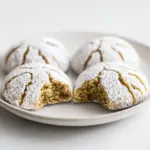
Pistachio Amaretti Cookies
Ingredients
Ingredients
- 1 cup 100 g almond flour or very finely ground almonds, sifted
- 1 cup 100 g pistachio flour or very finely ground pistachios, sifted
- 1 cup 200 g granulated sugar
- 1/4 teaspoon salt
- 2 large egg whites 60 g
- 1/2 teaspoon lemon juice
- 1/2 teaspoon pistachio extract
- confectioners’ sugar as needed
Instructions
Instructions
- Preheat oven to 170°F (the lowest setting on most ovens). Line a rimmed baking sheet with parchment paper. Spread the sifted almond flour and sifted pistachio flour in an even layer on the sheet.
- Bake the nut flours at 170°F for 30–45 minutes, stirring or shaking the pan once or twice, until the flours are dry and lightly toasty. This removes excess moisture so the cookies hold their shape. Let the flours cool completely on the baking sheet.
- Once cooled, transfer the dried nut flours to a large bowl.
- Increase oven temperature to 300°F. Prepare your baking sheet(s): stack two matching, heavyweight, light- to medium-colored cookie sheets one inside the other if you have them (this helps prevent excessive browning), and line with parchment paper or a silicone baking mat. If you do not stack sheets, use a single lined sheet and watch baking time closely.
- Add the granulated sugar (1 cup) and 1/4 teaspoon salt to the cooled nut flours and whisk until evenly combined.
- In a clean mixing bowl or the bowl of a stand mixer fitted with the whisk attachment, combine the 2 large egg whites and 1/2 teaspoon lemon juice. Whisk until the egg whites hold soft peaks.
- Add the beaten egg whites and 1/2 teaspoon pistachio extract to the dry ingredients. Stir until the mixture forms a soft, sticky dough; if needed, gently knead with your hands to bring it together.
- Lightly dust your hands with confectioners’ sugar. Use a small cookie scoop to portion the dough into 1-inch balls. Roll each portion into a smooth ball, then roll each ball in confectioners’ sugar to coat.
- Arrange the coated balls on the prepared baking sheet, leaving about 1 inch between cookies.
- Bake at 300°F for 30–35 minutes, until the tops are cracked and the bottoms are just barely golden. If you did not use doubled cookie sheets, begin checking at about 25 minutes because they may brown sooner. For crunchier cookies, bake an additional ~5 minutes or until the tops begin to brown.
- Remove the cookies from the oven and let them rest on the baking sheet for a few minutes. Transfer cookies to wire racks to cool completely.
- Store cooled cookies at room temperature in an airtight container or bag for up to 5 days.
Equipment
- Rimmed Baking Sheet
- Parchment Paper
- mixing bowl or stand mixer with whisk attachment
- small cookie scoop
- silicone baking mat (optional)
- Wire Rack