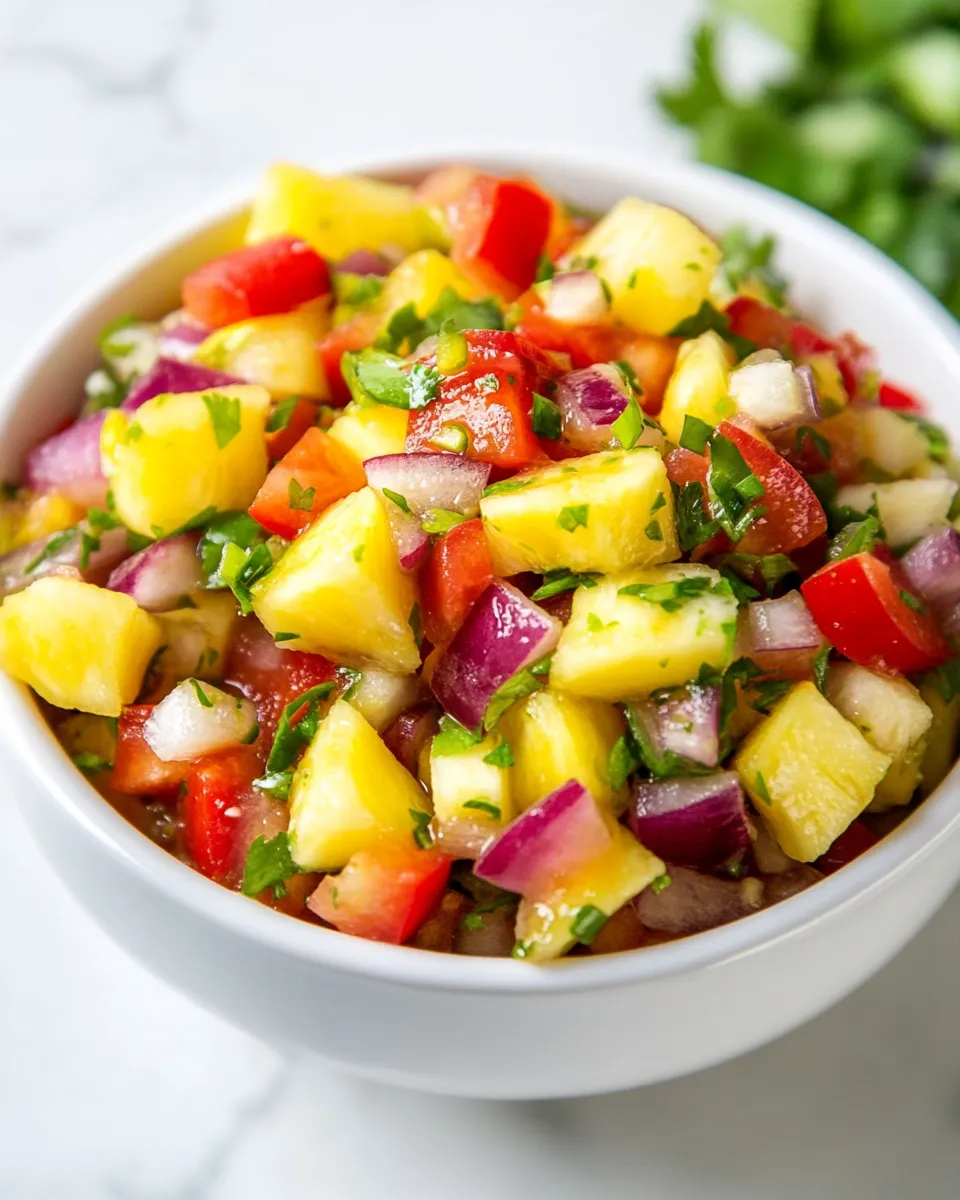
Pineapple Salsa
I love a recipe that brightens a table and doesn’t ask for much fuss. This pineapple salsa does exactly that: fresh fruit, a little heat, a lot of brightness, and a few pantry-stable touches that make it useful all year. It’s the kind of thing I make when summer fruit is at its peak, then recreate with small swaps when seasons change.
This post is practical and focused. I’ll walk you through the ingredients, give you the exact steps, and share the real-life tips I use when I’m making a double batch for a party. No fluff—just clear, useful instructions so your salsa turns out bright, balanced, and ready to serve.
If you like contrast—sweet against spicy, crisp against soft—this salsa will become one of your go-tos. Read on for the full ingredient breakdown, step-by-step directions, storing tips, and answers to the common questions that pop up when you’re making fruit salsas at home.
What Goes Into Pineapple Salsa

At its core this Pineapple Salsa is simple: fresh pineapple, a crunchy bell pepper, some red onion for bite, jalapeño for heat, cilantro for herbal lift, lime juice for acidity, and a touch of salt to bring it all together. It’s a textbook example of balancing texture and flavor with minimal fuss.
Ingredients
- 3 cups fresh pineapple, diced (about half a large pineapple) — provides the sweet, juicy base and texture; dice small so every bite has pineapple.
- 1 red bell pepper, diced — adds crunch, color, and mild sweetness to balance the pineapple.
- ½ cup red onion, diced (about half an onion) — gives sharpness and bite; rinse briefly if you want a milder raw onion flavor.
- 1 jalapeño, seeds and ribs removed then finely chopped — supplies heat; remove seeds/ribs for milder salsa, keep them for more kick.
- ?? cup cilantro, chopped — brings herbal brightness and freshness; chop fine so it distributes evenly.
- 2 tablespoons lime juice — acid brightens flavors and keeps the salsa tasting fresh.
- ¼ teaspoon salt — essential for flavor balance; start with this and adjust after tasting.
Pineapple Salsa, Made Easy
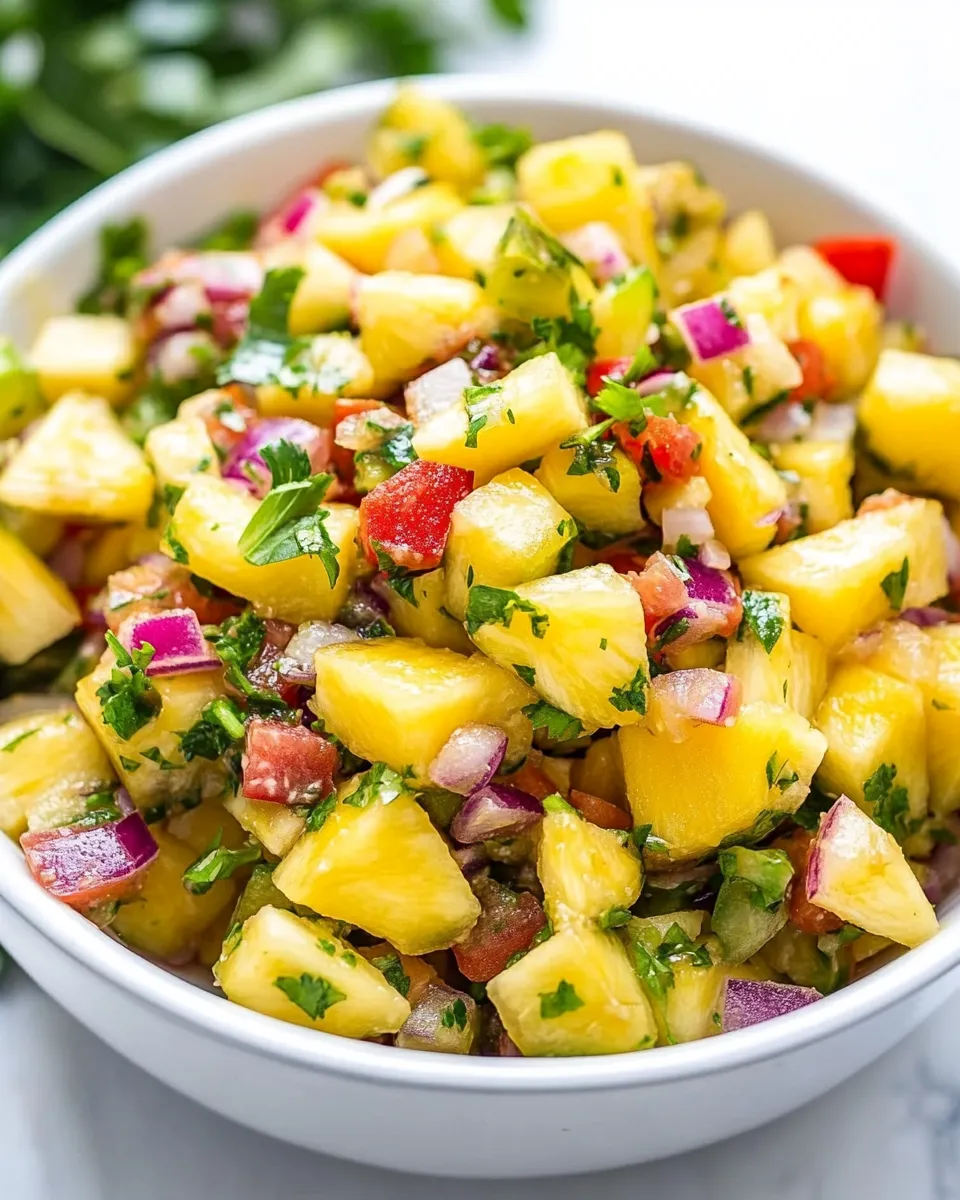
Follow these steps in order. They’re straightforward and tested—no need to improvise until you’ve tried the base version once.
- Peel and dice the pineapple into small, bite-sized pieces until you have 3 cups fresh pineapple, diced (about half a large pineapple). If the pineapple is very ripe and you are dicing it small, the core can be left in; otherwise remove the core.
- Dice the red bell pepper into small pieces similar in size to the pineapple (use 1 red bell pepper, diced).
- Dice enough red onion to equal ½ cup red onion, diced.
- Remove the seeds and ribs from 1 jalapeño, then finely chop the jalapeño.
- Chop the cilantro listed in the ingredients.
- In a large bowl combine the 3 cups pineapple, the diced red bell pepper, the ½ cup red onion, the chopped jalapeño, and the chopped cilantro.
- Add 2 tablespoons lime juice and ¼ teaspoon salt to the bowl.
- Toss everything very well to combine, taste, and adjust seasonings to your preference (for example, add a little more salt or lime juice if desired).
Top Reasons to Make Pineapple Salsa
- Fast and fresh: Prepping takes about 15–20 minutes, and you don’t need to cook anything.
- Versatile: Spoon it over grilled fish, chicken, tacos, or serve with chips as an easy appetizer.
- Balanced flavors: Sweet pineapple, crisp pepper, bright lime, and salty finish make it crowd-pleasing.
- Customizable heat: Adjust the jalapeño amount or leave seeds/ribs in or out depending on your guests.
Ingredient Swaps & Substitutions
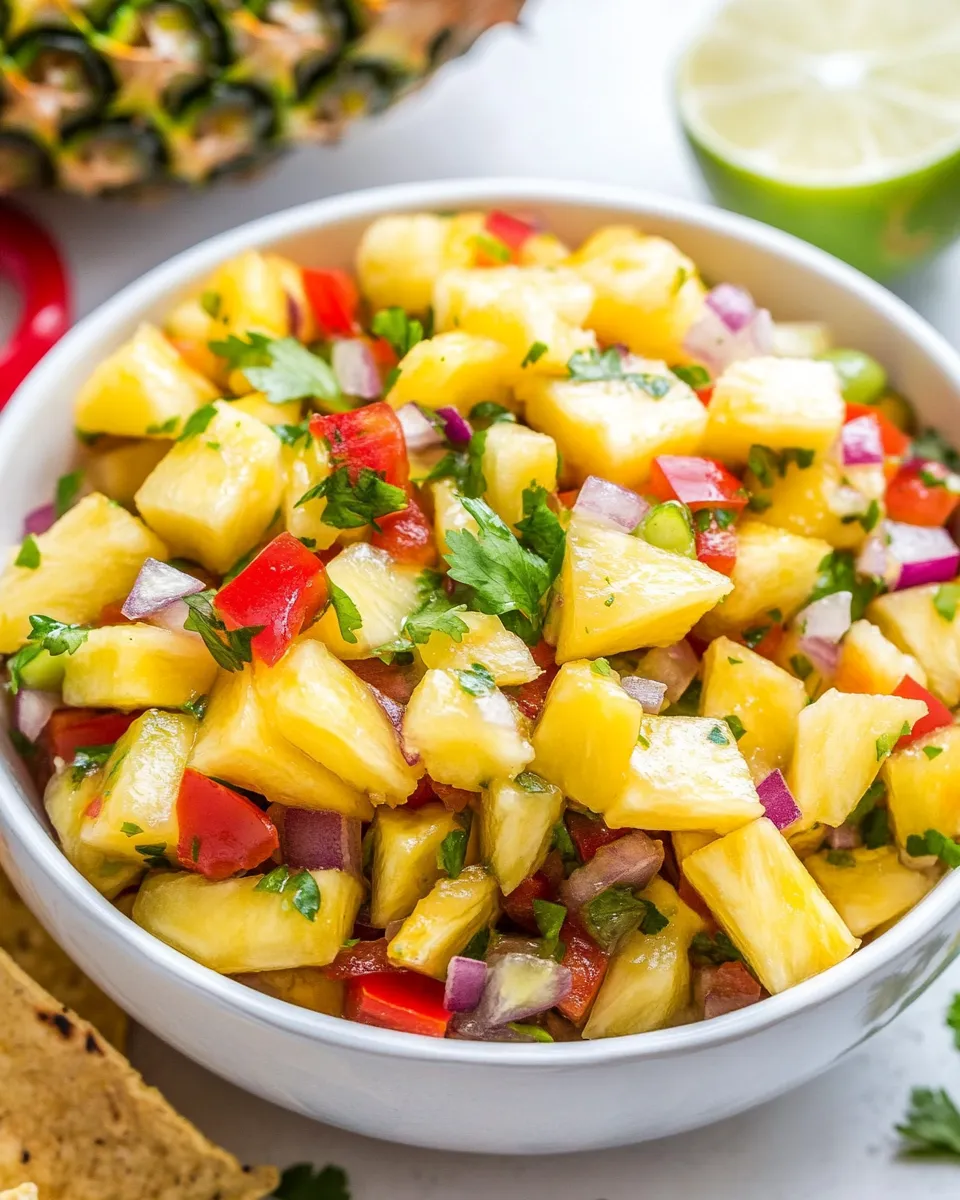
Want to tweak the recipe to match what’s in your kitchen or on the menu? Here are sensible swaps that preserve the spirit of the salsa without inventing new ingredients.
- Pineapple: Canned pineapple will work in a pinch, but drain it very well to avoid a watery salsa and reduce additional sweet syrup if present.
- Bell pepper: Use yellow or orange bell pepper for a slightly sweeter note; skip green peppers if you don’t like the bitterness.
- Red onion: Shallot is a milder alternative—use a similar volume, finely minced.
- Jalapeño: Serrano gives more heat; poblano or a small portion of chipotle in adobo will add smokiness but change the flavor profile.
- Cilantro: If you’re one of those who dislike cilantro, try a mix of finely chopped flat-leaf parsley and a tiny pinch of lime zest to mimic brightness.
- Lime juice: Lemon is a workable substitute, but the flavor will be less traditionally “salsa-like.”
Tools of the Trade
You don’t need special gadgets to make this salsa. Here’s what I actually use and why it matters.
- Chef’s knife: A sharp knife makes quick work of pineapple and gives uniform dice.
- Cutting board: A stable, medium-sized board keeps you safe while dicing fruit.
- Large bowl: Big enough to toss the salsa so ingredients don’t spill when you mix.
- Measuring spoons/cups: For the lime juice and salt so you start with a reliable baseline.
- Spoon or spatula: For tossing and tasting.
Frequent Missteps to Avoid
Make these small adjustments and your salsa will sing:
- Don’t over-dice the pineapple: Too small and it becomes mushy and loses texture. Aim for bite-sized pieces.
- Too much onion: Half an onion (about ½ cup diced) is plenty—more can overwhelm the pineapple.
- Skipping the salt: Salt is the amplifier here. Without it, the salsa tastes flat even if it looks vibrant.
- Adding lime too early for long storage: Acid brightens flavor but can soften fruit over time; if storing longer than a day, add a splash more lime just before serving.
- Underseasoning: Always taste after tossing. You may want a touch more lime or salt depending on the pineapple’s natural sweetness.
Make It Year-Round
Pineapple is more consistently available now than it used to be, but if you can’t find ripe fresh pineapple, use well-drained canned pineapple and follow a few rules: drain thoroughly, pat dry with paper towel, and reduce added lime slightly. For colder months, this salsa pairs beautifully with roasted or grilled proteins—use it as a bright counterpoint to richer winter mains.
Flavor Logic
Understanding why each ingredient is present helps you adapt the recipe without breaking it. Pineapple brings sweetness and juiciness; bell pepper and red onion provide contrasting crunch and bite; jalapeño adds heat; cilantro gives a herbal lift; lime juice adds acidity to balance the sweetness; salt rounds and amplifies everything.
Taste each component as you combine them. If the pineapple is extremely sweet, add a touch more lime. If the salsa needs depth, a tiny pinch more salt will work wonders. The goal is a clean balance where no single element dominates.
Storing Tips & Timelines
Here’s how to keep the salsa fresh and flavorful:
- Refrigerate in an airtight container: Keeps for up to 3 days. After that, texture and brightness decline.
- Do not freeze: Freezing will destroy the pineapple’s texture and make the salsa watery when thawed.
- If making ahead: Combine and refrigerate up to 24 hours in advance. If you need to prepare earlier, keep lime juice and salt separate and toss in before serving.
- Serve at room temperature: For the best flavor, take the salsa out of the fridge 15–30 minutes before serving so the flavors open up.
Questions People Ask
Below are the questions I hear most often when friends try this recipe for the first time.
- Can I make it less spicy? Yes—remove the jalapeño seeds and ribs completely, or reduce to half a jalapeño.
- How long does it last? Up to 3 days refrigerated in an airtight container; toss before serving and taste for seasoning.
- Can I use frozen pineapple? Thawed frozen pineapple can work if drained well, but expect softer texture and more juice.
- What do I serve it with? Tortilla chips, grilled fish or shrimp, tacos, roasted chicken, or spoon it over grain bowls for fresh contrast.
- Can I add avocado? Yes—dice and stir in just before serving to avoid browning and sogginess.
That’s a Wrap
This Pineapple Salsa is uncomplicated, bright, and forgiving. It’s one of those recipes that makes weeknight meals feel special and holds up beautifully when you need an easy appetizer for guests. Stick to the simple steps, taste and adjust, and you’ll have a fresh, zippy salsa ready in minutes.
Make a batch, keep some chilled for snacks, and remember: the freshest ingredients and a quick taste-check are what make this salsa really shine. Enjoy—and come back to experiment with small swaps once you’ve nailed the basic version.
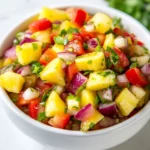
Pineapple Salsa
Ingredients
Ingredients
- ?3 cupsfresh pineapplediced about half a large pineapple
- ?1 red bell pepperdiced
- ?1/2 cupred oniondiced about half an onion
- ?1 jalapeñoseeds and ribs removed then finely chopped
- ??cupcilantrochopped
- ?2 tablespoonslime juice
- ?1/4 teaspoonsalt
Instructions
Instructions
- Peel and dice the pineapple into small, bite-sized pieces until you have 3 cups fresh pineapple, diced (about half a large pineapple). If the pineapple is very ripe and you are dicing it small, the core can be left in; otherwise remove the core.
- Dice the red bell pepper into small pieces similar in size to the pineapple (use 1 red bell pepper, diced).
- Dice enough red onion to equal ½ cup red onion, diced.
- Remove the seeds and ribs from 1 jalapeño, then finely chop the jalapeño.
- Chop the cilantro listed in the ingredients.
- In a large bowl combine the 3 cups pineapple, the diced red bell pepper, the ½ cup red onion, the chopped jalapeño, and the chopped cilantro.
- Add 2 tablespoons lime juice and ¼ teaspoon salt to the bowl.
- Toss everything very well to combine, taste, and adjust seasonings to your preference (for example, add a little more salt or lime juice if desired).
Notes
Try to dice the pineapple and vegetables pretty finely (but not too small). Naturally the pineapple pieces will be a little bigger compared to the bell pepper and onion, but that’s totally fine. You just need a small dice to be able to enjoy the salsa with tortilla chips.
If you don’t have time to dice a pineapple, buy pre-sliced fresh pineapple and that will save you a lot of time.
To make this salsa even more fun, try adding diced fresh mango, peach, or sweet corn!
There is no right or wrong when it comes to what ingredients to add to this salsa, want to add a tomato? Go for it! A cucumber? Sure why not! Have fun with it!
Serve chilled or at room temperature.
Store the leftovers in an airtight container in the fridge for 2-3 days.