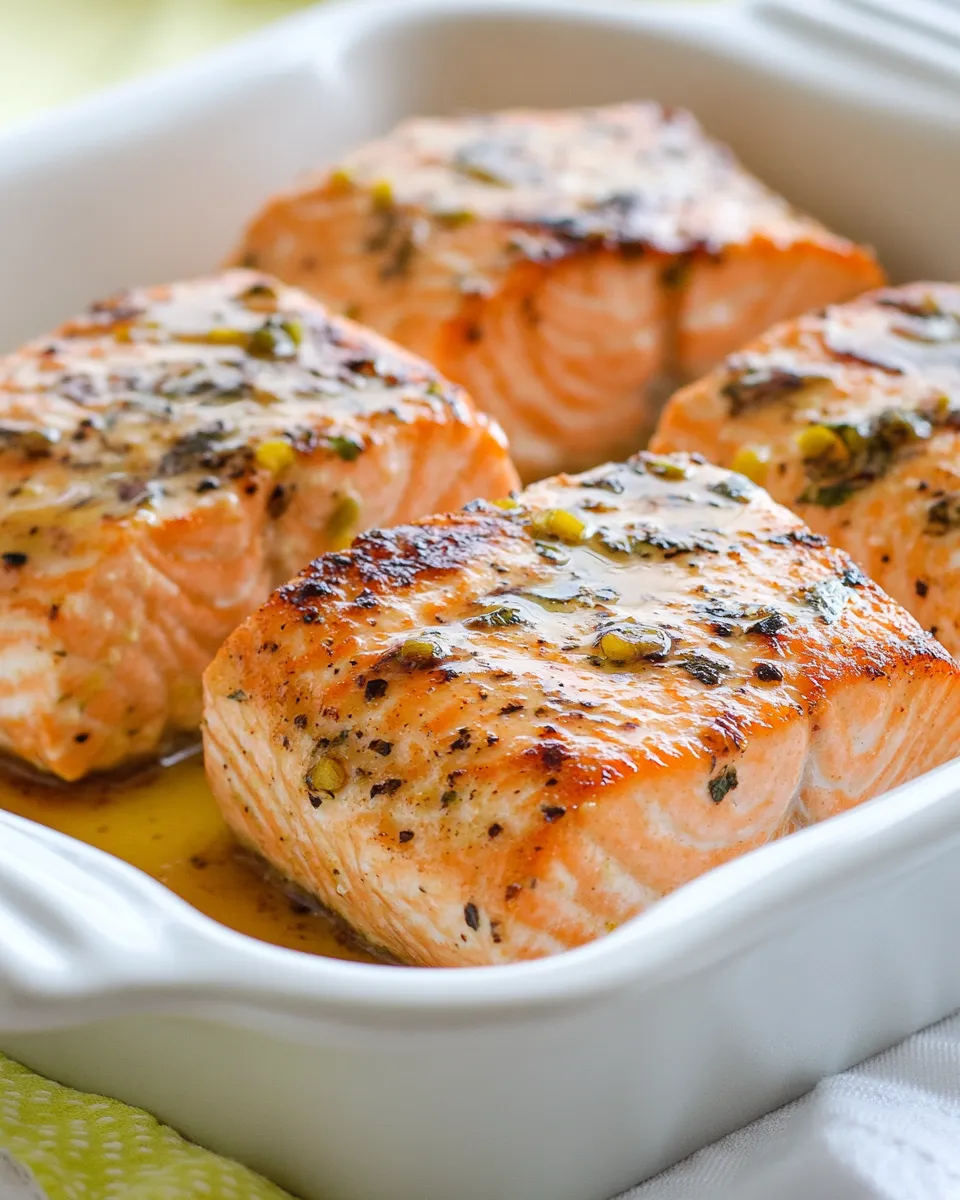
Oven Baked Salmon with a Tangy Glaze
There are few weeknight dinners as unfussy and reliable as a well-baked piece of salmon. This recipe gives you tender, flaky fish with a tangy, slightly golden top—easy enough for a Tuesday, nice enough for company. I keep a fillet in the fridge most weeks because it cooks fast, cleans up even faster, and pairs with almost anything on hand.
You’ll find this version leans on a simple seasoned mayo layer and fresh lemon slices to give bright acidity and a little caramelized crust after a brief broil. It’s forgiving with timing and forgiving with pantry ingredients, which is exactly what I want from a dinner I return to again and again.
I’ll lay out everything clearly: what you need, the one-pan method, common slip-ups, and swaps for diets or flavor preferences. Follow the steps exactly when you’re ready to cook, watch the broiler near the end, and you’ll have flaky, flavorful salmon in under 30 minutes from oven to table.
The Essentials

This section gives you the quick facts before you begin. Read it once so you know what to expect, then follow the method step by step.
Quick snapshot
- Serves: About 4 (based on a 2lbs fillet).
- Active work: ~10 minutes. Total cook time: 23–25 minutes (including broil).
- Temperature: Oven 350°F, finished under the broiler for color and texture.
- Result: Moist interior, lightly crisp, golden top from the mayonnaise and broil.
Ingredients
- 2lbs fresh salmon — the star of the dish; a uniform fillet cooks more evenly.
- 1/2 tsp salt — seasons the fish and enhances natural flavors.
- 1/8 tsp sugar — a touch of sweetness to balance the tang.
- 1/8 tsp ground black pepper — a mild background heat.
- 1/8 tsp garlic powder — adds savory depth without fresh garlic’s sharpness.
- 1/8 tsp paprika — color and subtle smokiness.
- 1/3 cup mayonnaise — creates the tangy, protective glaze that browns under the broiler.
- 1 lemon, sliced — placed on top for bright, fresh acidity while baking.
Make Oven Baked Salmon: A Simple Method
- Preheat the oven to 350°F. Position the oven rack in the upper third of the oven (so the top of the fish will be close enough to the broiler for finishing).
- Line a large rimmed baking sheet with parchment paper.
- Pat the 2lbs fresh salmon dry with paper towels and place it skin-side down (if it has skin) on the prepared baking sheet.
- In a small bowl, combine 1/2 tsp salt, 1/8 tsp sugar, 1/8 tsp ground black pepper, 1/8 tsp garlic powder, and 1/8 tsp paprika; mix to make the seasoning.
- Evenly sprinkle the seasoning mixture over the top of the salmon.
- Spread 1/3 cup mayonnaise in a thin, even layer over the seasoned top of the salmon.
- Arrange the lemon slices on top of the mayonnaise-covered salmon.
- Cover the baking sheet tightly with foil and bake at 350°F for 20 minutes.
- Remove the foil, switch the oven to broil, and broil the salmon for about 3 minutes, watching closely, until the top is golden and slightly crisp.
- Remove from the oven and let the salmon rest for a couple of minutes before serving.
What Sets This Recipe Apart
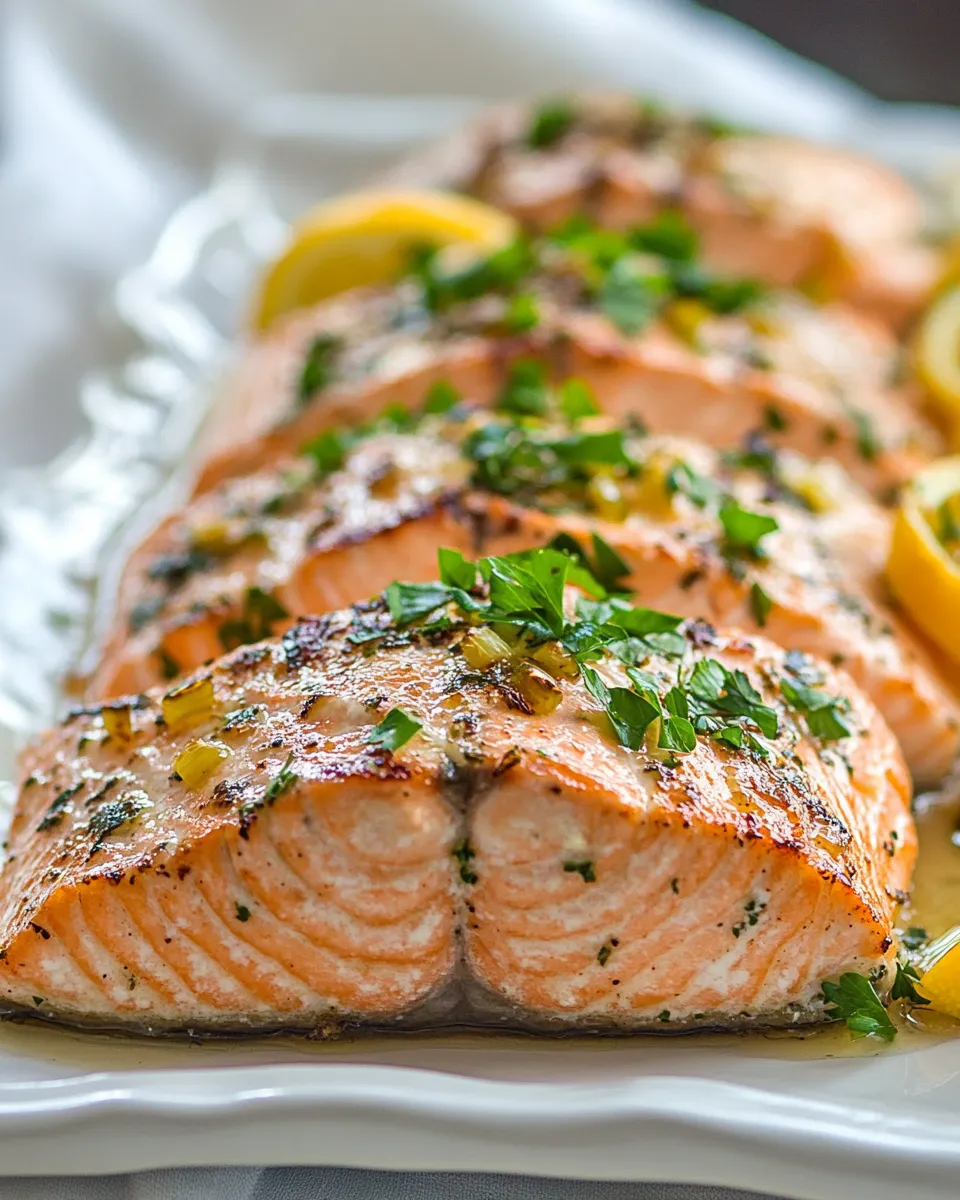
This recipe is built around two simple techniques that make a big difference: a thin mayonnaise layer on top of the seasoned fillet, and a short broil to finish. The mayo does two things—adds tang and fat that help the surface brown and gives the finished fish a silky mouthfeel. The lemon placed on top steams gently into the mayo during baking so the citrus is integrated, not just squeezed on at the end.
Compared with heavy glazes or long marinades, this method is quick and reliable. There’s no need to marinate ahead of time; everything happens on the baking sheet in under half an hour. It’s an ideal balance when you want a restaurant-feel finish (golden, slightly crisp top) without fancy techniques or last-minute fuss.
Swap Guide
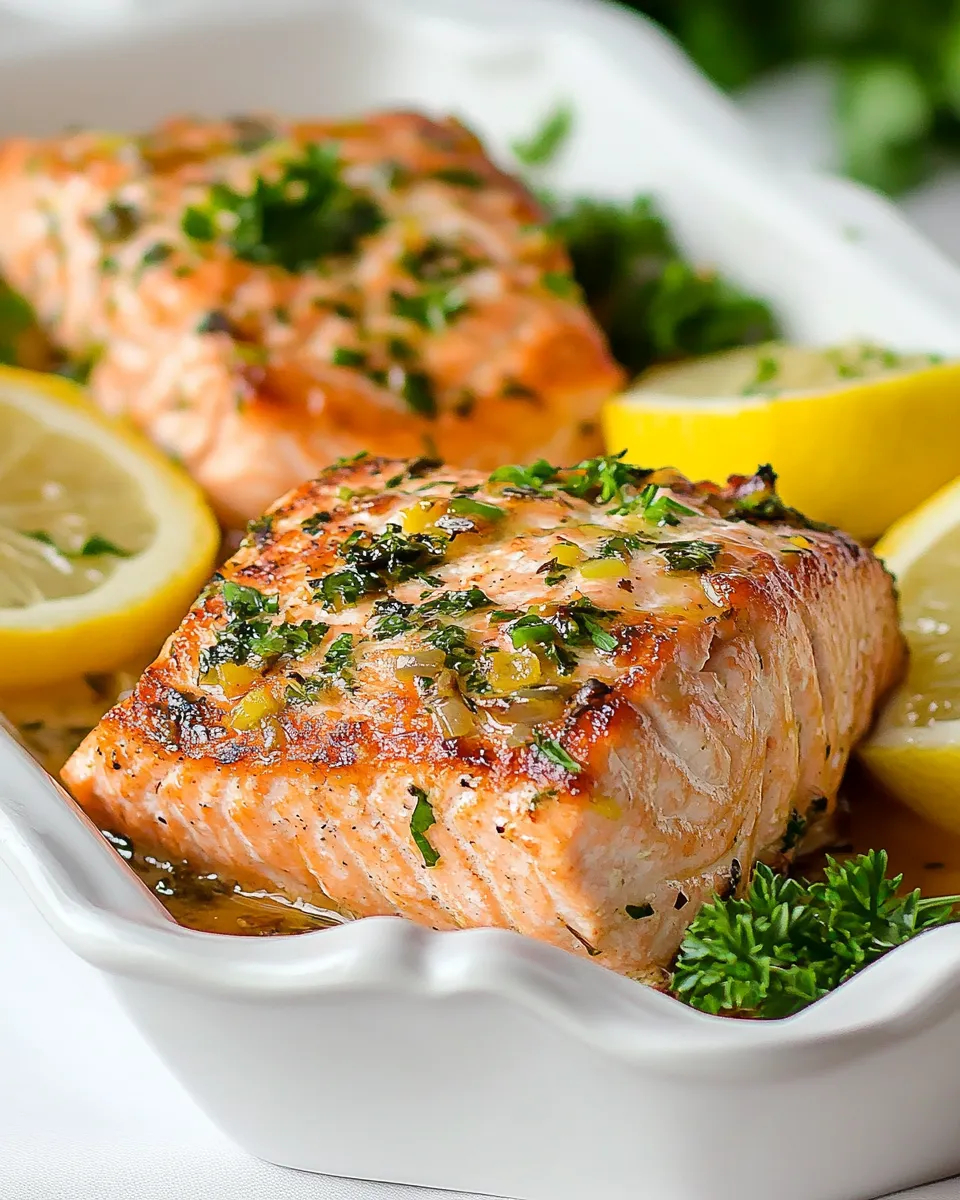
- Mayonnaise alternative: Use plain yogurt or a light olive oil-based spread for a less rich top—expect slightly less browning.
- Lemon: Replace sliced lemon with a few teaspoons of lemon zest mixed into the mayo for a less watery finish if you prefer.
- Seasoning: If you like heat, add a pinch of cayenne or crushed red pepper to the seasoning mix. For herb-forward flavor, fold in chopped fresh dill or parsley to the mayo before spreading.
- Cooking method: If you want the same topping but prefer a skillet finish, sear the salmon skin-side down and finish in a hot oven for a similar golden top.
What’s in the Gear List
- Large rimmed baking sheet — contains juices and fits a full fillet.
- Parchment paper — prevents sticking and makes cleanup simple.
- Aluminum foil — used to cover the fish during the initial bake to trap steam and prevent over-browning.
- Small bowl and spoon — to mix the dry seasoning before sprinkling.
- Measuring spoons — for precise, small measurements of the seasonings.
Mistakes That Ruin Oven Baked Salmon
- Skipping the pat dry step — excess moisture prevents the mayo from adhering and reduces browning in the broil step.
- Broiling without watching — the thin mayo layer can go from golden to burned in seconds. Stay close and check often during the 3-minute broil.
- Using a fillet with wildly uneven thickness — thin areas will overcook while thick areas finish. Trim or fold thin tips under for a more even surface.
- Oven rack too low — if the rack sits too far from the broiler, you won’t develop the golden finish this recipe depends on; position the rack in the upper third as directed.
- Leaving foil on during broil — the foil will block direct heat and prevent crisping; remove it before switching to broil.
Substitutions by Diet
- Low-sodium: Reduce or omit the 1/2 tsp salt, and rely on fresh lemon at the end for brightness.
- Dairy-free / Egg-sensitive: Replace mayonnaise with an egg-free mayo or a thin brush of olive oil combined with a splash of vinegar and a pinch of mustard powder for tang.
- Pescatarian: This recipe is already pescatarian-friendly as written.
- Lower-fat option: Use a light mayonnaise or swap for plain nonfat Greek yogurt—texture and browning will be slightly different but still tasty.
- Paleo / Whole30-style: Use avocado oil or an approved compliant mayo and omit the sugar if strict about added sweeteners.
Author’s Commentary
I come back to this preparation because it hits that comforting spot—crispy-enough top, tender inside, lemony freshness—without a mountain of work. The shortlist of pantry seasonings means it’s approachable even when you haven’t restocked the spice drawer. The mayo trick is one of those tiny chef moves that feels like a cheat code: it browns beautifully and keeps the flesh incredibly moist.
When I serve this, I’ll usually add a simple salad, steamed greens, or roasted baby potatoes. A drizzle of olive oil and an extra squeeze of lemon at the table is my final flourish. If you’re feeding others, bring the salmon straight to the table on the lined baking sheet—minimal fuss, maximum impact.
Save for Later: Storage Tips
- Refrigerate: Store cooled leftovers in an airtight container for up to 3 days.
- Reheat: Gently rewarm in a 300°F oven for 8–10 minutes or until just heated through; avoid the microwave for best texture.
- Freeze: You can freeze cooked salmon, wrapped tightly, for up to 2 months. Thaw in the refrigerator overnight before reheating gently.
- Meal prep note: If you plan to meal-prep, undercook slightly the first time and finish with a quick broil or hot pan when serving to restore texture.
Common Questions
- Can I use frozen salmon? — Yes, thaw completely and pat dry before seasoning so the mayo and seasonings stick and the fillet cooks evenly.
- Do I need to remove the skin? — No, keep the skin on during baking; it helps hold the fillet together and releases easily after cooking if you prefer skinless servings.
- How do I know when it’s done? — The edges should flake easily with a fork and the center should be opaque but still moist. The short broil is mainly for color and texture.
- Can I double the recipe? — Yes, use a larger baking sheet or two sheets so pieces aren’t crowded; keep the same timings, watching broil time closely.
- Is the sugar necessary? — It’s optional but it helps balance acidity and promotes slight caramelization. You can omit it if preferred.
Time to Try It
Make a mental note: this is a hands-off bake with a flirty finish under the broiler. Follow the method as written, watch the broiler for those last 3 minutes, and get ready for a dependable, tasty salmon dinner. If you try it, come back and tell me how you served it—my favorite part is hearing the little swaps readers make that become their new standards.
Oven Baked Salmon with a Tangy Glaze
Ingredients
Ingredients
- 2 lbsfresh salmon
- 1/2 tspsalt
- 1/8 tspsugar
- 1/8 tspground black pepper
- 1/8 tspgarlic powder
- 1/8 tsppaprika
- 1/3 cupmayonnaise
- 1 lemon sliced
Instructions
Instructions
- Preheat the oven to 350°F. Position the oven rack in the upper third of the oven (so the top of the fish will be close enough to the broiler for finishing).
- Line a large rimmed baking sheet with parchment paper.
- Pat the 2lbs fresh salmon dry with paper towels and place it skin-side down (if it has skin) on the prepared baking sheet.
- In a small bowl, combine 1/2 tsp salt, 1/8 tsp sugar, 1/8 tsp ground black pepper, 1/8 tsp garlic powder, and 1/8 tsp paprika; mix to make the seasoning.
- Evenly sprinkle the seasoning mixture over the top of the salmon.
- Spread 1/3 cup mayonnaise in a thin, even layer over the seasoned top of the salmon.
- Arrange the lemon slices on top of the mayonnaise-covered salmon.
- Cover the baking sheet tightly with foil and bake at 350°F for 20 minutes.
- Remove the foil, switch the oven to broil, and broil the salmon for about 3 minutes, watching closely, until the top is golden and slightly crisp.
- Remove from the oven and let the salmon rest for a couple of minutes before serving.
Equipment
- Oven
- Rimmed Baking Sheet
- Parchment Paper
- Aluminum Foil
- Small Bowl
- Paper Towels