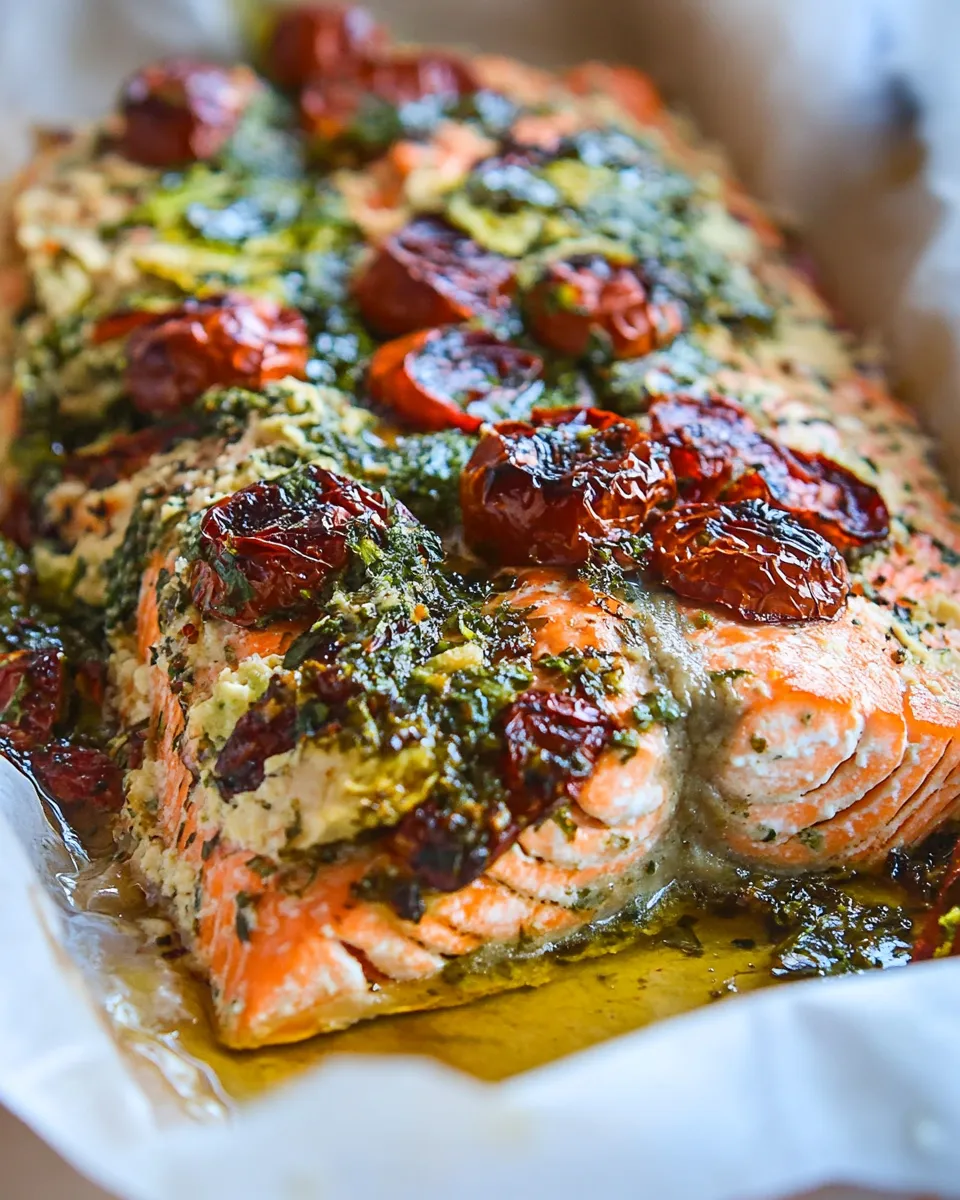
Mediterranean Salmon in Parchment Paper
I love recipes that do a lot of the work for you while delivering bright, confident flavors. This Mediterranean salmon in parchment paper is exactly that: a simple assembly, a sealed cooking environment that steams the fish gently, and a layered Mediterranean topping that comes through in every bite. It’s elegant enough for a dinner party and forgiving enough for a busy weeknight.
The parchment packet locks in moisture and concentrates aromatics—olives, capers, sun-dried tomatoes and pesto all mingle without needing constant attention. You end up with flaky, evenly cooked salmon that tastes like it took longer than it did. I reach for this method when I want a low-fuss main that still feels special.
Below you’ll find a clear ingredient checklist, the exact steps for making it, and practical notes on gear, storage, swaps and common pitfalls. Read through once, assemble confidently, and the oven does the rest.
Ingredient Checklist

- 1 (2‑pound) salmon fillet — the centerpiece of the packet; choose a single fillet to get even cooking and easy portioning.
- 1/4 tsp sea salt to taste — just a touch to season the fish; you can always add more at the table.
- 1 tsp paprika — adds color and a gentle smoky-sweet background note.
- 1 tsp ground ginger or garlic powder — pick one depending on whether you want warm spice (ginger) or savory garlic lift.
- 1 tsp dried dill — brings a subtle herbaceous, slightly anise-like flavor that pairs well with fish.
- 1/4 cup kalamata olives pitted and chopped — salty, briny bursts that cut through the richness of the salmon.
- 1/4 cup sun-dried tomatoes drained — concentrated tomato sweetness and chew; draining prevents excess oil in the packet.
- 1/2 cup artichoke hearts — tender, tangy pieces that add texture and Mediterranean character.
- 1/4 cup capers — tiny pockets of brine that amplify the overall savory profile.
- 3 sprigs fresh dill chopped — for fresh herb lift; saved for topping so the herb stays vibrant.
- 1/3 cup pesto sauce — herb-rich and oily, pesto coats ingredients and adds depth; a little goes a long way.
Mediterranean Salmon in Parchment Paper in Steps
- Preheat the oven to 400°F. Lay a long sheet of parchment paper on a large baking sheet—use a piece large enough to fold into a sealed packet around the salmon.
- Place the 1 (2‑pound) salmon fillet in the center of the parchment. Evenly sprinkle the fillet with 1/4 tsp sea salt (or to taste), 1 tsp paprika, 1 tsp ground ginger or garlic powder (your choice), and 1 tsp dried dill.
- Top the seasoned salmon with the remaining ingredients, distributing them evenly across the fillet: 1/4 cup chopped pitted Kalamata olives, 1/4 cup drained sun-dried tomatoes, 1/2 cup artichoke hearts, 1/4 cup capers, 3 sprigs fresh dill (chopped), and 1/3 cup pesto sauce.
- Fold the parchment over the salmon to form a packet: bring the long edges together, then fold and crimp the short ends so the packet is sealed but has some room for steam. Secure the packet with kitchen twine if desired and place it seam-side up on the baking sheet.
- Bake on the center rack of the preheated oven for 20 minutes. If your salmon is thicker than average, bake 25 to 30 minutes.
- Remove the baking sheet from the oven. Carefully cut the twine and open the packet away from your face to avoid steam. Check doneness with an instant-read thermometer inserted into the thickest part of the salmon—finished salmon should register 145°F.
- Let the salmon rest in the opened packet for 2–3 minutes, then cut into individual portions and serve.
Why It’s My Go-To
This method gives consistently moist salmon with minimal babysitting. The parchment packet creates a gentle steam environment so the fish never dries out, and the toppings layer flavor without overpowering the salmon.
It’s fast. Prep is about ten minutes. The oven does the rest. For weeknights, that means a well-rounded plate with far less stress than pan-searing or broiling. For guests, the packet feels special—there’s something theatrical about opening it at the table—and it presents beautifully.
Finally, it’s flexible. The Mediterranean elements are assertive but balanced; swap small components and the foundation remains solid. That reliability—flaky fish, concentrated aromatics, and an easy cleanup—makes me reach for it again and again.
Healthier Substitutions
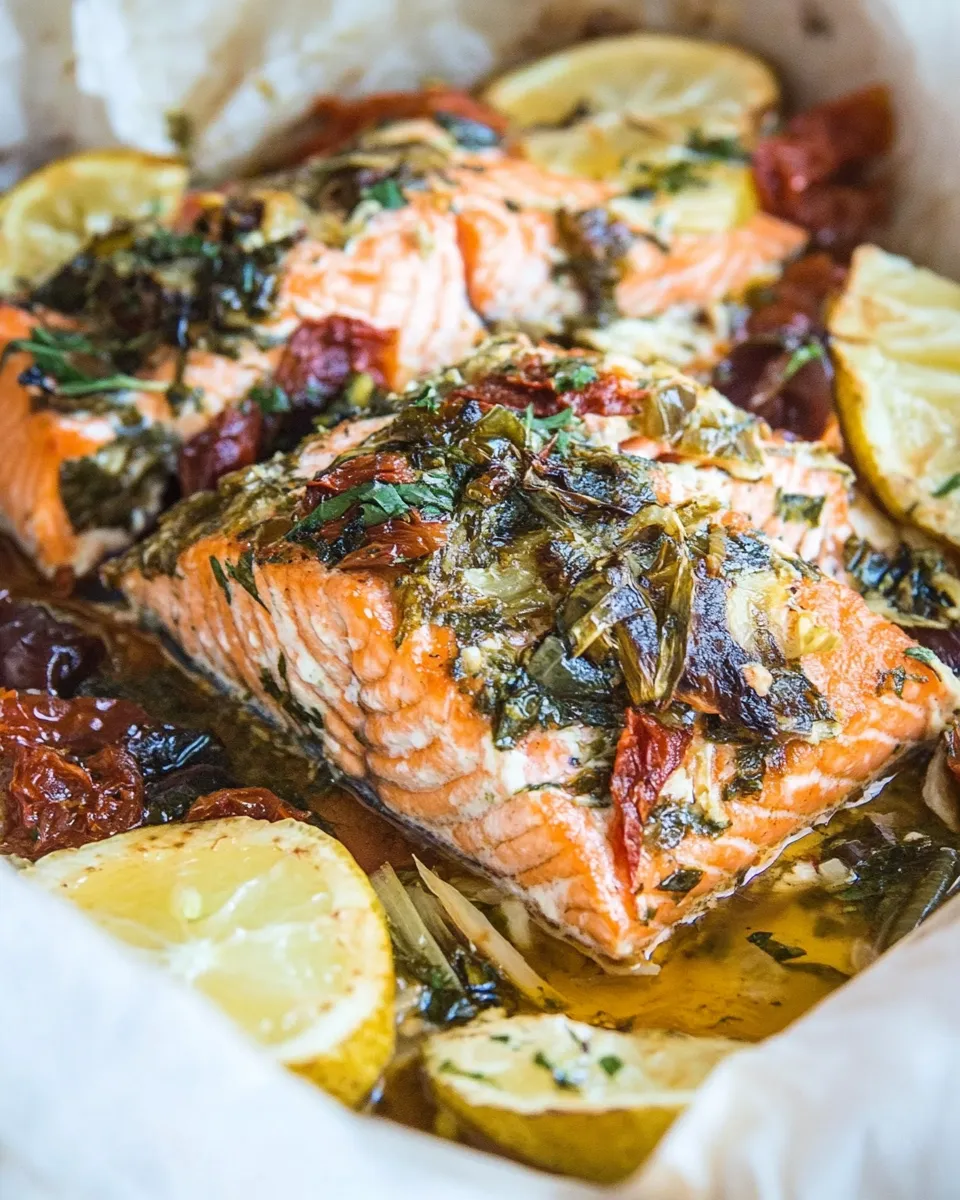
If you want to lighten this further, a few simple swaps keep flavor while trimming calories or sodium.
- Use a low-sodium pesto or reduce the pesto to 2 tablespoons to cut added oil and salt without losing herb flavor.
- Rinse capers briefly to remove excess brine; this reduces sodium impact while keeping their tang.
- Swap half the pesto for a mixture of lemon zest + a drizzle of extra-virgin olive oil to reduce caloric density while preserving brightness.
- If you need to limit oil, drain the sun-dried tomatoes thoroughly and use artichokes packed in water rather than oil.
What’s in the Gear List
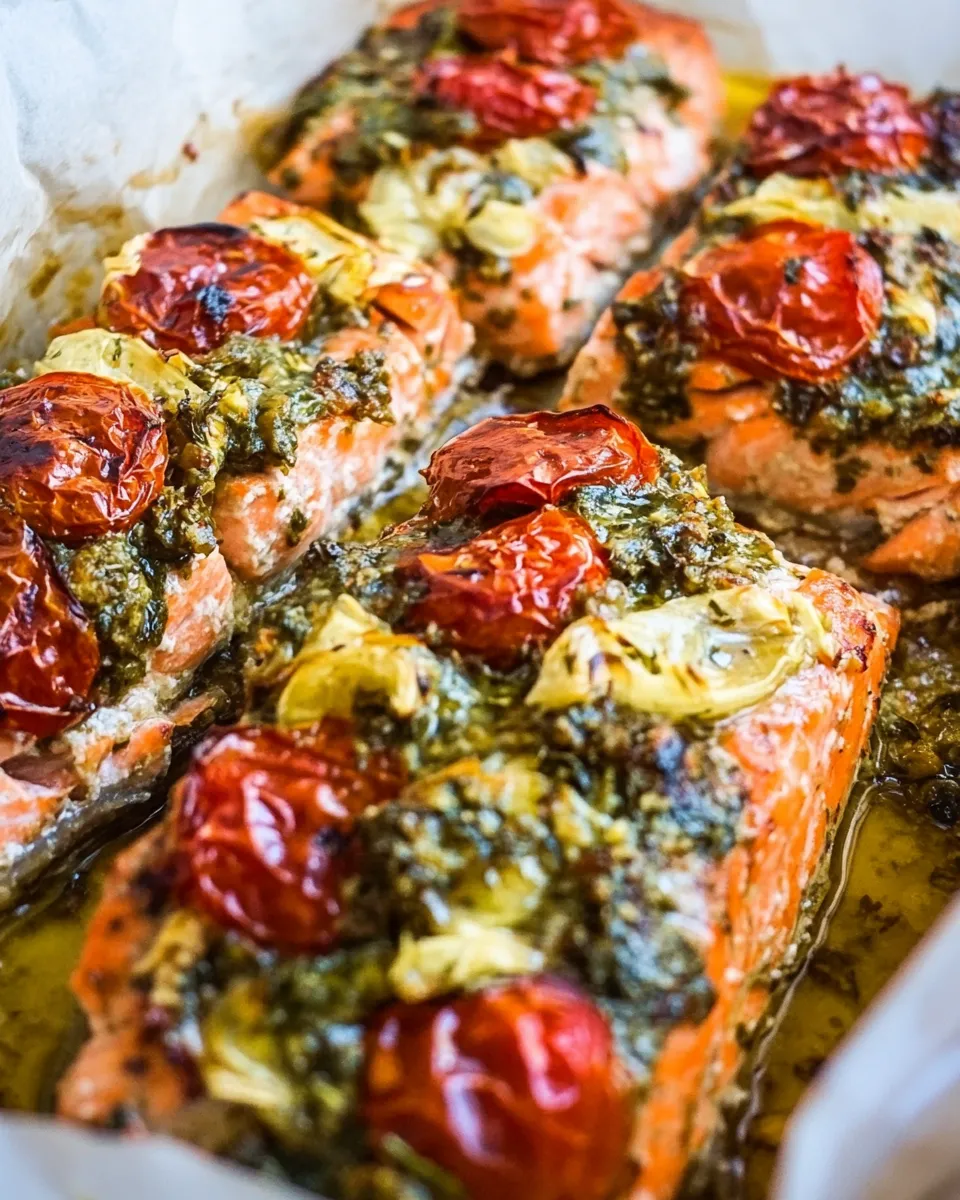
You don’t need fancy equipment for this—just a few straightforward tools:
- A large baking sheet — to support the packet and catch any juices.
- Parchment paper, a wide sheet — make sure it’s big enough to fold into a sealed packet around the fish.
- Instant-read thermometer — the fastest, most reliable way to confirm doneness (145°F target).
- Kitchen twine (optional) — helps seal the packet and makes handling easier, especially if you’re transporting it from counter to oven.
- Sharp knife — for trimming or portioning the salmon after resting.
Avoid These Mistakes
There are a few small missteps that change the outcome. Avoid them and this dish practically cooks itself.
- Using too small a sheet of parchment — packets that are too tight don’t allow steam to circulate; leave room inside so the fish steams evenly.
- Over-salting — both Kalamata olives and capers bring salt. Season lightly before baking and finish to taste at the table.
- Baking without an instant-read thermometer — time is a guideline; thickness varies. Check the thickest part of the fillet to avoid overcooking.
- Opening the packet too close to your face — the steam is hot and full of concentrated aromatics. Open away to avoid burns and a face-full of steam.
Adaptations for Special Diets
This dish is naturally friendly to several dietary patterns, and with slight swaps it can fit more.
- Gluten-free — naturally gluten-free as written, provided your pesto contains no added gluten ingredients (check labels).
- Low-carb / Keto — perfectly compatible. The Mediterranean toppings add fat and flavor; serve over leafy greens or roasted cauliflower.
- Pescatarian — of course this is a pescatarian main; no meat swaps needed.
- Dairy-free — pesto can contain cheese; choose a dairy-free pesto or use an herb-oil-lemon mix instead.
Flavor Logic
Understanding why these ingredients work helps you tweak with confidence. Salmon is rich and slightly oily; it needs acidity, brine and herb to balance. Kalamata olives and capers add brine and savory contrast. Sun-dried tomatoes bring concentrated sweetness and umami. Artichoke hearts add texture and a mild tang. Pesto ties the elements together with herbaceous fat that melds during steaming.
Spices are understated here. Paprika gives color and a whisper of warmth. The choice between ground ginger or garlic powder shifts the profile subtly: ginger adds a light lift and warmth, while garlic gives savory backbone. Dried dill and fresh dill layer the same herb at different intensities—dried infuses during cooking; fresh finishes bright.
Best Ways to Store
Leftovers are useful and can be stored several ways.
- Refrigerate: Place cooled portions in an airtight container and refrigerate up to 3 days. Keep any oily or pesto-rich liquids separated in case you want to refresh the fish before serving.
- Reheat: Gently reheat in a warm oven (300°F) still in a parchment or covered with foil for 8–10 minutes, or microwave at medium power in 30-second bursts until warmed through—watch the texture so it doesn’t dry.
- Freeze: You can freeze cooked portions wrapped tightly for up to 2 months. Thaw overnight in the fridge and reheat gently to maintain moisture.
Popular Questions
Here are answers to the questions readers ask most often when they try this.
Q: Can I use frozen salmon?
A: Use fully thawed salmon for even cooking. If you cook from partially frozen, the center may remain underdone while edges overcook. Thaw overnight in the fridge.
Q: My salmon is thicker than average—how will I know how long to bake?
A: The recipe notes 20 minutes as a baseline and 25–30 minutes for thicker pieces. An instant-read thermometer is best; 145°F at the thickest point is the safe target.
Q: Do I need to oil the parchment?
A: Not necessary. The pesto and natural oils in salmon provide enough fat. If you’re worried about sticking with a very lean fish, a light brush of oil helps.
Q: Can I assemble the packets ahead of time?
A: Yes. You can assemble and refrigerate sealed packets for a few hours before baking. If assembling ahead longer, keep components separate and assemble closer to baking time to preserve freshness.
Q: What should I serve with this?
A: Simple sides work best—roasted baby potatoes, a crisp green salad, steamed asparagus, or a lemon-herb couscous. The packet is flavorful; keep sides light to balance the plate.
See You at the Table
This Mediterranean salmon in parchment paper is a dependable, flavorful routine I always keep in rotation. It’s one of those dinners that feels like it took effort, but really respects your time. The packet is forgiving, the flavors are bold in a balanced way, and cleanup is fast—parchment goes in the compost or trash and your baking sheet needs just a quick wipe.
Make it as written the first time. Once you know how the components sing together, start adjusting small things—less pesto, a squeeze of lemon, or a sprinkle of toasted pine nuts. Then invite someone to the table and open the packet together. That small flourish turns a weekday meal into something memorable.
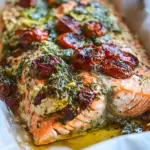
Mediterranean Salmon in Parchment Paper
Ingredients
Ingredients
- 1 2-poundsalmon fillet
- 1/4 tspsea saltto taste
- 1 tsppaprika
- 1 tspground gingeror garlic powder
- 1 tspdried dill
- 1/4 cupkalamata olivespitted and chopped
- 1/4 cupsun-dried tomatoesdrained
- 1/2 cupartichoke hearts
- 1/4 cupcapers
- 3 sprigs fresh dillchopped
- 1/3 cuppesto sauce
Instructions
Instructions
- Preheat the oven to 400°F. Lay a long sheet of parchment paper on a large baking sheet—use a piece large enough to fold into a sealed packet around the salmon.
- Place the 1 (2‑pound) salmon fillet in the center of the parchment. Evenly sprinkle the fillet with 1/4 tsp sea salt (or to taste), 1 tsp paprika, 1 tsp ground ginger or garlic powder (your choice), and 1 tsp dried dill.
- Top the seasoned salmon with the remaining ingredients, distributing them evenly across the fillet: 1/4 cup chopped pitted Kalamata olives, 1/4 cup drained sun-dried tomatoes, 1/2 cup artichoke hearts, 1/4 cup capers, 3 sprigs fresh dill (chopped), and 1/3 cup pesto sauce.
- Fold the parchment over the salmon to form a packet: bring the long edges together, then fold and crimp the short ends so the packet is sealed but has some room for steam. Secure the packet with kitchen twine if desired and place it seam-side up on the baking sheet.
- Bake on the center rack of the preheated oven for 20 minutes. If your salmon is thicker than average, bake 25 to 30 minutes.
- Remove the baking sheet from the oven. Carefully cut the twine and open the packet away from your face to avoid steam. Check doneness with an instant-read thermometer inserted into the thickest part of the salmon—finished salmon should register 145°F.
- Let the salmon rest in the opened packet for 2–3 minutes, then cut into individual portions and serve.
Equipment
- Oven
- Parchment Paper
- Baking Sheet
- Kitchen twine
- Instant-read thermometer