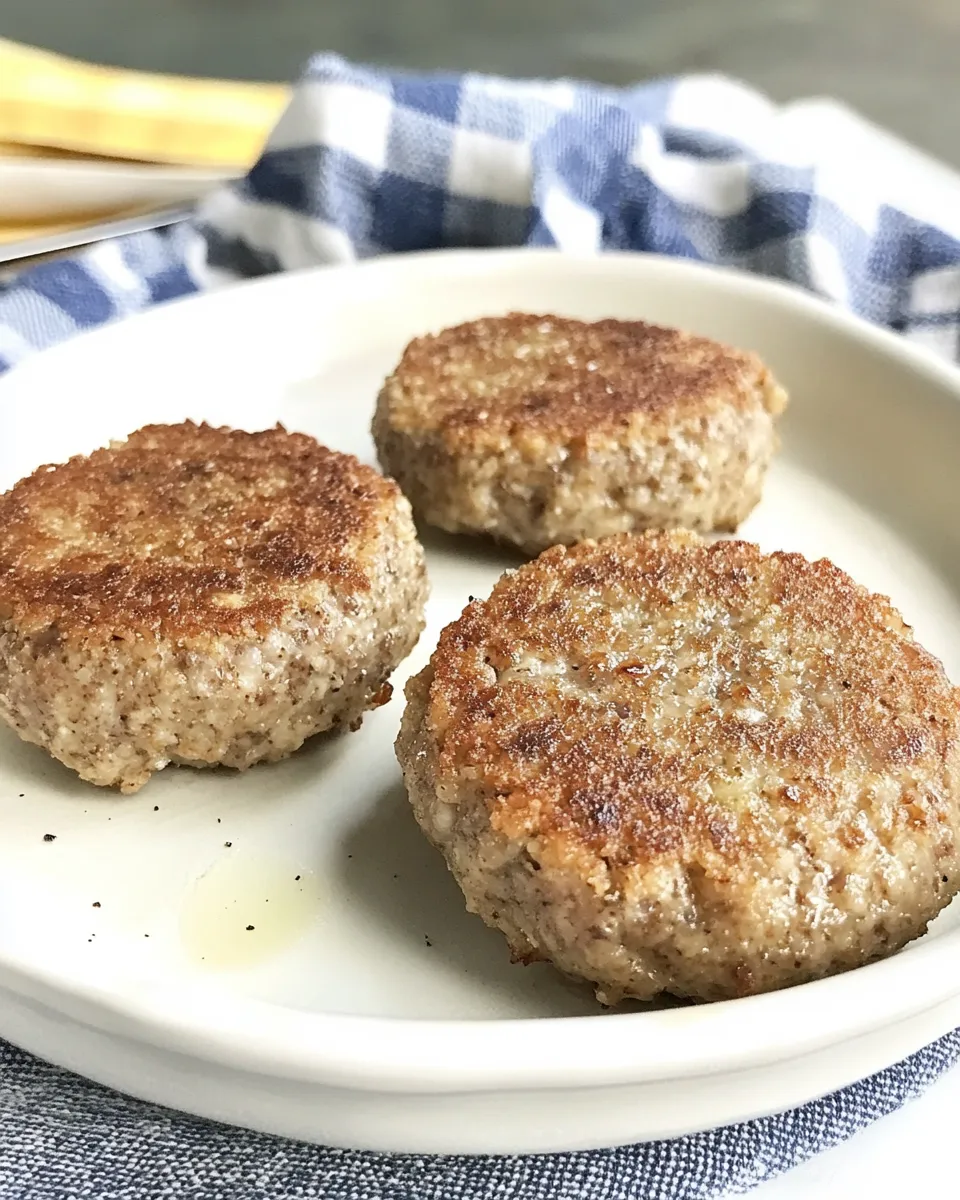
How to Cook Sausage Patties in the Oven
There’s something quietly satisfying about baking sausage patties in the oven: hands-free cooking, even browning, and a tidy kitchen. If you make breakfast for a crowd or want a simple weekday routine that scales, the oven is your best friend. This method takes the guesswork out of skillet splatters and gives you consistent results every time.
I’m sharing a straightforward approach I use at home and on the blog when I want breakfast that’s reliable and low-maintenance. No fancy techniques — just clear steps and practical tips so your patties cook through, stay juicy, and drain off excess fat. You’ll get crisp edges without drying out the centers.
Ingredient Breakdown

Ingredients
- 16ozBreakfast Sausage — the sole ingredient; this is the pre-seasoned ground sausage you’ll form into patties.
How to Prepare Sausage Patties in the Oven
- Preheat the oven to 350°F. Line a rimmed baking sheet with parchment paper and press it into the corners.
- Remove the sausage from its packaging. Divide the 16 oz of sausage into eight equal portions (about 2 oz each). Shape each portion into a patty and place the patties on the parchment-lined baking sheet, evenly spaced.
- Put the baking sheet on the middle oven rack once the oven is fully preheated and close the door.
- Bake for 10 minutes. Carefully flip each patty with a spatula.
- Bake an additional 3–6 minutes, checking after 3 minutes. The patties are done when an instant-read thermometer inserted into the center reads 165°F and there is no pink in the centers.
- Transfer the patties to a paper-towel–lined plate to drain any excess fat. Let rest briefly, then serve hot.
Why It Works Every Time
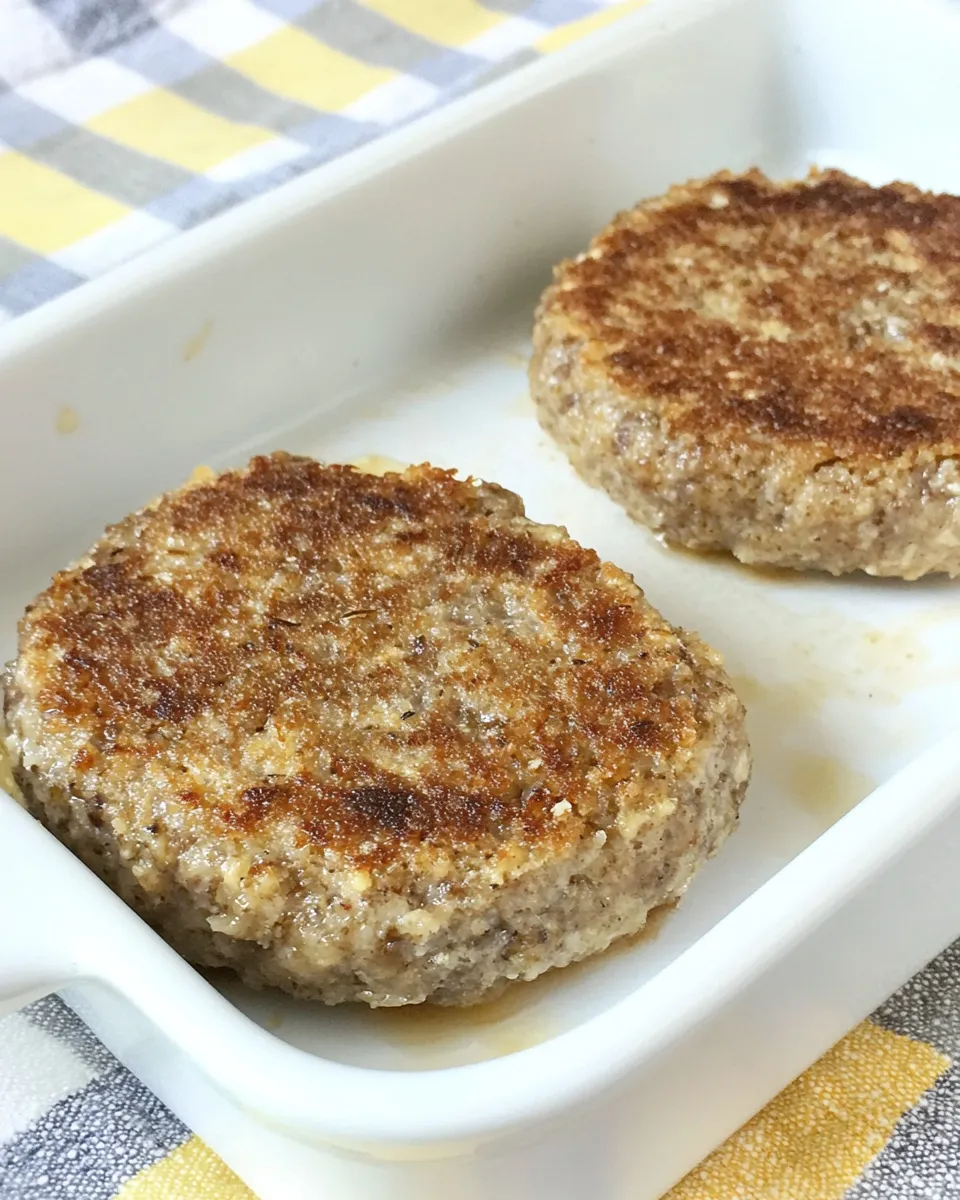
Baking sausage patties at a moderate oven temperature gives predictable heat distribution. At 350°F, the meat cooks through evenly without the exterior burning before the center reaches a safe temperature. Pressing the parchment into the pan corners keeps the patties from sticking and makes cleanup simple.
Dividing the 16 oz into eight equal portions keeps patty size uniform, which is the single most important factor for consistent cooking. When every piece is roughly the same weight and thickness, they finish together. Flipping once midway encourages even browning on both sides while minimizing moisture loss from repeated handling.
Vegan & Vegetarian Swaps
If you need a plant-based option, swap in a store-bought vegan sausage that comes as ground or pre-formed patties. Cook time and temperature vary by product, so follow the manufacturer’s guidance. Many vegan sausages benefit from a similar approach: bake on a parchment-lined sheet and flip once for even browning. If the vegan product is very thin, reduce bake time and check texture earlier.
For a homemade vegetarian patty, consider using a firm bean or lentil base bound with a little flour or oats and flavored to mimic sausage spices. Press into 2 oz patties for similar portion control and test cook times — these usually need less time and a slightly higher temperature to firm up and brown.
Equipment at a Glance
- Rimmed baking sheet — contains drippings and allows air to circulate around patties for even cooking.
- Parchment paper — prevents sticking and simplifies transfer and cleanup.
- Instant-read thermometer — essential for confirming the internal temperature reaches 165°F (food safety).
- Spatula — for flipping patties gently without breaking them.
- Paper towels — for blotting excess grease after baking.
Troubleshooting Tips
Patty shape and thickness
If patties are too thick, they’ll take longer to reach 165°F and risk a dry exterior. If they’re too thin, they can become crisped before the center is warm. Aim for consistent, palm-sized patties around 2 oz each as the recipe directs.
Uneven browning
Uneven color is usually a spacing issue. Give each patty room; crowded pans trap steam and prevent browning. Use the middle oven rack for the most even heat. If your oven has hot spots, rotate the sheet once when you flip the patties.
Excess grease
If your patties release a lot of fat, blotting briefly on a paper-towel–lined plate as directed will remove the surface oil and make them less greasy while still retaining juiciness. For especially fatty sausage, you can lift the sheet briefly and tilt to drain into a heatproof container partway through baking, but do this carefully and only if you’re comfortable handling hot pans.
How to Make It Lighter
To reduce the calorie and fat content, choose a leaner breakfast sausage if available — turkey or chicken sausage blends can be significantly lighter than traditional pork varieties. Keep portion sizes to 2 oz patties as specified to control serving calories. Baking rather than frying already reduces the amount of added fat since excess drips away on the sheet and is blotted off.
If you make your own sausage mix, use lean ground meat, plenty of aromatics (garlic, sage, fennel), and bind with a small amount of whole-grain breadcrumbs or oats to keep patties tender without adding extra fat.
Behind-the-Scenes Notes
I test this exact method because it’s reproducible in home ovens and friendly for batching. I learned early on that pushing the parchment into the corners prevents the edges from lifting and keeps patties sitting level as they bake. Also, dividing the sausage into eight portions is a deliberate choice: it gives a satisfying patty size for sandwiches and plates while keeping each portion small enough to cook quickly and evenly.
One practical note: let the oven fully preheat before placing the sheet inside. Putting cold sausage into a partially heated oven changes the cooking timeline and can lead to uneven doneness. Give the oven time to stabilize at 350°F so the 10-minute first bake is accurate.
Prep Ahead & Store
Make-ahead is where this method shines. Shape the patties and arrange them on a parchment-lined sheet, then cover tightly and refrigerate for up to 24 hours before baking. If you want longer storage, freeze the shaped patties on a sheet until firm, then transfer to a freezer bag. Bake from frozen, adding a few extra minutes to the cook time and checking for the 165°F internal temperature.
Cooked patties store well: refrigerate in an airtight container for up to 4 days, or freeze for 2–3 months. Reheat gently in a 350°F oven for 6–10 minutes from refrigerated (longer if frozen), or microwave in short bursts if you’re short on time — expect the texture to be slightly softer with microwave reheating.
Sausage Patties in the Oven FAQs
How do I know when sausage patties are done?
Use an instant-read thermometer: 165°F in the center is the safe target. Also check visually — there should be no pink in the center, and juices should run clear. The instructions above specify flipping at 10 minutes, then checking after 3 more minutes to reach the final temperature.
Can I bake more or fewer patties?
Yes. If you increase batch size, give each patty room on the sheet. Use multiple sheets if needed and rotate them between racks halfway through to keep heat even.
What if my patties fall apart?
Patties that crumble usually aren’t compacted enough. Gently press each portion into a cohesive patty without overworking the meat — too much handling can make them tough. If using a leaner sausage, you may need a brief press to bind the edges. Cold sausage is easier to shape; if the mix becomes sticky, chill it briefly before forming.
Should I grease the pan?
Parchment paper is sufficient for preventing sticking with most packaged sausages. If you don’t have parchment, a light brush of oil or a nonstick spray will help, but expect a bit more cleanup.
Wrap-Up
Oven-baked sausage patties are a straightforward, low-fuss way to get dependable breakfast protein on the table. The method in this post — dividing 16 oz of sausage into eight 2 oz patties, baking at 350°F, flipping once, and finishing to 165°F — is built for consistency and convenience. It scales, stores well, and keeps your stove-top clean.
Try shaping the patties ahead when you have a few minutes, then bake just what you need each morning. With a simple thermometer and a rimmed sheet, you’ll have juicy, evenly cooked patties every time. Enjoy them in sandwiches, alongside eggs, or chopped into a skillet hash.

How to Cook Sausage Patties in the Oven
Ingredients
Ingredients
- 16 ozBreakfast Sausage
Instructions
Instructions
- Preheat the oven to 350°F. Line a rimmed baking sheet with parchment paper and press it into the corners.
- Remove the sausage from its packaging. Divide the 16 oz of sausage into eight equal portions (about 2 oz each). Shape each portion into a patty and place the patties on the parchment-lined baking sheet, evenly spaced.
- Put the baking sheet on the middle oven rack once the oven is fully preheated and close the door.
- Bake for 10 minutes. Carefully flip each patty with a spatula.
- Bake an additional 3–6 minutes, checking after 3 minutes. The patties are done when an instant-read thermometer inserted into the center reads 165°F and there is no pink in the centers.
- Transfer the patties to a paper-towel–lined plate to drain any excess fat. Let rest briefly, then serve hot.
Equipment
- Oven
- Rimmed Baking Sheet
- Parchment Paper
- Spatula
- Instant-read thermometer
- Paper Towels
Notes
If you buy the sausage that is in a log shape, simply remove the plastic wrapping and cut into slices for perfectly round sausage patties.It is fine to bake your sausage with another dish you are cooking in the oven (like a breakfast casserole).
If you do not have a meat thermometer, I recommend getting one. You can find one in the cooking section of your local store or at any cooking store. Also available online through all kinds of outlets. I have some that I recommend in the Resources section of my website if you need a recommendation.
The higher quality sausage you purchase, the less fat it will have. The fat cooks off and you are left with meat that you are eating. Since I like to eat most of the meat I buy, I usually opt for the more expensive sausage because ultimately, I am paying for the meat to eat and not just grease that I will pour off and discard.