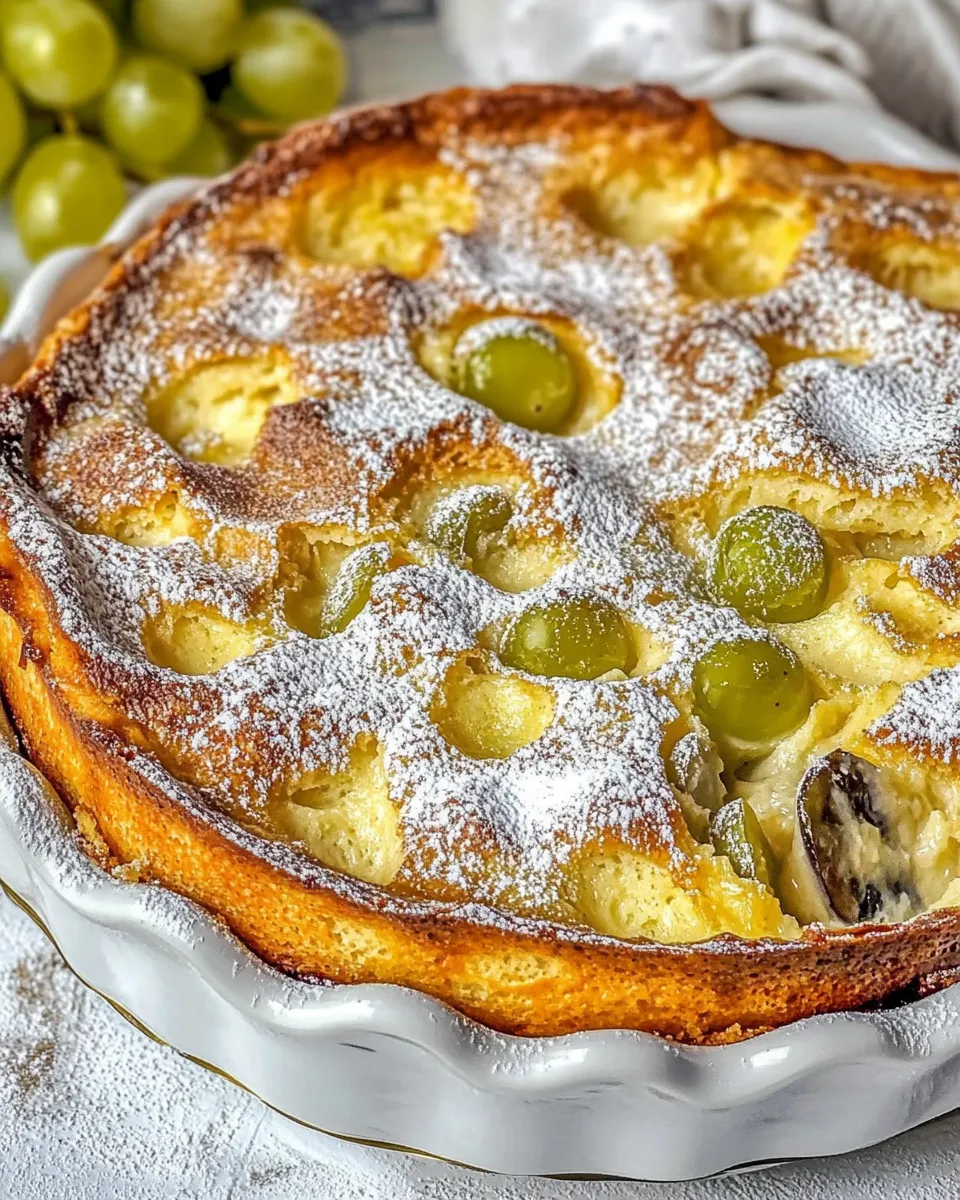
Grape Clafoutis
This is an honest, dependable grape clafoutis you can make on a weeknight or bring to a small gathering. It’s not fussy: just a handful of pantry staples, a pound of juicy grapes, and a blender to make a batter that bakes into a tender, custardy tart. The result is gently sweet, slightly eggy, and perfumed with vanilla—the kind of dessert that feels both homey and a little elegant.
I like this recipe because it’s forgiving. The batter is thin and delicate; it settles around the fruit and puffles in the oven, then settles into a silkier texture as it cools. Serve it warm, straight from the pan, or let it cool and slice it like a rustic tart. Either way, it’s simple to make and satisfying to eat.
What Goes In

- 1 pound green grapes (washed and dried) — the fruit base; choose firm, ripe grapes so they keep their shape while baking.
- 1¾ cup milk — provides the custard body; use whole milk for creamier results.
- 1 teaspoon vanilla extract — adds aromatic warmth and rounds the flavor.
- 4 large eggs — the structure of the clafoutis; they set the batter into a custardy texture.
- ¼ cup butter (melted, salted) — used for greasing and folded into the batter for richness and flavor.
- 1 cup all-purpose flour — gives the clafoutis its light, slightly cakey lift.
- ½ cup sugar (granulated) — sweetens the batter; it also helps with browning at the edges.
Make Grape Clafoutis: A Simple Method
- Preheat the oven to 375°F.
- If the 1/4 cup butter is not already melted, melt it. Use some of the melted butter to grease the bottom and sides of a baking dish; keep the remaining melted butter for the batter.
- Place the 1 pound of washed and dried green grapes in an even layer on the bottom of the buttered baking dish.
- In a blender add 1 3/4 cups milk, 1 teaspoon vanilla extract, 4 large eggs, the remaining melted butter, 1 cup all-purpose flour, and 1/2 cup granulated sugar.
- Blend until the mixture is smooth and has a thin, pourable consistency (about 20–30 seconds). Scrape down the sides and blend briefly again if needed.
- Pour the batter evenly over the grapes in the baking dish.
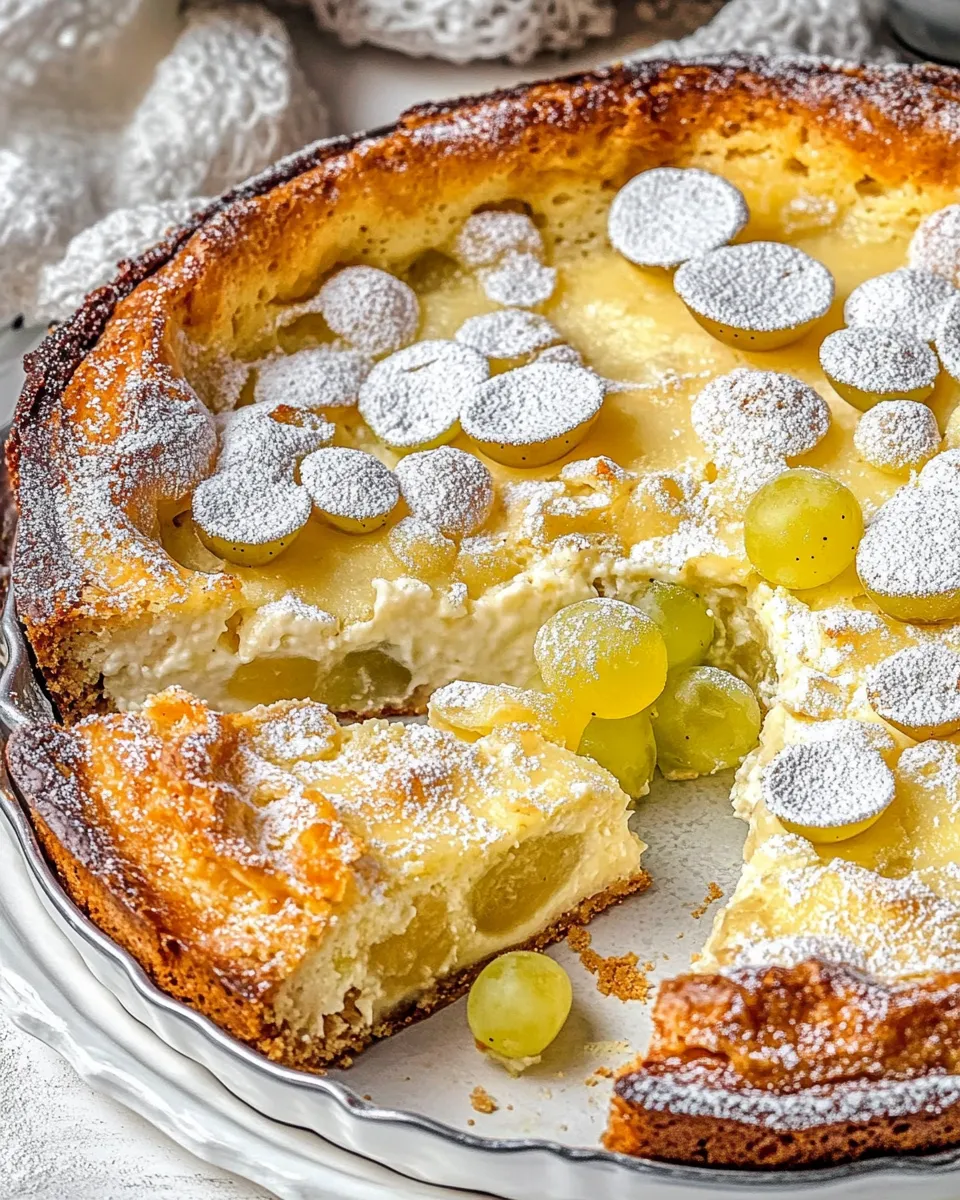
- Bake in the preheated oven for about 1 hour, or until the clafoutis is set in the center and lightly golden at the edges (a knife inserted near the center should come out clean).
- Remove from the oven and let cool for 10–15 minutes. Serve warm.
Why This Recipe Is Reliable
This clafoutis follows a classic, simple ratio: eggs, milk, flour, and a touch of fat and sugar. That structure is forgiving because the batter is intentionally thin; it flows around the fruit rather than trying to suspend it like a cake would. The blender smooths the batter quickly and evenly, so you don’t have to fuss with lumps or long mixing.
The timing is conservative. One hour at 375°F gives the center time to set without burning the edges. A knife test—clean when inserted near the center—is the most reliable indicator of doneness because ovens vary. The short cooling window after baking helps the custard firm up just enough to slice, while still keeping that warm, tender mouthfeel that makes clafoutis so appealing.
Dairy-Free/Gluten-Free Swaps
If you need dairy-free or gluten-free options, this recipe adapts well with a couple of straightforward swaps. Use a plant-based milk with similar viscosity to dairy milk for the smoothest texture, and choose a neutral-flavored variety so the grapes and vanilla still shine. For a gluten-free version, use a 1:1 gluten-free flour blend designed to replace all-purpose flour in baked goods; this keeps the batter’s thickness and structure close to the original.
Be mindful that different milk alternatives and flours absorb liquid differently. If your batter looks significantly thinner or thicker than the thin, pourable consistency described in the method, adjust slightly: a tablespoon more flour or a splash more milk will bring it back into balance.
Appliances & Accessories
- Blender — speeds up batter preparation and ensures a smooth, lump-free batter in 20–30 seconds.
- Oven — consistent heat is important; place the baking dish on the middle rack for even cooking.
- Baking dish — a shallow, ovenproof dish works best so the batter spreads thinly and bakes evenly; grease it well with the melted butter called for in the recipe.
- Knife — use to test doneness by inserting near the center; it should come out clean when the clafoutis is done.
- Spatula — helpful for scraping down the blender and pouring the batter evenly over the grapes.
What Not to Do
Don’t overload the baking dish with fruit. The recipe calls for 1 pound of grapes; piling in more can make the batter too thin to properly set and lead to a soggy center. Also, don’t skip greasing the dish—clafoutis can stick if the butter isn’t used to coat the pan first.
Avoid overbaking. The edges should be lightly golden and the center set; if you let it go much longer, the custard can dry out and become rubbery. Equally, don’t under-bake; a wet, jiggly center won’t hold a slice. Rely on the knife test rather than appearance alone.
Holiday-Friendly Variations
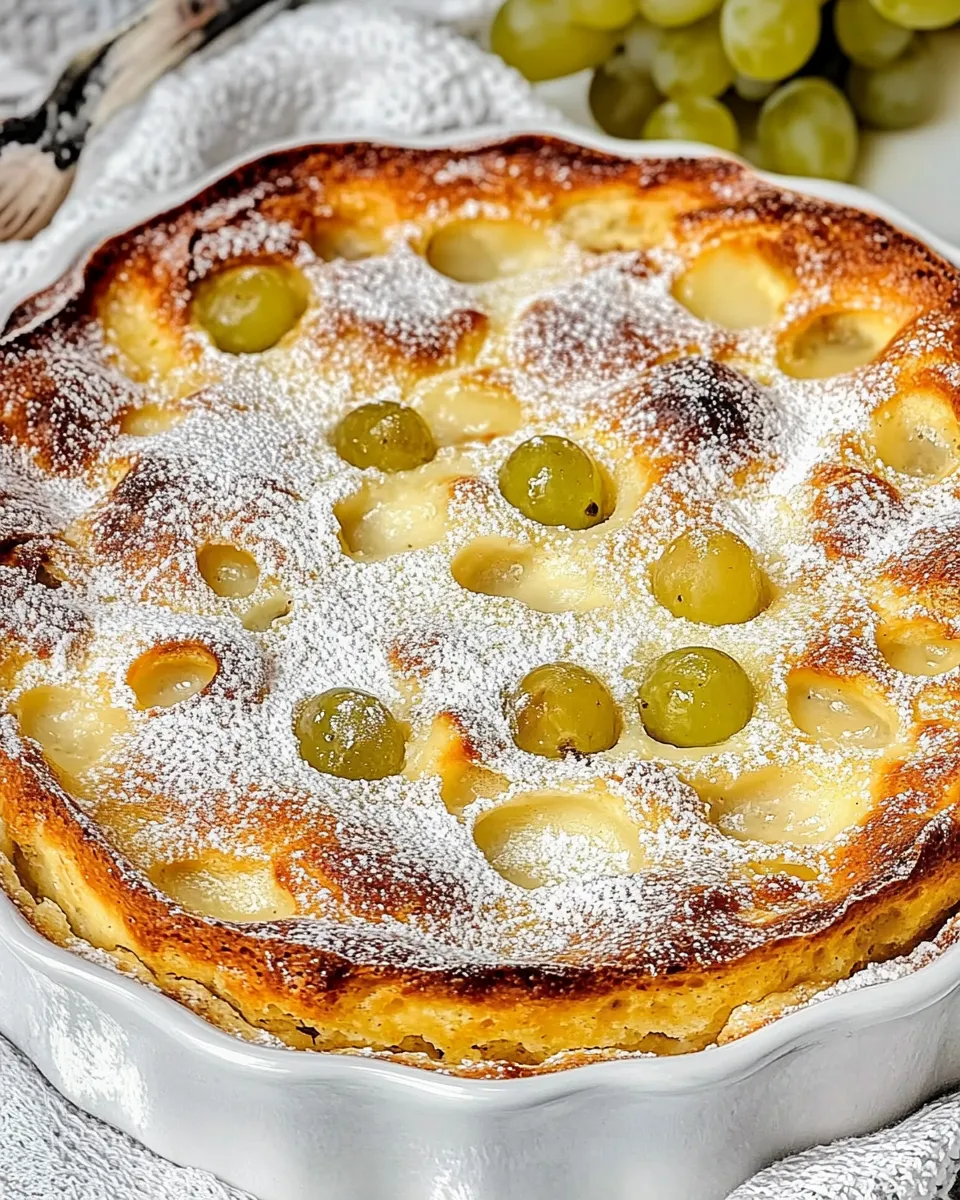
This clafoutis is lovely as written, but it also adapts well for special occasions without changing measurements. For a subtle festive touch, serve warm with a dusting of powdered sugar or a small scoop of lightly sweetened whipped cream at the table. If you’d like to introduce spice notes, add a gentle sprinkle of a warm spice to the batter after blending—just enough to scent, not overpower.
Because the base is so simple, you can present it in different ways for holidays: warm and rustic straight from the dish for a cozy family meal, or cooled and sliced for a more formal spread. Either approach makes grape clafoutis feel special without extra work.
Cook’s Notes
Batter texture and blending
The recipe asks you to blend until the batter is smooth and thin. The target is a pourable batter that will flow around the grapes. If yours seems too thick right after blending, give it a short additional pulse with a splash of milk. If it seems too thin, a quick whisk-in of a spoonful of flour will help. The blender also helps aerate the eggs slightly, which contributes to the lightness of the finished clafoutis.
Grape prep
Wash and dry the grapes thoroughly. Excess water will water down the batter and can extend baking time. If your grapes are large, you can halve them to spread the fruit more evenly, but whole grapes are perfectly fine and look charming when baked whole.
Storage Pro Tips
Store leftover clafoutis covered in the refrigerator for up to 3 days. Reheat gently in a low oven (about 300°F) for 8–10 minutes if you prefer it warm; a quick microwave reheat works, too, but you may lose some of the original texture. For longer storage, you can refrigerate and then freeze slices wrapped tightly; thaw overnight in the fridge and refresh in a warm oven before serving.
To maintain the best texture, avoid freezing the clafoutis in the baking dish. Slice portions and wrap them individually if you plan to freeze—this makes reheating individual servings easier and preserves texture more reliably.
Quick Questions
- Can I use red grapes instead? — Yes. Red grapes will work and will change the look, but the method and quantities remain the same.
- Can I make this ahead? — You can bake it and reheat gently before serving. It holds well for a day or two in the refrigerator.
- Is the sugar amount adjustable? — Yes. The 1/2 cup granulated sugar gives a balanced sweetness; reduce slightly if you prefer less sweet, but keep some sugar so the clafoutis browns properly.
- Do I need to peel the grapes? — No. Keep the skins on—grape skins hold the fruit together during baking and add color and texture.
In Closing
This grape clafoutis is a solid weeknight dessert and a graceful option for guests. It’s straightforward to assemble, forgiving in the oven, and delivers a homey finish that feels intentional. Follow the simple ingredient list and the blender-and-bake method here, and you’ll have a tender, slightly custardy tart that highlights the clean, sweet flavor of grapes.
Make it when you want something that’s more than a bowl of fruit but less than an elaborate cake—comforting, quick, and reliably delicious.

Grape Clafoutis
Ingredients
Ingredients
- 1 poundgreen grapes washed and dried
- 1 3/4 cupmilk
- 1 teaspoonvanilla extract
- 4 largeeggs
- 1/4 cupbutter melted, salted
- 1 cupall-purpose flour
- 1/2 cupsugar granulated
Instructions
Instructions
- Preheat the oven to 375°F.
- If the 1/4 cup butter is not already melted, melt it. Use some of the melted butter to grease the bottom and sides of a baking dish; keep the remaining melted butter for the batter.
- Place the 1 pound of washed and dried green grapes in an even layer on the bottom of the buttered baking dish.
- In a blender add 1 3/4 cups milk, 1 teaspoon vanilla extract, 4 large eggs, the remaining melted butter, 1 cup all-purpose flour, and 1/2 cup granulated sugar.
- Blend until the mixture is smooth and has a thin, pourable consistency (about 20–30 seconds). Scrape down the sides and blend briefly again if needed.
- Pour the batter evenly over the grapes in the baking dish.
- Bake in the preheated oven for about 1 hour, or until the clafoutis is set in the center and lightly golden at the edges (a knife inserted near the center should come out clean).
- Remove from the oven and let cool for 10–15 minutes. Serve warm.
Equipment
- 9-inch pie plate
Notes
Make individual servings.If serving a crowd, use a muffin tin to make personal servings.
Your grape clafoutis will last up to4 daysrefrigerated covered with plastic wrap. It’s a great dessert that keeps really well in the fridge, so you can easily make this 1 or 2 days before serving.