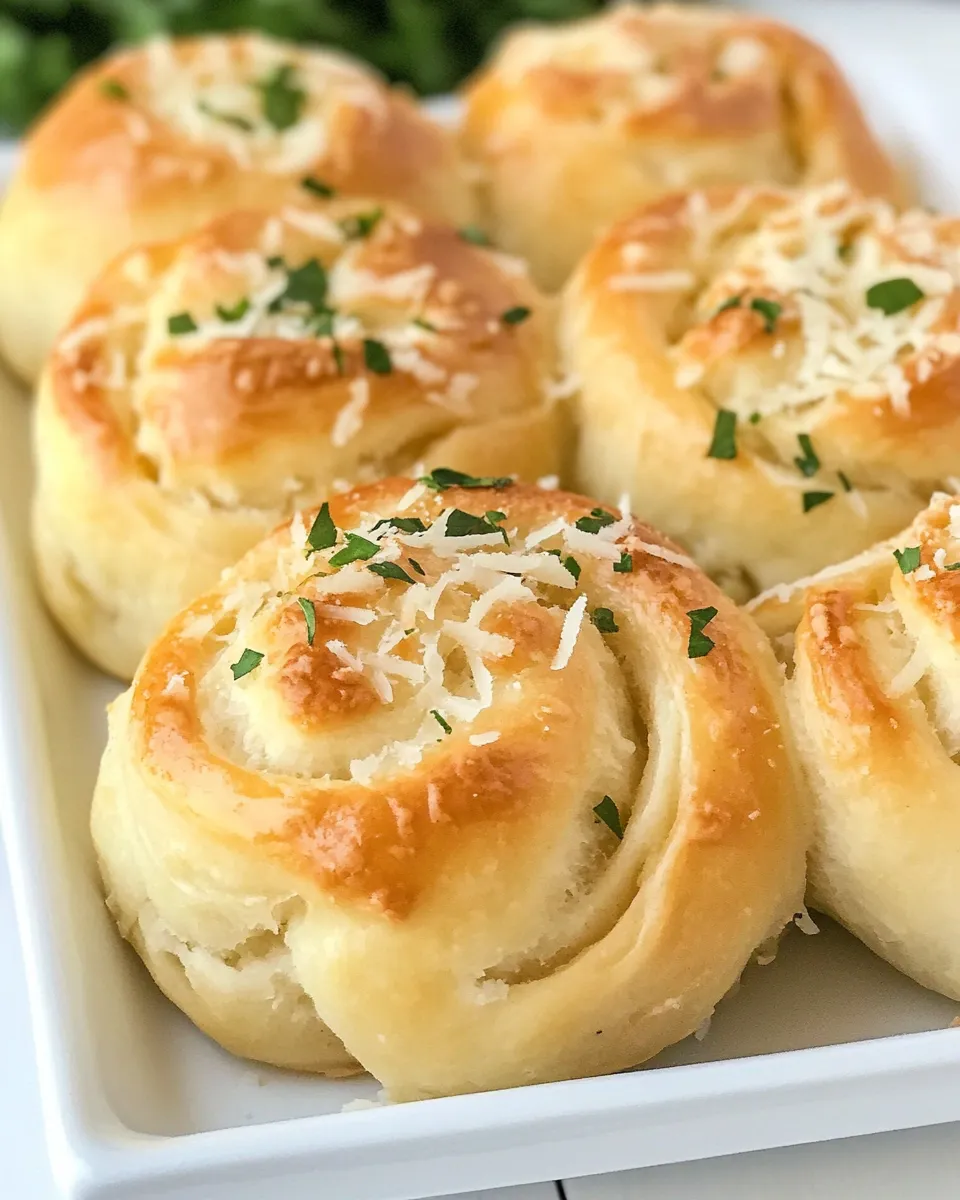
Garlic Parmesan Rolls
These Garlic Parmesan Rolls are the kind of bread I turn to when I want something simple, soulful, and ready to disappear off the plate in minutes. They have a soft, tender crumb, a buttery garlic hit, and a sharp finish from freshly grated Parmesan. No complicated fillings. No fuss. Just reliable technique and big flavor.
I walk through the dough, the butter garlic swirl, and the quick bake so you get the same results every time. The method is straightforward: activate the yeast, knead until smooth, roll, butter, cheese, slice, rest, and bake. Small steps, predictable results.
I’ll also cover what to buy, the exact tools I reach for, common missteps I see, and quick swaps for dietary needs. If you’ve ever wanted bakery-style rolls without a bakery’s schedule, this recipe is for you.
Ingredients

- 1 cup warm water — warms activate yeast; should feel like lukewarm bath water.
- 1 package active dry yeast — the leavener; check the date for best rise.
- 2 teaspoons granulated sugar — feeds the yeast to jump-start fermentation.
- 1/2 teaspoon salt — balances flavor; add with flour, not directly on yeast.
- 1 Tablespoon olive oil — adds tenderness and a little elasticity to the dough.
- 2- 2 1/2 cups all-purpose flour — start with 2 cups, add up to 1/2 cup if dough is sticky.
- 6 Tablespoons unsalted butter, melted — provides richness in the garlic butter spread.
- 2-3 teaspoons garlic powder — concentrated garlic flavor for the butter; adjust to taste.
- 1 teaspoon dried parsley flakes — for a mild herb note and color.
- drizzle of Extra Virgin Olive oil — a finishing drizzle in the butter mixture for brightness.
- 1/2 cup freshly grated parmesan cheese, separated — divided: half inside the roll, half for topping.
Your Shopping Guide
Buy fresh yeast if you can; a package of active dry yeast lasts a while in the fridge but will give better rise when it’s not old. If you’re unsure about freshness, proof it in the warm water with sugar—if it foams in 10 minutes, it’s good.
Parmesan makes a measurable difference here. Grate it yourself from a wedge when possible. Pre-grated cheese often contains additives that change texture when baked and won’t melt the same way. For small batches, a 4–6 ounce wedge is plenty.
For flour, plain all-purpose works perfectly. If you prefer bread flour, you can use it for a slightly chewier roll, but stick to the stated amounts and adjust with the extra 1/2 cup if needed. Buy unsalted butter so you control salt. Olive oil can be your regular extra virgin for flavor; only a drizzle is called for in the butter mix.
Garlic Parmesan Rolls Made Stepwise
- In a bowl (or the bowl of a stand mixer) combine 1 cup warm water, 2 teaspoons granulated sugar, and 1 package active dry yeast. Stir, then let sit 10 minutes, until the mixture is foamy.
- Add 2 to 2 1/2 cups all-purpose flour (start with 2 cups and add up to 1/2 cup more if needed), 1/2 teaspoon salt, and 1 tablespoon olive oil to the yeast mixture. Mix with the mixer and dough hook or knead by hand for about 5–7 minutes, until the dough is smooth and elastic.
- Lightly cover the bowl and let the dough rise in a warm place until doubled in volume, about 1 hour.
- Turn the risen dough out onto a lightly floured countertop. Roll it into a large rectangle no more than 1/2 inch thick.
- In a small bowl stir together 6 tablespoons melted unsalted butter, 2–3 teaspoons garlic powder, 1 teaspoon dried parsley flakes, and a drizzle of extra virgin olive oil. Reserve half of this butter mixture for brushing the tops later.
- Use a pastry brush to spread about half of the butter mixture evenly over the rolled dough. Sprinkle 1/4 cup of the freshly grated Parmesan cheese over the buttered dough.
- Roll the dough tightly lengthwise into a log (like a cinnamon roll log). Use a sharp serrated knife to cut the log into pieces about 1 1/2 inches thick.
- Place the rolls cut-side up on a greased baking sheet, leaving a little space between them. Cover the rolls with plastic wrap that has been sprayed with cooking spray (so it won’t stick) and allow them to rest for about 30 minutes.
- While the rolls are resting, preheat the oven to 400°F (205°C).
- Bake the rolls at 400°F for a total of 12–14 minutes. At about the 9-minute mark, remove the rolls from the oven, brush the tops with the reserved butter/garlic mixture, sprinkle the remaining 1/4 cup Parmesan cheese over them, and return to the oven to finish baking until golden and cooked through.
- Remove the rolls from the oven, let cool a few minutes, then serve.
Why It’s My Go-To
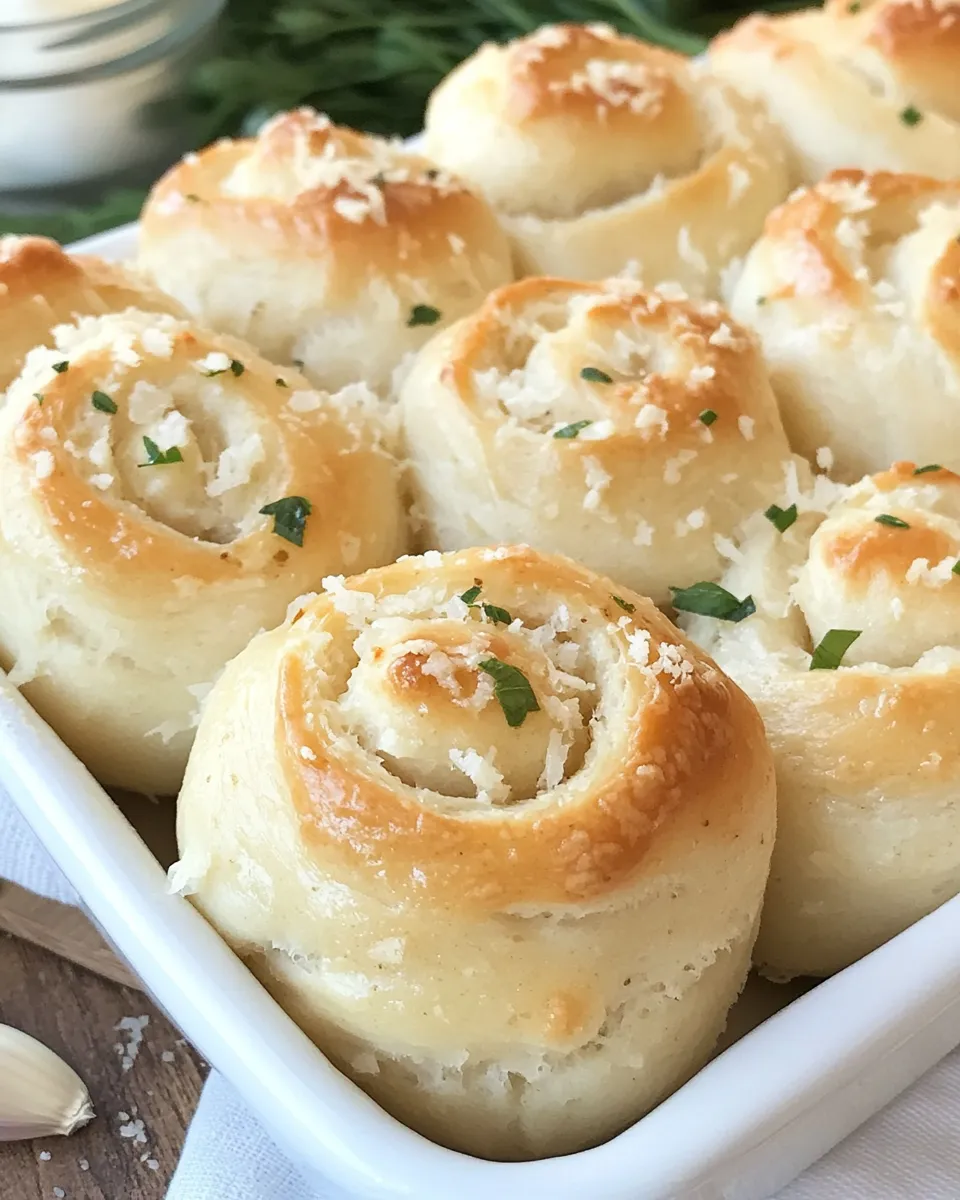
These rolls are reliable. The dough is forgiving; the process tolerates small variations in timing or humidity. The garlic butter is bold but uncomplicated, and the Parmesan gives a savory lift that makes the rolls taste special without extra work.
They’re quick for homemade bread. From start to finish you can be eating them in roughly two hours, and most of that is hands-off rising time. That makes them practical for weeknight dinners or weekend baking when you want warm bread but not an all-day project.
If You’re Out Of…
If you run out of active dry yeast and only have instant yeast, use the same amount but skip the initial proof step—mix it directly with the flour and liquids. If you only have fresh yeast, use the equivalent (about one-third the weight of active dry), but dissolve it in the water first.
No fresh Parmesan? Use a firmer, aged hard cheese that grates finely. Pre-grated cheese works in a pinch, but the texture and melt will differ. If you don’t have garlic powder, finely minced fresh garlic mixed into the melted butter is an option—use about 1 medium clove for a milder hit, more if you like it strong.
Prep & Cook Tools
- Bowl or stand mixer with dough hook — either works; mixer saves time and forearms.
- Rolling pin — to roll the dough to an even 1/2-inch thickness.
- Pastry brush — for the butter spread and the top-brushing at bake time.
- Sharp serrated knife — cuts the roll log cleanly without squashing.
- Greased baking sheet — an 11×17 or similar works; leave space between rolls.
- Plastic wrap and cooking spray — to cover the rolls for the short proof without sticking.
Frequent Missteps to Avoid
Too-hot water kills yeast. The water should be warm, not scalding. If the yeast doesn’t foam in step one, discard and start with fresh yeast.
Don’t over-flour when rolling. Add just enough surface flour so the dough doesn’t stick. Overdoing it will make the rolls dry and tight rather than soft and tender.
Cut with a serrated knife or dental floss. A dull or straight-edge knife can compress the log and seal the layers, preventing the spiral from opening during bake. Light sawing motion or floss works best.
Substitutions by Diet
Vegetarian: This recipe is already vegetarian.
Lactose-free/dairy-free: Use a dairy-free butter substitute for the melted butter and a dairy-free grated Parm-style cheese for topping. Texture and flavor will change, but the structure of the roll remains the same.
Lower-sodium: Reduce the added salt slightly and replace the Parmesan with a lower-sodium hard cheese, or use less Parmesan on top and inside.
Gluten-free: This dough relies on gluten for structure. For a gluten-free version, use a tested gluten-free roll mix or a cup-for-cup flour that includes xanthan gum and follow that mix’s instructions—do not substitute directly.
Pro Tips & Notes
Timing and Warmth
Find a warm spot for proofing the dough—an oven with just the light on or a slightly warmed microwave (turned off) works well. Dough doubles roughly in an hour at around 75–80°F; cooler temps will take longer.
Handling the Log
When rolling the rectangle into a log, keep the roll tight but not stretched thin. A firm, even roll ensures consistent spirals and an attractive presentation.
Cheese Tips
Freshly grated Parmesan melts and browns better than pre-grated. If you like extra crisp top, turn the oven to broil for 30–60 seconds at the very end—watch carefully.
Prep Ahead & Store
Make the dough up to the first rise, punch it down, shape it into the rectangle, apply the butter and Parmesan, then roll and cut. Place the cut rolls in the pan, cover, and refrigerate overnight. Before baking, let them sit at room temperature for 30–45 minutes and then proceed with the bake as directed. Chilled dough will need a little extra bake time.
Store leftovers in an airtight container at room temperature for up to two days. Rewarm in a low oven (300°F) for 5–8 minutes or microwave briefly to revive softness. For longer storage, freeze fully cooled rolls in a sealed bag for up to 3 months; reheat from frozen at 350°F until warmed through.
Reader Q&A
- Q: Can I use fresh garlic instead of garlic powder? A: Yes. Mince 1 medium clove and mix into the melted butter. Fresh garlic is stronger and may brown faster, so watch heat exposure.
- Q: My rolls are dense. Why? A: Likely under-kneaded or the yeast was weak. Knead until dough is elastic and passes the windowpane test—a small piece stretches thin without tearing. Also confirm your yeast foamed at the start.
- Q: Can I make mini rolls? A: Yes. Cut thinner slices of the log and reduce bake time slightly; monitor color and doneness closely.
- Q: Can I add herbs or other cheeses? A: Yes—rosemary, thyme, or a mix of Parmesan with Pecorino work well. Add sparingly so the garlic and butter remain the star.
The Last Word
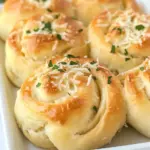
These Garlic Parmesan Rolls are practical, quick, and consistently satisfying. The technique gives you soft, buttery spirals with a toasted, cheesy top. Follow the steps, watch your yeast, and resist over-flouring—the result will reward you with bread that feels like a treat and fits into a busy kitchen. Serve warm, and enjoy the way the house fills with garlic and butter while they bake.
Garlic Parmesan Rolls
Ingredients
Ingredients
- 1 cupwarm water
- 1 packageactive dry yeast
- 2 teaspoonsgranulated sugar
- 1/2 teaspoonsalt
- 1 Tablespoonolive oil
- 2- 2 1/2 cupsall-purpose flour
- 6 Tablespoonsunsalted butter melted
- 2-3 teaspoonsgarlic powder
- 1 teaspoondried parsley flakes
- drizzle of Extra Virgin Olive oil
- 1/2 cupfreshly grated parmesan cheese seperated
Instructions
Instructions
- In a bowl (or the bowl of a stand mixer) combine 1 cup warm water, 2 teaspoons granulated sugar, and 1 package active dry yeast. Stir, then let sit 10 minutes, until the mixture is foamy.
- Add 2 to 2 1/2 cups all-purpose flour (start with 2 cups and add up to 1/2 cup more if needed), 1/2 teaspoon salt, and 1 tablespoon olive oil to the yeast mixture. Mix with the mixer and dough hook or knead by hand for about 5–7 minutes, until the dough is smooth and elastic.
- Lightly cover the bowl and let the dough rise in a warm place until doubled in volume, about 1 hour.
- Turn the risen dough out onto a lightly floured countertop. Roll it into a large rectangle no more than 1/2 inch thick.
- In a small bowl stir together 6 tablespoons melted unsalted butter, 2–3 teaspoons garlic powder, 1 teaspoon dried parsley flakes, and a drizzle of extra virgin olive oil. Reserve half of this butter mixture for brushing the tops later.
- Use a pastry brush to spread about half of the butter mixture evenly over the rolled dough. Sprinkle 1/4 cup of the freshly grated Parmesan cheese over the buttered dough.
- Roll the dough tightly lengthwise into a log (like a cinnamon roll log). Use a sharp serrated knife to cut the log into pieces about 1 1/2 inches thick.
- Place the rolls cut-side up on a greased baking sheet, leaving a little space between them. Cover the rolls with plastic wrap that has been sprayed with cooking spray (so it won't stick) and allow them to rest for about 30 minutes.
- While the rolls are resting, preheat the oven to 400°F (205°C).
- Bake the rolls at 400°F for a total of 12–14 minutes. At about the 9-minute mark, remove the rolls from the oven, brush the tops with the reserved butter/garlic mixture, sprinkle the remaining 1/4 cup Parmesan cheese over them, and return to the oven to finish baking until golden and cooked through.
- Remove the rolls from the oven, let cool a few minutes, then serve.
Equipment
- Mixing Bowl
- Stand mixer (optional)
- dough hook (if using stand mixer)
- Rolling Pin
- Pastry brush
- Sharp Serrated Knife
- Baking Sheet
- Plastic Wrap
- Oven