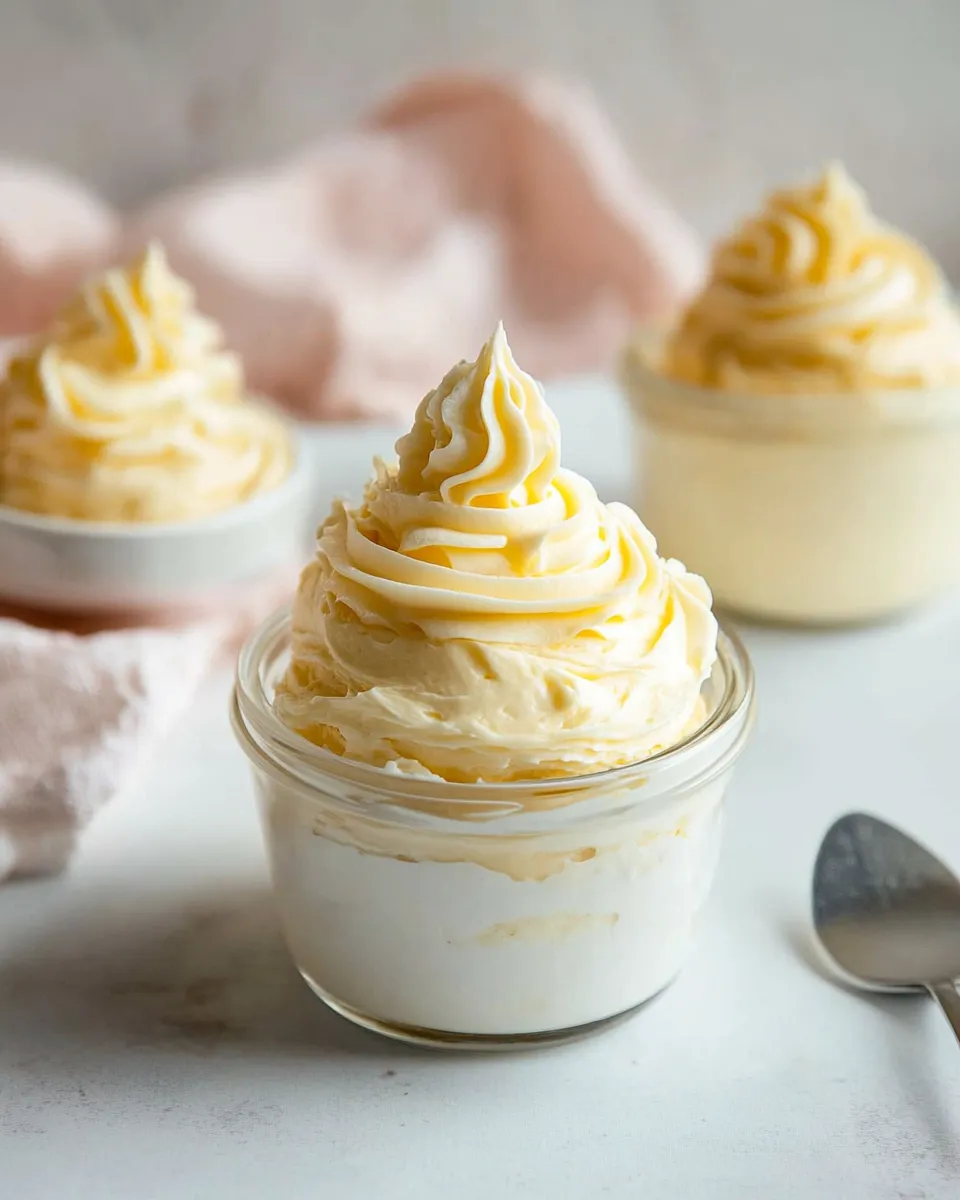
French Buttercream
I learned French buttercream early in my pastry days and it quickly became my go-to when I wanted something silky, rich, and unapologetically buttery. It feels indulgent without being cloying because the base is egg yolks instead of whole eggs or only butter. The texture is dense enough to hold shape for piping, yet soft enough to spread effortlessly over layers.
This recipe is straightforward if you respect two things: temperature and timing. Hot sugar syrup meets whipped yolks, and then cold butter is coaxed in until the emulsion sings. If you follow the steps carefully, the result is a glossy, stable buttercream that slices cleanly and tastes of pure butter and vanilla—classically French and endlessly adaptable.
Below you’ll find the exact ingredients and the step-by-step method I follow in my kitchen. I’ll also share practical tricks I use to rescue a split buttercream, alternate flavor ideas, and how to store what you don’t use right away. Let’s get into it.
Ingredient List

- 8 large egg yolks — provide the structure and custardy base; room temperature yolks whip more easily.
- 1 ½ cups granulated sugar — creates the hot syrup that cooks and stabilizes the yolks; use regular granulated sugar for predictable results.
- ½ cup water — dissolved sugar becomes the syrup; measure accurately for the syrup to hit the soft-ball stage.
- 1 ½ cups unsalted butter, room temperature — the fat component that gives body and shine; room temperature is essential so it incorporates smoothly.
- 1 pinch salt — balances the sweetness and amplifies butter flavor; add more to taste if using unsalted butter with low salt.
- 2 teaspoons vanilla extract, or vanilla bean paste — offers aromatic depth; vanilla bean paste gives flecks and a slightly richer flavor.
French Buttercream Cooking Guide
- Combine 1 ½ cups granulated sugar and ½ cup water in a small saucepan. Stir over medium-low heat until the sugar dissolves, then bring to a steady boil. Cook without letting it darken further until the syrup reaches 240°F (soft-ball stage) on a candy thermometer. Be careful—the syrup is very hot.
- While the syrup heats, place 8 large egg yolks in the bowl of a stand mixer fitted with the whisk attachment. Whip on medium-high until the yolks are thick, pale, and foamy.
- When the syrup reaches 240°F, remove the pan from the heat. With the mixer running on low, very slowly and carefully drizzle the hot sugar syrup into the whisked yolks in a thin, steady stream (aim for the center). Do not pour too fast to avoid cooking or splattering.
- After all the syrup is incorporated, increase the mixer speed to medium and whip the yolk-syrup mixture until the outside of the bowl feels cool to the touch.
- Add 1 ½ cups room-temperature unsalted butter one tablespoon at a time, waiting for each tablespoon to be fully absorbed before adding the next. If the mixture looks separated at any point, continue whipping on medium until it comes back together before adding more butter.
- Add 2 teaspoons vanilla extract (or vanilla bean paste) and 1 pinch salt. Whip on medium until the buttercream is smooth, glossy, and fully combined.
- Use immediately or refrigerate briefly if needed; re-whip briefly on medium if chilled before use.
Why You’ll Love This Recipe
This buttercream is rich and custard-like because it’s built on egg yolks rather than a meringue. The flavor reads as more buttery and less sugary than many buttercreams, which makes it feel grown-up and balanced. It also has excellent texture for decorating: pipe sharp ruffles, smooth a cake, or spread thickly between layers without sliding.
It’s versatile. With the neutral sweetness and strong butter presence, it complements chocolate, fruit curds, coffee, and nuts equally well. And because the method creates an emulsion, it’s relatively stable at room temperature for typical serving times—perfect for parties and celebration cakes.
Finally, it’s forgiving once you know the signs to watch for. A quick re-whip will often bring a separated batch back together. That reliability makes it a kitchen favorite when I’m prepping several components at once.
Flavor-Forward Alternatives
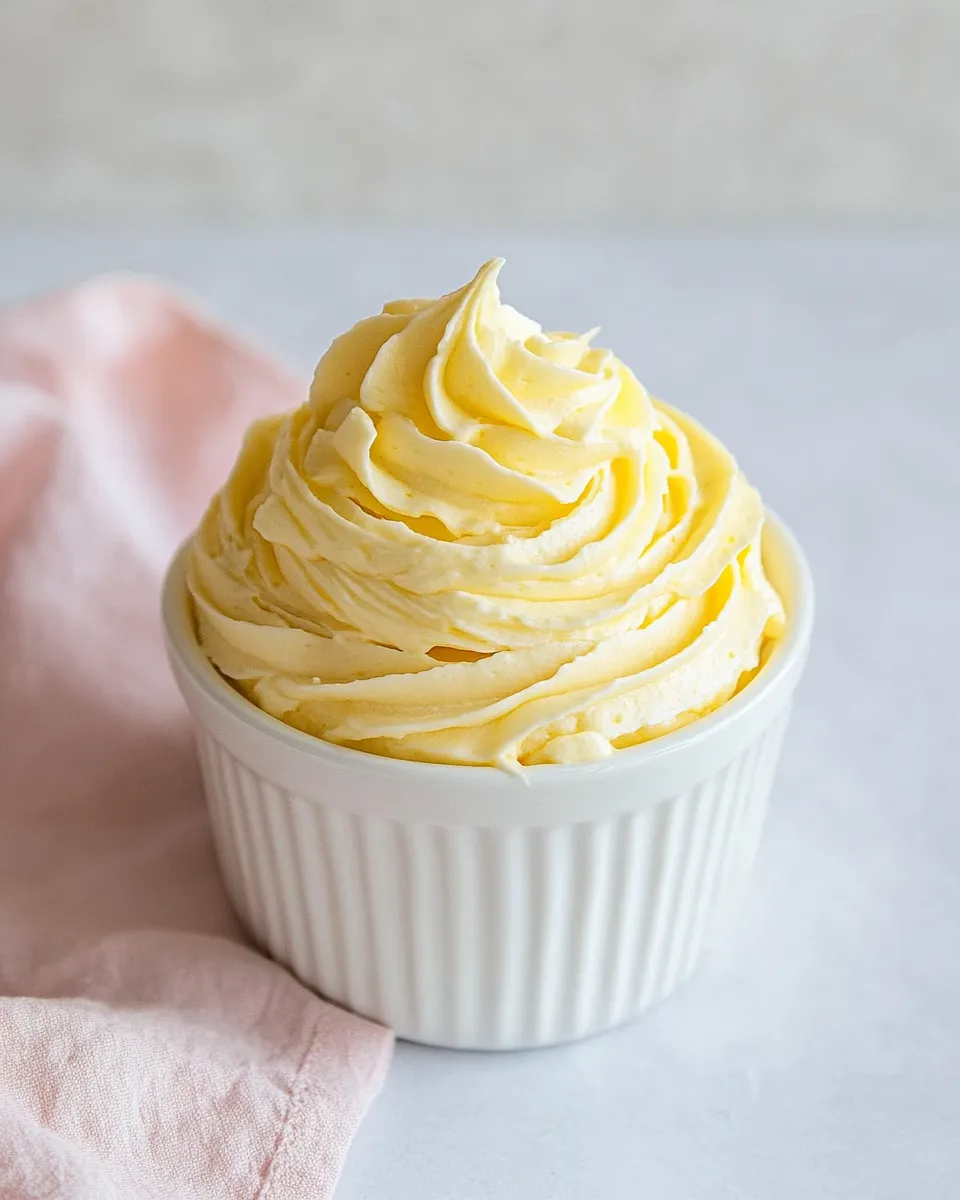
French buttercream takes flavor additions beautifully because the base is so rich. Here are practical, no-measure ideas to adapt it without changing the method:
- Cocoa or melted chocolate — fold in high-quality melted chocolate (warmed and cooled slightly) to make a chocolate French buttercream.
- Espresso or cold-brew concentrate — whisk in a concentrated coffee addition for an espresso-forward buttercream that pairs beautifully with chocolate cakes.
- Fruit purées or curds — swap part of the vanilla for a spoonful of intense fruit reduction (well-drained) for a bright note; stabilize with a little extra whipping if the mixture softens.
- Nut pastes — incorporate almond, hazelnut, or pistachio paste for a nuttier profile; mix gently so the texture stays smooth.
- Spirits or liqueurs — add vanilla-alternative flavor by stirring in a splash of rum, Grand Marnier, or amaretto to taste for adult desserts.
Hardware & Gadgets
These are the tools I use every time I make French buttercream. They help maintain control and make the process safer and cleaner.
- Stand mixer with whisk attachment — for steady, hands-off whipping and consistent texture.
- Candy thermometer — indispensable; you need an accurate read to hit 240°F for the syrup.
- Small saucepan — choose one with a thick bottom for even heating of the syrup.
- Heatproof spatula — for scraping butter and smoothing the finished buttercream.
- Measuring cups and spoons — precise sugar and water measurement matter for the syrup stage.
- Fine-mesh sieve (optional) — useful if you want an extra-silky finish or are adding purees.
Frequent Missteps to Avoid
I see the same issues in home kitchens, and all are fixable if you understand the cause.
- Pouring syrup too fast — that cooks the yolks into lumps. Drizzle slowly and aim for the center of the whisk bowl.
- Syrup not hot enough — undercooked syrup won’t set the yolks correctly. Use a candy thermometer and wait for 240°F.
- Butter too cold — cold chunks will make the mixture split. Let butter soften to room temperature so it can be added tablespoon by tablespoon.
- Adding butter too quickly — overwhelms the emulsion. Patience matters; wait for each spoonful to absorb.
- Overheating the mixture after syrup addition — if the bowl runs warm from mixing, the butter can melt. Whip until bowl feels cool before adding butter.
Spring to Winter: Ideas
French buttercream adapts to the seasons with small ingredient swaps and pairing choices. In spring and summer, keep things light with a bright fruit curd or a touch of citrus zest paired with lighter sponge cakes. For late summer and fall, fold in roasted stone-fruit purée or a spoon of fruit jam for depth.
As the weather cools, move toward richer flavors: dark chocolate buttercream, coffee-swirl, toasted nuts, or spiced buttercream with cinnamon and a hint of orange. For winter holidays, a splash of warm liqueur or a brown-butter variation (introduce browned butter carefully) lends festive richness.
Chef’s Notes
Room temperature is the recurring theme. Egg yolks that are closer to room temperature incorporate and aerate more predictably. Butter should be soft but not greasy—if it feels slick and shiny, it’s too warm. If the butter melts into the mixture, chill the bowl briefly, then whip again to re-emulsify.
When your buttercream looks grainy or separated, don’t panic. Continue whipping on medium speed and give it time; often it will come back together as the temperature equalizes. If it refuses, chill the bowl for a few minutes and then whip again. Conversely, if it becomes too stiff after chilling, let it sit at room temperature and re-whip briefly to soften.
Leftovers & Meal Prep
Store French buttercream in an airtight container in the refrigerator for up to a week. When you need to use it, let it come closer to room temperature and re-whip on medium until smooth and spreadable. If you want to freeze it, portion into shallow containers and freeze for up to a month; thaw in the refrigerator overnight and re-whip before using.
For make-ahead cakes, you can freeze a filled and crumb-coated cake (well-wrapped) with a thin layer of buttercream. Thaw slowly in the refrigerator before final decorating to avoid condensation on the surface.
Quick Questions
Is it safe to eat uncooked egg yolks? The yolks are effectively cooked by the hot sugar syrup in this method. The syrup brings the yolk-syrup mixture to a safe and stable state when added properly. If you have concerns, use pasteurized yolks.
Can I replace butter with margarine or oil? Butter provides structure, flavor, and mouthfeel that margarine or oil won’t replicate. Unsalted butter is recommended for control over salt level and flavor.
What if my buttercream is too sweet? French buttercream reads less sweet than many versions, but if you find it too sweet, a pinch more salt or a small splash of heavy cream (added carefully) can balance it without changing the method.
The Last Word
French buttercream takes some attention, but it rewards you with a silky, rich finish that elevates any cake or cupcake. Respect the temperatures, add your butter slowly, and don’t rush the cooling and whipping stages. When you get the rhythm of syrup, yolks, and butter, you’ll have a versatile buttercream that tastes like a pastry shop and holds up beautifully for decorating and serving.
If you want variations or troubleshooting help for a specific problem with your batch, tell me what happened and I’ll walk you through the fix step by step. Happy baking—and enjoy that glossy, buttery finish.

French Buttercream
Ingredients
Ingredients
- 8 large egg yolks
- 1 1/2 cupgranulated sugar
- 1/2 cupwater
- 1 1/2 cupsunsalted butter room temperature
- 1 pinchsalt
- 2 teaspoonsvanilla extract or vanilla bean paste
Instructions
Instructions
- Combine 1 ½ cups granulated sugar and ½ cup water in a small saucepan. Stir over medium-low heat until the sugar dissolves, then bring to a steady boil. Cook without letting it darken further until the syrup reaches 240°F (soft-ball stage) on a candy thermometer. Be careful—the syrup is very hot.
- While the syrup heats, place 8 large egg yolks in the bowl of a stand mixer fitted with the whisk attachment. Whip on medium-high until the yolks are thick, pale, and foamy.
- When the syrup reaches 240°F, remove the pan from the heat. With the mixer running on low, very slowly and carefully drizzle the hot sugar syrup into the whisked yolks in a thin, steady stream (aim for the center). Do not pour too fast to avoid cooking or splattering.
- After all the syrup is incorporated, increase the mixer speed to medium and whip the yolk-syrup mixture until the outside of the bowl feels cool to the touch.
- Add 1 ½ cups room-temperature unsalted butter one tablespoon at a time, waiting for each tablespoon to be fully absorbed before adding the next. If the mixture looks separated at any point, continue whipping on medium until it comes back together before adding more butter.
- Add 2 teaspoons vanilla extract (or vanilla bean paste) and 1 pinch salt. Whip on medium until the buttercream is smooth, glossy, and fully combined.
- Use immediately or refrigerate briefly if needed; re-whip briefly on medium if chilled before use.
Equipment
- Saucepan
- Stand mixer
- whisk attachment
- Candy thermometer