
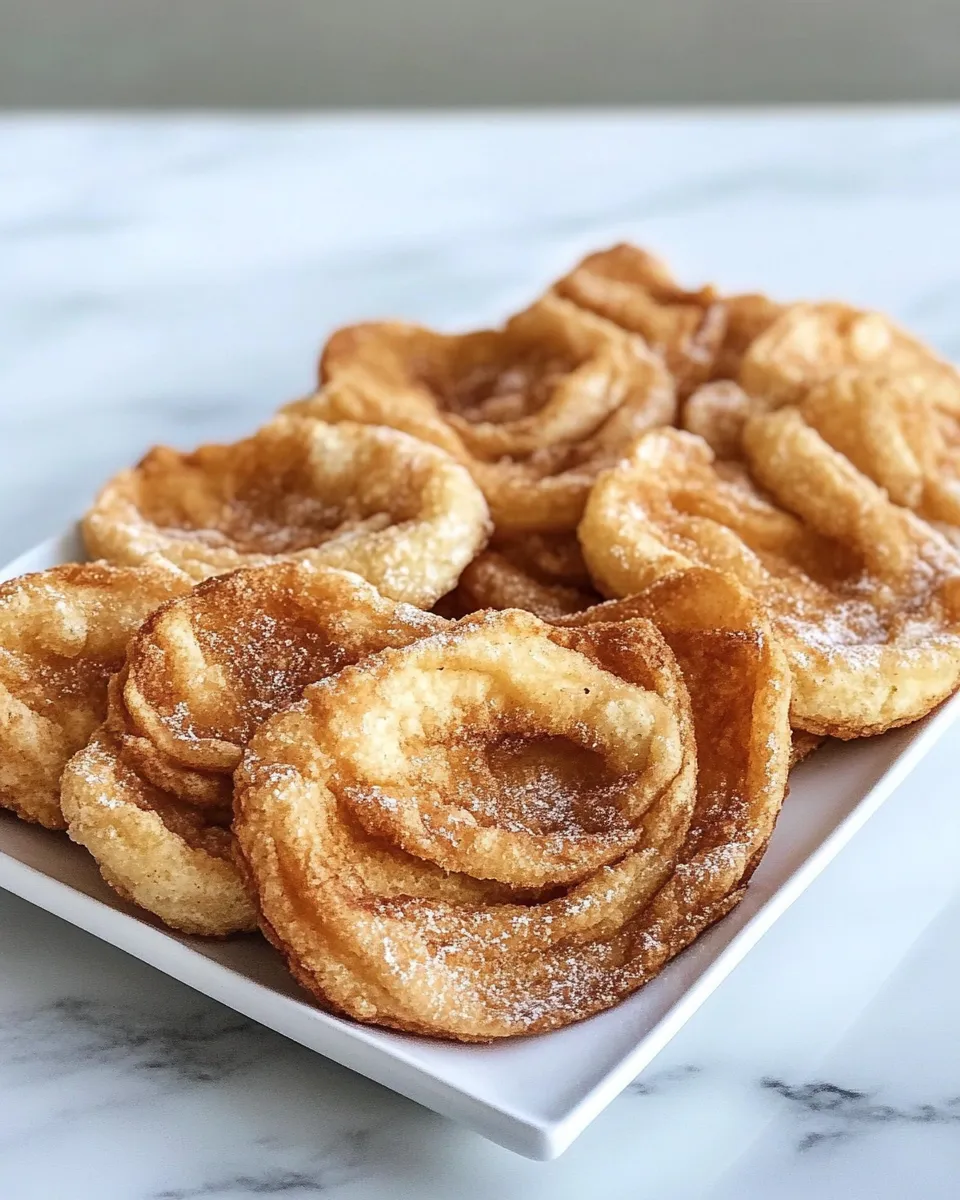
Elephant Ears Recipe
These elephant ears are the kind of simple, honest fair-food treat that hits a sweet spot: light fried dough, a crackly golden surface, and a warm dusting of cinnamon sugar. No yeast, no complicated resting schedules—just pantry staples and a few minutes at the stove. I test recipes until they’re practical and repeatable for home cooks, and this one reliably delivers crispy, tender results every time.
I like serving them right out of the fryer when the sugar sticks best and the centers are still slightly tender. They’re a kid-pleaser, an easy dessert for guests, and a small luxury for weekday baking when you want something quick and comforting. Below you’ll find the exact ingredient list I used and a step-by-step process that follows my testing notes.
Read through the whole post for troubleshooting tips, tool recommendations, storage advice, and a few variations that work depending on the weather or what you have on hand. Let’s make Elephant Ears together—nothing fancy, just good technique.
The Ingredient Lineup

- 2 cups all-purpose flour — the base for structure; measure by spooning into the cup for accuracy.
- 1/4 teaspoon salt — balances sweetness and strengthens the dough’s flavor.
- 1/2 teaspoon baking powder — gives a light lift so the dough puffs slightly while frying.
- 1 cup warm water (or as needed) — hydrates the dough; use only enough to bring it together into a soft, slightly tacky dough.
- Neutral oil, for frying — a high smoke-point oil (like vegetable or canola) keeps flavors clean during deep frying.
- 2 1/2 tablespoons granulated sugar — part of the cinnamon-sugar finish; provides crunch and sweetness.
- 2 1/4 teaspoons ground cinnamon — aromatic coating that defines the flavor.
From Start to Finish: Elephant Ears
- In a medium bowl, combine 2 cups all-purpose flour, 1/4 teaspoon salt, and 1/2 teaspoon baking powder; whisk or stir to evenly distribute.
- Gradually add up to 1 cup warm water (use less if the dough comes together sooner), mixing until a soft, slightly tacky dough forms. Add only as much water as needed.
- Turn the dough onto a lightly floured surface and knead briefly (about 30 seconds) until smooth and cohesive.
- Cover the dough with a clean towel or plastic wrap and let it rest for 5 minutes.
- After resting, divide the dough into 6 equal pieces. Shape each piece into a ball.
- On a lightly floured surface, roll each ball into a circle about 1/2 inch thick.
- Pour neutral oil into a deep pot to a depth of about 3 inches and heat to 390°F (use a deep-fry thermometer). Maintain this temperature while frying.
- Fry the dough circles in batches, placing them gently into the hot oil. Fry about 1 minute per side, or until each side is golden brown. Do not overcrowd the pot.
- Use a slotted spoon or tongs to remove fried pieces and place them on a paper towel–lined plate to drain excess oil.
- In a small bowl, mix 2 1/2 tablespoons granulated sugar with 2 1/4 teaspoons ground cinnamon.
- While each elephant ear is still warm, lightly sprinkle or dust the cinnamon-sugar mixture evenly over both sides so the coating adheres.
- Serve the elephant ears warm and enjoy immediately.
Why This Recipe is a Keeper
This version strips the process down to essentials: flour, a touch of chemical leavener, warm water, and a hot pan of oil. That simplicity means two things: it’s fast, and it doesn’t require specialized ingredients. The dough comes together in minutes and needs only a short rest, which makes it ideal for last-minute treats.
The balance of frying temperature and dough thickness is what makes these successful. Rolling to about 1/2 inch keeps the center slightly tender while the exterior crisps and browns in under two minutes. The cinnamon-sugar finish is classic and economical—no glaze required. If you want more contrast, add a pinch more sugar to the coating for extra crunch.
Swap Guide

Common swaps that still work
If you need to adapt, small swaps are fine but keep the method the same:
- Flour — you can try a mix of half all-purpose and half whole wheat for a nuttier flavor, but dough will be denser; add water slowly.
- Oil — any neutral, high-smoke-point oil is appropriate for frying. Avoid strong-flavored oils that will interfere with the cinnamon-sugar taste.
- Sugar & Cinnamon — adjust the sugar level in the coating to taste; the ratio given is balanced for most palates.
Essential Tools for Success
These are the items that make the process safer and more predictable.
- Deep pot — a heavy-bottomed pot to hold 3 inches of oil stably.
- Deep-fry thermometer — critical for maintaining 390°F so the elephant ears cook quickly without absorbing excess oil.
- Rolling pin — helps you get consistent 1/2-inch thickness.
- Slotted spoon or tongs — for safe removal and draining.
- Paper towels — for draining excess oil before sugar coating.
Pitfalls & How to Prevent Them
Frying is fast; mistakes are visible immediately. Here’s how to avoid common problems.
Dough too sticky or too dry
Add water a tablespoon at a time until it forms a soft, slightly tacky dough. If it’s overly sticky, dust the surface sparingly with flour while shaping—the dough should remain soft.
Oil temperature issues
Too hot and the outside burns before the inside cooks; too cool and the dough soaks up oil. Use a thermometer and aim for 390°F, allowing the oil to return to temperature between batches. If the oil smokes, discard and start again with fresh oil.
Uneven frying
Don’t overcrowd the pot. Fry in small batches so the oil temperature stays steady and each piece has room to float and brown evenly.
Warm & Cool Weather Spins
These elephant ears shine hot, but you can adapt them to seasonal preferences.
In warm weather, serve smaller pieces right after frying with a dusting of cinnamon sugar and a squeeze of citrus (like a light brush of lemon) to brighten the flavor. For cool weather, serve with a warm dipping sauce—think a simple honey or chocolate sauce warmed gently.
Regardless of season, keep the core method the same: crisp exterior, warm interior, and the classic sugar-cinnamon finish.
What I Learned Testing
I tested batches with slight variations in thickness, oil temperature, and coating method. Here’s what consistently mattered:
- Thickness: 1/2 inch gives the best balance of crisp edge and slightly tender middle. Thinner leads to a cracker-like chew; thicker requires longer frying and more oil absorption.
- Temperature: Starting at 390°F and keeping it there avoids greasy, undercooked centers. Let the oil recover between batches for consistent results.
- Coating timing: Apply the cinnamon-sugar while the pieces are still warm and slightly oily so the coating adheres without sliding off. Too soon and loose crumbs stick; too late and it won’t adhere well.
Storage & Reheat Guide
Elephant ears are best eaten immediately. If you have leftovers, cool them fully on a rack and store in a single layer in an airtight container at room temperature for up to 24 hours. They will lose some crispness.
To reheat and revive crispness, warm a skillet over medium-low heat and warm each piece for a minute per side, or bake at 350°F on a wire rack for 5–8 minutes. Avoid microwaving if you want texture—microwaves make them soggy.
Ask & Learn
Here are answers to questions readers often ask:
- Can I make the dough ahead? You can prepare the dough and refrigerate it wrapped for up to a day. Let it come to room temperature before dividing and rolling so it’s pliable.
- Can I bake instead of fry? Baking will give a different result—less immediate crispness and a different texture. If you must, brush with oil and bake at a high temperature on a preheated baking sheet, but expect a drier final product.
- How do I know when they’re done? Each side should be golden brown in about a minute. Timing can vary slightly with thickness and oil temperature; visual cues matter most.
Final Bite
Elephant ears are comfort food in the simplest form—few ingredients, quick turnaround, and that perfect finish of cinnamon sugar. Follow the method above, keep an eye on oil temperature, and you’ll have a plate of warm, crispy treats in under 30 minutes. Serve them straight away, and enjoy the small ritual of frying and coating; it’s fast, satisfying, and reliably delicious.

Elephant Ears Recipe
Ingredients
Ingredients
- 2 cupsall-purpose flour
- 1/4 teaspoonsalt
- 1/2 teaspoonbaking powder
- 1 cupwarm water (or as needed)
- Neutral oil for frying
- 2 1/2 tablespoonsgranulated sugar
- 2 1/4 teaspoonsground cinnamon
Instructions
Instructions
- In a medium bowl, combine 2 cups all-purpose flour, 1/4 teaspoon salt, and 1/2 teaspoon baking powder; whisk or stir to evenly distribute.
- Gradually add up to 1 cup warm water (use less if the dough comes together sooner), mixing until a soft, slightly tacky dough forms. Add only as much water as needed.
- Turn the dough onto a lightly floured surface and knead briefly (about 30 seconds) until smooth and cohesive.
- Cover the dough with a clean towel or plastic wrap and let it rest for 5 minutes.
- After resting, divide the dough into 6 equal pieces. Shape each piece into a ball.
- On a lightly floured surface, roll each ball into a circle about 1/2 inch thick.
- Pour neutral oil into a deep pot to a depth of about 3 inches and heat to 390°F (use a deep-fry thermometer). Maintain this temperature while frying.
- Fry the dough circles in batches, placing them gently into the hot oil. Fry about 1 minute per side, or until each side is golden brown. Do not overcrowd the pot.
- Use a slotted spoon or tongs to remove fried pieces and place them on a paper towel–lined plate to drain excess oil.
- In a small bowl, mix 2 1/2 tablespoons granulated sugar with 2 1/4 teaspoons ground cinnamon.
- While each elephant ear is still warm, lightly sprinkle or dust the cinnamon-sugar mixture evenly over both sides so the coating adheres.
- Serve the elephant ears warm and enjoy immediately.
Equipment
- Medium Bowl
- Small Bowl
- deep pot
- Deep-fry thermometer
- Slotted Spoon
- Tongs
- Paper Towels