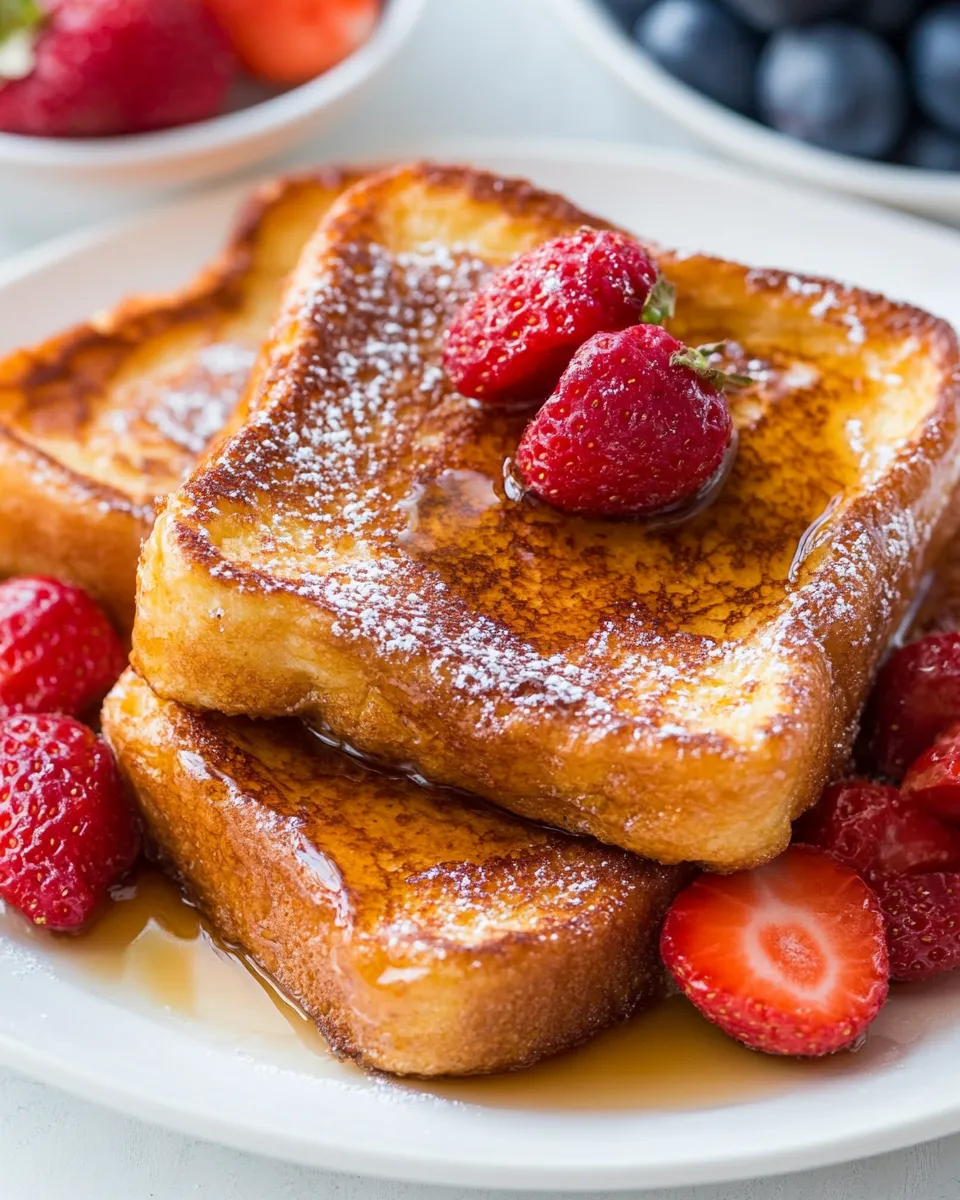
Easy French Toast Recipe
I love this French toast because it’s forgiving, fast, and reliably comforting. It turns simple ingredients into golden slices that are crisp on the outside and custardy inside. You don’t need fancy technique—just a little patience and the right pan temperature.
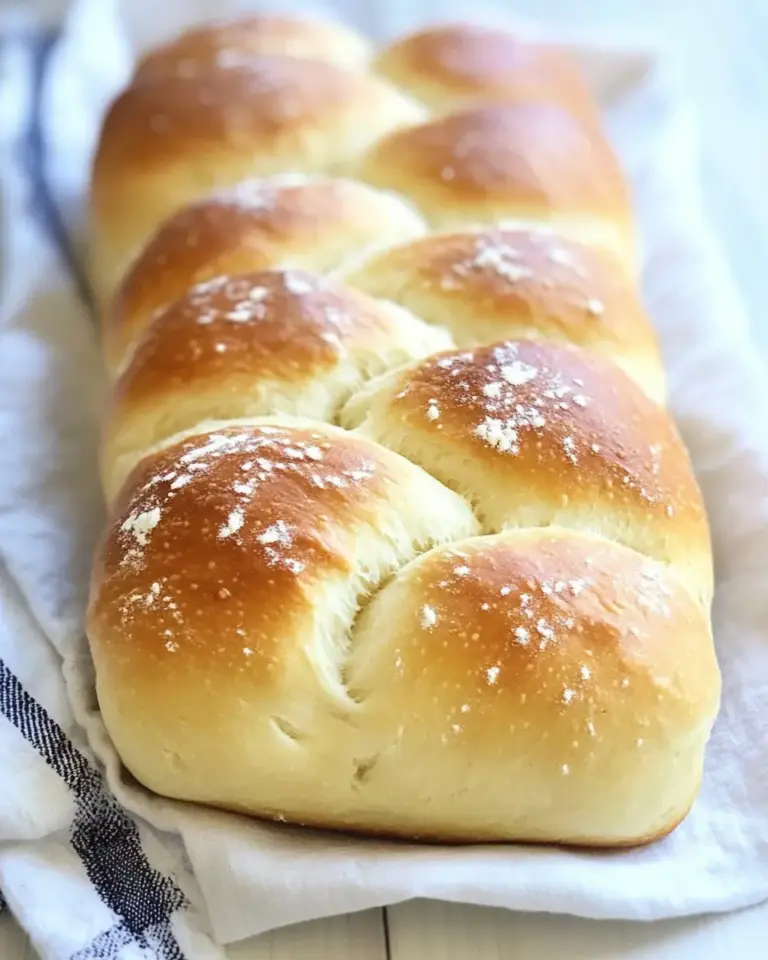
This recipe works with Challah, brioche, or even thick Texas toast. The directions include a drying step, a rich custard, and a brief oven hold so every slice stays warm and perfectly set. Read through the steps once, then follow them in order for consistent results.
I’ll cover what you need, the exact step-by-step, swaps for common dietary needs, common mistakes and how to avoid them, and tips to keep leftovers excellent. Let’s make breakfast feel like a small celebration without fuss.
What You’ll Need

- 6 large eggs — the backbone of the custard; sets the mixture and adds richness.
- 2 large egg yolks — add extra silkiness and creaminess to the center.
- 1 cup whole milk — thins the custard to a pourable consistency and keeps it tender.
- 1/4 tsp salt — balances sweetness and enhances flavor.
- 2 tsp vanilla extract — provides warm aromatic flavor.
- 1 tsp ground cinnamon — brings a classic warm spice note.
- 1 Tbsp warm honey — sweetens and helps the custard caramelize; warm so it dissolves evenly.
- 1 lb bread such as Challah, Brioche, or Texas Toast,(about 8-10, 3/4”-thick slices) — the vehicle for the custard; slightly stale or day-old is ideal for soaking without falling apart.
- 3 Tbsp unsalted butter,to saute toasts — used to get a golden, flavorful crust without burning.
French Toast: Step-by-Step Guide
- If your bread is not already sliced, cut it into about 3/4″ thick slices (about 8–10 slices per 1 lb). Arrange slices on a wire rack to dry for 1–2 hours if time permits. Preheat the oven to 275°F.
- Warm the 1 Tbsp honey until pourable. In a medium bowl, whisk together 6 large eggs, 2 large egg yolks, 1 cup whole milk, 1/4 tsp salt, 2 tsp vanilla extract, 1 tsp ground cinnamon, and the warmed 1 Tbsp honey until well blended and the honey is dissolved.
- Pour the egg mixture into a shallow casserole dish or baking dish large enough to fit up to 4 slices at a time (or as many as will fit in your skillet).
- Place a skillet over medium-low heat. Add 2 Tbsp unsalted butter and melt, coating the pan.
- Dip 4 bread slices at a time into the egg mixture, soaking each slice about 30–40 seconds per side (adjust time for thickness). Lift each slice and let excess custard drip back into the dish.
- Place the soaked slices into the hot skillet without overcrowding and cook 3–4 minutes per side, until golden brown.
- Transfer the cooked slices to a baking sheet and place the sheet in the oven at 275°F to keep warm.
- Add the remaining 1 Tbsp unsalted butter to the skillet as needed, melt, and repeat steps 5–7 with the remaining bread slices.
- After all slices are sautéed and on the baking sheet, keep them in the oven for another 10–15 minutes to ensure the custard center is fully set.
- Remove from the oven and serve warm.
Why This Recipe Belongs in Your Rotation
This version balances ease and texture. The warm honey dissolves smoothly into the custard, giving a subtle sweetness that caramelizes nicely against the buttered skillet. Using both whole eggs and extra yolks makes the center custardy without being runny.
The drying step and the oven hold are small investments that pay off. Slightly drying the bread helps it absorb the custard without disintegrating; the oven keeps everything warm and finishes setting the interior so you don’t end up with undercooked centers.
You’ll find this recipe scales well for a family or a brunch crowd and adapts to what’s in your pantry. The flavors are classic—vanilla and cinnamon—so toppings can be as simple or as indulgent as you like.
Allergy-Friendly Substitutes
Below are practical swaps if you or guests have common allergies. Each swap keeps technique the same while changing ingredient behavior slightly—watch soak times and texture.
- Egg allergy — Use a commercial egg replacer designed for custards; expect a slightly different texture and reduce soaking time to avoid mushy slices.
- Dairy allergy (milk or butter) — Replace whole milk with unsweetened plant milk that has some fat (oat or full-fat canned coconut thinned slightly). Use a neutral plant-based butter or a high-heat oil like refined coconut oil to sauté; flavor will change slightly.
- Honey (or vegan) — Swap the warm honey for a maple syrup or agave option in the same amount; if using a liquid swap, reduce any additional liquid elsewhere only if the custard seems too thin.
- Gluten-free — Use a sturdy gluten-free loaf sliced to similar thickness; some gluten-free breads are more fragile—drying longer helps them hold up.
Tools & Equipment Needed
Simple gear makes this faster and more reliable:
- Skillet (10–12″) — cast iron or heavy-bottomed stainless will give the best, even browning.
- Wire rack — for drying slices and letting excess custard drip off.
- Baking sheet — to hold cooked slices in the oven.
- Shallow casserole or baking dish — wide enough to fit slices flat for even soaking.
- Whisk and medium mixing bowl — to blend eggs, milk, and spices thoroughly.
Mistakes Even Pros Make
There are a few small missteps that ruin an otherwise great batch. Watch out for these:
- Overcrowding the skillet — crowding drops the pan temperature and results in pale, soggy toast. Cook in batches.
- Too-hot pan — if butter browns and the toast burns before the center cooks, lower to medium-low and allow a little more time per side.
- Skipping the oven hold — serving directly from the skillet can mean under-set centers for thicker slices. The 275°F oven keeps slices warm and finishes cooking gently.
- Soaking too long or too short — thick, dense brioche may need longer than 30–40 seconds per side; thin sliced bread will fall apart if soaked too long. Adjust based on bread type.
Dietary Swaps & Alternatives
Want to tweak for low-carb, vegan, or sweeter profiles? Here are options and what to expect:
- Lower sugar — omit the honey; add a sprinkle of cinnamon and a dash of vanilla for flavor without added sweetener.
- Vegan — use a silken tofu and plant milk blend (smooth with a blender) or a commercial egg replacer plus plant milk. Cook gently and expect different browning characteristics.
- Higher protein — serve with a side of Greek yogurt (if not avoiding dairy) or a scoop of ricotta; this keeps the French toast the same but increases protein in the meal.
- Extra caramelization — finish slices briefly under a broiler for 30–60 seconds (watch closely) or sprinkle a light dusting of sugar before browning to encourage caramelization.
If You’re Curious
Small variations can change texture and flavor in interesting ways:
- Swap the cinnamon for cardamom or a pinch of nutmeg to shift the aroma profile.
- If you like very creamy centers, try adding a tablespoon of heavy cream to the custard, keeping an eye on soak time so slices don’t get soggy.
- Using day-old or slightly stale bread is ideal. Fresh bread works, but it absorbs more and can become too soft—consider drying it longer on the rack.
Freezer-Friendly Notes
You can freeze cooked French toast for quick breakfasts. Cool slices completely on a rack, then arrange in a single layer on a baking sheet and freeze until firm. Transfer frozen slices to a freezer-safe bag with parchment between layers to prevent sticking.
To reheat: bake frozen slices at 350°F on a wire rack set over a sheet pan for 10–12 minutes, flipping once, until heated through and crisped. Microwaving will heat quickly but can make them soggy; the oven or a toaster oven yields best texture.
Popular Questions
Q: Can I make the custard ahead?
A: Yes. Mix the custard (eggs, yolks, milk, salt, vanilla, cinnamon, warmed honey) and keep it covered in the fridge for up to 24 hours. Whisk briefly before using. Chilled custard soaks slightly slower, so allow an extra few seconds per side when dipping.
Q: How do I prevent the toast from being greasy?
A: Use the butter in measured amounts and let the pan come back up to temperature between batches. Wipe the pan with a paper towel if it accumulates browned bits, then add the next portion of butter.
Q: My centers were still slightly runny—what now?
A: After cooking all slices, keep them in the 275°F oven for 10–15 minutes as directed; this finishes the cooking gently. If one slice is runny, pop it back in the skillet and cook low and slow for a minute per side, or place it in the oven a bit longer.
Q: Can I add fruit into the custard?
A: Avoid adding fruit to the custard itself—it releases moisture and affects soak. Instead, top the finished French toast with warm fruit compote or fresh berries.
Final Bite
This French toast recipe is straightforward but thoughtful: a custard that’s rich without being heavy, a brief hold in the oven that keeps everything perfect, and clear steps so you get the same great result every time. Use good bread, respect the soak time, and don’t rush the pan temperature.
Serve with butter and a drizzle of maple or a dusting of powdered sugar, or go savory with a side of bacon and fresh fruit. Either way, this method reliably delivers breakfast you’ll be happy to wake up for.

Easy French Toast Recipe
Ingredients
Ingredients
- 6 large eggs
- 2 large egg yolks
- 1 cupwhole milk
- 1/4 tspsalt
- 2 tspvanilla extract
- 1 tspground cinnamon
- 1 Tbspwarm honey
- 1 lbbread such as Challah Brioche, or Texas Toast, (about 8-10, 3/4”-thick slices)
- 3 Tbspunsalted butter to saute toasts
Instructions
Instructions
- If your bread is not already sliced, cut it into about 3/4" thick slices (about 8–10 slices per 1 lb). Arrange slices on a wire rack to dry for 1–2 hours if time permits. Preheat the oven to 275°F.
- Warm the 1 Tbsp honey until pourable. In a medium bowl, whisk together 6 large eggs, 2 large egg yolks, 1 cup whole milk, 1/4 tsp salt, 2 tsp vanilla extract, 1 tsp ground cinnamon, and the warmed 1 Tbsp honey until well blended and the honey is dissolved.
- Pour the egg mixture into a shallow casserole dish or baking dish large enough to fit up to 4 slices at a time (or as many as will fit in your skillet).
- Place a skillet over medium-low heat. Add 2 Tbsp unsalted butter and melt, coating the pan.
- Dip 4 bread slices at a time into the egg mixture, soaking each slice about 30–40 seconds per side (adjust time for thickness). Lift each slice and let excess custard drip back into the dish.
- Place the soaked slices into the hot skillet without overcrowding and cook 3–4 minutes per side, until golden brown.
- Transfer the cooked slices to a baking sheet and place the sheet in the oven at 275°F to keep warm.
- Add the remaining 1 Tbsp unsalted butter to the skillet as needed, melt, and repeat steps 5–7 with the remaining bread slices.
- After all slices are sautéed and on the baking sheet, keep them in the oven for another 10–15 minutes to ensure the custard center is fully set.
- Remove from the oven and serve warm.
Equipment
- Wire Rack
- Oven
- shallow casserole dish or baking dish
- Skillet
- Baking Sheet
- Whisk