Easy Focaccia Recipe
I make focaccia on slow afternoons because it asks for patience more than attention. The dough rests in the fridge overnight, so you do most of the work ahead and get a tender, olive-oil–kissed bread the next day. It’s forgiving, fast to pull together once you understand the flow, and it rewards simple ingredients with big flavor.
This post gives a clean, practical walkthrough: what to buy, the exact steps, what can go sideways, and how to keep leftovers tasting fresh. I’ll flag the optional herbed oil and show the plain-butter finish too, so you can choose the flavor that fits your meal.
No uncommon tools, no fancy flours, no last-minute runs required if you keep a few staples on hand. Read through, prep at your pace, and you’ll have warm, dimpled focaccia ready for sandwiches or to tear apart with friends.
What to Buy

Ingredients
- 6 tablespoons olive oil, divided — coats the dough and crisps the crust; some is reserved for finishing.
- 2-1/2 cups water, warm (110°F) — activates the yeast; aim for comfortably warm, not hot.
- 2-1/4 teaspoons instant yeast or active dry yeast — the leavening; either works with the given proofing step.
- 1 tablespoon honey — feeds the yeast and gives a soft crumb.
- 5 cups all-purpose flour — the bulk of the dough; gives structure and chew.
- 1 tablespoon salt — seasons the dough through and controls fermentation.
- 3 tablespoons unsalted butter, divided — used to grease the pan and (for plain focaccia) brushed on the finished loaf.
- Flaky sea salt — optional for finishing; adds a bright crunch on top.
- 2 teaspoons minced garlic — for herbed oil only; provides aromatic depth.
- 1 tablespoon chopped fresh thyme or 1 teaspoon dried — optional herb for herbed oil.
- 1 tablespoon chopped fresh rosemary or 1 teaspoon dried — optional herb for herbed oil.
- 1/4 teaspoon pepper — seasons the herbed oil; black or white both work.
Focaccia Recipe: From Prep to Plate
- In a medium bowl, whisk together 2-1/2 cups warm water (110°F), 2-1/4 teaspoons yeast, and 1 tablespoon honey. Let sit 5 minutes, until foamy (active dry yeast will foam; instant yeast may foam less but this step is fine for either).
- Optional — make herbed oil (skip for plain focaccia): In a small saucepan combine 4 tablespoons of the olive oil, 2 teaspoons minced garlic, 1 tablespoon chopped fresh thyme (or 1 teaspoon dried), 1 tablespoon chopped fresh rosemary (or 1 teaspoon dried), and 1/4 teaspoon pepper. Warm gently over low heat 5–10 minutes until very fragrant. Remove from heat and let cool completely. Set aside the cooled herbed oil. If making plain focaccia, measure out 4 tablespoons plain olive oil and set aside. Reserve the remaining 2 tablespoons olive oil for later steps.
- In a large bowl, combine 5 cups all-purpose flour and 1 tablespoon salt. Add the yeast mixture and stir until a shaggy dough forms.
- Press the dough to one side of the bowl and pour in the 4 tablespoons of reserved oil (plain or cooled herbed). Using your hands (oiled or wet), pick up the sticky dough and turn it over twice so the surface is coated in oil.
- Cover the bowl tightly with plastic wrap and refrigerate 8–24 hours. (If you want to bake sooner, let the dough rise at room temperature until bubbly and wobbly, about 2–3 hours.)
- Remove 1 tablespoon of the 3 tablespoons unsalted butter from the refrigerator and rub it all over the bottom and sides of your baking pan (9×13-inch or 13×18-inch). Leave the pan at room temperature. Remove the dough from the fridge. Using two forks, gather the dough farthest from you, lift it up and fold it over toward the center, turn the bowl a quarter turn, and repeat until you have folded the dough 4 times total. Gently let the dough slide from the bowl into the prepared pan.
- Let the dough rise, uncovered, in a warm spot for 1.5–3 hours, until it is bubbly and wobbly and when poked it springs back slowly leaving an indentation.
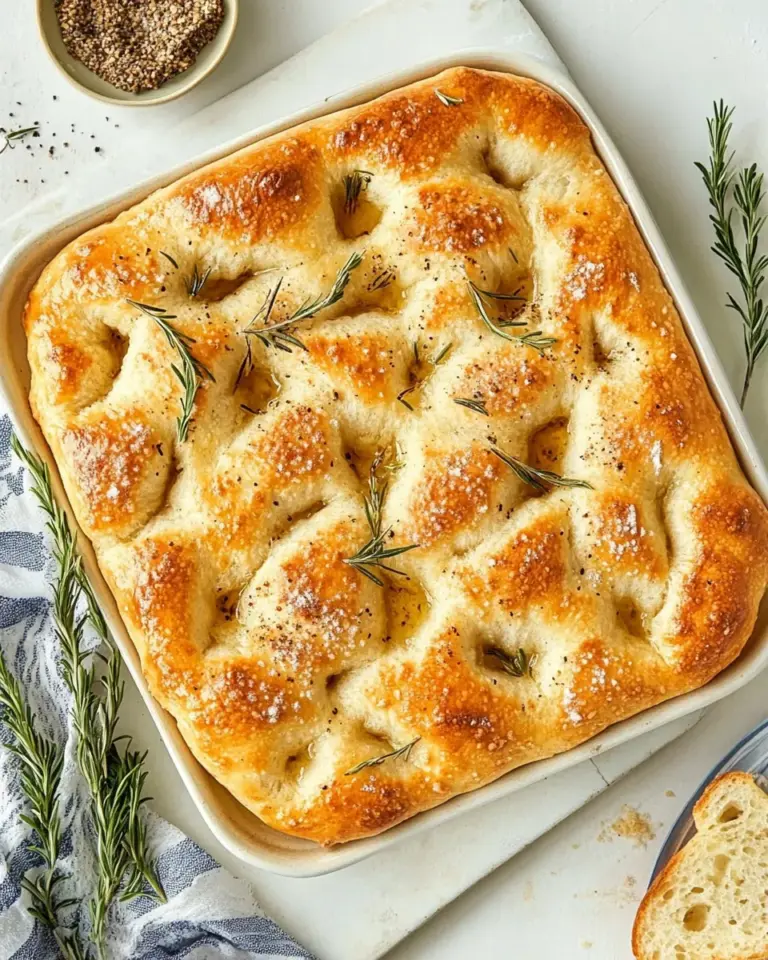
- Preheat the oven to 450°F (230°C). Lightly oil your hands with about 1 teaspoon of the reserved olive oil and press/stretch the dough to fill the pan. Dimple the dough all over with your fingertips. Drizzle 1 tablespoon of the reserved olive oil evenly over the surface.
- Bake until the focaccia is puffed and deeply golden brown: 20–30 minutes for a 13×18-inch pan or 25–35 minutes for a 9×13-inch pan. Remove from the oven and let rest 10–15 minutes.
- Finish and serve:
- For herbed focaccia: brush the top with the remaining 1 tablespoon of the reserved olive oil (use the cooled herbed oil if you made it).
- For plain focaccia: melt the remaining 2 tablespoons unsalted butter and brush it over the warm bread; sprinkle flaky sea salt if desired.
Cut into squares and serve warm (for sandwiches, slice each square in half).
Why It’s Crowd-Pleasing
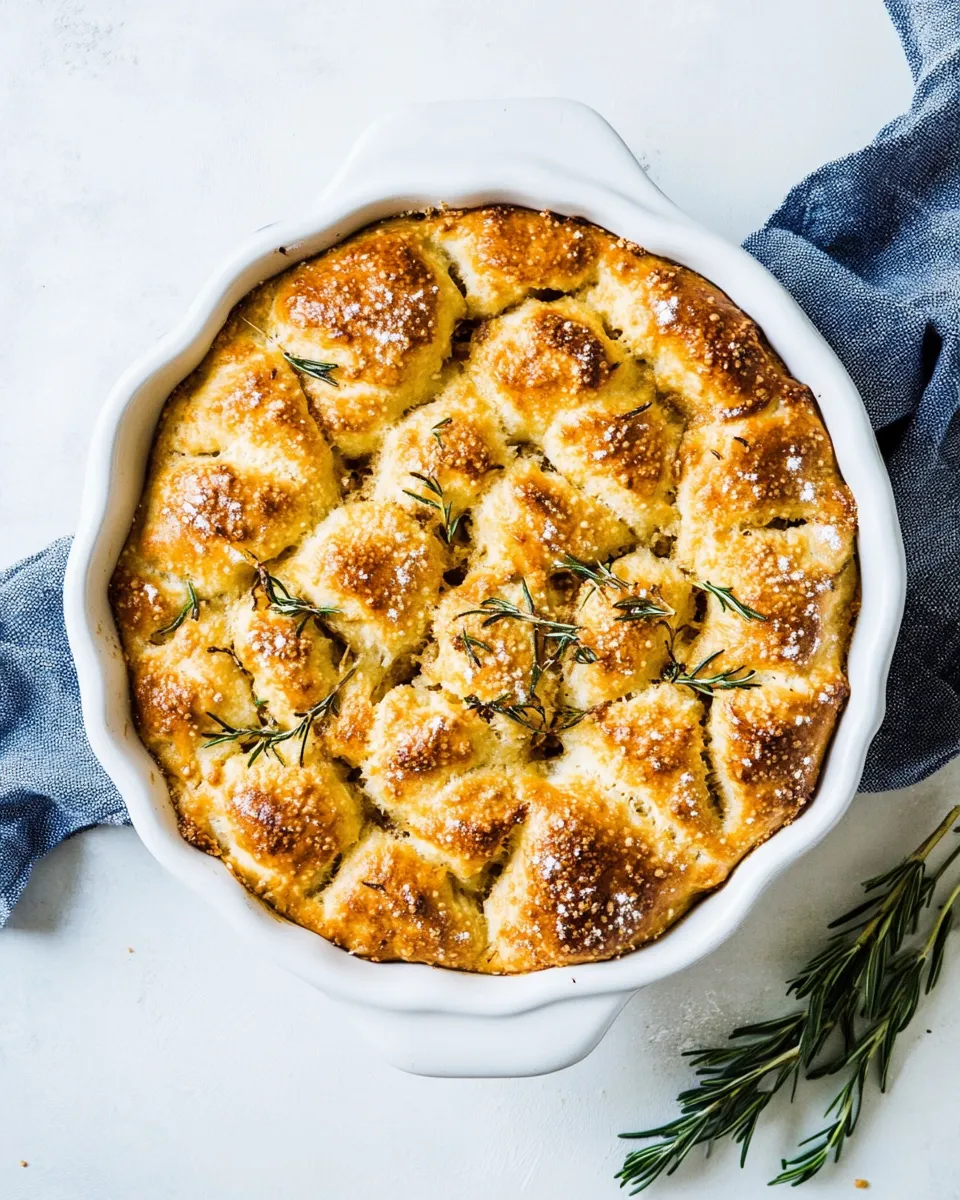
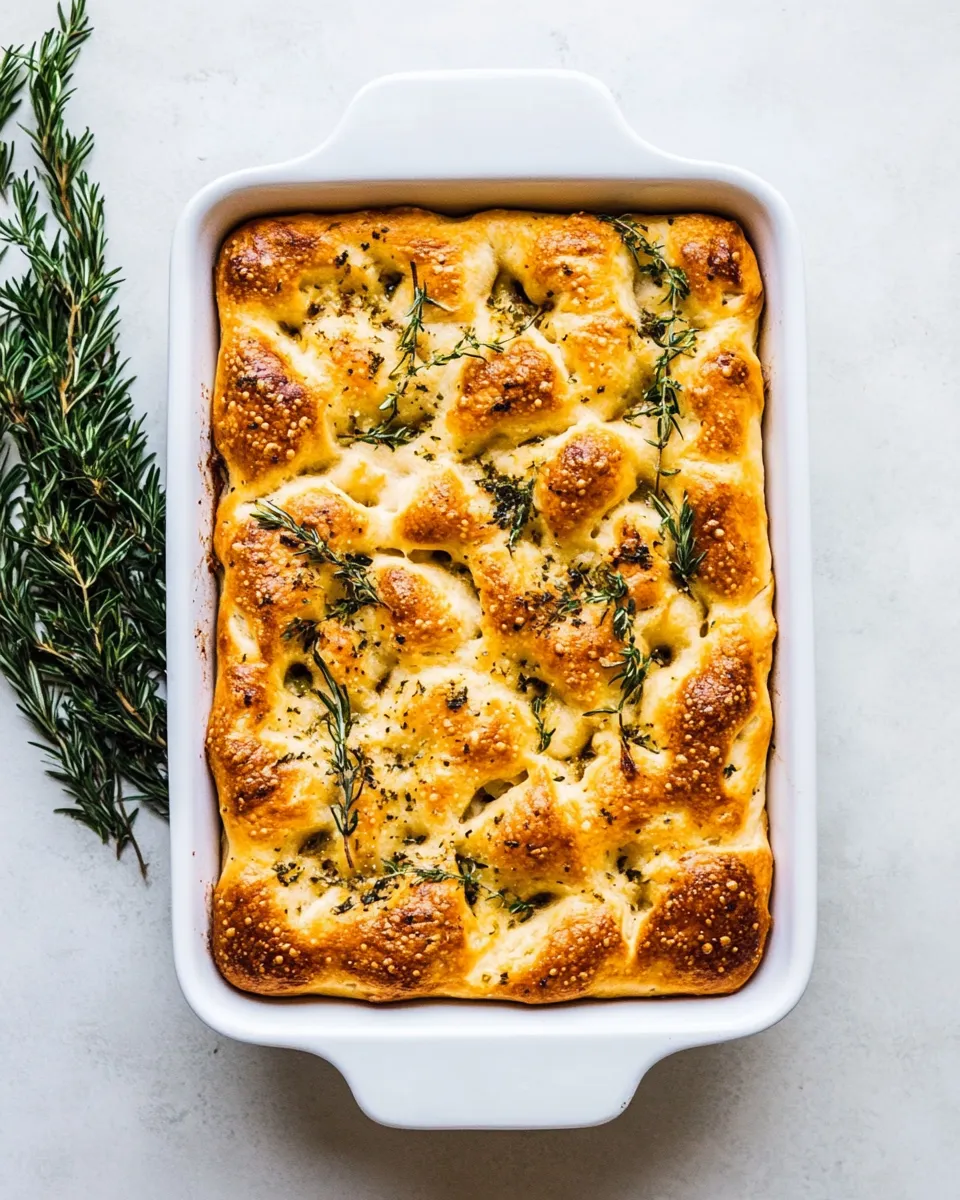
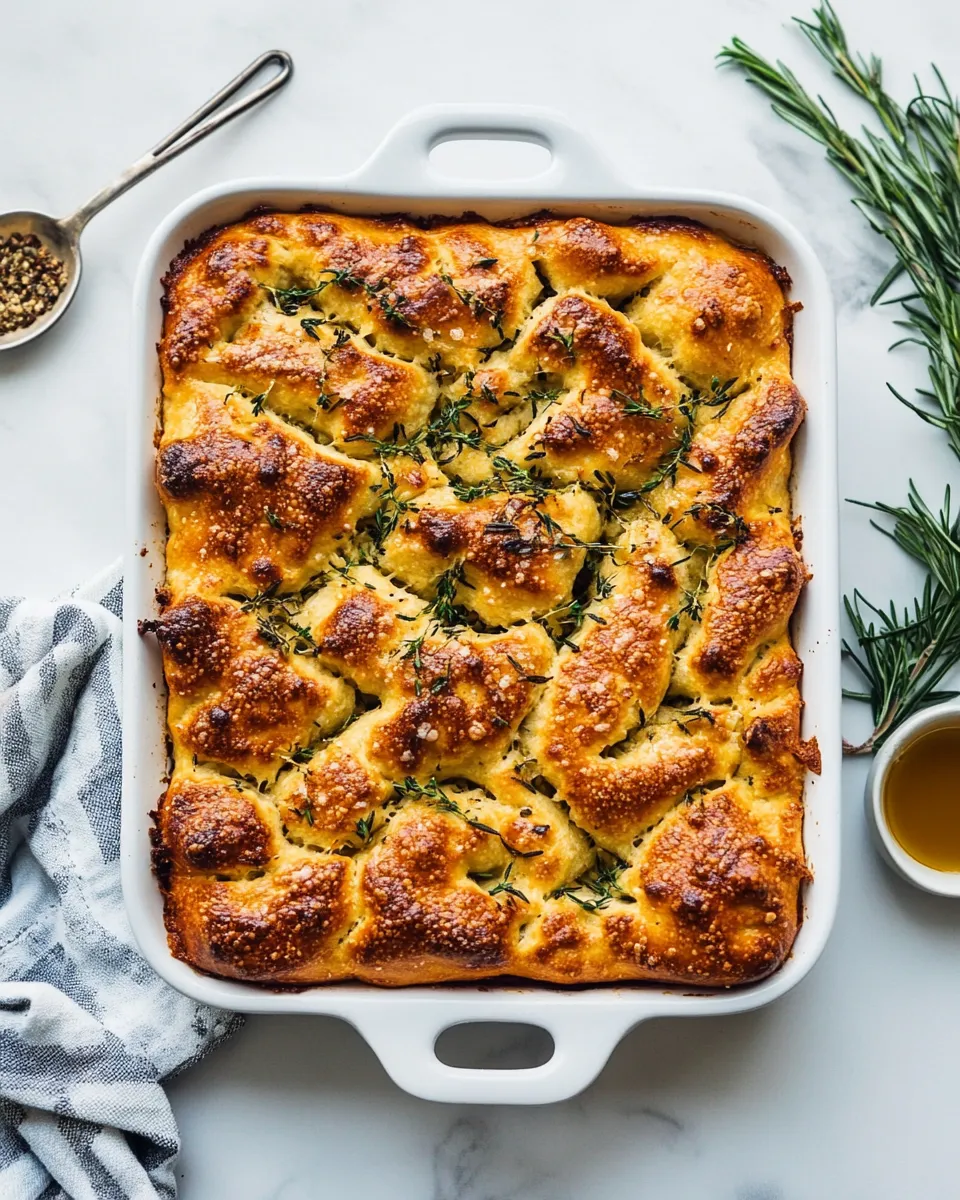
Focaccia hits three reliable notes: an airy interior, a golden, slightly crisp exterior, and a generous olive oil flavor. The dimples hold oil and seasoning so each bite feels indulgent without being heavy. It’s a background hero — excellent alongside soups and salads, or turned into sandwiches when you need something more substantial.
People like its texture. It’s soft and pillowy inside, with a crisp, flavored top. It’s also forgiving: the dough tolerates long, slow fermentation in the fridge, which builds flavor without constant babysitting.
No-Store Runs Needed
This recipe is designed around pantry staples: flour, yeast, water, salt, oil, and a little honey and butter. If you don’t have fresh herbs, the recipe already accepts dried substitutes (the directions list exactly how much to use). Skip the herbed oil entirely and finish with melted butter instead — still delicious.
If you keep olive oil, flour, and yeast in rotation, you can bake this any day. The overnight rest is the perfect excuse to prep the night before and bake the next afternoon, so you won’t need last-minute runs.
Gear Up: What to Grab
- Medium mixing bowl and large mixing bowl
- Plastic wrap to cover the dough
- 9×13-inch or 13×18-inch baking pan
- Small saucepan (for herbed oil)
- Two forks (for folding the dough)
- Measuring cups and spoons
- Oven preheated to 450°F (230°C)
- Pastry brush or spoon for finishing with oil or melted butter
Problems & Prevention
Dough too sticky or too dry: this recipe yields a sticky, shaggy dough on purpose. Use oiled or wet hands for handling. If the dough feels impossibly wet after handling, add a tablespoon of flour at a time while mixing until it becomes workable; but avoid over-flouring — a tacky dough gives the best crumb.
Dough not rising: check your yeast. If the yeast mixture doesn’t show some foam after 5 minutes, your yeast may be old or the water too hot/cold. For instant yeast it may foam less, but you should still see some activity. Also ensure your fridge temperature is in the standard range; a too-cold fridge will slow fermentation but won’t ruin the dough — just give it more time.
Crust burns before inside bakes: use the correct pan size and oven temperature. If you’re using a shallow pan and the top darkens too quickly, tent loosely with foil in the last 5–10 minutes.
Make It Year-Round
Keep the core ingredients stocked and you can bake this any season. Use fresh thyme and rosemary in spring and summer if you have them, and switch to the dried measurements in winter. The herbed oil is optional but keeps the bread feeling seasonal: rosemary-heavy in fall, thyme-forward in spring.
For holiday meals, slice into squares and offer as part of a bread board with olive oil for dipping. For summer sandwiches, cool and slice in half horizontally to make lighter, herb-brushed sandwiches.
What Could Go Wrong
- Underproofed dough — dense crumb: give the bulk rise time (1.5–3 hours after shaping) until the dough is wobbly and springs back slowly.
- Over-oiled crust — soggy bottom: be generous but measured; use the amounts given for oil in the recipe and be sure the pan is well greased but not swimming in oil.
- Flat focaccia — weak rise: make sure your yeast is active and that you folded the dough before transferring to the pan; the folding step helps structure the dough.
- Heavy, dry bread — too much flour: avoid adding extra flour unless absolutely needed during handling.
Storage & Reheat Guide
Room temperature: store focaccia wrapped loosely in foil or in an airtight container for up to 2 days. Warm it briefly in a 350°F oven for 5–10 minutes to revive the crust.
Refrigerator: you can refrigerate leftover slices up to 4 days, but expect a slight change in texture. Reheat in the oven to bring life back — 350°F for 8–10 minutes works well.
Freezer: cool completely, then wrap slices tightly in plastic or foil and freeze. Reheat from frozen in a 350°F oven for 12–18 minutes, or thaw in the fridge and warm as above.
Helpful Q&A
Q: Can I bake the dough the same day?
A: Yes. If you prefer a same-day bake, skip the fridge rest and let the dough rise at room temperature until bubbly and wobbly, about 2–3 hours as the recipe notes. The flavor will be good; the overnight fermentation just builds extra depth.
Q: Do I have to make the herbed oil?
A: No. The recipe includes an easy plain option. Use 4 tablespoons plain olive oil in step 2, then finish the baked focaccia with melted butter if you want a classic finish.
Q: Can I use bread flour?
A: The recipe is written for all-purpose flour (5 cups). Bread flour will make a chewier crumb. If you substitute, keep the rest of the recipe the same but expect a slightly different texture.
Q: How do I know when the focaccia is done?
A: It should be puffed and deeply golden brown. A bit of resistance when you press the top is normal; let it rest 10–15 minutes before finishing with the last oil or butter.
Bring It Home
Focaccia is one of those recipes that rewards patience and little practice. Follow the steps as written, choose the herbed oil if you want a fragrant top or keep it plain and buttery for a classic finish. Make it the night before, bake the next day, tear it warm, and you’ll find it’s one of the most satisfying breads to share.
If you try it, leave a note about how you finished yours — herb oil or butter — and whether you served it plain or in sandwiches. I love hearing which version becomes your go-to.
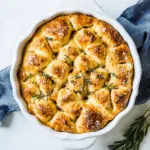
Easy Focaccia Recipe
Ingredients
Ingredients
- 6 tablespoonsolive oildivided
- 2-1/2 cupswaterwarm 110℉
- 2-1/4 teaspoonsinstant yeastoractive dry yeast
- 1 tablespoonhoney
- 5 cupsall-purpose flour
- 1 tablespoonsalt
- 3 tablespoonsunsalted butterdivided
- Flaky sea saltfor topping bread optional
- 2 teaspoonsminced garlic
- 1 tablespoonchopped fresh thymeor 1 teaspoon dried
- 1 tablespoonchopped fresh rosemaryor 1 teaspoon dried
- 1/4 teaspoonpepper
Instructions
Instructions
- In a medium bowl, whisk together 2-1/2 cups warm water (110°F), 2-1/4 teaspoons yeast, and 1 tablespoon honey. Let sit 5 minutes, until foamy (active dry yeast will foam; instant yeast may foam less but this step is fine for either).
- Optional — make herbed oil (skip for plain focaccia): In a small saucepan combine 4 tablespoons of the olive oil, 2 teaspoons minced garlic, 1 tablespoon chopped fresh thyme (or 1 teaspoon dried), 1 tablespoon chopped fresh rosemary (or 1 teaspoon dried), and 1/4 teaspoon pepper. Warm gently over low heat 5–10 minutes until very fragrant. Remove from heat and let cool completely. Set aside the cooled herbed oil. If making plain focaccia, measure out 4 tablespoons plain olive oil and set aside. Reserve the remaining 2 tablespoons olive oil for later steps.
- In a large bowl, combine 5 cups all-purpose flour and 1 tablespoon salt. Add the yeast mixture and stir until a shaggy dough forms.
- Press the dough to one side of the bowl and pour in the 4 tablespoons of reserved oil (plain or cooled herbed). Using your hands (oiled or wet), pick up the sticky dough and turn it over twice so the surface is coated in oil.
- Cover the bowl tightly with plastic wrap and refrigerate 8–24 hours. (If you want to bake sooner, let the dough rise at room temperature until bubbly and wobbly, about 2–3 hours.)
- Remove 1 tablespoon of the 3 tablespoons unsalted butter from the refrigerator and rub it all over the bottom and sides of your baking pan (9×13-inch or 13×18-inch). Leave the pan at room temperature. Remove the dough from the fridge. Using two forks, gather the dough farthest from you, lift it up and fold it over toward the center, turn the bowl a quarter turn, and repeat until you have folded the dough 4 times total. Gently let the dough slide from the bowl into the prepared pan.
- Let the dough rise, uncovered, in a warm spot for 1.5–3 hours, until it is bubbly and wobbly and when poked it springs back slowly leaving an indentation.
- Preheat the oven to 450°F (230°C). Lightly oil your hands with about 1 teaspoon of the reserved olive oil and press/stretch the dough to fill the pan. Dimple the dough all over with your fingertips. Drizzle 1 tablespoon of the reserved olive oil evenly over the surface.
- Bake until the focaccia is puffed and deeply golden brown: 20–30 minutes for a 13×18-inch pan or 25–35 minutes for a 9×13-inch pan. Remove from the oven and let rest 10–15 minutes.
- Finish and serve: - For herbed focaccia: brush the top with the remaining 1 tablespoon of the reserved olive oil (use the cooled herbed oil if you made it). - For plain focaccia: melt the remaining 2 tablespoons unsalted butter and brush it over the warm bread; sprinkle flaky sea salt if desired. Cut into squares and serve warm (for sandwiches, slice each square in half).
Equipment
- 9 x 13-inch baking panor 13×18-inch pan, see note 1
Notes
Note 1:
Use a 9×13-inch pan for thick focaccia (perfect for sandwiches!) or use a
13×18-inch pan (half sheet pan) for thinner focaccia (great for snacking/bread basket).
Note 2:
Measuring flour can greatly vary, which can lead to changes in texture. If you have a food scale, I highly recommend using it. No food scale? Make sure to spoon flour into the cup measurer and completely fill it up, then level the top off with the back of a butter knife.
Note 3:
Baking without chilling overnight: Let bread rise at room temperature (70
°
F) until doubled in size, about 90 mins to 2 hours. Spread in pan and let rise again until doubled in size, then bake.
Storage
: Focaccia is best eaten the day it’s made. To store, freeze sliced pieces wrapped in plastic wrap and place in a freezer-safe bag for up to 3 months. Reheat unwrapped on a sheet pan in a 300°F (150°C) oven.