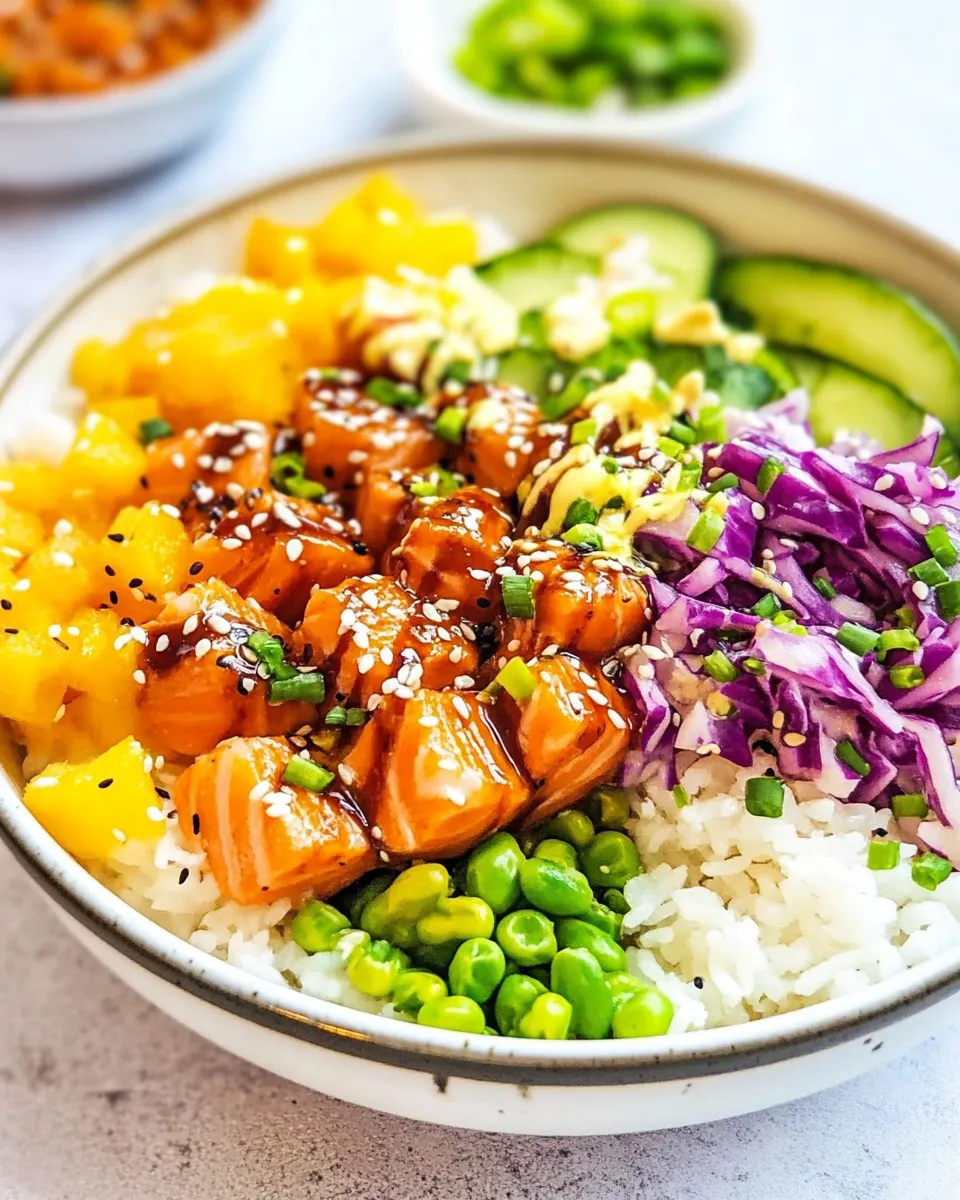
Cooked Salmon Poke Recipe
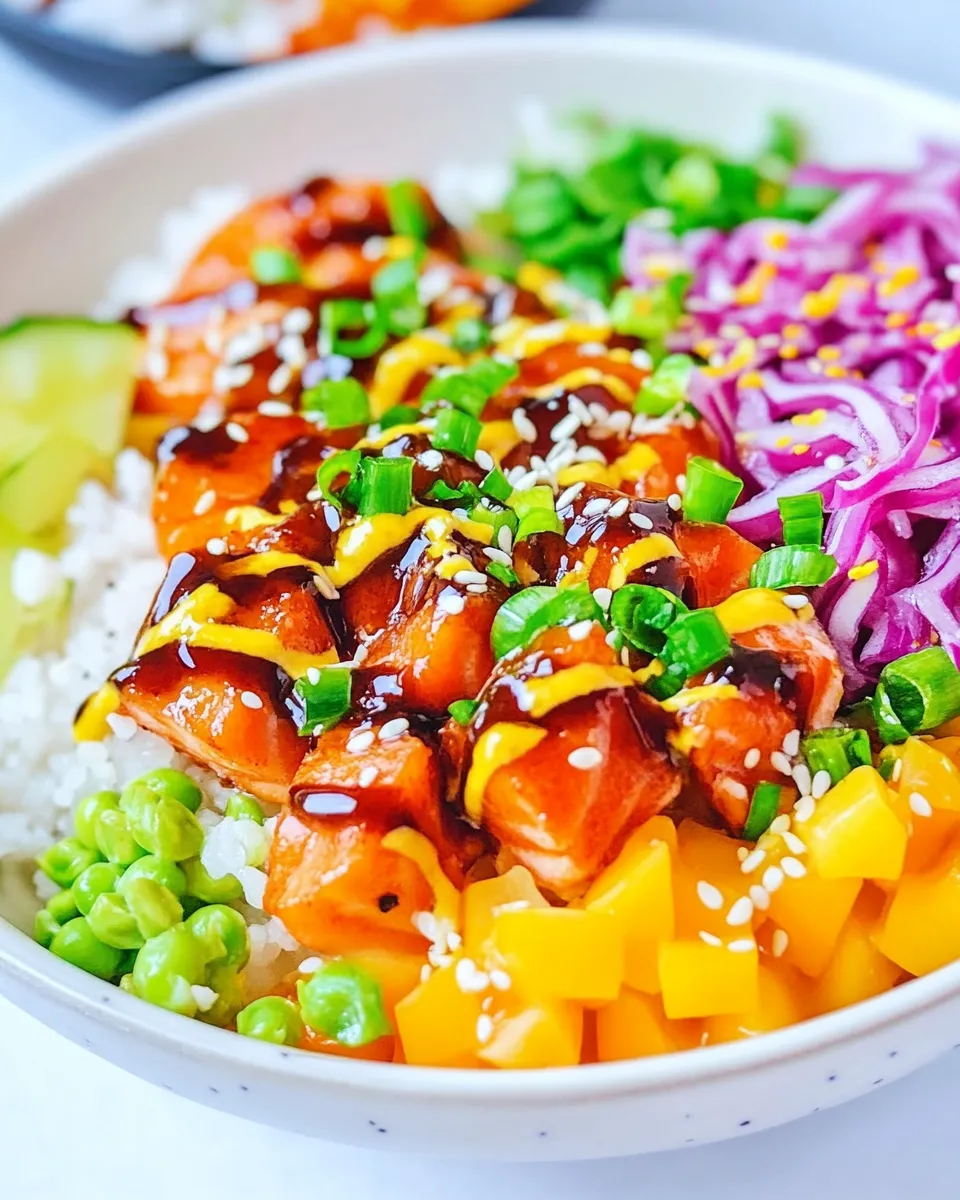
If you love vibrant bowls packed with contrasting textures, bright flavors, and colorful produce, this Cooked Salmon Poke Recipe is a weeknight winner. Think tender, lightly seared salmon cubes glazed in a sweet-savory sauce, layered over fluffy rice and brimming with crunchy vegetables, tropical fruit, and creamy avocado. The dressing is simple, the assembly is forgiving, and the components can be prepped ahead to make dinner feel like a restaurant meal at home.
Why you’ll love this version

This Cooked Salmon Poke Recipe balances the clean, citrusy notes of sushi-style rice with the rich, caramelized glaze on pan-seared salmon cubes. Instead of raw fish, we use cooked, fully safe-to-eat salmon so everyone at the table can enjoy it. The bowl format makes it endlessly customizable: swap in whatever vegetables or toppings you have on hand. It’s bright, filling, and perfect for meal prep.
Ingredients
- 2 cups Japanese short-grain rice (sushi rice)
- 2 1/4 cups water
- 1/4 cup rice vinegar (unseasoned)
- 4 teaspoons granulated sugar
- 1 teaspoon fine sea salt
- 2 lbs. salmon without skin and cut into 1″ cubes
- 2 cloves minced garlic
- 1 teaspoon grated ginger
- 1 tablespoon toasted sesame oil
- 2 tablespoons soy sauce
- 2 tablespoons honey
- 1 tablespoon canola oil
- 2 teaspoons sriracha (optional)
- Shredded purple cabbage
- Cubed pineapple
- Cubed mango
- Edamame
- Shredded carrot
- Avocado
- Sliced cucumber
- Spicy mayo
- Sesame seeds
- Microgreens
- Pickled ginger
- Seaweed
Equipment
- Medium saucepan with lid
- Small bowl for dressing
- Large nonstick or stainless pan for cooking salmon
- Rice paddle or wooden spoon
- Sharp knife and cutting board
- Bowls for serving and assembling toppings
Prep at a glance
Cook the rice and finish it with the vinegar mixture. While the rice is steaming, mix the glaze, cube the fruit and vegetables, and sear the salmon. Total hands-on time is about 25–35 minutes; rice needs a short rest time of 10 minutes after cooking.
Step-by-step directions
Follow these clear steps to make the Cooked Salmon Poke Recipe from start to finish. The order mirrors how the elements should be prepared and assembled for best texture and flavor.
- Rinse the rice: Measure 2 cups Japanese short-grain rice into a fine-mesh sieve or bowl. Rinse under cold running water, gently swishing with your hand, until the water runs mostly clear. Drain well.
- Cook the rice: Combine the rinsed rice and 2 1/4 cups water in a medium saucepan. Cover and bring to a gentle boil over medium-high heat. Once boiling, reduce heat to low and simmer, covered, for 15 minutes without lifting the lid. After 15 minutes, remove from heat and keep covered for 10 minutes to steam.
- Make the sushi-style seasoning: While the rice cooks, whisk together 1/4 cup rice vinegar (unseasoned), 4 teaspoons granulated sugar, and 1 teaspoon fine sea salt in a small bowl until the sugar and salt dissolve.
- Finish the rice: Transfer the cooked rice to a wide shallow bowl or a rice pot. Pour the vinegar mixture over the rice and gently fold with a rice paddle or wooden spoon until evenly coated. Spread the rice out a bit to cool slightly; it should be warm, not hot, when assembling bowls.
- Prepare the glaze for the salmon: In a small bowl, whisk together 2 cloves minced garlic, 1 teaspoon grated ginger, 1 tablespoon toasted sesame oil, 2 tablespoons soy sauce, 2 tablespoons honey, and 2 teaspoons sriracha (if using). Set this mixture aside; it will flavor the salmon during cooking and also glaze it at the end.
- Heat the pan and oil: Place a large nonstick or stainless pan over medium-high heat. Add 1 tablespoon canola oil and let it shimmer but not smoke.
- Sear the salmon cubes: Pat the 2 lbs. salmon cubes dry with paper towels to remove excess moisture. Working in a single layer (cook in batches if necessary to avoid overcrowding), add the salmon cubes to the hot pan. Sear without moving for about 1 to 2 minutes per side until the edges develop a golden crust. Turn to cook the other sides; total searing time should cook the exterior and leave the interior tender—about 3 to 5 minutes total depending on cube size and pan heat. You want cooked but moist salmon.
- Glaze the salmon: Once the salmon is nearly done, pour the prepared glaze into the pan and gently toss or spoon it over the salmon cubes to coat them. Cook for another 30–60 seconds just to caramelize the glaze and warm the garlic-ginger mixture, then remove the salmon from the pan and transfer to a plate. Taste a small piece to ensure the seasoning is balanced; adjust with a little more soy or honey if you prefer it saltier or sweeter.
- Prep the toppings: While the salmon rests, prepare the bowl components: thinly shred purple cabbage, cube pineapple and mango, steam or thaw edamame if frozen, shred carrot, slice cucumber, and slice avocado just before serving to keep it fresh. Arrange each topping in individual bowls for easy assembly.
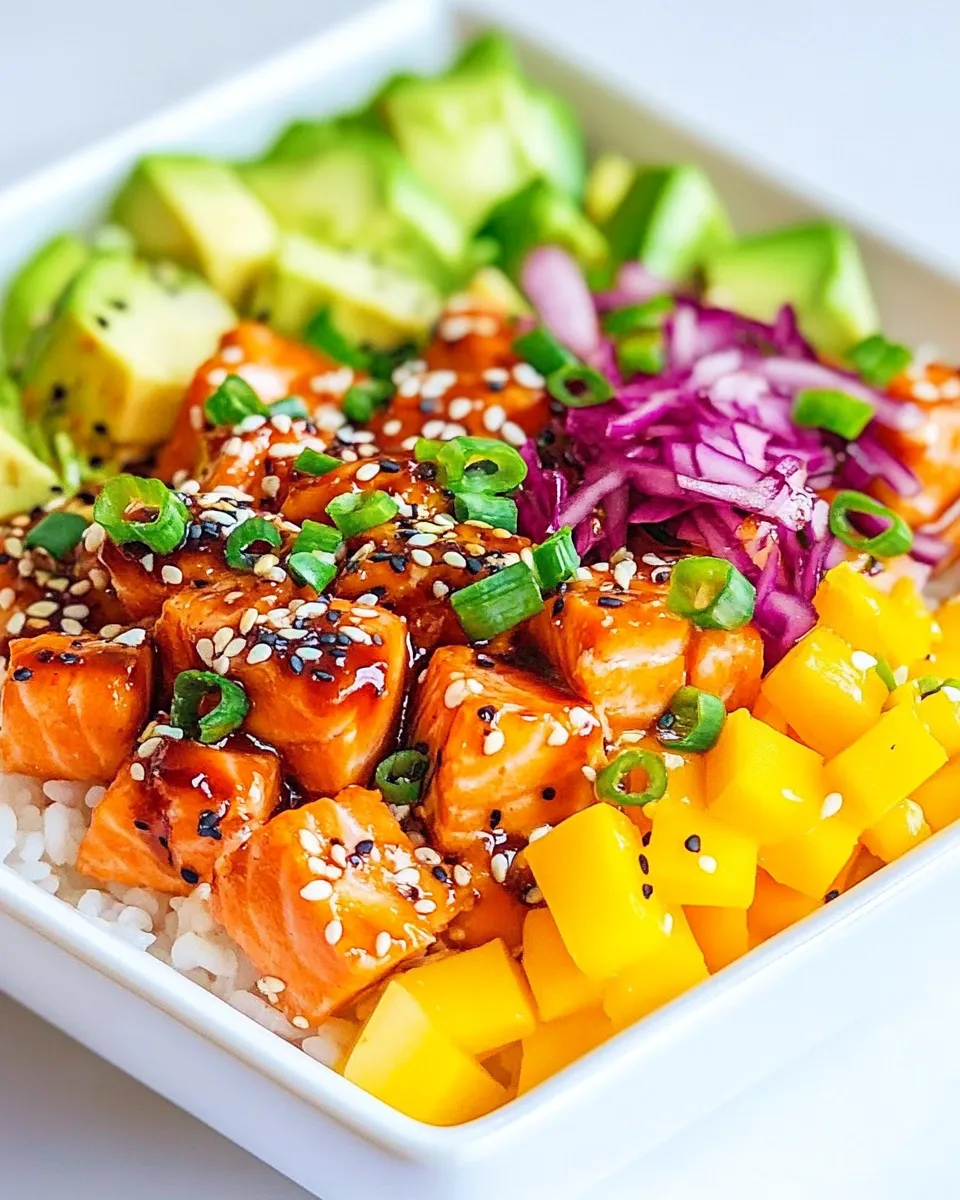
- Assemble the bowls: Divide the seasoned rice between serving bowls. Arrange the glazed cooked salmon cubes on top of the rice. Add neat sections of shredded purple cabbage, cubed pineapple, cubed mango, edamame, shredded carrot, sliced cucumber, and avocado.
- Finish with garnishes: Drizzle spicy mayo over the salmon and vegetables as desired. Sprinkle sesame seeds and scatter microgreens over the bowls. Add a small spoonful of pickled ginger and a few strips of seaweed to each bowl for brightness and umami.
- Serve immediately: Serve the bowls while the salmon is still warm and the rice is slightly warm to room temperature. Provide extra soy sauce, sriracha, or spicy mayo on the side for guests to tailor their bowls.
Tips and variations
- Rice texture: Using Japanese short-grain rice gives you that slightly sticky, tender texture typical of sushi bowls. If you prefer a looser grain, rinse the rice a bit longer before cooking.
- Don’t overcrowd the pan: Searing in batches creates better caramelization on the salmon cubes. Crowding the pan lowers the temperature and causes steaming rather than searing.
- Make it spicier: Add more sriracha to the glaze or mix sriracha into the spicy mayo for a creamy heat boost.
- More umami: Add a drizzle of toasted sesame oil to the finished bowl or top with furikake for extra savory depth.
- Meal prep: Cook the rice and salmon ahead of time and store separately in airtight containers for up to 2 days. Slice produce just before serving for peak freshness.
- Vegan swap: Replace salmon with pan-seared large cubes of firm tofu or tempeh and use maple syrup instead of honey if avoiding animal products.
Storage
Store leftover components separately for best quality. Keep glazed cooked salmon in an airtight container in the refrigerator for up to 2 days. Rice keeps well for up to 3 days when refrigerated. Store avocado and sliced cucumber separately and add fresh when assembling to prevent browning and sogginess.
Flavor pairing and serving ideas
This Cooked Salmon Poke Recipe pairs beautifully with a crisp, light salad or a bowl of miso soup to start. A chilled green tea or a citrusy sparkling beverage cuts through the sweetness of the glaze and the richness of the fish. For a fun shareable plate, create a poke bar with all the toppings laid out and let everyone build their own bowl.
Nutritional notes
The bowl delivers a balanced mix of protein from the salmon and edamame, complex carbs from the rice, and vitamins from the fresh vegetables and fruit. Using toasted sesame oil and a modest amount of honey keeps the dressing aromatic and lightly sweet without overpowering the fish. For lower sodium, choose a reduced-sodium soy sauce or use less soy sauce in the glaze.
Common troubleshooting
- Rice too sticky or gummy: This can happen if rice isn’t rinsed enough or if cooking time/ratio is off. Rinsing well removes excess starch and will improve texture.
- Salmon overcooked: Cut the cubes evenly and sear quickly over high heat. Remove from the pan when salmon flakes easily but is still moist inside.
- Glaze too thin: Let the glaze reduce briefly in the hot pan after adding to the salmon, stirring frequently, until it becomes glossy and clings to the fish.
Final notes
Whether you’re making this Cooked Salmon Poke Recipe for meal prep or a casual dinner, the bowl feels special without requiring complicated techniques. The key is good-quality short-grain rice, well-seasoned salmon, and fresh, crisp toppings that create contrast in every bite. Enjoy the bright fruit, crunchy vegetables, and warm, glazed fish together for a balanced and satisfying meal.
Quick serving suggestion
Place a mound of seasoned rice in each bowl, arrange 6–8 glazed salmon cubes on top, and artfully add the shredded purple cabbage, cubed pineapple, cubed mango, edamame, shredded carrot, sliced cucumber, and avocado. Drizzle spicy mayo, sprinkle sesame seeds, add microgreens and pickled ginger, and finish with a few strips of seaweed. Serve immediately and let everyone mix their bowl to taste.

Cooked Salmon Poke Recipe
Ingredients
- 2 cups Japanese short-grain rice (sushi rice)
- 2 1/4 cups water
- 1/4 cup rice vinegar (unseasoned)
- 4 teaspoons granulated sugar
- 1 teaspoon fine sea salt
- 2 lbs salmon, skin removed and cut into 1-inch cubes
- 2 cloves garlic, minced
- 1 teaspoon fresh ginger, grated
- 1 tablespoon toasted sesame oil
- 2 tablespoons soy sauce
- 2 tablespoons honey
- 1 tablespoon canola oil
- 2 teaspoons sriracha (optional)
- shredded purple cabbage
- cubed pineapple
- cubed mango
- edamame
- shredded carrot
- avocado, sliced
- sliced cucumber
- spicy mayo
- sesame seeds
- microgreens
- pickled ginger
- seaweed
Instructions
- Rinse 2 cups sushi rice in a fine-mesh strainer under cold water until the water runs clear, about 1–2 minutes; drain thoroughly.
- Combine the rinsed rice and 2 1/4 cups water in a saucepan and bring to a simmer over medium-high heat with the lid on; reduce heat to medium-low and simmer gently for 16–18 minutes, until the liquid is absorbed.
- Remove the pan from heat and let the rice steam, covered, for 10 minutes without lifting the lid.
- While the rice cooks, heat 1/4 cup rice vinegar with 4 teaspoons sugar and 1 teaspoon fine sea salt in a small saucepan until very warm but not boiling, stirring until the sugar dissolves; remove from heat.
- Transfer the hot rice to a large bowl, remove the lid, and gently fold in the vinegar mixture with a spatula or fork until evenly coated; cover the rice with a damp towel and let cool.
- Whisk together 2 cloves minced garlic, 1 teaspoon grated ginger, 1 tablespoon toasted sesame oil, 2 tablespoons soy sauce, 2 tablespoons honey, and 2 teaspoons sriracha (if using) to make the marinade.
- Toss 2 lbs salmon cubes in the marinade to coat; let sit 30 minutes in the refrigerator for best flavor, or proceed immediately.
- Heat a large skillet over medium-high heat until hot, add 1 tablespoon canola oil and swirl to coat.
- Using tongs, add the salmon cubes (shake off excess marinade) and sear 2–3 minutes per side until browned and cooked through.
- Pour any remaining marinade into the skillet, toss with the salmon, and cook 1 additional minute to coat.
- Divide the sushi rice among bowls and top with cooked salmon, shredded purple cabbage, cubed pineapple, cubed mango, edamame, shredded carrot, sliced avocado, sliced cucumber, microgreens, sesame seeds, pickled ginger, seaweed, and a drizzle of spicy mayo.
- Serve immediately.
Equipment
- medium fine-mesh strainer
- saucepan with lid
- Small Saucepan
- Large Mixing Bowl
- Large Skillet
- Tongs
- spatula or fork
Notes
- Marinate the salmon up to 6 hours for more flavor.
- Use warmed vinegar mixture so it dissolves the sugar fully.
- Keep rice covered with a damp towel to prevent drying.
- Adjust sriracha to control heat level.