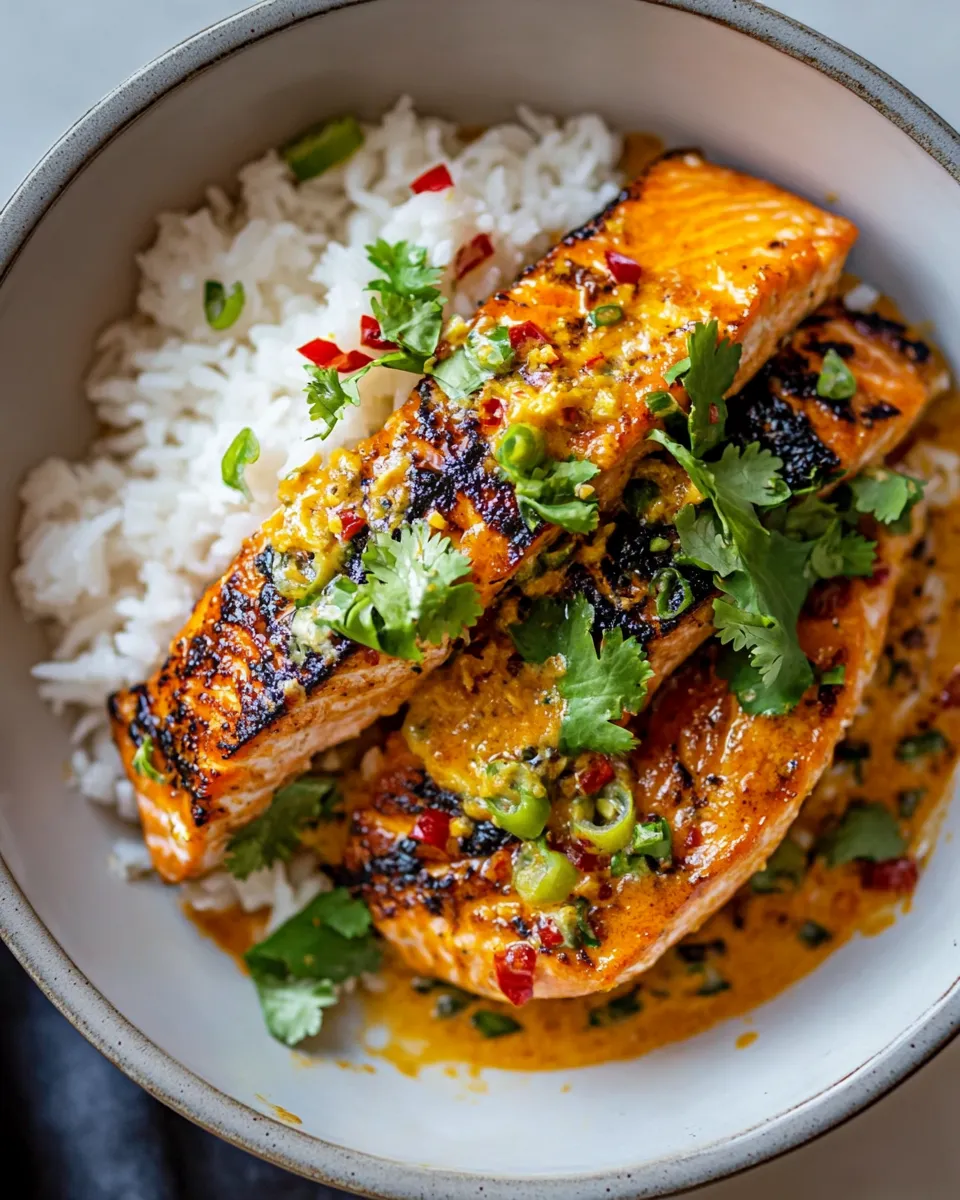
Coconut Curry Salmon with Garlic Butter.
I love recipes that feel a little fancy but actually come together fast on a weeknight. This Coconut Curry Salmon with Garlic Butter is exactly that: bold flavors, minimal fuss, and a finishing touch that makes it sing. The broil gives the salmon a caramelized edge, the coconut-curry sauce is creamy and aromatic, and the garlic-chili butter adds a glossy, punchy finish.
You’ll notice the recipe splits the work into two simple stages—broil the fish briefly, then simmer it gently in the coconut curry sauce. That keeps the salmon tender and prevents the sauce from overcooking. It also means you can get a veg cooked right in the sauce without extra pans.
Read through the ingredient checklist and the step-by-step; I’ve also added practical swaps, tools, and troubleshooting notes from testing. If you like bold curries with a buttery finish, this one will become a repeat dinner.
Ingredient Checklist

- 4 (4-6 ounce) salmon filets — main protein; choose evenly sized pieces so they cook uniformly.
- 2-3 tablespoons spicy curry powder (homemade in notes) — provides the dry spice layer before broiling; adjust between 2–3 tbsp based on heat preference.
- kosher salt and black pepper — simple seasoning to brighten flavors; taste and season as you go.
- chili flakes — used in the garlic butter for heat; pinch to taste.
- 1 tablespoon extra virgin olive oil — rubs the fish to help spices stick and promote browning.
- 2 tablespoons honey — brushed over the filets for quick caramelization under the broiler.
- 6 tablespoons salted butter — divided (1 tbsp for the curry base, 5 tbsp for the garlic butter); brings richness and helps carry flavor.
- 1/4 cup Thai red curry paste — concentrated red curry flavor; it’s the backbone of the sauce.
- 1 tablespoon fresh grated ginger — adds brightness and a slight bite that balances the coconut.
- 1 1/2 cups chopped broccoli — cooks in the sauce; keeps the dish whole and colorful.
- 2 cups canned full-fat coconut milk — makes the sauce silky and rich; full-fat yields the best mouthfeel.
- 2 tablespoons tamari or soy sauce — salty umami element; tamari for gluten-free, soy for pantry staple.
- 1 tablespoon fish sauce (or soy sauce) — adds depth and savory complexity; use soy if you prefer to skip fish sauce.
- 3-4 cloves garlic, chopped — used in the brown garlic butter finish; watch closely so it crisps without burning.
From Start to Finish: Coconut Curry Salmon with Garlic Butter.
- Preheat the broiler and position the oven rack about 6 inches from the heat. Pat the 4 salmon filets dry and place them on a rimmed baking sheet. Rub each filet with 1 tablespoon extra virgin olive oil, then evenly sprinkle 2–3 tablespoons spicy curry powder over the fish. Season with kosher salt and black pepper to taste. Drizzle 2 tablespoons honey over the filets.
- Broil the salmon 3–5 minutes, watching closely, until the tops begin to crisp and brown. The salmon will finish cooking in the sauce in a later step.
- While the salmon is broiling, heat a large skillet over medium heat. Add 1 tablespoon of the salted butter and melt. Stir in 1/4 cup Thai red curry paste and 1 tablespoon fresh grated ginger; cook, stirring, 2–3 minutes until very fragrant.
- Add 1 1/2 cups chopped broccoli, 2 cups canned full-fat coconut milk, 2 tablespoons tamari or soy sauce, and 1 tablespoon fish sauce (or soy sauce) to the skillet. Stir to combine and bring the mixture to a gentle simmer.
- Carefully slide the broiled salmon into the simmering sauce. Simmer gently 3–5 minutes, spooning sauce over the salmon, until the salmon reaches your desired doneness.
- While the salmon simmers, melt the remaining 5 tablespoons salted butter in a small skillet over medium heat. Add 3–4 cloves chopped garlic and a pinch of chili flakes. Cook, stirring, until the butter is lightly browning and the garlic is crisped, about 2–4 minutes—watch closely to avoid burning.
- Serve the salmon and broccoli with plenty of the coconut-curry sauce. Drizzle the garlic-chili butter over the salmon and sauce before serving.
Why Cooks Rave About It
This dish combines contrasting textures and layered umami. The quick broil gives the salmon a clean, caramelized top while leaving the interior tender. Then the short simmer in the coconut curry infuses the fish and veg without drying anything out. The final garlic-chili butter does two things: it adds a nutty, brown-butter aroma and a spicy, crisp garlic finish that cuts through the richness.
It’s also approachable. You don’t need advanced technique—just attention to timing. The recipe is forgiving: the curry paste and coconut milk carry flavors well, and the tamari/fish sauce pair creates a deep savory backbone. The result reads restaurant-quality but cooks in one skillet plus one sheet pan.
Finally, it scales. Make two portions for weeknight dinners or four for company, and the flavor profile holds up. People often tell me the first bite surprises them because it’s buttery, bright, and savory all at once.
Budget & Availability Swaps
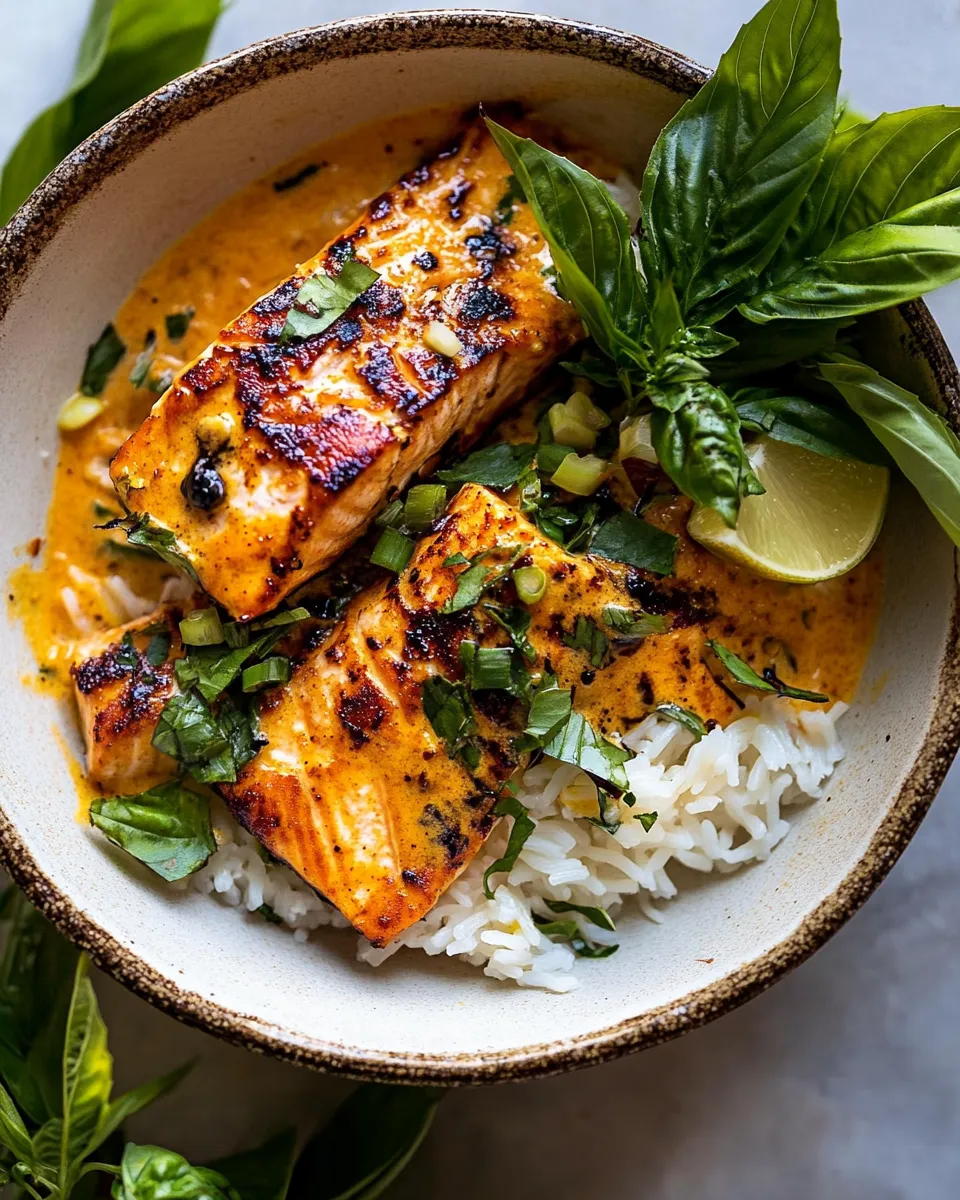
– Salmon: If fresh wild salmon is pricey or sold out, use farmed or previously frozen fillets. Thaw safely in the fridge overnight and pat dry before seasoning. The broil-simmer method still works with frozen-thawed fish; just watch the final doneness time.
– Coconut milk: Full-fat canned coconut milk gives the creamiest result. If you’re avoiding the extra fat, light canned coconut milk will work—expect a thinner sauce and milder mouthfeel.
– Curry paste and powder: If you don’t have Thai red curry paste, use equal parts store-bought paste like panang or a spoonful of tomato paste plus extra spices, but the easiest solution is a pinch more red curry powder and an extra splash of soy for depth. (The recipe already calls for both curry powder and red curry paste, so use what you have.)
– Veg swap: If broccoli isn’t available, quick-cooking veggies like green beans or sliced bell pepper can go in. Add firmer veg a minute or two earlier so everything finishes together.
– Sauces: The recipe lists tamari or soy and fish sauce (or soy). If you prefer lower-sodium soy, reduce the volume slightly and taste as the sauce simmers.
Essential Tools for Success
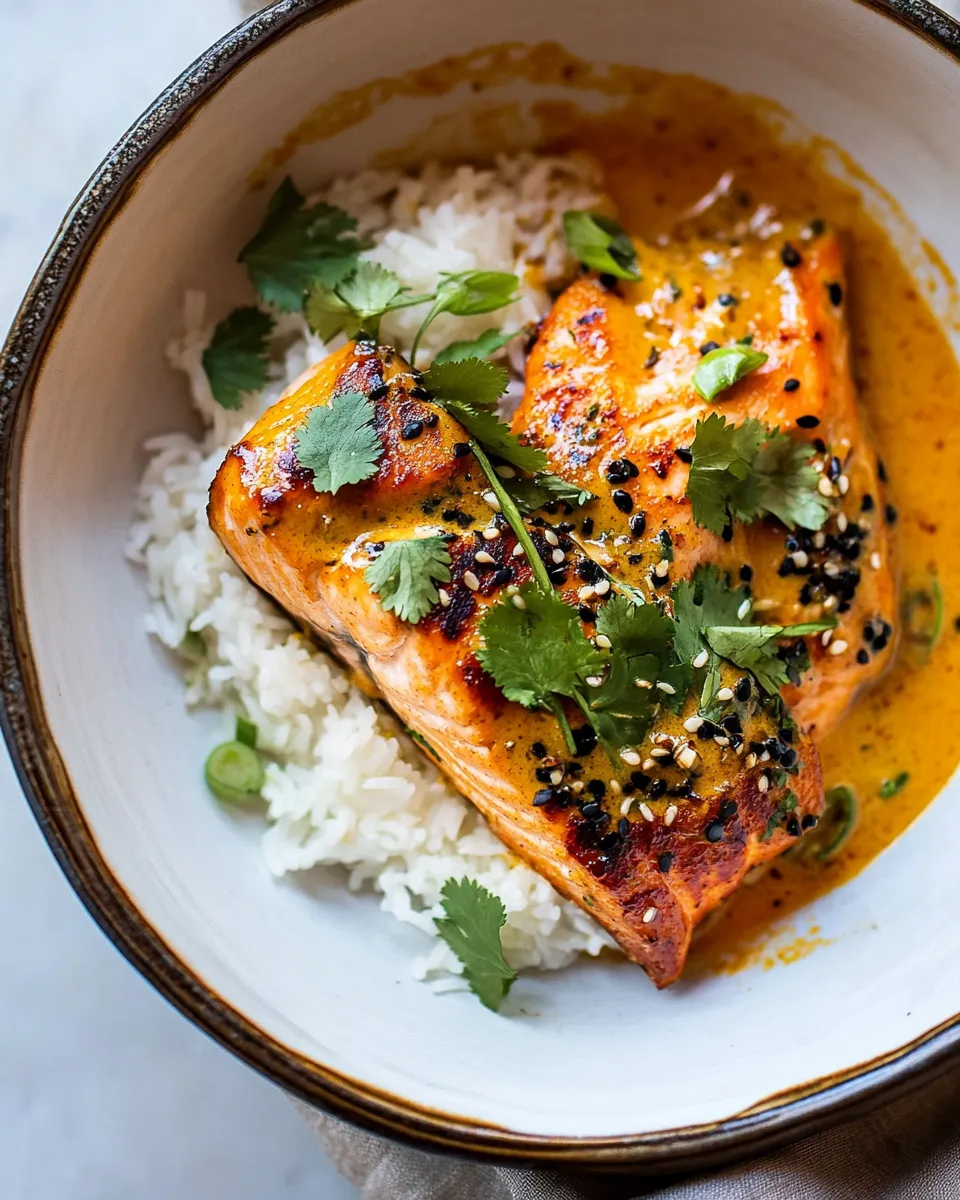
What I use and why
- Rimmed baking sheet — gives space for broiling without drippings spilling; easy to slide into the skillet.
- Large skillet with a tight-fitting edge — the sauce needs surface area to simmer and to cradle the salmon comfortably.
- Small skillet for brown garlic butter — you want control over the butter’s color; a smaller pan prevents the garlic from scattering and burning.
- Tongs or a wide spatula — for carefully sliding the broiled salmon into the simmering sauce.
- Instant-read thermometer (optional) — a quick way to check salmon doneness; 125–130°F for medium-rare, up to 140°F for fully done, depending on preference.
Avoid These Mistakes
– Don’t walk away from the broiler. Broiling happens fast; 3–5 minutes can mean the difference between nicely charred and burned. Stay close and watch for the tops to brown.
– Don’t skip patting the salmon dry. Excess moisture prevents proper browning. A quick paper towel wipe matters.
– Don’t over-simmer the salmon in the sauce. The simmer step is short—3–5 minutes—to finish the fish. Overcooking will make the texture dry.
– Don’t burn the garlic. The garlic in the butter should be crisped and golden, not black. Once it starts to brown, remove from heat quickly and pour over the salmon.
– Don’t crowd the skillet. Give the salmon room so the sauce can circulate and the broccoli cooks evenly.
Nutrition-Minded Tweaks
– To reduce saturated fat: use 3 tablespoons of butter for the garlic finish instead of 5, and try low-fat coconut milk if you need to trim calories. The flavor will be a bit lighter but still satisfying.
– To boost veggies and fiber: double the broccoli or add a cup of chopped kale right at the end of the simmer so it wilts into the sauce. This bulks the meal with minimal changes.
– To cut sodium: use low-sodium tamari/soy and taste before adding the optional fish sauce; fish sauce is potent, so add sparingly and adjust.
– Protein balance: keep the salmon portion at 4–6 ounces per person for a protein-focused plate. Pair with a small serving of brown rice or cauliflower rice to make the meal more filling without losing the curry profile.
What I Learned Testing
I tested this twice with different salmon thicknesses. Thinner fillets needed only the minimum broil time and roughly 3 minutes simmer; thicker fillets took the full broil and closer to 5 minutes simmer. The honey on top caramelized beautifully under high broil heat; it also helps the curry powder adhere.
The curry paste is strong—cook it briefly in butter with ginger to release its oils. That step transforms it from a concentrated paste into a fragrant sauce base. The broccoli cooked perfectly in the coconut milk; it picked up curry flavor without turning mushy as long as you kept the simmer gentle.
The garlic butter finish was a revelation. Cook the garlic just until it crisps and the butter edges brown. Pouring it right over the plated salmon gives a smell and texture contrast that elevates the whole dish.
Make Ahead Like a Pro
– Sauce ahead: You can prepare the coconut-curry sauce (through step 4) a day in advance. Cool it, refrigerate, then gently reheat before sliding in the broiled salmon. This saves 10–12 minutes on dinner night.
– Prep the aromatics: grate the ginger and chop the garlic ahead and store in small containers; bring butter to room temperature for quicker melting.
– Broil last: For best texture, broil the salmon just before serving. If you broil it too early it can lose its edge in the sauce. Instead, keep the sauce warm and broil the fish right before the final simmer.
– Leftovers: store cooled salmon and sauce separately in airtight containers in the fridge up to 2 days. Reheat gently on the stovetop over low heat to avoid overcooking.
Common Questions
Q: Can I skip the broil and cook the salmon entirely in the sauce?
A: Yes, but you’ll lose that initial caramelized top. If you simmer raw salmon straight into the sauce, it will still be flavorful, but the texture will be different—so adjust simmer time and expect a softer exterior.
Q: My sauce looks thin—what happened?
A: If you used light coconut milk or didn’t reduce the sauce a bit, it will be thinner. Simmer a few extra minutes to concentrate it, or remove the salmon and reduce the sauce down, then return the fish for a minute to rewarm.
Q: Can I make this spicy or mild?
A: Adjust the heat mainly via the spicy curry powder amount (2–3 tbsp) and the pinch of chili flakes in the butter. If you prefer milder, use 2 tbsp and half the chili flakes; for more heat, lean to 3 tbsp and add extra flakes to the butter.
Q: Is fish sauce necessary?
A: It adds umami depth, but the recipe lists soy as an alternative. If you avoid fish sauce, use soy and consider a splash of Worcestershire for extra savoriness if you like.
Let’s Eat
Plate one salmon fillet with a generous ladle of coconut curry and the broccoli alongside. Spoon extra sauce over the fish. Finish with the browned garlic-chili butter—let it cascade over the hot salmon so the butter melts into the sauce and pools on the plate.
Serve with steamed rice, quinoa, or a simple bed of sautéed greens to sop up every last drop. Light a candle, put on some music, and enjoy the layered flavors: caramelized, spicy, buttery, and coconut-rich. It’s elegant enough for guests and easy enough for a Tuesday night.
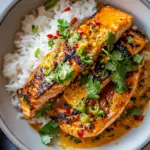
Coconut Curry Salmon with Garlic Butter.
Ingredients
Ingredients
- 4 4-6 ouncesalmon filets
- 2-3 tablespoonsspicy curry powder homemade in notes
- kosher salt and black pepper
- chili flakes
- 1 tablespoonextra virgin olive oil
- 2 tablespoonshoney
- 6 tablespoonssalted butter
- 1/4 cupThai red curry paste
- 1 tablespoonfresh grated ginger
- 1 1/2 cupschopped broccoli
- 2 cupscanned full-fat coconut milk
- 2 tablespoonstamari or soy sauce
- 1 tablespoonfish sauce or soy sauce
- 3-4 clovesgarlic chopped
Instructions
Instructions
- Preheat the broiler and position the oven rack about 6 inches from the heat. Pat the 4 salmon filets dry and place them on a rimmed baking sheet. Rub each filet with 1 tablespoon extra virgin olive oil, then evenly sprinkle 2–3 tablespoons spicy curry powder over the fish. Season with kosher salt and black pepper to taste. Drizzle 2 tablespoons honey over the filets.
- Broil the salmon 3–5 minutes, watching closely, until the tops begin to crisp and brown. The salmon will finish cooking in the sauce in a later step.
- While the salmon is broiling, heat a large skillet over medium heat. Add 1 tablespoon of the salted butter and melt. Stir in 1/4 cup Thai red curry paste and 1 tablespoon fresh grated ginger; cook, stirring, 2–3 minutes until very fragrant.
- Add 1 1/2 cups chopped broccoli, 2 cups canned full-fat coconut milk, 2 tablespoons tamari or soy sauce, and 1 tablespoon fish sauce (or soy sauce) to the skillet. Stir to combine and bring the mixture to a gentle simmer.
- Carefully slide the broiled salmon into the simmering sauce. Simmer gently 3–5 minutes, spooning sauce over the salmon, until the salmon reaches your desired doneness.
- While the salmon simmers, melt the remaining 5 tablespoons salted butter in a small skillet over medium heat. Add 3–4 cloves chopped garlic and a pinch of chili flakes. Cook, stirring, until the butter is lightly browning and the garlic is crisped, about 2–4 minutes—watch closely to avoid burning.
- Serve the salmon and broccoli with plenty of the coconut-curry sauce. Drizzle the garlic-chili butter over the salmon and sauce before serving.
Equipment
- Rimmed Baking Sheet
- Oven Broiler
- Large Skillet
- Small Skillet
Notes
Spicy Curry Powder:
2 teaspoons ground cumin
2 teaspoons ground ginger
1 teaspoon paprika
1/2-1 teaspoon cayenne
1 teaspoon garlic powder
1 teaspoon onion powder
1/4 teaspoon cinnamon
kosher salt and black pepper
Mix everything to combine. Makes 2-3 tablespoons.