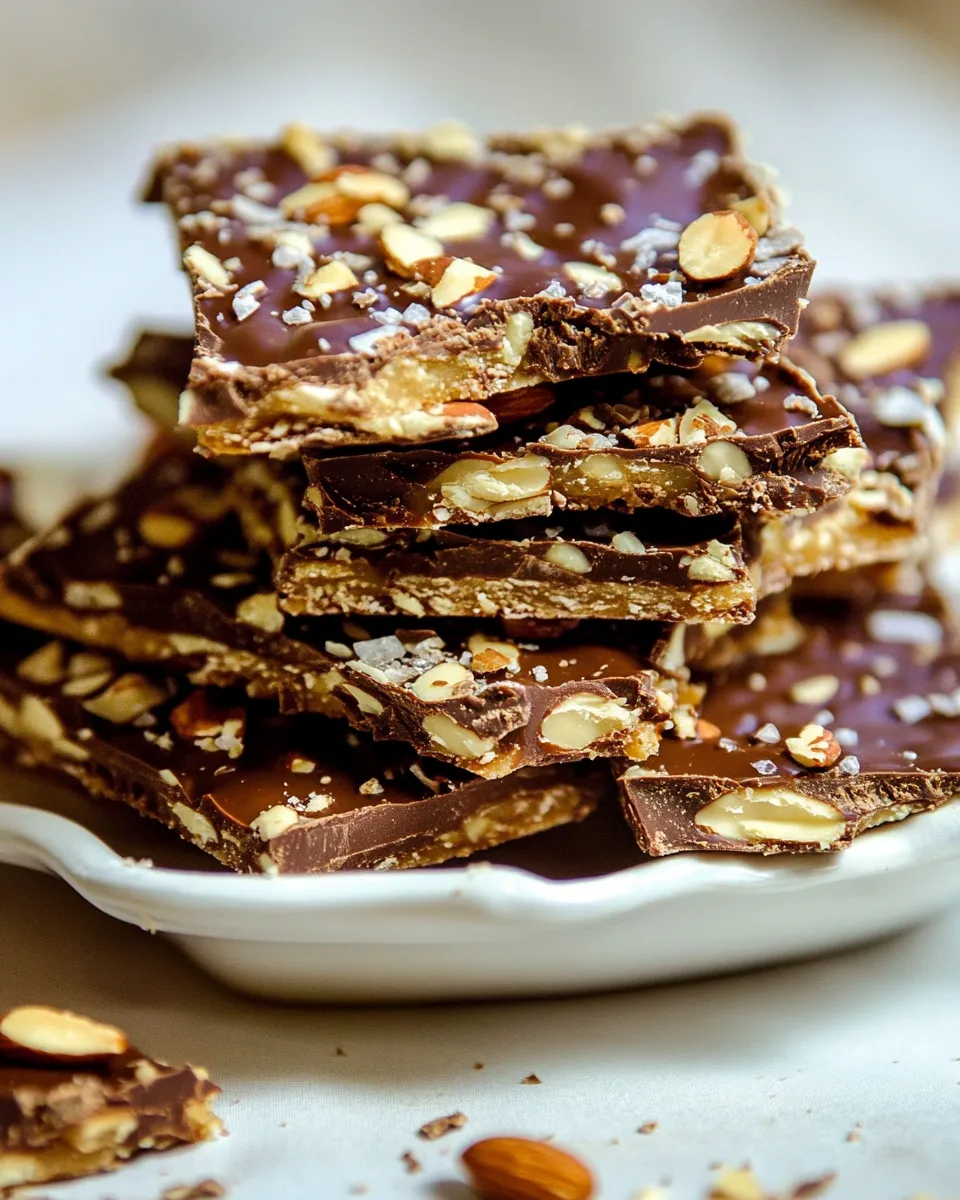
Chocolate Toffee with Almonds
I make this Chocolate Toffee with Almonds every December, but honestly it’s the kind of treat that belongs on the counter year-round. It’s simple, impressive, and forgiving when you pay attention to temperature. A crunchy butter-sugar backbone, toasted almonds, and a glossy milk chocolate top—what’s not to love?
I’ll walk you through each step, exactly as the recipe expects, with practical tips so you don’t second-guess your timing. You don’t need fancy equipment—just a candy thermometer, a sturdy pan, and a little patience while the sugar works its magic.
Bring a small rimmed sheet of parchment and some patience. This toffee sets firm and stores beautifully, and once you try it you’ll be making it for friends, gifts, and last-minute hostess offerings.
What’s in the Bowl

Ingredients
- 1½ cups sliced almonds — the crunchy base that toffee will coat; spread evenly for a uniform layer.
- 1 cup unsalted butter (2 sticks) — provides the rich fat for the toffee; unsalted lets you control finishing salt.
- 2 tablespoons water — helps dissolve the sugar and gives a smoother boil.
- 1 cup sugar — the structure of the toffee; watch the temperature closely.
- ½ teaspoon vanilla extract — adds depth to the caramelized flavor; stir in off the heat.
- 7 milk chocolate bars unwrapped — I use standard-sized bars so they melt into an even top layer.
- coarse sea salt — optional, to finish; a light sprinkle enhances the chocolate and balances sweetness.
From Start to Finish: Chocolate Toffee with Almonds
- Line a rimmed baking sheet or cutting board with a piece of parchment paper about 10 x 12 inches.
- Evenly spread 1½ cups sliced almonds in a single layer on the parchment.
- In a medium saucepan, combine 1 cup unsalted butter (2 sticks), 2 tablespoons water, and 1 cup sugar. Heat over low heat, stirring frequently until the butter melts and the sugar dissolves.
- Once the mixture comes to a gentle boil, gradually increase the heat to medium. Attach a candy thermometer to the pan (or clip it to the side) and continue stirring frequently. Monitor the temperature until it reaches 305°F. Stir continuously but avoid vigorous splashing.
- When the toffee reaches 305°F, remove the pan from the heat and stir in ½ teaspoon vanilla extract until combined.
- Immediately pour the hot toffee evenly over the almonds on the parchment. Tilt the pan or use a heatproof spatula to spread the toffee if needed so it covers the almond layer.
- Arrange the 7 unwrapped milk chocolate bars evenly over the hot toffee. Let sit undisturbed for about 5 minutes to allow the chocolate to soften and begin melting.
- After ~5 minutes, use a spatula or the back of a spoon to spread the softened chocolate into an even layer over the toffee.
- If using, lightly sprinkle coarse sea salt over the melted chocolate to taste.
- Let the chocolate toffee set at room temperature or place in the refrigerator for faster setting. Chill for 1 to 2 hours (or overnight) until fully firm.
- Once set, use a sharp knife to cut the toffee into pieces, or lift the parchment and break it into pieces by hand.
- Store the pieces in a container with a tight-fitting lid.
Why You’ll Love This Recipe
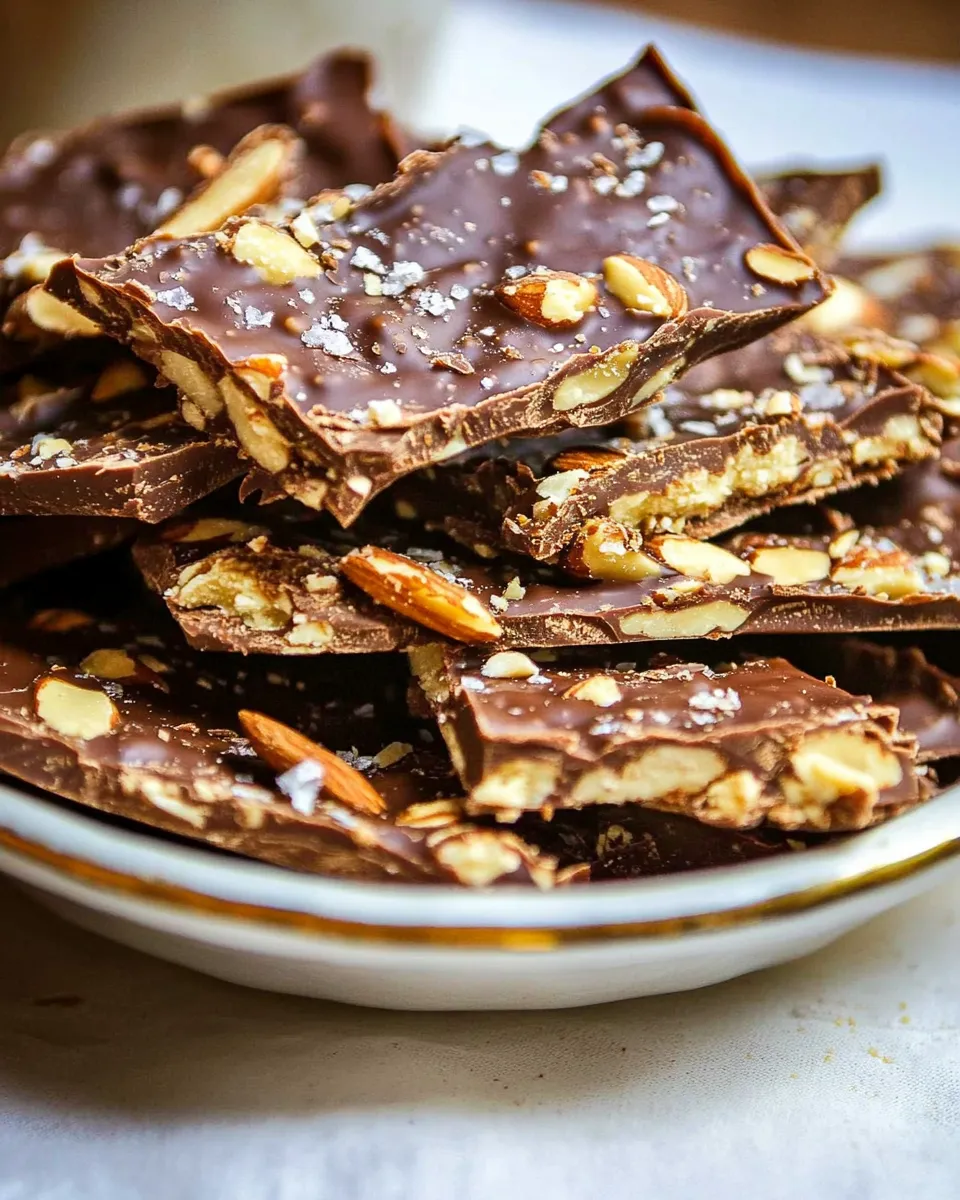
Because it checks a lot of boxes: quick to assemble, dramatic to gift, and reliably delicious. The method is straightforward—melt, boil to temperature, pour, and top—so you spend your time watching a thermometer rather than guessing. The assembly is visual: layers of almonds, glossy toffee, then a blanket of chocolate that you spread to perfection.
The flavors are familiar and crowd-pleasing: brown-butter notes from the toffee, toasted almonds, sweet milk chocolate, and the option for a little sea-salt contrast. It’s crunchy, crisp, and makes for a satisfying snack or a beautiful homemade gift.
Vegan & Vegetarian Swaps
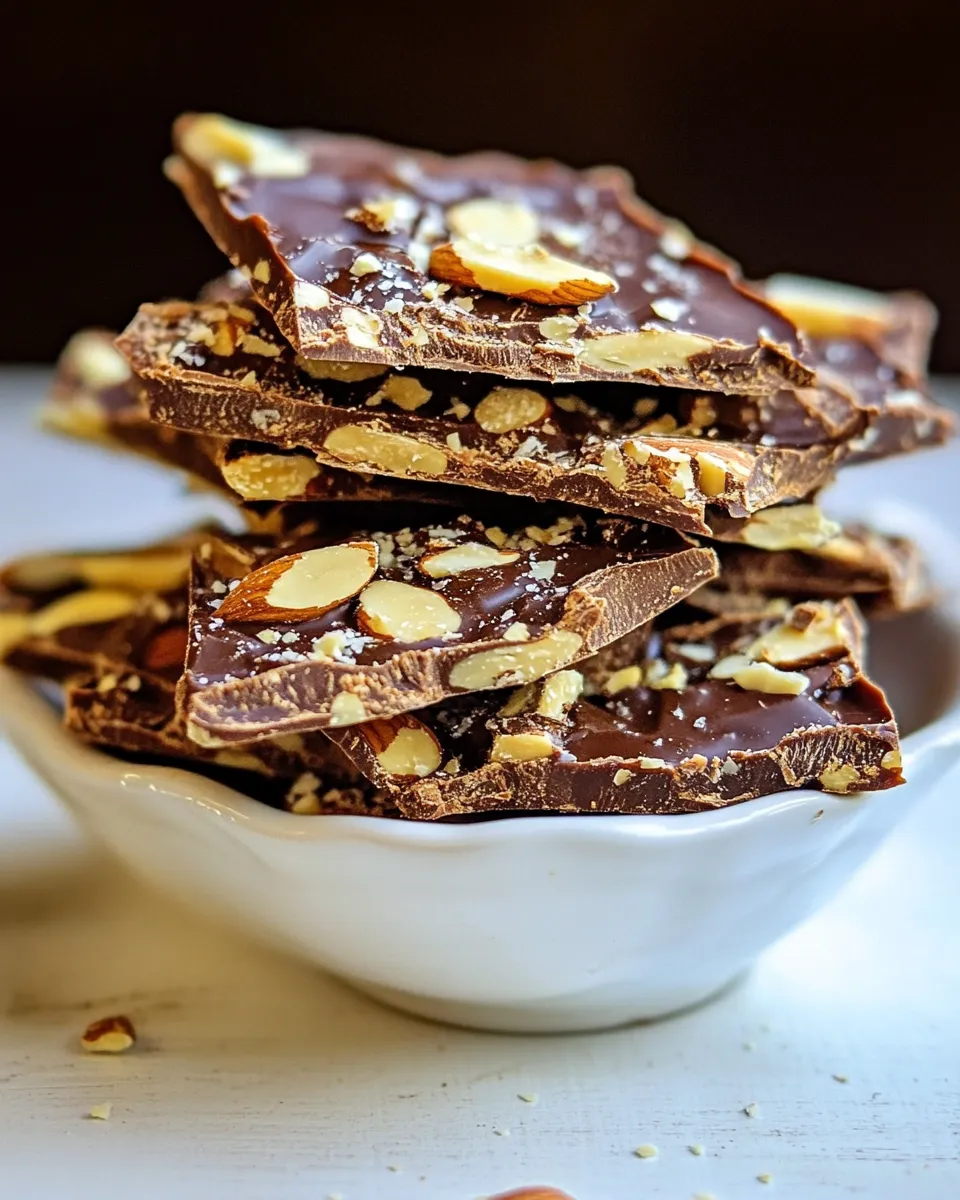
- Vegetarian: This recipe is already vegetarian as written—no animal-derived gelatin or rennet involved. If you use salted butter instead of unsalted, skip or reduce finishing salt.
- Vegan: Replace the 1 cup unsalted butter with a firm vegan butter that’s designed for baking; use vegan powdered sugar alternatives if needed and check that your chocolate bars are dairy-free. Use dark or vegan milk-style chocolate bars that explicitly state dairy-free on the label. Expect slightly different flavor and texture but the process is the same.
- Nuts: For a nut-free vegan version, omit the almonds and spread the toffee on parchment; you can sprinkle toasted sunflower seeds if allergy-safe and desired.
Prep & Cook Tools
Essential
- Medium heavy-bottomed saucepan — even heat distribution is key for candy.
- Candy thermometer — required for reliable doneness at 305°F.
- Rimmed baking sheet or cutting board — lined with a 10 x 12 inch piece of parchment.
- Heatproof spatula or wooden spoon — for gentle stirring and spreading.
- Sharp knife — to cut toffee once it’s set.
Helpful but not required
- Metal offset spatula — makes spreading chocolate smooth and even.
- Kitchen scale — for precision but the cup measures in the recipe work fine.
- Refrigerator — speeds up setting if you’re short on time.
Things That Go Wrong
Toffee making is precise but forgiving if you know the likely slip-ups:
- Temperature is off: If you don’t reach 305°F, the toffee will be softer and chewier. If you overshoot, it can burn and taste bitter. Rely on your candy thermometer and remove from heat promptly at 305°F.
- Sugar crystallizes: Stirring gently during the early stages helps. If sugar crystals cling to the pan’s sides, dip a pastry brush in warm water and brush them down to avoid seeding the mixture.
- Chocolate doesn’t melt evenly: Let the chocolate rest on the hot toffee for the full ~5 minutes before spreading. If bars haven’t softened through, a short low-heat hack in the oven (on very low) or a quick double-boiler spoon-melt for patches will help—but avoid overheating.
- Toffee won’t set: Either it didn’t reach hard-crack temperature (305°F) or the ambient temperature is too warm. Chill for longer or overnight to firm up.
- Butter burns: Use a medium saucepan and low-to-medium heat. A heavy-bottomed pan prevents hot spots and burning.
Spring to Winter: Ideas
- Spring: Add a light dusting of freeze-dried strawberry powder on the chocolate for a bright, floral note; serve in small squares with tea.
- Summer: Break into bite-sized pieces and mix with ice cream as a crunchy topping, or package chilled for outdoor parties.
- Fall: Toast the almonds with a pinch of cinnamon or pumpkin pie spice before layering for seasonal warmth.
- Winter: Finish with a sprinkle of coarse sea salt or crushed peppermint for holiday gifting. Wrap in waxed paper and tie with twine.
Pro Tips & Notes
- Measure exactly: The balance of butter to sugar matters. Use the listed 1 cup butter and 1 cup sugar as given.
- Watch the thermometer: Artificially high or low readings can ruin texture. Clip the thermometer to the side so the bulb sits in the candy without touching the bottom.
- Spread quickly, but carefully: The toffee is very hot when poured. Work efficiently when smoothing the chocolate after it softens, but avoid sloshing or pressing hard.
- Chocolate placement: Arrange the 7 milk chocolate bars evenly so they melt into one sheet. Small gaps make spreading harder.
- Salt is optional but recommended: It’s a contrast agent—use a light hand with coarse sea salt.
- Cooling: Room temperature setting preserves shine; refrigeration speeds firming but can introduce condensation when returning to room temp. If chilling, keep the toffee in an airtight container once fully set.
Best Ways to Store
Once the toffee has set and you’ve cut it into pieces, transfer to a container with a tight-fitting lid. Layer pieces between sheets of parchment or wax paper to prevent sticking.
- Room temperature: Store in an airtight container in a cool, dry place for up to 2 weeks. Avoid warm kitchens where chocolate can soften.
- Refrigerator: Place in an airtight container for up to 3 weeks. Bring to room temperature before serving to avoid a cold, hard bite.
- Freezer: To keep longer, freeze pieces in a sealed container for up to 2 months. Thaw in the refrigerator, then bring to room temperature before unwrapping to minimize condensation.
FAQ
- Q: Can I use other nuts?
A: Yes. Pecans or chopped walnuts work well. Adjust to a single layer and make sure they’re evenly spread for a uniform toffee. Note: toasting nuts lightly beforehand deepens flavor but is optional.
- Q: What if I don’t have a candy thermometer?
A: A thermometer is strongly recommended for reliable results. Without one, the toffee can be hit-or-miss; it’s easy to undercook (chewy) or overcook (bitter). If you must, learn the “hard-crack” stage by testing a drop into very cold water—if it solidifies into hard, brittle threads, you’re near the target—but this is less precise.
- Q: Can I use dark chocolate instead of milk?
A: Absolutely. Use 7 bars of dark chocolate if you prefer a less sweet, deeper flavor. Dark chocolate can pair beautifully with the toffee’s caramel notes.
- Q: Why does my toffee taste grainy?
A: Graininess often comes from sugar not fully dissolving before boiling or crystallization during cooking. Make sure the sugar dissolves in butter and water at low heat before increasing the temperature, and avoid splashing to keep crystals off the pan sides.
- Q: Can I halve or double this recipe?
A: Yes. Be mindful that doubling needs a larger pan and maybe a slightly longer time to reach temperature. Halving works well in a small saucepan but keep the same method.
Bring It Home
Chocolate Toffee with Almonds makes a great gift, a refined party snack, and a satisfying batch to keep for yourself. Follow the steps, trust the thermometer, and don’t rush the cooling. Once you’ve made one pan, you’ll learn how your stove and pans behave and will be able to replicate or adapt the recipe confidently.
Share a photo, tie a few pieces in parchment, and hand them to someone who loves crunchy sweets. It’s simple, personal, and reliably delicious.

Chocolate Toffee with Almonds
Ingredients
Ingredients
- 1 1/2 cupsalmondssliced
- 1 cupunsalted butter2 sticks
- 2 tablespoonwater
- 1 cupsugar
- 1/2 teaspoonvanilla extract
- 7 milk chocolate barsunwrapped
- coarse sea saltoptional
Instructions
Instructions
- Line a rimmed baking sheet or cutting board with a piece of parchment paper about 10 x 12 inches.
- Evenly spread 1½ cups sliced almonds in a single layer on the parchment.
- In a medium saucepan, combine 1 cup unsalted butter (2 sticks), 2 tablespoons water, and 1 cup sugar. Heat over low heat, stirring frequently until the butter melts and the sugar dissolves.
- Once the mixture comes to a gentle boil, gradually increase the heat to medium. Attach a candy thermometer to the pan (or clip it to the side) and continue stirring frequently. Monitor the temperature until it reaches 305°F. Stir continuously but avoid vigorous splashing.
- When the toffee reaches 305°F, remove the pan from the heat and stir in ½ teaspoon vanilla extract until combined.
- Immediately pour the hot toffee evenly over the almonds on the parchment. Tilt the pan or use a heatproof spatula to spread the toffee if needed so it covers the almond layer.
- Arrange the 7 unwrapped milk chocolate bars evenly over the hot toffee. Let sit undisturbed for about 5 minutes to allow the chocolate to soften and begin melting.
- After ~5 minutes, use a spatula or the back of a spoon to spread the softened chocolate into an even layer over the toffee.
- If using, lightly sprinkle coarse sea salt over the melted chocolate to taste.
- Let the chocolate toffee set at room temperature or place in the refrigerator for faster setting. Chill for 1 to 2 hours (or overnight) until fully firm.
- Once set, use a sharp knife to cut the toffee into pieces, or lift the parchment and break it into pieces by hand.
- Store the pieces in a container with a tight-fitting lid.
Equipment
- ▢Parchment paper
- ▢Candy thermometer
Notes
See the video near the top of the blog post for visual guidance. If you liked the video, please
subscribe to our YouTube channe
l
.
The most important thing to remember when making the toffee is to keep the temperature low, especially at the beginning. After the butter melts, bring the heat up just enough for the mixture to barely come to a boil. Then, slowly and gradually, continue increasing the heat until it turns the color of peanut butter and most importantly, reaches 305°F on your candy thermometer.
If your butter and sugar separate during the heating process, add 2 teaspoons of water and use a whisk to vigorously mix the mixture. This should help bring it back together.
Be sure to let the chocolate completely cool before breaking up the toffee. We keep the toffee in a container in the fridge, but, you can also store it on the counter.
The toffee will keep for a couple of weeks.