Bibimbap Recipe
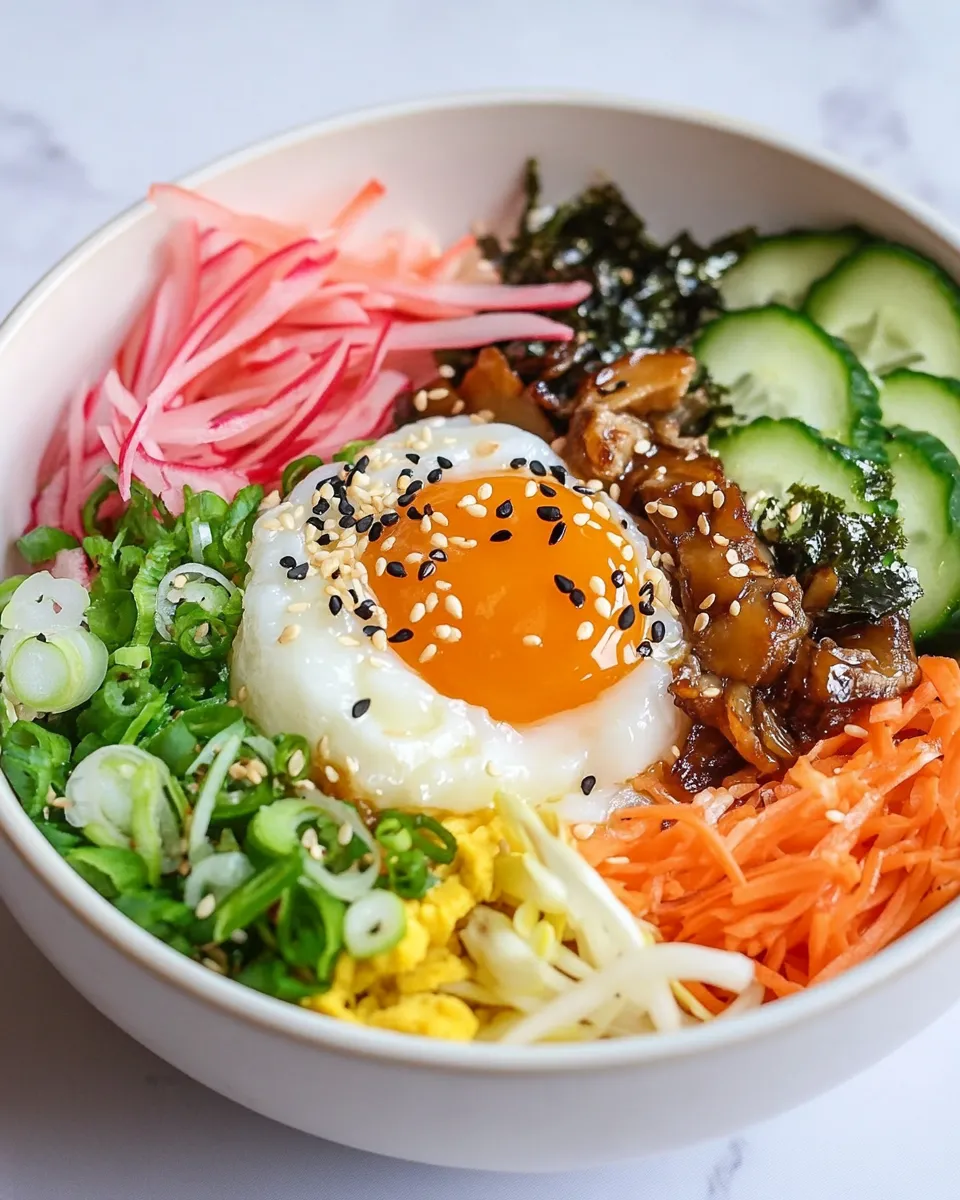
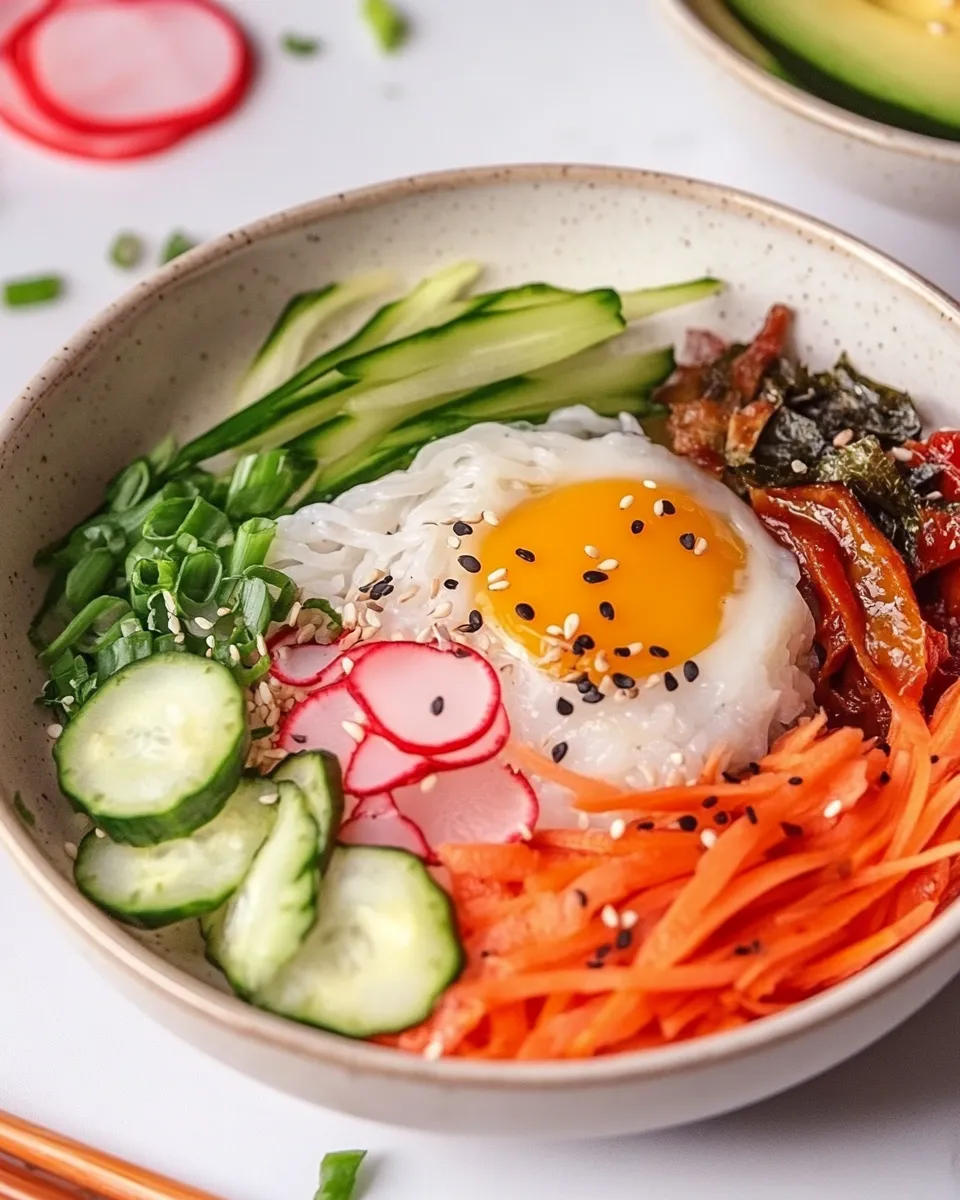
There’s something about a bowl that’s built more like a small, edible landscape than a single dish. Bibimbap is exactly that — a composed bowl of warm rice, crisp vegetables, tender mushrooms, and a runny egg that breaks into a glossy sauce when you mix everything together. It’s practical comfort and bright, clean flavors in one scoop.
I love this version because it’s straightforward to assemble on a weeknight yet feels special enough for guests. The components are simple and mostly cooked quickly in a single skillet. You’ll get a balanced bowl: tang from rice vinegar, savory notes from soy and sesame oil, and a pop of heat if you add gochujang.
The technique matters more than complexity. Prep your vegetables ahead, brown the mushrooms, fry the eggs just before serving, and the bowls come together in minutes. Below I’ll list everything you need, walk you through the steps exactly as I make them, and share practical tips for swapping, storing, and avoiding common mistakes.
What You’ll Need

Ingredients
- 1 cucumber — thinly sliced — adds crunch and a cool, refreshing contrast.
- 2 teaspoons rice vinegar — divided — brightens the cucumber and carrot; split between the two dressings.
- 1 1/2 tablespoons sesame oil — divided — to dress the veggies and to cook mushrooms/eggs; toasted sesame oil gives a nutty depth.
- pinch of sea salt — necessary for seasoning vegetables to taste.
- 3 ounces shiitake mushrooms — sliced — provide an earthy, meaty bite when browned.
- 1 teaspoon soy sauce — seasons the mushrooms with umami.
- 2 eggs — fried sunny-side up and used to top the bowls; yolk creates sauce when broken.
- 2 cups white rice — cooked — the warm base for everything; short- or medium-grain works best.
- 1 cup mung bean sprouts — raw or lightly blanched, they bring crunch and freshness.
- 1 carrot — shredded — adds color, sweetness, and texture.
- 1 tablespoon scallions — chopped, for garnish — a bright finish with mild onion notes.
- Black and white sesame seeds — for garnish — nutty crunch and visual contrast.
- Gochujang sauce — to taste, for garnish — spicy, fermented chili paste; adds depth and heat if you like it.
Bibimbap Made Stepwise
- Place the thinly sliced cucumber in a small bowl. Add 1 teaspoon rice vinegar, 1/2 tablespoon sesame oil, and a small pinch of sea salt. Toss to coat and set aside.
- In another small bowl, combine the shredded carrot with the remaining 1 teaspoon rice vinegar and a small pinch of sea salt. Toss and set aside.
- Heat 1 tablespoon sesame oil in a medium skillet over medium-high heat. Add the sliced shiitake mushrooms and cook, stirring occasionally, about 5 minutes or until browned and tender.
- Season the cooked mushrooms with 1 teaspoon soy sauce, stir to combine, then remove the mushrooms from the skillet and set aside.
- Using the same skillet, reduce heat to medium. Crack both eggs into the skillet and fry sunny-side up until the whites are set and the yolks are cooked to your preference, about 3 minutes.
- Divide the 2 cups cooked white rice evenly between two bowls. Arrange the dressed cucumber, the dressed shredded carrot, 1 cup mung bean sprouts (divide between bowls), and the cooked shiitake mushrooms on top of the rice.
- Top each bowl with a fried egg. Garnish with chopped scallions, black and white sesame seeds, and gochujang sauce to taste.
The Upside of Bibimbap
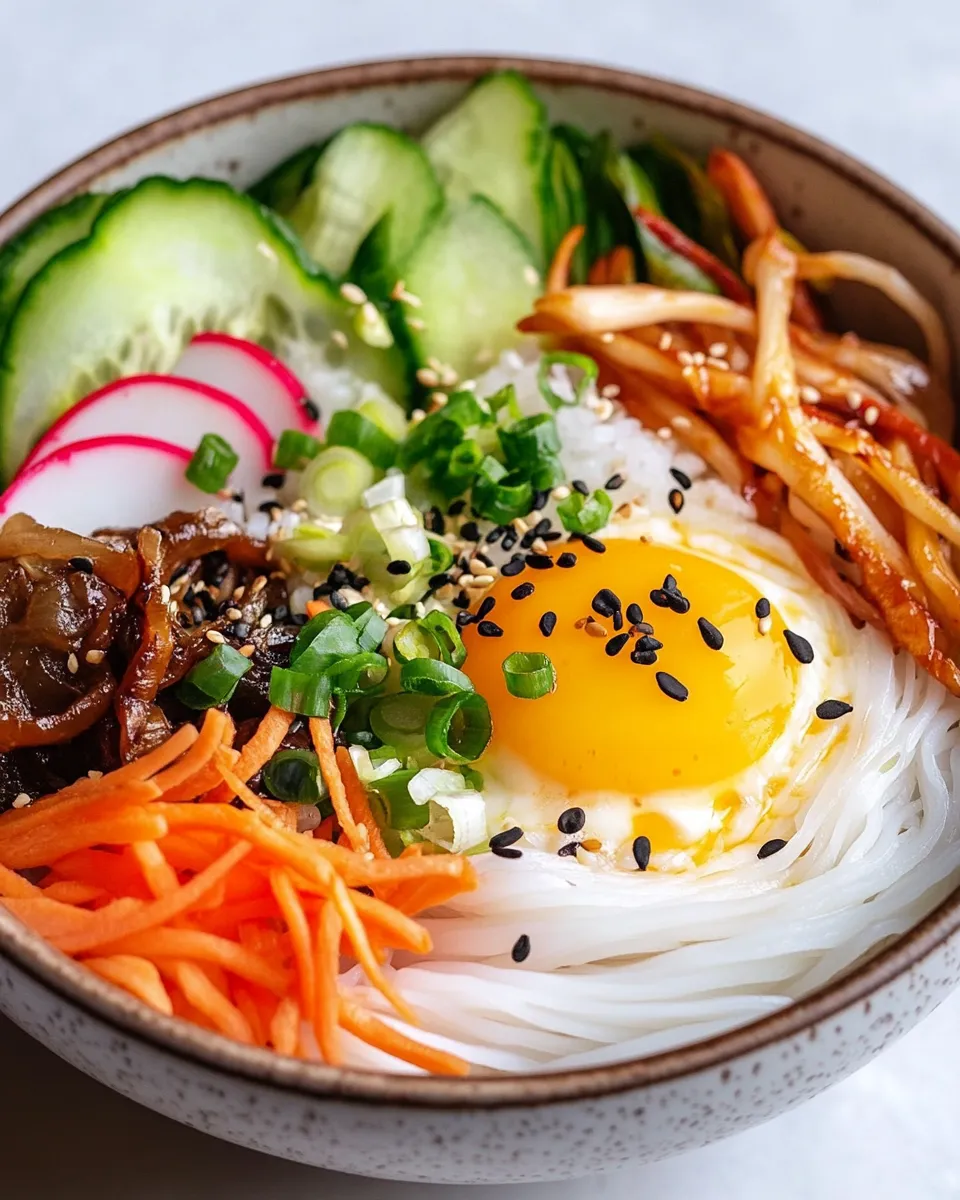
Bibimbap is modular in the best way. You assemble components one by one, and each holds its own flavor while contributing to the whole. That modularity makes it easy to scale: double the vegetables for more bowls, or halve for a single serving. It’s also forgiving — if one element is slightly under- or overdone, the rest carries the bowl.
Nutrition-wise, this version balances carbohydrates (rice), protein (eggs, mushrooms), and vegetables. The raw cucumber and carrot keep a crisp counterpoint to warm rice and earthy mushrooms. And when you break the yolk and toss everything together, you get an instant silky sauce that needs no additional dressing.
Finally, it’s a great template. Use the technique to build different bowls: swap mushrooms for other sautés, change the grains, or vary the garnish. The structure teaches you how to produce maximum flavor with a minimum of fuss.
Allergy-Friendly Substitutes
I keep substitutions focused on the ingredients already in the bowl so you can adjust without buying new pantry items.
- Egg allergy — omit the fried egg. Add an extra portion of cooked shiitake mushrooms or double the mung bean sprouts to keep the bowl hearty and texturally balanced.
- Soy allergy — skip the soy sauce step on the mushrooms. Increase the pinch of sea salt very slightly to taste and rely on sesame oil and browned mushrooms for depth.
- Sesame allergy — leave out sesame oil and sesame seeds. Dress the cucumber and carrot with rice vinegar and a small pinch of sea salt instead.
- Spice sensitivity — omit the gochujang garnish. Rely on scallions and sesame seeds for flavor and texture.
- Mung bean sprout intolerance — simply leave the sprouts off and add more shredded carrot or sliced cucumber for crunch and freshness.
Equipment & Tools
Keep this list minimal. You don’t need anything fancy to make a great bibimbap.
- Medium skillet — for browning mushrooms and frying eggs.
- Two small bowls — for dressing cucumber and carrot separately.
- Rice cooker or pot — for cooking the rice; cooked rice is a must.
- Sharp knife and cutting board — for thinly slicing the cucumber and mushrooms, and for shredding the carrot if you don’t have a grater.
- Spatula or tongs — to remove mushrooms and handle eggs gently.
Learn from These Mistakes
Here are the common slip-ups I see and how to avoid them.
- Overcrowding the skillet when browning mushrooms. Crowded mushrooms steam instead of brown. Cook in a single layer or do two quick batches so you get caramelization and concentrated flavor.
- Underdressing the vegetables. Both cucumber and carrot need that splash of rice vinegar and a pinch of salt to come alive. Toss them well and taste — they should be bright, not bland.
- Frying eggs on too-high heat. If the skillet is too hot the whites will crisp and the yolk will overcook. Medium heat for about 3 minutes is the sweet spot for sunny-side up.
- Serving cold rice. Warm rice binds the bowl. If your rice is chilled, steam it briefly or microwave to take the chill off before assembling.
- Adding gochujang blindly. Start conservatively. A little gochujang goes a long way; you can always add more after mixing your bowl.
Holiday & Seasonal Touches
For winter gatherings, make a larger batch and serve components family-style so guests can build bowls. Warm additional toppings like roasted root vegetables (not in this recipe list) or extra sauteed mushrooms make the dish heartier for cold nights.
In spring and summer, emphasize raw elements: extra cucumber, a higher ratio of shredded carrot, and crisp mung bean sprouts make the bowl brighter. The dressing proportions in this recipe scale well — just double or triple the small bowls of dressed veg when serving more people.
Cook’s Commentary
I keep the seasonings in this recipe deliberately simple. The rice vinegar and sesame oil are a small but impactful dressing for the raw veg. The soy sauce on the mushrooms is essential for an umami lift but use only a teaspoon so it doesn’t overpower the other elements.
The fried egg is non-negotiable for me — it glues the bowl together. If you like a runny yolk, aim for a skillet at medium heat so the white sets gently while the yolk stays soft. If you prefer fully set yolks, let the eggs cook a touch longer or cover the skillet for a minute.
Gochujang is optional but transformative. Add it sparingly at first and toss the bowl to taste. The heat, sweetness, and fermented depth really complete the experience.
Keep It Fresh: Storage Guide
Leftovers store well if you keep components separate.
- Rice: Cool to room temperature then refrigerate in an airtight container up to 3 days. Reheat with a splash of water to restore moisture.
- Mushrooms: Store in a sealed container up to 3 days. Reheat gently in a skillet to refresh texture.
- Dressed cucumber and carrot: Best within 24 hours; they soften over time but remain usable up to 2 days.
- Assembled bowls: If fully assembled, eat within 24 hours. The egg will lose texture and the vegetables will become softer.
Ask the Chef
Q: Can I make this vegan?
A: Yes — omit the egg. To keep the bowl satisfying, add more mushrooms or extra mung bean sprouts. The egg’s role is richness, so consider doubling the mushrooms to bolster umami.
Q: What rice works best?
A: Short- or medium-grain white rice clumps nicely and gives the right mouthfeel. If you only have long-grain, it will still work; the texture will be a bit looser.
Q: Can I prep the components ahead?
A: Absolutely. Dress the cucumber and carrot, cook the mushrooms, and cook rice up to a day ahead. Fry the eggs just before serving for best texture.
Q: How spicy is this?
A: The base recipe is mild; spice comes from gochujang garnish, which you control. Start with a small dollop per bowl and add to taste.
Final Bite
Simple, composed, and adaptable — that’s the strength of this Bibimbap. It’s a weekday staple and a weekend showpiece, depending on how many toppings you add and how you plate it. Follow the steps here exactly for consistent results: dress the vegetables lightly, brown the mushrooms for umami, fry eggs gently, and assemble with hot rice. Break the yolk, mix everything together, and enjoy the layered textures and flavors in every spoonful.
Make it your own. Once you’re comfortable with this base, tweak proportions, try different vegetables you already have on hand, or add extra garnishes. The bowl rewards experimentation.
Bibimbap Recipe
Ingredients
Ingredients
- 1 cucumberthinly sliced
- 2 teaspoonsrice vinegardivided
- 1 1/2 tablespoonssesame oildivided
- pinchof sea salt
- 3 ouncesshiitake mushroomssliced
- 1 teaspoonsoy sauce
- 2 eggs
- 2 cupswhite ricecooked
- 1 cupmung bean sprouts
- 1 carrotshredded
- 1 tablespoonscallionschopped for garnish
- Black and white sesame seedsfor garnish
- Gochujang sauceto taste for garnish
Instructions
Instructions
- Place the thinly sliced cucumber in a small bowl. Add 1 teaspoon rice vinegar, 1/2 tablespoon sesame oil, and a small pinch of sea salt. Toss to coat and set aside.
- In another small bowl, combine the shredded carrot with the remaining 1 teaspoon rice vinegar and a small pinch of sea salt. Toss and set aside.
- Heat 1 tablespoon sesame oil in a medium skillet over medium-high heat. Add the sliced shiitake mushrooms and cook, stirring occasionally, about 5 minutes or until browned and tender.
- Season the cooked mushrooms with 1 teaspoon soy sauce, stir to combine, then remove the mushrooms from the skillet and set aside.
- Using the same skillet, reduce heat to medium. Crack both eggs into the skillet and fry sunny-side up until the whites are set and the yolks are cooked to your preference, about 3 minutes.
- Divide the 2 cups cooked white rice evenly between two bowls. Arrange the dressed cucumber, the dressed shredded carrot, 1 cup mung bean sprouts (divide between bowls), and the cooked shiitake mushrooms on top of the rice.
- Top each bowl with a fried egg. Garnish with chopped scallions, black and white sesame seeds, and gochujang sauce to taste.
Equipment
- Small Bowl
- Medium Skillet
- Bowl