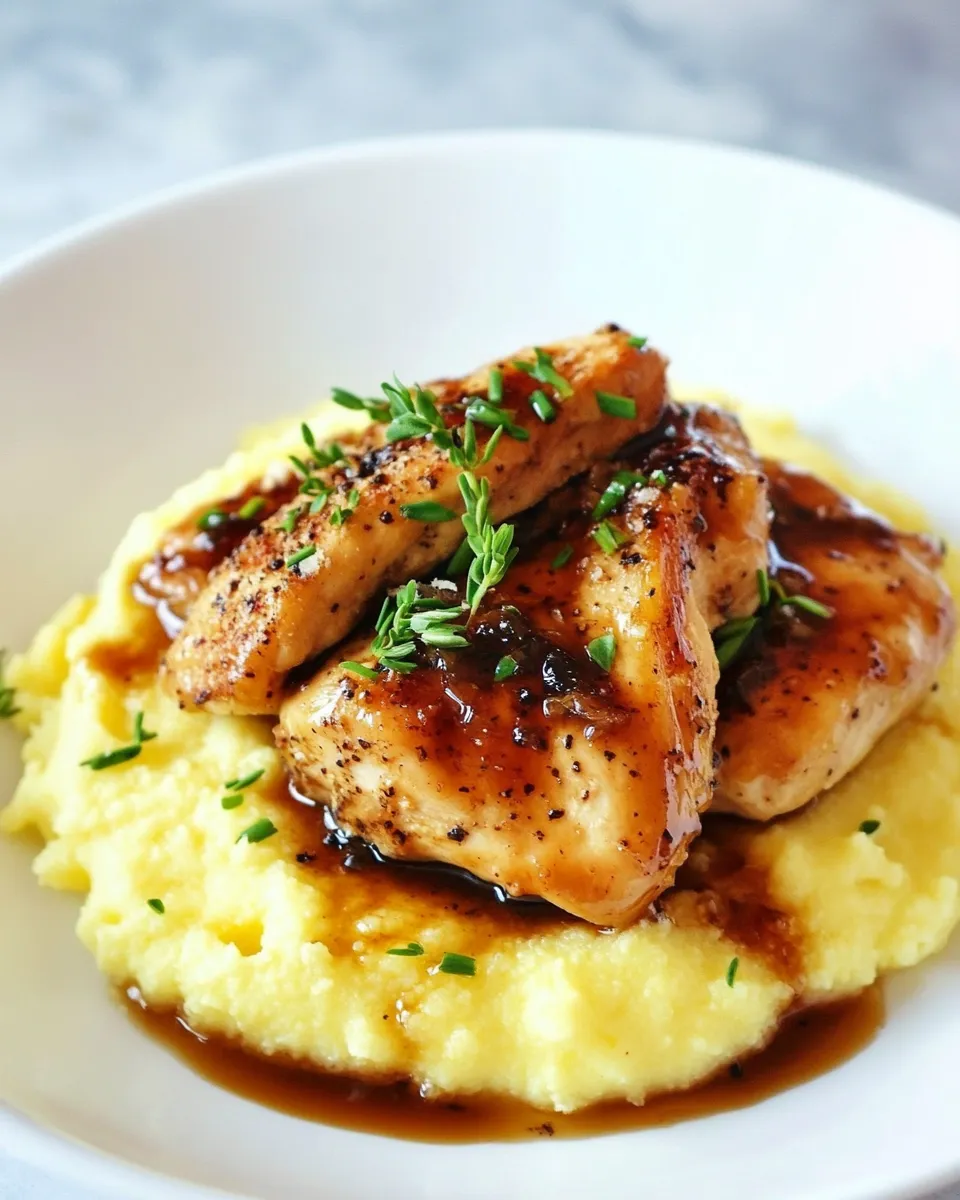
Balsamic Orange Glazed Chicken with Creamy Goat Cheese Polenta
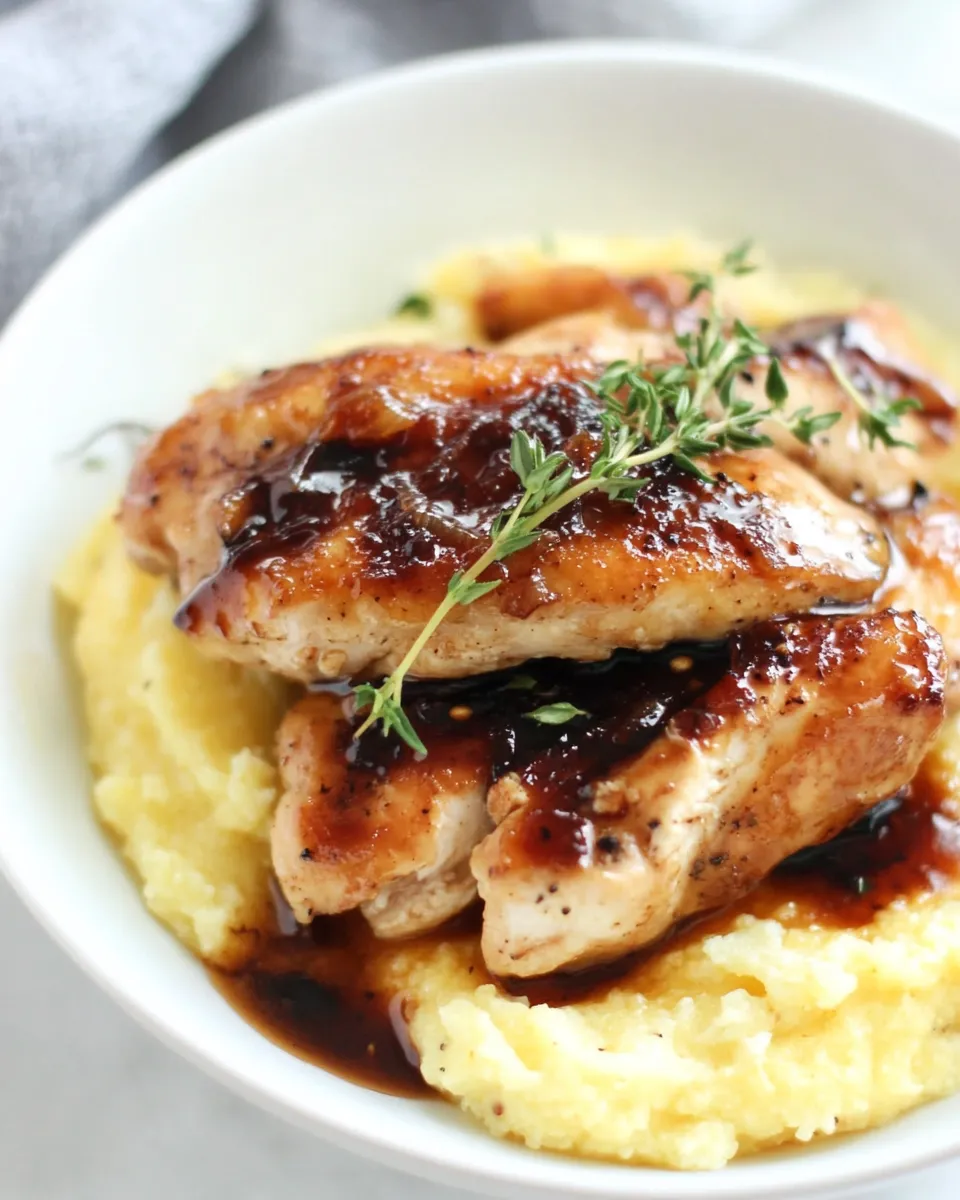
I love recipes that feel special but come together without drama. This Balsamic Orange Glazed Chicken with Creamy Goat Cheese Polenta is exactly that: bright, savory, and comforting. The chicken gets a glossy, tangy-sweet glaze while the polenta is finished with tangy goat cheese and butter for a silky base that soaks up every last drop of sauce.
It’s an elegant enough dish for a dinner party and straightforward enough for a weeknight. The glaze uses pantry-friendly ingredients—orange marmalade and balsamic—so you can pull this off with minimal shopping. The polenta cooks fast and holds a creamy texture that contrasts perfectly with the glazed chicken.
Below I walk you through ingredients, the exact step-by-step method, and practical notes so your timing is tight and your plate looks as good as it tastes. Read through the equipment and storage tips so nothing surprises you when you cook.
Gather These Ingredients

- 2 tablespoons extra-virgin olive oil — for browning the chicken and building flavor in the pan.
- 4 pounds boneless skinless chicken breasts (about 2) — the main protein; pat dry before cooking for a good sear.
- Salt and freshly ground black pepper — essential for seasoning both chicken and polenta; taste as you go.
- 1 teaspoon poultry seasoning — adds warm, savory background notes to the chicken.
- 1/2 teaspoon dried rosemary — a little herb lift that pairs well with orange and balsamic.
- 1/2 cup orange marmalade — provides the orange flavor and the sweet base of the glaze.
- 1/2 cup balsamic vinegar — gives depth, tang, and that beautiful dark gloss to the glaze.
- 1/4 cup chicken broth — thins and loosens the glaze while adding savory umami.
- 1/8 cup chopped fresh parsley (plus more for garnish) — folded into the finished glaze and used for a fresh garnish.
- 1 1/2 cups water or chicken broth (plus more for thinning) — the cooking liquid for the polenta; use broth for extra flavor.
- 1 1/2 cups milk — makes the polenta creamy and tender.
- 1 cup polenta — the grain base; whisk into boiling liquid for a quick-cook polenta.
- 2 tablespoons butter — stirred into the polenta off the heat for richness and shine.
- 4 ounces goat cheese — folded into the polenta to create tang, creaminess, and a silky texture.
Mastering (Balsamic Orange Glazed Chicken with Creamy Goat Cheese Polenta): How-To
- Prepare: measure out the ingredients, chop the parsley if not already chopped (you will use the 1/8 cup chopped parsley listed and there is additional parsley available for garnish). Pat the chicken breasts dry.
- Season the chicken breasts on both sides with salt, freshly ground black pepper, and 1 teaspoon poultry seasoning.
- Heat 2 tablespoons extra-virgin olive oil in a large skillet over medium-high heat until shimmering.
- Add the chicken to the hot skillet and brown for about 5 minutes without moving. Turn the chicken, sprinkle 1/2 teaspoon dried rosemary over the top, and cook about 5 minutes more until the exterior is golden (the chicken may not be fully cooked through yet).
- In a small bowl, stir together 1/2 cup orange marmalade, 1/2 cup balsamic vinegar, and 1/4 cup chicken broth. Pour this mixture over the chicken in the skillet.
- Bring the pan to a boil, then reduce heat to medium-low and simmer, turning the chicken once or twice, for 10 to 15 minutes so the glaze coats the chicken and the chicken finishes cooking through (internal temperature should reach 165°F/74°C).
- While the glaze is simmering, make the polenta: in a medium pot bring 1 1/2 cups water or chicken broth plus 1 1/2 cups milk to a boil. Whisk in 1 cup polenta and cook, whisking, for 2–3 minutes until thickened. If the polenta becomes too thick, add a little more water or broth (from the “plus more for thinning” allowance) to reach your desired consistency.
- Off the heat, stir 2 tablespoons butter and 4 ounces goat cheese into the polenta until melted and smooth. Season to taste with salt and pepper.
- When the chicken is done, transfer the breasts to a plate and tent loosely with foil to rest. Increase the skillet heat to medium-high and cook the remaining glaze until it thickens slightly and coats the back of a spoon, about 1–3 minutes. Stir the 1/8 cup chopped parsley (from the ingredients) into the finished glaze; reserve additional parsley for garnish as needed.
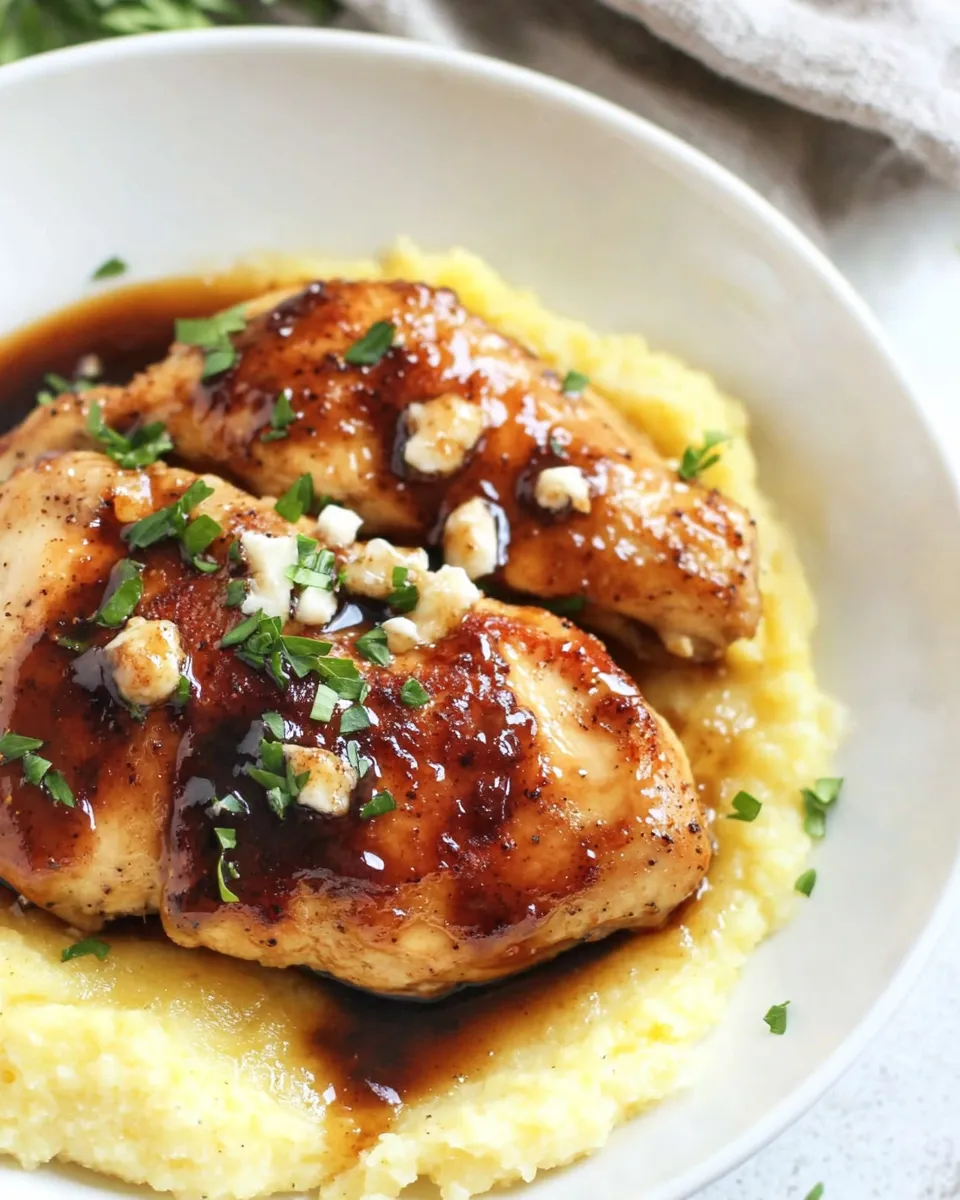
- To serve, spoon creamy goat cheese polenta into shallow bowls or plates, place a chicken breast on top, and spoon extra balsamic orange glaze over the chicken. Garnish with the reserved chopped parsley.
Why This Recipe Belongs in Your Rotation
This recipe hits a balance that makes it a keeper. It’s built from pantry-friendly staples—marmalade and balsamic—yet the result feels layered and restaurant-worthy. The sweet-tart glaze brightens the plate, while the goat cheese polenta grounds it with comforting richness.
It’s also versatile in timing: prep is short, the polenta cooks quickly, and the chicken finishes in the glaze so you spend less time juggling multiple pans. If you want a weeknight staple that can also double as a date-night menu item, this is a prime candidate.
Vegan & Vegetarian Swaps
- Vegetarian main: replace chicken with thick-cut roasted or grilled cauliflower steaks or portobello caps. Brown them and finish in the same glaze; timing will vary—watch closely so they don’t overcook.
- Vegan protein: use firm tofu or tempeh, pressed and seared, then simmer in the glaze. Skip the butter and goat cheese.
- Polenta: use plant-based milk (almond, oat, or soy) and swap butter for vegan butter. Replace goat cheese with a tangy dairy-free spread or nutritional yeast plus a splash of lemon for brightness.
- Broth: use vegetable broth in place of chicken broth for a fully plant-based finish.
Setup & Equipment
- Large skillet (preferably heavy-bottomed or cast iron) — for browning chicken and finishing the glaze.
- Medium pot — for cooking polenta; choose one with a heavy bottom to prevent scorching.
- Whisk — for smoothing polenta into the hot liquids quickly.
- Tongs or a spatula — for turning and moving the chicken without tearing.
- Instant-read thermometer — optional but recommended to confirm the chicken reaches 165°F/74°C.
- Small bowl — to mix the marmalade-balsamic-chicken broth glaze before adding it to the pan.
Steer Clear of These
- Don’t skip patting the chicken dry. Excess surface moisture prevents a proper sear and will hinder the caramelization that helps the glaze stick.
- Don’t rush the glaze reduction. If you cut the simmering time too short, the sauce will be thin and won’t cling to the chicken. Conversely, don’t over-reduce it into a syrup; you want it glossy and spoonable.
- Avoid high heat for the polenta. Rapid, rolling boils can cause splatter and inconsistent cooking. Bring liquids to a boil, then whisk in polenta and keep it on moderate heat while stirring.
- Don’t skip resting the chicken. Tent it for a few minutes so the juices redistribute and the meat stays moist.
Spring–Summer–Fall–Winter Ideas
Spring: Brighten the plate with lightly dressed spring greens on the side—arugula with lemon and olive oil pairs well—and finish the dish with extra chopped chives or mint for freshness.
Summer: Swap the marmalade for a stone-fruit preserve (peach or apricot) if you want a fruit-forward glaze. Add grilled corn and charred tomatoes as seasonal sides.
Fall: Roast root vegetables alongside the chicken for an earthy side. Add a sprinkle of toasted walnuts or hazelnuts to the polenta for texture and a nutty note.
Winter: Stir in a tablespoon of Dijon or a splash of cream to the glaze for extra depth and warmth. Serve with braised greens or a roasted squash to make the meal feel cozy and substantial.
Chef’s Rationale
I pair a tangy-sweet glaze with a tangy goat cheese polenta intentionally. The marmalade brings bright citrus, balsamic brings acidity and body, and the goat cheese creates a creamy counterpoint with a slight tang. Together they strike a balance so neither component dominates.
The short sear on the chicken develops Maillard flavor that the glaze amplifies. Finishing the polenta off the heat with butter and goat cheese prevents separation and keeps the texture silky. Small techniques—drying the chicken, using a heavy skillet, and resting the meat—make a measurable difference.
Cooling, Storing & Rewarming
Cool components separately. Place leftover chicken and glaze in an airtight container and refrigerate for up to 3–4 days. Store polenta in a separate container; it will firm up as it cools.
To rewarm chicken: gently reheat in a skillet over low–medium heat with a splash of chicken broth to loosen the glaze, or place in a 325°F oven until warmed through. For polenta: reheat gently on the stove with a splash of milk or broth and whisk until smooth. Microwave works in a pinch—stir every 30 seconds and add liquid as needed.
Ask the Chef
Can I use chicken thighs instead?
Yes. Bone-in thighs will need more time; boneless thighs can be seared and finished in the glaze with similar timing but watch internal temperature for doneness and adjust simmer time accordingly.
My glaze is too thin—what now?
Remove the chicken and boil the remaining sauce over medium-high until it thickens and coats the back of a spoon, about 1–3 minutes. You can also whisk in a small pat of butter off heat for extra gloss.
Polenta is lumpy—how to fix?
Return it to low heat and whisk briskly, adding a splash of warm liquid to loosen. For very stubborn lumps, pass through a fine-mesh sieve or use an immersion blender briefly.
Bring It to the Table
Serve the polenta spooned into shallow bowls, top with a chicken breast, and finish with extra glaze and a scattering of fresh parsley. Offer lemon wedges on the side for guests who like an extra bright squeeze. A simple green salad or roasted seasonal vegetables completes the plate without competing with the glaze.
Pair with a medium-bodied white like a Chardonnay or a light red such as Pinot Noir. The acidity in the glaze can handle a wine with some brightness, and the goat cheese polenta loves anything with a hint of oak or fruitiness.
This is one of those meals that looks like you fussed, but you actually didn’t. With a few intentional steps and the right timing, you’ll get a glossy, flavorful dinner that’s as satisfying to eat as it is to serve.
Balsamic Orange Glazed Chicken with Creamy Goat Cheese Polenta
Ingredients
Ingredients
- 2 tablespoonsextra-virgin olive oil
- 4 poundsboneless skinless chicken breastsabout 2
- Salt and freshly ground black pepper
- 1 teaspoonpoultry seasoning
- 1/2 teaspoondried rosemary
- 1/2 cuporange marmalade
- 1/2 cupbalsamic vinegar
- 1/4 cupchicken broth
- 1/8 cupchopped fersh parsleyplus mor for garnish
- polenta
- 1 1/2 cupswater or chicken brothplus more for thinning
- 1 1/2 cupsmilk
- 1 cuppolenta
- 2 tablespoonsbutter
- 4 ouncesgoat cheese
- salt and pepper
Instructions
Instructions
- Prepare: measure out the ingredients, chop the parsley if not already chopped (you will use the 1/8 cup chopped parsley listed and there is additional parsley available for garnish). Pat the chicken breasts dry.
- Season the chicken breasts on both sides with salt, freshly ground black pepper, and 1 teaspoon poultry seasoning.
- Heat 2 tablespoons extra-virgin olive oil in a large skillet over medium-high heat until shimmering.
- Add the chicken to the hot skillet and brown for about 5 minutes without moving. Turn the chicken, sprinkle 1/2 teaspoon dried rosemary over the top, and cook about 5 minutes more until the exterior is golden (the chicken may not be fully cooked through yet).
- In a small bowl, stir together 1/2 cup orange marmalade, 1/2 cup balsamic vinegar, and 1/4 cup chicken broth. Pour this mixture over the chicken in the skillet.
- Bring the pan to a boil, then reduce heat to medium-low and simmer, turning the chicken once or twice, for 10 to 15 minutes so the glaze coats the chicken and the chicken finishes cooking through (internal temperature should reach 165°F/74°C).
- While the glaze is simmering, make the polenta: in a medium pot bring 1 1/2 cups water or chicken broth plus 1 1/2 cups milk to a boil. Whisk in 1 cup polenta and cook, whisking, for 2–3 minutes until thickened. If the polenta becomes too thick, add a little more water or broth (from the "plus more for thinning" allowance) to reach your desired consistency.
- Off the heat, stir 2 tablespoons butter and 4 ounces goat cheese into the polenta until melted and smooth. Season to taste with salt and pepper.
- When the chicken is done, transfer the breasts to a plate and tent loosely with foil to rest. Increase the skillet heat to medium-high and cook the remaining glaze until it thickens slightly and coats the back of a spoon, about 1–3 minutes. Stir the 1/8 cup chopped parsley (from the ingredients) into the finished glaze; reserve additional parsley for garnish as needed.
- To serve, spoon creamy goat cheese polenta into shallow bowls or plates, place a chicken breast on top, and spoon extra balsamic orange glaze over the chicken. Garnish with the reserved chopped parsley.
Equipment
- Large Skillet
- Medium pot
- Whisk
- Small Bowl
- Spoon
- Foil
Notes
Chicken adapted from Rachel Ray.