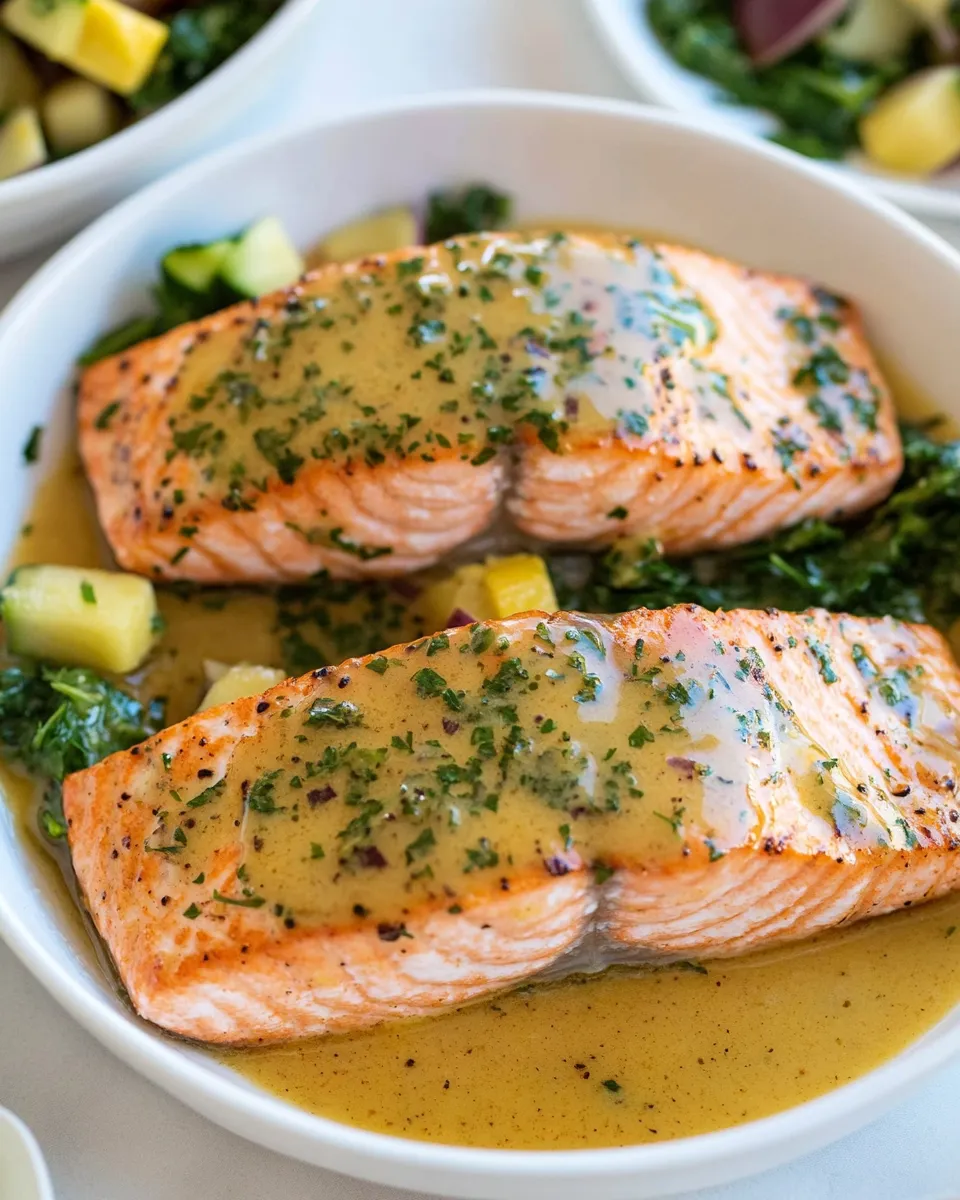
Baked Salmon with Buttery Honey Mustard Sauce
There are nights when I want a dinner that feels thoughtful but doesn’t demand a chef’s schedule. This baked salmon fits that bill: four simple fillets, a buttery honey‑mustard coating, and a baking time that’s shorter than it takes to set the table. The sauce is bright enough to cut through the fat, and buttery enough to give the fish a glossy, irresistible finish.
I like this recipe for weeknights, because it gives you control — you can follow it exactly for a reliably juicy result, or tweak tiny details to match whatever’s in your kitchen. It hits familiar flavor notes, so picky eaters will usually come back for seconds, and it presents beautifully without fussy plating.
Below I’ll walk you through exactly what goes into the dish, step-by-step instructions (kept true to the original method), gear you’ll want within reach, common mistakes to avoid, and a few practical swaps if you need them. Everything is written so you can get dinner on the table with confidence.
What Goes Into Baked Salmon with Buttery Honey Mustard Sauce

Ingredients
- 4 (6 oz) skinless salmon fillets — the star of the dish; even thickness helps them cook evenly.
- 2 Tbsp unsalted butter, melted — gives the sauce its glossy richness and helps the mustard meld.
- 1 1/2 Tbsp dijon mustard — adds tang and a bit of bite; Dijon blends smoothly with the butter.
- 1 1/2 Tbsp honey — balances the mustard with sweetness and creates a light glaze when baked.
- 1 tsp minced garlic (1 clove) — builds background savory flavor without overpowering the fish.
- Salt and freshly ground black pepper — essential now and after brushing to season both sides.
- 2 tsp minced fresh parsley (optional) — brightens the finished dish and adds a fresh color contrast.
Baked Salmon with Buttery Honey Mustard Sauce Made Stepwise
- Preheat the oven to 400°F. Spray a 13×9-inch baking dish with non-stick cooking spray.
- In a small bowl, whisk together 2 Tbsp melted unsalted butter, 1 1/2 Tbsp Dijon mustard, 1 1/2 Tbsp honey, and 1 tsp minced garlic until smooth. (If your butter is not already melted, melt it first.)
- Pat the 4 (6-oz) salmon fillets dry with paper towels. Lightly season the bottoms of the fillets with salt and freshly ground black pepper.
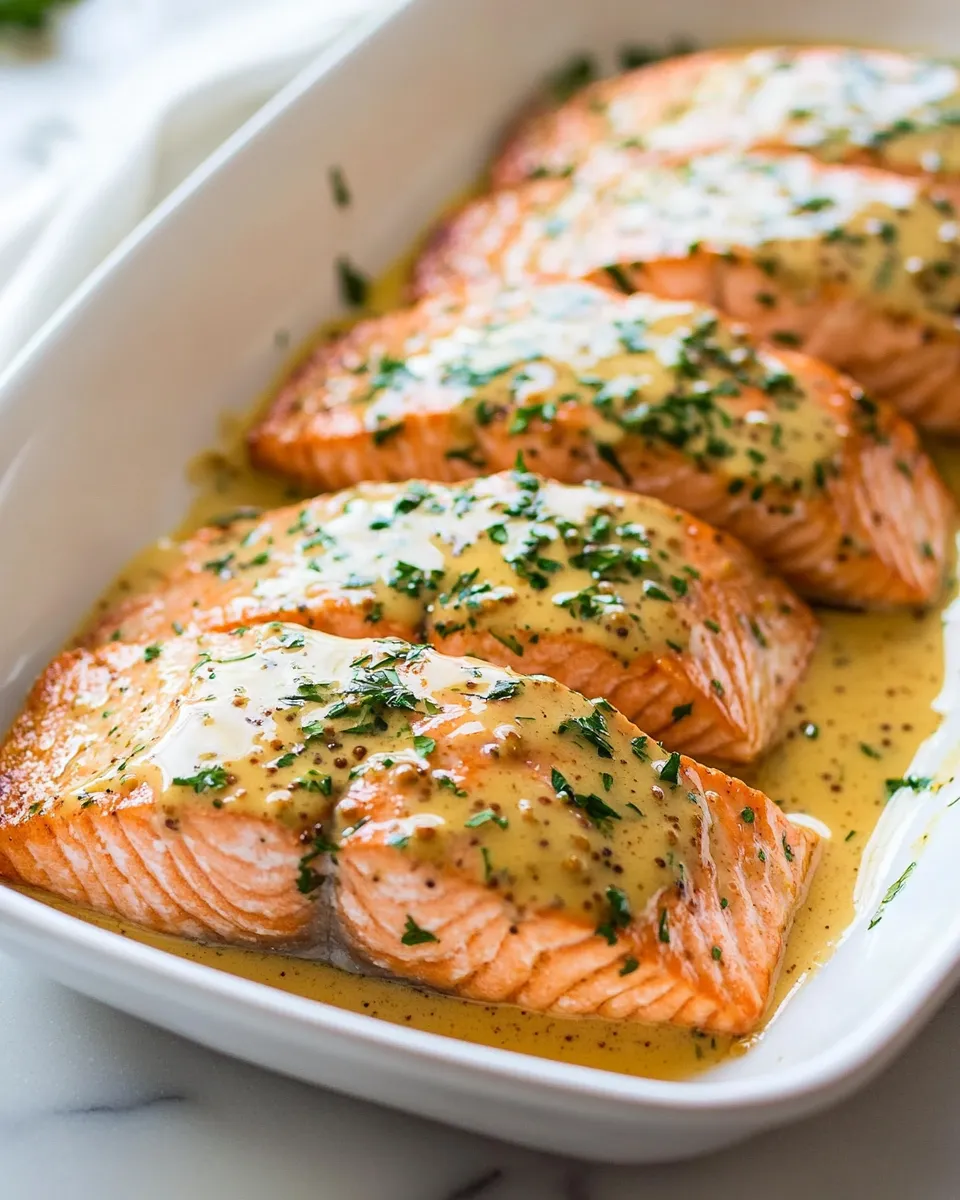
- Lay the salmon fillets in a single layer in the prepared baking dish, spaced evenly apart.
- Brush the butter–mustard mixture evenly over the top and sides of each fillet.
- Lightly season the tops of the fillets with additional salt and freshly ground black pepper.
- Bake in the preheated oven for 10–13 minutes, until the salmon is opaque throughout and flakes easily with a fork.
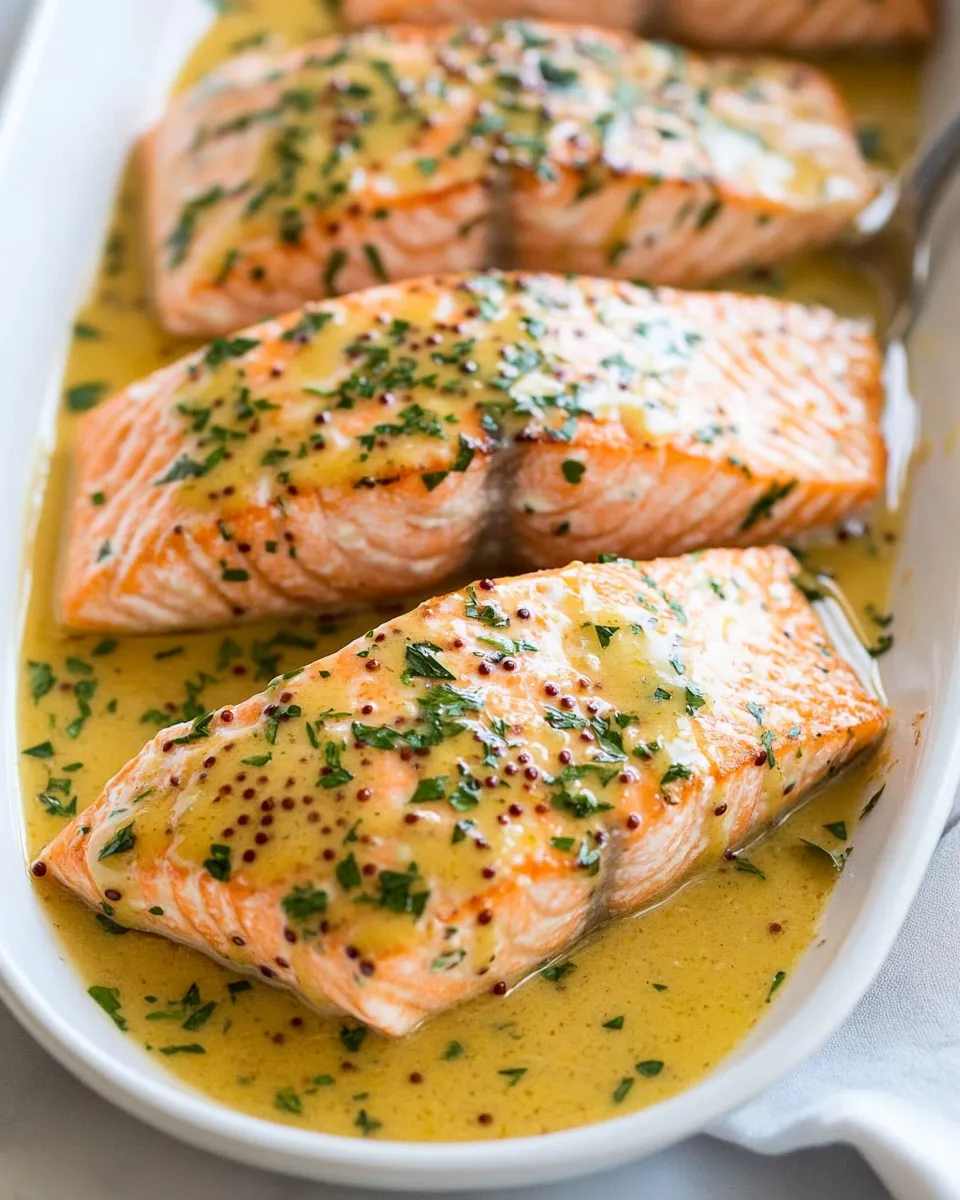
- Sprinkle with 2 tsp minced fresh parsley, if using, and serve immediately.
Reasons to Love Baked Salmon with Buttery Honey Mustard Sauce
This recipe balances comfort and speed. The sauce is buttery and luxurious but the mustard and honey keep it lively. The method is straightforward, with one small bowl to make the sauce and a single baking dish to clean — perfect for busy evenings.
It’s forgiving. Bake time accounts for slight differences in fillet thickness, and the sauce hides minor variations in cooking so the fish still feels elevated. It also scales well: double the ingredients, use a larger dish, and you’ve got an easy family meal or a casual dinner for guests.
Healthier Substitutions
If you want to trim calories or saturated fat without losing flavor, a few swaps work well:
- Butter — swap for an equal amount of olive oil for a lighter fat profile and heart-healthy monounsaturated fats. The texture will be slightly less glossy but still delicious.
- Honey — reduce by a half or substitute a sugar-free syrup if you need to cut sugars, keeping in mind sweetness and glaze will be less pronounced.
- Salt — use a light hand or a potassium-based salt alternative for lower sodium; taste before serving to adjust.
- Parsley — optional, but herbs like dill or chives add flavor with negligible calories and enhance freshness.
What’s in the Gear List
Keep these on hand before you start. No specialty equipment required.
- 13×9-inch baking dish — recommended in the directions for even baking and spacing the fillets.
- Small mixing bowl — to whisk the butter, mustard, honey, and garlic together.
- Pastry brush or spoon — to brush or spoon the butter–mustard mixture over the fillets.
- Paper towels — for patting salmon dry; dryness encourages even browning and prevents sogginess.
- Measuring spoons — to keep the sauce balanced.
- Instant-read thermometer (optional) — helpful if you want precise doneness (salmon is done at about 125–130°F for medium-rare to 140°F for well done).
Errors to Dodge
Two mistakes will undermine this dish: under-seasoning and overcooking. Salmon needs salt to shine; season both bottom and top lightly as the steps instruct. Don’t skip patting the fillets dry — excess moisture will steam rather than roast, and the sauce won’t adhere well.
Watch the clock in the oven. The recipe’s 10–13 minute window assumes average fillets around 6 ounces each. If they’re noticeably thicker or thinner, adjust the time and check for flakiness or use an instant-read thermometer. Remove the fish the moment it flakes easily and is opaque through the center.
Tailor It to Your Diet
Want to keep the sauce but alter other elements for dietary needs? Here are practical modifications that respect the recipe’s intent:
- Low-carb / keto: keep butter and Dijon, cut honey to half or omit it; a zero-carb sweetener can replace honey if you want some sweetness.
- Dairy-free: replace the butter with extra virgin olive oil or a dairy-free spread that melts and emulsifies.
- Pescatarian-friendly sides: serve the salmon with steamed asparagus, a crisp salad, or cauliflower rice to keep the meal light and green-forward.
- Nut allergies: this recipe contains no nuts — it’s ready for nut-free households without change.
Pro Perspective
Butter gives the sauce a glossy finish and mouthfeel but heat it gently. If your butter is hot when mixed with mustard, the emulsion can break slightly; whisk briskly and let it cool a bit if needed. Dijon mustard is an unsung hero here — it binds the fat and the honey, creating a thin glaze instead of a runny sauce.
Bake uncovered. The short roast time lets the top take on a gentle sheen without drying. If you need a bit of color on top, switch to the broiler for 30–60 seconds at the end, watching closely so the honey doesn’t burn. But generally, the baked finish gives a consistent texture and keeps the flaky interior tender.
Cooling, Storing & Rewarming
Cool leftover salmon at room temperature no longer than two hours, then refrigerate in an airtight container for up to 3 days. Keep the sauce-coated fillets together to preserve flavor; the butter–mustard glaze will firm slightly in the fridge.
To rewarm without drying: place fillets in a single layer on a baking sheet, cover loosely with foil, and warm in a 275–300°F oven for 8–12 minutes, until warmed through. Alternatively, reheat gently in a skillet over low heat with a teaspoon of water or a light brush of oil to recreate moisture. Microwaving works in a pinch but risks an uneven, rubbery texture.
Helpful Q&A
Q: Can I marinate the salmon in the sauce ahead of time?
A: You can brush the mixture onto the fillets 15–30 minutes ahead if you want the flavors to meld, but avoid long marinades with honey and salt because the texture of the fish can change. The method provided produces bright flavor with minimal prep time.
Q: How can I tell when the salmon is done without a thermometer?
A: Use a fork to check if the flesh flakes easily along the grain and looks opaque all the way through. If it still looks translucent in the center, give it another minute or two and check again.
Q: My honey burned the last time I broiled. Any tips?
A: Honey can burn quickly under high heat. If you broil for color, keep the oven rack farther from the element and watch constantly. A better option is to finish under the broiler for just 30–60 seconds or skip broiling and rely on the baked glaze.
Q: Can I use skin-on salmon?
A: The source recipe calls for skinless fillets. If you use skin-on, you can lay the fillets skin-side down and either leave the skin on (it will render some fat and crisp) or remove it after cooking. Baking time may change slightly with thicker fillets.
Bring It Home
This Baked Salmon with Buttery Honey Mustard Sauce is a daily-dinner hero — fast, reliable, and pleasing to most palates. Stick to the simple steps: pat the fish dry, season the bottoms and tops, brush the butter–mustard glaze, and bake until flaky. A small sprinkle of fresh parsley makes it feel finished, but the flavor is the real draw.
Try it tonight with a simple green salad or roasted vegetables, and make note of how your oven behaves so the 10–13 minute window lands you the perfect flaky fillet. If you take a photo, I’d love to see how yours turns out — there’s something quietly satisfying about pulling a sheet from the oven and knowing a good meal is ready.
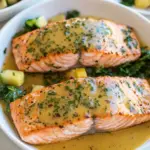
Baked Salmon with Buttery Honey Mustard Sauce
Ingredients
Ingredients
- 4 6 ozskinless salmon fillets
- 2 Tbspunsalted butter melted
- 1 1/2 Tbspdijon mustard
- 1 1/2 Tbsphoney
- 1 tspminced garlic 1 clove
- Salt and freshly ground black pepper
- 2 tspminced fresh parsley optional
Instructions
Instructions
- Preheat the oven to 400°F. Spray a 13x9-inch baking dish with non-stick cooking spray.
- In a small bowl, whisk together 2 Tbsp melted unsalted butter, 1 1/2 Tbsp Dijon mustard, 1 1/2 Tbsp honey, and 1 tsp minced garlic until smooth. (If your butter is not already melted, melt it first.)
- Pat the 4 (6-oz) salmon fillets dry with paper towels. Lightly season the bottoms of the fillets with salt and freshly ground black pepper.
- Lay the salmon fillets in a single layer in the prepared baking dish, spaced evenly apart.
- Brush the butter–mustard mixture evenly over the top and sides of each fillet.
- Lightly season the tops of the fillets with additional salt and freshly ground black pepper.
- Bake in the preheated oven for 10–13 minutes, until the salmon is opaque throughout and flakes easily with a fork.
- Sprinkle with 2 tsp minced fresh parsley, if using, and serve immediately.
Equipment
- 13x9-inch baking dish
- non-stick cooking spray
- Small Bowl
- Whisk
- Pastry brush or spoon
Notes
*Check interior of salmon doneness, by taking a sharp knife to check into the center of the thickest part. If the salmon is beginning to flake, but still has a little translucency in the middle, it's done.