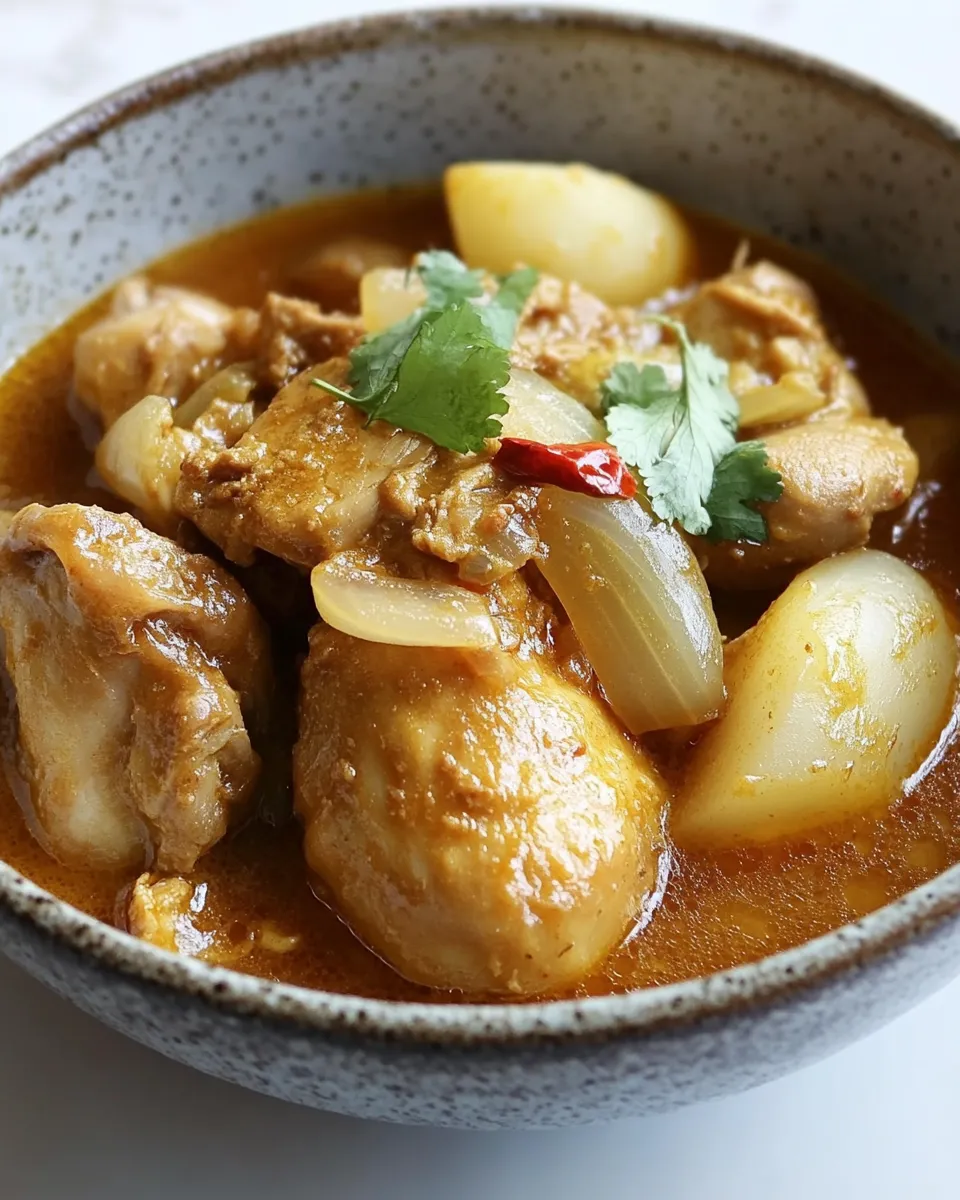
Authentic Massaman Chicken Curry
This Massaman chicken curry is the kind of dish I turn to when I want something comforting, aromatic, and completely crowd-pleasing. It takes a little time up front — toasting spices and building a real curry paste — but the payoff is a deeply layered curry with warm spices, mellow coconut, and tamarind brightness. It’s authentic in technique and honest in flavor; you’ll notice the difference from jarred pastes as soon as the aroma hits the kitchen.
I’ll walk you through every stage: shopping, making the paste, building the curry, and how to finish it so the balance is right. There are small, practical tips tucked into each step so you don’t waste time guessing. If you’re short on time, there’s a clear option to use store-bought paste while keeping many of the same finishing steps.
Expect a curry that’s mildly spicy, richly spiced, and gently sweet-sour. Serve it with steamed jasmine rice and a simple cucumber salad to cut the richness. Read on for the ingredients, the exact step-by-step method, and smart storage and reheating tips so you can make this again and again.
Ingredients

- 10 dried long chilies (seeds removed) — primary source of heat and color for the paste; remove seeds to control spice level.
- 1 tsp white peppercorns — adds warm, sharp undertone to the toasted spice mix.
- 2 tbsp lemongrass (sliced, tender part only) — bright citrus aromatics for the paste; use only the tender inner stalk.
- 1 tsp galangal (sliced) — peppery, pine-like flavor that’s essential to Thai curry character.
- 2 coriander roots (cleaned and chopped) — deep, earthy coriander flavor; roots are more aromatic than stems.
- ½ piece whole nutmeg (grated) — warm, sweet spice; grate fresh for the best aroma.
- 3 blades mace — adds sweet, floral warmth to the toasted mix.
- 10 whole cloves (spice) — small but potent; contributes depth to the curry paste.
- 10 cloves garlic — backbone aromatic; roast/char slightly to mellow sharpness.
- 1 cinnamon stick (about 5 cm / 2 inches) — provides warm, sweet spice to the blend.
- 5–6 shallots (peeled) — sweet, rounded allium flavor that caramelizes nicely in the paste.
- 10 green cardamom pods — floral, citrusy lift to the spice profile.
- 3 tsp coriander seeds — one of the primary toasted seeds for the paste.
- 1 tsp cumin — earthy, nutty balance to the brighter spices.
- 1 piece kaffir lime peel (optional, for aroma) — potent citrus aroma; optional but highly recommended if available.
- 1 piece fresh ginger (about 2 cm / 1 inch) — adds warmth and fresh bite alongside galangal and garlic.
- 1 tbsp shrimp paste (optional) — umami anchor; use if you eat seafood and want authentic depth.
- 2 chicken drumsticks (or bone-in chicken pieces) — protein; bone-in pieces give more flavor to the curry.
- 200 g Massaman curry paste (from above) — measured paste for cooking; set aside after you make it or use 200 g store-bought.
- 475 ml thick coconut milk (coconut cream) — for frying the paste and building richness.
- 700 ml thin coconut milk (or dilute 1 cup thick coconut milk with 2 cups water) — for simmering the curry and adjusting body.
- 2 onions (sliced) — soften in the curry and meld with the paste for body and sweetness.
- 500 g potatoes (peeled and cubed) — starchy element that soaks up flavor and rounds the dish.
- 200 g cashew nuts plain roasted — texture and nutty sweetness; fold in during cooking.
- 2 tbsp palm sugar — traditional sweetener; balances tamarind and fish sauce.
- 1 pinch salt — for adjusting seasoning.
- ½ tbsp fish sauce — umami and saltiness; adjust to taste within listed ingredients.
- 4 tbsp tamarind paste — provides the characteristic tangy, fruity sour note.
Your Shopping Guide
Buy whole spices where possible: dried chilies, coriander seeds, cardamom pods, white peppercorns, cloves, and a small piece of nutmeg. Whole spices toast far better than pre-ground versions and you’ll get a fresher, brighter curry paste. If you don’t have a spice grinder, a mortar and pestle works just as well but plan for more elbow grease.
For aromatics, look for fresh lemongrass stalks (the pale, tender inner part), galangal (often sold in Asian markets), coriander roots (or use extra stalks if unavailable), and kaffir lime peel if you can find it. Use plain roasted cashews — salted versions will throw off the balance. Palm sugar, tamarind paste, and fish sauce are pantry essentials for Thai curries; you can usually find them in the Asian aisle or at an Asian grocery store.
Stepwise Method: Authentic Massaman Chicken Curry
- Prepare and toast the dry spices: heat a dry skillet over low heat. Add 10 dried long chilies (seeds removed), 1 tsp white peppercorns, 3 tsp coriander seeds, 1 tsp cumin, 10 green cardamom pods, 10 whole cloves (spice), ½ piece whole nutmeg (grated), 3 blades mace, and 1 cinnamon stick (about 5 cm / 2 inches). Stir constantly for 8–10 minutes until fragrant and slightly darkened. Remove from heat and let cool.
- Grind the toasted spices to a fine powder using a spice grinder or mortar and pestle. Transfer the ground spice mix to a bowl and set aside.
- Dry-roast the fresh aromatics: wipe the skillet clean, return it to low heat, and add 2 tbsp lemongrass (sliced, tender part only), 1 tsp galangal (sliced), 2 coriander roots (cleaned and chopped), 10 cloves garlic, 5–6 shallots (peeled), 1 piece fresh ginger (about 2 cm / 1 inch), and 1 piece kaffir lime peel (optional). Add a pinch of salt. Stir constantly over low heat until the aromatics are deeply aromatic and slightly charred.
- Add the optional shrimp paste: if using, add 1 tbsp shrimp paste (optional) to the pan with the aromatics, stir briefly over low heat to release its aroma, then remove the pan from the heat and let the mixture cool.
- Make the curry paste: transfer the cooled roasted aromatics to a blender or food processor. Add the ground toasted spices from step 2. To help the blender, add a small amount of the thin coconut milk (from the 700 ml) or water as needed, and blend until smooth. You now have your Massaman curry paste.
- Measure the paste: set aside 200 g of the Massaman curry paste (from step 5) for cooking. If you are using store-bought paste, measure 200 g.
- Heat the thick coconut milk: in a large heavy-bottomed pot, warm 475 ml thick coconut milk over medium heat until it just begins to simmer.
- Fry the paste: add the 200 g Massaman curry paste to the hot thick coconut milk. Cook, stirring constantly, until the paste becomes fragrant and the oil begins to separate from the paste, about 4–6 minutes.
- Add onions and brown slightly: stir in 2 onions (sliced) and cook until they are slightly softened, about 2–3 minutes.
- Add chicken, potatoes, and cashews: add 2 chicken drumsticks (or bone-in chicken pieces), 500 g potatoes (peeled and cubed), and 200 g cashew nuts (plain roasted). Turn the chicken and stir so the pieces are well coated with the paste.
- Add thin coconut milk and simmer: pour in 700 ml thin coconut milk. Reduce heat to low, cover partially, and simmer gently for 45–60 minutes, stirring occasionally to prevent sticking, until the chicken is tender and the potatoes are cooked through.
- Finish and season: stir in 2 tbsp palm sugar, 4 tbsp tamarind paste, ½ tbsp fish sauce, and 1 pinch salt. Simmer for 3–5 minutes more to combine flavors. Taste and, within the listed ingredients, adjust by adding a little more palm sugar, tamarind paste, or fish sauce if needed.
- Serve: remove from heat and serve hot.
Why It Deserves a Spot
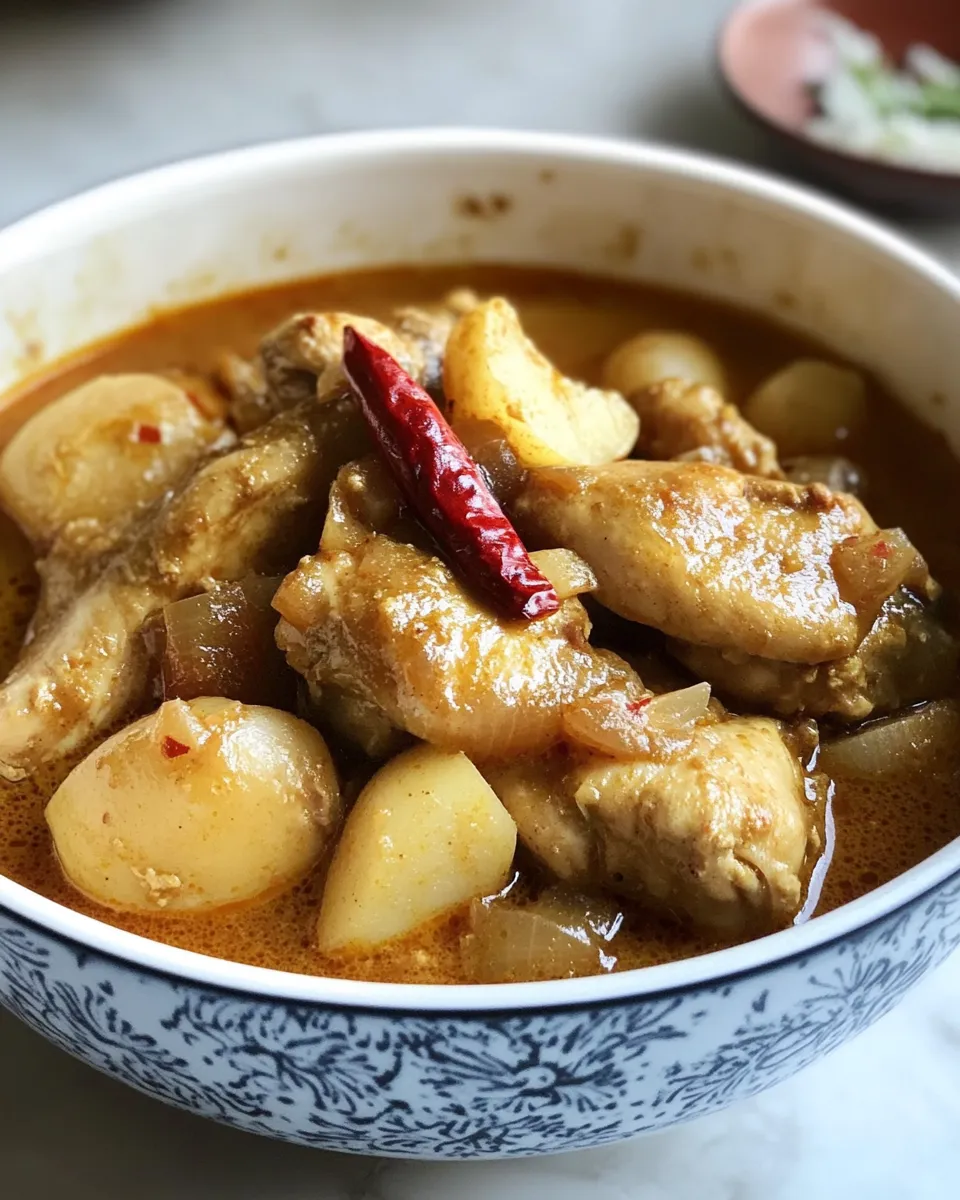
Massaman is one of those curries that rewards effort. It’s less fiery than some Thai curries but far richer in warm spices — think cinnamon, cardamom, and nutmeg — which makes it crowd-friendly and complex at the same time. The balance of coconut, tamarind, and palm sugar lands somewhere comforting and exciting, which is why it’s often a favorite at dinner gatherings.
It’s versatile: bone-in chicken enriches the stock, potatoes give the dish substance, and cashews add crunch. It reheats beautifully and often tastes better the next day once the flavors meld. If you want a satisfying one-pot dinner that still feels special, this earns its place on your weekly rotation.
Allergy-Friendly Substitutes
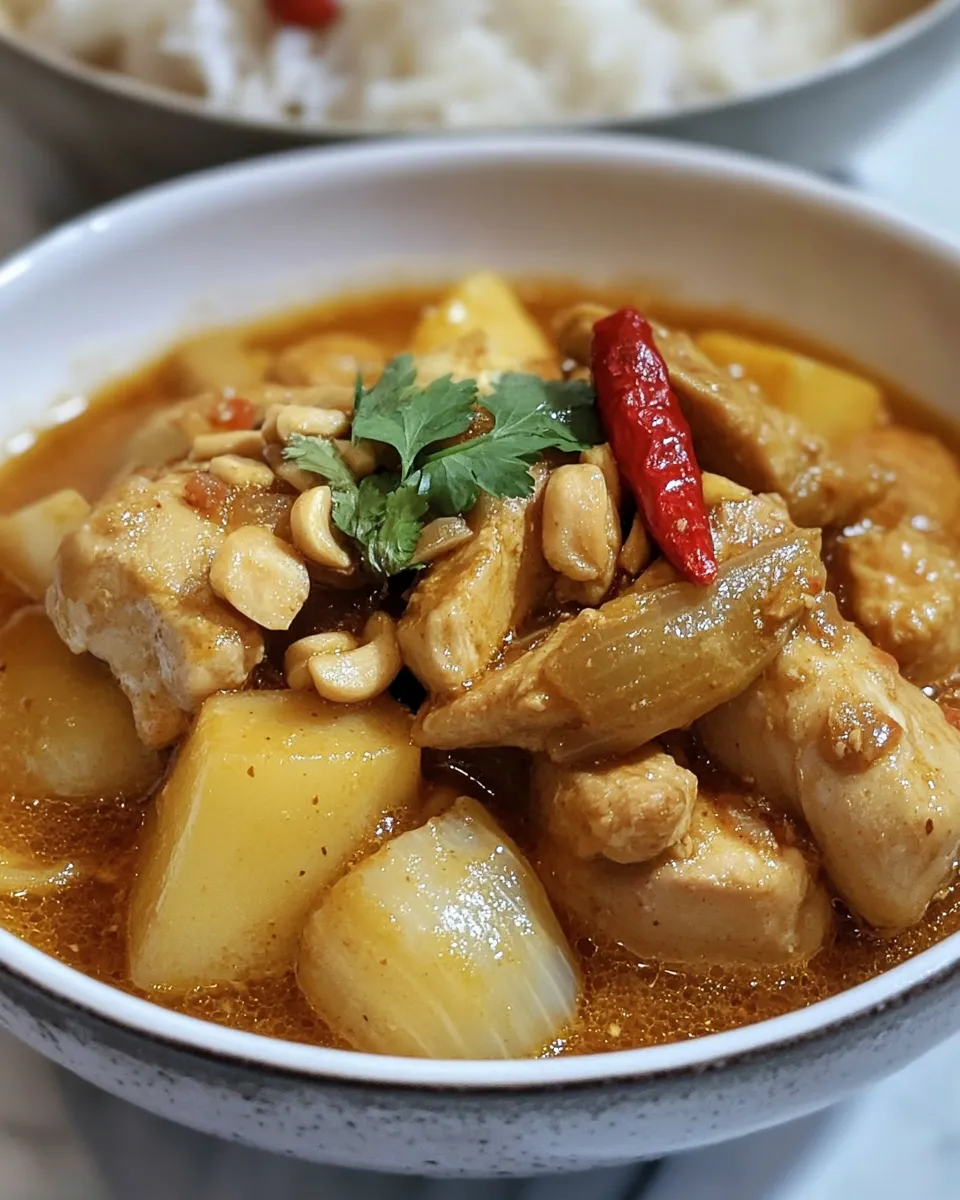
If tree nuts are a problem, omit the cashews; roasted chickpeas or toasted pumpkin seeds give a similar textural contrast without changing the core flavors. For shellfish allergies, skip the shrimp paste — the paste will still be robust from the toasted spices and aromatics. If you avoid fish sauce, use a little extra salt and a squeeze of lime (if available) to add brightness, but keep adjustments modest since the recipe’s balance relies on those listed seasonings.
What’s in the Gear List
- Dry skillet or frying pan — for toasting whole spices and aromatics.
- Spice grinder or mortar and pestle — essential for making a fine powdered spice mix.
- Blender or food processor — to turn the roasted aromatics and spices into a smooth paste.
- Large heavy-bottomed pot — for frying the paste and simmering the curry evenly.
- Wooden spoon or sturdy spatula — to stir the paste as oil separates and to prevent sticking.
What Not to Do
Do not rush the toasting steps. Low, patient toasting brings out the oils and aromas; high heat burns the spices and turns the paste bitter. Don’t skip frying the paste in thick coconut milk — that step unlocks the paste’s aroma and releases flavorful oil that coats the chicken and potatoes.
Also, don’t over-stir during the long simmer. Stir occasionally to prevent sticking and check the liquid level, but aggressive stirring can break down the potatoes and make the curry cloudy. Finally, avoid adding large amounts of water to thin the curry; use the thin coconut milk amount specified or dilute carefully to maintain flavor balance.
Seasonal Ingredient Swaps
In cooler months, swap regular potatoes for sweet potatoes for added sweetness and a seasonal feel. In summer, add a handful of green beans or peas in the last 5–7 minutes of cooking for color and freshness. If kaffir lime leaves or peel are unavailable year-round, a strip of regular citrus peel can provide some lift — use sparingly.
Pro Perspective
Toast to bloom. Professional cooks treat toasting and frying as crucial flavor-building steps rather than optional extras. Toasting whole spices until they’re fragrant and then frying the paste in coconut cream to release oil both deepen flavor and increase the paste’s shelf-stability if you store some. Use bone-in chicken where possible; the bones add real depth that boneless meat won’t replicate.
Also, layering is everything: the toasted spices give top notes, roasted aromatics add mid-notes, and frying in coconut cream produces the rounded finish. Taste at the end and tweak within the listed ingredients — that small final adjustment of palm sugar, tamarind, or fish sauce is what makes the curry sing.
Store, Freeze & Reheat
Cool the curry to room temperature within two hours and store in an airtight container in the fridge for up to 3–4 days. The curry often improves after a day as flavors meld.
For longer storage, freeze in portions in freezer-safe containers for up to 3 months. Thaw overnight in the refrigerator before reheating. Reheat gently on low to medium heat so the coconut milk doesn’t break; add a splash of water or thin coconut milk if it thickens too much. Stir occasionally and bring just to simmer before serving.
Quick Q&A
Can I use boneless chicken?
Yes. Boneless chicken works and cooks faster, but you’ll lose some depth that bones provide. Reduce simmer time slightly and watch the potatoes for doneness.
Is there a shortcut?
Use 200 g store-bought Massaman paste and follow steps 7–13. You’ll skip the homemade paste, but keep the frying-in-thick-coconut-milk step to build flavor.
How spicy is this?
Mild to medium if you remove seeds from the dried chilies as instructed. Adjust the number of chilies in the paste step if you want it hotter.
Bring It Home
This Massaman chicken curry is a project that rewards care. If you make the paste from scratch, you get a curry with depth and character that jarred pastes rarely achieve. If you’re short on time, the cooking technique still lifts store-bought paste into something special.
Serve with steamed jasmine rice, a simple cucumber relish if you like brightness, and let people help themselves. It’s the kind of meal that warms a room and leaves even picky eaters asking for more.
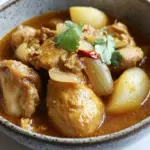
Authentic Massaman Chicken Curry
Ingredients
Ingredients
- 10 dried long chilies seeds removed
- 1 tspwhite peppercorns
- 2 tbsplemongrasssliced tender part only
- 1 tspgalangalsliced
- 2 coriander rootscleaned and chopped
- 1/2 piecewhole nutmeggrated
- 3 bladesmace
- 10 wholecloves spice
- 10 clovesgarlic
- 1 cinnamon stick about 5 cm / 2 inches
- 5-6 shallotspeeled
- 10 green cardamom pods
- 3 tspcoriander seeds
- 1 tspcumin
- 1 piecekaffir lime peel optional, for aroma
- 1 piecefresh ginger about 2 cm / 1 inch
- 1 tbspshrimp paste optional
- 2 chicken drumsticks or bone-in chicken pieces
- 200 gMassaman curry paste from above
- 475 mlthick coconut milk coconut cream
- 700 mlthin coconut milk or dilute 1 cup thick coconut milk with 2 cups water
- 2 onionssliced
- 500 gpotatoespeeled and cubed
- 200 gcashew nutsplain roasted
- 2 tbsppalm sugar
- 1 pinchsalt
- 1/2 tbspfish sauce
- 4 tbsptamarind paste
Instructions
Instructions
- Prepare and toast the dry spices: heat a dry skillet over low heat. Add 10 dried long chilies (seeds removed), 1 tsp white peppercorns, 3 tsp coriander seeds, 1 tsp cumin, 10 green cardamom pods, 10 whole cloves (spice), ½ piece whole nutmeg (grated), 3 blades mace, and 1 cinnamon stick (about 5 cm / 2 inches). Stir constantly for 8–10 minutes until fragrant and slightly darkened. Remove from heat and let cool.
- Grind the toasted spices to a fine powder using a spice grinder or mortar and pestle. Transfer the ground spice mix to a bowl and set aside.
- Dry-roast the fresh aromatics: wipe the skillet clean, return it to low heat, and add 2 tbsp lemongrass (sliced, tender part only), 1 tsp galangal (sliced), 2 coriander roots (cleaned and chopped), 10 cloves garlic, 5–6 shallots (peeled), 1 piece fresh ginger (about 2 cm / 1 inch), and 1 piece kaffir lime peel (optional). Add a pinch of salt. Stir constantly over low heat until the aromatics are deeply aromatic and slightly charred.
- Add the optional shrimp paste: if using, add 1 tbsp shrimp paste (optional) to the pan with the aromatics, stir briefly over low heat to release its aroma, then remove the pan from the heat and let the mixture cool.
- Make the curry paste: transfer the cooled roasted aromatics to a blender or food processor. Add the ground toasted spices from step 2. To help the blender, add a small amount of the thin coconut milk (from the 700 ml) or water as needed, and blend until smooth. You now have your Massaman curry paste.
- Measure the paste: set aside 200 g of the Massaman curry paste (from step 5) for cooking. If you are using store-bought paste, measure 200 g.
- Heat the thick coconut milk: in a large heavy-bottomed pot, warm 475 ml thick coconut milk over medium heat until it just begins to simmer.
- Fry the paste: add the 200 g Massaman curry paste to the hot thick coconut milk. Cook, stirring constantly, until the paste becomes fragrant and the oil begins to separate from the paste, about 4–6 minutes.
- Add onions and brown slightly: stir in 2 onions (sliced) and cook until they are slightly softened, about 2–3 minutes.
- Add chicken, potatoes, and cashews: add 2 chicken drumsticks (or bone-in chicken pieces), 500 g potatoes (peeled and cubed), and 200 g cashew nuts (plain roasted). Turn the chicken and stir so the pieces are well coated with the paste.
- Add thin coconut milk and simmer: pour in 700 ml thin coconut milk. Reduce heat to low, cover partially, and simmer gently for 45–60 minutes, stirring occasionally to prevent sticking, until the chicken is tender and the potatoes are cooked through.
- Finish and season: stir in 2 tbsp palm sugar, 4 tbsp tamarind paste, ½ tbsp fish sauce, and 1 pinch salt. Simmer for 3–5 minutes more to combine flavors. Taste and, within the listed ingredients, adjust by adding a little more palm sugar, tamarind paste, or fish sauce if needed.
- Serve: remove from heat and serve hot.
Equipment
- Dry Skillet
- spice grinder or mortar and pestle
- Blender or food processor
- Large Heavy-Bottomed Pot