
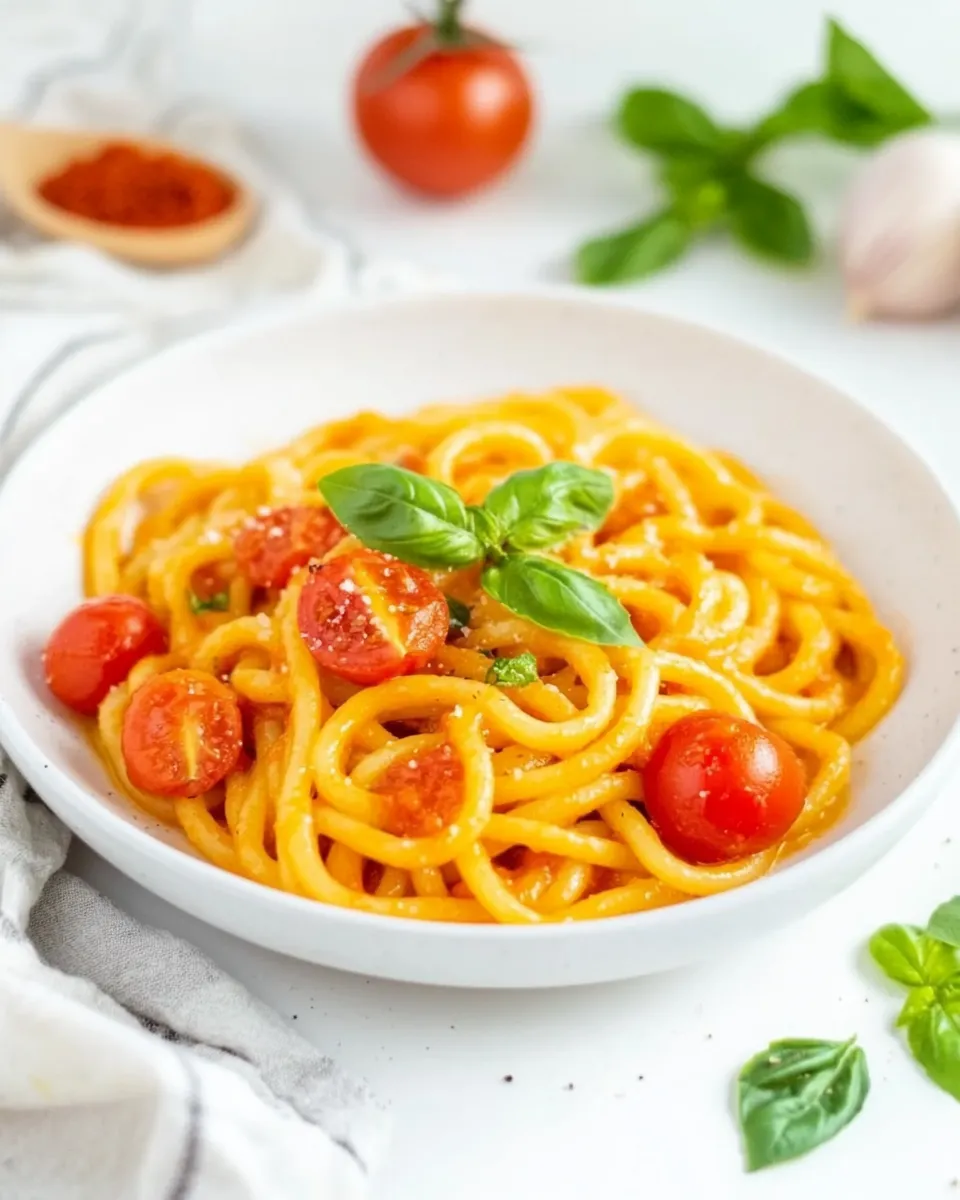
Bucatini Pomodoro
There’s a beautiful confidence in simple food: a handful of ingredients, a clear technique, and a result that tastes like sunshine. Bucatini Pomodoro is one of those dishes —arkingly elegant, deeply comforting, and impossibly quick. Using pantry-friendly canned tomatoes, sweet onion, fragrant basil, and a good drizzle of extra-virgin olive oil, this recipe turns everyday ingredients into a bowl you’ll return to again and again.
This version was written with attention to balance and clarity so you can make it exactly as intended: bright tomato, mellow caramelized onion, and long, toothsome bucatini that soaks up sauce in its hollow center. The method is straightforward and forgiving, perfect for a weeknight or an easy weekend dinner when you want something that feels a little special.
Ingredients

- 1 medium-large onion, finely minced
- 2 cans organic whole plum tomatoes (15 oz / 400 g each), or canned cherry tomatoes
- 2 tablespoon extra-virgin olive oil
- 8 fresh basil leaves
- sea salt and black pepper to taste
- 17.06 oz bucatini pasta
Why this combination works
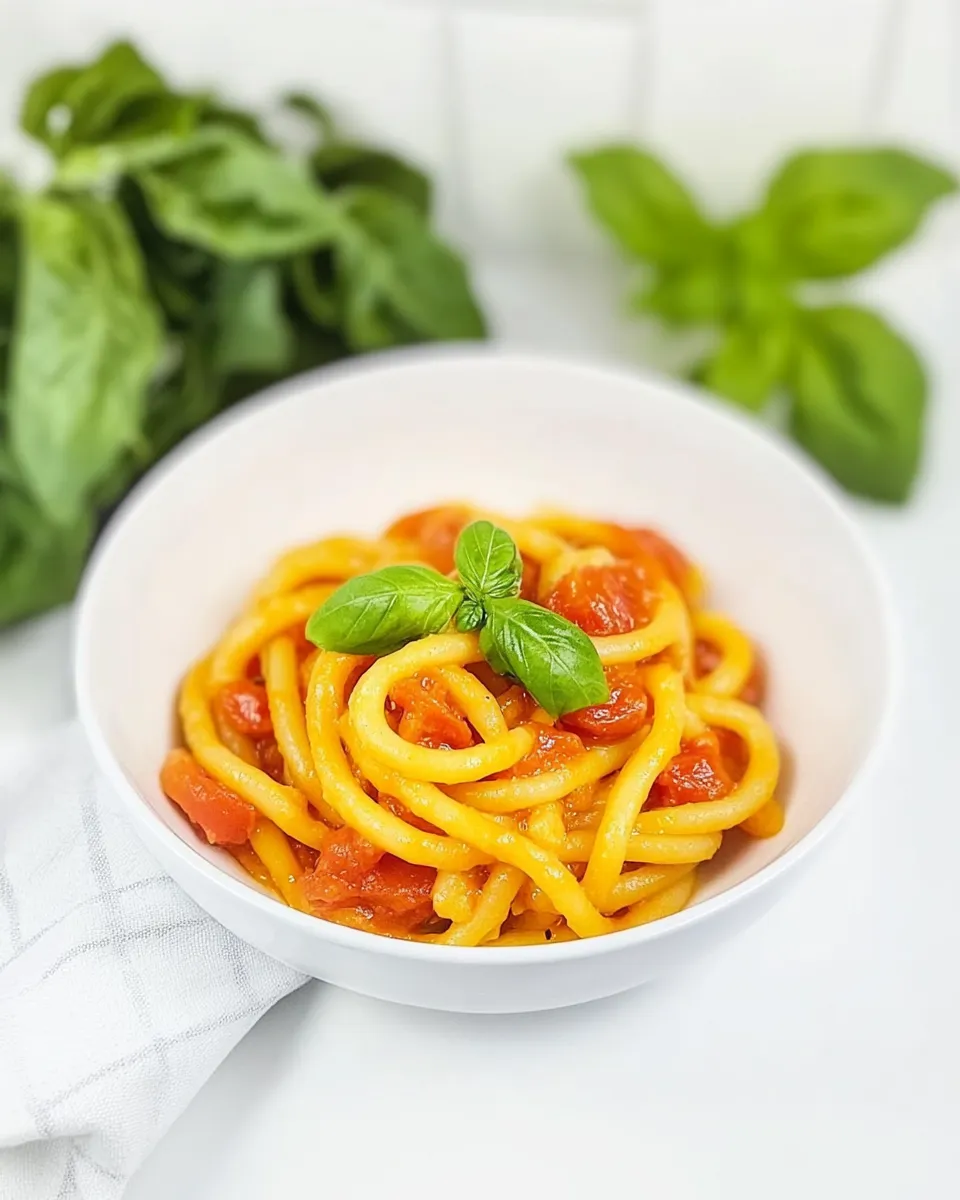
Onion, when finely minced and gently cooked, provides a sweet, savory foundation without overpowering the tomatoes. Whole plum tomatoes give the sauce depth and body; breaking them down by hand or with a spoon preserves texture better than a straight purée. Extra-virgin olive oil provides fruity richness and helps coax flavor from the onion and tomato. Basil adds aromatic lift at the end so the sauce smells as good as it tastes. And bucatini, with its hollow core, traps the sauce and offers a delightful chew.
Equipment you’ll need
- Large pot for boiling pasta
- Large skillet or sauté pan for the sauce
- Wooden spoon or spatula
- Colander
- Kitchen knife and cutting board
- Measuring spoons and scale (optional)
Flavor tips before you start
- Use the best extra-virgin olive oil you can find; its flavor carries through to the finished plate.
- If you prefer a smoother sauce, crush the tomatoes more thoroughly while they cook. If you like texture, break them apart gently with a spoon.
- Taste and adjust seasoning gradually. Sea salt and black pepper should enhance the tomatoes, not hide them.
Step-by-step directions
Follow these steps in order. The directions have been rewritten for clarity while keeping ingredient amounts and the original sequence intact.
- Bring a large pot of salted water to a rolling boil. The pot should be roomy enough so the 17.06 oz bucatini can move freely while cooking.
- While the water heats, prepare your aromatics: peel and finely mince 1 medium-large onion. Set it aside so it’s ready when the pan is hot.
- Heat a large skillet over medium heat and add 2 tablespoon extra-virgin olive oil. Swirl to coat the bottom of the pan so the onion cooks evenly without sticking.
- Add the finely minced onion to the warm oil. Cook over medium heat, stirring frequently, until the onion becomes translucent and begins to turn a light golden color. This should take about 6–8 minutes; reduce heat slightly if the onion starts to brown too quickly. You want a gentle sweetness without bitterness.
- Open 2 cans organic whole plum tomatoes (15 oz / 400 g each), or use canned cherry tomatoes if you prefer a slightly sweeter, brighter profile. Pour the tomatoes into the skillet with the softened onion. If you used whole plum tomatoes, break them up in the pan with the back of a wooden spoon or a spatula until you reach your desired texture. Bring the mixture to a gentle simmer over medium-low heat.
- Let the sauce simmer gently, uncovered, for about 12–15 minutes, stirring occasionally. The sauce will reduce slightly and concentrate in flavor. Taste as it cooks and season with sea salt and black pepper to your liking. Start with a small pinch of salt and a few turns of freshly cracked black pepper, then adjust.
- When the water has reached a rolling boil, add the 17.06 oz bucatini pasta and cook according to the package instructions, usually around 9–11 minutes, until the pasta is al dente. Stir occasionally to prevent the strands from sticking together. Reserve about 1 cup of the pasta cooking water before draining; this starchy liquid can be used to adjust the sauce consistency and help it cling to the bucatini.
- Roughly tear or chiffonade 8 fresh basil leaves. Add most of the basil directly to the simmering tomato sauce about 1–2 minutes before you finish the sauce to let the herb release its aroma and flavor. Reserve a few basil pieces for garnish.
- When the bucatini is al dente, transfer it directly from the pasta pot to the skillet using tongs or a pasta fork, allowing some of the reserved cooking water to come along if needed. If you drained the pasta into a colander, add it to the sauce immediately and toss. Add a splash of the reserved pasta water (start with 1/4 cup) to the sauce to loosen it and help it cling to the pasta. Toss the bucatini and sauce together over low heat for 1–2 minutes until they are well combined. Add more pasta water a little at a time if the sauce seems too thick; the goal is a glossy coating that clings to every strand.
- Taste once more and adjust seasoning with sea salt and black pepper as needed. Finish with the remaining torn basil scattered over the top for bright herbal lift.
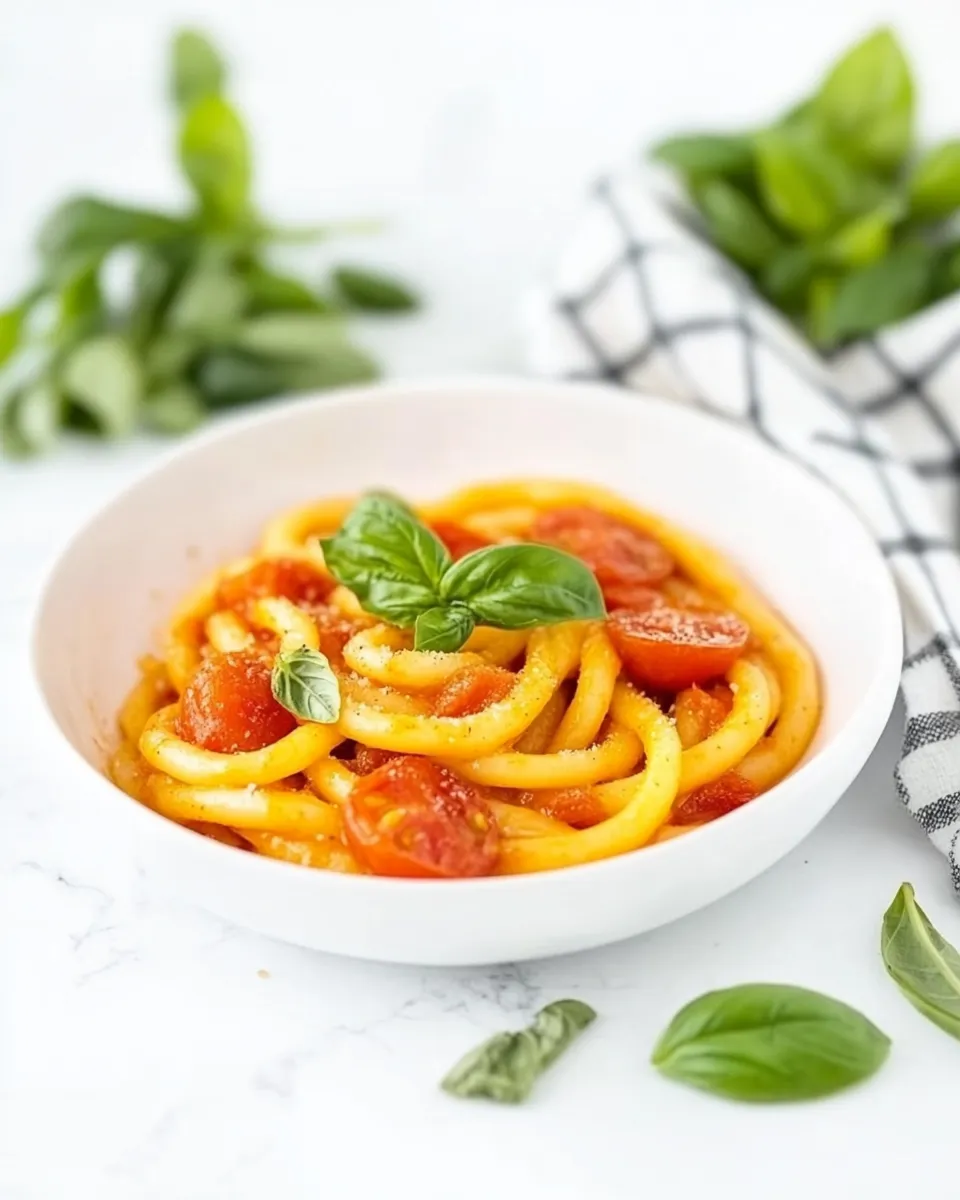
- Serve immediately, dividing the pasta among warm bowls. Garnish each bowl with the reserved basil leaves and an optional drizzle of extra-virgin olive oil if desired. Enjoy while hot.
Serving suggestions
Bucatini Pomodoro is lovely on its own or paired with a simple side salad and crusty bread for mopping up any remaining sauce. Add a scatter of toasted pine nuts or a shave of a firm cheese substitute if you like a nutty contrast and extra texture. For a heartier meal, serve it alongside a lemony green vegetable or a tray of roasted vegetables.
Make-ahead and leftovers
You can make the sauce up to 2 days in advance and store it covered in the refrigerator. Reheat gently in a skillet and add a splash of water to freshen the texture before tossing with freshly cooked bucatini. Leftover pasta keeps well in an airtight container in the fridge for 2–3 days; when reheating, add a little water and reheat on the stove for best texture.
Variations and swaps
- If you prefer a chunkier tomato presence, use the canned cherry tomatoes and break them up less when adding to the pan.
- Add a pinch of red pepper flakes early with the onion for a gentle heat boost.
- For more depth, stir in a splash of your favorite vinegar or a teaspoon of sugar if the tomatoes taste very acidic; add small amounts and taste as you go.
- Finish with a grind of black pepper and an extra drizzle of olive oil for a glossy, restaurant-worthy shine.
Troubleshooting
- Onion burned or bitter: If the onion browns too fast, reduce the heat and continue cooking more gently; remove any overly browned bits that taste bitter.
- Sauce too thin: Simmer a bit longer to reduce, or simmer uncovered to evaporate excess water. Alternatively, toss with a little more cooked pasta to thicken the mixture.
- Sauce too thick: Stir in small amounts of reserved pasta water until you reach a silky consistency.
- Pasta sticking: Stir the bucatini when it first goes into the boiling water and again in the first minute to prevent strands from clinging together.
Notes on ingredients
Choose canned tomatoes with minimal added ingredients; many organic options list only tomatoes and salt. The flavor and acidity of tomatoes can vary from brand to brand, so taste and adjust seasoning as you cook. Use good-quality extra-virgin olive oil for finishing — it adds aroma and rounds the sauce beautifully.
Final thoughts
Bucatini Pomodoro is an ode to the essentials. It’s a reminder that with just a few thoughtful ingredients and simple technique, you can create a meal that feels both honest and indulgent. This recipe is reliable, flexible, and made to be shared — whether you’re feeding friends or cooking for one, it’s an easy way to enjoy pasta at its most authentic and satisfying.
Now put on a pot of water, warm the olive oil, and let the smell of simmering tomatoes and basil fill your kitchen. A perfect bowl of Bucatini Pomodoro is only a short time away.

Bucatini Pomodoro
Ingredients
- 1 medium-large onion finely minced
- 2 cans organic whole plum tomatoes 15 oz (400 g) each; or canned cherry tomatoes
- 2 tablespoons extra-virgin olive oil
- 8 fresh basil leaves
- sea salt to taste
- black pepper to taste
- 17.06 oz bucatini pasta
Instructions
- Heat 2 tablespoons of extra-virgin olive oil in a skillet over medium-low heat.
- Add the finely minced onion and cook, stirring occasionally, until translucent, about 4–5 minutes.
- Add the canned tomatoes with their juices and gently break them up with a wooden spoon.
- Season the sauce with salt and pepper and add 6 basil leaves torn or roughly chopped; cover and simmer on low for 15 minutes, stirring occasionally, until creamy but still slightly chunky.
- Meanwhile, bring a large pot of lightly salted water to a boil and cook the bucatini according to package directions for al dente, or 2–3 minutes less than the package time if desired.
- Drain the pasta, reserving a splash of cooking water if you like to loosen the sauce.
- Remove the sauce from the heat, stir in the remaining basil leaves, adjust seasoning with salt and pepper, then fold in the cooked bucatini until evenly coated; add a little reserved pasta water if needed.
- Drizzle with a little extra-virgin olive oil and serve immediately.
Equipment
- Large Pot
- Skillet
- Wooden Spoon
- Knife
- Cutting Board
- Colander
Notes
- Optional: halve canned tomatoes and remove seeds to reduce bitterness.
- If sauce tastes acidic, add a bay leaf while it simmers or a pinch of sugar.