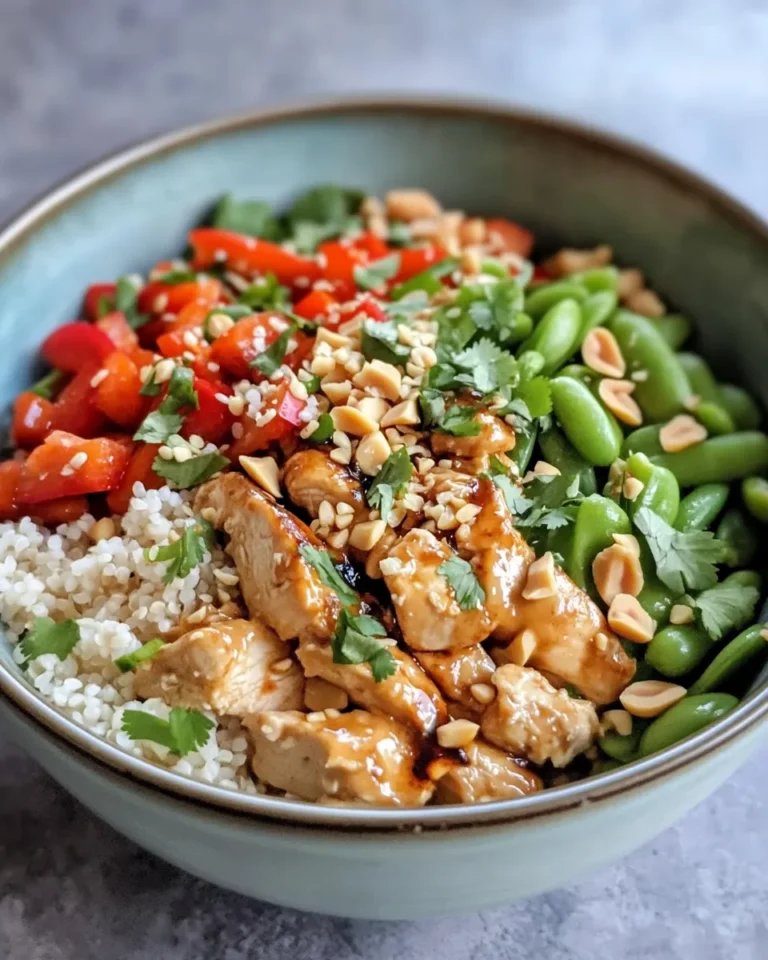
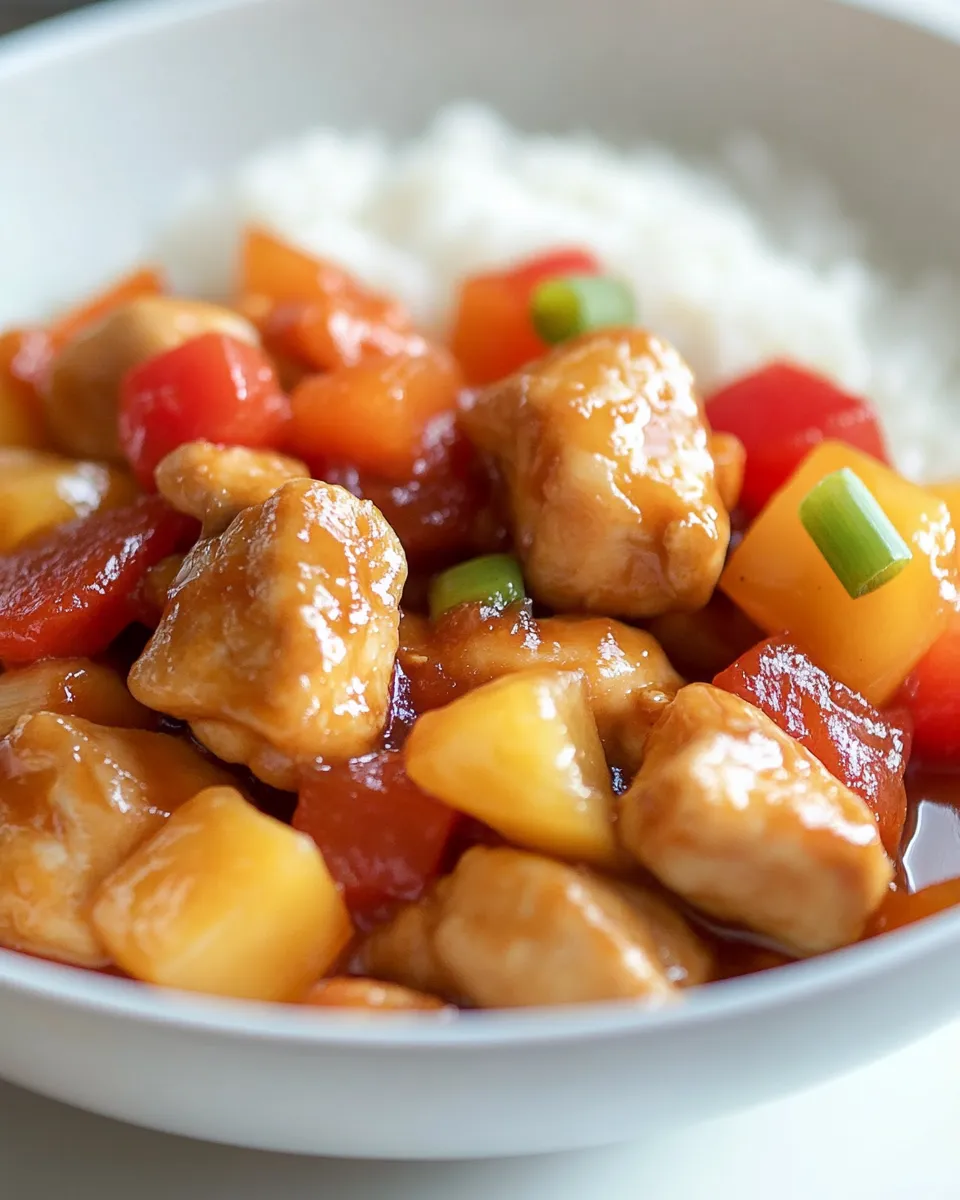
Macro Friendly Sweet and Sour Chicken
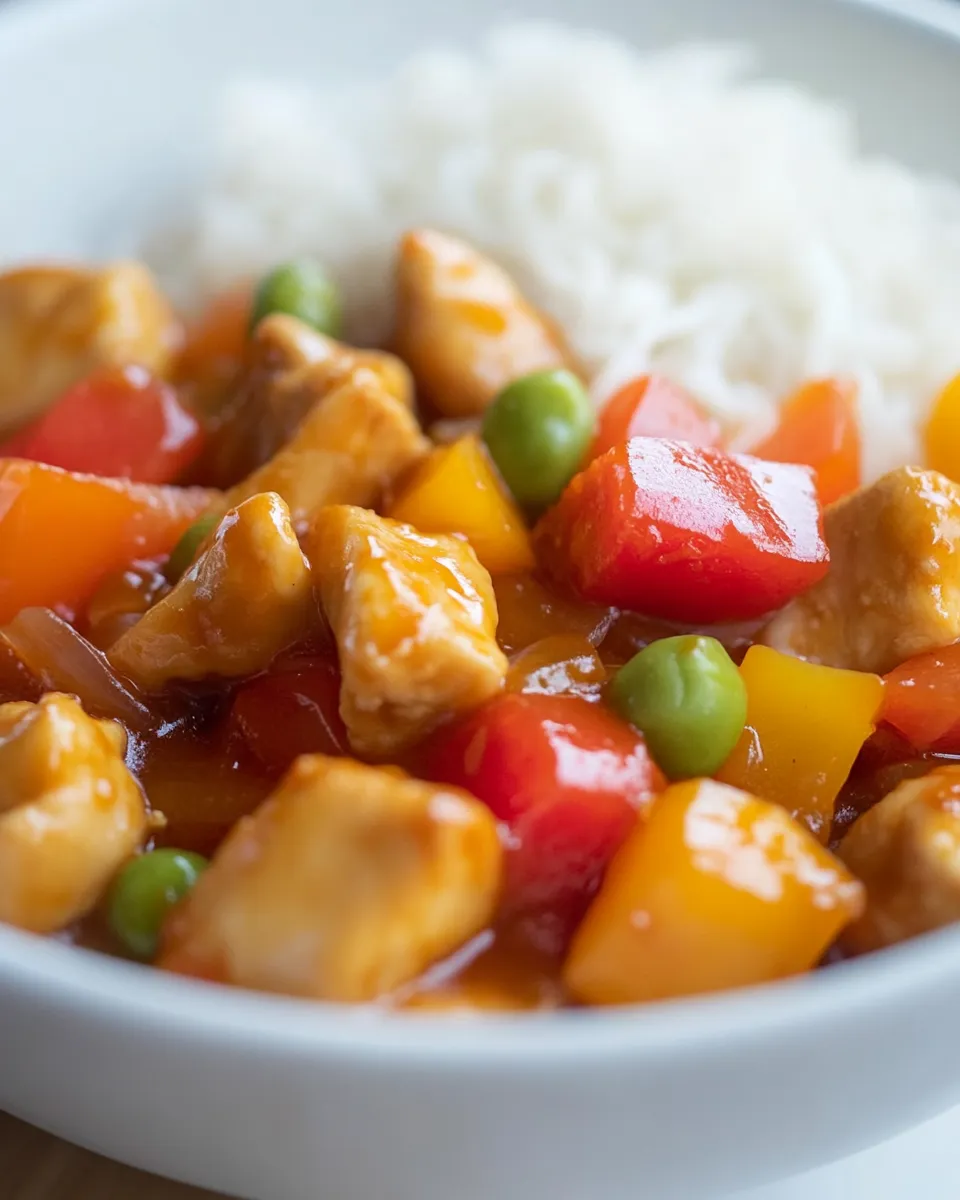
Light, tangy, and perfectly balanced, this Macro Friendly Sweet and Sour Chicken is an easy weeknight favorite that keeps macros in mind without sacrificing flavor. Tender bite-sized chicken pieces get seared quickly, tossed with crisp vegetables and fresh pineapple, then coated in a glossy, tangy sauce that offers the best mix of sweet and sour — all while using simple pantry ingredients. Whether you meal-prep for the week or want a quick dinner that reheats beautifully, this recipe delivers big flavor with smart nutrition.
Why you’ll love this version

- Balanced macros: lean chicken breast and controlled sugars make this an approachable option for tracking meals.
- Bright, fresh ingredients: red onion, bell peppers, garlic, and pineapple give contrast and texture.
- Fast cooking: from stovetop to table in about 30 minutes.
- Flexible: serve over cauliflower rice, steamed rice, or your favorite grain.
Ingredients
Use the ingredient list exactly as shown for accurate results and consistent macros.
- 1/2 tablespoon vegetable oil
- 1 pound boneless skinless chicken breasts cut into bite size pieces
- salt & pepper to taste
- 1/2 teaspoon garlic powder
- 1/2 red onion chopped
- 1 whole bell pepper I used half a red, half a green
- 2 cloves garlic
- 1 cup fresh pineapple diced
- 1/2 cup chicken broth
- 1/2 cup white distilled vinegar
- 1/3 cup soy sauce
- 1/3 cup ketchup
- 1/3 cup Truvia
- 1/2 cup granulated sugar
- pinch garlic powder
- 2 tablespoons cornstarch
Equipment
- Large skillet or wok
- Mixing bowl
- Whisk or fork
- Sharp knife and cutting board
- Measuring cups and spoons
Preparation notes
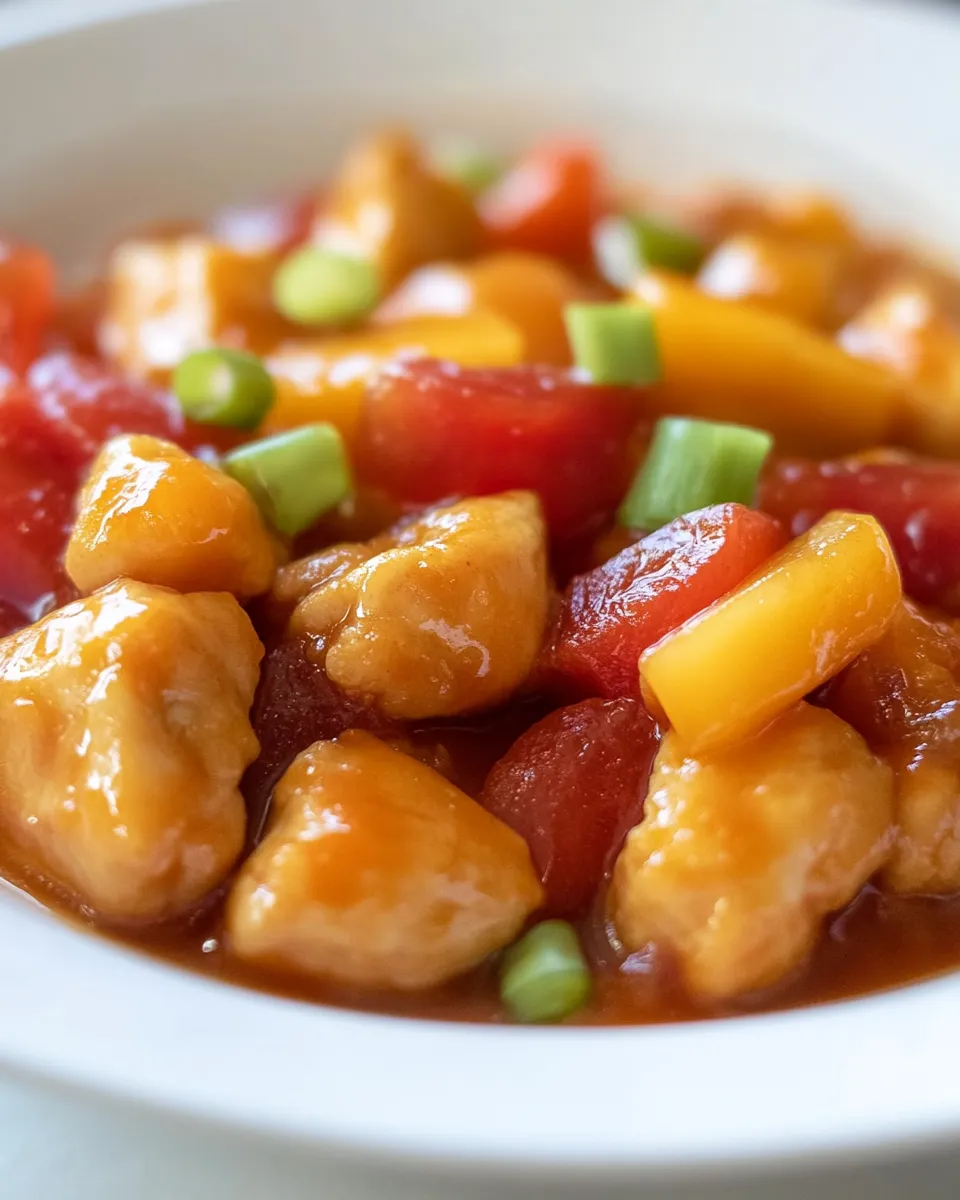
Trim any excess fat from the chicken breasts and pat them dry before cutting into uniform bite-sized pieces so they cook evenly. Chop the onion and bell pepper into similar-sized pieces, and dice the fresh pineapple so each spoonful has a nice balance of fruit and vegetables. Minimize the size variation between ingredients for even cooking and good texture in every bite.
Step-by-step method
The directions below are rewritten for clarity and flow while following the original order and ingredient list. Read through once before you start so everything moves smoothly.
- Prep all ingredients. Cut 1 pound boneless skinless chicken breasts into bite-sized pieces. Season the chicken pieces with salt and pepper and sprinkle 1/2 teaspoon garlic powder evenly over them. Chop 1/2 red onion and 1 whole bell pepper (I used half a red and half a green). Mince 2 cloves garlic. Dice 1 cup fresh pineapple.
- Heat the pan. Place a large skillet or wok over medium-high heat and add 1/2 tablespoon vegetable oil. Let the oil heat until shimmering but not smoking, about 30–60 seconds.
- Sear the chicken. Add the seasoned chicken pieces in a single layer, leaving a little space between pieces so they brown instead of steam. Cook, undisturbed, for 2–3 minutes until the undersides are golden. Stir and continue to cook another 2–3 minutes until all sides are lightly browned and the chicken is nearly cooked through. Remove the chicken from the pan and set it aside on a plate.
- Sauté the aromatics. In the same skillet, add the chopped 1/2 red onion and the chopped bell pepper. Sauté for 2–3 minutes until they begin to soften. Add the minced 2 cloves garlic and cook for an additional 30–45 seconds, stirring constantly, until fragrant. Be careful not to let the garlic burn.
- Add the pineapple. Stir in the 1 cup diced fresh pineapple and cook for 1–2 minutes so the pineapple warms through and releases some of its juices.
- Make the sauce. In a medium mixing bowl, whisk together 1/2 cup chicken broth, 1/2 cup white distilled vinegar, 1/3 cup soy sauce, 1/3 cup ketchup, 1/3 cup Truvia, 1/2 cup granulated sugar, and a pinch garlic powder until smooth and the sugar is mostly dissolved.
- Combine chicken and sauce. Return the seared chicken pieces to the skillet with the vegetables and pineapple. Pour the sauce evenly over the top and stir to coat everything. Bring the mixture to a gentle simmer over medium heat.
- Thicken the sauce. In a small bowl, whisk 2 tablespoons cornstarch with a few tablespoons of cold water to make a smooth slurry. Once the sauce in the pan is simmering, slowly whisk the cornstarch slurry into the skillet. Stir continuously until the sauce thickens and becomes glossy, about 1–2 minutes. If the sauce seems too thick, add a splash of water or extra chicken broth to reach your desired consistency.
- Finish cooking. Reduce the heat to medium-low and simmer for 1–2 minutes to ensure the chicken is cooked through and the flavors have melded. Taste and adjust seasoning with additional salt and pepper if needed.
- Serve. Plate the Macro Friendly Sweet and Sour Chicken immediately over rice, cauliflower rice, or your preferred grain. Garnish with thinly sliced green onions or sesame seeds if desired. Leftovers can be stored in an airtight container in the refrigerator for up to 3 days.
Tips for success
- Even pieces: Cutting the chicken and veggies to similar sizes ensures uniform cooking and a pleasing bite in every spoonful.
- High heat sear: Browning the chicken in a hot skillet builds flavor. Don’t overcrowd the pan; cook in batches if necessary.
- Balance the sauce: If the sauce is too sharp from the vinegar, a touch more sugar or Truvia will soften the tang. If it’s too sweet, add a splash more vinegar or a bit of extra soy sauce for umami.
- Fresh pineapple vs canned: Fresh pineapple adds brightness and texture. If you must use canned, drain it well and reduce added liquid in the pan accordingly.
- Thickening: Add cornstarch slurry gradually and cook until glossy. The sauce will continue to thicken as it cools, so stop once it coats the back of a spoon.
Macro notes and serving suggestions
This Macro Friendly Sweet and Sour Chicken emphasizes lean protein from boneless skinless chicken breasts and controlled amounts of sweeteners. For a lower-carb plate, serve over cauliflower rice or a bed of mixed greens. For higher carbs, pair with jasmine or brown rice. To boost fiber and micronutrients, toss in extra vegetables such as snap peas or shredded carrots during the sauté step.
Portioning matters for tracking macros. Divide the finished dish into equal portions and weigh or measure to align with your personal macro goals. The inclusion of both Truvia and granulated sugar provides sweetness and helps with texture; if you prefer, you can reduce the granulated sugar slightly and compensate with a touch more Truvia, but the ingredient amounts above will produce the intended texture and caramelization.
Make-ahead and storage
- Refrigerate: Store leftovers in an airtight container and refrigerate for up to 3 days.
- Freeze: This dish can be frozen, though sauce texture changes slightly. Portion into freezer-safe containers and freeze for up to 2 months. Thaw overnight in the fridge before reheating.
- Reheating: Reheat gently over medium-low heat on the stovetop, adding a splash of water or chicken broth if the sauce has thickened too much. Microwave in short bursts, stirring between intervals, for a quick option.
Common substitutions
- Oil: Use a neutral oil such as canola or sunflower if you prefer. Keep the quantity at 1/2 tablespoon to maintain cooking performance and macro calculations.
- Sugar alternatives: If you’d like to avoid using two different sweeteners, you can experiment by reducing the granulated sugar and increasing the Truvia slightly; follow taste preference but be mindful that texture will change.
- Soy sauce: If you need a lower-sodium option, use low-sodium soy sauce but taste and adjust salt accordingly.
- Pineapple: If fresh pineapple isn’t available, well-drained canned pineapple works; reduce added liquid elsewhere if the canned fruit is very juicy.
Flavor variations
- Spicy: Add a teaspoon of sriracha or 1/4–1/2 teaspoon red pepper flakes to the sauce for gentle heat.
- Ginger: Stir in 1 teaspoon grated fresh ginger with the garlic for extra warmth and depth.
- Vegetable boost: Fold in snap peas, broccoli florets, or shredded carrots with the bell pepper for more color and nutrients.
Final thoughts
This Macro Friendly Sweet and Sour Chicken proves you don’t need complicated steps to make a satisfying, macro-conscious meal. The combination of seared chicken, crisp vegetables, and a glossy sweet-and-sour sauce hits all the right notes: savory, tangy, and just lightly sweet. It’s approachable for home cooks, customizable to your tastes, and great for meal prep. Try it once and you’ll find it’s a reliable staple for busy nights and balanced eating.
Enjoy this flavorful, balanced dish, and feel free to swap vegetables or adjust seasoning to make it your own.
Macro Friendly Sweet and Sour Chicken
Ingredients
- 1/2 tablespoon vegetable oil
- 1 pound boneless skinless chicken breasts cut into bite-size pieces
- salt to taste
- black pepper to taste
- 1/2 teaspoon garlic powder
- 1/2 red onion chopped
- 1 whole bell pepper use half red and half green if desired, chopped
- 2 cloves garlic
- 1 cup fresh pineapple diced, reserve some for later if desired
- 1/2 cup chicken broth
- 1/2 cup white distilled vinegar
- 1/3 cup soy sauce
- 1/3 cup ketchup
- 1/3 cup Truvia
- 1/2 cup granulated sugar
- pinch garlic powder
- 2 tablespoons cornstarch
Instructions
- Prep all ingredients: cut chicken into bite-size pieces, chop onions and bell pepper, mince garlic, and dice pineapple; whisk together chicken broth, vinegar, soy sauce, ketchup, Truvia, granulated sugar, 2 tablespoons cornstarch and a pinch of garlic powder until smooth to make the sauce.
- Season the chicken on both sides with salt, pepper, and 1/2 teaspoon garlic powder.
- Heat a large nonstick skillet over medium-high and add 1/2 tablespoon vegetable oil (and cooking spray if desired). Add the chicken and cook, stirring occasionally, until browned and cooked through, about 5–7 minutes.
- Add the chopped red onion and bell pepper to the skillet (reserve the pineapple). Cook 2–4 minutes until vegetables are crisp-tender or longer to preferred doneness.
- Pour the prepared sauce into the skillet, bring to a boil, and cook until the sauce thickens, stirring frequently, about 1–3 minutes.
- Stir in the diced pineapple, heat through for 1 minute, then remove from heat.
- Divide into four equal portions and serve over rice if desired.
Equipment
- large nonstick skillet
- Cutting Board
- Chef’s knife
- Measuring Cups and Spoons
- Mixing Bowl
- Whisk
- Spatula or tongs
Notes
- Macro for 1 serving (1/4): 293 calories, 4.5g fat, 53.9g carbs, 27.9g protein.
- If using half the sauce, macros per serving: 185.4 calories, 4.5g fat, 26.4g carbs, 27.9g protein.