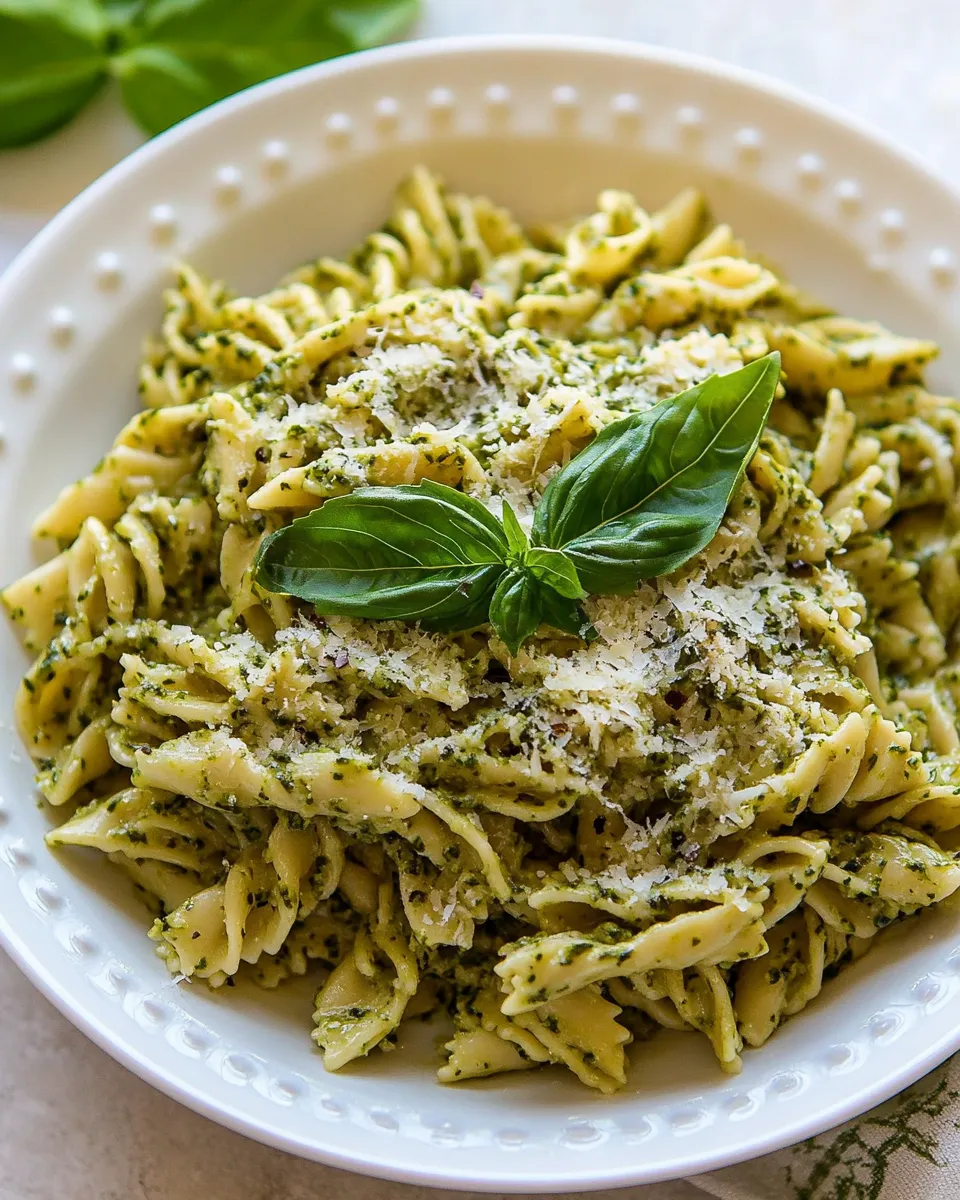
Creamy Pesto Pasta
I make this recipe at least once a week when I need something quick, bright, and comforting. It balances fresh basil and a silky cream sauce in a way that feels both indulgent and fresh. The technique is straightforward, and the results are reliable—great for weeknights or for feeding friends without stress.
There are a few small moves that change everything: reserve a little pasta water, gently warm the cream before you finish the sauce, and don’t let the garlic color beyond the first blush. Those are the moments that keep the basil tasting green and the sauce glossy.
Below you’ll find the ingredient list, the step-by-step method exactly as written, and practical notes for swaps, troubleshooting, and serving. If you like shortcuts, I’ll point them out. If you want maximum flavor, I’ll show you where to slow down. Either way, you get a pasta that feels special without being finicky.
Ingredient List

- 2 1/2 cups packed (54g) fresh basil leaves — the star for bright, herby pesto flavor; packed means press the leaves gently into the measuring cup so you get the right amount.
- 3 Tbsp extra virgin olive oil, divided — split usage: most for the pesto base, a little for sautéing garlic; choose a good, fruity oil for the best flavor.
- 2 Tbsp water — added to the pesto to help the leaves process smoothly and keep the texture light.
- 12 oz. dry mini farfalle or regular farfalle pasta — mini farfalle gives more bits of sauce per bite; cook it according to package directions for al dente texture.
- Salt and black pepper — salt the pasta water generously; finish with black pepper to taste for a bit of bite.
- 1 1/2 Tbsp minced garlic (4 cloves) — gives aromatic backbone; mince fine so it releases flavor quickly during a brief sauté.
- 3/4 cup heavy cream, or 1/4 cup more for a creamier pasta — creates the plush sauce; the optional extra 1/4 cup is for anyone who wants a richer finish.
- 2 oz. parmesan cheese, finely grated with a rasp grater (1 cup) — melts into the sauce and adds savory saltiness and texture; a rasp gives the best melt and mouthfeel.
Method: Creamy Pesto Pasta
Make the basil mixture
- Place 2 1/2 cups packed fresh basil leaves, 2 Tbsp extra virgin olive oil, and 2 Tbsp water in a food processor. Pulse until the basil is very finely minced, stopping occasionally to scrape down the sides. Transfer the basil mixture to a small airtight container and set aside.
- Bring about 10 cups of water to a boil in a large pot. Season the water generously with salt.
- Add 12 oz farfalle to the boiling water and cook according to the package directions. Before draining, reserve 1/2 cup of the pasta cooking water, then drain the pasta.
- Return the empty pot to the stove over medium-low heat. Add the remaining 1 Tbsp extra virgin olive oil.
- Add 1 1/2 Tbsp minced garlic (about 4 cloves) to the pot and sauté 20–30 seconds, until fragrant and just beginning to deepen in color but not browned.
- Pour in 3/4 cup heavy cream (add the optional extra 1/4 cup here if you prefer a creamier sauce) and bring the mixture to a light simmer.
- Reduce the heat to low and stir in 2 oz finely grated Parmesan cheese until the cheese has melted and the sauce is smooth.
- Add the drained pasta and the reserved basil mixture to the pot. Toss thoroughly to coat the pasta evenly with the sauce and pesto. If the sauce is too thick, add the reserved pasta water a tablespoon at a time until you reach the desired consistency (the sauce will thicken as it rests).
- Season to taste with salt and black pepper and serve immediately.
Why It Deserves a Spot
This dish earns its place in the rotation because it hits three priorities: speed, flavor, and comfort. You can go from pantry-and-fridge ingredients to a finished bowl in about the time it takes to boil pasta. The basil keeps the profile fresh and green, while the cream and Parmesan make it rich and comforting.
It scales well and adapts to company. Make a double batch of the basil mixture ahead of time and you’ve got the base for multiple meals. The technique also teaches useful habits—reserve pasta water, warm dairy gently—that translate to many other pasta dishes.
Easy Ingredient Swaps
- Fresh basil — if you’re out of basil, roast a handful of spinach leaves first and use them sparingly; the flavor will change but you’ll keep the green color. (No quantities changed here—use basil when you can.)
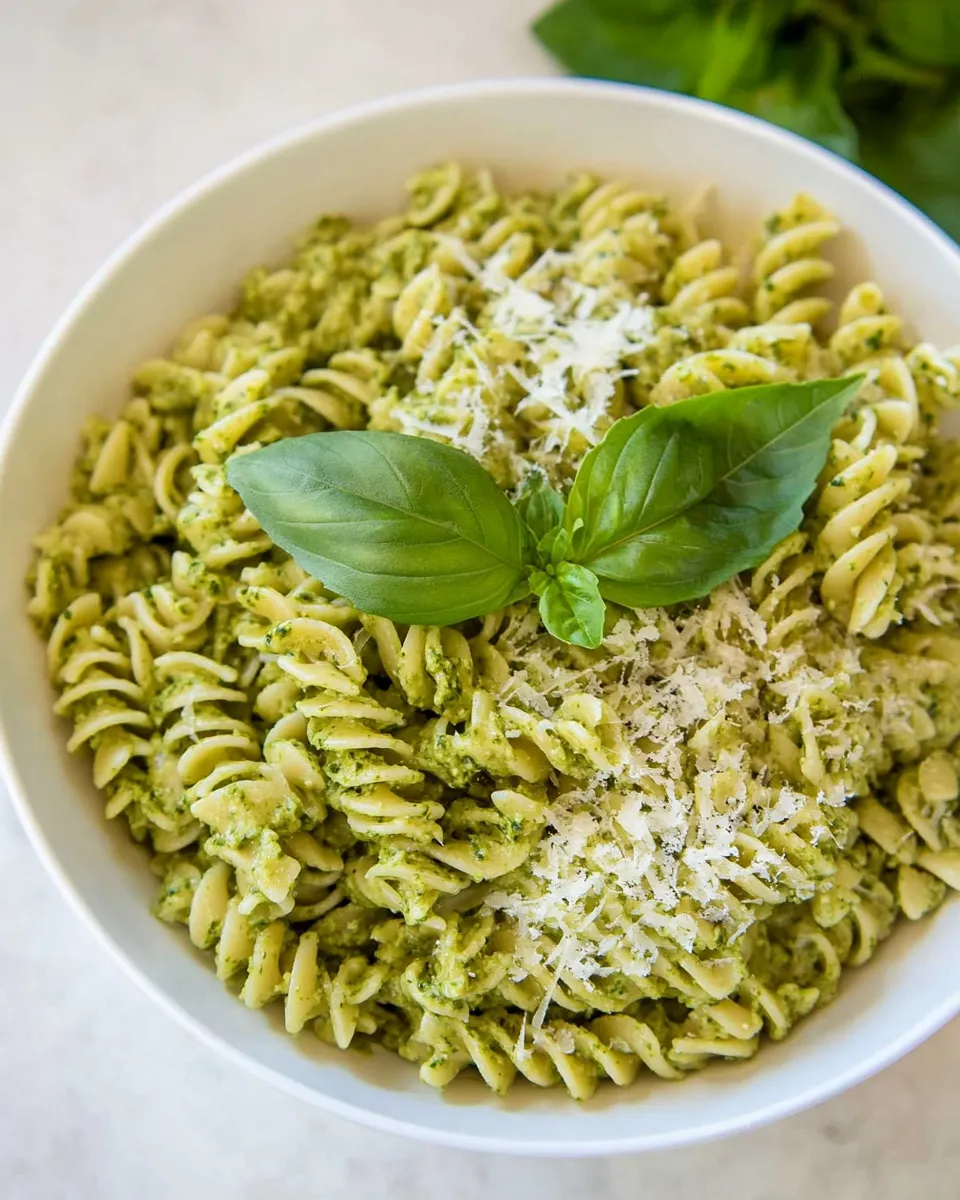
- Farfalle — any short pasta with nooks and folds works: penne, orecchiette, or shells.
- Heavy cream — for a lighter version, you can substitute half-and-half, but avoid substitutions during the high-heat step; use lower heat and accept a slightly less silky texture.
- Parmesan — a Pecorino will add a sharper tang; use the same weight (2 oz.) to maintain the sauce balance.
Hardware & Gadgets
- Food processor — makes fast work of the basil mixture; a blender will work but may heat the leaves slightly, dulling the color.
- Large pot — for boiling pasta with room to move; you want the pasta to cook evenly.
- Rasp grater — the recipe specifies a rasp for the Parmesan; it creates light, fine shreds that melt quickly and evenly into the cream.
- Tongs or a heatproof spatula — for tossing pasta in the sauce without breaking the shapes.
Don’t Do This
Do not let the garlic brown. Burnt garlic tastes bitter and will overpower the pesto. The instruction is explicit for a reason: sauté the minced garlic 20–30 seconds until fragrant and only just starting to deepen in color.
Don’t dump the pesto into a boiling pan of cream. Adding the basil mixture to medium-low heat and allowing the sauce to come together gently keeps the basil bright. Also don’t skip reserving pasta water; a little starchy water is the easiest tool to loosen and bind the sauce.
Seasonal Serving Ideas
- Spring — serve alongside roasted asparagus or peas; their sweetness and snap pair perfectly with the creamy pesto.
- Summer — add halved cherry tomatoes on top just before serving for freshness and a pop of color.
- Autumn — finish with a light drizzle of browned butter instead of some olive oil for a nutty note; use sparingly so the basil still sings.
- Winter — fold in a handful of sautéed mushrooms or crispy pancetta for an umami lift and extra warmth.
What Could Go Wrong
Sauce separates or looks oily
If the sauce looks oily, it likely got too hot or the fat outran the emulsification. Lower the heat immediately and whisk in reserved pasta water a tablespoon at a time to bring it back together. Gentle agitation plus the starchy water helps the cream, cheese, and oil re-emulsify.
Basil tastes dull or brown
Over-processing or heat will dull basil’s green vibrancy. Pulse the leaves just until finely minced and transfer them off heat quickly. Also avoid using a hot blender—work in short pulses and scrape down the sides often.
Pasta too dry after resting
The sauce will thicken as it rests. If the pasta tightens up, add a splash of reserved pasta water and toss to revive the texture before serving.
Freezer-Friendly Notes
Pesto freezes beautifully; freeze the basil mixture flat in a zip-top bag or in ice cube trays for single-use portions. Thaw in the refrigerator before adding to the hot cream base.
Cooked creamy pasta generally doesn’t freeze and reheat well—the texture of both the cream and the pasta can be compromised. If you need to store leftovers, refrigerate in an airtight container for up to 3 days and reheat gently on the stove with a splash of water or cream to loosen the sauce.
Ask & Learn
Q: Can I use a blender for the basil mixture?
A: Yes, but pulse carefully. Blenders can heat the basil blades and gray the color; short pulses and scraping down the walls keep the mixture bright.
Q: What is the point of the reserved pasta water?
A: The reserved pasta water carries starch. A tablespoon at a time will loosen a tight sauce and help the cream, cheese, and oil cling to the pasta for a glossy finish.
Q: Is the extra 1/4 cup cream necessary?
A: It’s optional. Use it if you prefer a richer, looser sauce. The recipe is balanced at 3/4 cup; the additional cream only changes mouthfeel, not safety or technique.
Bring It Home
This is a recipe that rewards attention to small details: pulse the basil, salt the water, reserve the pasta water, and warm the cream gently. Those moves are the difference between a good weeknight dinner and a bowl you’ll want to serve guests.
Make the basil mixture in advance when you have a few spare minutes—store it in an airtight container and you’ll shave off prep time for several meals. When you sit down to eat, serve the pasta straight from the pot so it’s glossy, warm, and perfectly sauced.
Enjoy this Creamy Pesto Pasta with a simple green salad and a glass of chilled white wine, or keep it as a satisfying solo dinner. It’s dependable, adaptable, and bright—just what I reach for when I want something delicious without drama.
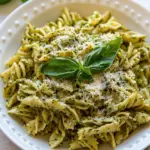
Creamy Pesto Pasta
Ingredients
Ingredients
- 2 1/2 cups packed 54 gfresh basil leaves
- 3 Tbspextra virgin olive oil divided
- 2 Tbspwater
- 12 oz.dry mini farfalleor regular farfalle pasta
- Saltand black pepper
- 1 1/2 Tbsp mincedgarlic 4 cloves
- 3/4 cupheavy cream or 1/4 cup more for a creamier pasta
- 2 oz.parmesan cheese finely grated with a rasp grater (1 cup)
Instructions
Instructions
- Place 2 1/2 cups packed fresh basil leaves, 2 Tbsp extra virgin olive oil, and 2 Tbsp water in a food processor. Pulse until the basil is very finely minced, stopping occasionally to scrape down the sides. Transfer the basil mixture to a small airtight container and set aside.
- Bring about 10 cups of water to a boil in a large pot. Season the water generously with salt.
- Add 12 oz farfalle to the boiling water and cook according to the package directions. Before draining, reserve 1/2 cup of the pasta cooking water, then drain the pasta.
- Return the empty pot to the stove over medium-low heat. Add the remaining 1 Tbsp extra virgin olive oil.
- Add 1 1/2 Tbsp minced garlic (about 4 cloves) to the pot and sauté 20–30 seconds, until fragrant and just beginning to deepen in color but not browned.
- Pour in 3/4 cup heavy cream (add the optional extra 1/4 cup here if you prefer a creamier sauce) and bring the mixture to a light simmer.
- Reduce the heat to low and stir in 2 oz finely grated Parmesan cheese until the cheese has melted and the sauce is smooth.
- Add the drained pasta and the reserved basil mixture to the pot. Toss thoroughly to coat the pasta evenly with the sauce and pesto. If the sauce is too thick, add the reserved pasta water a tablespoon at a time until you reach the desired consistency (the sauce will thicken as it rests).
- Season to taste with salt and black pepper and serve immediately.
Equipment
- Food Processor
- Large Pot
- Rasp grater
- small airtight container