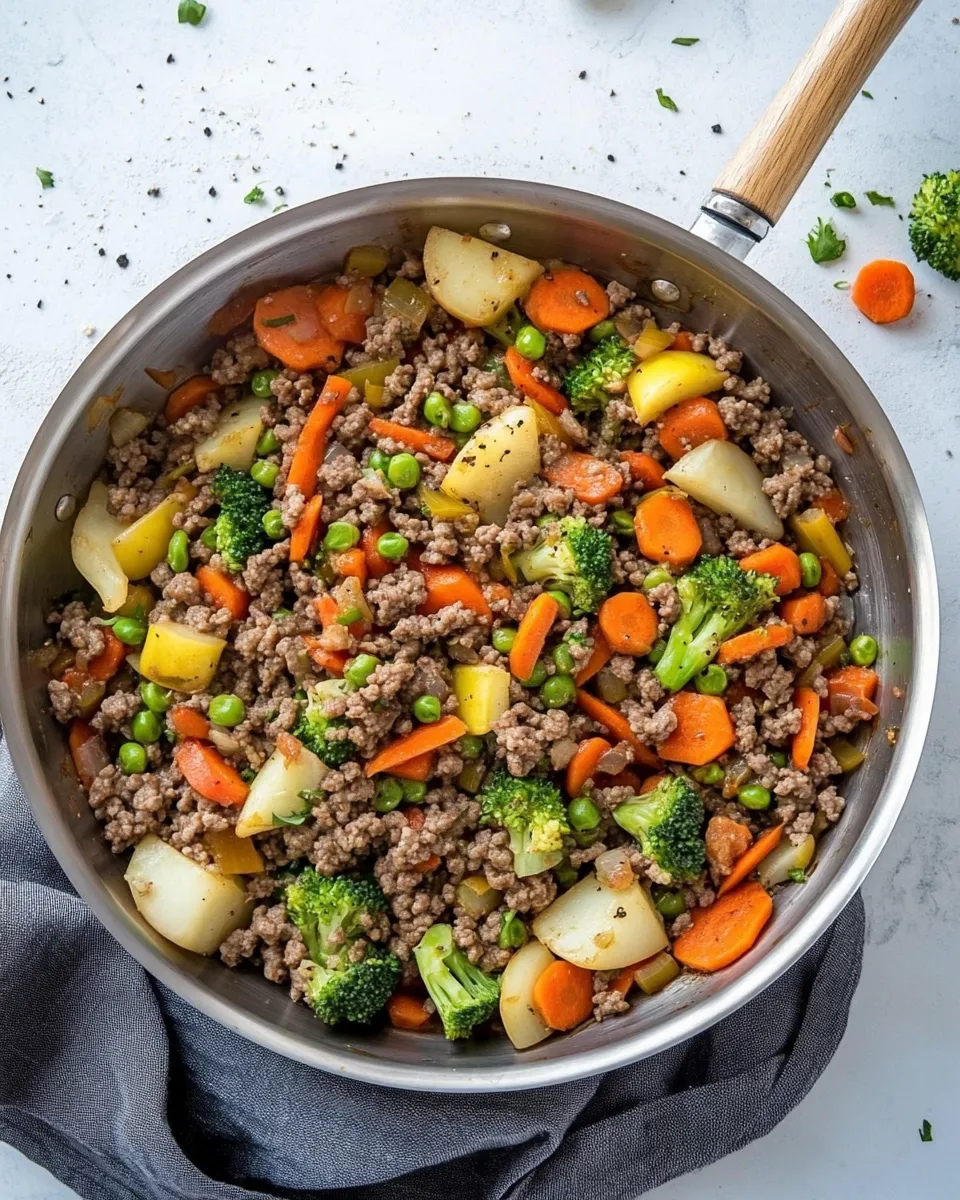
30-Minute Teriyaki Ground Beef Skillet with Vegetables
This skillet dinner is one of those weeknight heroes: fast, flavorful, and forgiving. Ground beef browns quickly, the vegetables cook through without fuss, and a splash of paleo teriyaki sauce brings everything together with bright, savory-sweet notes. No rice cooker, no oven—just one pan and about half an hour from start to finish.
I like this recipe because it’s practical: it uses pantry-stable beef and a short list of vegetables that most of us keep on hand. You can make the whole meal in one skillet, which means fewer dishes and less cleanup—exactly what I want after a long day. The technique is simple but intentional: a couple of minutes of undisturbed searing for the beef, then staged vegetable cooking so nothing ends up mushy.
Below you’ll find ingredient notes, the exact step-by-step method (kept in the original order and amounts), troubleshooting tips, low-carb swaps, and storage guidance. If you want a quick, weekday-friendly dinner that still tastes built-from-scratch, this skillet fits that bill.
Ingredient Notes

Ingredients
- 1lb ground beef — The main protein and source of flavor; browns quickly and soaks up the teriyaki sauce.
- 1/2 red bell pepper cut into match sticks — Adds sweetness and crunch; slice thin so it cooks in the same short time as the carrots.
- 1 large carrot chopped — Provides sweetness and texture; chop small so it softens during the covered cook time.
- 1 medium zucchini chopped — Mild, releases a bit of moisture, and takes on the sauce nicely; chop into bite-sized pieces.
- 1 large crown broccoli chopped* — Adds color, fiber, and a slightly firm bite; the florets hold up well to a quick steam under the lid.
- 1/4 cup paleo teriyaki sauce** — The glaze that flavors the dish; choose a sauce you like, and note that some brands are sweeter or thicker than others.
- 1/2 tsp sea salt to taste — Finishing salt to season the whole skillet; add the full amount if your sauce is mild, or less if it’s already quite salty.
Method: Teriyaki Ground Beef Skillet with Vegetables
- Heat a large skillet over medium-high heat. Add the 1 lb ground beef to the center of the skillet and let it cook undisturbed for 2–3 minutes so the bottom browns.
- Flip the beef and cook the other side for an additional 2–3 minutes without chopping.
- Use a spatula to break the beef into smaller pieces and stir briefly so it browns evenly.
- Add the chopped red bell pepper and chopped carrot to the skillet, stir to combine, cover with a lid, and cook 3–5 minutes.
- Add the chopped zucchini and chopped broccoli, stir, cover, and cook 3–5 minutes more, until the vegetables reach your desired doneness.
- Pour in the 1/4 cup paleo teriyaki sauce and increase the heat just enough for the mixture to come to a full boil. Stir occasionally and cook until the sauce has thickened.
- Remove from heat, add up to the 1/2 teaspoon sea salt (or to taste), stir once, and serve.
Why You’ll Love This Recipe

It’s fast. The method is built for speed: browning the meat without fuss, then staging the vegetables so everything finishes together. You get browned beef flavor plus crisp-tender vegetables in about 30 minutes.
It’s balanced. You have protein, a handful of vegetables, and a punchy sauce, so the meal feels complete and satisfying without needing many extras. The paleo teriyaki glaze gives a sweeter, umami-forward finish that makes the dish feel plenty special for a quick weeknight.
It’s adaptable. Swap textures, double the veg, or add a grain if you want to stretch servings. The technique scales: keep the skillet large enough and follow the same order of operations.
Low-Carb/Keto Alternatives
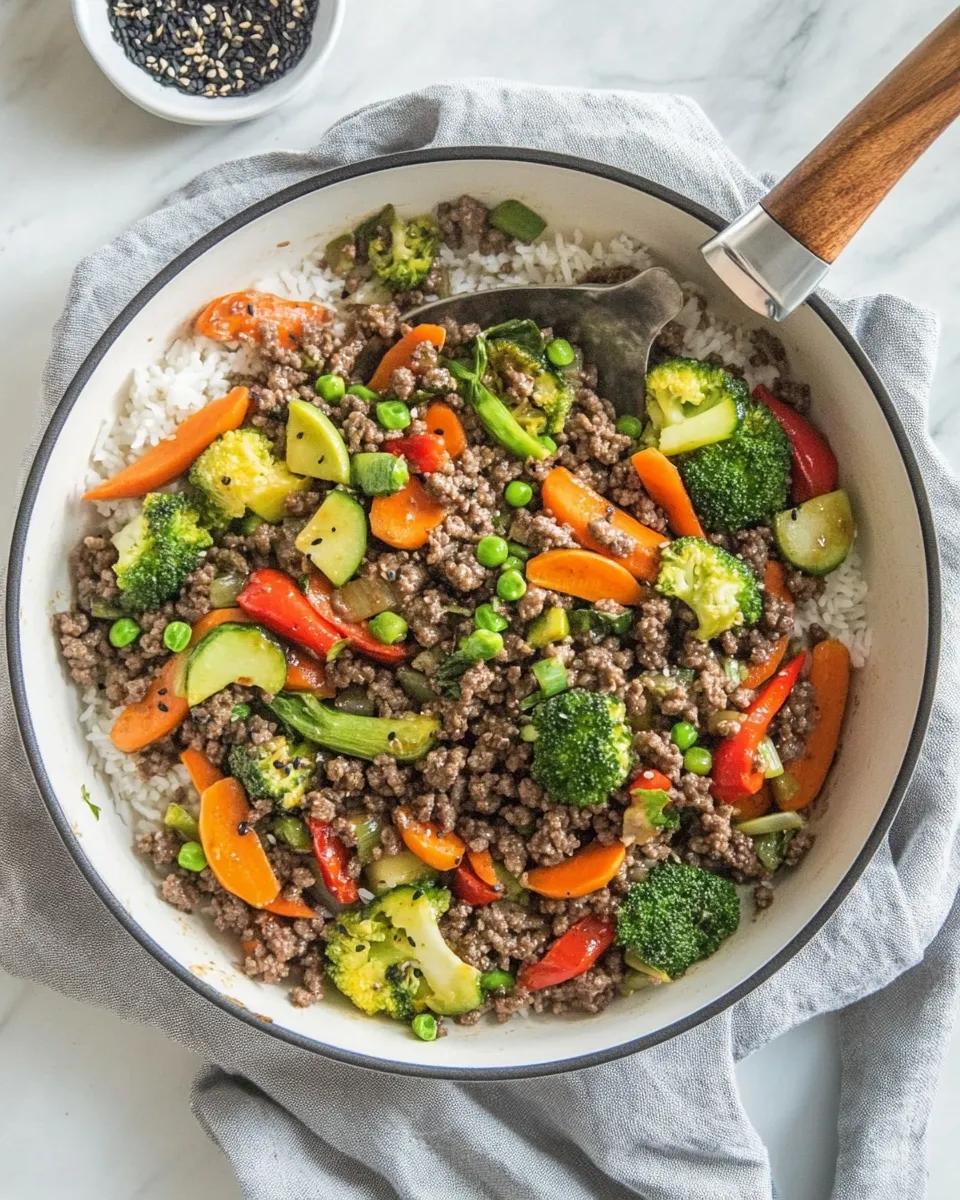
- Serve over cauliflower rice instead of white rice to keep carbs very low. The skillet’s sauce pairs beautifully with cauliflower rice and soaks in nicely.
- Swap the carrot for additional low-carb vegetables like riced cauliflower or thinly sliced cabbage if you want to cut sugar from the veg.
- Check your paleo teriyaki sauce for sweeteners—some brands use honey or maple syrup. Use a low-carb teriyaki or make a quick sugar-free sauce with coconut aminos plus a touch of low-carb sweetener if needed.
Equipment & Tools
- Large skillet (10–12 inches) — Enough surface area lets the beef sear undisturbed and the vegetables spread in an even layer.
- Lid for the skillet — Needed to steam the vegetables briefly and speed up cooking.
- Heatproof spatula — For flipping the beef and breaking it apart after searing.
- Cutting board and sharp knife — For the quick vegetable prep; consistent sizes mean even cooking.
Troubleshooting Tips
If the beef steams instead of browns
Make sure the skillet is properly preheated to medium-high before adding the meat, and avoid crowding the pan. Let the beef sit undisturbed for the first 2–3 minutes as directed to form a brown crust.
If the vegetables are too soft or mushy
Reduce the covered cooking time by a minute or two, and cut the carrots smaller or thinner so they cook through faster. Zucchini and broccoli should be added after the firmer vegetables, as the recipe orders.
If the sauce doesn’t thicken
Bring it to a full boil as instructed and stir occasionally. If your paleo teriyaki sauce is very thin, remove the lid and boil for a minute or two longer to reduce, or mix a small slurry of arrowroot or tapioca starch with cold water and stir in a teaspoon at a time until desired thickness is reached.
If the final dish tastes underseasoned
Remember the finishing step: add up to the 1/2 teaspoon sea salt or to taste after the sauce has cooked. Because teriyaki sauces vary in salt, taste before adding the full amount.
Smart Substitutions
- Ground proteins: Swap ground beef for ground turkey, chicken, or pork if you prefer leaner or different-flavored meat. Cooking times may be similar—watch for browning.
- Vegetables: Use bell peppers of any color, snap peas, or thin-sliced mushrooms. Keep the order: firmer vegetables first, softer ones later.
- Teriyaki sauce: If you don’t have a paleo teriyaki, a regular teriyaki or store-bought soy-based sauce works fine. Adjust salt levels since conventional sauces can be saltier.
- Fresh aromatics: If you want more depth, stir in 1–2 minced garlic cloves or 1 teaspoon minced ginger with the vegetables (add when you add zucchini and broccoli) — but only if you have them on hand.
Recipe Notes & Chef’s Commentary
The single most important technique here is how you handle the beef at the start: letting it sear undisturbed gives you color and flavor that a quick crumble won’t produce. There’s intention in the order of adding vegetables: carrots and red pepper have a bit more structure and need a head start under the lid, while zucchini and broccoli finish quickly and keep some snap if added last.
Use the lid like a timer: the recipe gives 3–5 minute ranges because stove power and vegetable cut size vary. Lean toward the shorter end if you like crisp-tender veg; toward the longer end if you prefer softer vegetables. When you add the sauce, turning up the heat to a boil concentrates flavors quickly—watch it closely so it thickens but doesn’t scorch.
If you want a glossy finish, swirl a tiny bit of neutral oil (1 tsp) into the sauce just before removing from heat. If you’re watching sodium, taste the sauce before adding the 1/2 tsp sea salt at the end.
Storage & Reheat Guide
Store leftovers in an airtight container in the refrigerator for up to 3–4 days. The vegetables will soften a bit more in the fridge, so expect a different texture on day two—but the flavors hold up well.
To reheat: warm gently in a skillet over medium-low heat, adding a splash of water or broth if the sauce has thickened or stuck to the container. Stir frequently so the beef warms through evenly. Reheating in the microwave works in a pinch—cover and heat in 30–45 second bursts, stirring between intervals.
To freeze: portion into freezer-safe containers and freeze up to 2 months. Thaw overnight in the refrigerator before reheating. Note that the texture of zucchini may soften further after freezing and thawing.
Helpful Q&A
- Q: Can I double the recipe? — Yes. Use a larger skillet or two skillets so the beef and vegetables don’t crowd and steam. Keep the same method and timings, but you may need a minute or two longer for added mass to come up to heat.
- Q: Can I make this vegetarian? — Swap the ground beef for a plant-based ground crumbles or crumbled firm tofu. Increase the initial browning time slightly and watch moisture levels; press tofu well if using.
- Q: Is paleo teriyaki necessary? — No. The recipe calls for a paleo teriyaki, but any teriyaki-style sauce works. Adjust salt to taste because regular teriyaki tends to be saltier.
- Q: Can I add rice or noodles to the skillet? — You can toss in pre-cooked rice or noodles at the end after the sauce thickens, just to warm through. Don’t add dry grains or pasta directly to the skillet; they need to be cooked separately.
- Q: My sauce is too sweet—how to balance? — Stir in a splash of rice vinegar or a squeeze of lime to cut sweetness. A small pinch of red pepper flakes introduces contrast as well.
Final Bite
This Teriyaki Ground Beef Skillet with Vegetables is straightforward, flexible, and quick—exactly the kind of recipe I turn to when I want a tasty, no-fuss dinner. The method rewards a little attention up front with real browning and texture payoff, and the teriyaki glaze brings everything together for a satisfying finish. Make it as written the first time, then tweak vegetables, sauce levels, or protein to fit your weeknight rhythm. Enjoy.
30-Minute Teriyaki Ground Beef Skillet with Vegetables
Ingredients
Ingredients
- 1 lbground beef
- 1/2 red bell peppercut into match sticks
- 1 large carrotchopped
- 1 medium zucchinichopped
- 1 large crown broccolichopped*
- 1/4 cuppaleo teriyaki sauce**
- 1/2 tspsea saltto taste
Instructions
Instructions
- Heat a large skillet over medium-high heat. Add the 1 lb ground beef to the center of the skillet and let it cook undisturbed for 2–3 minutes so the bottom browns.
- Flip the beef and cook the other side for an additional 2–3 minutes without chopping.
- Use a spatula to break the beef into smaller pieces and stir briefly so it browns evenly.
- Add the chopped red bell pepper and chopped carrot to the skillet, stir to combine, cover with a lid, and cook 3–5 minutes.
- Add the chopped zucchini and chopped broccoli, stir, cover, and cook 3–5 minutes more, until the vegetables reach your desired doneness.
- Pour in the 1/4 cup paleo teriyaki sauce and increase the heat just enough for the mixture to come to a full boil. Stir occasionally and cook until the sauce has thickened.
- Remove from heat, add up to the 1/2 teaspoon sea salt (or to taste), stir once, and serve.
Equipment
- Large Skillet
- Spatula
- Lid
Notes
*If you're sensitive to broccoli, use one bunch of broccolini instead. I've noticed broccoli can be tough on the GI, but broccolini is much more well-received.
**Use
homemade
or
store-bought
Low-FODMAP Teriyaki Sauce to keep the recipe Low-FODMAP.
If you tolerate onion and garlic, add 1/2 of a yellow onion (finely chopped) and 3 to 4 cloves of garlic (minced).