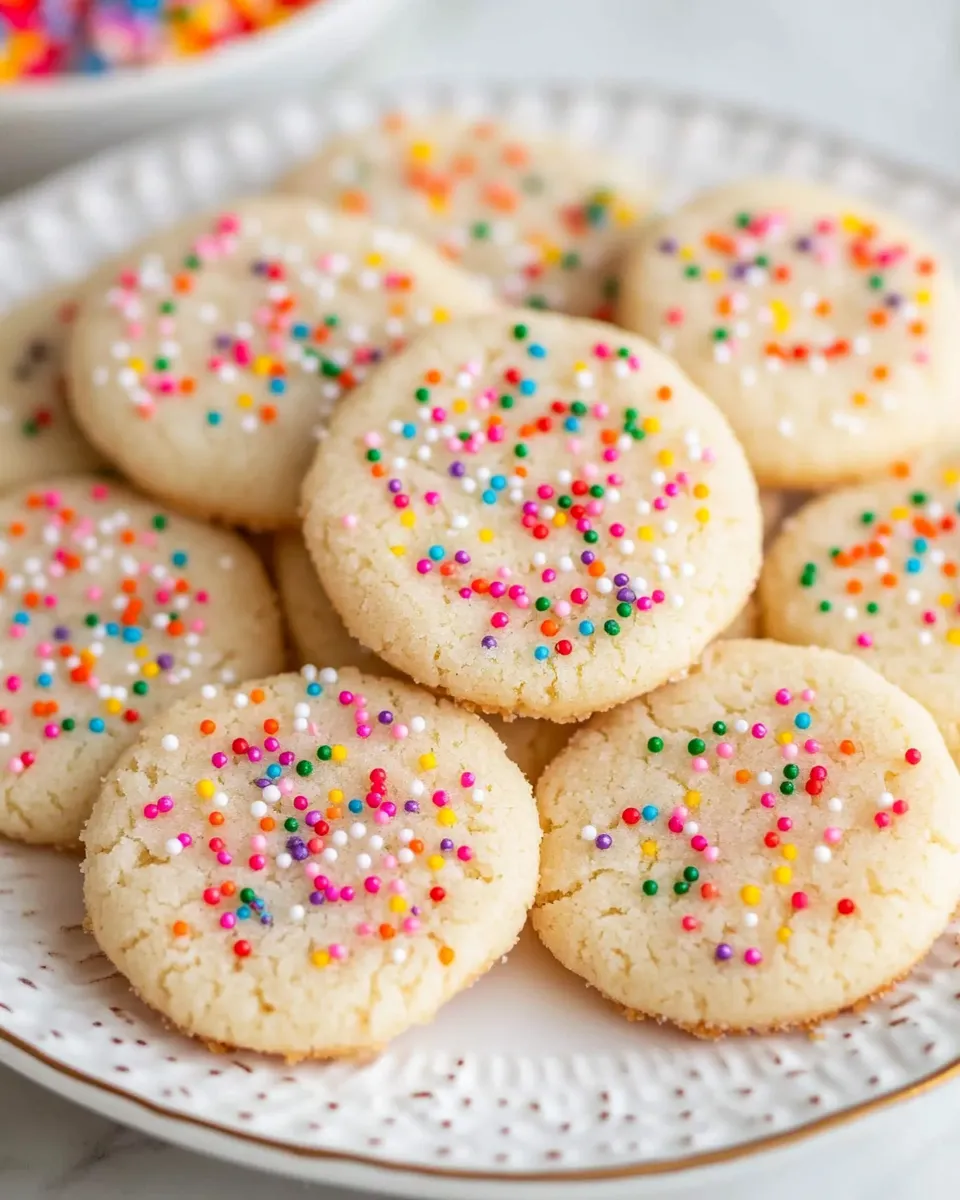
3 Ingredient Sugar Cookies
These sugar cookies are about as simple and satisfying as a cookie can be: three core ingredients, one optional extract for a whisper of flavor, and a couple of pantry tricks that make them reliably good. I keep this recipe in my back pocket for last-minute cookies, baking with kids, or when I just want something buttery, sweet, and uncomplicated.
No fussy chilling or fancy frosting is required. The method is forgiving: mix, roll, press, bake, and wait the short time it takes for the bottoms to color. The reserved tablespoon of sugar gives the tops a subtle crunch and a clean look if you press with a sugared cup.
Read through the ingredients and the straight-ahead directions below. I’ve also included practical notes from testing, common failures and fixes, storage tips, and a few seasonal variations that keep the same basic ingredients but change the mood of the cookie.
The Essentials

Start by making sure your butter is properly softened. Too cold and it won’t blend; too melted and the dough will be greasy and hard to handle. Room-temperature butter is the easiest — it should give slightly when pressed but hold shape.
Measure flour by spooning it into the cup and leveling it off. Adding extra flour is allowed if the dough is sticky; the recipe even anticipates up to 1/4 cup more. Keep the reserved tablespoon of sugar out of the main mixing so you can use it to create that pretty, lightly sugared surface.
Almond extract is optional, but a small teaspoon adds a floral nutty note that elevates the cookies without changing texture. Sprinkles are purely decorative—press them on before baking so they stick.
Ingredients
- 1 cup butter, softened — provides fat and structure; should be room temperature for easy blending.
- ⅔ cup sugar — sweetness and a bit of tenderness; reserve about 1 tablespoon for topping.
- 2 cups all-purpose flour (may need 1/4 cup more) — the dry framework; add up to 1/4 cup more only if dough is too sticky to handle.
- 1 teaspoon almond extract, optional — adds a subtle, nutty aroma; skip if you prefer plain.
- sprinkles, optional — for color and extra crunch; press on before baking so they adhere.
Directions: 3 Ingredient Sugar Cookies
- Preheat oven to 325°F and position a rack in the center. Line a baking sheet with parchment paper.
- Reserve about 1 tablespoon of the 2/3 cup sugar for topping, then in a medium bowl combine 1 cup softened butter and the remaining sugar until well blended (use a hand mixer, stand mixer, or a sturdy spoon).
- Add 2 cups all-purpose flour and 1 teaspoon almond extract, if using. Stir until the mixture is mostly combined, then use your hands to bring it into a cohesive dough. If the dough is too sticky to handle, add up to 1/4 cup more flour, a little at a time, just until it can be rolled.
- Roll the dough into 1 to 1½-inch balls and place them about 2 inches apart on the prepared baking sheet.
- Dip the bottom of a cup into the reserved tablespoon of sugar, then press each dough ball down with the sugared cup to flatten slightly. If using sprinkles, add them now and press lightly so they stick.
- Bake for 14–16 minutes, or until the bottoms are golden.
- Let the cookies cool on the baking sheet for 10–15 minutes before transferring or eating.
Why This 3 Ingredient Sugar Cookies Stands Out
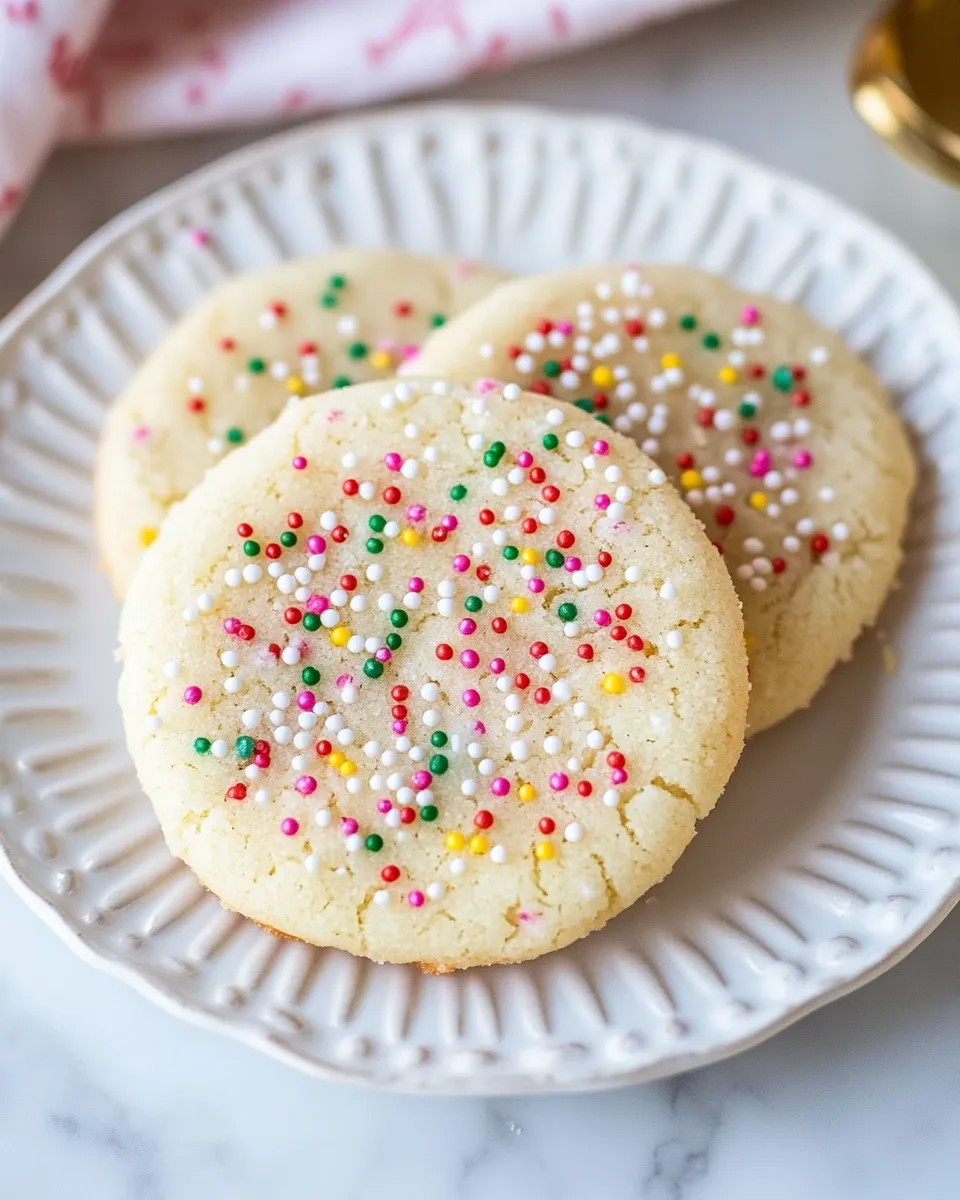
It’s the combination of buttery richness and a simple, tender crumb that makes these cookies so dependable. With just butter, sugar, and flour, you get a short, melt-in-your-mouth texture that many more elaborate recipes chase with layers of technique. The reserved sugar and gentle press produce a uniform, lightly sugared top—clean and classic.
The recipe is forgiving: if the dough is a touch soft, you can add the small amount of extra flour the instructions allow. If you omit the optional almond extract, you still have a perfectly tasty cookie. For quick batch baking or teaching kids the basics, this one is tough to beat.
If You’re Out Of…
If you’re missing the optional almond extract, the dough will still come together and the cookies will be pleasant and buttery—simply omit it. If you don’t have sprinkles, skip them or press the cookies with the sugared cup only; the top will still have a bit of sparkle.
If you’re short on the reserved tablespoon of sugar for topping, it’s fine to press the balls with a plain cup. The reserved sugar is a small visual and textural detail rather than a critical ingredient for structure. If your butter isn’t softened yet, let it rest at room temperature until it yields slightly to pressure; rushing with melted butter will change the dough’s handling.
Tools & Equipment Needed
- Oven (set to 325°F).
- Baking sheet(s) and parchment paper for easy removal and cleanup.
- Medium mixing bowl.
- Hand mixer, stand mixer, or sturdy spoon for creaming butter and sugar.
- Measuring cups for butter, sugar, and flour.
- Measuring spoon for the almond extract (optional).
- A cup with a flat bottom for pressing cookies and dipping into the reserved sugar.
- Cooling space or rack where baked cookies can rest on the sheet for 10–15 minutes.
Things That Go Wrong
Sticky dough: If the dough clings to your hands and won’t roll, add flour a tablespoon at a time, up to the 1/4 cup allowed in the recipe. Work gently; overworking with too much flour will make the cookies dry.
Flat, greasy cookies: That usually happens when the butter was too warm or melted before baking. Bring butter to room temperature—soft, but not oily—and handle quickly so it doesn’t warm further.
Under-baked centers / raw-feeling middle: Check that your oven is at the correct temperature. These bake at a relatively low 325°F to avoid over-browning the tops while letting the centers set; if the bottoms are still pale after the listed time, give them a minute or two more and watch closely.
Brittle, dry cookies: That can be caused by too much flour. When adding extra flour, do it sparingly and only until the dough is manageable.
Year-Round Variations
These stay very close to the ingredients list while changing the final character:
- Keep them plain for a classic buttery cookie that pairs well with tea or coffee.
- Use the optional almond extract for a subtle nutty aroma—it’s a spring or holiday favorite when you want something a touch more special with no extra work.
- Press sprinkles into the dough for birthdays or holidays; use a consistent sprinkle color to make themed batches.
Notes from the Test Kitchen
We tested the recipe with both a mixer and by hand. The cookies come together faster and more evenly when you cream the butter and sugar with a mixer, but a sturdy spoon works perfectly if you don’t have one. If you cream too long and the butter gets soft and glossy, stop and chill the dough briefly if needed.
Spacing matters: give 2 inches between dough balls. At 1 to 1½-inch balls pressed gently, they’ll expand slightly but shouldn’t run into each other if spaced properly.
Bake until the bottoms are golden. Because ovens vary, begin checking at 14 minutes and watch the base color. The top won’t look deeply browned, so the bottoms are the best visual cue.
Freezer-Friendly Notes

Dough: You can freeze the raw dough balls (flash-freeze on a tray until solid, then transfer to a sealed bag). When ready to bake, press with the sugared cup and add a minute or two to the bake time if baking straight from frozen. For best results, let frozen dough sit at room temperature for 10–15 minutes before pressing and baking.
Baked cookies: Once completely cool, layered cookies freeze well in an airtight container with parchment between layers. Thaw at room temperature for 20–30 minutes before serving. The texture holds up nicely; a quick reheat for 5–8 seconds in the microwave can restore that just-baked softness.
Handy Q&A
Are these really only three ingredients? Yes—the core recipe is butter, sugar, and flour. The almond extract and sprinkles are listed as optional extras for flavor and decoration.
How should I store them? Keep baked cookies in an airtight container at room temperature for up to 3 days for best texture. If you prefer a crisper edge, store them uncovered for a few hours before sealing.
Can I double the recipe? Yes. Use two baking sheets and rotate them halfway through baking if your oven has hot spots. Make sure you don’t crowd the pans.
Do they need to be chilled before baking? No. The dough is meant to be rolled and pressed right after mixing. If your kitchen is very warm or the dough feels too soft, a short chill for 10–15 minutes will firm it up.
Final Thoughts
These 3 Ingredient Sugar Cookies are the kind of recipe that earns regular use: uncomplicated, quick, and reliable. They’re perfect when you want a small batch with minimum fuss, when you’re baking with kids, or when your pantry needs a recipe that doesn’t demand specialty items. Keep the technique in mind—softened butter, reserved sugar for pressing, and watching the bottoms for doneness—and you’ll have buttery, tender cookies every time.
Make a few batches, try the optional almond extract, and play with sprinkles when the mood strikes. The bones are simple; the results are consistently satisfying.

3 Ingredient Sugar Cookies
Ingredients
Ingredients
- 1 cupbuttersoftened
- 2/3 cupsugar
- 2 cupsall-purpose flour may need 1/4 cup more
- 1 teaspoonalmond extractoptional
- sprinklesoptional
Instructions
Instructions
- Preheat oven to 325°F and position a rack in the center. Line a baking sheet with parchment paper.
- Reserve about 1 tablespoon of the 2/3 cup sugar for topping, then in a medium bowl combine 1 cup softened butter and the remaining sugar until well blended (use a hand mixer, stand mixer, or a sturdy spoon).
- Add 2 cups all-purpose flour and 1 teaspoon almond extract, if using. Stir until the mixture is mostly combined, then use your hands to bring it into a cohesive dough. If the dough is too sticky to handle, add up to 1/4 cup more flour, a little at a time, just until it can be rolled.
- Roll the dough into 1 to 1½-inch balls and place them about 2 inches apart on the prepared baking sheet.
- Dip the bottom of a cup into the reserved tablespoon of sugar, then press each dough ball down with the sugared cup to flatten slightly. If using sprinkles, add them now and press lightly so they stick.
- Bake for 14–16 minutes, or until the bottoms are golden.
- Let the cookies cool on the baking sheet for 10–15 minutes before transferring or eating.
Equipment
- Oven
- Baking Sheet
- Parchment Paper
- Mixing Bowl
- hand mixer or stand mixer or spoon
- Measuring Cups
- Measuring Spoons
- cup or glass