The Best New York-Style Cheesecake
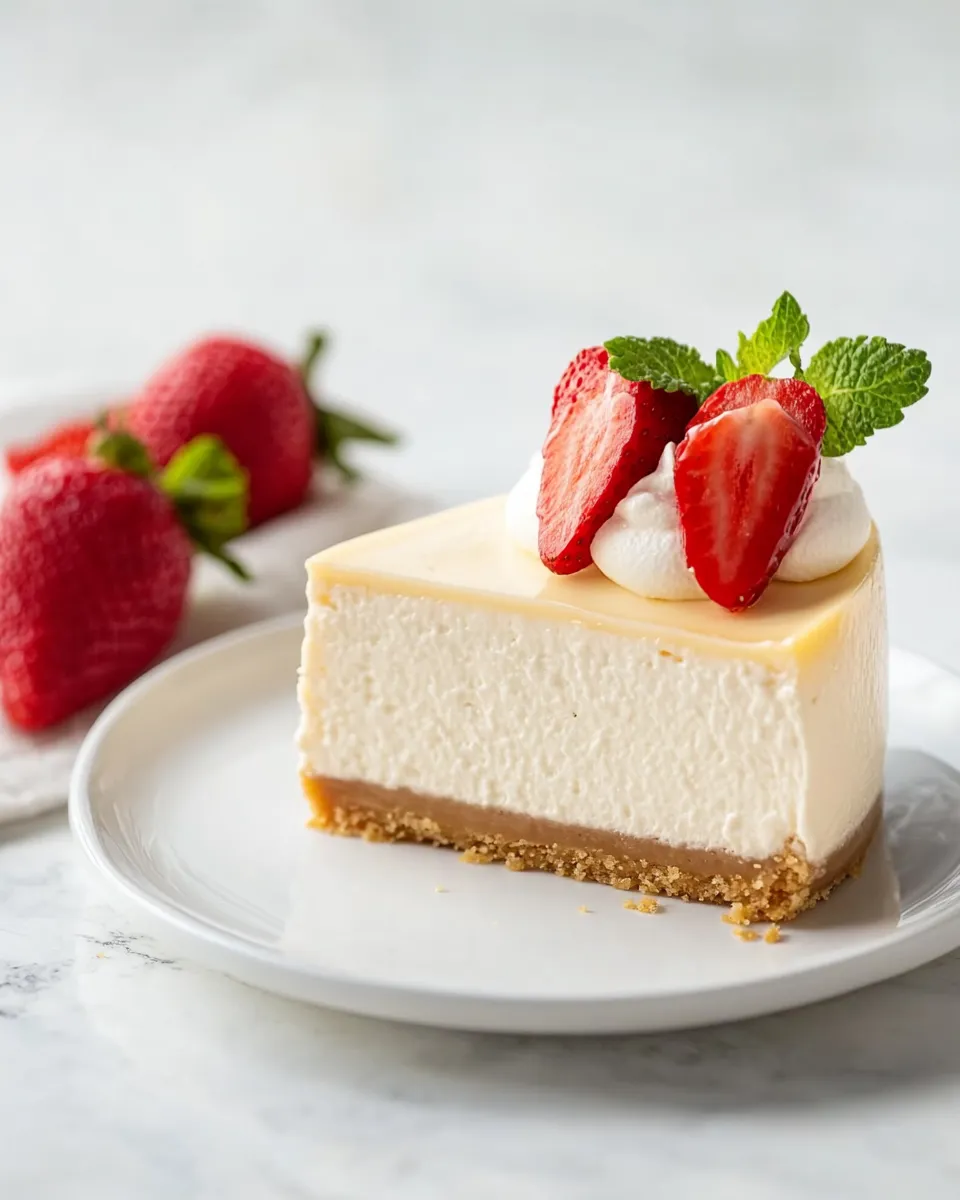
I make this New York‑Style Cheesecake whenever I want a dessert that’s both impressive and reliably excellent. It’s the kind of cake that slices clean, holds its shape, and tastes rich without being cloying. The recipe below follows a classic approach: a sturdy graham cracker crust, a dense, creamy cream cheese filling, and a slow, gentle bake in a water bath so the texture comes out smooth and velvety.
There’s nothing fussy about the technique—mostly patience and a few simple tricks. Read the steps, pull everything to room temperature, and plan time for a long chill. That resting time is where a lot of the magic happens: flavors settle, texture firms, and slicing gets easy. I’ll walk you through each stage, point out the common mistakes to avoid, and offer swaps if you need them.
If you’re new to baking cheesecakes, take a breath and follow the order below. If you’ve made them before, you’ll still find a detail or two that tightens your results. Either way, you’ll end up with a classic New York‑Style Cheesecake that’s perfect for dinner parties, birthdays, or any day you want something truly comforting.
What’s in the Bowl

Ingredients
- 2cups (210g) graham crackers crumbs — the base of the crust; finely crushed for an even texture.
- 1/3cup (66g) granulated sugar — sweetens the crust slightly and balances the filling.
- 1/4teaspoon salt — sharpens the flavor and brings out the butteriness.
- 1/2cup (113g) unsalted butter melted — binds the crumbs and adds richness; melt completely.
- 38-ounce packages (681g) full-fat cream cheese room temperature — the heart of the filling; use full-fat for structure and flavor.
- 1cup (227g) full-fat sour cream room temperature — adds tang and lightens the texture slightly.
- 1 and 1/4cups (249g) granulated sugar — sweetens the filling; gives that characteristic New York cheesecake sweetness.
- 2teaspoons pure vanilla extract — essential for depth and aroma; use a good-quality vanilla.
- 3large eggs room temperature — provide structure; add them one at a time for even incorporation.
- 2large egg yolks room temperature — add extra richness and silkiness to the custard.
- 2tablespoons (28g) all-purpose flour — stabilizes the filling slightly so slices hold cleanly.
- 1/2cup (113ml) heavy cream room temperature — smooths the batter and mellows the acidity.
Build New York-Style Cheesecake Step by Step
Crust
- Remove the cream cheese, sour cream, eggs, egg yolks, and heavy cream from the refrigerator to come to room temperature while you prepare the pan and crust (about 30–60 minutes if chilled).
- Preheat the oven to 350°F (177°C). Lightly spray a 9-inch springform pan with nonstick spray. Wrap the bottom and sides of the pan in heavy-duty, extra-wide aluminum foil—use several layers and press the foil smooth so no gaps remain. Set the prepared pan aside.
- In a large bowl, combine the graham cracker crumbs, 1/3 cup granulated sugar, 1/4 teaspoon salt, and the melted unsalted butter. Mix until the crumbs are evenly moistened.
- Press the crumb mixture firmly into the bottom of the prepared springform pan and press it slightly up the sides to form an even crust.
- Bake the crust in the preheated 350°F oven for 10 minutes. Remove the crust from the oven and place it on a cooling rack. Reduce the oven temperature to 325°F (163°C) while you make the filling.
Filling
- In the bowl of a stand mixer fitted with the paddle attachment, a large bowl with an electric hand mixer, or a food processor bowl, add all of the room-temperature cream cheese and the room-temperature sour cream. Beat on medium speed until very smooth and creamy, stopping to scrape down the sides and bottom of the bowl as needed.
- Add the 1 1/4 cups granulated sugar and 2 teaspoons vanilla extract. Beat until combined and smooth, scraping the bowl as needed.
- On the lowest mixer speed, add the 3 large eggs and 2 large egg yolks one at a time, mixing each just until incorporated. Stop and scrape down the sides and bottom of the bowl between additions to ensure an even texture. Do not overbeat.
- Using a rubber spatula, fold in the 2 tablespoons all-purpose flour until just incorporated. Then fold in the 1/2 cup heavy cream until the batter is smooth and homogenous. Scrape the sides and bottom of the bowl a few more times to ensure everything is evenly mixed.
- Pour the filling into the partially baked crust and use a silicone spatula to smooth the top into an even layer.
Bake & Cool
- Place the wrapped springform pan into a larger, deep roasting pan or baking dish. Carefully pour hot (not boiling) water into the larger pan until it reaches about 3 inches up the outside of the springform pan to create a water bath.
- Carefully transfer the pans to the oven and bake at 325°F (163°C) for 1 hour and 30 minutes. The center should still slightly jiggle when gently shaken.
- Turn the oven off and crack the oven door open slightly. Let the cheesecake sit undisturbed in the oven, still in the water bath, for 30 minutes to cool gradually.
- After 30 minutes, remove the cheesecake from the oven and lift the springform pan out of the water bath. Carefully remove the foil from the pan and place the cheesecake on a cooling rack. Cool completely at room temperature.
- Once completely cooled, refrigerate the cheesecake (still in the springform pan) for at least 6 hours or overnight.
- Do not remove the springform ring until the cheesecake has fully chilled. When ready to serve, run a thin knife around the edge if needed, unlock and remove the ring, slice, and serve.
The Upside of New York-Style Cheesecake
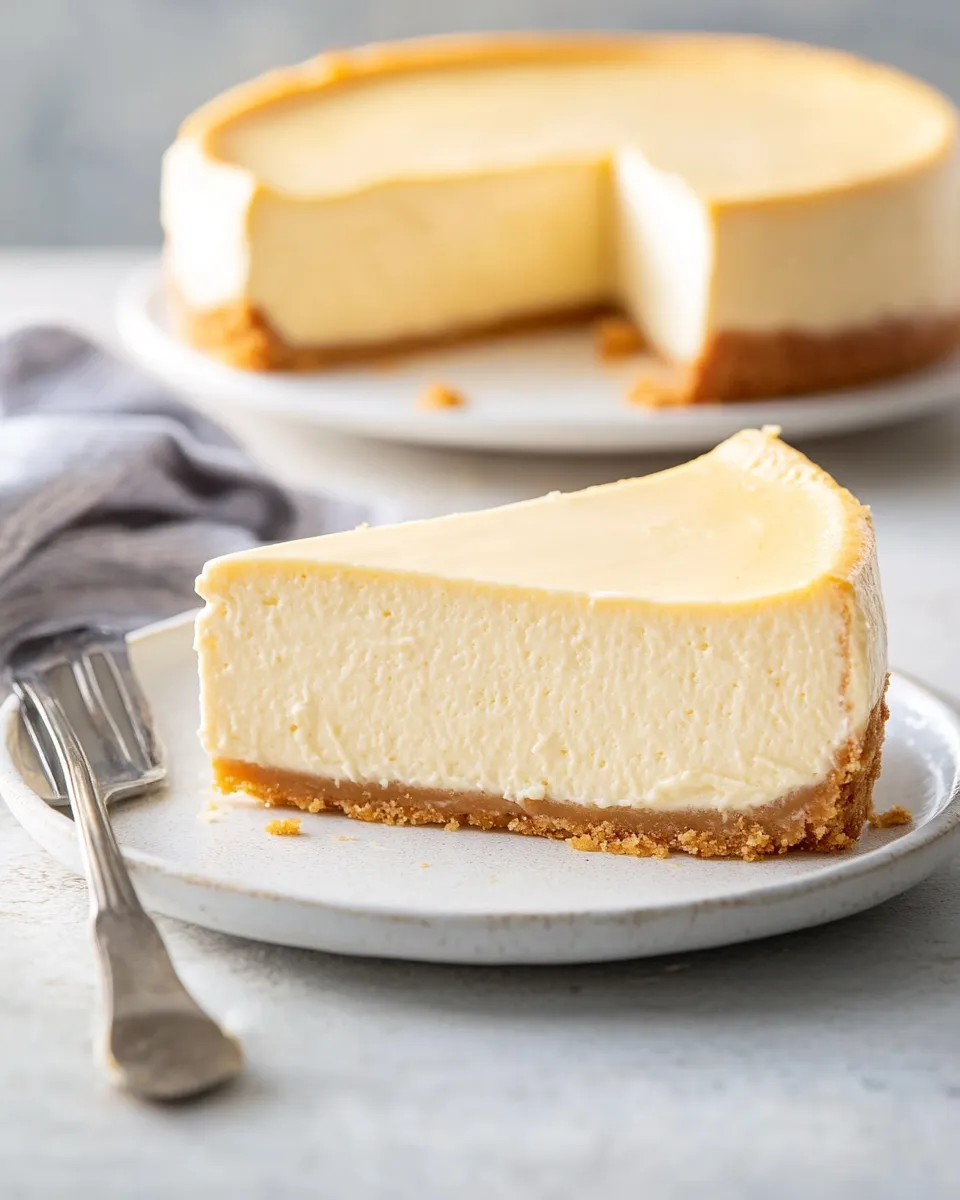
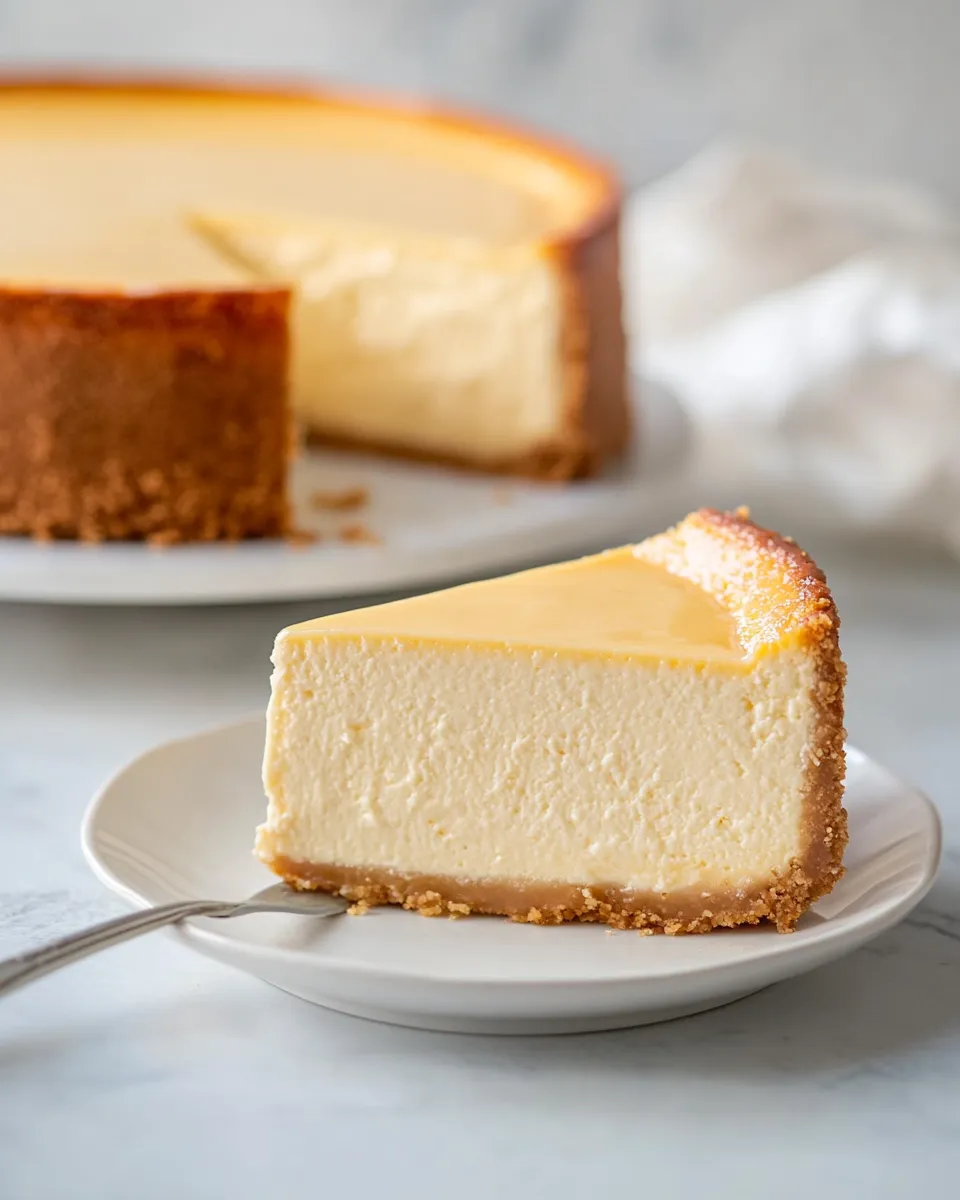
This cheesecake is forgiving in flavor and flattering on the plate. The high ratio of cream cheese to other dairy gives it a dense, buttery mouthfeel that needs no complicated finishing. It holds up well under fruit toppings, sauces, or a simple dusting of powdered sugar. Slices come out clean when chilled properly, making it ideal for events where presentation matters.
It also keeps very well: the texture improves after a day in the fridge as the flavors meld. For bakers who prefer structure over soufflé-like delicacy, this version delivers every time. Finally, the technique—room-temperature dairy, low-and-slow bake, water bath cooling—is versatile and will serve you across other custard-based bakes.
Easy Ingredient Swaps
Need small adjustments? Here are swaps that won’t break the method:
- Crust: Swap graham crackers for digestive biscuits or plain shortbread crumbs for a slightly richer base.
- Butter: Use salted butter if that’s what you have—omit additional salt in the crust if you prefer.
- Sour cream: Plain full-fat Greek yogurt can be used if you want a tangier but slightly denser result.
- Heavy cream: A splash more sour cream can replace heavy cream in a pinch, though it will be slightly less silky.
Setup & Equipment
Gather these before you begin—having everything ready makes the bake predictable.
- 9-inch springform pan: essential for easy removal and clean slices.
- Heavy-duty aluminum foil: for wrapping the pan tightly so no water seeps in during the water bath.
- Large roasting pan or baking dish: deep enough to hold water up to about 3 inches on the outside of the springform.
- Stand mixer with paddle attachment or electric hand mixer: for smoothing cream cheese without overworking it.
- Silicone spatula and rubber scraper: for folding and scraping the bowl clean.
- Kitchen scale or measuring cups: to measure ingredients accurately—especially the crumbs and sugars.
Mistakes That Ruin New York-Style Cheesecake
These are the common pitfalls I see—and how to avoid them.
- Cold ingredients: Using cold cream cheese or eggs causes lumps and uneven texture. Let everything come to room temperature.
- Overbeating: Whipping too long incorporates air that will expand and crack the top. Mix just until combined and scrape down often.
- Water in the pan: If foil is not sealed well, water can leak into the cake and make it grainy. Wrap generously and press seams smooth.
- Too-high heat: Baking too hot or too fast leads to browning and cracks. The low, slow bake with a water bath is key.
- Skipping the rest: Not chilling long enough makes slicing messy. Give it the 6 hours or overnight chill the recipe asks for.
Dietary Swaps & Alternatives
If you need to adapt for diet restrictions, these options work but change the final texture or flavor slightly.
- Lower-fat options: You can use reduced-fat cream cheese and sour cream, but expect a less creamy, slightly looser texture.
- Gluten-free crust: Use gluten-free graham-style crumbs or ground gluten-free cookies in the same volume as the crumbs called for.
- Dairy-free: This is a tricky swap. Use firm dairy-free cream-cheese alternatives and a plant-based heavy cream substitute; note structure and flavor will differ and baking times may change.
- Sugar substitutes: Granulated sugar contributes to structure. If you must reduce sugar, adjust minimally and expect a different set and browning.
Cook’s Notes
Small details that consistently improve results:
- Room temperature means room temperature: Cream cheese should be soft enough to press a finger into easily; eggs should not be chilled straight from the fridge.
- Scrape, scrape, scrape: Pause often while mixing and scrape the bowl and paddle to ensure uniform texture and avoid pockets of unmixed cream cheese.
- Check for the jiggle: The center should still have a slight wobble after baking. It will set during the gradual cooling period in the oven and then the fridge.
- Slicing tip: Use a sharp knife dipped in hot water and wiped clean between slices for perfect edges.
- Toppings: Fresh berries, a spoonful of lemon curd, or a glossy fruit compote complement the dense cheesecake without overpowering it.
Store, Freeze & Reheat

Storage is simple and the cake keeps well.
- Refrigerator: Store covered or in an airtight container for up to 5 days. Leave it in the springform base if possible to maintain the shape.
- Freezing: You can freeze whole or sliced. Wrap tightly in plastic wrap and aluminum foil, then freeze up to 2 months. Thaw overnight in the refrigerator.
- Reheating: Cheesecake is best served cold or at room temperature. If you prefer it slightly warm, bake slices at 300°F for a few minutes—but avoid heating the whole cake in the oven as it changes texture.
FAQ
Q: Can I make this ahead?
A: Yes. It actually improves after chilling. Make it a day ahead and keep it refrigerated.
Q: Why did my cheesecake crack?
A: Most cracks are caused by overbeating, baking too hot, or rapid temperature changes. Follow the low bake, water bath, and gradual cooling steps carefully.
Q: Can I use a different pan?
A: A 9‑inch springform is ideal. A removable-bottom tart pan might work, but a springform gives the cleanest removal and easiest presentation.
Q: My crust sank or got soggy—what happened?
A: If the crust wasn’t pressed firmly or the butter ratio was off, it can compress under the filling. Press firmly and bake the crust first as the recipe directs.
Q: Can I halve the recipe?
A: Yes, but adjust baking time and consider using a smaller springform pan. Halving requires experience to judge doneness by jiggle rather than strict timing.
Ready, Set, Cook
There’s joy in the methodical parts of this recipe—mixing until silky, wrapping the pan, filling the water bath. Those steps are the scaffolding for something indulgent and dependable. Gather your ingredients, give the dairy time to warm up, and follow the sequence. You’ll end up with a classic New York‑Style Cheesecake that’s rich, clean-sliced, and worth the wait.
If you bake one today, promise me you’ll give it the overnight chill. Slice with a warm knife. Pour the coffee. Then enjoy that first perfect bite.

The Best New York-Style Cheesecake
Ingredients
Ingredients
- 2 cups 210 ggraham crackers crumbs
- 1/3 cup 66 ggranulated sugar
- 1/4 teaspoonsalt
- 1/2 cup 113 gunsalted buttermelted
- 38- ounce packages 681 gfull-fat cream cheeseroom temperature
- 1 cup 227 gfull-fat sour creamroom temperature
- 1 and 1/4 cups 249 ggranulated sugar
- 2 teaspoonspure vanilla extract
- 3 largeeggsroom temperature
- 2 largeegg yolksroom temperature
- 2 tablespoons 28 gall-purpose flour
- 1/2 cup 113 mlheavy creamroom temperature
Instructions
Instructions
- Remove the cream cheese, sour cream, eggs, egg yolks, and heavy cream from the refrigerator to come to room temperature while you prepare the pan and crust (about 30–60 minutes if chilled).
- Preheat the oven to 350°F (177°C). Lightly spray a 9-inch springform pan with nonstick spray. Wrap the bottom and sides of the pan in heavy-duty, extra-wide aluminum foil—use several layers and press the foil smooth so no gaps remain. Set the prepared pan aside.
- In a large bowl, combine the graham cracker crumbs, 1/3 cup granulated sugar, 1/4 teaspoon salt, and the melted unsalted butter. Mix until the crumbs are evenly moistened.
- Press the crumb mixture firmly into the bottom of the prepared springform pan and press it slightly up the sides to form an even crust.
- Bake the crust in the preheated 350°F oven for 10 minutes. Remove the crust from the oven and place it on a cooling rack. Reduce the oven temperature to 325°F (163°C) while you make the filling.
- In the bowl of a stand mixer fitted with the paddle attachment, a large bowl with an electric hand mixer, or a food processor bowl, add all of the room-temperature cream cheese and the room-temperature sour cream. Beat on medium speed until very smooth and creamy, stopping to scrape down the sides and bottom of the bowl as needed.
- Add the 1 1/4 cups granulated sugar and 2 teaspoons vanilla extract. Beat until combined and smooth, scraping the bowl as needed.
- On the lowest mixer speed, add the 3 large eggs and 2 large egg yolks one at a time, mixing each just until incorporated. Stop and scrape down the sides and bottom of the bowl between additions to ensure an even texture. Do not overbeat.
- Using a rubber spatula, fold in the 2 tablespoons all-purpose flour until just incorporated. Then fold in the 1/2 cup heavy cream until the batter is smooth and homogenous. Scrape the sides and bottom of the bowl a few more times to ensure everything is evenly mixed.
- Pour the filling into the partially baked crust and use a silicone spatula to smooth the top into an even layer.
- Place the wrapped springform pan into a larger, deep roasting pan or baking dish. Carefully pour hot (not boiling) water into the larger pan until it reaches about 3 inches up the outside of the springform pan to create a water bath.
- Carefully transfer the pans to the oven and bake at 325°F (163°C) for 1 hour and 30 minutes. The center should still slightly jiggle when gently shaken.
- Turn the oven off and crack the oven door open slightly. Let the cheesecake sit undisturbed in the oven, still in the water bath, for 30 minutes to cool gradually.
- After 30 minutes, remove the cheesecake from the oven and lift the springform pan out of the water bath. Carefully remove the foil from the pan and place the cheesecake on a cooling rack. Cool completely at room temperature.
- Once completely cooled, refrigerate the cheesecake (still in the springform pan) for at least 6 hours or overnight.
- Do not remove the springform ring until the cheesecake has fully chilled. When ready to serve, run a thin knife around the edge if needed, unlock and remove the ring, slice, and serve.
Equipment
- Equipment
- 9
- -inch springform pan