Sweet and Salty Chocolate Bark
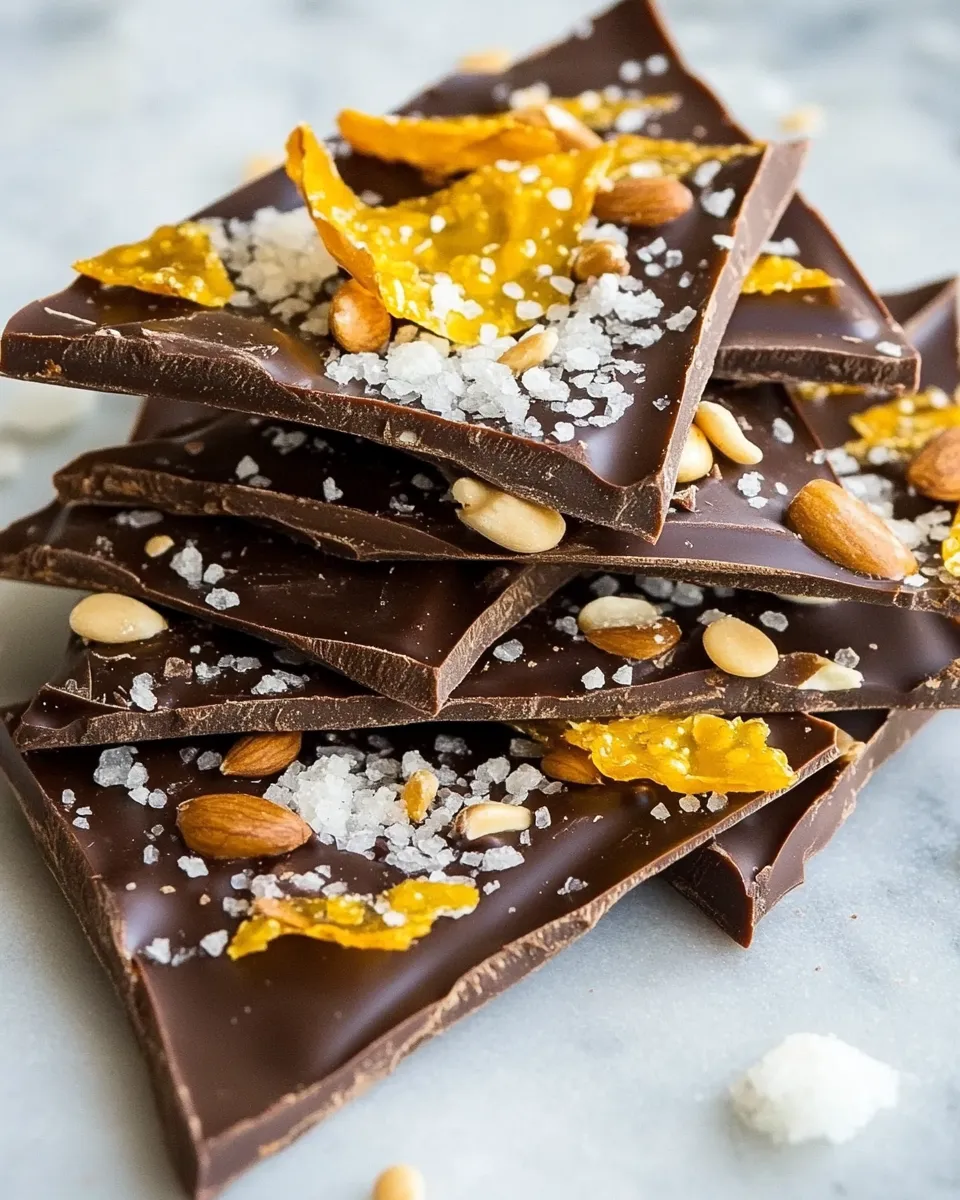
This chocolate bark is one of those recipes I reach for when I want something impressive that’s actually simple. It combines glossy dark chocolate with toasted almonds, bright candied orange peel, a touch of coconut palm sugar in the candying step, and a final scatter of flaky sea salt. The contrast — bitter, sweet, crunchy, and a little briny — keeps every bite interesting.
I make this recipe year-round, but it really shines as a gift or party snack because it stores well and breaks into rustic pieces that look beautiful on a platter. The method is straightforward: candy the orange peel, toast the almonds, melt and set the chocolate, then assemble. No tempering required, yet the finished bark looks elegant.
Below you’ll find exactly what I use, step-by-step directions, troubleshooting notes from testing, and some seasonal ideas to swap or add flavors. Read the ingredient notes first so you can prep everything, then follow the steps in order and you’ll have a professional-looking bark with minimal fuss.
What We’re Using

Ingredients
- 1 navel orange peel — from the whole orange; organic preferred. You only use the peel for candied strips; removing bitter pith and blanching helps keep the final pieces tender.
- 3/4 cup coconut palm sugar — used to make the syrup for candying the peel. It gives a deeper, caramel-like flavor versus white sugar.
- 8 ounces dark chocolate — the base of the bark. Choose a good-quality bar you like eating straight; it determines the final flavor.
- 1/4 cup almonds, sliced — toast them briefly for texture and aroma. Sliced almonds distribute easily over the chocolate.
- 1/4 teaspoon sea salt — flaked sea salt or larger crystal sea salt is especially good. It lifts the chocolate and balances the sweetness.
Sweet and Salty Chocolate Bark — Do This Next
- Use a vegetable peeler to remove the peel from the whole navel orange in long strips. Cut the strips into roughly 1/4–1/2-inch-wide pieces, discarding the fruit and keeping the peel pieces.
- Place the orange peel pieces in a small pot of boiling water. Boil 1 minute, then drain and rinse the peels under cold running water.
- Refill the pot with fresh water, bring to a boil again, add the peels, boil 1 minute, then drain and rinse under cold water. (Boiling twice reduces bitterness.)
- In a small pan, combine 3/4 cup coconut palm sugar and 1/2 cup water. Stir over medium heat until the sugar dissolves and the mixture comes just to a boil.
- Reduce heat to low, add the blanched orange peels to the sugar syrup, and simmer about 15 minutes, until the peels are translucent and tender and the syrup has slightly thickened.
- Using tongs or a fork, remove the peels from the syrup and arrange them in a single layer on wax or parchment paper. Let them cool and harden about 30 minutes at room temperature (or about 15 minutes in the fridge).
- While the peels cool, toast 1/4 cup sliced almonds in a dry skillet over medium heat, stirring constantly, for 1–2 minutes until lightly golden and fragrant. Transfer to a plate to cool.
- Line an 8-by-8-inch baking pan with parchment paper.
- Melt 8 ounces dark chocolate in a double boiler or in the microwave in 30-second intervals, stirring between intervals, until smooth. Pour the melted chocolate into the prepared pan and spread to an even layer with a spatula.
- Chop or tear the cooled candied orange peels into bite-sized pieces if desired. Evenly sprinkle the toasted sliced almonds and the candied orange peel pieces over the melted chocolate, then sprinkle 1/4 teaspoon flaked sea salt on top.
- Refrigerate the pan for about 1 hour, until the chocolate is fully set. Remove from the pan using the parchment, then break the bark into pieces to serve.
Why This Sweet and Salty Chocolate Bark Stands Out
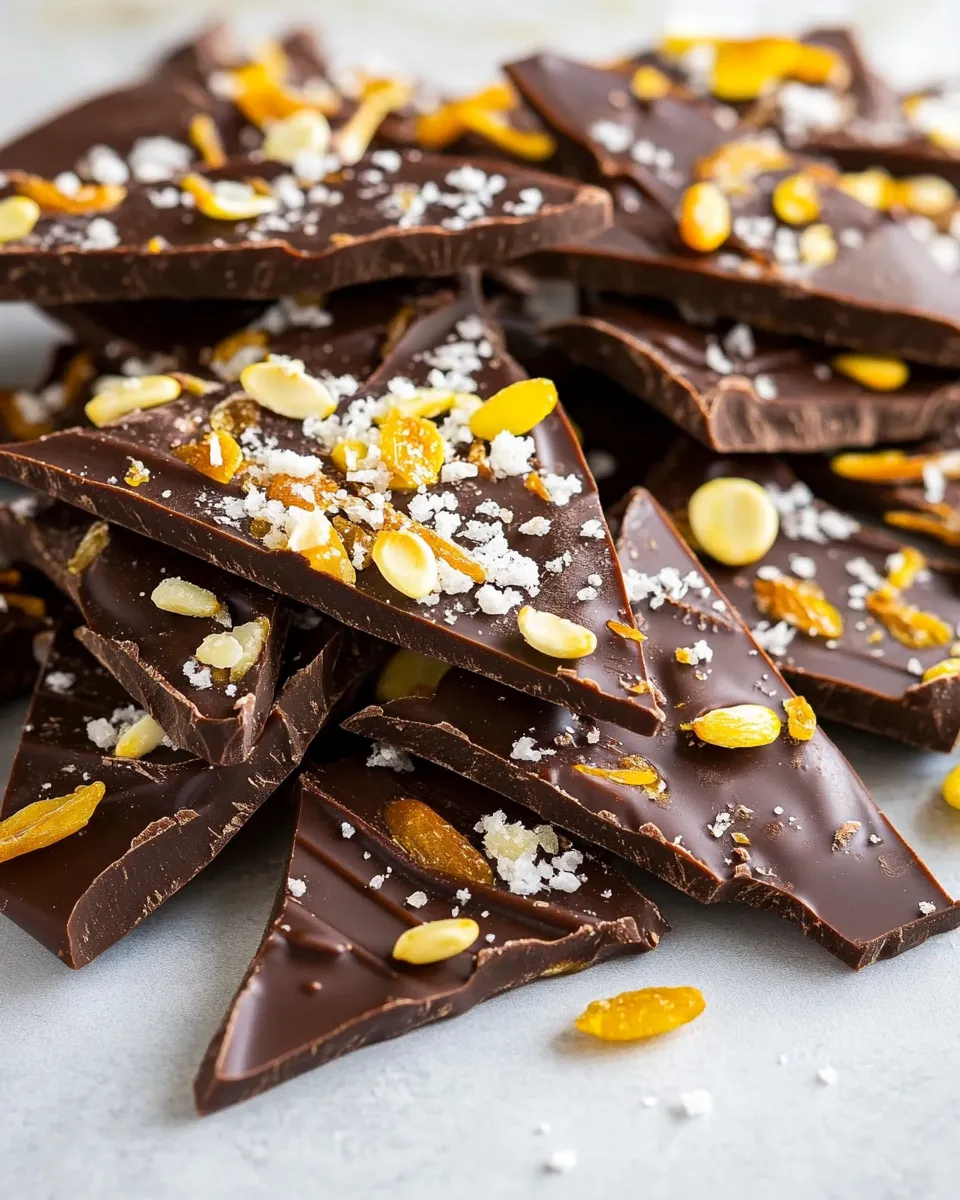
This bark balances flavors and textures deliberately. Dark chocolate brings bitterness and creaminess. Candied orange peel adds chewy brightness and a citrus oil aroma that cuts through the chocolate. Toasted almonds provide a dry, nutty crunch, and the flaked sea salt at the end wakes up every other component.
The method keeps things simple and repeatable. You’re not tempering chocolate, so the step count stays low. Candied peel makes the recipe feel elevated, but the blanch-and-simmer approach is forgiving. The result is a dessert that looks like it took longer than it did—great for gifts and last-minute hosting.
International Equivalents
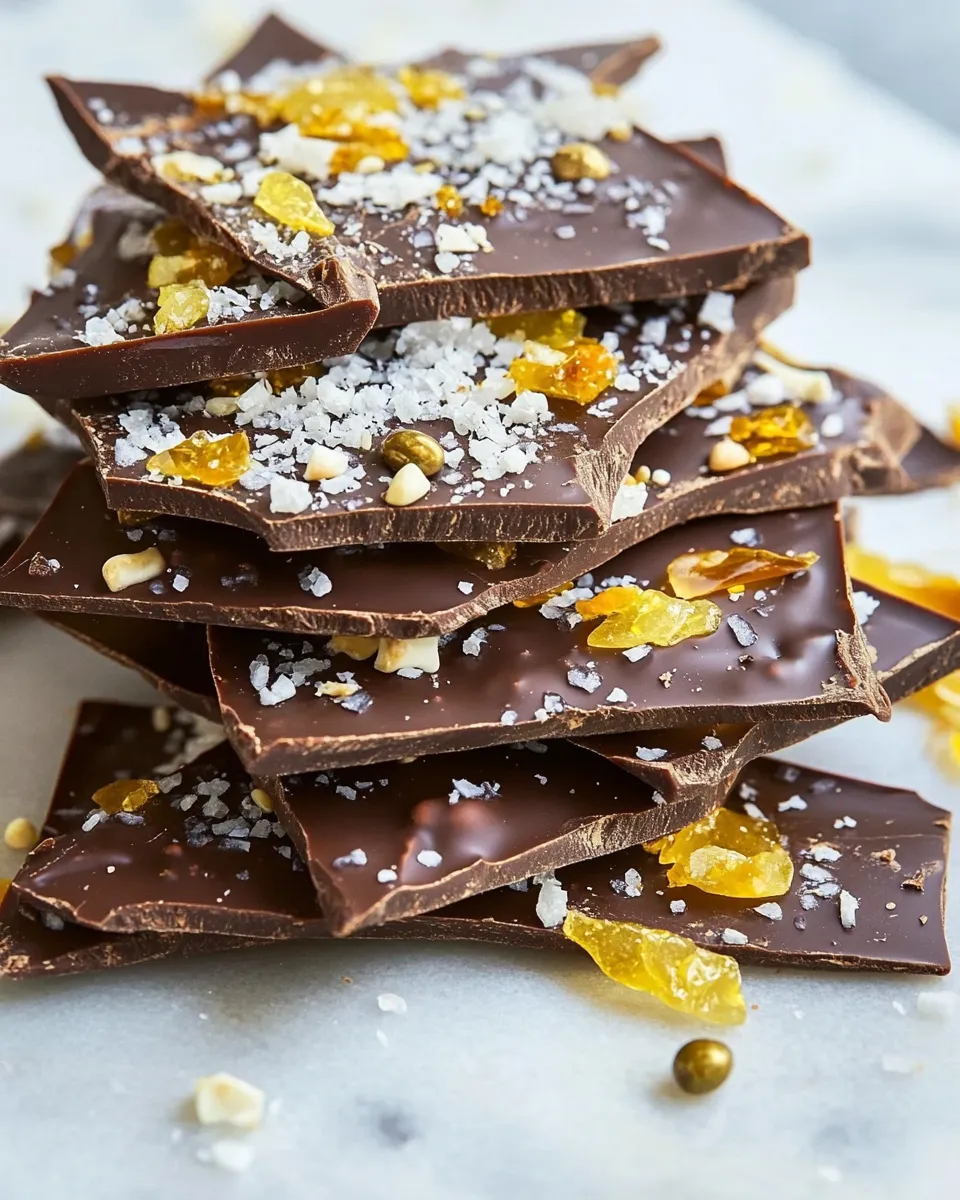
Chocolate bark is a universal concept with local spins. Here are straightforward swaps and equivalents you might encounter or use:
If you prefer a milkier result, use the same weight of milk chocolate in place of the dark. For a European-style touch, choose a 60–70% cocoa bar common in many continental recipes. In Mediterranean kitchens, candied citrus peel is sometimes preserved in heavier syrups; you can drain a bit more thoroughly if your peel is syrupy. For a Middle Eastern twist, sub toasted pistachios for the almonds and add a light dusting of finely crushed candied orange zest instead of larger peel pieces. In Japan or Korea, matcha-dusted white chocolate bark follows the same assembly steps — melt, spread, top, set — but replace the chocolate and toppings to match local flavor profiles.
Toolbox for This Recipe
Essential tools
You don’t need fancy gear. A few reliable tools make the process easier:
- Vegetable peeler — for clean, thin strips of orange peel.
- Small pot and small pan — one for blanching, one for candy syrup.
- Skillet — dry skillet for quickly toasting almonds.
- Double boiler or microwave-safe bowl — to melt the chocolate gently and avoid scorching.
- 8-by-8-inch baking pan and parchment paper — for an even, easily lifted slab of bark.
Learn from These Mistakes
When testing this recipe I repeated a few errors so you don’t have to. The common pitfalls are simple and avoidable.
Not blanching thoroughly leaves the peel bitter. Follow the double-boil/blanch step and rinse with cold water between blanches. Skipping it means the peel fights the chocolate rather than complementing it.
Overcooking the syrup will candy the peel unevenly or make it too firm. Simmer until translucent and tender; the syrup should thicken slightly but not caramelize into a sticky, hard mass. If your syrup darkens a lot, reduce the heat and shorten the time.
Don’t overcrowd the almonds while toasting. They toast fast and can go from golden to burnt in seconds; keep them moving in the pan and remove immediately when fragrant. Burnt almonds taste bitter and will overshadow the chocolate.
Finally, spread the melted chocolate evenly and finish the toppings while the chocolate surface is still glossy. If you wait too long, toppings won’t adhere and can fall off when the chocolate sets.
Season-by-Season Upgrades
Small swaps adapt this bark to the season without changing the technique.
Spring: Add a few freeze-dried raspberries or rose petals (edible) at the last second for a floral, tart lift. Summer: Try adding toasted coconut flakes with the almonds for a tropical note. Autumn: Replace half the almonds with chopped toasted hazelnuts and add a sprinkle of cinnamon over the chocolate before it sets. Winter: Increase the citrus presence with a mix of candied orange and lemon peel and finish with a dusting of finely grated orange zest for extra aroma.
What I Learned Testing
The difference between “good” and “great” is attention to texture and timing. In early tests I found that letting candied peel rest on paper for exactly the suggested time produced the best chew — shorter and it stayed tacky, longer and it became brittle.
I also learned that the type of chocolate affects set time and mouthfeel. A bar with higher cocoa butter will set smoother; couverture is ideal but not necessary. Microwaving in 30-second bursts with stirring was the most reliable melting method in home kitchens where a double boiler felt like overkill.
Cooling, Storing & Rewarming
After the bark sets, remove it from the pan using the parchment and break it into pieces. Store bark in an airtight container layered with parchment between layers to prevent sticking. Keep it in a cool, dry place away from direct sunlight; refrigeration is fine if your kitchen is warm, but it can introduce condensation when brought back to room temperature, which may soften the bark slightly.
Room temperature storage will maintain the best texture for a week. In the refrigerator, the bark keeps well for up to three weeks. If you must rewarm or soften pieces slightly before serving, let them sit at room temperature for 20–30 minutes; avoid microwaving, which can make chocolate grainy.
Ask the Chef
Q: Can I use a different sugar for the candied peel?
A: Yes, but flavors change. Coconut palm sugar gives a deeper, caramel note. White granulated sugar works as a direct substitute and yields a clearer, brighter candy look. Brown sugar will add more molasses flavor and darken the syrup.
Q: What if my chocolate blooms (white streaks) after storing?
A: Bloom is a texture/appearance issue caused by fat or sugar migration, not spoilage. It won’t affect safety. To reduce bloom, let the chocolate set in a consistently cool area and avoid temperature swings. Using a chocolate with good cocoa butter content also helps.
Q: Can I make the candied peel ahead?
A: Absolutely. Candied peel stores in an airtight container for a few weeks and saves time when assembling bark later. If it becomes sticky, a short chill will firm it up before chopping.
Final Thoughts
This Sweet and Salty Chocolate Bark rewards precision where it counts — blanching the peel, watching the syrup, and toasting the nuts — but it doesn’t demand advanced technique. The components are forgiving and easy to scale: make a double batch of candied peel, keep extra toasted almonds on hand, and you’ll be able to assemble fresh bark whenever you need a pretty, shareable treat.
Serve it with coffee or as part of a dessert board. It’s an easy hostess gift when wrapped in parchment and tied with twine. The contrasts in this recipe are deliberate: the citrus lifts, the almonds crunch, the sea salt sharpens. Follow the steps, respect the timing, and you’ll have bark that looks and tastes like something special without the fuss.
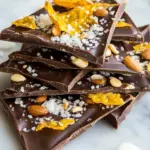
Sweet and Salty Chocolate Bark
Ingredients
Ingredients
- 1 navel orange peelfrom the whole orange organic preferred
- 3/4 cupcoconut palm sugar
- 8 ouncesdark chocolate
- 1/4 cupalmondssliced
- 1/4 teaspoonsea saltflaked sea salt or larger crystal sea salt is especially good
Instructions
Instructions
- Use a vegetable peeler to remove the peel from the whole navel orange in long strips. Cut the strips into roughly 1/4–1/2-inch-wide pieces, discarding the fruit and keeping the peel pieces.
- Place the orange peel pieces in a small pot of boiling water. Boil 1 minute, then drain and rinse the peels under cold running water.
- Refill the pot with fresh water, bring to a boil again, add the peels, boil 1 minute, then drain and rinse under cold water. (Boiling twice reduces bitterness.)
- In a small pan, combine 3/4 cup coconut palm sugar and 1/2 cup water. Stir over medium heat until the sugar dissolves and the mixture comes just to a boil.
- Reduce heat to low, add the blanched orange peels to the sugar syrup, and simmer about 15 minutes, until the peels are translucent and tender and the syrup has slightly thickened.
- Using tongs or a fork, remove the peels from the syrup and arrange them in a single layer on wax or parchment paper. Let them cool and harden about 30 minutes at room temperature (or about 15 minutes in the fridge).
- While the peels cool, toast 1/4 cup sliced almonds in a dry skillet over medium heat, stirring constantly, for 1–2 minutes until lightly golden and fragrant. Transfer to a plate to cool.
- Line an 8-by-8-inch baking pan with parchment paper.
- Melt 8 ounces dark chocolate in a double boiler or in the microwave in 30-second intervals, stirring between intervals, until smooth. Pour the melted chocolate into the prepared pan and spread to an even layer with a spatula.
- Chop or tear the cooled candied orange peels into bite-sized pieces if desired. Evenly sprinkle the toasted sliced almonds and the candied orange peel pieces over the melted chocolate, then sprinkle 1/4 teaspoon flaked sea salt on top.
- Refrigerate the pan for about 1 hour, until the chocolate is fully set. Remove from the pan using the parchment, then break the bark into pieces to serve.
Equipment
- Vegetable peeler
- Small pot
- Strainer
- Small Pan
- Tongs or fork
- wax or parchment paper
- Dry Skillet
- 8-by-8-inch baking pan
- Double boiler or microwave-safe bowl
- Spatula
- Refrigerator